wayground logo

Free Printable Worksheets

Font size

S
M
L
XL
Worksheets

Force Unit

Total questions: 145

Worksheet time: 2hrs 51mins

Name
Class
Date
1.
A ____________ is a push or a pull on an object.
a)
friction
b)
force
c)
magnet
d)
gravity
2.
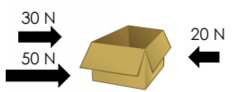
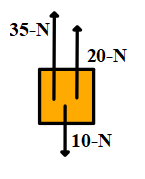
What is the net force?
a)
30 N 
b)
25 N 
c)
5 N 
d)
55 N 
3.
What does the strength of gravity between two objects depend upon?
a)
Mass & distance
b)
Mass & weight
c)
Gravity & inertia
d)
Inertia & mass
4.

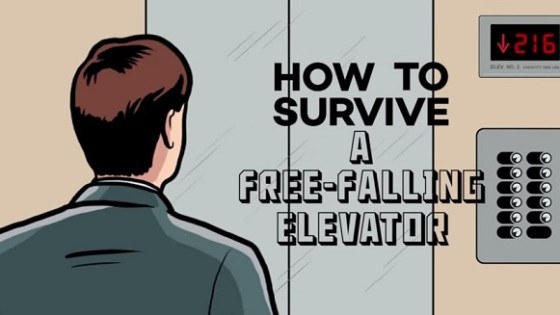
What is the force on a 1000 kg elevator that is falling freely at 9.8 m/sec2

a)

102.04 n

b)

9,800 n

c)

980 n

d)

103 n

5.
A 50 kg skater pushed by a friend accelerates 5 m/sec2.  How much force did the friend apply?
a)
45 N
b)
15 N 
c)
10 N
d)
250 N
6.
A force of 250 N is applied to an object that accelerates at a rate of 5 m/sec2.  What is the mass of the object?
a)
100kg 
b)
1,250kg
c)
50kg
d)
5kg
7.
How much force is needed to accelerate a 3kg skateboard at 5m/s2. 
a)
8N
b)
1.6N
c)
0.6N
d)
15N
8.
How much force is needed to accelerate a 25kg bowling ball at 2m/s2
a)
50N
b)
5N
c)
12.5N
d)
100N
9.
If a 2kg bird is pushed by the wind with a force of 2N, how fast does the bird accelerate?
a)
1 m
b)
2 m/s2
c)
4m/s2
d)
1 m/s2
10.
If you increase the force on an object, its acceleration? 
a)
decreases
b)
stays the same
c)
also increases
d)
stops
11.
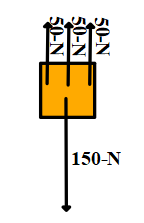
What is the net force?
a)
20 N 
b)
0 N 
c)
400 N 
d)
40 N 
12.
Calculate the Net Force. 
a)
60N, Left 
b)
40N, Right 
c)
0N
d)
60N, Right
13.

Acceleration of objects on Earth is always

a)

not enough information

b)

it depends on the object

c)

9.8 m/s2

d)

9.8 N

14.

A space exploration device is driving down the terrain weighing 1900 N with a mass of 340 kg. What is its acceleration due to gravity on its current planet?

a)

5.58 m/s2

b)

646000 m/s2

c)

0.178 m/s2

d)

1560 m/s2

15.

A bird has a mass of 0.45 kg. Calculate the weight of the bird due to Earth's acceleration due to gravity.

a)

4.41 N

b)

45 N

c)

4.5 N

d)

0.045 N

16.

Imagine the force of gravity on Jupiter is a little more than 2 times the gravitational force on Earth. If an object has a mass of 40 kg and a weight of 490 N on Earth, what would be the object's approximate mass and weight on Jupiter?

a)

40 kg and 390 N

b)

80 kg and 390 N

c)

40 kg and 800 N

d)

80 kg and 800 N

17.

What is the unit for FORCE?

a)

N (Newtons)

b)

lbs (pounds)

c)

g (grams)

d)

m/s (meters per second)

18.

In the district finals, Vanessa kicks the 0.600 kg soccer ball with a force of 80 N. How much does she accelerate the ball?

a)

122 m/s/s

b)

50 m/s/s

c)

133 m/s/s

d)

48 m/s/s

19.

A 68 kg runner exerts a force of 59 N. What is the acceleration of the runner?

a)

9.8 m/s/s

b)

5 m/s/s

c)

1.968 m/s/s

d)

0.868 m/s/s

20.

A crate is dragged across an ice covered lake. The box accelerates at 0.08 m/s/s and s pulled by a 47 N force. What is the mass of the crate?

a)

587.5 kg

b)

642.8 kg

c)

58.75 kg

d)

98.81 kg

21.

I thought that the acceleration of gravity was 9.8 m/s/s. Why does an object dropped from something high up, like from a plane, will reach a point where it won't accelerate anymore (terminal velocity)?

a)

because objects slow down as they fall.

b)

because the weight force is greater than the drag force.

c)

because the drag forces are more than the weight force.

d)

because the drag forces will balance out the weight.

22.

A tennis ball with a mass of 0.1 kg is accelerated at a rate of 164 m/s when hit by a professional tennis player. What force does the racket exert on the ball?

a)

15.3 N

b)

16.4 N

c)

25 N

d)

13.3 N

23.

How much does this box accelerate?

a)

2 m/s/s

b)

10 m/s/s

c)

5 m/s/s

d)

12 m/s/s

24.

How much does this box accelerate?

a)

8 m/s/s

b)

5 m/s/s

c)

2.5 m/s/s

d)

4.5 m/s/s

25.

Could this boat be moving? If it is, is it accelerating, decelerating, or moving at a constant speed?

a)

No

b)

Yes, accelerating

c)

Yes, decelerating

d)

Yes, moving at a constant speed

26.

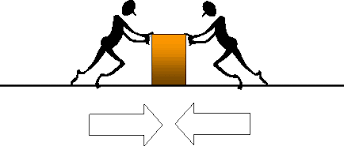
When 2 teams are in a tug of war game, and neither team is winning, what is the net force?

a)

100 N

b)

0 N

c)

50 N

d)

2 N

27.

A car moves along a level road.

The diagram shows all of the horizontal forces acting on the car.

Which statement is correct?

a)

The car is slowing down.

b)

The car is speeding up.

c)

The car is moving at a constant speed.

d)

The car is moving backwards.

28.

The diagram shows a tug-of-war between team X and team Y. The arrows show the forces exerted by the teams on the rope.

What is the size of the resultant force on the rope and in which direction does the resultant force act?

a)

size of resultant force = 75 N; direction of resultant force = to the left

b)

size of resultant force = 75 N; direction of resultant force = to the right.

c)

size of resultant force = 725 N; direction of resultant force = to the left

d)

size of resultant force = 725 N; direction of resultant force = to the right.

29.

Which property of an object cannot be changed by a force?

a)

mass

b)

motion

c)

shape

d)

size

30.

When forces are acting in the same direction they should be added together.

a)

True

b)

False

31.

Forces that are acting in opposite directions should be subtracted from each other.

a)

True

b)

False

32.

If the net force (Fnet) is 0, _____

a)

the forces are balanced.

b)

the object just keeps doing what it was doing.

c)

the object maintains its same speed and direction.

d)

the object maintains its velocity.

e)

the object does not speed up, slow down, or turn.

33.

If the net force is not 0, _____

a)

the forces are not balanced.

b)

the object changes what it is doing.

c)

the object changes its velocity.

d)

the object accelerates.

34.

The net force (Fnet) and the acceleration are always in the same direction.

a)

True

b)

False

35.

If the acceleration and velocity are in the same direction the object will _____.

a)

speed up

b)

slow down

c)

turn

36.

If the acceleration and the velocity are in opposite directions, the object will _____.

a)

speed up

b)

slow down

c)

turn

37.

If the acceleration and velocity are at angles to each other, the object will _____.

a)

speed up

b)

slow down

c)

turn

38.

The net force acting on the object is acting _____.

a)

to the right

b)

to the left

c)

up

d)

down

39.

The net force (Fnet) acting on the object is (a)   N.

40.

If the velocity of the object is to the right, the object will _____.

a)

speed up

b)

slow down

c)

turn

41.

If the velocity of the object is to the left, the object will _____.

a)

speed up

b)

slow down

c)

turn

42.

Which of the following are ways to accelerate?

a)

speed up

b)

slow down

c)

turn

43.

What is the resultant force?

a)

40 N left

b)

0 N Balalnced

c)

400 N right

d)

40 N right

44.
How will this object move? 
a)
It won't move. 
b)
It will move to the right. 
c)
It will move to the left. 
d)
It will move in both directions. 
45.

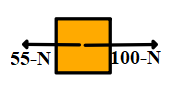
What is the resultant/ net force?

a)

30 N left

b)

25 N right

c)

5 N left

d)

55 N right

46.
You and your dad are moving the couch from one side to another. Your dad pushes with a force of 35 N to the right and you push with a force of 25 N right. What is the net force on the couch?
a)
60 N right
b)
10 N left
c)
60 n right
d)
50 N left
47.

What is the resultant/ net force?

a)

400 N Up

b)

400 N Down

c)

- 400 N Down

d)

800 N Down

48.

A balanced force is only an object that is not moving.

a)

True

b)

False

49.
Are forces balanced or unbalanced when a car is moving at a constant speed in a straight line?
a)
Balanced
b)
Unbalanced
50.
Are forces balanced or unbalanced when a marble rolls down a ramp?
a)
Balanced
b)
Unbalanced
51.
Are forces balanced or unbalanced when skateboarding down a ramp?
a)
Balanced
b)
Unbalanced
52.
What is a force?
a)
the PUSH or PULL on an object 
b)
The MOTION an object creates
c)
The objects HITTING one another
d)
Going REALLY FAST
53.
With unbalanced forces, the object will move in the direction of the _______ force.
a)
larger 
b)
smaller 
c)
equal 
54.
If there are two forces going in the SAME direction, you would ...?
a)
(-) Subtract the forces
b)
(+) Add the forces
c)
Neither
d)
(x) Multiply
55.

If there are two forces going in opposite directions how would you find the net force?

a)

Subtract

b)

Add

c)

Neither

d)

Multiply

56.
What is the net force?
a)
5.5 N left
b)
5.5 N right
c)
2.5 N left
d)
2.5 N right
57.
What is the net force?
a)
65 N left
b)
65 N right
c)
35 N left
d)
35 N right
58.
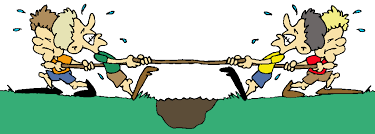
If these boys are pulling with the same amount of force.  What will happen?
a)
The boy in blue will win.
b)
They will not move at all.
c)
The boy in red will win.
d)
Both will fall down.
59.
What is the net force?
a)
4.2 N left
b)
4.2 N right
c)
2.2 N left
d)
2.2 N right
60.
What is the net force?
a)
11 N left
b)
11 N right
c)
3 N left
d)
3 N right
61.
What is the net force?
a)
3 N left
b)
3 N right
c)
7 N left
d)
7 N right
62.

Mr. Candler jumps off a table on to the floor. When he hits the floor, he decelerates at -45 m/s/s and his weight is 1100 N, What TOTAL force does the floor exert on Mr. Candler's legs.

a)

-49500 N

b)

49500 N

c)

6151 N

d)

5161 N

63.
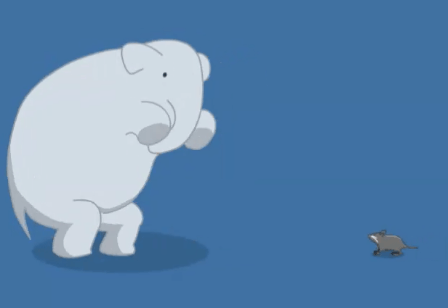
Which objects have a STRONG force of gravity?
a)
Objects with GREATER mass, like elephants
b)
Objects with LESS mass, like mice
64.
Two factors effecting the magnitude of the force of gravity between 2 objects are...
a)
mass and distance 
b)
mass and matter
c)
distance and weight 
d)
weight and mass
65.
What is the net force?
a)
20 N 
b)
0 N 
c)
400 N 
d)
40 N 
66.
What is the unit to MEASURE force?
a)
Kilogram
b)
Meter
c)
Pascal
d)
Newton
67.
If these teams are pulling with the same amount of force what will happen?
a)
The boy in blue will win.
b)
They will not move at all.
c)
The boy in red will win.
d)
Both will fall down.
68.
Balanced or unbalanced?
a)
balanced
b)
unbalanced
69.

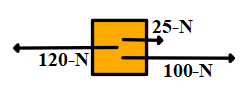
The free body diagram of four boxes are shown below. Which box is in equilibrium?
a)
b)
c)
d)
70.

______________ is a push or pull.

a)

evidence

b)

diagram

c)

force

d)

gravity

71.

A person’s body is thrown outward as a car rounds a curve on a highway.

a)

Newton's 1st Law

b)

Newton's 2nd Law

c)

Newton's 3rd Law

d)

None of them

72.
Rockets are launched into space using jet propulsion where exhaust accelerates out from the rocket and the rocket accelerates in an opposite direction.
a)
Newton's 1st Law
b)
Newton's 2nd Law
c)
Newton's 3rd Law
d)
None of them
73.
Pushing a child on a swing is easier than pushing an adult on the same swing, because the adult has more inertia.
a)
Newton's 1st Law
b)
Newton's 2nd Law
c)
Newton's 3rd Law
d)
None of them
74.
Acceleration is produced when a force acts on a mass. The greater the mass (of the object being accelerated) the greater the amount of force needed (to accelerate the object).
a)
Newton's 1st Law
b)
Newton's 2nd Law
c)
Newton's 3rd Law
d)
None of them
75.
A soccer ball accelerates more than a bowling ball when thrown with the same force.
a)
Newton's 1st Law
b)
Newton's 2nd Law
c)
Newton's 3rd Law
d)
None of them
76.
The swimmer moves her hand down and to the left and her body goes forward to the right.
a)
Newton's 1st Law
b)
Newton's 2nd Law
c)
Newton's 3rd Law
77.
The combination of all forces acting on an object is called __________
a)
Parallelogram Rule
b)
Net Force
c)
Vector Quantity
d)
All the Jedi's using their abilities together
78.
Equilibrium means _________
a)
being at rest
b)
traveling at light speed
c)
balance
d)
pushing or pulling
79.
What is the net force on a bathroom scale when a 110 lb person stands on it?
a)
110 lb is the supporting force
b)
100 N is the supporting force
c)
0 lbs, the scale is at rest. The scale reads the support force, not the net force.
d)
Fat
80.
For an object at rest on a horizontal surface, the __________  must equal the object's weight
a)
Net Force
b)
Support Force
c)
Force
d)
Equilibrium
81.
If the children are each 50 N, what must be the tension of one of the ropes?
a)
100N
b)
50 N
c)
100 lbs
d)
50 lbs
82.
The four fundamental forces of nature are: 
a)
Electromagnetism, Gravity, Strong Nuclear, Weak Nuclear
b)
Gravity, Strong Nuclear, Weak Nuclear, Medium Nuclear
c)
Normal Force, Force due to gravity, Magnetism, Nuclear 
d)
Nuclear, Electricity, Gravity, Atomic 
83.
Rank the four fundamental forces of nature in order from weakest to strongest:  
a)
Electromagnetism, Gravity, Strong Nuclear, Weak Nuclear
b)
Weak Nuclear, Gravity, Electromagnetism, Strong Nuclear
c)
Gravity, Weak Nuclear,  Electromagnetism, Strong Nuclear
d)
Weak Nuclear, Electromagnetism, Gravity, Strong Nuclear
84.
A sled sliding on a flat, icy surface with a constant velocity is best described by
a)
Newton’s first law of motion for objects at rest.
b)
Newton’s first law of motion for objects in motion.
c)
Newton’s second law of motion.
d)
Newton’s third law of motion.
85.
A person steps out of the boat and onto the dock.  As the person moves forward onto the dock, the boat moves backward.  Which statement best describes the backward motion of the boat as the person steps forward?
a)
For every action there is an equal and opposite reaction.
b)
Every mass exerts a force on every other mass.
c)
An object at rest tends to stay at rest.
d)
Friction opposes the motion of an object.
86.
 267.5 N unbalanced force applied to push a stuffed chair across the room, causing an acceleration of 4.2 m/s2. What is the mass of the chair?
a)
26.75 kg
b)
63.69 kg 
c)
263.3 kg 
d)
1123.5 kg
87.
Which of these best describes why your weight (on Earth) would change on another planet?
a)
weight doesn’t change, no matter where you are
b)
different planets have different gravitational pulls
c)
In general, the smaller the planet, the greater weight
d)
dehydration effects on different planets change weight
88.
An empty truck and a fully loaded truck are next to each other at a traffic light. When the light turns green, the lighter truck increases speed more quickly. Which of these best explains this situations
a)
Newton's first law
b)
Newton's second law
c)
Newton's third law
d)
Conservation of momentum
89.
What is the name of the units that we measure force in?
a)
Einsteins 
b)
Newtons
c)
Kg
d)
Metres
90.
What will cause an object to move?
a)
Applied forces
b)
Balanced forces
c)
Unbalanced forces
91.
If an object is stationary (not moving) the forces acting upon it are _____________
a)
unbalanced
b)
weak
c)
balanced
d)
Hulk Smash!
92.
Which one is balanced?
a)
top
b)
bottom
c)
both
93.

A ____________ is a push or a pull on an object.

a)

friction

b)

force

c)

magnet

d)

gravity

94.
The sum of all forces acting on an object.
a)
Contact Force
b)
Balanced Force
c)
Unbalanced Force
d)
Net Force
95.

Suppose that an astronaut throws a baseball in outer space at a location far from significant influences of gravity and air resistance. One would expect that the baseball would ____.

a)

eventually stop since all objects ultimately "lose their steam"

b)

eventually stop as its inertia slowly becomes used up

c)

continue in motion with the same speed and direction

d)

either a, b, or c -- depending on whether the astronaut continues to push it

96.

All objects have inertia

a)

True

b)

False

97.

Inertia depends on ______

a)

Velocity

b)

Speed

c)

Distance

d)

Mass

98.

A skateboard rolls down a hill, reaches the level surface and eventually comes to a stop. The fact that the skateboard ultimately stops is best explained by ____.

a)

an unbalanced force would be required to keep the sled moving forward at constant speed

b)

the presence of an unbalanced force (e.g., friction) can cause a moving object to stop

c)

the presence of inertia causes it to stop

d)

the natural tendency of any object is to ultimately stop

99.

Mac and Tosh are arguing in the cafeteria. Mac says that if he flings the jello with a greater speed it will have a greater inertia. Tosh argues that inertia does NOT depend upon speed, but rather upon mass. Who is correct?

a)

Mac

b)

Tosh

c)

Neither

d)

Both

100.

More mass = More inertia

a)

True

b)

False

101.

the tendency of an object to resist a change in its motion

a)

acceleration

b)

inertia

c)

mass

d)

frame of reference

102.
Objects with greater _________ also have greater inertia.
a)
speed
b)
mass
c)
temperature
d)
friction
103.

A force has both strength and _____.

a)

power

b)

direction

c)

color

d)

balance

104.
Which of the following is a unit for acceleration?
a)
km/s
b)
m/s2
c)
mi/hr
d)
ft
105.
Acceleration only takes place when things speed up. 
a)
True
b)
False
106.
When a car goes around a corner at 20 mph, why do we say it  accelerates?
a)
The car is accelerating because of the velocity is constant
b)
The car accelerates because it's going 20 mph
c)
Cars always accelerate when they are in motion
d)
The car is accelerating because it's changing direction
107.
Acceleration only takes place when things speed up. 
a)
True
b)
False
108.
Acceleration can be classified as _______________
a)
Speeding up
b)
Slowing Down
c)
Changing directions
d)
All of the above
109.
This type of force resist motion between two surfaces that are pressed together
a)
contact
b)
gravity
c)
friction
110.
"For every action, there is an equal and opposite reaction."
a)
Newton's 1st Law
b)
Newton's 2nd Law
c)
Newton's 3rd Law
d)
Newton's 4th Law
111.
Force = Mass x Acceleration
a)
Newton's 1st Law
b)
Newton's 2nd Law
c)
Newton's 3rd Law
d)
Newton's 4th Law
112.
The tendency of an object to resist changes in its motion is...
a)
inertia
b)
force
c)
acceleration
d)
velocity
113.
The force that opposes motion between two surfaces in contact with each other.
a)
inertia
b)
friction
c)
momentum
d)
gravity
114.
A force that opposes motion between a surface in contact with the atmosphere.
a)
air resistance
b)
gravity
c)
momentum
d)
terminal velocity
115.
An automobile you are riding in suddenly stops, but you continue to go forward.
a)
Newton's
1st
Law of Motion
b)
Newton's
2nd
Law of Motion
c)
Newton's
3rd
Law of Motion
116.
You push against a wall and the wall is pushing back on you.
a)
Newton's
1st
Law of Motion
b)
Newton's
2nd
Law of Motion
c)
Newton's
3rd
Law of Motion
117.

What is the acceleration of a 50 kg object pushed with a force of 500 newtons?

a)

100 m/s2

b)

25,000 m/s2

c)

10 m/s2

d)

25 m/s2

118.
Which force produces a change in motion?
a)
unbalanced force
b)
balanced force
c)
gravitational force
d)
frictional force
119.
A crumpled piece of paper hits the ground before a flat sheet of paper because
a)
the acceleration of gravity is greater on the  crumpled paper.
b)
there is more air resistance against the flat paper.
c)
the crumpled paper is more massive
d)
the crumpled paper is less massive.
120.
A sled sliding on a flat, icy surface with a constant velocity is best described by
a)
Newton’s first law of motion for objects at rest.
b)
Newton’s first law of motion for objects in motion.
c)
Newton’s second law of motion.
d)
Newton’s third law of motion.
121.
The gravitational force of any object near Earth's surface is ____.
a)
unknown
b)
friction
c)
Newton's first law
d)
9.8 m/s2
122.
A magician pulls a tablecloth out from under dishes and glasses on a table without disturbing them.
a)
Newton's 1st Law
b)
Newton's 2nd Law
c)
Newton's 3rd Law
d)
None of them
123.

A pulling force exerted along a rope, string, wire, cable...

a)

Friction

b)

Gravity

c)

Normal

d)

Tension

124.

The gravitational attraction between an object and the Earth.

a)

Friction

b)

Weight

c)

Normal

d)

Tension

125.

Which of Newton's Laws describes the relationships between Force, mass and acceleration.

a)

1st

b)

2nd

c)

3rd

126.

Which of Newton's Laws says that objects tend to maintain a constant velocity unless acted on by an unbalanced force.

a)

1st

b)

2nd

c)

3rd

127.

Which of Newton's Laws states that forces always come in pairs that are equal and opposite to one another.

a)

1st

b)

2nd

c)

3rd

128.

A swimmer pushes backward on the water in order to move forward. This is an example of Newton's ________ Law.

a)

1st

b)

2nd

c)

3rd

129.

A shopping cart accelerates more slowly when full. This is an example of Newton's ________ Law.

a)

1st

b)

2nd

c)

3rd

130.

When a driver slams on the brakes, passengers fly forward. This is an example of Newton's ________ Law.

a)

1st

b)

2nd

c)

3rd

131.

A person is pushed forward into their seatbelt when a car stops. Which of Newton's Laws explains this?

a)

1st

b)

2nd

c)

2 and 3

d)

3rd

132.
What is Newton's First Law known as? The Law of
a)
Friction
b)
Mass
c)
Inertia
d)
Gravity
133.
What is Newton's First Law
a)
F=ma
b)
Every action has an equal and opposite reaction
c)
An object at rest stays at rest, an object in motion stays in motion. 
d)
Friction 
134.
What can a force do?
a)
all of the above
b)
start a motion
c)
stop a motion
d)
change the direction of the motion
135.
Which law explains why when you put a book on a table the table pushes on the book
a)
3rd law
b)
4th law
c)
1st law
d)
2nd law
136.
If you double the mass of an object with the same force apply on it, the acceleration will
a)
double
b)
cut in half
c)
the same
d)
zero
137.
What kind(s) of objects have inertia?
a)
all objects with mass
b)
only objects at rest
c)
only objects in motion
d)
only objects whose motion is being changed
138.
Which one needs a greater net force to move, a kilogram of feathers or a kilogram of iron? 
a)
feathers 
b)
iron
c)
same
d)
depends on their friction
139.
A book weighs 4 N. When held at rest in your hands, the net force on the book is
 
a)
0 N.
b)
 0.4 N.
c)
 4 N.
d)
 39 N.
140.
When a cannon fires a cannonball we observe Newton's third law. Which force is the reaction force?
a)
The cannon moving forward
b)
The cannonball moving forward
c)
The cannon moving backward
d)
The cannonball moving backward
141.
What is the difference between mass and weight?
a)
mass is how much matter is in an object, and weight is the gravitational pull on that object
b)
mass and weight are the same
c)
weight affects how much mass is in an object
d)
weight is determined by how many atoms make up an object
142.
What is the name of the units that we measure force in?
a)
Einsteins 
b)
Newtons
c)
Kg
d)
Metres
143.
An object at rest will remain at rest unless acted on by an unbalanced force. An object in motion continues in motion with the same speed and in the same direction unless acted upon by an unbalanced force.
a)
Newton's 1st Law
b)
Newton's 2nd Law
c)
Newton's 3rd Law
d)
None of them
144.
Acceleration is produced when a force acts on a mass. The greater the mass (of the object being accelerated) the greater the amount of force needed (to accelerate the object).
a)
Newton's 1st Law
b)
Newton's 2nd Law
c)
Newton's 3rd Law
d)
None of them
145.
For every action there is an equal and opposite reaction.
a)
Newton's 1st Law
b)
Newton's 2nd Law
c)
Newton's 3rd Law
d)
None of them