wayground logo

Free Printable Worksheets

Font size

S
M
L
XL
Worksheets

Science 10 Biology

Total questions: 149

Worksheet time: 3hrs 55mins

Name
Class
Date
1.
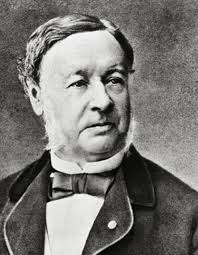
Which of the following scientists contributed to the cell theory?
a)
Rudolf Virchow, Robert Hooke, Anton van Leuwenhoek
b)
Matthais Schleiden, Theodor Schwann, Rudolf Virchow
c)
Robert Hooke, Theodor Schwann, Anton von Leuwenhoek
d)
Theodor Schwann, Matthais Schleiden, Robert HookeOption 4 (optional)
2.
Which of the following scientists concluded that all animals are made of cells?
a)
Rudolf Virchow
b)
Matthais Schleiden
c)
Robert Hooke
d)
Theodor Schwann
3.
Which of the following scientists was the first to observe bacteria?
a)
Anton van Leuwenhoek
b)
Matthais Schleiden
c)
Robert Hooke
d)
Theodor Schwann
4.
Which of the following statements is not part of the cell theory?
a)
Cells are the basic unit of structure and function in all living things.
b)
All cells are produced from other cells.
c)
Only animal cells are composed of cells.
d)
All living things are composed of cells.
5.
The invention of the microscope made it possible for people to discover and learn about
a)
Plants
b)
Skin 
c)
Animals 
d)
Cells
6.
What is one way in which all living things on Earth are alike?
a)
All living things have hair.
b)
All living things are made of cells and come from other cells.
c)
The cells of all living things have chloroplast.
d)
All living things can move. 
7.
What structures distinguish a plant cell from an animal cell?
a)
Plant cells have cell walls and ribosomes.
b)
Plant cells have cell walls and chloroplasts.
c)
Plant cells have chloroplasts and ribosomes.
d)
Plant cells have chloroplasts and mitochondria.
8.

What is A?

a)

Revolving Nose Piece

b)

Ocular Lens

c)

Objective Lens

d)

Light

9.

What is B?

a)

Light

b)

Arm

c)

Base

d)

Revolving Nose Piece

10.

What is C?

a)

Ocular Lens

b)

Stage

c)

Objective Lens

d)

Light

11.

The magnification produced by the objective lens and the eye lens of a compound microscope are 25 and 6 respectively. The magnifying power of this microscope is:

a)

19

b)

31

c)

150

d)

120

12.

A compound microscope has two lenses. The magnifying power of one is 5 and the combined magnifying power is 100. The magnifying power of the other lens is:

a)

10

b)

20

c)

50

d)

25

13.
a microscope with two lenses or sets of lenses
a)
Optical Microscope
b)
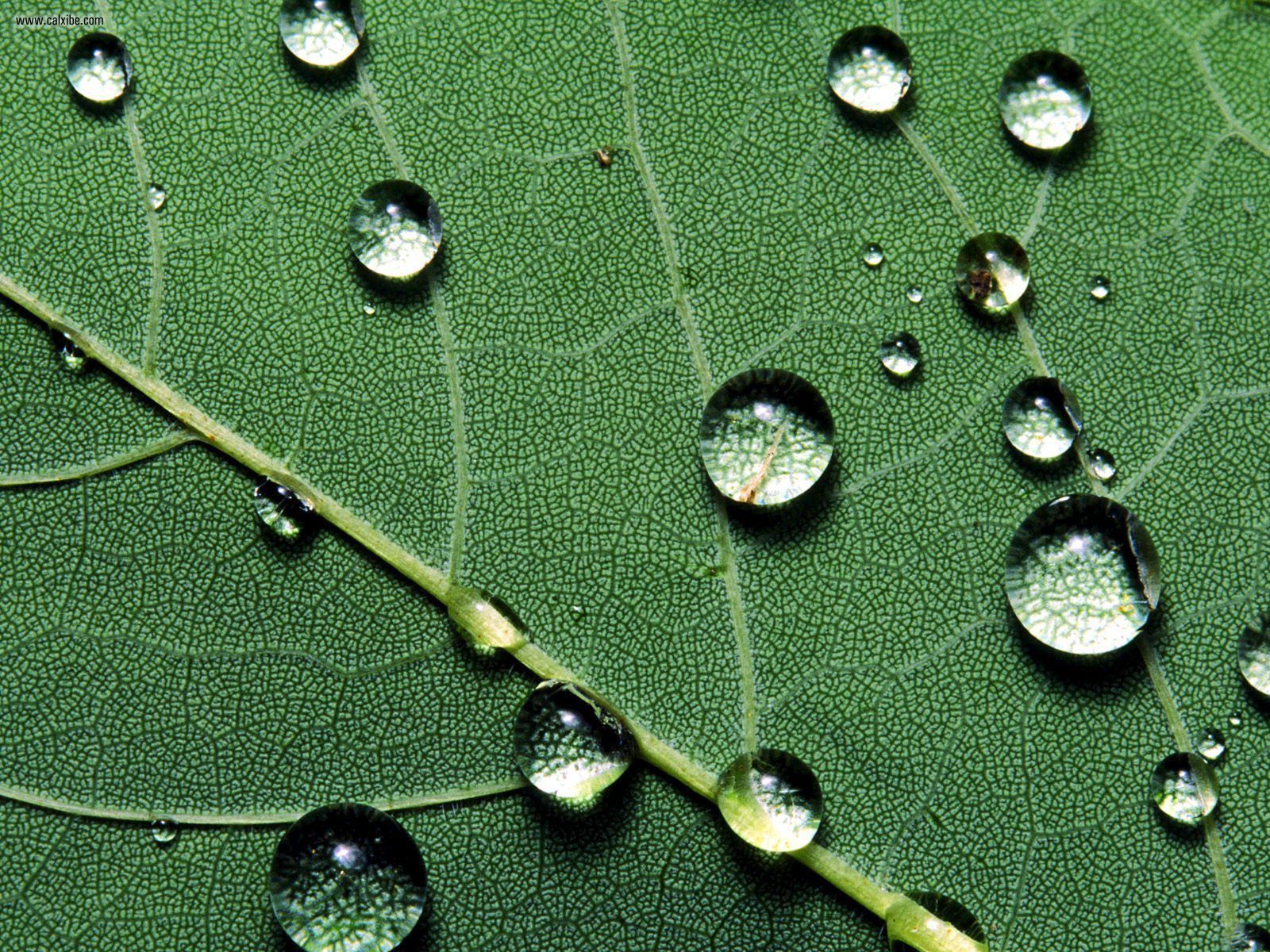
Electron Microscope
c)
Compound Microscope
d)
Simple Microscope
14.

What was the independent variable in Redi's experiment?

a)

The type of meat he put in the jars

b)

The amount of time in his experiment

c)

The type of covering on the jars containing meat

d)

The flies's eggs

15.

In Pasteur's experiment, which of the flasks had broth that remained clear? (no bacterial growth)

a)

Left flask

b)

Right flask

c)

Both flasks

d)

Neither flask

16.

In Pasteur's experiment, which of the flasks had broth that remained clear? (no bacterial growth)

a)

Left flask

b)

Right flask

c)

Both flasks

d)

Neither flask

17.
The ___ is the basic unit of structure and function of organisms
a)
Atom
b)
Cell
c)
Matter
d)
All of these
18.
Which microscope delivers the highest overall magnification possible?
a)
Scanning Electron (SEM)
b)
Transmission Electron Microscope (TEM)
c)
Light Microscope
d)
Dissecting Microscope
19.
Electron microscopes use a beam of _________________ to produce an image magnified up to 100,000 or more
a)
Sunlight
b)
Lasers
c)
Electrons
20.
Which of the following is a disadvantage of both the TEM and SEM?
a)
Low magnification
b)
Cannot observe living specimens
c)
High resolution
21.

This scientist named the nucleus.

a)

Brown

b)

Baur

c)

Galileo

d)

Virchow

22.
Which type of microscope is the MOST suitable for observing the surface of a virus?
a)
Transmission Electron Microscope
b)
Confocal Microscope
c)
Bright Field Microscope
d)
Scanning Electron Microscope
23.
What type of microscope was used to capture the image
a)
Dark Field Microscope
b)
Phase Contrast Microscope
c)
Bright Field Microscope
d)
Confocal Microscope
24.
Which electron microscope provides details of a cell's internal structures?
a)
Scanning Electron Microscope (SEM)
b)
Transmission Electron Microscope (TEM)
c)
Light Microscope
d)
Dissecting Microscope
25.
The higher the magnification, the ________ you see of the specimen.
a)
more
b)
less
c)
higher
d)
lower
26.

located on the stage, adjust the amount of light passing into the slides.

a)

objective

b)

base

c)

Nosepiece

d)

Diaphram

27.

Which organelle controls what goes in and out of the cell?

a)

nucleus

b)

nucleolus

c)

cell membrane

d)

nuclear membrane

28.

This organelle digests dead cell parts and contains enzymes

a)

lysosome

b)

golgi body

c)

smooth ER

d)

Rough ER

29.

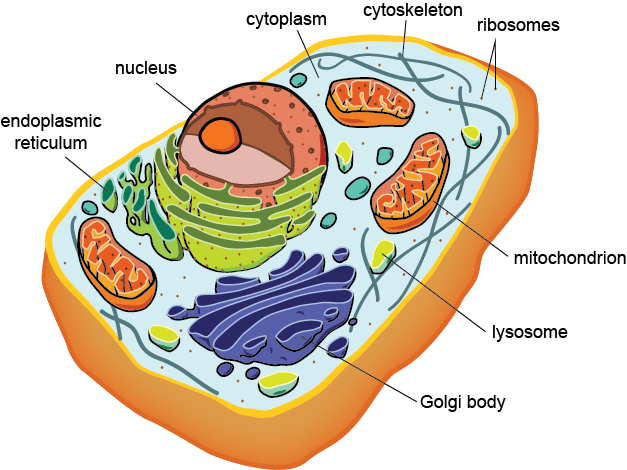
What organelle is represented by this image?

a)

rough endoplasmic reticulum

b)

smooth endoplasmic reticulum

c)

ribosome

d)

nucleus

30.

The jelly-like material inside the cell

a)

ribosomes

b)

lysosome

c)

granum

d)

cytoplasm

31.

Which organelle contains DNA and controls the cell?

a)

Cell membrane

b)

nucleus

c)

nucleolus

d)

lysosme

32.

What function does this organelle carry out in the cell?

a)

detoxification

b)

packaging materials for release from the cell

c)

breaking down old cellular components

d)

storing genetic material

33.

Proteins are produced at this organelle.

a)

golgi body

b)

ribosome

c)

cytoskeleton

d)

cilia

34.

This organelle makes useable energy for the cell

a)

chloroplast

b)

mitochondria

c)

ribosome

d)

nucleolus

35.

What is the function of this organelle?

a)

modify and build proteins

b)

break down proteins

c)

make lipids for the membrane

d)

store extra material, like water and food

36.

This organelle produces the microtubules used during cell division.

a)

lysosome

b)

centriole

c)

cytoplasm

d)

ribosome

37.

In _______ cells, the vacuole is large and located in the center of the cell.

a)

plant

b)

animal

c)

both plant and animal

d)

all

38.

Which of the images below represents a chloroplast?

a)
b)
c)
d)
39.

Ribosomes are produced here

a)

nucleus

b)

nuclear membrane

c)

nucleolus

d)

chromosomes

40.

This structure provides protection to plant cells and is made of cellulose.

a)

chloroplast

b)

cell membrane

c)

cell wall

d)

cytoplasm

41.

Which organelle is this?

a)

Golgi Apparatus

b)

Mitochondria

c)

Nucleus

d)

Chloroplast

42.

Which organelle is only found in animal cells?

a)

cytoplasm

b)

vacuole

c)

centriole

d)

ribosome

43.

This organelle makes lipids for the cell.

a)

Rough ER

b)

Smooth ER

c)

Golgi body

d)

nucleus

44.

What organelle does this image represent?

a)

Golgi Apparatus

b)

Ribosome

c)

Mitochondria

d)

Chloroplast

45.

Which 2 organelles are involved in the making of a protein?

a)

Ribosome

b)

Lysosome

c)

Rough Endoplasmic Reticulum

d)

Smooth Endoplasmic Reticulum

46.

Which of the following organelles is found only in a plant cell?

a)

mitochondria

b)

chloroplast

c)

centrioles

d)

vacuole

47.
Which organelle controls what comes in and out of a cell?
a)
cell membrane
b)
nucleolus
c)
cell wall
d)
ribosomes
48.
Which organelle controls what comes in and out of a cell?
a)
cell membrane
b)
nucleolus
c)
cell wall
d)
ribosomes
49.

What is the "big idea" of the Fluid Mosaic Model of plasma membranes?

a)

the plasma membrane creates a specialized FLUID that looks like a MOSAIC.

b)

the plasma membrane is a MOSAIC.

c)

the fluid mosaic model is NOT related to the plasma membrane.

d)

a plasma membrane is a MOSAIC of components that move FREELY and FLUIDLY.

50.

Describes the arrangement of the cell membrane as bendable and made of many parts.

a)

the fluid mosaic model

b)

the major mobility model

c)

the crazy cell model

d)

the cell theroy model

51.
What is the diffusion of water only across a cell or semi-permeable membrane?
a)
Osmosis
b)
Diffusion
c)
Active Transport
d)
Passive Transport
52.
What type of cellular transport uses energy?
a)
Passive Transport
b)
Active Transport
53.
In which case would a cell most likely shrink?
a)
when placed in a solution containing a high salt concentration
b)
when placed in a isotonic solution
c)
when placed in a solution containing a low pH
d)
when placed in a solution containing distilled water
54.
Active transport requires energy because...
a)
The cell is moving something against a concentration gradient
b)
The cell is moving something with a concentration gradient
55.
A student noticed that placing wilted lettuce in a bowl of cool water caused the lettuce to become more crisp and firm. What is the best explanation for his observation?
a)
Water moved into the lettuce cells by active transport.
b)
Water moved into the lettuce cells by osmosis.
c)
Salt moved into the lettuce cells by diffusion.
d)
Water moved out of the lettuce cells by osmosis.
56.
_______ regulates what enters and leaves a cell.  
a)
Cell Membrane
b)
Nucleus
c)
Mitochondria
d)
Cytoplasm
57.

Diffusion & Facilitated Diffusion are both __________ transport.

a)

Passive

b)

Active

c)

Easy

d)

Free

58.

Passive Transport is the movement of particles across the membrane from an area of [ ___ ] to an area of [ ___ ]

a)

high to low

b)

low to high

c)

low to low

d)

high to high

59.

Passive Transport uses ____ energy

a)

no

b)

a lot of

c)

a little bit of

d)

some

60.

_____________ is the free movement of particles across the membrane with the concentration gradient

a)

diffusion

b)

facilitated diffusion

c)

active transport

d)

fusion

61.

What is the movement of particles with the concentration gradient using protein "helpers"?

a)

diffusion

b)

facilitated diffusion

c)

active transport

d)

enzymatic reactions

62.

What is the movement of particles with the concentration gradient using protein "helpers"?

a)

diffusion

b)

facilitated diffusion

c)

active transport

d)

enzymatic reactions

63.

Facilitated diffusion needs what to get particles from one side of the membrane to the other?

a)

a membrane-spanning protein

b)

a surface protein

c)

a phospholipid

d)

a carbohydrate

64.

What is a difference between diffusion and facilitated diffusion?

a)

movement of particles from [high] to [low]

b)

a protein "helper"

c)

movement of particles from [low] to [high]

d)

energy

65.

The condition in which all acting influences are balanced.

a)

equilibrium

b)

dynamic equilibrium

c)

net movement

66.

occurs when the concentration of particles is higher in one area than another.

a)

concentration gradient

b)

concentration

c)

[high] --> [low]

67.

The cell membrane is selectively permeable, which means...

a)

All materials can enter and leave the cell

b)

Certain things can enter while others cannot

c)

The cell manually sorts through all materials

68.
A can of air freshener is sprayed in the opposite side of the room.  Ten minutes later you start to smell the scent.  This is an example of 
a)
diffusion
b)
active transport
c)
endocytosis
d)
osmosis
69.

Against the concentration gradient

low to high uses energy/ATP

a)

facilitated diffusion

b)

osmosis

c)

active transport

d)

simple diffusion

70.
The diffusion of WATER across a semi-permeable membrane is
a)
osmosis
b)
diffusion
c)
endocytosis
d)
exocytosis
71.
The picture is an example of _________________.
a)
osmosis
b)
isotonic
c)
diffusion
d)
active transport
72.
In this image, the cell is using which type of molecular transport?
a)
Osmosis
b)
Diffusion 
c)
Endocytosis
d)
Exocytosis 
73.
A type of active transport that releases particles that were enclosed from a cell when the membrane of the vesicle fuses with that of the cell membrane
a)
Exocytosis
b)
Osmosis
c)
Mitosis
d)
Endoyctosis
74.

Identify the following structure

a)

Phospholipid

b)

Cell

c)

Cell membrane

d)

Protein

75.

What is the name of 'D' found on the structure below

a)

Lipid hydrophobic tails

b)

Protein

c)

Lipid bi layer

d)

Phosphate hydrophilic heads

76.
The cell below is in a _________ solution.
a)
Hypotonic
b)
Hypertonic
c)
Isotonic
77.
The cell below is in a _____________ solution.
a)
Hypertonic
b)
Hypotonic
c)
Isotonic
78.
This picture represents what type of cell transport?
a)
endocytosis
b)
exocytosis
c)
osmosis
d)
passive transport
79.
This picture represents which type of cellular transport?
a)
passive transport
b)
endocytosis
c)
exocytosis
d)
osmosis
80.
Endocytosis is defined as
a)
the movement of large molecules from the inside of the cell to the outisde of the cell using channel proteins. 
b)
the movement of large molecules from the inside of the cell to the outisde of the cell membrane vesciles. 
c)
 the movement of large molecules from the outside of the cell to the inside of the cell using membrane vesciles.
d)
the movement of large molecules from the outside of the cell to the inside of the cell using channel proteins. 
81.

What is shown in this image?

a)

Cell Membrane

b)

Micelle

c)

Liposome

82.

For this vocabulary assignment, you all will need to look up the definitions for the vocabulary words below using Google (or another search engine of your choice) and then you need to write out the answer in YOUR OWN WORDS (paraphrase). Do not simply copy/paste the definitions or you will NOT receive full credit for the assignment.


Do you understand the instructions presented above?

a)

Yes, I understand.

b)

No, I do not understand.

c)

When is lunch?

83.

What is a Hemodialysis?

a)

It is a procedure that recycles blood

b)

A procedure where a dialyzer is used to clean your blood

c)

After the procedure the patient''s blood is not free from toxins

84.
Define Surface area
a)
The total area on the surface of an object
b)
Length X Width 
c)
6 X (length X width)
d)
Add up the sides and divide by 4
85.
How can surface area (SA) be increased? 
a)
Grow larger
b)
Divide into smaller pieces
86.
The amount of space something takes up is called the.... 
a)
Surface area
b)
Perimeter 
c)
Volume
d)
Weight
87.
For cells to stay alive they require what type of SA:V?
a)
Large SA, Large V
b)
Small SA, Large V
c)
Large SA, Small V
d)
Small SA, Small V
88.
Which best describes a difference between a unicellular organism and a multicellular organism?
a)
A unicellular organism is a plant and a multicellular organism is a human.
b)
A unicellular organism has one purpose- to survive.  A multicellular organism has many cells working together to keep the organism alive.
c)
A multicellular organism is simple and a unicellular organism is complex.
d)
A unicellular organism can only be found in certain biomes but a multicellular organism can be found anywhere on Earth.
89.
Which is an example of a single-celled organism?
a)
bird
b)
cricket
c)
snake
d)
bacteria
90.
Which best explains how a single-celled organism can survive without other cells?
a)
They do not need any substance from outside of the cell.
b)
They are able to perform all necessary functions within one cell. 
c)
They do not need to perform more than one function to survive.
d)
They can't survive without other cells.
91.
Fish are multi-celled organisms with specialized cells. What would most likely happen if their specialized cells did not function properly?
a)
The fish would increase in size.
b)
The fish would decrease in size.
c)
The fish would die.
d)
The fish would grow and thrive.
92.
Which best explains why humans are multicellular organisms?
a)
Human cells are too small to function alone.
b)
Human cells join together to form one large cell.
c)
Humans need many cells to carry out life processes.
d)
Humans have many systems that perform the same function.
93.

When a plant starts to grow towards the bright sunlight that is shining through the side of a window, which characteristic of life is being shown?

a)

ability to reproduce

b)

adapt to environment

c)

organization

d)

none of the above

94.
Which statement would most likely be found in an article about multi-celled organisms like plants?
a)
Plants have a simple structure.
b)
Plants contain only one cell that performs all functions.
c)
Plants do not need to eat, remove waste, or reproduce.
d)
Plants contain many specialized cells that perform different functions.
95.
How are single-celled organisms and multi-celled organisms similar?
a)
Both need food for energy and growth.
b)
Both have a skeletal system for support.
c)
Both require the interaction of many cells to survive.
d)
Both are able to carry out all life functions in only one cell.
96.
Fungi, Plants, and Animals
a)
Unicellular organisms 
b)
Multicellular organisms
97.

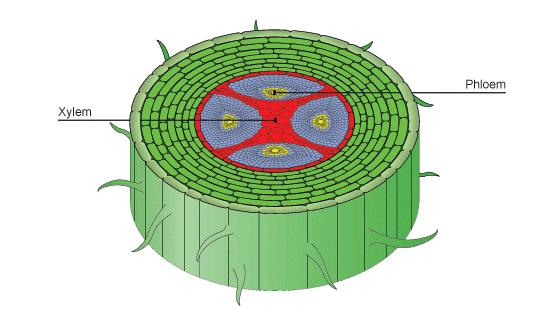
Specific type of plant tissue that transports water and minerals from the roots, through the stems, to leaves

a)

vascular plant

b)

nonvascular plant

c)

xylem

d)

phloem

98.

Specific type of plant tissue that transports food (sugar) made in the leaves to the entire plant

a)

vascular plant

b)

nonvascular plant

c)

xylem

d)

phloem

99.

Other than transporting water, what is a function of xylem?

a)

making food

b)

transporting food

c)

helping support the plant

d)

catching light

100.

Sieve tubes and companion cells are present in

a)

xylem

b)

phloem

c)

cambium

d)

cork

101.

Xylem and phloem are examples of

a)

epidermal tissue

b)

connective tissue

c)

protective tissue

d)

vascular tissue

102.

A tissue whose cells are capable of dividing and re-dividing is called

a)

complex tissue

b)

permanent tissue

c)

connective tissue

d)

meristematic tissue

103.
What is a tissue
a)
A group of cells that share a common goal
b)
a tissue that has a function
c)
A group of cells that share a common function, structure or both
d)
A group of cells
104.
What tissue type defends the plant from physical damage and pathogens?
a)
Ground tissue
b)
Protective tissue
c)
Vascular tissue
d)
Dermal tissue
105.
Tissue in a plant that is neither vascular nor dermal is
a)
Vascular tissue
b)
Ground tissue
c)
Filler tissue
d)
Dermal tissue
106.

#1 - outermost layer and not made of cells; helps regulate water loss.

a)

Epidermal cells

b)

Palisade cells

c)

Xylem cells

d)

Waxy cuticle

107.

#2 & #5 - outermost layer of cells; provides protection from outside elements.

a)

Epidermal cells

b)

Palisade cells

c)

Phloem cells

d)

Waxy cuticle

108.

#3 - layer of tall, columnar cells that contain many chloroplast for photosynthesis

a)

Epidermal cells

b)

Guard cells

c)

Pallisade mesophyll

d)

Spongy mesophyll

109.

#4 - layer of irregular cells with space in between the cells

a)

Pallisade mesophyll

b)

Phloem

c)

Spongy mesophyll

d)

Xylem

110.

#6 - porous opening in the bottom of the leaf that allows for gaseous exchange

a)

Pallisade mesophyll

b)

Spongy mesophyll

c)

Stomata

d)

Vein

111.

#7 - two cells that surround each porous opening; regulates gaseous exchange by opening and closing the pore.

a)

Epidermal cells

b)

Guard cells

c)

Stomata cells

d)

Xylem cells

112.

#8 - Cell tissue that makes up part of each vein that transports glucose and nutrients throughout the plant

a)

Epidermal cells

b)

Guard cells

c)

Phloem cells

d)

Xylem cells

113.

#9 - Cell tissue that makes up part of each vein that transports water throughout the plant

a)

Epidermal cells

b)

Guard cells

c)

Phloem cells

d)

Xylem cells

114.
The important gases, carbon dioxide and oxygen, enter and leave the leaf through the
a)
upper epidermis
b)
phloem
c)
stomata
d)
guard cells
115.
Which structures open and close stomata to allow gas exchange but prevent water loss in leaves?
a)
Epidermis
b)
Vascular tissue
c)
Guard cells
d)
Spongy mesophyll
116.
Which structure helps prevent water loss and protects the leaf?
a)
Palisades mesophyll
b)
Spongy mesophyll
c)
Vascular tissue
d)
Cuticle
117.
Which of the following is not a reactant in photosynthesis
a)
H2O
b)
Light Energy
c)
CO2
d)
O2
118.
A plant native to which of the following biomes is likely to have the thickest cuticle?
a)
Tropical Rainforest
b)
Desert
c)
Wetlands
d)
Temperate Grasslands
119.

In which organelle does photosynthesis occur?

a)

Cell Wall

b)

Chlorophyll

c)

Chloroplast

d)

Cytoplasm

120.

What are the end products of photosynthesis?

a)

Carbon Dioxide and Water

b)

Glucose and Carbon Dioxide

c)

Oxygen and Glucose

d)

Water and Glucose

121.

Which of the following are reactants of photosynthesis?

a)

CO2 and H2O

b)

O2

c)

H2O and Glucose

d)

None of the above

122.
____________________ provides the energy necessary for photosynthesis.
a)
water
b)
sunlight
c)
glucose
d)
soil
123.
The plant tissue that carries food materials DOWNWARD from the leaves to the rest of the pant is the ______.
a)
Phloem
b)
Stomata
c)
Chlorophyll
d)
Xylem
124.
Vascular tissue that transports water and minerals UPWARDS from a plant's roots is know as ______.
a)
Chlorophyll
b)
Phloem
c)
Stomata
d)
Xylem
125.
Plant absorbs water through the _________. 
a)
stem
b)
roots 
c)
leaves 
d)
all of the above
126.
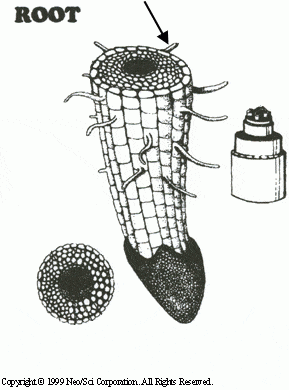
What is the name of the part of the root that allows water and minerals enter?
a)
root hairs
b)
epidermis
c)
phloem
d)
phyla
127.
what is the function of root hair?
a)
it is place to store the food
b)
it has large surface area to absorb more water
128.
How do water enter the roots from the soil?
a)
diffusion
b)
osmosis
c)
transpiration
d)
active transport
129.
Water vapour exits a plant leaf by
a)
the stomata
b)
the epidermis
c)
the palisade cells
d)
the spongy mesophyll
130.
Transpiration is
a)
the movement of water through a plant from the roots up the stem
b)
the loss of water from the leaves of a plant by the process of evaporation
c)
the flow of water into plant roots by osmosis from the soil
d)
the process of minerals and sugars moving through plant veins
131.
What happens to the transpiration rate as light intensity increases?
a)
It increases
b)
It stays the same
c)
It decreases
132.
A plant growing in response to the sunlight. 
a)
Geotropism 
b)
Phototropism
c)
Thigmotropism
d)
Hydrotropism
133.
The shoot of a plant growing up. 
a)
Positive Geotropism 
b)
Negative Geotropism 
c)
Thigmotropism
d)
Hydrotropism
134.
The root of a plant growing down. 
a)
Positive Geotropism 
b)
Negative Geotropism 
c)
Thigmotropism
d)
Hydrotropism
135.
When a plant grows toward a stimuli it is known as:
a)
Positive
b)
Negative
136.
When the plant responds to light, it is known as:
a)
Phototropism
b)
Geotropism
c)
Thigmotropism
d)
Hydrotropism
137.

What happen to the osmotic pressure in sieve tube due to high concentration of sucrose?

a)

Increase

b)

Decrease

c)

No change

138.

In the pressure flow hypothesis of translocation, what causes the pressure?

a)

Root pressure

b)

The osmotic uptake of water by sieve tubes at the source

c)

The accumulation of minerals and water by the stele in the root

d)

The osmotic uptake of water by the sieve tubes of the sink
139.

Refer to the picture of water sticking to a leaf; this is occurring because of:

a)

Adhesion

b)

Cohesion

140.

Describe COHESION.

a)

Water molecules attracted to other substances.

b)

Water molecules climbing upwards against the force of gravity.

c)

Water molecules dissolving many substances because of its polarity.

d)

Water molecules attracted to other water molecules.

141.
What word describes when water is attracted to other substances?
a)
cohesion
b)
adhesion
c)
capillary action
d)
surface tension
142.
molecule in which opposite ends have opposite electric charges
a)
cohesion
b)
polar molecule
c)
hydrogen bond
d)
solution
143.

Which of the following is increased by staining a specimen?

a)

Contrast

b)

Resolution

c)

Magnification

d)

Clarity

144.

The ability to distinguish between two structures that a very close together.

a)

Contrast

b)

Resolution

c)

Magnification

d)

Clarity

145.

A system that exchanges both matter and energy.

a)

Open

b)

Closed

c)

Isolated

146.

A system that exchanges only energy.

a)

Open

b)

Closed

c)

Isolated

147.

A system that exchanges neither matter, nor energy.

a)

Open

b)

Closed

c)

Isolated

148.

The image shows a

a)

Liposome

b)

Micelle

c)

Cell

d)

Bacteria

149.

Perotineal dialysis

a)

Removes and replaces the blood from your body

b)

Inserts fluid through a catheter

c)

Swaps your old blood for new blood

d)

None of the above