
 Worksheets
H-Biology Midterm Review
Total questions: 154
Worksheet time: 3hrs 31mins
In animals, the process which results in haploid gametes is known as
meiosis
mitosis
fertilization
fission
After one primary sex cell in a human testis undergoes meiosis, the usual result is
four haploid cells
one haploid cell
one diploid cell
four diploid cells
Which process is most directly involved in the production of egg cells by a female frog?
meiosis
metamorphosis
regeneration
cleavage
Which organelle is the site of cellular respiration?
endoplasmic reticulum
mitochondria
ribosomes
chloroplast function
Which phrase best describes cellular respiration, a process that occurs continuously in the cells of organisms?
removal of oxygen from the cells of an organism
conversion of light energy into the chemical bond energy of organic molecules
transport of materials within cells and throughout the bodies of multicellular organisms
changing of stored chemical energy in food molecules to a form usable by organisms
Which statement best describes cellular respiration?
It occurs in animal cells but not in plant cells.
It converts energy in food into a more usable form.
It uses carbon dioxide and produces oxygen.
It stores energy in food molecules.
Centrioles are cell structures involved primarily in
cell division
storage of fats
enzyme production
cellular respiration
In animals, the organelles in which aerobic cellular respiration occurs are known as
ribosomes
chloroplasts
nuclear membranes
mitochondria
Aerobic cellular respiration requires an adequate supply of
oxygen
carbon dioxide
ethyl alcohol
starch
When do green plants carry on cellular respiration?
only during the night
only during the day
during both the night and the day
neither during the night nor during the day
ATP is a compound that is synthesized when
A) chemical bonds between carbon atoms are formed during photosynthesis
B) energy stored in chemical bonds is released during cellular respiration
C) energy stored in nitrogen is released, forming amino acids
D) digestive enzymes break amino acids into smaller parts

The graph below shows the progress of a biochemical reaction. What effect would an enzyme have on the reaction?
An enzyme would increase the amount of energy at Point 3.
An enzyme would increase the amount of energy needed at Point 1.
An enzyme would decrease the energy needed to move from Point 1 to Point 2.
An enzyme would cause the amount of energy at Point 1 and Point 3 to switch places.

Chitin is a polysaccharide found in the exoskeleton of insects. The diagram below shows a chitin monomer. To which major category of biological molecules does chitin belong?
A) proteins, because chitin forms the flexible joints of an insect's shell
B) nucleic acids, because chitin provides the blueprint for insect body plans
C) lipids, because chitin serves as an insect's insulation from the environment
D) carbohydrates, because chitin is used for structural support in the insect's external skeleton
Which of the following statements illustrates why carbon atoms are so important in living organisms?
Carbon atoms contain large stores of energy.
Carbon is found in most inorganic compounds.
Carbon atoms are polar which allows them to dissolve many compounds.
Carbon is able to bond to many other atoms to form large and complex molecules.
Which property of water allows it to travel such large distances from the roots of the redwood tree to the leaves?
molecular expansion
low molecular density
versatility as a solvent
cohesion and adhesion
A scientist grew an Elodea plant in a freshwater aquarium. She removed a leaf from the plant and placed the leaf in a hypertonic solution containing 8% salt in order to observe what happened to the cells within the leaf. When she looked at the cells under a microscope, she noticed that the cells in the leaf shrunk. Which statement best explains what caused the cells to shrink?
The hypertonic solution caused the water in the cell to move from the cytoplasm into the nucleus.
The salt moved from the hypertonic solution into the cell and chemically bonded with the water.
The salt within the cell moved through the cell membrane into the solution with the higher salt
The water within the cell moved through the cell membrane into the solution with the lower water concentration.
Which of the following correctly describes the function of the cell wall?
The cell wall provides rigid support and protection for the cell.
The cell wall is a network of fibers inside the cell that gives the cell its shape.
The cell wall is a barrier that allows certain substances into and out of the cell.
The cell wall is a series of folded membranes that produces and distributes proteins in the cell.

Which of the following structures are found in both plant and animal cells?
nucleus, cell wall, and cytoplasm
cell wall, nucleus, and mitochondrion
mitochondrion, cytoplasm, and nucleus
cytoplasm, mitochondrion, and cell wall

Which of the following metabolic processes uses the products of the reaction shown above as its reactants?
fermentation
glycolysis
photosynthesis
Cellular respiration
How are the processes of photosynthesis and cellular respiration interrelated?
Photosynthesis releases energy and cellular respiration stores energy.
Photosynthesis is unique to plants and cellular respiration is unique to animals.
The products of photosynthesis are carbon dioxide and water; cellular respiration produces oxygen and sugars.
Photosynthesis removes carbon dioxide from the atmosphere and cellular respiration releases carbon dioxide into the atmosphere.
Anaerobic respiration is considered to be less efficient than aerobic respiration because
less lactic acid is formed during anaerobic respiration than aerobic respiration
anaerobic respiration requires more oxygen than aerobic respiration
the net gain of ATP molecules is less in anaerobic respiration than in aerobic respiration
less energy is required during anaerobic respiration than aerobic respiration
The products of aerobic respiration in green plants are ATP and
lactic acid and oxygen
glucose and oxygen
carbon dioxide and water
carbon dioxide and ethyl alcohol
Which metabolic process is responsible for the muscle fatigue and cramping an athlete may experience after running a race?
alcoholic fermentation
dehydration synthesis
lactic acid fermentation
aerobic respiration
Which of the following statements best describes interphase?
Interphase is made up of the M and C phase and is the portion of the cell cycle where the nucleus divides.
Interphase is made up of the G1, S, and G2 phase and is the portion of the cell cycle where cellular contents are duplicated.
Interphase is made up of the G1, S, G2, M, and C phase and is the portion of the cell cycle where two new daughter cells are formed.
Interphase is made up of the C, G1, S, and G2 phase and is the portion of the cell cycle where the genetic information is exchanged between chromosomes during cell division.
Which of the following statements correctly describes the difference between the semiconservative model of DNA replication and the conservative model of DNA replication?
A) The semiconservative model states both strands of DNA remain together after replication and the conservative model states both strands separate.
B) The semiconservative model states single-stranded DNA strands are used as a template strand to create newly synthesized DNA strands and the conservative model states only one side is used as a template.
C) The semiconservative model states the DNA strands are randomly paired with a newly synthesized DNA strand and the conservative model states only new strands are paired.
D) The semiconservative model states the two original DNA strands separate and are used as template strands to create newly synthesized DNA strands and the conservative model states the two original strands remain together.
Which statement best explains how the genetic code is universal?
DNA sequences are unique for each species
The nucleotide ratios in the DNA molecule are different between species.
The shape of a DNA molecule is the same in different species.
A DNA sequence codes for the same proteins in different species.
During replication, the genetic material of an organism has developed an error which is now part of the genome in its gamete cells. What is the most likely result of this mutation?
A) Its offspring will inherit a new set of genetic material each generation
B) Its offspring will inherit the mutation if it does not prevent reproduction.
C) Its offspring will revert to the genetic material of an evolutionary ancestor.
D) Its offspring will revert to the original genetic material from the previous generation.
Which of the following statements is NOT part of the cell theory?
Cells come from existing cells.
Living things must contain one or more cells.
The cell is the basic building block of living things.
Cells have at least one nucleus, which contains DNA.
Following the cell division of a eukaryotic cell, the two daughter cells end up with the wrong number of chromosomes. One has one too many chromosomes and the other has one too few. During which phase of mitosis did this error likely occur?
anaphase
metaphase
prophase
telophase
Is ADP or ATP more like a fully charged battery, and why?
ADP, because it has three phosphate groups; breaking and reforming the bonds among them releases energy.
ADP, because it has two phosphate groups; breaking and reforming the bonds among them releases energy.
ATP, because it has three phosphate groups; breaking and reforming the bonds among them releases energy.
ATP, because it has two phosphate groups; breaking and reforming the bonds among them releases energy.
The process of protein synthesis can be compared to using a recipe to bake a cake, what does the cake represent?
DNA
Protein
Amino Acid
Enzyme
In biological systems, chemical energy can be stored in glucose or released and made available for use. Which of the following statements correctly describes how this energy is stored and then released for use?
Energy is stored in organic compounds during the process of cellular respiration and then released during the process of photosynthesis.
Energy is stored in organic compounds during the process of photosynthesis and then released during the process of cellular respiration.
Photosynthesis and cellular respiration are both responsible for storing energy in organic compounds and fermentation is responsible for releasing that energy.
Fermentation is responsible for storing energy in organic compounds while both photosynthesis and cellular respiration are responsible for releasing that energy.
Which of the following best describes the role of chlorophyll in photosynthesis?
Chlorophyll absorbs light energy to drive the synthesis of glucose.
Chlorophyll releases oxygen as a byproduct of cellular respiration.
Chlorophyll stores energy in the form of ATP.
Chlorophyll transports water from roots to leaves.
What is the function of a plant's stem?
To support the plant and transport nutrients and water between the plant's roots and leaves
To make the plant taller
To help the plant reproduce
To keep the plant in the ground

What is the function of the flower part of a plant?
help the plant reproduce
transport water to the leaves
make food for the plant
provide support for the plant

The diffusion of water vapor out of a leaf
transportation
transformation
transpiration
translocation
What is the function of roots in plants?
To carry water and food to the plant
To make the plant's food
To protect the seed
To anchor the plant in place and absorb water and nutrients from the soil
What is the function of stems in plants?
To support the leaves and carry water and food to the plant
To protect the seed
To make the plant's food
To carry water and food to the plant
What is the function of leaves in plants?
To make the plant's food
To protect the seed
To support the leaves and carry water and food to the plant
To carry water and food to the plant
What is the function of dermal tissues in plants?
To carry water and food to the plant
To make the plant's food
To support and store nutrients
To protect the plant
What is the function of vascular tissues in plants?
To add structural support
To move food down the plant
All of the above
To move water and nutrients up the plant
What is the function of ground tissues in plants?
To support and store nutrients
To add structural support
To move food down the plant
To move water and nutrients up the plant
Where is meristem tissue found in plants?
In the leaves and flowers of plants
In the stem and roots of plants
In the dermal tissues of plants
In the roots and tips of plants
What is the function of root hairs in plants?
To protect the root and aid in growth
To make the plant's food
To anchor the plant in the soil and aid in nutrient and water uptake
To carry water and food to the plant
What is the function of xylem in plants?
To add structural support
To move food down the plant
To move water and nutrients up the plant
To make the plant's food
What is the function of phloem in plants?
To add structural support
To move food down the plant
To move water and nutrients up the plant
To make the plant's food
What is the function of stomata in plants?
To make the plant's food
To protect the seed
To allow gas exchange
To carry water and food to the plant
This property of water that allows fluids to travel through narrow structures, such as the xylem and phloem is_____which allows capillary action to occur
polarity
a covalent bond
cohesion/adhesion
a hydrogen bond
These move between soil particles in order to maximize the surface area when finding water
taproot
fibrous root
root hairs
root cap
What is the function of the guard cells in plants?
To regulate the opening and closing of stomata
To make the plant's food
To carry water and food to the plant
To add structural support
Phloem and Xylem together make up the...
Ground Tissue
Vascular Tissue
Dermal Tissue
Cardiac Tissue

Identify the structure that is indicated by the arrow in the image.
cell wall
central vacuole
chloroplast
nucleus

Identify the structure that is indicated by the arrow in the image.
cell wall
central vacuole
chloroplast
cell membrane

The arrow is showing the fluid inside the cell that surrounds the cell organelles and gives the cell its shape. What is the arrow pointing to in the cell?
cytoplasm
mitochondria
ribosomes
nucleus

What organelle is this??
cell wall
chloroplast
mitochondria
nucleus
cell membrane

I make proteins for the cell. What am I?
ribosome
cell membrane
nucleus
chloroplast
Fill out the venn Diagram for plant and animal cells
Cell Wall
Mitochondria
Lysosome
Match the following the following organelle with its function
Golgi Apparatus
Packages up proteins for transport
Flagella
Whip like tail used for movement.
Plasma Membrane
Controls what enters and leaves the cell
Mitochondria
Produces energy inside the cell
This cell has a cell wall, nucleus, chloroplasts, and other organelles. What type of cell is it?
Plant
Animal
Prokaryotic
This cell has a cell wall, no nucleus, and no membrane bound organelles. What type of cell is it?
Plant
Animal
Prokaryotic
The _____________ holds the DNA, and controls the functions of eukaryotic cells.
Nucleus
Nuclear Membrane
Mitochondria
Chloroplast
If many of the ribosomes of a cell were destroyed, what effect would this most likely have on the cell?
The cell would not be able to create energy.
The cell would not be able to make proteins.
The cell would not e able to photosynthesize.
The cell would not be able to break down waste in the cell.

This organelle is the transportation network for the cell and moves materials around in the cell. What am I?
mitochondria
lysosomes
chloroplast
endoplasmic reticulum
Passive transport (a) require energy because it moves (b) the concentration gradient, from (c) .
Active transport (a) require energy because it moves (b) the concentration gradient, from (c) .
Why are diffusion and osmosis important to cells?
It allows them to take in materials/substances without using energy.
It allows them to reproduce.
It allows them to absorb sunlight.
It allows cells to use all energy.
Which type of passive transport focuses on the movement of water through the membrane?
Facilitated diffusion
Osmosis
Diffusion

What part of the cell regulates what can enter and leave the cell?


Materials enter and leave a cell due to openings in its
DNA
organelles
chromosomes
membrane

When a cell gets rid of large molecules by releasing them from vesicles to an area OUTSIDE the cell, it is called
magic
exocytosis
endocytosis

When a cell TAKES IN a substance by surrounding it with its cell membrane, it is called
diffusion
osmosis
exocytosis
endocytosis


The cell shrunk in size, which means it was placed in a ____ solution.
Isotonic
Hypertonic
Hypotonic


Which type of active transport is displayed?
Endocytosis
Exocytosis
Which type of solution makes a cell shrink?
Hypotonic
Hypertonic
Isotonic
Match the following

phospholipid

cell membrane proteins

phospholipid bilayer

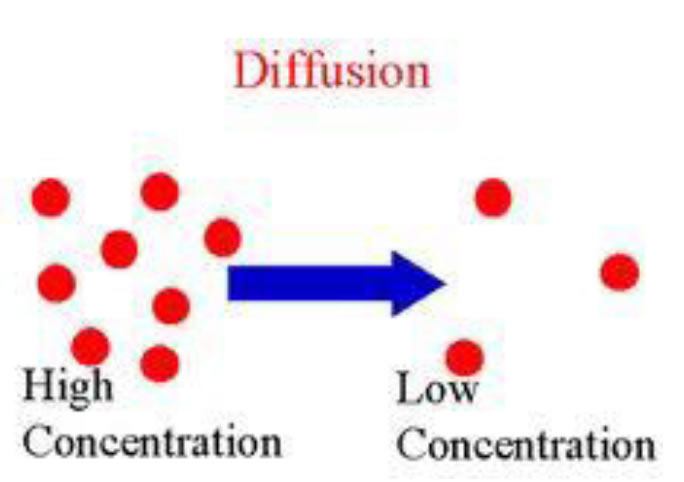


The movement of molecules from a place where there is a greater/higher concentration to an area where there is lesser/lower concentration is:
Homeostasis
Diffusion
Endocytosis
Active Transport
If a red blood cell is placed in a solution that has a concentration gradient higher than the red blood cell, this type of solution is called:
Isotonic
Hypotonic
Hypertonic
Homeotonic
If a red blood cell is placed in a hypotonic solution, it will eventually
shrink up
swell and burst
no change will occur
swell and not burst
All of the following statements can be used to describe osmosis, EXCEPT:
Osmosis is the movement of water molecules from an area of high concentration to an area of low concentration.
Osmosis is the diffusion of water.
Osmosis is a type of passive transport.
Osmosis requires energy in the form of ATP.
Diffusion is the movement of molecules from an area of (a) concentration to an area of (b) concentration.
Determine the tonicity


Organize these options into the right categories
Determine the Tonicity
(Each has 1 picture answer and 3 discrilptions)


Cells are in an environment in which solute concentration is high
Cells are in an environment in which solute concentration is low
Cells are in an environment in which solute concentration is the same inside/outside the cell
Water diffuses out of the cell
Water diffuses into the cell
Water diffuses into and out of the cell
Cell shrink / shrivel
Cell swell and can burst (lyse)
Cell is at normal functional size

In the cell pictured, where would water move?
Into the cell, causing it to swell
Out of the cell, causing it to shrink
In and out of the cell equally, causing the shape to stay the same

In the cell pictured, which way would water move?
Into the cell, causing the cell to swell
Out of the cell, causing the cell to shrink
In and out of the cell equally, keeping the shape the same

In the cell pictured, which way would water move?
Into the cell, causing the cell to swell
Out of the cell, causing the cell to shrink
In and out of the cell equally, keeping the shape the same


What is the role of mRNA
Carry an amino acid to the ribosome
Copy the instructions from DNA and carry it out of the nucleus
Make up the ribosomes
Where does Transcription occur
Nucleus
Ribosome
ER
Mitochondria
What is an anticodon?
rRNA
an amino acid
Three nucleotide sequence found on mRNA
Three nucleotide sequence found on tRNA
In what process is mRNA synthesized?
Transcription
Translation
DNA Replication
Mitosis

Which process does this diagram illustrate?
transcription
DNA replication
translation

Which anticodon would be placed in spot #2
GGC
CCA
GGA
GGT
Choose the sequence of the mRNA strand that would match up with to the following DNA strand:
GTACAT
CATGTA
GAUCUA
CAUGUA
CUTGTU

A copy of DNA has THE SAME number bases than the original. What type of mutation is MOST likely?
Insertion
Substitution
Deletion
Environmental

A copy of DNA has LESS bases than the original. What type of mutation is MOST likely?
Insertion
Substitution
Deletion
Environmental

Match the following
Original DNA strand and copy have the same number of bases
SUBSTITUTION
Copy strand of DNA has MORE bases
INSERTION
Copy strand of DNA has LESS bases than original
DELETION

Original Strand: ATACCG (6 bases)
Copy Strand: ATACGG (6 bases)
What type of mutation is this?
Substitution
Deletion
Insertion
GAG-CTC-GAC-AGA
Mutant
GAG CTC-CAC-AGA
Why are insertion and deletion (frameshift) mutations so harmful?
They change all of the codons from the mutation on down the line, which changes the amino acid sequence
They insert things that an organism doesn't need.
They often delete things that organisms need.
Insertion and deletions are not any more harmful than substitution mutations.
A mutation is defined as:
A change in the cell's structure
Anything that changes in an embryo
Any change in the physical features of a human
A change in the DNA sequence
Which of the following would result in a frameshift mutation?
Insertions only
Substitution only
Deletion only
Insertions and Deletions


Part of a chromosome is repeated
Gene Mutation
Point Mutation
Deletion Mutation
Duplication Mutation

What property describes the uneven charge of a water molecule? (has a negative and positive end)
Universal Solvent
Cohesion & Adhesion
High Specific Heat/Heat Capacity
Polarity
Less dense as a solid

What word describes when water is attracted to other substances?
cohesion
adhesion
capillary action
surface tension
the oxygen end
the hydrogen end
both ends are slightly positive
neither end is positive

Water is a universal solvent because:
It can be found anywhere
It freezes when it gets cold
It floats when frozen
It dissolves most substances

less polar
more polar
less dense
more dense

cohesion
polar molecule
hydrogen bond
solution

Covalent bonds
Ionic bonds
Polar bonds
Hydrogen bonds

nonpolar fats and oils
polar sugar molecules
salt made of a positive sodium ion and a negative chloride ion
all of the substances will dissolve easily in water

Blood functions as a transport mechanism to take nutrients and oxygen to all cells in the body. What property of water allows for this to occur?
Expansion Upon Freezing
Universal Solvent
Cohesive Behavior
Ability to Moderate Temperature
What is the charge of oxygen in a water molecule?
Positive
Negative
Neutral
Variable
What type of bonds form between water molecules?
Covalent bonds
Ionic bonds
Hydrogen bonds
Van der Waals forces
What property of water allows insects, like water striders, to skate on its surface?
Adhesion
Cohesion
Surface tension
Solvent power
Scientists frequently repeat the experiments of others scientists. Why is this important in science?
Scientists often ask each other for help in performing experiments.
Replication of experiments helps to confirm and verify results.
Scientists frequently perform other scientists’ experiments in order to practice their technique.
Repeating experiments is an effective way to make sure a laboratory is in optimal condition.
Kaylee reads an article that states that the frequency of chirping by crickets is related to the temperature of
their environment. She wants to conduct an experiment to see if this is true. Kaylee states this hypothesis:
Crickets chirp more frequently when the temperature of their environment increases. What is the test
variable (independent variable) and outcome variable (dependent variable) in Kaylee’s experiment?
a.test variable (independent variable): number of crickets; outcome variable (dependent variable): frequency of chirping
b. test variable (independent variable): temperature of environment; outcome variable (dependent variable): frequency of chirping
c. test variable (independent variable): number of crickets; outcome variable (dependent variable): temperature of environment
d. test variable (independent variable): frequency of chirping; outcome variable (dependent variable): temperature of environment


Match the following parts of an experiment set up
things kept the same in an experiment
controlled variables
factor the experimenter changes
independent variable
factor that is measured
dependent variable
does NOT receive the experiment treatment
control group
procedure done to test a hypothesis
experiment
a different scientist conducts the same experiment
replication
what will happen in the future based on evidence
prediction
doing multiple trials of the same experimet
repetition
interpreting the things you observe
inferring
examination to discover facts
investigation
Match the parts of a controlled experiment
finding patterns in the data
analysis
explains experiment results
conclusion
using senses to gather information
observation
doing multiple trials
repetition
If...then statement that gives a prediction of what will happen in the test
hypothesis



