wayground logo

Free Printable Worksheets

Font size

S
M
L
XL
Worksheets

Exam Revision

Total questions: 152

Worksheet time: 2hrs 10mins
Name
Class
Date
1.
Energy of motion is which type of energy?
a)
Potential
b)
Kinetic
c)
Sound
d)
Gravitational
2.
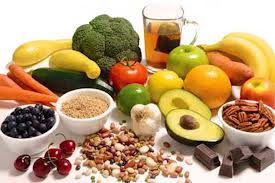
What type of energy is in this picture?
a)
Kinetic
b)
Potential
c)
Chemical
d)
Sound
3.
When plants convert the sun's energy into food, which type of energy is it?
a)
kinetic
b)
chemical
c)
thermal
d)
radiant
4.
What kind of energy is represented in this picture?
a)
Thermal
b)
Potential
c)
Nuclear
d)
Mechanical
5.
What kind of energy is represented in the picture?
a)
Thermal
b)
Chemical
c)
Sound
d)
Nuclear
6.
A battery converts what type of energy to another?
a)
sound to kinetic
b)
light to heat
c)
mechanical to electrical
d)
chemical to electrical
7.
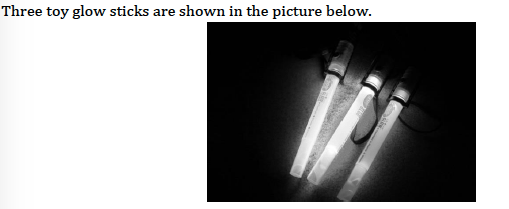
The glow sticks produce light for a short amount of time. The light from the glow stick is a conversion from what to what?
a)
thermal to light
b)
gravitational to potential
c)
radiant to electrical
d)
chemical to light
8.
What machine changes electrical energy into light and sound energy?
a)
battery
b)
lightbulb
c)
alarm clock
d)
apple
9.
On a roller coaster, where is maximum potential energy?
a)
At the bottom of a big hill
b)
When going around a corner
c)
When going upside down
d)
At the top of a big hill
10.
On a roller coaster, where is maximum kinetic energy?
a)
At the bottom of a big hill
b)
When going around a corner
c)
When going upside down
d)
At the top of a big hill
11.
According to which law of energy, energy can't be created or destroyed?
a)
First law of motion
b)
The law of tacos
c)
Laws of Energy
d)
law of conservation of energy
12.
What kind of energy is associated with vibrations?
a)
mechanical energy
b)
electrical energy
c)
light energy
d)
sound energy
13.
How does heat always transfer?
a)
from cold to hot
b)
from hot to cold
c)
from liquid to solid
d)
from gas to liquid
14.
What type of heat transfer does this picture represent? (pot touching burner)
a)
radiation
b)
conduction
c)
convection
d)
sunshine
15.
What type of heat transfer does this picture represent?
a)
radiation
b)
conduction
c)
convection
d)
sunburns
16.
What type of heat transfer does this picture represent?
a)
radiation
b)
conduction
c)
convection
d)
hot air balloons
17.
Which of the following would sound travel through the fastest?
a)
water
b)
oxygen
c)
wood
d)
koolaid
18.
Which of the following energy transformations occur when a lamp that is plugged into a wall socket is functioning correctly?
a)
Chemical to light
b)
Electrical to chemical
c)
Electrical to light
d)
Chemical to electrical
19.
Which of the following shows an energy transformation from chemical energy to electrical to light energy?
a)
A bolt of lightning lights the night sky.
b)
A candle glows brightly in the dark.
c)
A fire in a fireplace lights up a room.
d)
A battery causes a flashlight to shine.
20.
The diagram shows a complete circuit with a battery and a buzzer making noise. This circuit works by transforming -
a)
chemical energy to electrical to sound.
b)
electrical energy to thermal to light.
c)
sound energy to electrical to chemical.
d)
mechanical energy to electrical to sound.
21.
A television works by transforming electrical energy into what other kinds of energy?
a)
Light, thermal, and sound
b)
Thermal, chemical, and solar
c)
Sound, mechanical, and electrical
d)
Light, chemical, and mechanical
22.
Which of the following shows the correct order of the energy transformations that occur when green plants produce their food from the Sun’s energy?
a)
chemical to thermal
b)
light to chemical
c)
thermal to light
d)
chemical to electrical
23.
Which object is the best conductor of electricity?
a)
A ceramic mug
b)
A plastic fork
c)
A penny
d)
A wooden craft stick
24.
A girl turned the light off and went to bed.  She remembered she had accidentally left her glass of ice water on the counter.  When she got up the next morning, the ice had melted. What form of energy caused the ice to melt?
a)
Sound energy
b)
Light energy
c)
Thermal energy
d)
Mechanical energy
25.
Which form of energy is produced when a guitar string vibrates?
a)
Sound energy
b)
Electrical energy
c)
Chemical energy
d)
Light energy
26.
Conduction is heat transfer by -
a)
Touch
b)
Circles
c)
Waves
27.
Convection is heat transfer by-
a)
Touch an object
b)
The heating and cooling of a fluid
c)
Electromagnetic Waves
28.
Warm air rises and the cool air sinks demonstrates this type of heat transfer. 
a)
conduction
b)
convection
c)
radiation
d)
Insolation 
29.
The heat from a hot burner to a pot is transferred by ______.
a)
convection
b)
insulation
c)
radiation
d)
conduction
30.
When the 2nd story of a house is warmer than the 1st floor of a house is heat transfer through 
a)
conduction
b)
convection
c)
radiation
d)
thermal equilibrium
31.
The sun warming your skin is an example of heat transfer through 
a)
conduction
b)
convection
c)
radiation
d)
thermal electricity
32.
Heat transfer through electromagnetic waves is called 
a)
conduction
b)
convection
c)
radiaton
d)
thermal
33.
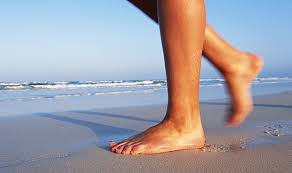
Walking on the warm sand sand with your bare feet demonstrates this type of heat transfer. 
a)
conduction
b)
convection
c)
radiation
34.
A group of friends gather around a fire to stay warm.
a)
conduction
b)
convection
c)
radiation
35.
Hot coffee is stirred with a spoon; the spoon gets hot due to
a)
conduction
b)
convection
c)
radiation
36.
What type of heat transfer takes place in solids?
a)
Conduction
b)
Convection
c)
Radiation
37.

What type of heat transfer takes place in liquids and gasses?

a)

Conduction

b)

Convection

c)

Radiation

d)

Thermal Equilibrium

38.
As you touch a hot stove the heat transfers -
a)
from your hand to the stove
b)
from the stove to your hand
c)
It doesn't transfer
39.
Which is more dense?
a)
Hot Liquid
b)
Cold Liquid
40.
What happens to particles as they heat up?
a)
They slow down
b)
Nothing
c)
They don't move
d)
They speed up
41.
Conductors are materials that...
a)
Allow heat to pass through
b)
Stop heat from passing through
c)
Allow cold to pass through
d)
Stop cold from passing through
42.
An object that doesn't conduct heat well is known as:
a)
a conductor
b)
an insulator
c)
conduction
d)
insulation
43.
According to the Law of Conservation of Energy, energy cannot be _________ or ____________. 
a)
destroyed, destroyed
b)
created, saved
c)
created, destroyed
d)
lost, found
44.
Energy transformations occur when...
a)
energy is created through conduction
b)
energy changes from one form to another
c)
two forces slide together that are touching
d)
a chemical reaction takes place
45.
Gravitational potential energy depends on the ________ and ________ of the object. 
a)
Height and mass
b)
Friction and movement
c)
Mass and Movement
d)
Height and Friction 
46.
The roller coaster cart has the most gravitational potential energy at position-
a)
W
b)
X
c)
Y
d)
Z
47.
what type of energy is stored in a battery?
a)
electrical
b)
chemical
c)
thermal
d)
mechanical
48.
In energy transformations, "wasted energy" usually takes what form?
a)
heat
b)
chemical energy
c)
light
d)
sound waves
49.

Earth’s nearest star (our Sun) radiates this type of energy.

a)

Solar

b)

Coal

c)

Propane

d)

Oil

50.

Energy Efficiency is calculated by useful energy (Energy Out) divided by energy consumed (Energy In) , expressed as a percentage

a)

False

b)

True

51.

What is the efficiency of a machine if 55.3 J of energy are consumed by the machine, but only 14.3 J of useful energy is produced by the machine?

a)

0.25 J

b)

26%

c)

386%

d)

3.86 J

52.

What is the efficiency of the machine if the input (energy consumed) is 263 J and the output (useful energy) is 142 J?

a)

6.26%

b)

54%

c)

100%

d)

260%

53.

How much energy is wasted by a machine if the energy consumed (input) is 263 J and the useful energy (output) is 142 J?

a)

405 J

b)

395 J

c)

121 J

d)

1.85 J

54.
Which direction will the heat flow while this person holds a hot cup of tea?
a)
from the cup to her hand
b)
from her hand to the cup
c)
no heat is transferred
55.
Which direction will the heat flow while this ice cap melts?
a)
there is no heat transfer
b)
from the icecap to the water
c)
from the water to the icecap
56.

Heat energy is also called ______ energy.

a)

chemical

b)

electrical

c)

mechanical

d)

thermal

57.
To increase the EFFICIENCY of energy use, we could...
a)
Turn off lights when not in use
b)
Keep the car running as you go into the store
c)
Water the plants in a drought
58.
Efficiency is...
a)
The percentage of energy that is actually used to do work
b)
The stuff in the walls that keeps energy in
59.

If fossil fuels are burnt what are the products formed?

a)

Water vapour

b)

Oxygen Gas

c)

Carbon Dioxide

d)

Methane

60.

What do most most metals have to be exposed to, to be able to corrode?

a)

Fossil Fuels

b)

Water

c)

Air

d)

Hydrogen

61.

A rusting reaction is best known as a...

a)

Oxidation Reaction

b)

Corrosive Reaction

c)

Exothermic Reaction

d)

Combustion Reaction

62.

Why does sherbet leave your tongue cold?

a)

Because it is cold

b)

An exothermic reaction has occurred

c)

Oxygen gas absorbs the heat

d)

An endothermic reaction absorbs the heat

63.

What is a burning reaction?

a)

Corrosion Reaction

b)

Oxidation Reaction

c)

Exothermic Reaction

d)

Combustion Reaction

64.

What substance is needed for combustion to occur?

a)

Oxygen

b)

Hydrogen

c)

Chemicals

d)

Acid

65.

What is anodising?

a)

When metal starts to rust

b)

Putting on a layer of protective oxide

c)

A bright blueish-greenish formed on copper or brass

d)

Loss of lustre

66.
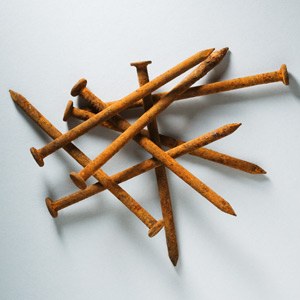
Is this an example of corrosion?
a)
Yes
b)
No
67.

Finish the sentence


During photosynthesis, plants take in...

a)

glucose, oxygen and water.

b)

sunlight, carbon dioxide and water.

c)

sunlight, oxygen and carbon dioxide.

68.

Finish the sentence:


During photosynthesis, plants give off...

a)

sunlight, water and carbon dioxide.

b)

glucose and carbon dioxide.

c)

glucose and oxygen.

69.

Fill in the blanks:


Aerobic respiration:


oxygen + ____________ = energy + carbon dioxide + water

a)

glucose

b)

photosynthesis

c)

carbon dioxide

70.

Fill in the blanks:


Aerobic respiration:


oxygen + glucose = ____________ + carbon dioxide + water

a)

water

b)

energy

c)

minerals

71.

Finish the sentence:


Plants absorb a gas called...

a)

oxygen.

b)

carbon dioxide.

c)

glucose.

72.

This process occurs in the chloroplasts of plant cells

a)

ATP

b)

Respiration

c)

Photosynthesis

d)

Calvin Cycle

73.

Photosynthesis creates

a)

Water

b)

Carbon Dioxide

c)

Glucose

d)

Chloroplasts

74.

In photosynthesis, what do carbon dioxide and water yield?

CO2 + H2O ->

a)

Glucose (C6H12O6)

b)

Water (H2O)

c)

Oxygen (O2)

d)

ATP

75.

In Respiration what do Glucose and Oxygen yield?

<- C6H12O6 + O2

a)

Glucose

b)

Oxygen

c)

Carbon Dioxide

d)

Water

e)

ATP

76.

Where does respiration occur within the cell?

a)

Mitochondria

b)

Guard Cell

c)

Stomata

d)

Chloroplasts

77.
All living things do which of the following?
a)
Chemosynthesis
b)
Respiration
c)
photosynthesis
d)
all of the answers
78.
Aerobic respiration is different from anaerobic respiration in that aerobic respiration needs...
a)
chlorophyll
b)
carbon dioxide
c)
glucose
d)
oxygen
79.
you breathe in oxygen for
a)
photosynthesis
b)
anaerobic respiration
c)
 fermentation
d)
aerobic respiration
80.
In which eukaryotic organelles does photosynthesis occur?
a)
mitochondria
b)
stomata
c)
xylem
d)
chloroplast
81.
Which gas is removed from the atmosphere during photosynthesis?
a)
hydrogen
b)
oxygen
c)
nitrogen
d)
carbon dioxide
82.
The main source of energy for all life comes from ____.
a)
the Earth
b)
the moon
c)
the sun
d)
the food we eat/make
83.
Photosynthesis and respiration are essentially the opposite of each other.
a)
True
b)
False
84.
Is burning wood a chemical or physical change?
a)
chemical
b)
physical
85.
Is glass breaking a chemical or phyiscal change?
a)
chemical
b)
physical
86.
Is hammering wood together to build a house a chemical or physical change?
a)
chemical
b)
physical
87.
Is a a rusting bicycle a chemical or physical change?
a)
chemcial
b)
physical
88.
Is melting butter for popcorn a chemical or physical change?
a)
chemical
b)
physical
89.
Is spoiling food a physical or chemical change?
a)
phyiscal
b)
chemical
90.
Is mixing lemonade powder with water a physical or chemical change?
a)
physical
b)
chemical
91.
Is corroding metal a chemical or physical change?
a)
physical
b)
chemical
92.
Are fireworks exploding a physical or chemical change?
a)
phyiscal 
b)
chemical
93.
Is sqeezing organges to make orange juice a phyical or chemcial change?
a)
physical
b)
chemical
94.
Is frying an egg a physical or chemical change?
a)
chemical
b)
physical
95.
Is burning toast a chemical or physical change?
a)
physical
b)
chemical
96.
Salt dissolves in water.
a)
Physical
b)
Chemical
97.
HCl (acid) reacts with NaOH (base) to produce NaCl (salt), H2O (water) and heat.
a)
Physical
b)
Chemical
98.
Water is heated and evaporates.
a)
Physical
b)
Chemical
99.
The change from liquid to solid, or the reverse of melting, is called:
a)
freezing
b)
condensation
c)
boiling
d)
sublimation
100.
The faster an object moves, the ________ kinetic energy it has. 
a)
more
b)
less
c)
none of the above
d)
all of the above 
101.
__________ is stored energy. 
a)
Potential
b)
Kinetic
c)
None of the above 
d)
All of the above 
102.
The change of state from a gas to a liquid
a)
condensation
b)
deposition
c)
evaporation
d)
sublimation
103.
Temperature at which matter changes from liquid to solid
a)
freezing point
b)
melting point
c)
boiling point
d)
absolute zero
104.
What is an example of sublimation?
a)
Ice cream melting
b)
Dry ice
105.
What is the definition of sublimation?
a)
a chemical process where a solid turns into a gas without going through a liquid stage
b)
the process of a liquid changing into a gas
106.
What happens during conduction?
a)
Energy is transferred from low temperature to high temperature
b)
The amount of energy is increased
c)
Both substances get hotter
d)
Energy is transferred from high temperature to low temperature
107.
What is a water molecule made of?
a)
1 Oxygen, 2 Hydrogen atoms
b)
1 Hydrogen, 2 Oxygen atoms
c)
Many different molecules of Hydrogen
d)
2 Oxygen, 1 Hydrogen atoms
108.
What happens when liquid water evaporates?
a)
Water molecules break apart into atoms
b)
The molecules bump past each other
c)
The molecules move faster and become gas
d)
The water increases in mass
109.
Why does hot water evaporate faster than room temperature water?
a)
Hot water molecules are lighter
b)
More water molecules move fast enough to break attractive forces
c)
Room temperature water has more mass
d)
The water molecules spread further apart
110.
What happens when water vapor condenses?
a)
Cooling water vapor causes molecules to move further apart
b)
Molecules slow down and their attractions bring them closer
c)
Colder temperatures speed up the molecules
d)
Water vapor is less dense than liquid water
111.
When water freezes, liquid water turns to solid ice because...
a)
Water molecules get harder
b)
Molecules move slowly enough that their attractions keep them fixed
c)
All liquid water eventually becomes ice
d)
Ice can float on water
112.
True or False: Adding energy has no effect on evaporation.
a)
True
b)
False
113.
What is the process that causes a substance to change from liquid to solid?
a)
Melting
b)
Freezing
c)
Evaporation
d)
Condensation
114.
True or False: Making water vapor colder increases the rate of condensation.
a)
True
b)
False
115.

What happens to a puddle of water on a hot, sunny day?

a)

It freezes.

b)

It condenses.

c)

It evaporates.

d)

It melts.

116.

A foggy mirror is an example of what process?

a)

Freezing

b)

Condensation

c)

Evaporation

d)

Melting

117.
compounds are chemically bounded together 
a)
False
b)
true
c)
I don't know?
118.
Can an element be broken down into a simpler substance 
a)
yes 
b)
No
119.
Are there any compounds on the periodic table 
a)
yes there are many 
b)
no because only elements are on the periodic table
c)
I think they are?
120.
Which one has more than one type of atom in it
a)
Element
b)
Compound 
121.
which one only has one type of atom In it.
a)
Element
b)
compound
122.
Is salt (NaCI) a compound or a element
a)
Compound
b)
element
123.
How many elements are represented in the compound?
Na2CO3
a)
1
b)
2
c)
3
d)
4
124.
Which of the following an element?
a)
Carbonic Acid
b)
Copper
c)
Iron and Copper
d)
Water
125.
Which of the following represents an element?
a)
H2O
b)
H2
c)
NaCl
d)
CaCO3
126.
Which of the following is not a compound?
a)
HCl
b)
Cl
c)
NaCl
d)
CO2
127.
Salt water boils and the water completely evaporates, salt (NaCl) is left in the bottom of the beaker. Which of the following is left in the beaker?
a)
Compound
b)
Element
c)
Mixture
d)
None of the Above
128.
Water is an example of:
a)
compound
b)
element
c)
solution
129.
A combination of substances that are not chemically combined is called a(n)____________. 
a)
mixture
b)
compound
c)
physical
130.
Mixtures are separated through ___________changes.
a)
mixture
b)
compound
c)
physical
131.
This picture represents which of the following?
a)
element
b)
compound
c)
mixture
132.
This picture represents which of the following?
a)
element
b)
compound
c)
mixture
133.
In general, metals are _____. 
a)
poor conductors of heat
b)
brittle
c)
poor conductors of electricity 
d)
good conductors of heat
134.
Vertical columns in the periodic table are called _________ of elements and have similar properties. 
a)
groups
b)
periods
135.
The horizontal rows on the periodic table are known as
a)
periods.
b)
atoms.
c)
groups or families.
d)
valence electrons.
136.
What is H2SO4 
 made up of?
a)
2 hydrogen, 1 sulfur, 4 oxygen
b)
1 hydrogen, 2 sulfur, 4 oxygen
c)
2 hydrogen & 4 sodium
d)
1 hydrogen & 6 sodium
137.
This diagram represents a _____.
a)
pure substance that is a compound
b)
mixture of elements
c)
pure substance that is an element
d)
mixture of compounds
138.
This diagram represents a _____.
a)
pure substance that is a compound
b)
mixture of elements
c)
pure substance that is an element
d)
mixture of compounds
139.
a)
Element
b)
Compound
c)
Mixture of compound and element
d)
Mixture of two elements
140.
A combination of particles of one or more substance that are distributed uniformly throughout another substance is a/an
a)
Mixture 
b)
Substance
c)
Solution
141.
To change a solid to a liquid, what do you add?
a)
heat
b)
water
c)
cold
d)
mass
142.
Mixtures are __________ combined.
a)
Chemically
b)
Physically
c)
Magically
d)
Spontaneously
143.
Based off of the image, what type of matter is shown?
a)
gas
b)
solid
c)
liquid
144.
Has a definite volume but no shape.
a)
Liquid
b)
Solid
c)
Gas
d)
Fluid
145.
What is the tiniest particle in the entire universe?
a)
cells
b)
gases
c)
atoms
d)
liquids
146.
What is the term for combining 2 or more atoms together?
a)
atoms
b)
elements
c)
molecules
d)
compounds
147.
What is the term for combining 2 or more DIFFERENT atoms together?
a)
atoms
b)
elements
c)
molecules
d)
compounds
148.
Are these molecules also compounds?
a)
YES
b)
NO
149.
Are these molecules also compounds?
a)
YES
b)
NO
150.
Which of the following atomic symbols is written correctly?
a)
ee
b)
hE
c)
C
d)
CL
151.
Which of the following chemical formulas represents a compound? 
a)
C3
b)
O2
c)
CH3CHO
d)
H2
152.
Which of these is an example of a molecule?
a)
a small nugget of pure gold
b)
the smallest grain of salt in a salt shaker
c)
 a small drop of sugar water
d)
two oxygen atoms joined to a carbon atom