
 Worksheets
CFE Review- Comprehensive Science 2
Total questions: 157
Worksheet time: 6hrs 43mins
The independent variable is also known as the _______ variable.
super
outcome
dependent
test
The dependent variable is also known as the _______ variable.
test
outcome
independent
varied
Which variable do we change in an experiment in order to test it?
outcome variable
independent variable
dependent variable
we don't change any variables
Which variable do we measure as the result of an experiment?
varied
dependent
independent
outlier
What's the dependent variable?


When organisms are better adapted to their environment they will survive and reproduce more successfully than organisms less adapted. This process is called —
selective breeding
natural selection
evolution of all species
cloning

Which best explains why the birds evolved with differently shaped beaks?
They interbred with each other.
Some birds had defective gene pools.
All of the birds ate the same type of food.
They adapted to eating different types of food.
An adaptation is
Body parts of different organisms that performs similar functions but do not have similar structures
The process by which species of organisms change over time
a trait that helps an organism survive in a particular setting
When you get bit by a spider and get cool Spider -senses
A vestigial structure is...
A cool new vest you can wear
a body part that does not seem to have a function in an organism.
an arrangement of and relations between the parts or elements of something complex
body parts of different organisms that have a similar structure but not necessarily a similar function
Evolution is
the process by which a species stays the same
the process by which a species dies off
the process by which a species changes over time
the process by which a species contracts a new disease
Structures that have similar functions but different origins (ex. Wings of a moth and wings of a bird are both for flying but they are entirely different structures)
analogous structures
homologous structures
vestigial structures
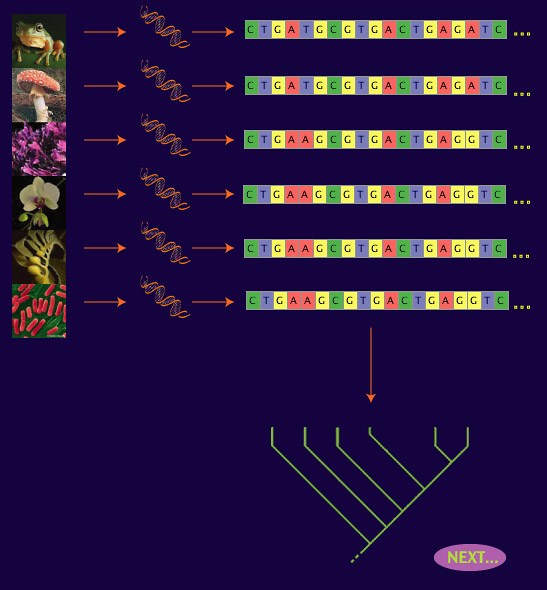

What do Fossils show us?
Exactly what dead organisms looked like
How much or how organisms have changed over time
How organisms have stayed the same
slight difference in an inherited trait of individual members of a species
variation
adaptation
trait
gene
body parts of organisms that are similar in structure and position but different in function
homologous structures
comparative anatomy
analogous structure
vestigial structure
Human arms, whale fins, and bat wings share the same number of bones in each place. Why?
They all need to be able to do the same thing with their limbs.
There is only one number of bones that all animals have in their limbs.
They share a common ancestor and diverged over time.
They lived in the same place and slowly developed the same number of bones.

Which of the following can be determined by observing the embryos shown in the diagram
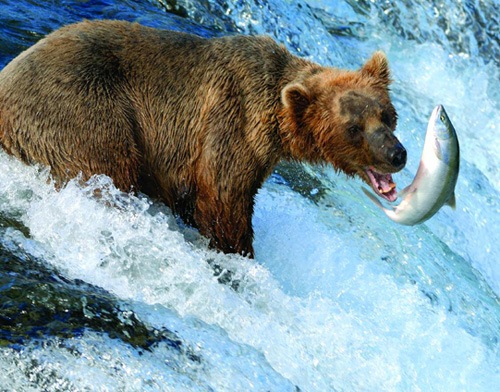
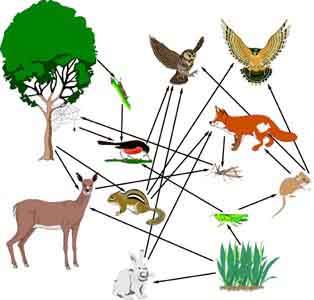


Grass > Grasshopper > Bird > Snake


What are genes?
Pants
Specific traits
Sections of DNA arranged along the chromosomes
Chromosomes

Genes, chromosomes, and DNA are important structures for processes related to heredity and reproduction. How are these structures related?
A. Many chromosomes make up a gene, and many genes make up DNA.
B. A chromosome is the same thing as a gene and both are made of DNA.
C. DNA is made up of chromosomes, and chromosomes are made of genes.
D. Genes are sections of DNA that make up a chromosome.
A
B
C
D
How many parents are required for sexual reproduction?
0
1
2
3
Meiosis results in _____.
4 haploid daughter cells
2 diploid daughter cells
2 haploid daughter cells
4 diploid daughter cells

Asexual reproduction is associated with what type of cell division?
Mitosis
Meiosis
In asexual reproduction, all of the offspring are:
Physically Identical
Genetically Identical
Physically and Genetically Identical
Not Identical

What is the type of cell division associated with sexual reproduction?
Mitosis
Meiosis
During mitosis the parent cell produces:
2 daughter cells with the same number of chromosomes as the parent cell.
2 daughter cells with the half the number of chromosomes as the parents cell.
4 daughter cells with the same number of chromosomes as the parent cell.
4 daughter cells with half the number of chromosomes as the parent cell.
During meiosis the parent cell produces:
2 daughter cells with the same number of chromosomes as the parent cell.
2 daughter cells with the half the number of chromosomes as the parents cell.
4 daughter cells with the same number of chromosomes as the parent cell.
4 daughter cells with half the number of chromosomes as the parent cell.
What is the type of reproduction that only requires one parent?
Asexual
Sexual

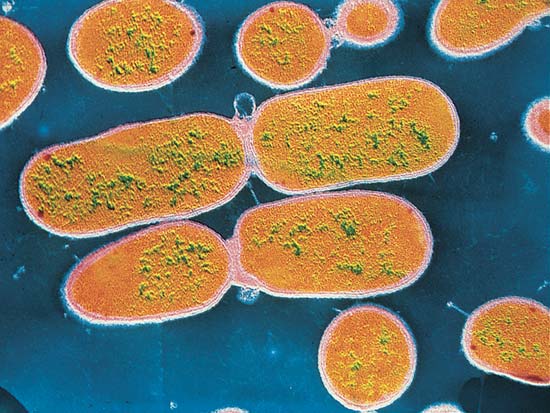
What type of cell division is illustrated in the picture?
Mitosis
Meiosis
The offspring of sexual reproduction are genetically _____________.
identical
the same
different
clones

The process on the right is:
Right: meiosis
Right: cloning
Right: meiosis
Right: mitosis
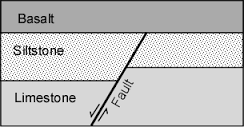


Which layer is OLDER? Layer M or Intrusion P?
Layer M
Intrusion P

Which layer is OLDER? Layer E or Intrusion A?
Layer E
Intrusion A

Which layer is OLDER? Fault E or Intrusion D?
Fault E
Intrusion D

What is the correct order of the rock layers from oldest to youngest?
F, E, C, B, A, D
F, E, D, C, B, A
A, B, C, D, E, F
D, F, E, C, B, A


This was the super continent, where all of the Earth’s continents were connected together
Beringia
Pantheon
Pangaea
Continentia

The Theory of Continental Drift states that Pangaea broke apart and the continents "drifted" away from each other
True
False

Which layer of the Earth consists of tectonic plates?
asthenosphere
mantle
mesosphere
lithosphere


What are the two (2) types of crust?
oceanic
continental
mantle
transform

Which is TRUE about the continental crust?
It is the thicker but less dense than oceanic crust
it is thinner than oceanic crust
it is denser than oceanic crust
it is thinner and more dense than the oceanic crust

Two plates come together or collide at what boundary?
Convergent
Divergent
Transform


Some volcanoes are formed without being near plate boundaries. These are known as _________ where magma escapes the Earth through cracks in the crust.

This type of Boundary results when plates separate
Divergent
Convergent
Transform

Two oceanic crusts diverge and create a ____________ (mountains under the ocean). New crust is created.
mid-ocean ridge
rift valley

What is the process happening at R?
Deep ocean trench
mid ocean ridge
subduction
sea floor spreading

What is seafloor spreading?
continental crust-continental crust
rift valleys
seafloor spreads
ocean spreads and magma rises to fill in gaps creating a Mid Ocean Ridge

This types of boundary results when plates slide past each other
Transform
Divergent
Convergent

What features is formed by this boundary type?
Earthquakes
Volcanoes
Rift valleys

Transform boundaries slip sideways past each other creating a __________. A large crack in the earth;s crust
Fault
Volcano

A general term for a relationship that describe a close interaction between two different species is known as what?
Biodiversity
Symbiosis
Predation
Emigration


Which of these would have the greatest mechanical potential energy?
A roller coaster at the top of a hill.
A roller coaster half-way up the hill.
A roller coaster half-way down the hill.
A roller coaster at the bottom of the hill.
Batteries are an example of which of the following forms of energy?
solar
thermal
chemical
mechanical

Water being released behind a dam is an example of what energy transformation?
chemical to heat
potential to kinetic
electrical to mechanical
solar to kinetic

Which of the following best describes the energy transformations that occur when a flashlight that runs on batteries is turned on?
chemical to mechanical to electrical to radiant
radiant to electrical to sound
chemical to radiant to mechanical to electrical
electric to radiant to chemical
The energy that travels in electromagnetic waves. It is also known as radiant energy.
Light
Electrical
Thermal
Energy that is stored in a system, ready to be used, is called ____________ energy.
Kinetic
Potential
Conserved
Power
What are genes?
Pants
Specific traits
Sections of DNA arranged along the chromosomes
Chromosomes

Genes, chromosomes, and DNA are important structures for processes related to heredity and reproduction. How are these structures related?
A. Many chromosomes make up a gene, and many genes make up DNA.
B. A chromosome is the same thing as a gene and both are made of DNA.
C. DNA is made up of chromosomes, and chromosomes are made of genes.
D. Genes are sections of DNA that make up a chromosome.
A
B
C
D
How many parents are required for sexual reproduction?
0
1
2
3
Meiosis results in _____.
4 haploid daughter cells
2 diploid daughter cells
2 haploid daughter cells
4 diploid daughter cells
Asexual reproduction is associated with what type of cell division?
Mitosis
Meiosis
In asexual reproduction, all of the offspring are:
Physically Identical
Genetically Identical
Physically and Genetically Identical
Not Identical
What is the type of cell division associated with sexual reproduction?
Mitosis
Meiosis
During mitosis the parent cell produces:
2 daughter cells with the same number of chromosomes as the parent cell.
2 daughter cells with the half the number of chromosomes as the parents cell.
4 daughter cells with the same number of chromosomes as the parent cell.
4 daughter cells with half the number of chromosomes as the parent cell.
During meiosis the parent cell produces:
2 daughter cells with the same number of chromosomes as the parent cell.
2 daughter cells with the half the number of chromosomes as the parents cell.
4 daughter cells with the same number of chromosomes as the parent cell.
4 daughter cells with half the number of chromosomes as the parent cell.
What is the type of reproduction that only requires one parent?
Asexual
Sexual
What type of cell division is illustrated in the picture?
Mitosis
Meiosis
The offspring of sexual reproduction are genetically _____________.
identical
the same
different
clones
The process on the right is:
Right: meiosis
Right: cloning
Right: meiosis
Right: mitosis

If the body cells in cats have 38 chromosomes, how many chromosomes will be in the sperm cells of a cat?
76
19
38
you cannot tell
What happens to wavelength as the frequency of a wave increases?
increase
stays the same
decreases
becomes faster
Which of the following is correct in order from lowest to highest energy?
X Rays, Visible Light, Microwave
Ultraviolet, Visible Light, Gamma-Rays
Microwave, Visible Light, Gamma Rays
Which of the following has the electromagnetic waves going from least amount of energy to most amount of energy?
Radio Waves, Infrared, X Rays
Gamma, Infrared, Microwaves
Microwaves, Radio, X Rays
Visible Light, Infrared, Microwaves

Which of the following has the longest wavelength?
microwaves
UV rays
Infrared
Gamma rays

Which of the following has the most energy?
X-rays
The color green
Microwaves
Infrared

Which of the following has the least amount of energy?
UV rays
The color yellow
Radio waves
Gamma rays

Which of the following has the most energy?
TV
Microwaves
Radiowaves
Infrared
When light waves bounce off a surface we call this:
Reflection
Refraction
Absorption
When light waves bend as they pass through a transparent medium we call this:
Refraction
Reflection
Absorption
When light waves are captured in matter and transferred to a new form of energy we call this:
Absorption
Reflection
Refraction
The color that absorbs visible light waves is:
Black
White
Red
Violet
The color that reflects all visible light waves is:
White
Black
Green
Yellow
If you see the color orange, this means:
The colors red, yellow, green, blue, indigo, and violet have been absorbed and orange has been refracted.
The colors red, yellow, green, blue, indigo, and violet have been absorbed and orange has been reflected.
The color orange has been absorbed and red, yellow, green, blue, indigo, and violet are refracted.
The color orange has been absorbed and red, yellow, green, blue, indigo, and violet are reflected.

A black shirt capturing light waves and making a person feel hot in the summer is an example of:
Reflection
Refraction
Absorption

reflection
refraction

reflection
refraction

What happens when light hits a shiny or smooth surface?
It disappears.
It is refracted.
It is absorbed.
It is reflected.

This is an example of?
fog
Reflection
Refraction
translucent

