
 Worksheets
Unit 4 Quiz dillon geo
Total questions: 147
Worksheet time: 2hrs 6mins

Which of the following orders the rock layers accurately from oldest to youngest?
1, 2, 3, 4, 5
5, 4, 3, 2, 1
2, 3, 4, 5, 1
1, 2, 3, 5, 4


Which of the following occurred relatively most recently?
Fault A
Intrusion B
Folding
Intrusion D


Which of the following offers a possible list of the layers in order from oldest to youngest?
A, B, C, D, E
E, C, B, D, A
E, D, C, B, A
C, B, A, D, E

Which rock layer was deposited first, and is the oldest rock, in this diagram?
B
C
D
E

What is the youngest layer in the diagram?
A
B
C
D

Look at the diagram, what layer did animal E first show up in?
Layer #4
Layer #5
Layer #6
Layer #8


WHICH OF THE FOLLOWING IS TRUE ABOUT THE FORMATION OF ROCK LAYERS?
LAYERS OF ROCKS ARE FORMED OVER NIGHT.
EACH LAYERS OF ROCKS ARE MADE UP OF DIFFERENT SEDIMENTS THAT COMPACTED AND CEMENTED.
LAYERS OF ROCKS ARE FORMED OVER TIME.
OLDEST LAYER IS FOUND AT THE BOTTOM OF THE LAYERS.
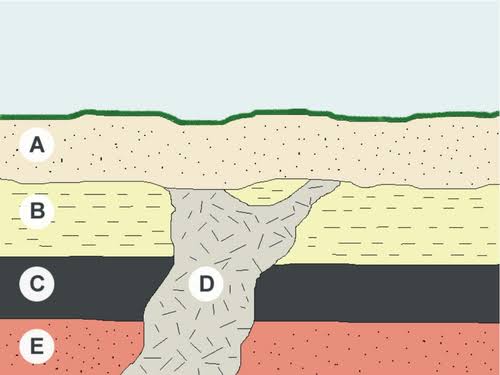
FOLLOWING THE PRINCIPLES OF RELATIVE DATING, WHICH IS THE CORRECT SEQUENCE OF THE ROCK LAYERS (OLDEST-YOUNGEST)?
(a)
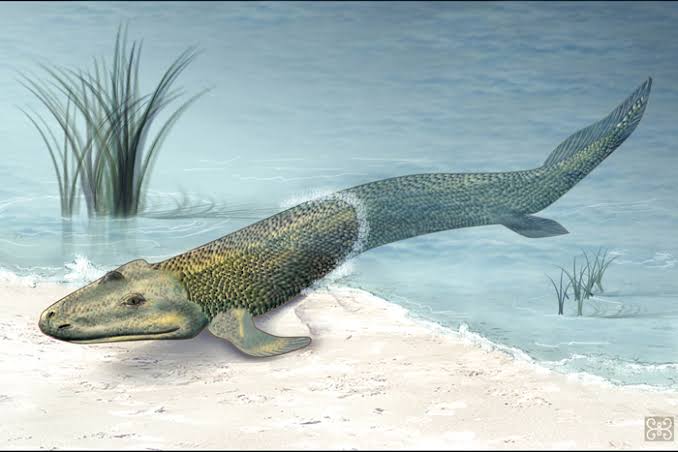
WHICH TYPE OF ANIMAL FIRST APPEARED DURING THE DEVONIAN PERIOD?
REPTILES
AMPHIBIANS
MAMMALS
FISHES
WHICH WAS THE FIRST LIFE FORM THAT EXISTED ON EARTH?
ARCHAEBACTERIA
DINOSAURS
FLOWERING PLANTS
FISHES
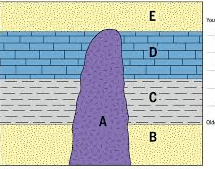
WHICH LAW OF RELATIVE DATING EXPLAINS THAT THE INTRUSION A IN THE IMAGE IS YOUNGER THAN THE ROCK LAYERS B, C, AND D?
(a)
THE FIRST EON WAS NAMED AFTER THE GREEK GOD OF THE UNDERWORLD FOR THE EARTH WAS ON FIRE DURING THIS TIME. WHO WAS THE GREEK GOD OF THE UNDERWORLD?
ZEUS
HERA
HADES
POSEIDON
WHICH PRINCIPLE OF RELATIVE DATING STATES THAT A FAULT IS YOUNGER THAT THE LAYER OF ROCKS?
(a)
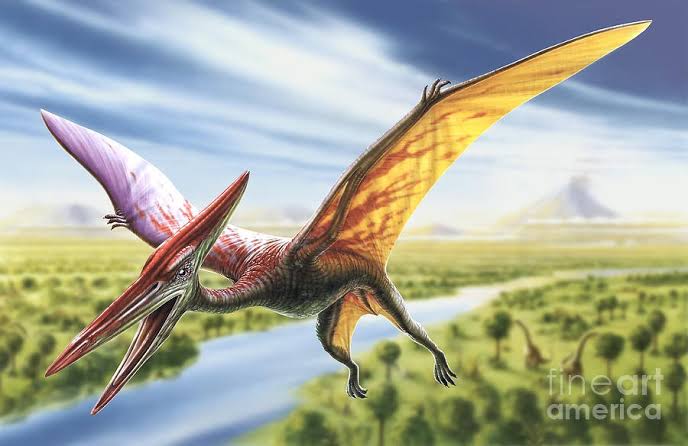
WHICH TYPE OF ANIMAL FIRST APPEARED DURING THE JURASSIC PERIOD?
PLANTS
AMPHIBIANS
BIRDS
REPTILES
HE WAS KNOWN AS THE FATHER OF STRATIGRAPHY, WHO IS HE?
NICHOLAS STINK
NICHOLES STEN
NICHO STENO
NICHOLAS STENO
Which of the following describes the relationship between events that happened throughout the Earth’s history?
Geologic Time Scale
Relative Dating
Geologic Time
Absolute Dating
HOW OLD IS THE EARTH?
4.6 BILLION YEARS OLD
12. 5 MILLION YEARS OLD
20 MILLION YEARS OLD
3.8 BILLION YEARS OLD
The idea that in an undeformed sequence of sedimentary rocks, each layer is older than the one above it.
correlation
uniformitarianism
law of superposition
relative dating
Principle that states sediment is generally deposited in flat, horizontal layers.
uniformitarianism
original horizontality
cross-cutting relationships
superposition
Principle that a fault or intrusion must be younger than any geologic formation through which it cuts.
cross-cutting relationships
original horizontality
superposition
uniformitarianism

Which is OLDER, rock layer B or intrusion D?
B
D
Which is OLDER, rock layer B or rock layer A?
B
A
Which is OLDER, intrusion D or fault E?
D
E

Arrange in order from OLDEST (1) to YOUNGEST (5).
C
1
B
2
A
3
D
4
E
5
What is the name for the span of time since the formation of Earth, 4.6 billion years?
Geology
Metric System
Geologic Time
Earth System
What is the name for the span of time since the formation of Earth, 4.6 billion years?
Geology
Metric System
Geologic Time
Earth System
Which division of Geologic Time is the largest?
Eons
Eras
Periods
Epochs
In which Eon did Earth have hellish condtions?
Phanerozoic
Prototerozoic
Archean
Hadean
Which eon accounts for about 90% of Earth's history?
Precambrian
Hadean
Proterozoic
Phanerozoic
During which era did the formation of Pangaea begin?
Cenozoic
Mesozoic
Paleozoic
Phanerozoic
Which type of age dating is qualitative and involves the relative order or sequence of events?
radiometric dating
relative age dating
absolute age dating
geometric age dating
Which law states that rock fragments (inclusions) are always older than the rock they are found in?
uniformitarianism
superposition
inclusions
cross-cutting relationships
Which law states that oldest rocks are on the bottom and youngest on the top?
uniformitariansim
superposition
inclusions
cross-cutting relationships

Which rock/layer/feature in this image is the oldest?
A
B
C
D

According to the law of cross-cutting relationships, which feature in this image is younger?
D
E
D & E are same age
Indeterminate
During which era, did the dinosaurs dominate?
paleozoic
mesozoic
cenozoiz
phanerozoic
During which era, did human evolution take place?
paleozoic
mesozoic
cenozoic
phanerozoic
It states that most sediments were originally laid down horizontally.
Law of Cross-cutting Relationship
Law of Lateral Continuity
Law Superposition
Law of Original Horizontality
It states that, in any sequence of layered sedimentary rocks, the top layer is younger than the bottom layer.
Law of Cross-cutting Relationship
Law of Lateral Continuity
Law Superposition
Law of Original Horizontality
It states that fault lines and igneous rocks are younger features that cut through older features of rocks.
Law of Cross-cutting Relationship
Law of Lateral Continuity
Law Superposition
Law of Original Horizontality

Which layer is the oldest?
A
B
C
D

Which of the following is true?
A fault is younger than the rock layers that it goes through.
A fault is older than the rock layers that it goes through.
The rock layers are younger than the fault that cuts through it.
Which division of Geologic Time is the largest?
Eons
Eras
Periods
Epochs
During which era did the formation of Pangaea begin?
Cenozoic
Mesozoic
Paleozoic
Phanerozoic
The Era with the largest extinction we know of is the..
. Mesozoic era
Precambrian era
Paleozoic era
Cenozoic era
Trilobites were alive during the _____________.
Cenozoic
Mesozoic
Paleozoic
Cretaceous
The most recent era in our history according to the geological time scale is:
Paleozoic
Precambrian
Mesozoic
Cenozoic
What type of animal lived only during the Mesozoic Era?
Birds and Mammals
Mammals
Dinosaurs
All of them
The period of geologic time when the biodiversity of life on the planet increased dramatically was A
A. Jurassic
B. Triassic
C. Permian
D. Cambrian

. The period when trilobites appeared was the
A. Devonian
B. Cambrian
C. Permian
D. Jurassic
. Which type of life dominates the Precambrian Time?
A. Dinosaurs
B. Mammals
C. Bacteria
D. Humans
There have been how many major extinction events on planet Earth?
A. 3
B. 4
C. 5
D. 2
The time when the first fishes appeared
A. Devonian
B. Cambrian
C. Permian
D. Jurassic
What are the names of ALL parts of the geologic time scale in correct order from broadest to narrowest?
A. era, period, eon
B. eon, era, period, epoch
C. era, eon, epoch, period
D. eon, era, epoch, period
The period when huge land plants were dominant and eventually became the coal and oil we use today.
A. Cambrian
B. Carboniferous
C. Silurian
D. Ordovician
When did large land reptiles first appear?
A. Cambrian
B. Permian
C. Silurian
D. Ordovician
what was the nickname of the middle Paleozoic?
A. the age of special creatures
B. the age of invertebrates
C. the age of amphibians
D. the age of fishes
Paleozoic era lasted
A. 291 million years
B. 251 million years
C. 350 million years
D. 542 million years
Reptiles evolved during
A. early Paleozoic
B. middle Paleozoic
C. Late Paleozoic
which were the first organisms to inhabit land environment
amphibians
reptiles
plants
invertebrates
how many periods are in early Paleozoic era
2
3
4
6

Which of the following animals did NOT live during the Mesozoic era?
Birds
Dinosaurs
Fish
Monkeys
Reptiles

Which Periods make up the Mesozoic Era?
Cambrian
Jurassic
Tertiary
Triassic
Cretaceous

Why do scientists believe a meteor impact caused the KT mass extinction event?
A crater on the surface of the Earth
A layer of iridium which has dinosaur fossils below it
Damage seen on dinosaur fossils
Based on information from previous extinction events, it is the mostly likely cause
The Mesozoic Era is also known as the...
Age of Mammals
Age of Fishes
Age of Reptiles
Age of Invertebrates

Which of the following did NOT first appear during the Mesozoic era?
Flowering plants
Birds
Reptiles
Mammals

What is the name of the supercontinent that breaks apart during the Jurassic period?
Pangea
Rhodonia
Laurasia
Pannotia

Why do supercontinents break apart?
They push against each other and break
Heat trapped under the surface of the continent causes the surface to raise and split apart.
Heat escapes easily from the continental surface.
Oceans flood parts of the continents leading to new seas.

Most early mammals are small because...
They are early in their evolutionary history.
The Earth was too hot for large mammals in the Mesozoic era.
To better avoid dinosaurs, their predators.
this era happened 252-65 Million years ago
mesozoic era
paleozoic era
cenozoic era
umay
It is also called the Age of Reptiles, as they and other sauropsids were the dominant animals at the time
mesozoic era
paleozoic era
cenozoic era
umay
Dinosaurs are the most famous creatures from this era, but mammals, pterosaurs, and flowering plants would appear as well.
mesozoic era
paleozoic era
cenozoic era
umay
the first period of the Mesozoic.
triassic period
jurassic period
cretaceous period
umay
Dinosaurs first appeared during this time, as did frogs, true mammals, and gingko trees.
triassic period
jurassic period
cretaceous period
umay
Triassic-Jurrasic Extinction
marks the boundary between the Triassic and Jurassic periods
34% of marine genera went extinct, including an entire class of jawless fish.
Many archosaurs, therapsids, and large amphibians also went extinct.
Dinosaurs would flourish in the wake of the extinction, and become the dominant animals.
this happened 252-200 million years ago
triassic period
jurassic period
cretaceous period
umay
this happened 200-145 million years ago
triassic period
jurassic period
cretaceous period
umay
this happened 145-66 million years ago
triassic period
jurassic period
cretaceous period
umay
the third, and last, period of the Mesozoic.
triassic period
jurassic period
cretaceous period
umay
Flowering plants appeared at the start of this period.
triassic period
jurassic period
cretaceous period
umay
Birds, crocodiles, and mammals continued to develop.
triassic period
jurassic period
cretaceous period
umay
Development of large mammals and humans
Precambrian
Paleozoic
Mesozoic
Cenozoic
Formation of Pangaea
PreCambrian
Paleozoic
Mesozoic
Cenozoic
Bacteria develop
Precambrian
Paleozoic
Mesozoic
Cenozoic
Birds
Precambrian
Paleozoic
Mesozoic
Cenozoic
Ice ages played a role in geological features that we see today
Precambrian
Paleopzoic
Mesozoic
Cenozoic
Single celled organisms
Precambrian
Paleozoic
Mesozoic
Cenozoic
Dinosaurs
Precambrian
Paleozoic
Mesozoic
Cenozoic
Flowering plants
Precambrian
Paleozoic
Mesozoic
Cenozoic
Fish
Precambrian
Paleozoic
Mesozoic
Cenozoic
Jellyfish
Precambrian
Paleozoic
Mesozoic
Cenozoic
The Law of Superposition helps scientists to determine what?
The absolute age of rock layers
The age of fossils
The relative age of rock layers
the super powers of squirrels
Which of the following correctly lists the layers in order from oldest to youngest?
A, B, C, D, E
E, B, C, D, A
E, D, C, B, A
C, B, A, D, E


What is the relative age of a rock?
The age determined by the things around it.
The age of an igneous rock.
The age determined by radioactive dating.
The time it takes for 1/2 of the radioactive atoms to decay in an element.
What is the absolute age of a rock?
The age determined by the things around it.
The age of an igneous rock.
The age determined by radioactive dating.
The time it takes for 1/2 of the radioactive atoms to decay in an element.
Look at the diagram, what layer did animal E first show up in?
Layers #4
Layers #5
Layers #6
Layers #8

The illustration provided shows three rock layers and an intrusion of basalt. The rock strata indicate that the basaltic intrusion must have occurred–
after the limestone was deposited.
before the granite was formed.
after the sandstone was deposited.
before all three layers were formed.


Which of the fossils is the oldest?
Dinosaur
Bird
Shell
Ammonite

Which rock layer is oldest from Site 1?
G
B
A
E

Which is the youngest rock layer?
Siltstone
Conglomerate
Mudstone
Limestone

Use relative age dating to put the rock layers in correct order from oldest to youngest.
B, D, A, E, C
C, E, D, A, B
A, C, E, D, B
C, E, D, B, A
Index fossils are fossils that help determine the _____ of other fossils and rock that are found in the same sedimentary layer.
age
location
fossil
origin
Index fossils must be _____ and easily recognizable.
old
new
alive
distinctive
Index fossils are _____ widespread.
never
globally
locally
possibly
Index fossils are _____
abundant
scarce
local
clay
Index fossils are limited to a _____ period of geologic time
long
extended
short
extinct
Index fossils are usually from _____ organisms
soft-bodied
hard-bodied
terrestrial
bacterial
Most rock that contains fossils formed in the _____, so most index fossils are from organisms that lived in the _____.
Mesozoic Era
Cenozoic Era
ocean
geologic scale
Some index fossils are _____
rare
broken
local
microfossils
_____ constantly recycles ocean crust
Dinosaurs
Time
Plate tectonics
marine fossil
Type of fold: downfolds or troughs
anticlines
synclines
monoclines
benchmarks


An upward fold in the rock that makes an arch
anticline
syncline
folded mountain
fault block

