
 Worksheets
Physics: Magnetism and Electricity
Total questions: 137
Worksheet time: 3hrs 25mins
How many poles does a magnet have?
1 pole
3 poles
2 poles
o pole
When a bar magnet is brought near iron dust, most of the dust sticks?
near the middle
equally everywhere
near two ends
at the middle and ends
when a magnet is placed on a plastic plate with common pins spread on it , then_______
pins stick all around the magnet
pins stick at the middle of the magnet
pins stick at the end of the magnet
none of these
like poles of a magnet attract each other and unlike poles of a magnet repel each other.
true
false
Iron is used to make
Permanent Magnet
Temporary Magnet
Which image represents an attraction between two magnetic poles?


Which image represent two magnets repelling each other?

Which type of field is represented in this image?
Gravitational Field
Geothermal Field
Magnetic Field
Electrical Field
What type of metals can have magnetic properties?
Cobalt, Aluminium, Iron, Nickel, Copper
Cobalt, Iron, Nickel, Aluminum
Titanium Alloy, Platinum, Silver, Cobalt
Iron, Nickel, Cobalt
How do you increase a magnetic force between two objects?
Increase Mass
Decrease Mass
Decrease the Distance
Increase the Distance
Change state of Matter
Objects with the same charge will ______________ each other.
Repel
Attract
balance each other out
remain neutral
Objects with opposite charges will ______________ each other.
Attract
Repel
Balance each other out
Remain neutral
This image represents a material that is not magnetized? Choose all that are correct.


This image represents a material that is magnetized? Choose all that are correct.
True or False: An electromagnet's magnetism can not be turned off with electricity.
True
False
What word best describes bar magnets?
Electromagnets
Permanent
Temporary
Which two of these are not magnetic materials? Tick two.
copper
steel
iron
aluminum
Specifically in which direction do the lines run in a magnetic field diagram?
pole to pole
south to north
north to south
Where is the strongest magnetic field around a bar magnet?
above and below
near the poles
in the middle
on the north pole
The 3 parts that an electromagnet consist of are:
battery
magnet
wire
core (iron nail)
light bulb
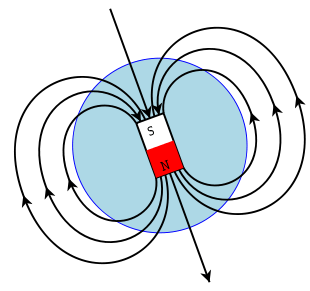
The area or lines of magnetic force surrounding a magnet is known as its _____________.
magnetic field
magnetic poles
magnetic fan lines
magnetic tan lines
True or False: All metals stick to magnets.
True
False
Which if these is a way to make an electromagnet stronger?
putting a switch in the electrical circuit
replacing the iron core with a copper core
replacing the copper wire with plastic wire
wrapping the wire around the iron core more times
The _ the current in an electromagnet has, the stronger the magnetic field.
less
greater
same
As the distance is increased from the magnetic field, the magnetic force becomes _.
stronger
remains the same
weaker
does not change
As electricity flows through a wire, what is created around it?
lightning
magnetic field
super nova
explosion

What will the magnets in the picture do?
Attract each other
Repel each other
Both attract and repel
Neither attract nor repel
A compass needle shows us the magnetic field of
the sun
Earth
the moon
a magnet that is near by

Earth has a magnetic field that is similar to a bar magnet's magnetic field.
true
false
Electronic devices create magnetic fields because they
are magnets
are compasses
have moving particles with electric charge
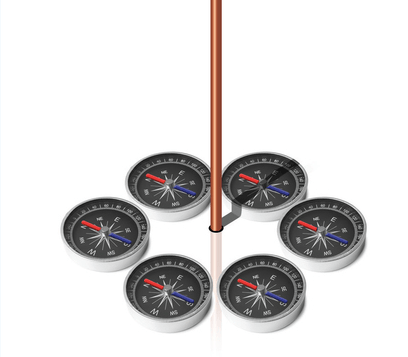
How can you test to see if there is a current running through a wire?
listen carefully to see if you hear a buzzing sound
place several compasses around the wire
place several batteries around the wire
What THREE ways are electromagnets different from permanent magnets?
they can be turned off and on
they can increase in strength by increasing the current in the wire
they are smaller in size
they can change which is the north and south pole
When _______________ travels through a
conductor, a magnetic field is created
current
a magnetic field
neutrons
Electric currents produce _____________
electron clouds
magnetic fields
sound waves
In magnets and electromagnets, similar poles attract
true
false
Electrons which collect at the negative end of the battery, can flow to the positive end through a ___________________
wire
electron cloud
magnet
To determine magnetic field direction around straight wire conductor we used
Right hand grip rule
Left hand grip rule

What is pole X and Y?
X : North
Y : South
X : South
Y : North

Thumb shows the direction of
Magnetic field
Current

Diagram shows meyhod to determine magnetic pole around a
Straight wire
Coil
Solenoid
When number of turns in solenoid increase, electromagnetic strength ...
Increase
Decrease

When more current flows in solenoid, strength of magnetic field ...
Decrease
Increase

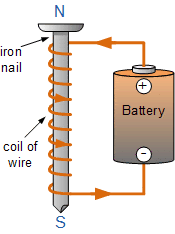
What would happen if you took one end of the wire off the battery?
The nail will be a magnet.
The nail would no longer be a magnet
Nothing will happened.
The nail will heats up.
Electric currents produce _____________
electron clouds
magnetic fields
sound waves
How can the strength of an electromagnet be increased? (mark all that apply)
increase the current flowing through the coil
increase the number of coils
add an amplifier to it
put iron core inside the coil
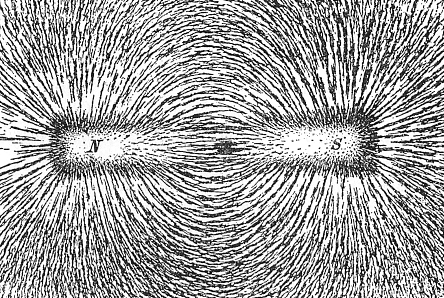
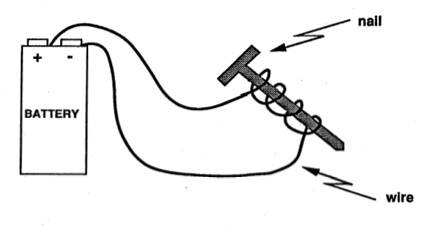
How is a magnetic field shown?
Field lines with arrows
Compasses pointing north
By repelling magnets
By attracting magnets


This is an object made from a battery, a nail and some wire. What will happen if you touch a metal paper clip to the nail?
The wires will melt.
The battery will spark.
The nail will give you a shock.
The paper clip will stick to the nail.
What type of particle is a Electron ?
Positive
Negative
Which of the following statements is true about electricity?
Electricity is the flow of negatively charged particles called electrons.
Electricity is the flow of negatively charged particles called protons.
Electricity is the flow of negatively charged particles called neutrons.
Electricity is the flow of neutrally charged particles called neutrons.
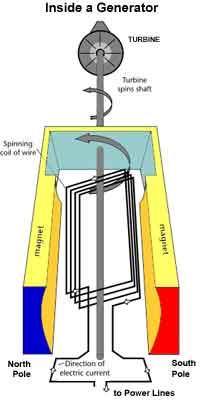
In an electrical generator, the energy transformation begins as ___________ and becomes ____________.
mechanical; electrical
electrical; mechanical
electrical; chemical
mechanical; chemical

What types of charges attract?
Positive and Positive
Positive and Neutral
Negative and Neutral
Positive and Negative

The accumulation of excess electric charge on an object is called
Static electricity
Electric discharge
Resistance
Circuit


Why electrical wiring usually are covered with a layer of plastic?
To make it look pretty
To help electricity flow along the wire
To make it safe
To add more energy

Why is electrical wiring usually made from copper?
Because copper is shiny
Because copper conducts electricity
Because copper is not magnetic
Because copper insulate electricity

1. Which switch or switches must be closed to make the lamps light?
Only switch 1
Only switch 1
Switches 1 and 2
Switches 1 , 2 and 3
What use symbols to represent the parts of a circuit, including a source of electrical energy and devices that are run by the electrical energy?
Circuits Diagrams
Ciscuits Drawings
Circuits Pictures
Circuits Lines
In this kind of circuit, If one element stops functioning in a series circuit, none of the elements can operate.
Series Circuit
Parallel Circuit
Alternating Circuit
Direct Circuit
The rate which electrical energy is transform into a different kind of energy is called ....
Series Circuit
Amperes
Electric Power
Ohms
Electric power can be calculated by multiplying ______________ and _________________.
Voltage and resistance
Voltage and current
Electric usage and voltage
Electric Energy and Time
Electrical energy is calculating by multiplying _________________ and ________________.
Electric Power and time
Voltage and time
Resistance and time
Current and time


A student uses a length of wire as a resistor. He makes a second resistor from the same material.
To be certain of making a second resistor of higher resistance, he should use a piece of wire that is:
longer and thicker.
longer and thinner.
shorter and thicker.
shorter and thinner.

The circuit shown contains a battery, a 6.0 Ω resistor and two meters X and Y.
One meter records current and one meter records potential difference.
meter X : 2.0 A
meter Y : 12.0 V
meter X : 2.0 V
meter Y : 1.0 A
meter X : 12.0 A
meter Y : 2.0 V
meter X : 12.0 V
meter Y : 2.0 A
Which equation can be used to calculate the resistance R of a resistor?
V = I / R
I = V x R
R = V x I
V = I x R

Which symbols are used for the units of current and of resistance?
A
B
C
D
The resistance of a component in a circuit is found using an ammeter and a voltmeter.
How are the ammeter and the voltmeter connected?
the voltmeter and ammeter in parallel with the component
the voltmeter and ammeter in series with the component
the voltmeter in parallel with the component and the ammeter in series with the component
the voltmeter in series with the component and the ammeter in parallel with the component
Electrons exist throughout the wire even when current is not flowing.
true
false
not sure
Current is...
...measured in volts with an voltmeter
...measured in volts with an ammeter
...measured in Amps with an voltmeter
...measured in Amps with an ammeter
Which answer best describes the voltage of a battery?
how long it will last for
how strongly it can push the current
how fast the current will be
how large the battery is

What is the ammeter measuring?
the size of the current flowing through the bulb
the brightness of the bulb
the voltage of the battery
the size of the current that the bulb uses up

Which is the correct description of how current flows in a circuit?


Which bulb will be the brightest and why?
A because it is designed for torches
B because it has the most electricity in it
C because it has the largest voltage so it pushes the biggest current
they are all the same because the bulbs are the same

A circuit consists of 2 batteries and a bulb.
The bulb is lit very brightly.
What will happen to the brightness of the bulb and why?
the bulb gets brighter because there is less resistance
the bulb gets dimmer because there is a lower voltage, so it pushes a smaller current round
the bulb gets dimmer because there is less energy than before

An alarm clock draws 0.5 A of current when connected to a 120 volt circuit. Calculate its resistance.
60Ω
120Ω
180Ω
240Ω
If the battery produced 12.6 Volts, what would be the current flow be for a 6 Ohm resistor?
2.1 Amps
2.4 Amps
1.71 Amps
15 Amps
If the Voltage is increased and the resistance stays the same, Current will
Increase
Decrease
Stay the same
none of these
If the Voltage stays the same and Resistance is increased, Current will
Increase
Decrease
Stay the same
none of these
What is the advantage of having a safety switch or fuse in the electric circuits of your house?
Safety switches break the circuit when there is no fault
Safety switches switch the electrical current
It prevents the circuit from overheating and starting the fire
Fuses are fused together with electrical wires

The diagram shows a circuit including a lamp, an electric bell and three switches S1, S2 and S3. The lamp and bell are not faulty.
The bell is ringing but the lamp is not lit. Which switches are closed?
S1 only
S1 and S2 only
S1 and S3 only
S1, S2 and S3
How does a voltmeter meter is added in the circuit?
Series
Parallel
How does an ammeter is added in the circuit?
Series
Parallel
What does a voltmeter measure?
Current
Voltage
Resistance
What does an ammeter measure?
Current
Voltage
Resistance
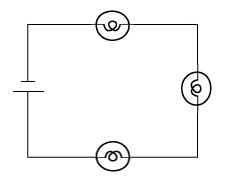
Which symbols can represent a bulb in a circuit?


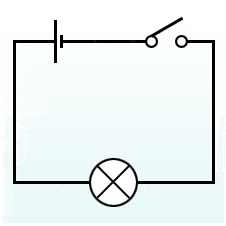
Which symbol represents an open switch in a circuit?

Which symbol represents a battery in a circuit?


Which pictures show a series circuit?


Which are true statements about electrical CURRENT?
It is the flow of electrons
It is the amount of charge flowing per second
It is measured by a voltmeter
It is also known as potential difference

What does the A symbol represent? (choose 2)
A device that measures current
A device that measures potential difference
A voltmeter that measures voltage
An ammeter

What does the voltmeter measure?
the direction of electron flow
the energy difference between the electrons before and after the bulb
the number of electrons before and after the bulb
the speed of electron flow before and after the bulb
Each component of a circuit obstructs the flow of charge.
What is this called?
Resistance
Rating
Conventional flow
Hindrance
How is resistance measured? (choose 2)
In ohms (Ω)
p.d. (V) ÷ current (A)
In volts (V)
p.d. (v) X
current (A)
In amperes (A)

What would be the value on these Ammeters?
All the same
Going down as you go from 1 to 3
Going up as you go from 1 to 3

What would be the value on these Ammeters? (choose 2)
All the same
A1 and A4 would be the same
A2 and A3 would add up the same as A1
Going down from A1 to 4
A1 and A4 would add up to the same as A2

What would be the values shows on voltmeters 1 and 2? (choose 2)
Both the same
Equal to the V total when added together
V1 is higher than V2
The same as the Vtotal.

What would be the values of V1, 2 and 3? (choose 2)
All the same
Going down from 1 to 3
Going up from 1 to 3
Adding up to equal the battery
All the same as the battery

The bulb brightness will be the same in both of these circuits.
True
False
Conventional current is drawn as travelling from the positive battery terminal.
True
False
Either

