
 Worksheets
Grade 8 light
Total questions: 141
Worksheet time: 2hrs 17mins

At what angle will the reflected ray strike the second mirror?
30
45
60
90
An image that you can see , but does not really exist is called which of the following
Real Image
Fake Image
Virtual Image
Digital Image
It is the bending of light rays as it travels from one medium to another medium of different densities?
a. Reflection
b. Refraction
c.Dispersion
d. Diffusion
Which of the following best describes the image formed by a plane mirror?
virtual, inverted and enlarged
real, inverted and reduced
virtual, upright and the same size as object
real, upright and the same size as object

which is a transparent object
glass
copper
iron
steel

The angle of incidence is _________ the angle of reflection


If the angle of incidence is 40 degrees, what is the angle of reflection?
50 degrees
60 degrees
90 degrees
40 degrees

The size of an object and its image are the same in this type of mirror...
Plane
Convex
Concave

Images in a plane mirror are
real
larger
same size
smaller

Q.
In the diagram, which letter represents the angle of incidence?
A
B
C
D
E
Q. ........... – the angle between the normal and the reflected ray.
Angle of incidence
Angle of reflection
Angle of coincidence
Angle of direction
According to the laws of reflection, what is the relationship between the angle of incidence and the angle of reflection?
They are always equal
They are always different
They are sometimes equal and sometimes different
There is no relationship
What is the ray which bounces off the mirror called?
Reflected ray
Normal
Point of incidence
Incident ray
What is the angle which the incident ray makes with the normal called?
Angle of incidence
Angle of reflection
Normal
Point of incidence
What is the line drawn perpendicular to the mirror through the point of incidence called?
Reflected ray
Incident ray
Point of incidence
Normal
What is the point at which the incident ray strikes the mirror called?
Point of incidence
Reflected ray
Incident ray
Normal
What word means to bend light rays toward each other?
Converging light
Diverging light
Virtual Light
Real Light
What word means to bend light rays away from each other?
Converging light
Diverging light
Virtual Light
Real Light

This is an example of ......
transparent
translucent
opaque

This is an example of ........
transparent
translucent
opaque

This is an example of ........
transparent
translucent
opaque
Light travels in ________.
straight lines
circles
dots
Which is the most suitable place to hide in the game of hide and seek ?
We can hide behind a transparent object.
We can hide behind a translucent object.
We can hide behind an opaque object.
Why does a banana appear yellow?
It absorbs all colours of light.
It absorbs all colours of light and reflects yellow.
It reflects all colours of light.
It's magic.
The bending of light is called...
Reflection
Refraction
Luminescence
Rainbow
Of the radiation types listed, the one with the LONGEST wavelength is...
Microwave
Radio wave
X-ray
Visible Light
Which electromagnetic wavelength is invisible to our eye?
Blue
Violet
Infrared
Red
When ALL of the light is blocked by a substance, we call it what?
Translucent
Opaque
Transparent
A lens that is thinner in the middle than on the outside is called...
Diverging
Concave
Convex
Prismatic
A lens that is thicker in the middle than on the outside is called...
Diverging
Concave
Convex
Prismatic
Which picture shows the correct way light travels in a convex lens?
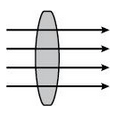
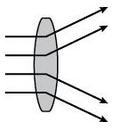
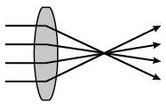
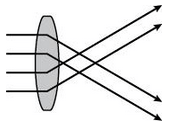
Which picture shows the correct way light moves in a concave lens?


A swimming pool appear shallower because of what?
Diffraction
Contraction
Reflection
Refraction
What happens to the speed of light as it moves from air into water?
It increases
It decreases
It remains the same
It stops completely
What is the phenomenon called when light bounces off an object?
Refraction
Diffraction
Reflection
Absorption

the bouncing of a wave off a surface
transmission
reflection
diffraction
absorption

the passage of light through a medium
transmission
reflection
diffraction
absorption
electromagnetic radiation that you can see
radiant energy
light
lens
wavelength

a material that allows almost all of the light striking it to pass through
transparent
translucent
opaque
reflection

a material through which light does not pass
transparent
translucent
opaque
reflection

the change in direction of a wave as it changes speed in moving from one medium to another
transmission
reflection
refraction
diffraction

lens that is thicker at the edges than in the middle
concave lens
convex lens

Which type of interaction is this?
reflection
refraction
absorption
transmission

Which type of interaction is this?
reflection
refraction
absorption
transmission


The point at which rays parallel to the optical axis meet is called the ____________________________.
focal point
virtual point
real point
optic point
Image behind the mirror is
virtual
real
upside down
upright


What is the relation between the frequency of electromagnetic waves and their wavelength?
Higher frequency= Higher wavelength
Higher frequency= Lower wavelength
Lower frequency = Lower wavelength
Top point of a transverse wave above the resting point of the medium is called a _________________.
Crest
Crust
Trough
The bottom part of a transverse wave below the resting point is called a _________________________.
Crest
Crust
Trough
The compressed part of a longitudinal wave is called a ______________________.
Rarefaction
Compression
Transverse
The spread out part of a longitudinal wave is called a ________________.
Rarefaction
Compression
Space
Transverse
How many waves go past a point in one second. Measured in hertz (Hz).
Frequency
Speed
Amplitude
Wavelength
A wave that does not require a medium to travel, for example, it can travel through a vacuum.
Electromagnetic
Mechanical
How far the medium (crests and troughs, or compressions and rarefactions) moves from rest position.
Amplitude
Frequency
Wavelength
Speed
A wave with a large wavelength will have a ______ frequency and _____ energy
high, low
high, high
low, high
low, low

What is being transferred with a wave?
medium
energy
matter
Chicken
Increasing the amplitude means you are increasing the _______________ of a wave.
frequency
amplitude
energy
wavelength
Longitudinal waves have:
crests and troughs
crests and compressions
compressions and rarefactions
troughs and rarefactions
Select the correct order of waves on the EMS from low to high energy
Radio, Micro, Infra, Visible, Ultra, X-ray, Gamma
Gamma, X-ray, Ultra, Vis, Infra, Micro, Radio
Vis, Micro, Infra, Ultra, X-ray, Gamma, Radio
Micro, Radio, Vis, Infra, Ultra, X-ray, Gamma
Which has the LONGEST wavelength and, therefore, the LOWEST frequency/energy
Gamma Rays
Ultraviolet
Visible Light
Infrared rays
Which of the following electromagnetic waves has the lowest frequency?
gamma ray
infrared wave
visible light wave
microwave
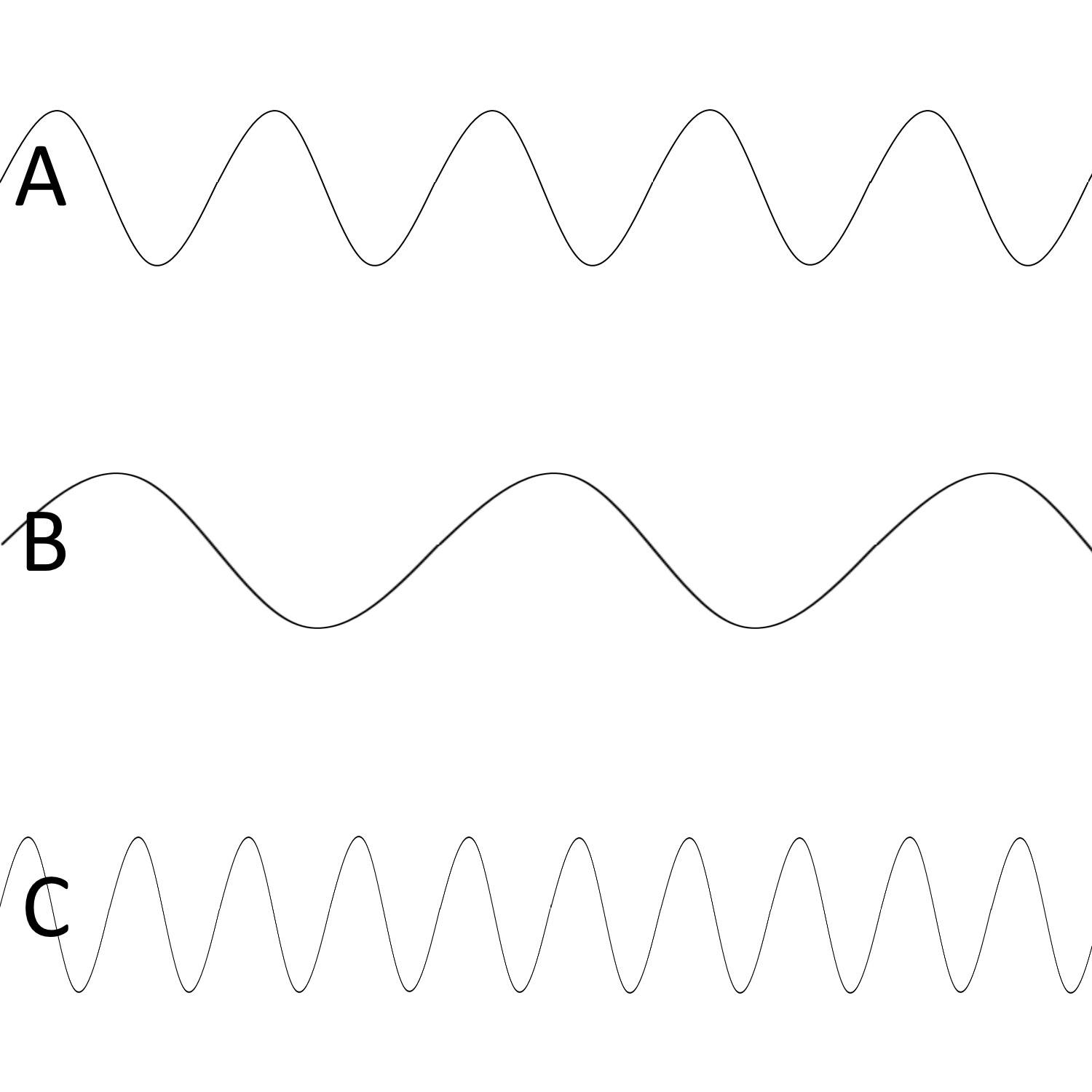


Light travels ____________________.
in one direction
towards the light source
in all directions
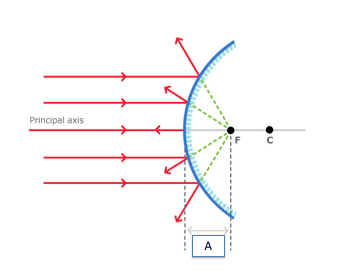
In the image, all the rays meet at F, What is F
focal length
focal point
center of curvature
reflection
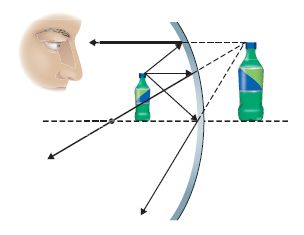
The two types of spherical mirrors are ...............
flat and plane
concave and plane
convex and concave
plane and rectangular

Through which point on principal axis shall reflected ray pass in the following diagram of incident ray ?
point F
point C
point P
none of the above
A mirror always form diminished image irrespective of the position of the object in-front of it , then the mirror is :-
Plane mirror
concave mirror
convex mirror
not possible
A mirror always form diminished image irrespective of the position of the object in-front of it , then the mirror is :-
Plane mirror
concave mirror
convex mirror
not possible
When distance of object from a mirror is gradually increased then image formed by it becomes inverted which was erect in the beginning. Which type of mirror is this ?
Plane mirror
Concave mirror
Convex mirror
none of the above
Which mirror is used as a make-up mirror ?
Convex mirror
plane mirror
concave mirror
plano-concave
A flat mirror is an example of a ___.
plane mirror
concave mirror
convex mirror
spherical mirror
A dentist uses a small dental mirror to help magnify teeth in your mouth. What type of mirror is this?
a convex mirror
a concave mirror
a convex lens
a concave lens
The side view mirrors on your car help shrink the image on both sides of the car, allowing you to see a larger field of view. What type of mirror is this?
a convex mirror
a concave mirror
a convex lens
a concave lens

Type of mirror used as a side mirror on a vehicle to provide a wide angle view...
Plane
Convex
Concave

Type of mirror that can produce an inverted image...
Plane
Convex
Concave

Which of the following is not a plane mirror?
Spoon surface
Smartphone display
Laptop display

What type of lens creates the image seen in the eyeglasses?
convex
concave
reflection
plane
A lens that is thicker in the middle than on the outside is called ___.
diverging
concave
convex
achromatic
A lens that is thinner in the middle than on the outside is called ___.
diverging
concave
convex
achromatic
convex lens is
bent outward
bent inward
Which lens represents the path light takes through a diverging lens?
Which figure represents the path light takes through a converging lens?
A lens that is thicker in the middle than on the outside is called ___.
diverging
concave
convex
achromatic
A lens that is thinner in the middle than on the outside is called ___.
diverging
concave
convex
achromatic
What word means to bend light rays toward each other?
Converging light
Diverging light
Virtual Light
Real Light

What type of lens is used in the shown instrument?
concave lens
convex lens
reflection lens
reduction lens
Image behind the mirror is
virtual
real
upside down
upright
image above the principal axis (PA) is
virtual
real
upright
upside down

what is A on the diagram?
center of curviture
focal length
reflected ray
focal point

The diagram represents a converging lens forming an image of an object. Which of the following lines show the focal length of the lens?
PQ
PR
QR
QS

The ball is ________ yellow.
Refracting
Reflecting
Absorbing
Transmitting

Which is NOT true about the apples.
The red apples reflect red light best and absorb all other wavelengths of light
The green apples reflect green light the best and absorb all other wavelengths of light
The red apples absorb orange, yellow, green, blue, indigo, and violet.
The green apples absorb red, orange, yellow, green, blue, indigo, and violet.

What is causing the rainbow?
Refraction and reflection
Refraction
Reflection
Diffusion

How many times is the light bent in the picture?
Once
Twice
Seven times
Three times

The bending of light is called __________.
Reflection
Diffraction
Transmission
Refraction

Which statement is true?
The cups are absorbing blue
The cups are blue
The cups are reflecting blue light and absorbing all other colors
The cups absorb blue and reflect all other colors

A material used to make paints that reflects some colors of light and absorbs others is
called a _________.
Dye
Pigment

In red light, a blue object would look _______.
Black
Red
Blue
White

Where are the color perceiving cells located in the eye?
Cornea
Lens
Pupil
Retina

Red, green, and ________ are the three primary colors of light. When they are mixed, you get ______ light.
Yellow/black
Orange/white
Blue/white
Blue/black

The three primary pigments are yellow, ________, and cyan. When mixed, they make _______.
Green/black
Blue/white
Magenta/white
Magenta/black


Why does a banana look yellow?
it reflects yellow wavelengths of light and absorbs most other wavelengths
it absorbs yellow wavelengths of light and reflects most other wavelengths

