wayground logo

Free Printable Worksheets

Font size

S
M
L
XL
Worksheets

Raider Reach pre assessment

Total questions: 139

Worksheet time: 2hrs 3mins

Name
Class
Date
1.

What is the definition of predation?

a)

Animal eats another animal

b)

Animal eats a plant

c)

Animal harms a plant

d)

Animal helps another animal

2.

Which of the following is an abiotic factor?

a)

fish

b)

light

c)

toad

d)

fungi

3.

Which of the following is an abiotic factor?

a)

fish

b)

light

c)

toad

d)

fungi

4.

What is the definition of a carnivore?

a)

Eats only plants

b)

Eats only animals

c)

Eats both plants and animals

d)

Eats nothing

5.

What is the definition of a herbivore?

a)

Eats only plants

b)

Eats only animals

c)

Eats both plants and animals

d)

Eats nothing

6.

Which of the following is an example of a omnivore?

a)

Pig

b)

Lion

c)

Giraffe

d)

Tiger

7.
Choose the correct term.  Specialized cells are found in (unicellular or multi-cellular) organisms.
a)
unicellular
b)
multi-cellular
8.
True or false?  All the energy needed for organisms to survive comes directly or indirectly from the sun.
a)
True
b)
False
9.
What tool is used by scientists to observe cells?
a)
balance
b)
binoculars
c)
telescope
d)
microscope
10.
A group of cells make up a ______
a)
cell
b)
organ
c)
tissue
d)
system
11.
The esophagus, stomach and intestines are part of what system?
a)
nervous system
b)
circulatory system
c)
digestive system
12.
What is the job of the nucleus?
a)
gel like substance
b)
power house of the cell
c)
control center
d)
storage area
13.
What is the job of the vacuole?
a)
gel like substance
b)
power house of the cell
c)
control center
d)
storage area
14.
What is the job of the ribosomes?
a)
manufactures proteins
b)
power house of the cell
c)
control center
d)
storage area
15.
What is the job of the mitochondria?
a)
gel like substance
b)
power house of the cell
c)
control center
d)
storage area
16.
What is the order from smallest to largest?
a)
cell, tissue, organ, organ system, organism
b)
system, organ, tissue, cell, organism
17.
Which body system is responsible for your sense of touch?
a)
nervous system
b)
digestive system
c)
respiratory system
18.
What two cell parts are found only in plant cells?
a)
cell membrane and chloroplasts
b)
cell wall and choloroplasts
19.
What is a producer? 
a)
Organism that creates their own food.
b)
Organism that eat other organisms for energy
c)
Organism that eat other dead organisms
20.
What is a consumer? 
a)
Organism that creates their own food.
b)
Organism that eat other organisms for energy
c)
Organism that eat other dead organisms
21.
What is a decomposer? 
a)
Organism that creates their own food.
b)
Organism that eat other organisms for energy
c)
Organism that eat other dead organisms
22.
What do Omnivores eat? 
a)
Plants ONLY 
b)
Animals ONLY
c)
Plants AND Animals
23.
What do Herbivores eat? 
a)
Plants ONLY 
b)
Animals ONLY
c)
Plants AND Animals
24.
What do Carnivores eat? 
a)
Plants ONLY 
b)
Animals ONLY
c)
Plants AND Animals
25.

What is a food chain?

a)

The flow of energy from one thing to another

b)

The way animals eat each other

c)

The way the sun makes everything

d)

How the plants grow

26.

An individual living things,such as animals or a plants,is called an

a)

Animal

b)

plant

c)

Organism

d)

Nutrition

27.
Use the diagram answer the question.
What is a fitting description for this diagram?
a)
A Food Chain
b)
An Ecosystem
c)
A Food Web
d)
Biotic and Abiotic Factors
28.
An organism that eats the producer- (animals that eats plants)
a)
Secondary Consumer
b)
Primary Consumer
c)
Tertiary Consumer
d)
Consumer
29.
An organism that eats the primary consumer.
a)
Primary Consumer
b)
Secondary Consumer
c)
Tertiary Consumer
d)
Producer
30.

A group of the same species of organisms would best be known as a _______________________.

a)

population

b)

community

c)

ecosystem

d)

biome

31.

What are the living and nonliving things in an environment or area?

a)

predator

b)

producer

c)

ecosystem

d)

abiotic factor

32.
Carnivores that eat freshly dead organisms are
a)
herbivores
b)
decomposers
c)
omnivores
d)
scavengers
33.

An organism that eats the primary consumer.

a)

Primary Consumer

b)

Secondary Consumer

c)

Tertiary Consumer

d)

Producer

34.

Biome = area of the world that shares the same plants, animals, and --

a)

people

b)

weather

c)

sports

d)

air pressure

35.
What structures distinguish a plant cell from an animal cell?
a)
Plant cells have cell walls and ribosomes.
b)
Plant cells have cell walls and chloroplasts.
c)
Plant cells have chloroplasts and ribosomes.
d)
Plant cells have chloroplasts and mitochondria.
36.
What tool do you use to view the cells?
a)
metric ruler
b)
centrifuge
c)
microscope
d)
pipette
37.
The Cell Theory states...
a)
atoms create all matter
b)
living things evolve
c)
the cell is the backbone of all matter
d)
cells are the basic unit of structure and organization of organisms
38.
Who looked at cork and named the cell?
a)
Robert Hooke
b)
Van Leeuwenhoek
c)
Robert Brown
d)
Francesco Redi
39.
Which statement is a part of the cell theory?
a)
all cells come from preexisting cells
b)
bacteria are prokaryotic cells
c)
eukaryotic cells are complex
d)
humans are multicellular
40.
In what organelle is the genetic material found inside?
 
a)
Endoplasmic Reticulum
b)
Golgi Complex
c)
Ribosomes
d)
Nucleus
41.
What organelle is called the "powerhouse" of a cell?

a)
Endoplasmic Reticulum
b)
Nucleus
c)
Mitochondria
d)
Nucleolus
42.
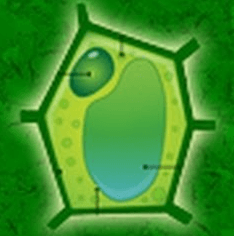
Using this image, what organelle is C?
a)
Cell Wall
b)
Mitochondria
c)
Large Cell Vacuole
d)
Chloroplast
43.
What is the function of the vacuole?
a)
Sac that stores water, nutrients, and waste products
b)
Sac filled with digestive chemicals
c)
Jelly-like substance within the plasma membrane
d)
stack of membranes that packages chemicals
44.
What is the function of nucleus?
a)
Structure that organizes motion of chromosomes. 
b)
Structure that contains DNA and directs the cell 
c)
Membrane that surrounds and protects the cell 
d)
Stack of membranes that packages chemicals
45.
I make proteins for the cell. What am I?
a)
ribosome
b)
mitochondria
c)
chloroplast
d)
lysosome
46.
A rigid layer that lies outside the cell's  membrane is...
a)
Cytoskeleton
b)
Cilia
c)
Cell Wall
d)
Flagella
47.
What makes the endoplasmic reticulum rough?
a)
Vesicles
b)
Vacuoles
c)
Ribosomes
d)
Chromosomes
48.
The ______________ is the brain of the cell.
a)
Vacuole
b)
Nucleus
c)
Chromosomes
d)
60 W light bulb
49.
The man who studied genetics and came up with genetics is
a)
Watson
b)
Crick
c)
Mendel
d)
Darwin
50.
Genotype refers to the ...
a)
physical expression of the genes
b)
the possible combination of alleles in a gene
c)
whether an allele is dominant or recessive
d)
how an organism will appear
51.
Which of the following is a phenotype?
a)
BB
b)
Bb
c)
bb
d)
Blue eyes
52.
having two of the same genes for the trait (sometimes called purebred).
a)
homozygous
b)
hetrozygous
c)
protein
d)
chromosome
53.
having two different genes for a trait (sometimes called hybrid).
a)
protein
b)
homozygous
c)
heterozygous
d)
genotype
54.
G = green, g = yellow
The genotype for a yellow plant is...
a)
GG
b)
Gg
c)
gg
d)
all of the choices result in yellow
55.
Two heterozygous (Tt) tall pea plants are crossed. Which describes their offspring?
a)
50% tall and 50% short
b)
75%tall and 25% short
c)
100%short
56.
True or False - The SI unit for measuring speed is miles per hour (mi/hr)
a)
true
b)
false
57.
True or False The total amount of energy in a system will changed depending on its surroundings.
a)
true
b)
false
58.
Which of the following is not one of the six forms of energy?
a)
nuclear
b)
thermal
c)
electrical
d)
conduction
59.
Calculate the velocity of a cyclist traveling 60 kilometers south over a period of 6 hours.
a)
10 km/hr
b)
10 km/hr south
c)
10 mi/hrnsouth
d)
360 km/hr south
60.
What is the name of the reaction in which energy is released?
a)
exothermic
b)
endothermic
c)
physical
d)
chemcial
61.
What is the name of the reaction in which energy is absorbed?
a)
exothermic
b)
endothermic
c)
chemcial
d)
physical
62.
What tool would you use to remove iron from sand?
a)
filter
b)
magnet
c)
evaporation
d)
filter paper
63.
In order, these are the energy transformation that occur when you light a match. We start with chemical energy stored in the match . . . . .
a)
Chemical, nuclear, magnetic
b)
Chemical, mechanical, sound, light, thermal
c)
Chemical, sound, thermal
d)
Chemical, gravitational, potential
64.
Emily slid down the sliding board at the park. Where did Emily have the most potential energy?
a)
In the middle of the slide
b)
Near the bottom of the slide
c)
At the top of the slide
65.
10 Emily slid down the sliding board at the park. Where did she have the most kinetic energy?
a)
In the middle of the slide
b)
At the top of the slide
c)
At the end of the slide when she stopped
d)
Near the bottom of the slide
66.
Frank jumps into a raft in his pool. As he jumps, he moves forward as the raft moves in the opposite direction. Which answer best describes the correct answer.
a)
The 1st law because a body at rest tends to stay at rest
b)
The 3rd law because for every action there is an equal and opposite reaction
c)
The 2nd law because as the mass increases so does the force
d)
The 4th law because I was not paying attention in class when we went over this topic.
67.
The Law of Conservation of Energy states:
a)
Energy can created or destroyed but not transformed 
b)
Energy cannot be created or destroyed, it can only transformed
c)
Energy can't be created, destroyed or transformed
68.

After cooking, you place a hot pan on a cold counter. After a while, the frying pan, the counter, and the air in the room will all be at the same temperature. Why?

a)

Because thermal energy will be transferred from the pan to its surroundings

b)

Thermal energy from the pan will be transferred to the air, but not the counter

c)

Thermal energy from the pan will absorb the coldness from the counter

d)

None of the above

69.

The heat energy that is released when fuel is consumed was originally stored in the fuel's...

a)

chemical bonds

b)

burning flame

c)

waste products

d)

candle wx

70.

Nash puts his cold Coke Slurpee on to the metal roof of his mom's car. Describe the heat transfer that takes place.

a)

Heat is transferred from the car's roof into the Slurpee and increases the temperature of the Slurpee.

b)

Heat is transferred from the Slurpee into the roof and increases the temperature of the roof.

c)

The Slurpee stays the same temperature until it is completely gone.

d)

The roof doesn't change temperature due to the fact that it sits in the sun all day.

71.

On a cold day, Jamarria puts a hot bowl of soup down on a concrete table. Describe the energy transformation that will occur.

a)

Heat from the air is transferred to Jamarria's hand.

b)

Heat from the hot bowl of soup is transferred to the car door.

c)

Heat from the concrete table is transferred to the hot bowl of soup.

d)

Heat from the hot bowl of soup is transferred to the concrete table.

72.

If energy is lost during a chemical reaction, it is usually lost in the form of...

a)

potential energy

b)

radiant energy

c)

heat energy

d)

all of the above

73.

Heat always travels from...

a)

Warm to cool

b)

Cool to warm

c)

Warm to warm

d)

Cool to cool

74.
According to which law of energy, energy can't be created or destroyed?
a)
First law of motion
b)
The law of tacos
c)
Laws of Energy
d)
law of conservation of energy
75.
What is the left part of a chemical equation called?
H2 + O → H2O
a)
Reactants
b)
Products 
c)
Yields 
d)
Chemical Equation 
76.
2H2 + O2 ----> 2H2O What is the product?
a)
------>
b)
2H2O
c)
2H2+ O2
77.

When reactants combine, the resulting products need to have ________ the reactants

a)

the same properties as

b)

many properties in common with

c)

different properties than

d)

none of the above

78.

In a chemical reaction, you begin with 23 atoms. When the reaction is over you would expect to have ______ atoms remaining.

a)

23

b)

less than 23

c)

more than 23

d)

There is not enough information to tell

79.
How many TOTAL atoms are on the REACTANT side of this equation?
CH4 + 2O2 → CO2 + 2H2
a)
5
b)
7
c)
9
d)
11
80.

If reactants' mass is 18g , what is the mass of the reactants ?

a)

15

b)

36

c)

81

d)

18

81.
How many elements are in C6H12O6?
a)
1
b)
2
c)
3
d)
4
82.
How many atoms of carbon (C) are in C6H12O6?
a)
3
b)
6
c)
12
d)
24
83.
Which of the following is a sign that a chemical reaction has occurred?
a)
change in shape
b)
melting
c)
formation of a gas
d)
dissolving
84.
Fizzing, foaming, and burning are all examples of
a)
Chemical change
b)
Physical change
85.
Is melting iron a physical or chemical change?
a)
Physical
b)
Chemical
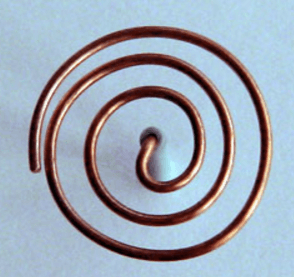
86.
Is bending copper wire a physical or chemical change?
a)
Physical
b)
Chemical
87.

The amount of distance covered in a specific amount of time is ___________.

a)

Velocity

b)

Speed

c)

Displacement

d)

Position

88.

At what time was the student stopped?

a)

0-20 minutes

b)

20-40 minutes

c)

40-50 minutes

d)

He never moved

89.

What was the students' overall displacement?

a)

3 miles

b)

6 miles

c)

1.5 miles

d)

0 miles

90.

Bryan traveled 5 miles north, 3 miles west, and then 8 miles south. What was his distance covered?

a)

16 miles

b)

0 miles

c)

3 miles west and 3 miles south of his starting location

d)

8 miles

91.

km is a unit for...

a)

speed

b)

distance

c)

time

92.

sec is a unit for...

a)

Speed

b)

Distance

c)

Time

93.

feet/min is a unit for...

a)

Speed

b)

Distance

c)

Time

94.

#1 =

a)

amplitude

b)

crest

c)

trough

d)

wavelength

95.

#2 =

a)

amplitude

b)

crest

c)

trough

d)

wavelength

96.

#3 =

a)

amplitude

b)

crest

c)

trough

d)

wavelength

97.

#4 =

a)

amplitude

b)

crest

c)

trough

d)

wavelength

98.

What type of wave is shown in the picture?

a)

Transverse

b)

Compression/Longitudinal

99.

What type of wave is shown?

a)

Transverse

b)

Compression/Longitudinal

100.
What is velocity?
a)
the quickness of an object
b)
the location of an object
c)
acceleration
d)
speed in a specific direction
101.
According to the graph how far does the person travel in the first 5 seconds?
a)
2 m
b)
10 m
c)
0 m
d)
5 m
102.
What is the formula to calculate speed?
a)
S = t/d
b)
S = d/t
c)
S = d x t
d)
S = t x d
103.

Wax Paper is...

a)

Translucent

b)

Transparent

c)

Opaque

104.

A brick is...

a)

Translucent

b)

Transparent

c)

Opaque

105.

Stained glass is...

a)

Translucent

b)

Transparent

c)

Opaque

106.

Plastic wrap is...

a)

Translucent

b)

Transparent

c)

Opaque

107.
What is a reactant?
a)
The starting substance
b)
The ending substance
108.
What is a product?
a)
The starting substance
b)
The ending substance
109.
Using the following chemical reaction
Hydrogen + Oxygen --> water
Identify the reactant(s).
a)
Hydrogen and Oxygen
b)
water
110.
Using the following chemical reaction
Hydrogen + Oxygen --> water
Identify the product(s).
a)
Hydrogen and oxygen
b)
water
111.
Angelina mixes 2 substances together in a beaker. The beaker becomes hot and the liquid changes color.
Did a chemical reaction occur?
a)
yes, because the properties changed and a new substance was made.
b)
no, because the properties did not change.
112.
Which of the following are NOT signs that a chemical reaction occured?
a)
the properties changed
b)
bubbles of gas formed
c)
color stays the same
d)
smells different
113.
What is a precipitate?
a)
a change in color 
b)
a change in temperature
c)
a solid formed
d)
a gas formed
114.
Alex wants to mix two substances together and to find out if a chemical reaction happens. What should he do?
a)
test the solubility before and after mixing
b)
measure the volume before and after mixing
c)
measure the mass before and after mixing
d)
test the density of the before substance but not the after substances.
115.
a student mixes  apple juice, water, and cinnamon together. Did a chemical reaction occur?
a)
Yes, because the apple juice changed the color of the water.
b)
yes, because the temperature stayed the sam
c)
no, because the properties stayed the same.
d)
yes, because dissolving is always a chemical reaction.
116.
Burning is always a chemical reaction.
a)
True
b)
false
117.
Sandra was burning a vanilla candle. Was there a chemical reaction?
a)
no, because burning is never a chemical reaction.
b)
Yes, because the properties of the wick changed.
c)
yes, because heat was added.
d)
no, because the ash formed was a different substance.
118.
Which of the following is NOT a chemical reaction?
a)
burning a marshmallow in a campfire.
b)
a campfire
c)
acid rain turning a copper roof green.
d)
Dissolving red Koolaid in water.
119.
Which of the following is a chemical reaction?
a)
Burning bread in the toaster.
b)
melting wax in a microwave.
c)
dissolving salt in water
d)
boiling water to make steam.
120.

What does a represent?

a)

Proton

b)

Neutron

c)

Electron

121.

What does b represent?

a)

Proton

b)

Neutron

c)

Electron

122.

What does c represent?

a)

Proton

b)

Neutron

c)

Electron

123.

What is the atomic mass of this element?

a)

20

b)

60

c)

40

d)

41

124.

What is the symbol of this element?

a)

Calcium

b)

P

c)

Ca

d)

C

125.

protons

a)

negative charge, nucleus

b)

positive charge, shells

c)

positive charge , nucleus

d)

neutral charge, nucleus

126.

neutrons

a)

no charge, shells

b)

positive charge, nucleus

c)

neutral, no charge, nucleus

d)

negative charge, shells

127.

electrons

a)

no charge, nucleus

b)

positive charge, nucleus

c)

negative charge, shells

d)

negative charge, nucleus

128.
The characteristics or properties of metals include
a)
shiny and solid
b)
ductile and malleable
c)
lose electrons
d)
all of the above
129.
Which particle contributes the negative charge to the atom?
a)
proton
b)
electron
c)
neutron
d)
nucleus
130.
Water is an element?
a)
true
b)
false
131.

A molecule is

a)

a singular particle of a particular element

b)

another name for an element

c)

2 or more atoms that are combined

132.

A pure substance that is a compound is made out of

a)

particles of more than one type of atom

b)

particles of the same type of atom

c)

a mixture of two or more substances that can be physically separated

133.
Gold is an example of a(n) 
a)
pure element
b)
pure compound
c)
pure mixture
134.

What is the number of protons that the element in this image contain?

a)

14

b)

7

c)

15

d)

18

135.
"C" is the element symbol for which element?
a)
calcium
b)
carbon
c)
chlorine
d)
cadmium
136.

True or False? Neutrons have a negative charge

a)

True

b)

False

137.
A _________ is a substance made of two or more DIFFERENT elements chemically combined. 
a)
mixture
b)
compound
c)
substance 
138.
A mixture can be separated by ________ means. 
a)
physical
b)
chemical
139.

What is the atomic number of this element?

a)

20

b)

60

c)

40

d)

41