wayground logo

Free Printable Worksheets

Font size

S
M
L
XL
Worksheets

📚EA8: HW21.22 (10.31)

Total questions: 135

Worksheet time: 1hrs 22mins

Name
Class
Date
1.
Which of the following is NOT found in ALL cells?
a)
Cell Wall
b)
Cell Membrane
c)
Cytoplasm
d)
Genetic Material
2.
Which organelle transports materials in the cell?
a)
Endoplasmic Reticulum
b)
Ribosome
c)
Golgi Bodies
d)
Chloroplast
3.
Which organelle is labeled letter A?
a)
Vacuole
b)
Ribosome
c)
Mitochondria
d)
Chloroplast
4.
Which organelle is labeled letter B?
a)
Nucleus
b)
Ribosome
c)
Golgi Bodies
d)
Chloroplast
5.
Which organelle is labeled letter B?
a)
Nucleus
b)
Ribosome
c)
Golgi Bodies
d)
Chloroplast
6.
Which organelle is labeled letter C?
a)
Endoplasmic Reticulum
b)
Ribosome
c)
Golgi Bodies
d)
Mitochondria
7.
Which organelle is labeled letter A?
a)
Chloroplast
b)
Ribosome
c)
Cytoplasm
d)
Mitochondria
8.
Which organelle is labeled letter C?
a)
Endoplasmic Reticulum
b)
Ribosome
c)
Cytoplasm
d)
Mitochondria
9.
Which structure on the image above is unique only to plant cells?
a)
Structure 1
b)
Structure 2
c)
Structure 5
d)
Structure 6
10.
What is the name of structure 5?
a)
Nucleus
b)
Mitochondria
c)
Cell membrane
d)
Cell wall
11.
What makes the endoplasmic reticulum rough?
a)
Vessicles
b)
Vacuoles
c)
Ribosomes
d)
Chromosomes
12.
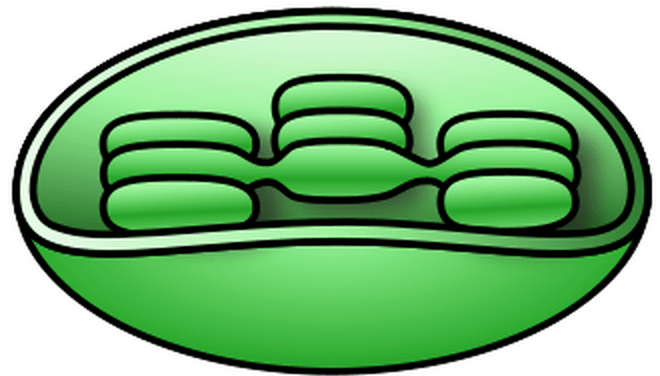
Which organelle is this?
a)
mitochondria
b)
lysosomes
c)
chloroplast
d)
endoplasmic reticulum
13.
I am only found in a plant cell. What am I?
a)
cell wall
b)
mitochondria
c)
cytoplasm
d)
chloroplast
14.
convert 0.036 mL to L
a)
3600 L
b)
3.6L
c)
360L
d)
0.000036L
15.
convert 78,000 mm to dm
a)
7.8dm
b)
78dm
c)
0.78dm
d)
780dm
16.
What is the least complex level of organization of the human body?
a)
Organ System
b)
 Organ 
c)
 Tissue 
d)
Cell
17.
Each organ in the body is part of an ________________ performing a major function. 
a)
Organ
b)
Tissue
c)
Organ System 
d)
 Cell
18.
How does a cell maintain homeostasis?
a)
Regulates what enters and leaves the cell
b)
Flexibility
c)
Protective barrier
d)
Structure and support
19.
What is a group of similar cells?
a)
Tissue 
b)
Organ
c)
Cell group
d)
Organ system
20.
Which of the following shows the correct diagram
a)
Cell-Tissue-Organ-Organ System
b)
Cell-Organ-Tissue-Organ System
c)
Organ System-Organ-Tissue-Cell
d)
Tissue-Organ System-Organ-Cell
21.
What is an adaptation?
a)
A feature or behavior that helps an animal survive.
b)
The food that an animal eats.
c)
How energy moves in a food web.
d)
How animals evolve throughout time.
22.
How do adaptations help animals?
a)
to hide from predators
b)
to hunt for food
c)
to survive in their habitats
d)
All of these are correct
23.
The ears of this fox are an example of...
a)
A behavioral adaptation
b)
Poor breeding
c)
A physical adaptation
d)
Plastic surgery gone horribly wrong
24.
A snake's fangs
a)
structural
b)
physiological
c)
behavioral
25.
Gills on a fish
a)
structural
b)
physiological
c)
behavioral
26.
A wolf howls
a)
structural
b)
physiological
c)
behavioral
27.
An otter makes an oil to keep its skin watertight
a)
physiological
b)
structural
c)
behavioral
28.
A deer raising its tail
a)
structural
b)
physiological
c)
behavioral
29.
A resting state through the winter. 
Adaptation: Bear sleeping in a cave during the winter months
a)
Locomotion
b)
Hibernation
c)
Migration
d)
Defense
30.
Lions often hide in the tall grass while stalking their prey.  This is an example of...
a)
camouflage
b)
warning coloration
c)
mimicry
d)
hibernation
31.
A grouse drums
a)
structural
b)
physiological
c)
behavioral
32.
protective coloration (blending in with your surrounding colors) is
a)
structural
b)
behavioral 
c)
physiological
33.
Which of the following is NOT a behavioral adaptation?
a)
Making a nest in the crevices of buildings
b)
Hunting at night
c)
Collecting food from trash cans
d)
Having large eyes that can see well in the dark
34.
The goal of every species on earth is...
a)
to survive and reproduce 
b)
divide and conquer 
c)
survive and conquer 
d)
reproduce and die 
35.

Term: Anything with mass and volume.

a)

matter

b)

energy

c)

adapation

d)

state

36.

Term: Amount of atoms.

a)

matter

b)

shape

c)

volume

d)

mass

37.

Term: Amount of space something takes up.

a)

matter

b)

shape

c)

volume

d)

mass

38.

Term: The outline of an object.

a)

matter

b)

shape

c)

volume

d)

mass

39.

Term: Definite shape and definite volume.

a)

solid

b)

liquid

c)

gas

d)

plasma

40.

Term: Indefinite shape and definite volume.

a)

solid

b)

liquid

c)

gas

d)

plasma

41.

Term: Indefinite shape and indefinite volume.

a)

solid

b)

liquid

c)

gas

d)

plasma

42.

Term: Description of matter.

a)

property

b)

change

c)

transformation

d)

trait

43.

Term: Action of matter.

a)

property

b)

change

c)

transformation

d)

trait

44.

Term: Changing from one form to another.

a)

property

b)

change

c)

transformation

d)

trait

45.

Term: Phase Change, gas to solid.

a)

deposition

b)

sublimation

c)

condensation

d)

boiling

46.

Term: Phase Change, solid to gas.

a)

deposition

b)

sublimation

c)

condensation

d)

boiling

47.

Term: Phase Change, liquid to gas (artificial heat).

a)

evaporation

b)

sublimation

c)

condensation

d)

boiling

48.

Term: Phase Change, liquid to gas (natural heat).

a)

evaporation

b)

sublimation

c)

condensation

d)

boiling

49.

Term: Phase Change, gas to liquid.

a)

melting

b)

sublimation

c)

condensation

d)

freezing

50.

Term: Phase Change, liquid to solid.

a)

melting

b)

sublimation

c)

condensation

d)

freezing

51.

Term: Action of matter that results in the creation of something new.

a)

physical property

b)

chemical property

c)

physical change

d)

chemical change

52.

Term: Action of matter that could be reversed and does not result in different identity properties.

a)

physical property

b)

chemical property

c)

physical change

d)

chemical change

53.

Term: Description that describes qualities such as size, shape, color, odor, etc of matter.

a)

physical property

b)

chemical property

c)

physical change

d)

chemical change

54.

Term: Description that describes the ability of matter to participate in a chemical reaction (such as flammability, corrosiveness or toxicity).

a)

physical property

b)

chemical property

c)

physical change

d)

chemical change

55.

Term: Person most responsible for securing your academic success.

a)

me

b)

my teacher

c)

my principal

d)

my parents

56.

Term: Ecological level, an individual.

a)

organism

b)

population

c)

community

d)

ecosystem

57.

Term: Ecological level, many organisms (a family).

a)

biome

b)

population

c)

community

d)

ecosystem

58.

Term: Ecological level, many populations (more than one family).

a)

biome

b)

biosphere

c)

community

d)

ecosystem

59.

Term: Ecological level, many communities to include its biotic and abiotic factors.

a)

biome

b)

biosphere

c)

community

d)

ecosystem

60.

Term: Ecological level, many ecosystems to include precipitation and average weather patterns.

a)

biome

b)

biosphere

c)

biotic

d)

abiotic

61.

Term: Ecological level, many biomes (The Earth).

a)

ecosystem

b)

biosphere

c)

biotic

d)

abiotic

62.

Term: Living factors.

a)

precipitation

b)

weather

c)

biotic

d)

abiotic

63.

Term: Non-living factors.

a)

precipitation

b)

weather

c)

biotic

d)

abiotic

64.

Term: Any kind of moisture in the atmosphere (fog, sleet, hail, fog, snow, and mist).

a)

precipitation

b)

weather

c)

biotic

d)

abiotic

65.

Term: Day-to-day temperature and trend of sunlight and/or wind.

a)

precipitation

b)

weather

c)

biotic

d)

abiotic

66.

Term: Must eat others for nutrients.

a)

consumer

b)

parasite

c)

host

d)

producer

67.

Term: Another term for heterotroph.

a)

consumer

b)

parasite

c)

host

d)

producer

68.

Term: Another term for autotroph.

a)

consumer

b)

parasite

c)

host

d)

producer

69.

Term: Organism that makes its own food (photosynthesis).

a)

consumer

b)

parasite

c)

host

d)

producer

70.

Term: Subatomic particle, positively charged.

a)

proton

b)

neutron

c)

electron

d)

nucleon

71.

Term: Subatomic particle, negatively charged.

a)

proton

b)

neutron

c)

electron

d)

nucleon

72.

Term: Subatomic particle, neutrally charged.

a)

proton

b)

neutron

c)

electron

d)

nucleon

73.

Term: Pure substance, one kind of an atom.

a)

element

b)

neutron

c)

electron

d)

compound

74.

Term: Pure substance, more than one kind of atom chemically combined.

a)

element

b)

neutron

c)

electron

d)

compound

75.

Term: Negatively charged particle.

a)

reactant

b)

product

c)

cation

d)

anion

76.

Term: Positively charged particle.

a)

reactant

b)

product

c)

cation

d)

anion

77.

Term: In a chemical reaction, the start.

a)

reactant

b)

product

c)

cation

d)

anion

78.

Term: In a chemical reaction, the end.

a)

reactant

b)

product

c)

cation

d)

anion

79.

Term: Organelle, the brain.

a)

nucleus

b)

cytoplasm

c)

ribosome

d)

endoplasmic reticulum

80.

Term: Organelle, the jelly.

a)

nucleus

b)

cytoplasm

c)

ribosome

d)

endoplasmic reticulum

81.

Term: Organelle, small protein factories.

a)

nucleus

b)

cytoplasm

c)

ribosome

d)

endoplasmic reticulum

82.

Term: Organelle, highway of the cell.

a)

golgi body

b)

chloroplast

c)

cell membrane

d)

endoplasmic reticulum

83.

Term: Organelle, packaging plant of the cell.

a)

golgi body

b)

chloroplast

c)

cell membrane

d)

endoplasmic reticulum

84.

Term: Organelle, site of photosynthesis.

a)

cell wall

b)

chloroplast

c)

cell membrane

d)

lysosome

85.

Term: Organelle, provides support and rigidity (plant).

a)

cell wall

b)

chloroplast

c)

cell membrane

d)

lysosome

86.

Term: Organelle, doorman (selects what goes in and out).

a)

cell wall

b)

chloroplast

c)

cell membrane

d)

lysosome

87.

Term: Diffusion of water.

a)

homeostasis

b)

simple diffusion

c)

facilitated diffusion

d)

osmosis

88.

Term: Movement of substances in and out of the cell with an assistant protein.

a)

homeostasis

b)

simple diffusion

c)

facilitated diffusion

d)

concentration gradient

89.

Term: The direction that substances move in and out of the cell without energy - from an area of high concentration to one of lower concentration.

a)

homeostasis

b)

simple diffusion

c)

facilitated diffusion

d)

concentration gradient

90.

Term: Set point or balance of maintenance.

a)

homeostasis

b)

simple diffusion

c)

facilitated diffusion

d)

concentration gradient

91.

Term: Locomotion of paramecium; tiny hairlike structures.

a)

cilia

b)

flagella

c)

arms

d)

pseudopod

92.

Term: Locomotion of euglena; a whiplike structure.

a)

cilia

b)

flagella

c)

arms

d)

pseudopod

93.

Term: Locomotion of ameba; a "false foot".

a)

cilia

b)

flagella

c)

arms

d)

pseudopod

94.

Term: Type of adaptation, body feature.

a)

adaptation

b)

behavioral

c)

structural

d)

physiological

95.

Term: Type of adaptation, action of the organism.

a)

adaptation

b)

behavioral

c)

structural

d)

physiological

96.

Term: Type of adaptation, chemical defenses.

a)

adaptation

b)

behavioral

c)

structural

d)

physiological

97.

Whats is the function of the mitochondrion?

a)

Energy production

b)

Store water

c)

Conduct photosynthesis

d)

None of the above

98.

Which one is a chloroplast?

a)
b)
99.
Plant cell structures that turn energy from sunlight into food.
a)
Cell Wall
b)
Mitochondria
c)
Chloroplast
d)
Cytoplasm
100.
Additional layer around the outside of plant cells made from cellulose that protect and give shape
a)
Cell Wall
b)
Chloroplast
c)
Cell Membrane
d)
Golgi Complex
101.
Storage of food, water, wastes, and enzymes.
a)
Vacuole
b)
Mitochondria
c)
Cell Membrane
d)
Cytoplasm
102.
Converts stored food into energy.
a)
Mitochondria
b)
Cell Wall
c)
Chloroplast
d)
Ribosome
103.
Produces proteins
a)
Ribosome
b)
Nucleus
c)
Cytoplasm
d)
Endoplasmic Reticulum
104.
Controls what enters and leaves the cell
a)
Cell Membrane
b)
Ribosome
c)
Chloroplast
d)
Vacuole
105.
Package and transport proteins from the cell
a)
Golgi Complex (body)
b)
Endoplasmic Reticulum
c)
Ribosome
d)
Mitochondria
106.
Transport system within the cell
a)
Endoplasmic Reticulum
b)
Nucleolus
c)
Cytoplasm
d)
Vacuole
107.
Supports the cell, allows cell parts to move
a)
Cytoplasm
b)
Nucleolus
c)
Chloroplast
d)
Mitochondria
108.
The green pigment in plants is due to the presence of 
a)
chlorophyll
b)
Chlorine
c)
Chlorophyta
d)
chromatophores
109.
What is diffusion?
a)
when molecules move from a low concentration to a high concentration 
b)
when molecules move from a high concentration to a low concentration.
c)
no movement 
d)
molecules move everywhere
110.
What is the definition of  Selective Permeability?
a)
The movement of materials across the cell membrane that requires NO ENERGY from the cell.
b)
The movement of materials through (or across) the cell membrane
c)
The ability of the cell membrane to allow some things to pass through while preventing other things from passing through.
d)
The movement of molecules from an area of high concentration (where the molecules are more crowded together) to a area of low concentration (where molecules are more spread apart)
111.
Osmosis
a)
diffusion of water molecules through a semi-permeable mebrane from an area of low concentration to an area of high concentration
b)
the diffusion of particles from an area of high concentration to an area of low concentration
c)
diffusion of water molecules through a semi-permeable membrane from an area of high concentration to an area of low concentration
d)
the diffusion of particles from an area of low concentration to an area of high concentration
112.
Osmosis is the movement of _____ across a membrane.
a)
food
b)
energy
c)
oxygen
d)
water
113.
Equilibrium?
a)
a large  amount of substance on  side of the cell and a small amount on the other side
b)
a small  amount of substance on  side of the cell and a large amount on the otherside
c)
equal amount of substance on either side of the membrane  
d)
no particles on either side of the a cell membrane
114.
Which way will the water molecules move during osmosis?
a)
Out of the cell, so the cell shrinks.
b)
Out of the cell, so the cell swells.
c)
Into the cell, so the cell shrinks.
d)
Into the cell, so the cell swells.
115.
When both inside and outside of a cell have the same amount of water it is said that the cell has reached a state of
a)
Osmosis
b)
Diffusion
c)
Equilibrium
116.

Passive Transport means

a)

Energy is used

b)

No energy is used

c)

Energy is created

117.

The cell membrane is mostly made of what 2 biomolecules?

a)

Lipids and Nucleic acids

b)

Protein and Nucleic acids

c)

Carbohydrates and lipids

d)

Lipids and Proteins

118.

Proteins in the cell membrane serve what major function ?

a)

They provide the framework of the cell

b)

They serve as attachment site

c)

They help with transport of materials in and out of the cell

d)

They allow cells to communicate with other cells

119.

Lipids in the cell membrane provide what function?

a)

Allow large molecules to pass through the cell

b)

They provide the framework

c)

Allows cells to communicate with other cells

d)

Work as a glue to glue the cell membrane togther

120.

The cell membrane assist the cell in maintaining homeostasis by..

a)

Coding for our traits

b)

providing long term energy

c)

Allowing molecules to move into and out of the cell as needed

d)

speeding up chemical reactions

121.

Which is not a form of passive transport?

a)

Osmosis

b)

Facilitated diffusion

c)

Active transport

d)

Diffusion

122.

Passive transport moves molecules from...

a)

low concentration to high concentration

b)

high concentration to low concentration

123.
What type of solution allows water to enter the plant cell?
a)
hypotonic solution
b)
hypertonic solution
c)
isotonic solution
d)
active transport
124.

Which way will water move in this example?


Note: The gray diamonds represent molecules of solute.

a)

into the cell

b)

out of the cell

c)

water will flow back and forth

125.

Which way will water move in this example?


Note: The gray diamonds represent molecules of solute.

a)

into the cell

b)

out of the cell

c)

water will flow back and forth

126.

Which way will water move in this example?


Note: The gray diamonds represent molecules of solute.

a)

into the cell

b)

out of the cell

c)

water will flow back and forth

127.

What will happen to the size and shape of the cell in this example?


Note: The gray diamonds represent molecules of solute.

a)

the cell will swell & get bigger

b)

the cell will shrink & get wrinkly

c)

the cell will stay the same size

128.

What will happen to the size and shape of the cell in this example?


Note: The gray diamonds represent molecules of solute.

a)

the cell will swell & get bigger

b)

the cell will shrink & get wrinkly

c)

the cell will stay the same size

129.

What will happen to the size and shape of the cell in this example?


Note: The gray diamonds represent molecules of solute.

a)

the cell will swell & get bigger

b)

the cell will shrink & get wrinkly

c)

the cell will stay the same size

130.

If too much water diffuses into a cell, the cell could ________.

a)

burst or pop

b)

shrivel up & die

131.

If too much water diffuses out of a cell, the cell could ________.

a)

burst or pop

b)

shrivel up & die

132.

Valence electrons are found

a)

in the innermost energy level of an atom

b)

in the middle energy levels of an atom

c)

in the outermost energy levels of an atom

133.

Which organelle contains DNA and controls the cell?

a)

Cell membrane

b)

nucleus

c)

nucleolus

d)

lysosme

134.

long whip like structures used for movement

a)

hair

b)

cilia

c)

flagella

d)

cytoskeleton

135.

the short hair like structures

a)

flagella

b)

cilia

c)

lysosome

d)

ribosome