wayground logo

Free Printable Worksheets

Font size

S
M
L
XL
Worksheets

Fall Semester Exam Study Guide

Total questions: 136

Worksheet time: 3hrs 48mins

Name
Class
Date
1.
Approved eye protection devices (such as goggles) are worn in the laboratory
a)
to improve vision
b)
only if you don't wear glasses
c)
anytime heat, chemicals, or glassware are used
d)
to avoid eye strain
2.
If a laboratory fire erupts, immediately
a)
notify your teacher
b)
run for the fire extinguisher
c)
throw water on the fire
d)
open a window
3.
If you do not understand a direction or part of a lab procedure, you should
a)
figure it out as you do the lab
b)
try several methods until something works
c)
skip it and go to the next part
d)
ask your teacher
4.
You are heating a substance in a test tube. Always point the open end of the tube
a)
towards your body
b)
toward your lab partner
c)
towards another classmate
d)
away from all people
5.
You have been injured in the laboratory (cut, burn, etc.). First you should
a)
visit school nurse
b)
text your parent
c)
see a doctor after school
d)
tell teacher immediatly
6.
Report any accident or injury to the teacher _______________, no matter how small it may appear
a)
at the end of the period
b)
immediately
c)
eventually
d)
after you get the situation under control
7.
The proper technique for smelling chemicals is ______________
a)
keeping your nose close to the glassware
b)
wafting
c)
to sniff only a small amount
d)
Trick question; you never are allowed to smell chemicals in class
8.
When moving chemicals during labs, you should; 
a)
Move quickly so you can be in the way for the shortest time possible 
b)
Walking very slowly
c)
Hold them securely and walk carefully
d)
Yell out "Code One" so that everyone clears a path for you to walk through
9.
If you break a glass container during lab, you should ___________________
a)
clean it up immediately
b)
yell "Code One" and letting your teacher clean it up
c)
alert your lab partners and other groups near you and tell your teacher
d)
leave it and tell your teacher after the lab is completed
10.
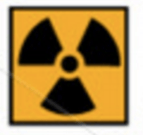
What safety symbol is this? 
a)
biohazard
b)
radiation
c)
toxic
d)
corrosive
11.
What safety symbol is this?
a)
Plant Safety
b)
Animal Safety
c)
Electrical Safety
d)
Hand Protection
12.
What safety symbol is this?
a)
Eye Protection
b)
Clothing Protection
c)
Hand Protection
d)
Heat Protection
13.
What safety symbol is this? 
a)
Electrical Safety
b)
Animal Safety
c)
Heat Protection
d)
Sharp Object Hazard
14.
What does this symbol indicate? 
a)
Fumes are present; ventilation required.
b)
Fumes are present; inhale deeply.
c)
Moisture is condensing; use a test tube to collect. 
d)
Spill safety.
15.
A series of steps used by scientists to solve a problem or answer a question. 
a)
scientific method
b)
recipe
c)
data collection
d)
metric system
16.
Which is NOT a step in the scientific method?
a)
Make observation
b)
Form a theory
c)
Collect data
d)
Form a hypothesis
17.
This variable in an experiment is the one being changed by the scientist. 
a)
dependent variable
b)
independent variable
c)
data
d)
control group
18.
Testing a hypothesis often involves a(n):
a)
answer
b)
experiment
c)
problem
d)
safety check
19.
What is a hypothesis?
a)
A hypothesis is the right answer to an experiment.
b)
A hypothesis is the wrong answer to an experiment.
c)
A hypothesis is an educated guess.
d)
I don't know.
20.
The name of the information that you get from your experiment (you organize it into charts and graphs).
a)
observations
conclusion
b)
data
c)
variables
d)
hypothesis
21.
The summary at the end of an experiment that explains the results. 
a)
conclusion
b)
procedures
c)
materials
d)
responding variable
22.
An experiment is performed on plants to see how different liquids affect plant growth. Each plant in the experiment is given a different liquid; water, apple juice, or milk. Each plant has the same amount of soil, sunlight, and listens to the same music. In this investigation, the independent variable is ...
a)
The type of plant
b)
The amount of sunlight
c)
The type of music
d)
The type of liquid
23.
Dependent variable means
a)
the scientist controls what to test
b)
educated guess
c)
ask a question
d)
what is being measured
24.
If you increase the amount of spinach you eat, then you will increase the iron in your blood. 
What's the dependent variable?
a)
increase the amount of iron in your blood
b)
spinach you eat
25.
What is the first step in the scientific method?
a)
Ask a question
b)
Conclusion
c)
No Horse Play
d)
Observe
26.
If I ride my bike to school instead of walking, then I will get to school faster. What is the dependent variable?
a)
True
b)
How fast you get to school
c)
Riding a bike or walking
d)
False
27.
Flammability (burns): Chemical or Physical Property
a)
Chemical Property
b)
Physical Property
28.
Solubility (dissolves): Chemical or Physical Property
a)
Chemical Property
b)
Physical Property
29.
One cup of water is left outside for two days when it was checked there was only half a cup left. What happened?
a)
evaporation; chemical change
b)
condensation; physical change 
c)
evaporation; physical change
d)
condensation; chemical change
30.
Which one of these is a chemical property?
a)
melting point
b)
boiling point
c)
color
d)
flammability
31.
Which of the following is not a chemical property? 
a)
rusting 
b)
boiling 
c)
rotting 
d)
burning 
32.
Ability to rust is this type of property:
a)
Physical property
b)
Chemical property
33.
Physical properties are
a)
properties that can be observed without changing the identity of the substance
b)
properties that describe how a substance changes into a completely different substance
34.
which one is the definition of chemical property?
a)
a property or characteristic of a substance that is observed during a reaction where the chemical composition of a substance is changed
b)
any change that results in the formation of new chemical substances
c)
combustibility
35.

The ability to hammered into a thin sheet or be bent is

a)

Ductility

b)

Solubility

c)

Density

d)

Malleability

36.

When an object has the ability to be stretched into a thin wire this is

a)

Density

b)

Ductility

c)

Dirtability

d)

Dissovility

37.

The positive particles of an atom are

a)

electrons

b)

positrons

c)

neutrons

d)

protons

38.
the central region of an atom where its neutrons and protons are is its 
a)
nucleus 
b)
electron cloud
c)
core 
d)
center 
39.
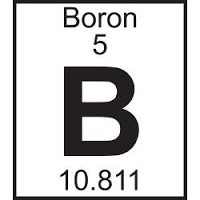
Which number here is my atomic number?
a)
5
b)
10.811
40.
How many protons does this atom have?
a)
2.5
b)
6
c)
5
d)
10.811
41.
In order for me to find the number of neutrons, I must round the atomic mass and then do what?
a)
atomic number-atomic mass
b)
atomic number x atomic mass
c)
atomic mass + atomic number
d)
atomic mass - atomic number
42.
What part of the atom is the arrow pointing to?
a)
nucleus
b)
proton
c)
electron shell
d)
electron
43.
Particles in an atom that are neutral and have no charge are 
a)
negatrons 
b)
electrons 
c)
neutrons 
d)
protons 
44.
A section of the Periodic Table of Elements is provided. What is the chemical symbol for magnesium?
a)
12
b)
Mg
c)
24.31
d)
Magnesium
45.
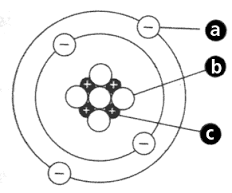
B and C are found in the ______ of an atom.
a)
Energy levels
b)
Space
c)
Nucleus
d)
Outside
46.
Which of these is the electron?
a)
A
b)
B
c)
C
d)
D
47.
all matter is made of what 
a)
energy 
b)
atoms 
c)
electrons 
d)
compounds 
48.
Which of these is the proton.
a)
A
b)
B
c)
C
d)
None
49.
Which of the following is NOT a type of subatomic particle?
a)
plasmids
b)
proton
c)
neutron
d)
electron
50.
Each row in the periodic table is called a 
a)
group or family
b)
period
c)
cluster
d)
unit
51.
Each column in the periodic table is called a 
a)
period
b)
group or family
c)
cluster
d)
unit
52.
The family in the periodic table that contains the most reactive metals is the_______
a)
Alkaline Earth Metals
b)
Transition Metals 
c)
Alkali Metals
d)
Other Metals
53.
Which group of the periodic table is composed of inert (not reactive)  gases?
a)
alkali metals
b)
alkaline earth metals
c)
halogens
d)
noble gases
54.
Elements which are shiny and conduct electricity and heat are called
a)
metals
b)
nonmetals
c)
metalloids
d)
nonexistent
55.
The yellow atoms are called 
a)
metals
b)
nonmetals
c)
metalloids
d)
noble gases
56.
The atoms along the stair step or zig-zag line are called 
a)
metals
b)
nonmetals
c)
metalloids
d)
noble gases
57.
Which of the 3 major groups contains the most elements?
a)
Metals
b)
Metalloids
c)
Nonmetals
58.
In what section would Transition Metals be found?
a)
orange
b)
light blue
c)
blue
d)
white
59.
The metals of group 2 are called
a)
transition metals
b)
alkaline earth metals
c)
lanthanides
d)
alkali metals
60.
The highlighted group is the 
a)
alkali metals
b)
alkaline earth metals
c)
halogens
d)
noble gases
61.
Elements that are gases, brittle and poor conductors are classified as what kind of elements?
a)
Nonmetals
b)
Metals
c)
Metalloids
d)
Alkali Metals
62.
Elements in the same group or family are expected to have  ________
a)
Similar Chemical Properties
b)
Same number of Protons
c)
Same Atomic number
63.
Which group on the Periodic Table has 3 Valence electrons(electrons on last energy level)?
a)
Group 13
b)
Group 3
c)
Group 17
64.
Group 2 Alkaline Earth elements are 
a)
more reactive than the alkali metals
b)
less reactive than the alkali metals
c)
unreactive
65.
Elements in the same period have
a)
same number of energy levels
b)
same number of protons
c)
same number of valence electrons
d)
similar physical and chemical properties
66.
How many valence electrons does magnesium have?
a)
1
b)
2
c)
12
d)
24
67.
How many valence electrons do atoms in group 16 have?
a)
4
b)
5
c)
6
d)
7
68.
What group number has 1 valence electron for each atom?
a)
group 1
b)
group 2
c)
group 10
d)
group 12
69.
Which statement is true about the properties of metalloids?
a)
Metalloids tend to have very similar properties to metals
b)
Metalloids tend to have very similar properties to nonmetals
c)
Metalloids tend to have properties that are a mixture of those of metals and nonmetals
d)
The properties of metalloids are completely different from both metals and nonmetals
70.
Which of the following is the most reactive group of non-metals? 
a)
Oxygen family (Group 16)
b)
Noble Gases
c)
Halogens (Group 17)
d)
Nitrogen family (Group 15)
71.

On the periodic table, Groups are

a)

Horizontal rows

b)

Vertical columns

72.

On the periodic table, Periods are

a)

Horizontal rows

b)

Vertical columns

73.

What is a valence electron?

a)

Electrons in the first energy shell

b)

Electrons in the second energy shell

c)

Electrons in the outer shell

d)

Total number of electrons

74.

The innermost energy level has a maximum of how many electrons?

a)

1

b)

2

c)

6

d)

8

75.

Which element is this?

a)

Nickel

b)

Neon

c)

Sodium

d)

Nitrogen

76.

Name this element.

a)

Argon

b)

Chlorine

c)

Aluminum

d)

Boron

77.

Name this element.

a)

Neon

b)

Magnesium

c)

Sodium

d)

Manganese

78.

What is the atomic number of this atom?

a)

2

b)

4

c)

6

d)

8

79.

What is the mass number of this atom?

a)

1

b)

3

c)

4

d)

7

80.

What is this element?

a)

Beryllium (atomic #4)

b)

Boron (atomic #5)

c)

Carbon (atomic #6)

d)

Nitrogen (atomic #7)

81.

How many valence electrons?

a)

2

b)

3

c)

4

d)

5

82.

How many valence electrons?

a)

2

b)

3

c)

4

d)

5

83.
Remember to use your Periodic Table of Elements to help you identify which Bohr Model is pictured...
a)
carbon
b)
nickel
c)
neon
d)
zinc
84.
Remember to use your Periodic Table of Elements to help you identify which Bohr Model is pictured...
a)
calcium
b)
sulfur
c)
aluminum
d)
boron
85.

Remember to use your Periodic Table of Elements to help you identify which Bohr Model is pictured...

a)

carbon

b)

magnesium

c)

neon

d)

zinc

86.
Remember to use your Periodic Table of Elements to help you identify which Bohr Model is pictured...
a)
calcium
b)
magnesium
c)
bromine
d)
nickel
87.
Remember to use your Periodic Table of Elements to help you identify which Bohr Model is pictured...
a)
calcium
b)
magnesium
c)
bromine
d)
neon
88.
Remember to use your Periodic Table of Elements to help you identify which Bohr Model is pictured...
a)
oxygen
b)
magnesium
c)
bromine
d)
chlorine
89.
Remember to use your Periodic Table of Elements to help you identify which Bohr Model is pictured...
a)
lithium
b)
potassium
c)
bromine
d)
iron
90.

Remember to use your Periodic Table of Elements to help you identify which Bohr Model is pictured...

a)

carbon

b)

potassium

c)

nitrogen

d)

iron

91.
How many electrons should Lithium have around its Lewis dot model?
a)
1
b)
2
c)
3
d)
4
92.
How many electrons should Beryllium have around its Lewis dot model?
a)
1
b)
2
c)
3
d)
4
93.
How many electrons should Boron have around its Lewis dot model?
a)
1
b)
3
c)
5
d)
7
94.
How many electrons should Carbon have around its Lewis dot model?
a)
1
b)
3
c)
4
d)
5
95.
How many electrons should Nitrogen have around its Lewis dot model?
a)
1
b)
3
c)
4
d)
5
96.
How many electrons should Oxygen have around its Lewis dot model?
a)
5
b)
6
c)
7
d)
8
97.
How many electrons should Neon have around its Lewis dot model?
a)
5
b)
6
c)
7
d)
8
98.
How many electrons should Sodium have around its Lewis dot model?
a)
1
b)
2
c)
3
d)
4
99.
How many electrons should Magnesium have around its Lewis dot model?
a)
1
b)
2
c)
3
d)
4
100.
How many electrons should Magnesium have around its Lewis dot model?
a)
1
b)
2
c)
3
d)
4
101.
How many electrons should Aluminium have around its Lewis dot model?
a)
1
b)
2
c)
3
d)
4
102.
How many electrons should Sulfur have around its Lewis dot model?
a)
5
b)
6
c)
7
d)
8
103.
Two Reactants and One Product
a)
Decomposition
b)
Combination
c)
Combustion
d)
Single Replacement
104.
CxHy +O--> H2O + CO2
a)
Decomposition
b)
Double replacement
c)
Combustion
d)
Single Replacement
105.
Always starts with a hydrocarbon that reacts with oxygen and produces carbon dioxide and water. 
a)
Decomposition
b)
Synthesis
c)
Combustion
d)
Single Replacement
106.
One reactant into several products.
a)
Decomposition
b)
Synthesis
c)
Combustion
d)
Single Replacement
107.
One element replaces another in a compound.
a)
Synthesis
b)
Combustion
c)
Single Replacement
d)
Double Replacement
108.

two or more elements chemically combined

a)

compound

b)

chemical reaction

c)

octet rule

d)

chemical bond

e)

ionic bond

109.

when atoms transfer electrons in order to be stable

a)

compound

b)

chemical reaction

c)

octet rule

d)

chemical bond

e)

ionic bond

110.

process by which the atoms of one or more substances are rearranged to form different substances

a)

compound

b)

chemical reaction

c)

octet rule

d)

chemical bond

e)

ionic bond

111.

atoms will gain, lose or share electrons in order to have 8 electrons in their outer shell

a)

compound

b)

chemical reaction

c)

octet rule

d)

chemical bond

e)

ionic bond

112.

force that holds atoms together in a compound

a)

compound

b)

chemical reaction

c)

octet rule

d)

chemical bond

e)

ionic bond

113.

starting ingredients in a reaction

a)

ions

b)

oxidation number

c)

cation

d)

anion

e)

reactants

114.

ion with a positive charge

a)

ions

b)

oxidation number

c)

cation

d)

anion

e)

reactants

115.

ion with a negative charge

a)

ions

b)

oxidation number

c)

cation

d)

anion

e)

reactants

116.

charged atom that has gained or lost electrons

a)

ions

b)

oxidation number

c)

cation

d)

anion

e)

reactants

117.

the charge on an ion

a)

ions

b)

oxidation number

c)

cation

d)

anion

e)

reactants

118.

chemical reaction that absorb energy as heat

a)

products

b)

chemical change

c)

physical change

d)

precipitate

e)

endothermic

119.

substances that are formed at the end of a chemical reaction

a)

products

b)

chemical change

c)

physical change

d)

precipitate

e)

endothermic

120.

when a change has occurred that can revert back to the original form. There is no rearrangement of atoms

a)

products

b)

chemical change

c)

physical change

d)

precipitate

e)

endothermic

121.

an insoluble solid compound that comes out of a solution

a)

products

b)

chemical change

c)

physical change

d)

precipitate

e)

endothermic

122.

when a new substance is formed and a chemical reaction has occurred. there is a change in atomic structure

a)

products

b)

chemical change

c)

physical change

d)

precipitate

e)

endothermic

123.

a reactant that blocks the reaction from occurring or it slows down the reaction rate

a)

exothermic reaction

b)

reaction rate

c)

catalyst

d)

inhibitor

124.

the rate at which a chemical reaction occurs

a)

exothermic reaction

b)

reaction rate

c)

catalyst

d)

inhibitor

125.

reactant that speeds up the chemical reaction

a)

exothermic reaction

b)

reaction rate

c)

catalyst

d)

inhibitor

126.

chemical reaction that releases energy as heat

a)

exothermic reaction

b)

reaction rate

c)

catalyst

d)

inhibitor

127.

which of the follow is NOT why elements form compounds

a)

elements form compounds to be stable

b)

elements form compounds to have a full outer shell

c)

elements form compounds to create a cation

128.

which group of elements are the least reactive group?

a)

alkali metals

b)

halogens

c)

noble gases

d)

transition metals

129.

Which of the follow is NOT why an ionic bond forms, how it forms, and the two parts that make it up

a)

ionic bonds form to make elements more stable

b)

a metal (cation) transfers its valence electrons to a nonmetal(anion)

c)

to make the overall charge of the atom 0

d)

a metal (cation) transfers its valence electrons to another metal(cation)

130.

Which of the following is NOT an explanation of the law of conservation of matter and how it relates to the amount of reactants and products in a chemical reaction

a)

matter cannot be created or destroyed it can only be transferred or changed forms

b)

the amount of reactants you start with should equal the amount of products you end with

c)

matter cannot not be created but it can be destroyed and transferred

131.

Which is NOT an evidence that a chemical reaction has occurred?

a)

release of light

b)

state of matter change

c)

sudden color change

d)

formation of a precipiate

e)

change in odor

132.

2 compounds react to form 2 new compounds and it forms a precipitate

a)

synthesis(combination)

b)

decomposition

c)

combustion

d)

single displacement

e)

double displacement

133.

2 or more reactants form 1 product

a)

synthesis(combination)

b)

decomposition

c)

combustion

d)

single displacement

e)

double displacement

134.

1 reactant breaks down into 2 or more products

a)

synthesis(combination)

b)

decomposition

c)

combustion

d)

single displacement

e)

double displacement

135.

1 element reacts with 1 compound and swaps, making 1 new compound and 1 new element.

a)

synthesis(combination)

b)

decomposition

c)

combustion

d)

single displacement

e)

double displacement

136.

something is burned, oxygen is always a reactant, carbon dioxide and water are always products

a)

synthesis(combination)

b)

decomposition

c)

combustion

d)

single displacement

e)

double displacement