
 Worksheets
7th Science Semester Review AMCMS 26
Total questions: 140
Worksheet time: 2hrs 15mins
Which features do the outer planets have in common?
A. They have no moons.
B. They have rocky surfaces.
C. They have extremely high temperatures.
D. They have atmospheres of hydrogen and helium gases.
Which features do all inner planets have in common?
A. They have rings.
B. They have moons.
C. They have rocky surfaces.
D. They have thick atmospheres.
Which statement about the Sun is correct
A. The Sun is the closest star to Earth.
B. The Sun is smaller than most planets.
C. The Sun is made of rock, minerals, and hot gases.
D. The Sun has a surface temperature similar to Jupiter.
Which statement best describes an asteroid?
A. An asteroid has an icy tail.
B. An asteroid has an atmosphere.
C. An asteroid is a ball of gas that orbits a planet.
D. An asteroid is a rocky object that orbits the Sun.
Which statement best compares the Sun to Earth?
A. They are similar in size, and Earth revolves around the Sun.
B. They are similar in size, and the Sun revolves around Earth.
C. The Sun is much larger, and Earth revolves around the Sun.
D. The Sun is much larger, and the Sun revolves around Earth
Which statement best describes comets?
A. Comets rotate on an axis.
B. Comets have thick atmospheres.
C. Comets can sometimes have moons.
D. Comets are composed of ice, rock, and gas.
What is at the center of our Solar System and also the largest object in it?
Earth
Jupiter
The Sun
The Moon
What is the order of the planets from the Sun?
Venus, Mercury, Earth, Mars, Saturn, Jupiter, Uranus, Neptune
Mercury, Venus, Earth, Mars, Neptune, Uranus, Saturn, Jupiter
Neptune, Uranus, Saturn, Jupiter, Mars, Earth, Venus, Mercury
Mercury, Venus, Earth, Mars, Jupiter, Saturn, Uranus, Neptune
Why does Earth's distance from the Sun make it the perfect place for life to exist?
it impacts temperature.
Earth isn't
too close or
too far away (too hot or cold)
from the Sun
the distance from the Sun impacts gravity.
Earth isn't
too close or
too far (too little
or too much gravity)
from the Sun
the distance from the Sun impacts the atmosphere.
Earth isn't
too close or too far (none or too much atmosphere)
from the Sun
the distance from the Sun impacts the presence of water.
Earth isn't
too close or too far (none or too much water)
from the Sun
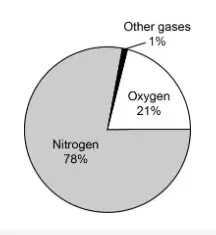
Earth's atmosphere is composed of the following gases.
To support human life, a planet's atmospheric composition needs to be made of predominantly---
carbon
and
argon
nitrogen
and
oxygen
carbon
and
oxygen
nitrogen
and
argon
Which of the following characteristics of Earth allow life to exist here?
1. presence of water
2. proximity to the Sun
3. composition of the atmosphere
4. presence of the Moon
1 and 2 only
1 and 3 only
1, 2, and 3 only
1, 2, 3, and 4
Earth can support life because it has water, an atmosphere, and weather.
Which of the following also contributes to supporting life on Earth?
the presence of
seasons
the proximity to its
star
the presence of
the Moon
the length of its
days
In terms of gravity, the larger the mass---
the larger the gravitational pull of an object
the smaller the gravitational pull of an object
the larger the distance from the Sun
the shorter the distance from the Sun
Which 2 variables determine gravitational pull?
gravitational pull does not change; therefore, there are no variations that determine it
distance between the objects
and
ages of the objects
distance between the objects
and
masses of the objects
ages of the objects
and
masses of the objects
In terms of gravity, as distance increases...
the gravitational pull on an object increases
the gravitational pull on an object decreases
the friction on an object increases
the friction on an object decreases
What force is responsible for the movement of all objects within our solar system?
magnetism
inertia
friction
gravity
Which factor is MOST responsible for the average temperature of a planet?
distance from the sun
the availability of water
the length of a day on the planet
the composition of the atmosphere

This is a diagram of the inner solar system (not to scale) including the four inner planets, the asteroid belt, and the sun. The orbital paths of the planets have been added.
The pattern of motion of objects in the solar system indicates that which of these planets will be revolving the fastest around the sun?
Mercury
Venus
Earth
Mars
A star begins as a ball of dust particles and gases pulled together by
heat energy
protostars
inertia
gravity
Which of the following statements is the reason why the planets and stars are round?
Gravity pushes out from the edge of the planet or star.
Gravity pushes out from the center of the planet or star.
Gravity pulls toward the center of the planet or star.
Gravity pulls toward the edge of the planet or star.
What is an example of natural satellite
a nebula
the Hubble Space telescope
the moon
a galaxy
An orbit is the pathway that one space body -
takes only around the Sun
takes around any other body in space
spins on an axis
forces on a smaller space body
What would happen if the gravitational force between the Earth and the Moon were to suddenly disappear?
The Moon would continue to orbit the Earth
The Moon would move in a straight line away from the Earth
The Moon would fall into the Earth
The Moon would explode
What would happen to the orbits of the planets if the Sun's gravity suddenly disappeared?
They would continue in their current orbits
They would move in straight lines
They would fall into the Sun
They would collide with each other
Choose some requirements necessary for Earth to allow life to exist. Select three answers.
Size of the planet
Percentage of landmass
Composition of the atmosphere
Presence of water
Proximity to the sun
Green substances floating on the surface of water are called _______.
algae
nutrients
bacteria
phosphates
Layers and areas of rocks below ground where all the cracks and spaces between rocks are full of water is called a(n) ____________.
sinkhole
dam
aquifer
dead zone
Cutting down trees near water causes _____________.
excess nutrients to end up in the ocean
fertilizer to end up in the ocean
excess sediments to end up in the ocean
algae to grow quickly
Three percent of all water is _________.
ocean
rivers
ice
fresh water
Where is the most fresh water found?
lakes
rivers
beneath Earth's surface
Why are all the fish and plants dying that stay in a dead zone?
There are too many plants in the area and are using up most of the oxygen.
The algae are feeding on all the bacteria and using up most of the oxygen.
Bacteria are multiplying after eating the decomposing algae and are using up most of the oxygen.
There are too many fish in the area and are using up most of the oxygen.
Choose all that will cause aquifers to have less water.
a heavy rain
urbanization
water in a well being removed faster than it is replaced
none of the answers
Waste matter or other materials that are introduced into water and that is harmful to organisms that live in, drink or are exposed to the water is called
water pollution
thermal pollution
water quality
water supply
The measure of how clean or polluted water is refers to
water quality
water supply
thermal pollution
water pollution
Water found below Earth's surface is called
groundwater
surface water
potable
reservoir
A(n) ____________ is an artificial body of water that usually forms behind dams.
reservoir
potable
surface water
ground water
Any form of water that is above or on the Earth's surface is called
surface water
potable
groundwater
reservoir
If water is _______________, it is suited for drinking.
potable
reservoir
surface water
groundwater
________ is pollution that comes from a specific site.
non-point source pollution
point-source pollution
nonrenewable resouce
renewable resource
________________ is the practice of using resources wisely.
Nature
Recycle
Conservation
Pollution
Which of the following is one way humans pollute the hydrosphere?
fishing
farming and causing soil runoff
going on a paddle boat
cleaning up an oil spill
Why is it important to clean, conserve and protect water?
Water is expensive
Water is a living thing
Water can be frozen
Water is a limited resource


What type of heat transfer takes place in liquids and gasses?
Conduction
Convection
Radiation
Thermal Equilibrium

What is defined as a measure of the average kinetic energy of the particles in a sample of matter?
Temperature
Heat
Specific Heat
Mechanical Energy
_____________ is the form of energy that is transferred between systems or objects with different temperatures.
Temerature
Heat
Specific Heat
Mechanical Energy
How does heat energy reach the Earth from the Sun
Convection
Radiation
Conduction
Insulation
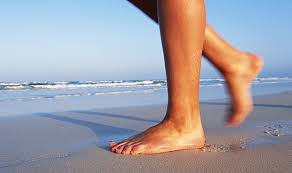
_________________ is the transfer of energy through or by electromagnetic waves.
Conduction
Convection
Radiation
Movements of water in a pot, molten mantle in the earth's crust and hot air rising in the atmosphere are examples of
Sublimation
Convection
Conduction
Radiation


When two materials that are in contact have the same temperature, the materials are said to be in thermal ________________.
transfer
energy
equilibrium
temperature
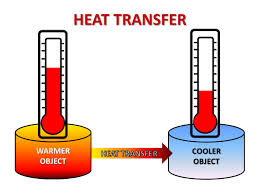
Heat always moves from _______1_________ objects to _________2_______ objects.
1 cooler
2 warmer
1 warmer
2 cooler
Hot water is poured into a mug and the mug gets hot. This is an example of which type of energy transfer?
radiation
conduction
convection
This is not an energy transfer
Radiation transfers energy by moving matter.
True
False
A hot iron is turned off and cools down to room temperature. The iron cools because __________.
the iron does not hold heat very well
the room transfers cold energy to the iron
thermal energy is transferred from the warm iron to the cooler room
the thermal energy is destroyed during an interaction with the room
Which type of energy transfer allows the Sun to warm Earth?
conduction
convection
radiation
transmission
Which type of energy transfer is responsible for the movement of magma in Earth's interior?
conduction
convection
radiation
melting
Conduction occurs through ________
density differences
waves
contact
Convection occurs through________
contact
density differences
waves
Radiation occurs through ________
waves
density differences
contact
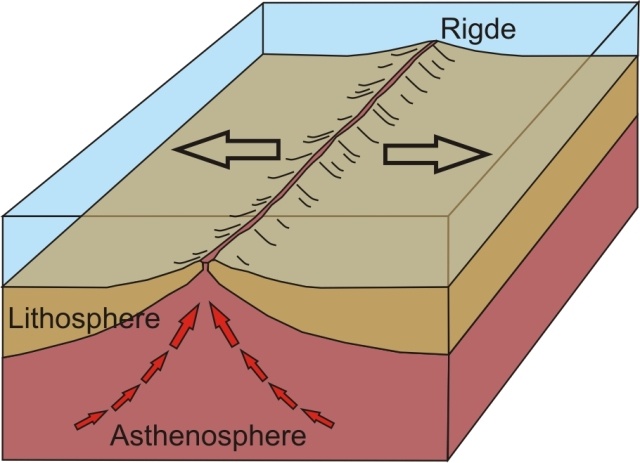
What is the process called where the ocean floor spreads apart at mid-ocean ridges?
Convection
Seafloor Spreading
Plate Tectonics
Divergent Boundary
Where do convection currents happen?
Crust
Mantle
Core
None of the above
Hot liquids _____ and cold liquids _____.
sink, sink
rise, rise
sink, rise
rise, sink
This scientist found most of the evidence for Continental Drift.
Harry Hess
Alfred Wegener
John Smith
Albert Einstein
Which of these is a key evidence for Continental Drift?
Continental shapes
Rock layers
Fossil record
All of the above
Why causes Earth's plates to move?
Convection currents
Magma chambers exploding in the mantle
New crust being produced
Fault lines pushing against crust
Earth's crust is broken into large pieces called _____.
Faults
Rifts
Trenches
Plates
Seafloor spreading and subduction refers to ____.
Continental Drift
Theory of Plate Tectonics
Both
When an oceanic plate hits a continental plate...
The oceanic plate goes underneath the continental plate
The continental plate goes underneath the oceanic plate
The two plates push up to create mountains
Both the oceanic and continental plate go back into the mantle to get recycled.
New crust is made at mid-ocean ridges.
True
False
When magma/lava cools it becomes ____.
Granite
Volcanic rock
Limestone
Shale
Where is old crust destroyed?
Mid-ocean ridges
Mountains
Subduction zones/trenches
None of these

Which oceanic crust/rock would be older?
A
B
Same age
What is the supercontinent that existed about 200 million years ago?
Gondwana
Pangea
Rodinia
None of these

What structure is the arrow pointing to?
Subduction zone
Stratovolcano
Mid-ocean ridge
Pangea
Which scientist came up with the Theory of Plate Tectonics?
Harry Hess
Mark Smith
Albert Einstein
Justin Bieber
What is the theory that explains how the Earth's lithosphere is divided into several large and small plates that move and interact with each other?
Continental Drift
Pangaea
Plate Tectonics
Seafloor Spreading
Who proposed the theory of continental drift?
Alfred Wegener
Isaac Newton
Marie Curie
Charles Darwin
What is the name of the supercontinent that existed about 300 million years ago, which later broke apart to form the current continents?
Atlantis
Laurasia
Gondwana
Pangaea
What are the three types of plate boundaries?
Divergent boundaries, convergent boundaries, and transform boundaries
Subduction boundaries, collision boundaries, and sliding boundaries
Tectonic boundaries, fault boundaries, and rift boundaries
Oceanic boundaries, continental boundaries, and island boundaries
Which type of plate boundary occurs when two plates move away from each other?
Transform plate boundary
Divergent plate boundary
Convergent plate boundary
Subduction plate boundary
Which type of plate boundary occurs when two plates collide and one is forced beneath the other?
Subduction plate boundary
Convergent plate boundary
Transform plate boundary
Divergent plate boundary
Which type of plate boundary occurs when two plates slide past each other horizontally?
convergent plate boundary
divergent plate boundary
subduction plate boundary
transform plate boundary
What is the term for the shaking or trembling of the Earth's surface caused by the sudden release of energy in the Earth's crust?
ground shaking
tremor
seismic activity
earthquake
Which best describes the relationship between depth into the earth and temperature/density/pressure?
As depth into the earth increases temperature, density, and pressure decrease.
As depth into the earth increases temperature, density, and pressure increase.
As depth into the earth decreases temperature, density, and pressure increase.
As depth into the earth increases temperature and density increases but pressure decreases.
Which layers of the earth make up the lithosphere?
Upper mantle and crust
continental and oceanic crust
Mantle, crust, outer core
Inner core and outer core
71% of earth's surface is covered in ___________.
Trees
Desert
Urban development
Water

What is the energy source for convection currents in the asthenosphere?
Geothermal heat
Heat from the sun that permeates through earth's crust
Heat from the core
Earth's magnetic field

Which type of crust is denser; continental crust or oceanic crust?
Continental crust
Oceanic Crust

Why does oceanic crust subduct below continental crust?
Continental crust is denser than oceanic crust
Oceanic crust is more drawn to earth's iron core
Oceanic crust is denser than continental crust
Oceanic crust is further below continental crust so it's the first to subduct

Where do volcanoes tend to form?
Hotter area's of the earth
Geothermal vents
Island chains
Subduction zones
Which of these is not a geological event due to the movement of tectonic plates?
Deltas forming
Volcanoes
Earthquakes
Mountain forming
Why do volcanoes form at subduction zones and not other boundaries?
Convergent boundaries produce infant volcanoes that are destroyed before they can release magma.
At subduction zones the dense oceanic crust melts, becomes less dense, and rises to the surface as hot magma
Transform boundaries are when tectonic plates slide past each other creating too much energy that would destroy volcano formation

Why would fossils of the same type of land animal be found on two continents separated by an ocean?
Early humans brought plant and animal specimens between continents
Over time the land animals evolved flippers, gills, and other aquatic body parts to swim to the other continent
The continents were once together in Pangea
The environments the fossils were found in are similar. Therefore they created the same types of animals.
Why does magma rise in convection currents when it's heated up and sink when it cools down?
When magma heats up it become less dense which causes it to rise.
When magma heats up it becomes attracted to the oceanic crust on the surface
When magma cool off it becomes more attracted to earth's core so it sinks
Which of these observations DO NOT support continental drift theory
The continents seem to fit together well
The same fossils are found on different continents
Different landforms are found on different continents
The continents are still moving a few centimeters each year
A small amount of NaCl is dissolved in water to make a solution. In this solution
water is the precipitate
water is the solute
NaCl is the solvent
NaCl is the solute
Items in a ________________ are difficult or impossible to pull apart.
mixture
physical change
solution

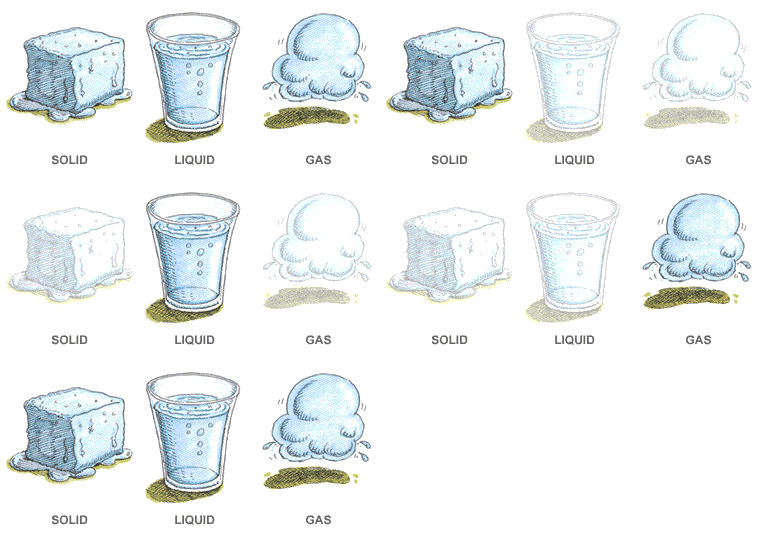
Is this a MIXTURE or a SOLUTION?
mixture
solution
The main substance in a solution that dissolves other substances.
solute
solvent
solution
solubility
The amount of a solute in a given amount of a solution.
Concentration
Dissolution
Dilution
Agitation
When you lower the concentration of a solution by adding more solvent.
Dilution
Solubility
Concentration
Aqueous Solution
A measure of how much a given substance is mixed with another substance.
dissolve
homogeneous mixture
solubility
concentration
A combination of two or more substances that is exactly the same throughout
homogeneous mixture
solubility
concentration
dissolve
The maximum concentration of solute that can be dissolved in a solvent.
dissolve
concentration
homogeneous mixture
solubility
To pass into solution.
homogeneous mixture
dissolve
concentration
solubility
A graph showing the relationship between solubility and another variable such as temperature or pressure.
solubility
solubility curve
concentration
dissolve
A substance that is dissolved in another substance to form a solution.
solute
solution
solvent
solubility
A homogeneous mixture of two or more substances.
solute
solution
solubility
solvent
A solid, liquid, or gas in which a solute is dissolved to form a solution.
solubility
solute
solution
solvent
A solution that contains the maximum amount of solute the solution can hold at a given temperature and pressure.
unsaturated solution
saturated solution
solubility
solution
A solution that can still dissolve more solute at a given temperature and pressure.
saturated solution
unsaturated solution
solvent
solute


The area around the pacific plate where boundaries form is called...
death ring
fire zone
ring of fire
zone of fire

