
 Worksheets
Semester 1 Final Review
Total questions: 141
Worksheet time: 1hrs 24mins
Mutations are...
Changes in the sequence of DNA
Broken chromosomes
Bad genes
What kind of mutations exist?
neutral mutations
all of these
beneficial mutations
harmful mutations
Chromosomes are found
only in muscle cells
in the genes of the cell
in the nucleus of the cell
in the proteins of the cell
Chromosomes are made of
DNA
genes
proteins
traits
What do genes do?
Give the body chromosomes.
Control the DNA.
Control the production of proteins.
What do proteins do?
Form cells
Control cell processes
Make DNA
Determine traits
What is a mutation?
A temporary change in the sequence of the DNA inside a cell
A permanent change in the sequence of the DNA inside a cell
A virus that attacks the DNA inside a cell
Bacteria that attack the DNA inside a cell
What happens when the genetic code in a gene is altered?
This situation has never occurred
A defective protein is produced, causing a mutation.
The genetic code is corrected by the lysosomes.
Nothing changes; the correct proteins are still made.
What is an example of a neutral mutation?
None of these
a disease
a change in eye color
lactose intolerance
What is an example of a beneficial mutation?
ability to digest milk
cancer
hemophilia
none of the above

The basalt intrusion occurred...
after the limestone was deposited.
before the granite was formed.
before the limestone was deposited.
before all three layers were formed.

Which of the following conclusions can be drawn from the data in this diagram?
Jellyfish and trilobites never competed for resources.
Trilobites and dinosaurs did not live at the same time.
Most mammals are in competition with birds for resources.
Mammals did not appear until after the dinosaurs went extinct.
The fossil remains of organisms with skeletons are not found in the lowest layers of rock discovered. How is the lack of fossilized skeletons in the lowest rock layers best explained?
Organisms with skeletons did not evolve until after these rock layers formed.
The fossils of organisms with skeletons are only found in the oldest rocks.
Fossil skeletons are usually crushed if other rock layers are above the ones they are in.
Organisms with skeletons live only at the highest altitudes, which is where they turn to fossils.

The illustration here shows rock layers in their original order, along with a fracture in some rock layers caused by an earthquake. Based on the evidence in the illustration, an earthquake occurred -
before layer W was deposited.
before layer X was deposited
after layer Y was deposited.
after layer Z was deposited.

The illustration shows rock layers from three different locations and fossils the rock layers contain. The fossils are all trilobites, ancient organisms that were different over time. Which conclusion can be drawn from the information in the illustration?
The trilobite Cyclopygidae appeared most recently of those shown here.
The trilobite Ceratopigidae appeared before all the others.
The trilobite Remopleiridae is the oldest of all the trilobites.
The trilobite Asaphidae appeared most recently of those shown here.
When examining rock layers, you will find the oldest layers at the bottom. Newer minerals and rock are piled on top and, over time, this creates distinct rock layers. This is called _______.
The Law of Superstition
The Law of Suspicion
The Law of Horizontality
The Law of Superposition

Fossils of trees were discovered in a sedimentary rock layer, and in a rock layer below were fossils of clams. Based on this evidence, what conclusion can be made about the sequence of climates in the past in the area where the fossils were discovered?
Based on the evidence, it can be assumed that this area was an underwater forest.
Based on the evidence, it can be assumed that this area was a forest before it was a beach or ocean.
Based on the evidence, it can be assumed that this area was an ocean or beach before it was a forest.
The mineralized remains of organisms and the rock layers in which they are found
Fossil
Rock Strata
Stratigraphy
Fossil Record
The sedimentary layers of rock in Earth
Fossil
Rock Strata
Stratigraphy
Fossil Record
The study of rock layers
Fossil
Rock Strata
Stratigraphy
Fossil Record
The preserved remains or trace of an organism that was once living
Fossil
Rock Strata
Stratigraphy
Fossil Record
The reproductive process in which a single cell makes a copy of itself
Variation
Inherited trait
Inherited trait
Asexual reproduction
When someone says that a daughter looks just like her mother, is it possible that the daughter is an exact copy of her mother?
No, because a daughter gets all of her alleles from her father.
Yes, because a daughter gets alleles from her mother.
No, because a daughter receives half of her genetic make up from her father.
Yes, because humans can practice asexual reproduction under certain circumstances.
Offspring resulting from asexual reproduction are always –
flowering plants
sterile
genetically diverse
genetically uniform
Different forms or versions of something
Variation
Asexual reproduction
Chromosome
Inherited trait
Inherited trait
A characteristic that is passed from parent to offspring
A single, highly organized and structured piece of DNA
Different forms or versions of something
The reproductive process involving two parents whose genetic material is combined to produce a new organism different from themselves
Why does sexual reproduction produce diverse offspring?
The cells of the offspring lack DNA.
The offspring all grow at different rates.
The offspring have a unique combination of DNA from its parents.
The offspring are spores.
A single, highly organized and structured piece of DNA
Chromosome
Inherited trait
Variation
Sexual Reproduction
Sexual reproduction
Different versions of a gene
The reproductive process involving two parents whose genetic material is combined to produce a new organism different from themselves
The reproductive process in which a single cell makes a copy of itself
A characteristic that is passed from parent to offspring
Two red flowers produce a white flower as an offspring. Which of the following best explains how this is possible?
It is a mistake.
A mutation occurred.
The parents were heterozygous, and the white flower is the expression of the recessive alleles.
White flowers are an adaptation to help with survival.
Alleles
The reproductive process involving two parents whose genetic material is combined to produce a new organism different from themselves
Different versions of a gene
Different forms or versions of something
A characteristic that is passed from parent to offspring
What will two homozygous-dominant parents (BB and BB) produce for offspring?
All offspring will be genotype BB.
All offspring will be genotype bb.
It is impossible to predict what the genotypes of the offspring will be.
All offspring will be genotype Bb.
What is the definition of chronological order?
The arrangement of things in the order that they occurred
The quality or state of having many different forms, types, ideas, etc.
The permanent disappearance of a species from Earth
The mineralized remains of organisms and the rock layers in which they are found that shows when and where long-dead organisms lived and how their bodies were structured

Fossil trees were discovered in a sedimentary rock layer. In the rock layer below are fossils of clams, similar to clams that are currently found on the shores of the Gulf of Mexico. Based on this evidence, we could conclude that the area where the fossils were discovered had what sequence of climates in the past?
Beach, followed by a forest
Rocky and dry, then very moist
Forest, and later a mountain
Very cold area, then much warmer
Geologists discovered a layer of rock formed millions of years in the past. Which of the following would provide the best evidence of what the environment was like when the rock formed?
The time when the rock appears to have formed
The sediments from which the rock is made
The fossil plants and animals found in the rock
The kinds of rocks above and below the rock layer
Finding fossils of what kind of organism in the rock layers below a forest would lead to the conclusion that the area long ago had a large lake?
Tall trees
Small reptiles
Flowering plants
Freshwater fish

The tables here give information on animal and plant fossils. Based on the information in the tables, which two fossils would most likely be found together in the same rock?
Fish skull and cactus
Mouse skull and seaweed
Alligator toe bone and fern
Shark’s tooth and marsh grass
Fossils are best used as evidence about which of these?
The processes that change rocks over time
How best to conserve natural resources
The plants and animals that lived long ago
What forces drive the water cycle on Earth
Finding fossils in an area can help us learn what about that location?
Which places in the region receive the most sunlight
The effect of the climate on the formation of soil
How modern plants and animals interact there
The kinds of organisms that lived there long ago
An area is currently a forest. What evidence would best indicate that this area was covered by water millions of years ago?
An increase in rainfall in the forest over time
Presence of plants in the forest that need water to live
Fossils of fish discovered in rocks below the forest
Insects living in the forest that lay their eggs in water

This table gives information on different fossils. According to the information on the table, finding which fossil in a region would lead to the conclusion that the area was, long ago, covered with trees?


Fossil ferns, like the ferns found in modern swamps, were discovered in a layer of rock. In a rock layer below were found the fossils of cactus, like those that live in hot, arid deserts today. Based on this evidence, we could conclude that the area where the fossils were discovered had what sequence of climates in the past?
Forest, followed by deep ocean
Cold climate that got warmer over time
Rushing river, then a dark cave
Very dry and then, much more damp
Herbivores are animals that eat plants. Finding many fossils of large herbivores in rocks that are millions of years old would lead to what conclusion about the ancient environment of an area? A reasonable conclusion is that the area was once a -
rocky seashore
thriving grassland
frozen lake
muddy swamp

In any undisturbed sequence of rocks deposited in layers, the youngest layer is on top and the oldest is on the bottom. This is called the
rock strata
radioactive dating
Law of Superposition
plate tectonics

The technique used to date materials, such as rocks or carbon, by observing the naturally occurring radioactive isotope is known as
radio frequency
carbon dating
rock strata
radioactive dating

Earth’s rocks change from one type into another over time due to various Earth processes. Changes occur in mineral compositions and physical structures. This is the
rock strata
rock cycle
metamorphic rock
geologic evidence

A bed or layer of sedimentary rock having approximately the same composition throughout is known as
superposition
evidence of geologic history
rock strata
rock cycle

Theory that the lithosphere is divided into tectonic plates that slowly move on top of the asthenosphere is known as
Law of Superposition
Fossil Theory
Evidence of Earth’s Geologic History
Plate Tectonic Theory
What do you call the type of reproduction in which the genetic materials from two different cells combine, producing an offspring?
pollination
sexual reproduction
fertilization
asexual reproduction
Which of the following is an advantage of sexual reproduction?
Genetic variation
Down syndrome
Mutation
New trait formed
All of the following statements are disadvantages of sexual reproduction except ______.
Takes much time to process reproduction
Hard t find a mate
Limited to some factors like fertilization cannot take place during pregnancy
Selective breeding
What type of reproduction takes place when one parent organism produces offspring without meiosis and fertilization?
pollination
sexual reproduction
asexual reproduction
fertilization
What do you call the type of asexual reproduction wherein a new organism grows by mitosis and cell division on the body of its parent?
fission
regeneration
budding
cloning
What type of asexual reproduction wherein it occurs when an offspring grows from a piece of its parent?
budding
fission
regeneration
vegetative reproduction
What do you call the form of asexual reproduction in which offspring grow from a part of a parent plant?
fission
budding
regeneration
vegetative reproduction
What do you call the type of asexual reproduction performed in a laboratory that produces identical individuals from a cell or from a cluster of cells taken from a multi cellular organism?
budding
fission
cloning
regeneration
All of the following are advantages of asexual reproduction except ____________.
produce varied offspring
spread and colonize certain part of an area
Reproduce without a mate
produce a large number of offspring
Which of the following is a disadvantage of asexual reproduction?
All organisms have genetic variation
Parents produces identical off spring which is not suitable for survival in a changing environment
Finding a mate is not needed
It can produce a lot of offspring
Which is an example of asexual reproduction by regeneration?
cloning sheep
lizard regrowing a tail
sea star arm producing a new organism
strawberry plant producing stolons
In _________,_____________ only one parent organism produces offspring.
sexual reproduction
asexual reproduction
pollination process
fertilization process
This type of reproduction involves two parents.
Asexual reproduction
Sexual reproduction
Which answer choice is NOT a type of asexual reproduction?
budding
fragmentation
fertilization
binary fission
Which type of reproduction produces an identical copy of the parent?
Sexual reproduction
Asexual reproduction
Which statement does NOT describe asexual reproduction?
takes a short amount of time
provides genetic variation - all offspring are different
no mate required in order to reproduce
provides no genetic variation - all offspring are the same
In sexual reproduction, how much DNA is given by each parent?
10%
30%
100%
50%
What is reproduction?
Biological process by which non-living organisms produce offsprings
Biological process by which zombies produce more zombies
Biological process by which living organisms produce offsprings
Biological process of killing offsprings
What is the importance or reproduction?
It ensures that no more offsprings are produced
It ensures continued existence of species
Living organisms can have fun
It helps to extinct a specie
What are the two types of reproduction?
Sexual and functional
Asexual and conditional
Sexual and menstrual
Asexual and sexual
Mutations can be negative because
They can cause cancer
They can cause birth defects
They can help an organism thrive in its environment.
They can affect offspring.
Mutations can benefit humans because they can:
Cause illness
Make an organism more suited to live in its environment.
Make organisms live shorter lives
Cause organisms to grow extra limbs.
Mutations are random.
True
False
Mutations are SOMETIMES helpful to the organism.
true
false
True or false, mutations create genetic diversity?
True
False

What adaptations do plants have that allow them to survive?
stem size
root systems
height
all of the above

For a seed to survive, which of these factors play an important role (check all that apply).
rainfall
sunlight
type of soil
space

The process of increasing in size and maturity is called
adaptation
growth
genetic factors
environmental factors

Identify the human activity as either beneficial, harmful, or neutral to plants.
Humans can share water and minerals with plant populations.
beneficial
harmful
neutral

Identify the human activity as either beneficial, harmful, or neutral to plants.
Humans can provide fertilizer, water dry plants, and combat the growth of invasive weeds.
beneficial
harmful
neutral

Identify the human activity as either beneficial, harmful, or neutral to plants.
Humans can introduce invasive plant populations into an ecosystem, build structures that block sunlight, & pollute the soil and/or groundwater of a habitat.
beneficial
harmful
neutral

True or false.
Weather affects growth patterns of trees, which can be observed in their rings.
true
false
True or False: DNA, also referred to as heredity also affects how big a living organism can grow.
True
False
What are genetic factors?
Competition with other plants and animals
Traits in DNA that organisms inherit to help them survive
Wind and rain
Global warming
True or False: Growth means increasing in size and maturity.
True
False
Any ecosystem factor that influences living organisms
Genetic factors
Environmental factors
Growth
Adaption
Genetic factors are traits that animals ___________________ that either positively or negatively influence their growth.
Biotic
Abiotic
Inherit
Genes
__________________________ factors that influence the growth of organisms can be biotic or abiotic.
Labor
Environmental
Genetic
Physical
Which of the following statements about chromosomes is correct?
Chromosomes are long, thread-like structures
Chromosomes are found in the nucleus of all cells in the human body
Chromosomes contain DNA
All of the above
How many chromosomes are found in each cell of your body (excluding gametes)?
46
23
40
45
What are genes?
Pants
Specific traits
Sections of DNA arranged along the chromosomes
Chromosomes
How many copies of each gene do you have?
1
2
3
4
Which of the following base pairings is correct?
T-T, C-A
A-T, C-C
A-T, C-G
C-G, C-C
The number of chromsomes depends on the type of organism.
true
false
usually, a set of instructions for making a particular protein
chromatin
gene
chromosome
nucleotide
double helix
The basic structural and functional unit of living organisms.
Variants
Traits
Cell
Proteins
Variants
Different forms of something.
A single, highly organized and structured piece of DNA.
Are found in all living cells and are made up of amino acids to perform bodily functions.
A characteristic of an organism; can be genetic or acquired.
A single, highly organized and structured piece of DNA
Chromosome
Cell
Protein
Trait
A characteristic of an organism; can be genetic or acquired
Cell
Chromosome
Protein
Trait
Genes
The basic structural and functional unit of living organisms.
The basic physical and functional unit of heredity made up of DNA.
Are found in all living cells and are made up of amino acids to perform bodily functions.
A characteristic of an organism; can be genetic or acquired
Are found in all living cells and are made up of amino acids to perform bodily functions.
Traits
Genes
Proteins
Variants
What is the definition of the fossil record?
The arrangement of things in the order that they occurred
The quality or state of having many different forms, types, ideas, etc.
The permanent disappearance of a species from Earth
The mineralized remains of organisms and the rock layers in which they are found that shows when and where long-dead organisms lived and how their bodies were structured
What is the definition of diversity?
The arrangement of things in the order that they occurred
The quality or state of having many different forms, types, ideas, etc.
The permanent disappearance of a species from Earth
The mineralized remains of organisms and the rock layers in which they are found that shows when and where long-dead organisms lived and how their bodies were structured
Match the definition with the vocabulary term: Scientific law that states fossils located in deeper sediment layers are older than ones deposited in layers closer to the surface.
Radioactive Dating
Sedimentary Layers
Petrification
Law of Superposition
Match the definition with the vocabulary term: Technique used to determine how old a rock is by analyzing the amounts of a radioactive isotope and its decay products in the rock.
Radioactive Dating
Sedimentary Layers
Petrification
Law of Superposition
Match the definition with the vocabulary term: The mineralized remains of organisms, showing how long-dead organisms lived and how their bodies were structured.
Radioactive Dating
Sedimentary Layers
Petrification
Fossils
Match the definition with the vocabulary term: Layers of rock that are successively deposited on top of one another and are distinguishable from one another based on their mineral contents.
Radioactive Dating
Sedimentary Layers
Petrification
Fossils
In which kind of rock do we usually find a fossil?
sedimentary rock
metamorphic rock
igneous rock
If you know the age of a fossil, you know the relative age of the ________________ it was found inside.
sticky tar
rock
amber
ice
If you know the age of a rock, you know the relative age of the _________________ that was found inside.
sticky tar
fossil
amber
ice
Which of the following would be an example of absolute age?
Fossil A is older than Fossil B
Fossil A and Fossil B are the same age
Fossil A is 10 million years old


What are the oldest fossils and why?
B, C- because they are closest to the top
A, B- because they are closest to the bottom
They are all the same age- because they are all found on layer 2
A, B- because they are found closest to the top
Which of the following can be learned by using the fossil record?
When organisms changed or evolved
when organisms appeared on Earth
when organisms became extinct
All the above
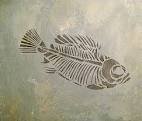
If scientists found this fossil in a desert, what could they infer?
what fish are like today
that this fish lacked oxygen
that water once covered the area where this fossil was found

Organisms D and C clearly lived in an aquatic (water) environment. Organism A does not look like it lived in the water. What is the most likely explanation for this?
The fossil in layer A died on land and was carried to the water
The fossils in layer C and D did not live in the same location as the fossil in layer A
The environment changed over a long period of time. It used to be under water, but is not anymore

The diagram provided here is a phylogenetic tree. It shows how groups of organisms are related through a shared evolutionary history.
Which of the following provides the best evidence that can be used to create this diagram?
The habitats in which the animals live
Competition between organisms for resources
Similarities and differences in body structures
Observations of interactions in the wild
Whales, which live in the water, have hips. These structures are important for carrying the weight of animals that walk on land.
Finding this body part in animals that don’t walk on land is best explained how?
Whales have evolved this structure because it might be useful in the future.
Whales are able to interbreed with other animals that have hips.
Whales have a diet that includes other animals that have this structure.
Whales share a common ancestor with animals that walk on land.

The diagram provided here is a phylogenetic tree. It shows how groups of organisms are related through a shared evolutionary history. The nodes on the diagram show the shared characteristics that link the related groups of animals. Two of the nodes are labeled with the correct characteristics.
Which of the nodes should be labeled “body hair"?
Node A
Node B
Node C
Node D

The table shows characteristics of the structures of several related groups of plants.
All of these plant types are related in their evolutionary history to a common ancestor that had what characteristic?
A transport system made of xylem and phloem
Seeds that were covered
Leaves with branching veins
Leaves with parallel veins

The bones of the forelimbs (wing or arm) of three animals are shown in the illustration.
What is the most reasonable conclusion that can be drawn from a comparison of these structures?
Birds and bats are closely related to each other while humans are unrelated to both.
The common ancestor of birds and bats must have had wings and flown.
Humans live in habitats very different from the habitats of both birds and bats.
Humans and bats share a closer evolutionary history with each other than with birds.
a body structure in two or more species that features the same parts
shared structure
speciation
species
ancestor population

Which species (H, I, or K) is the closest relative to Species J?
Species H
Species I
Species K
Neither
The body structures for a population of chimpanzees were stable for a long time. Then, their body structures changed, making the chimpanzees stronger. Why did this happen?
Organisms naturally become stronger over time.
It is impossible to say without more information.
The chimpanzee population wanted to be stronger.
Their environment must have changed.

Do you think the two species have a common ancestor?
NO
YES
an older population from which two or more newer species descended
descendant species
paleontologist
common ancestor population
shared structure
Two students were challenged with taking imaginary species and placing them on an evolutionary tree. Their models are shown below. Inspect the models and then answer the questions.
Which model do you think is correct?


Neither
a scientist who studies fossils in order to understand the ancient history of life on Earth
descendant species
shared structure
paleontologist
speciation
Evolution is
a group of organisms of the same kind (in one or more populations) that do not reproduce with organisms from any other group
the process of turning into a human
the process by which species adapt to environmental changes over a very long time
the process by which one population evolves into two or more different species


This image shows the development of two embryos.
Based on these images, which statement is true?
Their brains will function the same way after birth.
Their tails and legs are different as embryos.
Their eyes and heads are similar as embryos
Their legs will be the same length at birth.
At what stage of development do vertebrates embryos look very similar to each other?
Earliest stages of growth
Middle stages of growth
Late stages of growth
Vertebrate embryos don't look very similar
FINISH THE SENTENCE:
Embryonic similarities occur more frequently (more often) in species that
are not closely related.
live closer together.
are closely related.
eat the same kinds of foods.

At this stage it can be seen that the pig and the human are more closely related to each other than to the fish by looking at what features?
Spine and eyes
Eyes and tail
Ears and limbs
Tail and gill slits

