
 Worksheets
Autumn Term Science Examination Revision Practise 2025
Total questions: 135
Worksheet time: 4hrs 36mins
Which of the following is an accurate model of how the Sun, Earth, and Moon move?
Sun and moon orbit Earth
Earth and moon orbit Sun
Earth orbits the Sun and the moon orbits Earth
Earth and sun orbit moon
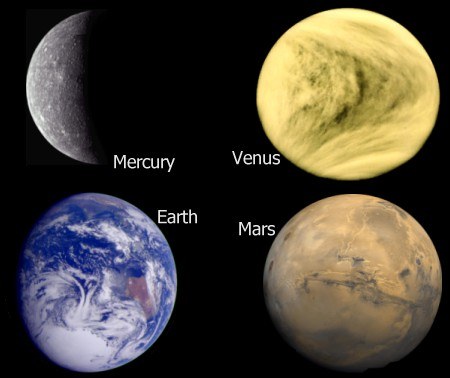

Which planet is NOT one of the
"Gas Giants"?
Uranus
Venus
Neptune
Saturn

What is the largest planet in
our solar system?
Neptune
Jupiter
Uranus
Mars

Which outer planets have rings?
Just Saturn
Saturn and Jupiter
Jupiter, Neptune, and Saturn
all 4 of the outer planets

This table shows the rotation period and revolution period for 6 planets, and Earth’s moon, all relative to Earth’s periods. Which 2 planets have shorter days than Earth?
Jupiter and Saturn
Venus and Mercury
Mars and Jupiter
Saturn and Moon
How long ago was our solar system formed?
10 million years ago
4.6 million years ago
4.6 billion years ago
2 billion years ago

a small rocky body orbiting the sun, ranging from the size of a small house to dust particles
nebula
terrestrial planets
collision
asteroids

the astronomical model in which the Earth and planets revolve around the Sun at the center of the Solar System.
Aristarchus
accretion
nebula
heliocentric system

a large planet composed mostly of gases, such as hydrogen and helium, with a relatively small rocky core. The gas giants of our solar system are Jupiter, Saturn, Uranus and Neptune
terrestrial planets
planetesimals
nebula
gas giant planets
What is the job (function) of the cranium, or skull?
protect the heart
protect the brain
protect the feet
Where is the femur?
brain
skull
arm
leg
Which statement is not a function of the skeletal system?
Protects organs
stores minerals
circulates blood in the body
helps with movement
What is cartilage?
joints that connect bone to tissue
Connective tissue that acts as balance for the body
Connective tissue near joints that act as a shock absorber
a piece of tissue that is attached to the scapula
What connects bones together?
ligaments
brains
tendons
cartilage
Bones can make blood cells. True or False?
True
False

Which bone is labeled O?
Femur
Tibia
Fibia
RibCage
Which bone is labeled P?
Femur
Tibia
Fibula
RibCage

Which bone is labeled G?
Humerus
Ulna
Femur
Pelvis

Which is NOT a function of the skeletal system?
production of red blood cells
store calcium
digest food
movement, protection, and support
Which bone disease causes bones to become weak and brittle?
artereosclerosis
arthritis
fracture
osteoporosis

What is the name for the connector that attaches bone to bone?
ligament
tendon
joint
cartilage

What bone is highlighted?
Femur
Cranium
Ribs
Skull

What is the name of the tissue that attaches muscle to bone?
ligament
tendon
joint
bones
Tissue found in some bones that makes blood cells
bone marrow
joints
tendons
ligaments
Skull, vertebral column, rib cage -
Axial Skeleton
Appendicular Skeleton
Arms, legs, pelvis, fingers, toes -
Axial Skeleton
Appendicular Skeleton

__________ connect muscles to bones
tendons
collagen
joints
cartilage
__________ protects bones from rubbing against each other.
joints
cartilage
sutures
tendons
Your shoulder joint is an example of __________.
a hinge joint
a saddle joint
a pivot joint
a ball-and-socket joint
About how many muscles do you have in your body?
600
50
1,000
100
Muscles usually work in __________ .
sets of 5
pairs
sets of 4
sets of 3
Muscles are working in your body even when you are asleep and still.
True
False
In the average person, _____ % of your body weight comes form muscles.
40
60
20
10
What is thick connective tissue that holds bone to bone?
tendon
ligament
cartilage
joint
What is soft tissue in the human body that allow for movement?
muscles
cartilage
ligament
tendons
What is muscle tissue that work together without thought or action?
involuntary muscle
voluntary muscle
memory muscle
contraction
What is the change in a muscle by which it becomes thicker and shorter?
striated
smooth
cardiac
contraction
What are the functions of the muscular system. Select all correct answers. (more than 1)
Helps you see
Helps you move
Helps fight diseases
Creates heat
Helps your heart beat
How should you care for your muscular system. Choose the correct answers. (more than 1)
Exercise regularly.
Warm-up before and cool-down after exercise
Stretch to remain flexible.
Eat healthy foods, especially foods high in protein.
Eat fast food on a daily basis.
How do pairs of skeletal muscles work together?
One contracts and the other stretches.
While one muscle in the pair contracts, the other returns to its original length.
Both muscles extend at the same time.
One muscle in the pair pulls on a bone, while the second muscle pulls on the first muscle.
What part of your blood carries oxygen to your cells?
platelets
red blood cells
white blood cells
plasma
What part of your blood carries nutrients, wastes, and hormones, antibodies, and other chemicals?
platelets
red blood cells
white blood cells
plasma
What part of your blood fights infections?
platelets
red blood cells
white blood cells
plasma
What part of your blood helps your blood clot when cut?
platelets
red blood cells
white blood cells
plasma
What type of blood vessel takes blood away from the heart?
arteries
veins
capillaries
What type of blood vessel brings blood back to the heart?
arteries
veins
capillaries
What type of blood vessel has thick, elastic and muscular walls
arteries
veins
capillaries
What type of blood vessel has one-way valves that allow blood to only move in one direction?
arteries
veins
capillaries
What type of blood vessel is so thin that white blood cells can squeeze out of through the blood vessel walls?
arteries
veins
capillaries
What type of blood vessel is where oxygen, nutrients, carbon dioxide, and wastes enter and leave the blood?
arteries
veins
capillaries
What side of the heart are the atrium?
the upper side
the lower side
the right side
the left side
What side of the heart are the ventricle?
the upper side
the lower side
the right side
the left side
What side of the heart receives blood back from the body and sends it to the lungs to be recharged with oxygen?
the upper side
the lower side
the right side
the left side
What side of the heart receives sends oxygen rich blood back to the body
the upper side
the lower side
the right side
the left side

Which letter on the diagram is the left atrium?
A
B
C
D
Which letter on the diagram is the left ventricle?
A
B
C
D
Which letter on the diagram is the right ventricle?
A
B
C
D
Which letter on the diagram is the right atrium?
A
B
C
D
Which letter on the diagram is the aorta?
E
F
G
H
Which letter on the diagram is the vena cava?
E
F
G
H
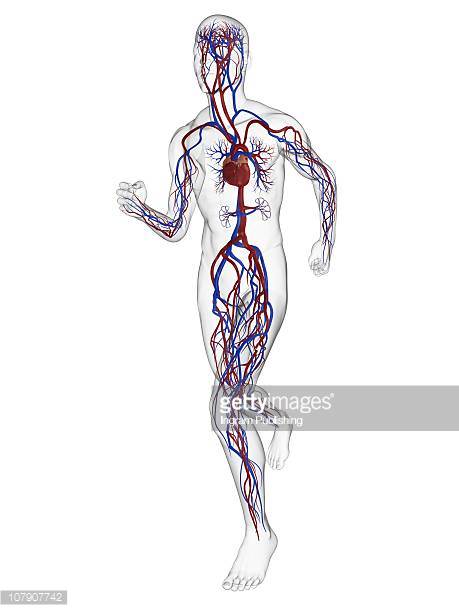
What is the main organ of the circulatory system?
small intestine
bone
lungs
heart

The job of the heart is to . . .
pump blood around the body.
send food to the small intestines.
break down food.
give energy to the body.

How does the heart work?
It pumps blood first to the lungs, back to the heart and then around the rest of the body.
It pumps blood first to the rest of the body, back to the lungs and then to the heart.
It pumps blood around the rest of the body, back to the heart and then to the lungs,

The circulatory system works with the ___________ system to provide our body with oxygen.
respiratory
digestive
muscular
skeletal


Deoxygenated blood means that the blood is low in...
Oxygen
Carbon Dioxide
About how big is the human heart?
the size of your nose
the size of your foot
the size of your fist
the size of your ear
Which of the following is not part of the circulatory system?
veins
heart
stomach
arteries
As the blood reaches the lungs, what is removed from the blood?
oxygen
carbon dioxide
red blood cells
white blood cells
The part of the blood that carries oxygen is called ___________. (Remember we can't live without our blood-line)
red blood cells
white blood cells
What do we call the movement of blood through the heart and around the body?
circulation
digestion

If the one bulb burned out, what would happen to the other bulb?
stay lit
not light up
brighter
dimmer

Is the image shown a series or a parallel circuit?
series
parallel
Is the image shown the switch is closed, are the lights on or off?
all lights are off
all lights are on

In the image, what type of circuit is shown?
series
parallel

What type of circuit is shown in the image?
series
parallel

What type of circuit is shown in the image?
series
parallel

What will happen to the 2 magnets if they are released?
attract
repel

Are the lights on in this circuit?
yes, the lights are on
no, the lights are off

What type of circuit is shown in the image?
series
parallel
Which of the following would have a light bulb turned on?
an open switch
a closed switch
a break in the wire
a wire and a load only

In the bottom of the picture, what explains why the balloons are repelling each other?
opposites attract
like charges in the balloon are repelling each other
the helium has negative charges
What is a complete closed path that electrical currents travel?
circuit
switch
resistance
battery

Which of the following best describes what is being created in the picture?
static electricity
potential energy
magnetic field

Why does the top magnet appear to float above the bottom magnet?
The magnets are made of different materials.
The like poles repel each other.
The opposite poles repel each other.
the magnets have different gravitational pull

Which electromagnet can lift more paperclips?
example W
example x
Copper wire, an iron nail, and a battery can be used to make an
(a)
Is a metal fork a conductor or insulator?
conductor
insulator
Is rubber a conductor or insulator?
conductor
insulator
Which of the following best describes what happens if you increase the number of turns of wire in an electromagnet?
the wire burns up
the magnetic field gets bigger
the magnet weakens
the poles reverse
A Bulb glows only in-
A closed circuit
An open circuit
In both circuits
Open circuit if bulb is not fused


What happens when you touch a metal doorknob after rubbing your shoes on the carpet?
The doorknob sends a burst of electric current into your body
Millions of electrons go from your finger into the doorknob
our finger becomes negatively charged


If one part of the circuit is broken what will happen?
The electricity will continue to flow
The electricity will stop flowing
The electricity will move faster
The electricity will move slower

