wayground logo

Free Printable Worksheets

Font size

S
M
L
XL
Worksheets

6th Grade: Unit 7 Review: Minerals & Rocks in the Geosphere

Total questions: 133

Worksheet time: 1hrs 21mins

Name
Class
Date
1.
The thinnest layer of the Earth is the ___________.
a)
mantle
b)
crust
c)
core
2.
Tectonic plates are made up of continental crust and ________ crust.
a)
continental
b)
oceanic
c)
plates
d)
mantle
3.
What is the thickest layer of the Earth?
a)
the crust
b)
the mantle
c)
the outer core
d)
the inner core
4.
What is the core made of?
a)
steel
b)
iron 
c)
aluminum
d)
iron and nickel
5.
What describes the outer core?
a)
solid
b)
liquid
c)
viscous
d)
gas
6.
Why is the inner core solid?
a)
its unknown
b)
what it's made of
c)
the pressure
d)
it is colder than the outer core
7.
Which layer of the Earth is the only liquid layer?
a)
Outer Core
b)
Inner Core
c)
Mantle
d)
Lithosphere
8.
Which layer(s) of the Earth make up the asthenosphere?
a)
Part of the mantle
b)
Crust, mantle, Core
c)
Crust and upper mantle
d)
Only the crust
9.
What is the correct order (starting from the surface) of Earth's layers?
a)
crust, outer core, inner core, mantle
b)
mantle, outer core, inner core, crust
c)
crust, mantle, outer core, inner core
d)
outer core, inner core, crust, mantle
10.
What layer is a semisolid and acts like a plastic?
a)
Lithosphere
b)
Mantle
c)
Asthenosphere
d)
crust
11.
The oceanic floor is made of?
a)
Granite
b)
Basalt
c)
Cookies
d)
Water
12.
The continental floor is made up of?
a)
Flowers and grass
b)
Basalt
c)
Granite
d)
Crust
13.
What happens to pressure as we move from the crust to the inner core?
a)
Pressure Decreases
b)
Pressure Increases
c)
Nothing
14.
What happens to temperature as we move from the crust to the inner core?
a)
Decreases
b)
Increases
c)
Nothing
15.
Less dense materials rise to the top.
a)
True
b)
False
16.
Which layer of Earth has the GREATEST density?
a)
crust
b)
mantle
c)
outer core
d)
inner core
17.
Which layer of Earth is made up of tectonic plates?
a)
outer core
b)
inner core
c)
asthenosphere
d)
lithosphere
18.

What layer of the Earth is labeled A?

(a)  

19.

What layer of the Earth is labeled B?

(a)  

20.

What layer of the Earth is labeled C?

(a)  

21.

What layer of the Earth is labeled D?

(a)  

22.
Scientists determine what Earth’s interior looks like by using:
a)
Volcanoes
b)
Seismic Waves
c)
Continental Drift
d)
Convection Currents
23.

The continental crust is

a)

thinner than the oceanic crust

b)

thicker than the oceanic crust

c)

the same thickness as the oceanic crust

24.

This layer is made of hot flowing rock (magma).

a)

Crust

b)

Mantle

c)

Core

25.

We live on this layer.

a)

Crust

b)

Mantle

c)

Core

26.

What distinguishes chemical layers of Earth?

a)

the elements and compounds in each layer

b)

how rigid each layer is

c)

the thickness of each layer

d)

the temperature of each layer

27.

Which layer exists as a collection of tectonic plates?

a)

asthenosphere

b)

mantle

c)

lithosphere

d)

outer core

28.

Which two layers have convection currents?

a)

asthenosphere & outer core

b)

asthenosphere & inner core

c)

lithosphere & outer core

d)

lithosphere & inner core

29.

Convection currents in the ______ create Earth's magnetic field.

a)

asthenosphere

b)

inner core

c)

mantle

d)

outer core

30.

Hardness:

a)

It’s the ability of some minerals to break in geometric shapes

b)

It's the stripe colour of a mineral

c)

It's a measure of a mineral’s resistance to being scratched

d)

None of the answers is correct

31.

Pyrite:

a)

Break into cubes

b)

Has metallic brightness

c)

It's called fool's gold

d)

All the answers are correct

32.

What is the mineral of the picture?

a)

Sulphur

b)

Malachite

c)

Pyrite

d)

Gypsum

33.
The color of a mineral in powder form is called the mineral's 
a)
hardness
b)
specific gravity
c)
luster
d)
streak
34.
How light reflects off of a mineral is called the mineral's 
a)
luster
b)
streak
c)
cleavage
d)
fracture
35.
Why is coal not a mineral?
a)
It's not a solid
b)
It is man-made
c)
It is not inorganic
d)
It is made of carbon
36.
The following image shows what mineral property?
a)
Hardness
b)
Streak
c)
Cleavage
d)
Density
37.
Diamond has a hardness of ___ on Mohs Hardness Scale.
a)
1
b)
5
c)
8
d)
10
38.
Dull, silky, waxy, pearly, and earthy are terms that best describe which property of minerals?
a)
luster
b)
color
c)
streak
d)
cleavage
39.
By definition, a mineral has which of the following characteristic(s)?
a)
definite chemical composition
b)
crystal structure
c)
naturally occuring
d)
all of the above
40.
How do you test the hardness of a mineral? 
a)
Throw it against a wall
b)
Step on it
c)
Scratch Test
d)
Kick it until it breaks
41.
What mineral is used for pencils?
a)
Graphite
b)
Galena
c)
Magnetite
d)
Quartz
42.
What mineral is salt?
a)
quartz
b)
sulfur
c)
halite
d)
calcite
43.
The solid, geometric form of a mineral produced by a repeating pattern of atoms
a)
crystal
b)
density
c)
element
d)
fracture 
44.
What mineral is the softest mineral on Moh's Hardness Scale and the main ingredient in baby powder?
a)
feldspar
b)
talc
c)
gypsum
d)
kaolinite
45.
Which mineral smells like rotten eggs?
a)
talc
b)
sulfer
c)
mica
d)
pyrite
46.
Large crystals are going to form
a)
when lava erupts from a volcano
b)
when a shallow sea evaporates
c)
when magma underground cools off
d)
all of the above
47.

The way in which a mineral reflects light

a)

streak

b)

luster

c)

hardness

48.

The manner in which a mineral breaks along curved or irregular surfaces

a)

streak

b)

cleavage

c)

fracture

49.

The splitting of a mineral along smooth, flat surfaces

a)

fracture

b)

cleavage

c)

hardness

50.

Mass divided by volume

a)

streak

b)

density

c)

hardness

51.

When we tested minerals in class, we used a nail, a penny, and our fingernail to test the ___________________ of the mineral

a)

streak

b)

hardness

52.
What is the LEAST useful way to identify a mineral?
a)
luster
b)
streak
c)
color
d)
density
53.

Rocks are made out of __________________.

a)

particles

b)

minerals

c)

molecules

d)

cells

54.

Minerals are made from ______________ which are chemically combined.

a)

rocks

b)

minerals

c)

particles

d)

elements

55.
How a mineral reflects light from its surface
a)
crystal
b)
luster
c)
streak
d)
refraction
56.
Formed by heat and pressure
a)
Sedimentary
b)
Metamorphic
c)
Extrusive Igneous
d)
Intrusive Igneous
57.
Formed by cooling & solidification of lava
a)
Sedimentary
b)
Metamorphic
c)
Extrusive Igneous
d)
Intrusive Igneous
58.
Formed by cooling & solidification of magma
a)
Sedimentary
b)
Metamorphic
c)
Extrusive Igneous
d)
Intrusive Igneous
59.
Formed by compacting & cementing of sediments
a)
Sedimentary
b)
Metamorphic
c)
Extrusive Igneous
d)
Intrusive Igneous
60.
Formed by weathering & erosion
a)
magma
b)
sediments
c)
sedimentary rock
d)
intrusive igneous
61.
Formed by melting
a)
magma
b)
sediments
c)
sedimentary rock
d)
intrusive igneous
62.
Has large crystals because of slow cooling
a)
sedimentary rock
b)
metamorphic rock
c)
intrusive igneous rock
d)
extrusive igneous rock
63.
Has small or no crystals because of rapid cooling
a)
sedimentary
b)
metamorphic
c)
extrusive igneous
d)
intrusive igneous
64.
Has wavy bands.
a)
sedimentary rock
b)
metamorphic rock
c)
extrusive igneous rock
d)
intrusive igneous rock
65.
Contains fossils. 
a)
sedimentary rocks
b)
metamorphic rocks
c)
extrusive igneous rocks
d)
intrusive igneous rocks
66.
A metamorphic rock in which the grains line up in parallel bands is a
a)
Clastic Rock
b)
Nonclastic Rock
c)
Nonfoliated Rock
d)
Foliated Rock
67.
If heat and pressure inside the Earth cause a rock to melt, the material that formed would be
a)
Metamorphic
b)
Magma
c)
Sedimentary
d)
Igneous
68.
The parent rock of Gneiss is
a)
Marble
b)
Granite
c)
Obsidian
d)
Biotite
69.
Which of the following is not a rock
a)
Pumice
b)
Lava
c)
Halite
d)
Sandstone
70.
The three groups of rocks are classified by
a)
How they form
b)
Color
c)
Grain size
d)
Chemical Composition
71.

What is underground molten rock?

a)

Lava

b)

Magma

c)

Soil

d)

Intrusive

72.

What is aboveground molten rock?

a)

Extrusive

b)

Magma

c)

Lava

d)

Sedimentary

73.

Limestone is an example of...

a)

Sedimentary

b)

Igneous

c)

Metamorphic

74.

Sandstone is an example of...

a)

Metamorphic

b)

Sedimentary

c)

Igneous

75.

Granite is an example of...

a)

Igneous

b)

Metamorphic

c)

Sedimentary

76.

Marble is an example of...

a)

Igneous

b)

Sedimentary

c)

Metamorphic

77.

Pumice is an example of

a)

Igneous

b)

Metamorphic

c)

Sedimentary

78.

Quartzite is an example of...

a)

Metamorphic

b)

Igneous

c)

Sedimentary

79.

Basalt is an example of...

a)

Igneous

b)

Sedimentary

c)

Metamorphic

80.

Shale is an example of...

a)

Metamorphic

b)

Sedimentary

c)

Igneous

81.

Gneiss is an example of...

a)

Igneous

b)

Sedimentary

c)

Metamorphic

82.

Obsidian is an example of...

a)

Igneous

b)

Sedimentary

c)

Metamorphic

83.

Conglomerate is an example of...

a)

Igneous

b)

Sedimentary

c)

Metamorphic

84.

What is it called when layers pile up and press down on the material below?

a)

Compaction

b)

Layering

c)

Cementation

d)

I don't know

85.

What is the parent material of all rocks?

a)

Magma

b)

Lava

c)

Sedimentary

d)

Organic matter

86.

Intrusive & extrusive are 2 types of...

a)

sedimentary

b)

metamorphic

c)

Igneous

87.

Foliated & non-foliated are 2 types of...

a)

Sedimentary

b)

Metamorphic

c)

Igneous

88.
This rock started as molten magma. What type of rock is this?
a)
Sedimentary
b)
Igneous
c)
Metamorphic
89.
This rock was another type of rock that was heated and compressed over time. What type of rock is this?
a)
Sedimentary
b)
Igneous
c)
Metamorphic
90.
This rock was formed by smaller pieces of rock that settled at the bottom of a lake millions of years ago. What type of rock is this?
a)
Sedimentary
b)
Igneous
c)
Metamorphic
91.
The process when rocks break into smaller pieces due to exposure to natural elements is called
a)
erosion
b)
weathering
c)
sediments
92.
What are the 3 major types of rocks?
a)
Igneous, Metamorphic, Sedimentary
b)
Metamorphic, Igneous, Cementation
c)
magma, lava, crystals
93.
The name rock is given when it is broken down into smaller pieces.
a)
texture
b)
weathering
c)
sediment
d)
erosion
94.

Which rock is formed form the cooling of volcanic ash on Earth's surface?

a)

intrusive igneous

b)

foliated metamorphic

c)

extrusive igneous

d)

organic sedimentary

95.

Rocks that form from colling magma inside Earth?

a)

Igneous intrusive

b)

Igneous extrusive

c)

Metamorphic foliated

d)

Metamorphic nonfoliated

96.

This is a natural solid that is made of one or more minerals.

a)

Mineral

b)

Fossil

c)

Rock

d)

Sediment

97.

This is the continuous process of rock changing from one type to another.

a)

Igneous rocks

b)

Sedimentary rocks

c)

Metamorphic rocks

d)

Rock Cycle

98.

What type of rock might contain evidence of past life?

a)

Sedimentary Rock

b)

Igneous Rock

c)

Metamorphic Rock

99.

Which of the following lists the steps an igneous rock undergoes in order to become a sedimentary rock, in the correct order?

a)

Deposition, erosion, melting, cooling

b)

Erosion, weathering, eruption, cooling

c)

Dissolving, deposition, cooling, fracture

d)

Weathering, erosion, deposition, cementation

100.

Limestone is a sedimentary rock. During the rock cycle, limestone is changed into marble, a metamorphic rock. The processes that act on limestone and change it into marble are

a)

weather and erosion

b)

heat and pressure

c)

compacting and cementing

d)

melting, cooling, and hardening

101.
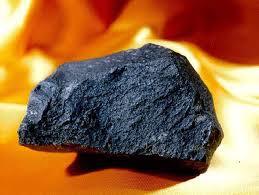
This rock was found near the mouth of a volcano. What type of rock is this?
a)
Sedimentary
b)
Igneous
c)
Metamorphic
102.
Each rock type can follow only one pathway of the rock cycle.
a)
True
b)
False
103.

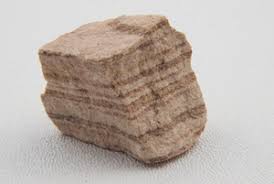
This rock is formed in layers.

a)

Sedimentary

b)

Igneous

c)

Metamorphic

104.

This rock is changed by heat and pressure.

a)

Sedimentary

b)

Igneous

c)

Metamorphic

105.

What factors can lead to the formation of a sedimentary rock?

a)

melting and solidification

b)

extreme heat and pressure

c)

compaction and cementation

106.

Which 2 statements below correctly identify the difference between a rock and a mineral?

a)

Rocks are mixtures and minerals are not.

b)

Rocks can be organic and minerals are always inorganic.

c)

Rocks are harder than minerals.

d)

Rocks are the building blocks of minerals.

107.

A naturally occurring solid mixture of one or more minerals or organic matter

a)

Rock

b)

Mineral

c)

Glass

d)

Gas

108.

Type of rock made from the cooling and hardening of magma or lava; Derived from the Latin word meaning fire**most common on the surface**

a)

Igneous

b)

Metamorphic

c)

Sedimentary

d)

Coal

109.

A classification of a metamorphic rock that has visible layers or bands

a)

Foliated

b)

Nonfoliated

110.

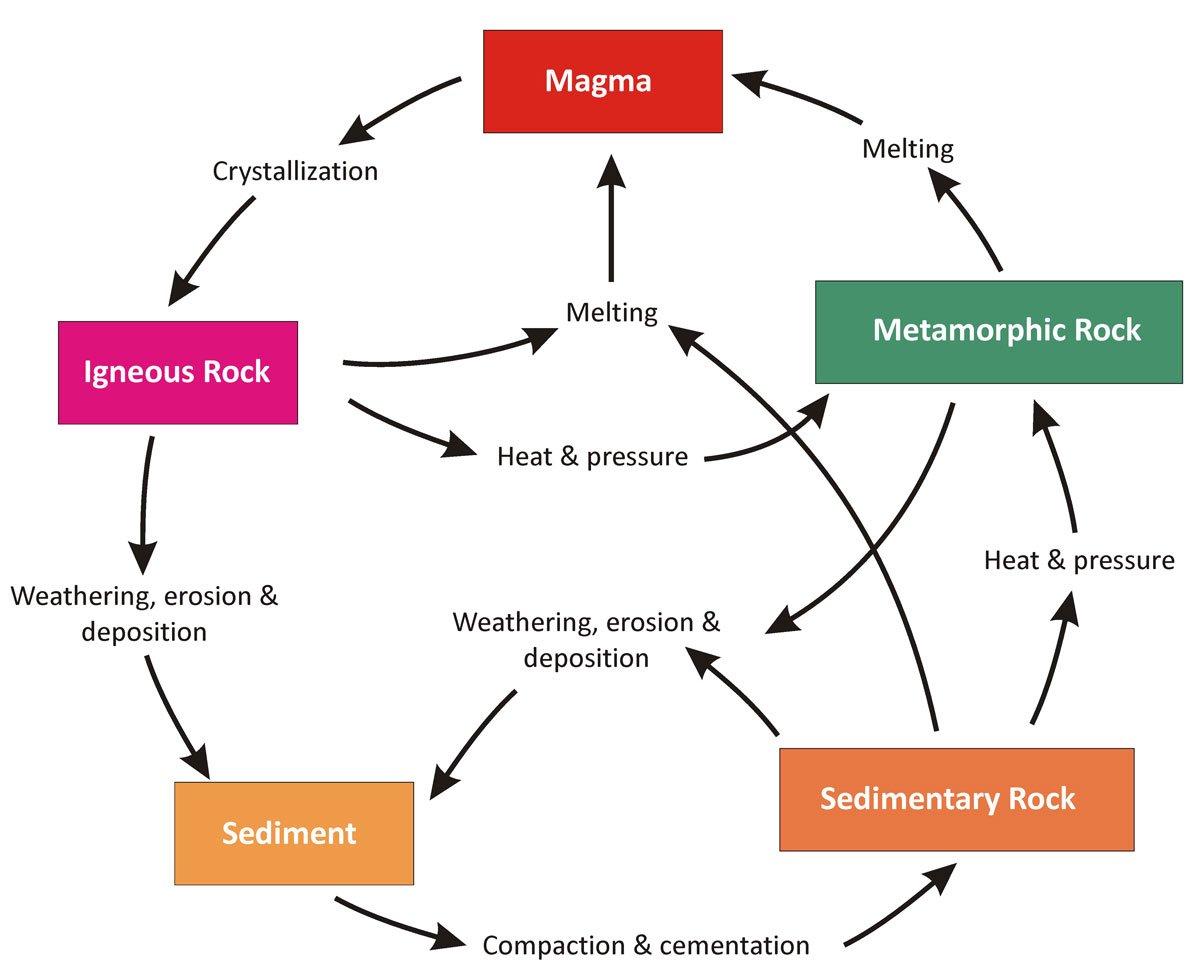
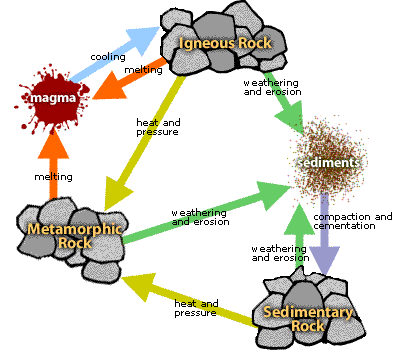
The rock cycle

a)

Has no beginning or end

b)

Involves rocks never changing

c)

Ends at the Igneous phase

d)

Ends at the metamorphic phase

111.

Rocks are classified based on

a)

how they form

b)

where they are found

c)

how old they are

d)

none of the above

112.

The process that move sediment is

a)

Weathering

b)

Erosion

c)

Deposition

d)

Uplift

113.

Weathering is the

a)

process of rocks breaking down

b)

melting of rocks

c)

baking of rocks

d)

cementing of particles

114.

Erosion is

a)

dissolving of minerals

b)

breaking down of rocks

c)

movement of sediment to a new location

d)

evaporation of minerals

115.

The process where sediment becomes glued together is called

a)

cementation

b)

erosion

c)

weathering

d)

compaction

116.

Which sedimentary rock has a fine-grained texture?

a)

1

b)

2

c)

3

d)

4

117.
Sedimentary rock that is made of fragments of rocks cemented together by a mineral are called...
a)
chemical
b)
organic
c)
clastic
118.
Sedimentary rock that is formed from water evaporating and minerals being left behind.
a)
clastic
b)
organic
c)
chemical
119.
Sedimentary rock made from fossils are called...
a)
organic
b)
chemical
c)
stratified
120.

What is the type of rock called that is used to make buildings and some old monuments?

a)

Limestone

b)

Marble

c)

Slate

d)

Granite

121.

How does a metamorphic rock become an igneous rock?

a)

Heat and pressure

b)

Melting and cooling

c)

Weathering/Erosion and Cementation

d)

Cycle

122.

How does an igneous rock become a sedimentary rock?

a)

Heat and pressure

b)

Melting and cooling

c)

Weathering/Erosion and Cementation

d)

Cycling

123.

How does a sedimentary rock become a metamorphic rock?

a)

Heat and pressure

b)

Melting and cooling

c)

Weathering/Erosion and Cementation

d)

Cycling

124.
When you watch a volcano erupt molten rock, you are seeing _____
a)
Lava
b)
Magma
c)
Mineral Crystals
d)
Igneous Rocks
125.

What are the two things to consider when identifying an igneous rock?

a)

grain size and silica content

b)

grain size and cooling time

c)

cooling time and where it formed

d)

silica content and rate of erosion

126.

When all the grains in a rock are large and easy to see, the rock is described as

a)

Fine-grained

b)

Coarse-Grained

c)

Glassy

127.

An igneous rock commonly used as building material is

a)

Slate

b)

Sandstone

c)

Granite

128.

Extremely rapid cooling of lava in which no crystals form, creates what type of texture?

a)

Fine-Grained

b)

Coarse-Grained

c)

Glassy

129.

High silica content in magma=

a)

Darker-colored rock

b)

Lighter-colored rock

130.

Low silica content in lava=

a)

Darker-colored rock

b)

Lighter-colored rock

131.
One condition necessary to produce diamonds is
a)
low temperatures
b)
quick cooling
c)
intense pressure
d)
high altitude
132.
Minerals are made of one or more
a)
minerals.
b)
sediments.
c)
elements.
d)
rocks.
133.
What does inorganic mean?
a)
Something that is living
b)
Something that is dead, but was once living
c)
Something that was never living
d)
Something that was once dead and is now alive