wayground logo

Free Printable Worksheets

Font size

S
M
L
XL
Worksheets

Matter, Geology, Energy Review

Total questions: 132

Worksheet time: 3hrs 34mins

Name
Class
Date
1.
This picture represents: 
a)
Element
b)
Compound
c)
Mixture of Elements
d)
Mixture of Compounds
2.
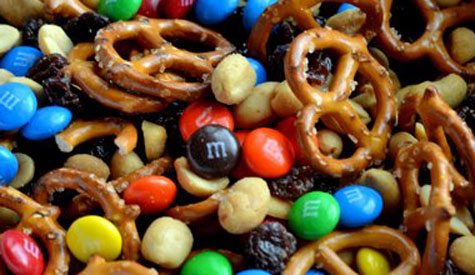
What type of mixture is this?
a)
homogenous mixture
b)
chemical
c)
heterogeneous mixture 
d)
solid mix
3.
A substance in which all the atoms are the same
a)
colloid
b)
homogeneous mixture
c)
solution
d)
element
4.
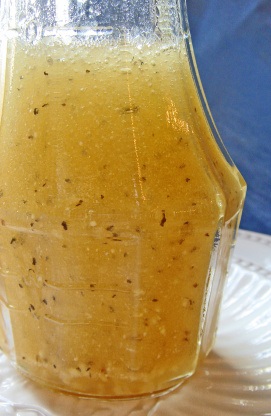
Italian Salad Dressing is a . . .
a)
heterogeneous mixture
b)
homogeneous mixture
c)
Pure Substance
d)
Compound
5.
Chicken soup is an example of what kind of substance?
a)
homogenous mixture
b)
solution
c)
heterogeneous mixture
d)
compound
6.
Co
a)
Element
b)
Compound
c)
Homogeneous Mixture
d)
Heterogeneous Mixture
7.
Aluminum
a)
Element
b)
Compound
c)
Homogeneous Mixture
d)
Heterogeneous Mixture
8.
NaCl
a)
Element
b)
Compound
c)
Homogeneous Mixture
d)
Heterogeneous Mixture
9.
Something that takes up space and has mass.
a)
volume
b)
matter
c)
mass
d)
density
10.
Which is an electron?
a)
A
b)
B
c)
C
11.
Which is a proton?
a)
A
b)
B
c)
C
12.
Which is a neutron?
a)
A
b)
B
c)
C
13.
What kind of charge do protons have?
a)
positive
b)
negative
c)
neutral
14.
Neutrons have a ________ charge.
a)
positive
b)
negative
c)
neutral
15.
Most of the mass of an atom is found it its _____.
a)
electron cloud
b)
nucleus
c)
atomic number
d)
empty space
16.
An element is made up of only one kind of _____.
a)
isotope
b)
plastic
c)
atom
d)
metal
17.
Particle in an atom that has a negative charge. 
a)
Proton 
b)
Neutron 
c)
Electron 
d)
Nucleus 
18.

How many protons does Oxygen have?

a)

2

b)

8

c)

16

d)

20

19.

What is the atomic weight of Iodine?

a)

127

b)

204

c)

53

d)

49

20.
What is the chemical symbol for the element hydrogen
a)
H
b)
He
c)
h
d)
he
21.
What is the chemical symbol for the element copper?
a)
co
b)
c
c)
Cu
d)
cu
22.
Sodium has an atomic number of 11, how many protons does this atom have?
a)
22
b)
11
c)
12
d)
2
23.

What is the atomic number for Hydrogen?

a)

1

b)

1.008

c)

2

d)

2.008

24.

What is the atomic number of Chlorine

a)

18

b)

17

c)

35

d)

35.4527

25.

How many protons are in Neon

a)

10

b)

20

c)

21

d)

30

26.
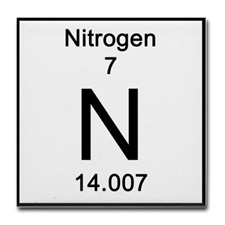
What is the number of protons that the element in this image contain?
a)
14
b)
7
c)
15
d)
18
27.
Highly reactive non-metals in second to last column on periodic table
a)
noble gases
b)
metalloids
c)
alkali metals
d)
halogens
28.
Highly reactive metals in first column of periodic table
a)
halogens
b)
noble gases
c)
alkali metals
d)
metalloids
29.
Electrons in the outermost orbit or shell
a)
quarks
b)
molecules
c)
valence
d)
compounds
30.
Number written below & to the right of a chemical symbol
a)
subscript
b)
reactant
c)
product
d)
coefficient
31.

The part labeled "d" is the

a)

element symbol

b)

atomic number

c)

element name

d)

atomic weight

32.

The part labeled "c" is the

a)

element symbol

b)

atomic number

c)

element name

d)

atomic weight

33.

The part labeled "b" is the

a)

element symbol

b)

atomic number

c)

element name

d)

atomic weight

34.

The part labeled "a" is the

a)

element symbol

b)

atomic number

c)

element name

d)

atomic weight

35.

The vertical (up and down) columns in the Periodic Table are called

a)

groups

b)

towers

c)

periods

d)

atomic numbers

36.
The Modern Periodic Table of Elements is arranged by
a)
atomic mass
b)
atomic number
c)
valence electrons
d)
number of isotopes
37.

Horizontal rows of elements that DO NOT share chemical properties.

a)

Groups

b)

Periods

38.

As you go down the Periodic Table the size and mass of the atoms _________.

a)

increases

b)

decreases

c)

cannot be determined

39.

The ______ are located on the left side of the zig-zag 'staircase' on the Periodic Table. (except for Hydrogen)

a)

metals

b)

non-metals

c)

metalloids

40.

The ___________ are located on the right side of the zig-zag 'staircase' on the Periodic Table (except for Hydrogen)

a)

metals

b)

non-metals

c)

metalloids

41.

The __________ are touching or bordering the zig-zag 'staircase' on the Periodic Table.

a)

metals

b)

non-metals

c)

metalloids

42.
Families or Groups are the vertical columns on the periodic table. How many Families/Groups are there?
a)
18
b)
7
c)
12
d)
20
43.
Elements in the same family have similar _______________.
a)
Protons
b)
Physical and Chemical Properties
c)
Shape
d)
Size
44.
The atomic mass is the ______________ + ____________ in the atom.
a)
neutrons + electrons
b)
protons + electrons
c)
protons + neutrons
d)
electrons
45.
Metals are ___________.
a)
Good Conductors of heat and electricity
b)
Noble Gasses 
c)
Bad Conductors of heat and electricity
d)
sometimes a gas
46.
Non-Metals are found ____________________.
a)
To the left of the stairs
b)
To the right of the stairs
c)
Includes only the elements touching the stairs
47.
Ductile means and material can be drawn into a wire. Which type of element can do this?
a)
Metals
b)
Non-Metals
c)
Metalloids
48.
Brittle means easily broken. Which type of element does this describe?
a)
Metal
b)
Non-metal
c)
Metalloid
49.
Periods are the rows of the periodic table. How many are there?
a)
b)
18
c)
12
d)
20
50.

Which element has chemical properties that are most similar to those of calcium?

a)

Co

b)

K

c)

N

d)

Sr

51.

How many Oxygen atoms are in H2O?

a)

1

b)

2

c)

0

d)

4

52.

What elements are in this compound?

a)

Nitrogen

b)

Carbon

c)

Oxygen

d)

Iron

e)

Neon

53.
Element or compound?
O2
a)
Element
b)
Compound
54.

The positive ions tend to _____________ electrons.

a)

lose

b)

gain

55.

The negative ions tend to _____________ electrons.

a)

lose

b)

gain

56.

Valence electrons are found

a)

in the innermost energy level of an atom

b)

in the middle energy levels of an atom

c)

in the outermost energy levels of an atom

57.

When an atom loses an electron, it becomes a

a)

positive ion

b)

negative ion

c)

neutral ion

d)

neutral atom

58.
Ionic bonds are between...
a)
Metal and Non-metal
b)
Non-metal and Non-metal
c)
Metal and Metal
59.

Why do all bonds form?

a)

so the number of protons equals the number of electrons

b)

so an atom can become unstable

c)

to fill the outermost energy level

60.
How old do Paleontologists believe the Earth is?
a)

2023 years old

b)
3.6 billion years old
c)
4.6 billion years old
d)
4.6 million years old
61.
The era that dinosaurs ruled the Earth's land, air and oceans.
a)
Cenozoic
b)
Paleozoic
c)
Precambrian
d)
Mesozoic
62.
Which is an example of a trace fossil?
a)
animal tracks
b)
coprolite
c)
burrows
d)
all of the answers given here
63.
Fossilized tracks or other evidence of activity of an organism.
a)
trail 
b)
trace 
c)
index
d)
absolute 
64.
Cavity in a rock made when an organism decayed
a)
cast
b)
mold 
c)
original remains
65.
Which of the following is NOT an example of a fossil?
a)
a petrified dinosaur bone
b)
a footprint captured in mud
c)
a seashell found on the beach
d)
an insect stuck in amber
66.
This is an example of a
a)
cast fossil
b)
mold fossil
c)
trace fossil
d)
carbon film
67.

What era do humans live in?

a)

Precambrian

b)

Paleozoic

c)

Mesozoic

d)

Cenozoic

68.

What era was dominated by ocean organisms?

a)

Precambrian

b)

Paleozoic

c)

Mesozoic

d)

Cenozoic

69.

The earth is ______________of years old

a)

Hundreds

b)

Millions

c)

Billions

d)

Trillions

70.

Mammals are a dominant group in which era?

a)

Cenozoic

b)

Mesozoic

c)

Paleozoic

d)

Cambrianozoic

71.

What era did the formation of the earth occur?

a)

Paleozoic

b)

Precambrian

c)

Cenozoic

d)

Cambrian

72.

What type of event usually marks the end of an Era

a)

A Mass Extinction

b)

A Quinceanera

c)

An earthquake

d)

A Volcanic Eruption

73.

What are the four eras in order from OLDEST to NEWEST?

a)

Pre-Cambrian, Paleozoic, Mesozoic, Cenozoic

b)

Pre-Cambrian, Mesozoic, Paleozoic, Cenozoic

c)

Cenozoic, Mesozoic, Paleozoic, Pre-Cambrian

d)

Mesozoic, Pre-Cambrian, Cenozoic, Paleozoic

74.

What era did trilobites, fishes, and other marine organisms dominate?

a)

Precambrian

b)

Paleozoic

c)

Mesozoic

d)

Cenozoic

75.

Which era is the most recent, the one that we are currently in?

a)

Mesozoic

b)

Paleozoic

c)

Cenozoic

d)

Precambrian

76.

The dinosaurs and reptiles were dominant in which Era?

a)

Precambrian

b)

Mesozoic

c)

Paleozoic

d)

Cenozoic

77.

At the end of this era, multi-cellular organisms like sponges, jellyfish and worms filled the oceans.

a)

Precambrian Era

b)

Paleozoic Era

c)

Mesozoic Era

d)

Cenozoic Era

78.
A bug stuck in amber is an example of what type of fossil?
a)
cast
b)
mold
c)
trace
d)
preserved remains
79.
The dinosaurs and reptiles were dominant in which Era?
a)
Precambrian
b)
Mesozoic
c)
Paleozoic
d)
Cenozoic
80.
Known as the age of the mammals?
a)
Mesozoic Era
b)
Holocene Epoch
c)
Cenozoic Era
d)
Cambrian
81.
The disappearance of a species.
a)
Evolution
b)
Extinction
c)
Migration
d)
Mutation
82.
Where did most of the life live during the paleozoic era?
a)
Land
b)
Water
c)
Air
d)
None. There was no life in the paleozoic era.
83.
Produced when sediments fill in a cavity made when an object decayed 
a)
cast
b)
mold
c)
original remains
84.
Cavity in a rock made when an organism decayed
a)
cast
b)
mold 
c)
original remains
85.
What are the hardened remains of living things that died long ago?
a)

Extinct

b)
Fossils
c)
Metamorphic rock
d)
Minerals
86.
Which of the following is NOT something you could learn from a fossil?
a)
The size of the animal
b)
What the animal ate
c)
The color of the animal
d)
Where the animal lived
87.

Footprints, nests, and eggs are all examples of what kind of fossils?

a)

Mold fossil

b)

Cast fossil

c)

Trace fossil

d)

True Form fossil

88.

What might a paleontologist conclude about an animal who's fossil footprints were far apart?

a)

It could swim.

b)

It was walking.

c)

It was able to fly.

d)

It ran fast.

89.
_______ are the preserved remains or traces of living things.
a)
bones
b)
fossils
c)
artifacts
d)
organic matter
90.
Fossils can provide evidence of how life has changed over time, how Earth's surface has changed, and clues about what past environments were like.
a)
True
b)
False
91.
_______________ are fossils in which minerals replace all or part of an organism.
a)
carbon films
b)
trace fossils
c)
petrified fossils
d)
amber
92.
Becoming trapped in tar and amber, and freezing are other processes besides fossilization that organisms can be preserved.
a)
True
b)
False
93.
Zebra's stripes help protect them from their
a)
prey
b)
parents
c)
zookeepers
d)
predators
94.
Hedgehogs, squirrels, and groundhogs, all have brown fur that helps them hide. Where do you think they live?
a)
They live in the ocean.
b)
They live in tan buildings.
c)
They live in the forest close to the brown ground and trees.
d)
The live on white icebergs.
95.

Animals use camoflauge...

a)

to hunt or hide

b)

for fun

c)

to sleep

96.
This bird uses patterns to..
a)
mimic
b)
blend in
c)
change colors
97.

How do zebra stripes protect the zebra?

a)

When zebras run as a herd,stripes help the predators pick out one zebra.

b)

When zebras run as a herd,stripes help the zebras by not letting the predator pick out one zebra because they blend together and look like a blur of stripes.

c)

The zebra stripes don't have a purpose.

98.
Where the better adapted organisms survive to pass traits along to offspring.
a)
Evolution
b)
Natural Selection
c)
Extinction
d)
Artifical Selection
99.
Why are advantageous traits more likely to be passed onto offspring?
a)
Because they are more likely to survive and reproduce.
b)
Because they come from dominant alleles.
c)
Because they come from recessive alleles.
d)
Because the trait is an acquired phenotype.
100.

What word describes a trait that helps an organism survive in its environment?

a)

natural selection

b)

mutation

c)

camouflage

d)

adaptation

101.
Which organisms are most likely to survive?
a)
the best adapted
b)
the fastest
c)
the strongest
d)
the most domesticated (tamed)
102.
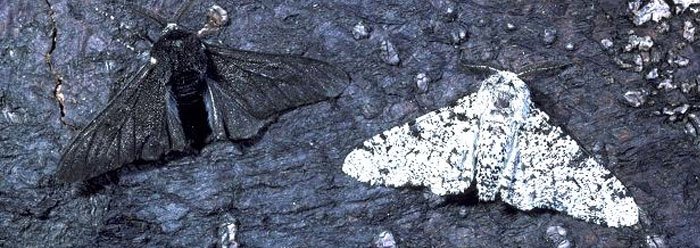
The trees these moths used to live on were white, but have been covered in soot from coal factories. Which moth will be more successful in this environment?
a)
Dark moth
b)
Light moth
c)
Both will be equally successful
d)
Neither will be successful
103.
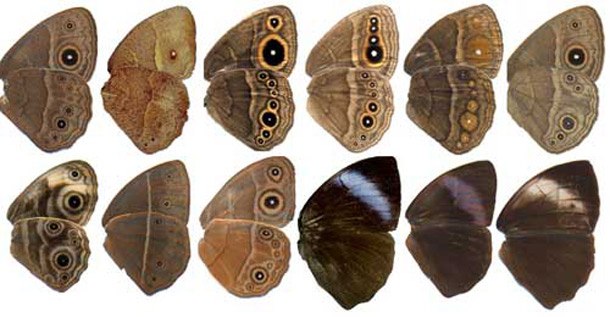
These moths are all the same species. The differences between their wings is an example of ________________
a)
Natural Selection
b)
Variation
c)
Homeostasis
d)
Extinction
104.

The Theory of Evolution states that organisms __________ over time.

a)

stay the same

b)

change

c)

go extinct

d)

become less adapted to their environment

105.

Geothermal energy uses heat from ____ to produce electricity.

a)

the earth

b)

coal

c)

oil

d)

natural gas

106.

Resources that are not able to be reproduced as quickly as they are used are called _____.

a)

renewable resources

b)

replaceable resources

c)

non renewable resources

d)

non replaceable resources

107.

What type of power plant uses the potential energy of water trapped behind a dam?

a)

nuclear power plant

b)

hydroelectric power plant

c)

solar station

d)

coal burning power plant

108.

What are fossil fuels?

a)

coal, oil, uranium

b)

oil, natural gas, uranium

c)

coal, oil, natural gas

d)

geothemals, coal, natural gas

109.
Coal is a __________ energy resource.
a)
Renewable
b)
Nonrenewable
110.
Re-processing material to make another product
a)
Reduce
b)
Reuse
c)
Recycle
111.
What does the three R's of recycling mean?
a)
risk corridors reinsurance and risk adjustment
b)
reading writing and arithmetic
c)
nothing
d)
Reduce Reuse Recycle
112.
The following is an example of reusing:  
a)
using fewer napkins when you eat.  
b)
using less water when you brush your teeth.  
c)
bringing cans back to a recycling center.  
d)
washing zip top bags after use so they can be used again.  
113.
The following is an example of reducing: 
a)
bringing newspapers to a recycling center. 
b)
using plastic bags as small garbage bags.  
c)
using less water when you shower.  
d)
all of the above.  
114.

What is NOT a renewable energy source?

a)

coal

b)

wind

c)

solar

d)

water

115.

Click all of the things that are non-renewable energy sources.

a)

oil

b)

gas

c)

coal

d)

water

116.
Petroleum and natural gas form from...
a)
strong winds
b)
cooled magma
c)
radioactive materials
d)
remains of plants and animals 
117.
 Energy from the sun is known as......... 
a)
hydroelectric energy
b)
geothermal energy
c)
solar energy
d)
wind energy
118.
Which of the following is a nonrenewable resource?
a)
milk
b)
coal
c)
biomass
d)
water
119.

Geothermal energy uses heat from ____ to produce electricity.

a)

the earth

b)

coal

c)

oil

d)

natural gas

120.

Resources that are not able to be reproduced as quickly as they are used are called _____.

a)

renewable resources

b)

replaceable resources

c)

non renewable resources

d)

non replaceable resources

121.

What type of power plant uses the potential energy of water trapped behind a dam?

a)

nuclear power plant

b)

hydroelectric power plant

c)

solar station

d)

coal burning power plant

122.

What are fossil fuels?

a)

coal, oil, uranium

b)

oil, natural gas, uranium

c)

coal, oil, natural gas

d)

geothemals, coal, natural gas

123.
Coal is a __________ energy resource.
a)
Renewable
b)
Nonrenewable
124.
Re-processing material to make another product
a)
Reduce
b)
Reuse
c)
Recycle
125.
What does the three R's of recycling mean?
a)
risk corridors reinsurance and risk adjustment
b)
reading writing and arithmetic
c)
nothing
d)
Reduce Reuse Recycle
126.
The following is an example of reusing:  
a)
using fewer napkins when you eat.  
b)
using less water when you brush your teeth.  
c)
bringing cans back to a recycling center.  
d)
washing zip top bags after use so they can be used again.  
127.
The following is an example of reducing: 
a)
bringing newspapers to a recycling center. 
b)
using plastic bags as small garbage bags.  
c)
using less water when you shower.  
d)
all of the above.  
128.

What is NOT a renewable energy source?

a)

coal

b)

wind

c)

solar

d)

water

129.

Click all of the things that are non-renewable energy sources.

a)

oil

b)

gas

c)

coal

d)

water

130.
Petroleum and natural gas form from...
a)
strong winds
b)
cooled magma
c)
radioactive materials
d)
remains of plants and animals 
131.
 Energy from the sun is known as......... 
a)
hydroelectric energy
b)
geothermal energy
c)
solar energy
d)
wind energy
132.
Which of the following is a nonrenewable resource?
a)
milk
b)
coal
c)
biomass
d)
water