
 Worksheets
Light waves
Total questions: 130
Worksheet time: 1hrs 28mins
What is it called when light waves enter a substance?
refraction
reflection
energy
absorption
When light bounces off something it is known as _____________
reflection
refraction
light energy
mechanical energy
The definition of the word refract is __________
to make warm
to go through
to bend
to create energy
What color of the rainbow has the longest wavelength?
red
blue
green
violet
A _________ object does not allow light to pass through it.
opaque
translucent
light
prism
A ____________ object does allow a few light waves to pass through it.
light
translucent
opaque
long
What type of wave is a sound wave?
transverse
mechanical
longitudinal
electrical
The highest point of a wave is known as the ___________
wavelength
trough
amplitude
crest
The louder the sound, the higher the ____________ of the wave.
amplitude
wavelength
pitch
compression
bending of light that happens when light travels through different mediums (substances)
reflection
refraction
diffusion
Hollowed or rounded inward
concave
convex
curved outward
concave
convex
uneven reflection when a surface is not smooth, which causes the light rays to bounce off at unequal angles.
reflection
refraction
diffusion
When light bounces off an object- If the surface is smooth and shiny, like glass, water or polished metal, the light will reflect at the same angle as it hit the surface.
reflection
refraction
diffusion
Objects that allow ALL light to pass through
transparent
translucent
opaque
Objects that allow SOME light to pass through
transparent
translucent
opaque
Objects that allow NO light to pass through
transparent
translucent
opaque
the height or depth of a wave that determines how much ENERGY the wave carries. In a sound wave, it is also synonymous with how much volume the wave carries.
wavelength
compression
amplitude
How is an electromagnetic wave different from a mechanical wave?
An electromagnetic wave travels slower than a mechanical wave.
An electromagnetic wave has a larger amplitude than a mechanical wave.
An electromagnetic wave can travel through a vacuum, but a mechanical wave cannot.
An electromagnetic wave has no wavelength, but a mechanical wave has a wavelength.
Which of the following are not a part of the Electromagnetic Spectrum?
Gamma Rays
Radio waves
Magnetic waves
x-rays
Gamma Rays are
High energy
Low energy
Medium energy
Just right

Why does this car appears red under a white light?
The car is absorbing the red light and reflecting the blue and green.
The car is reflecting only the red light while absorbing the blue and green.
The car is absorbing the red and green light while reflecting the blue.
The car is absorbing the red, blue and green, but our eyes can only see the red.
Reflection is to bouncing as refraction is to:
bending.
breaking.
dissipating.
halting.

This drawing illustrates the ________________________ of a light wave.
refraction
reflection
diffraction
dispersion
Suppose you shine a laser directly at a mirror so that the laser strikes it perpendicularly. The angle of reflection is 0.5°. What does this tell you about the mirror?
The mirror’s surface is not perfectly flat. It is angled 0.5° in the location that the laser is striking.
The incident light ray struck the mirror at a 0.5o angle.
99.5% of the ray transmitted through the mirror while only 0.5% of the ray actually reflected.
The mirror is cracked and angles upward at 0.5o.
When a light ray strikes a smooth, flat surface, what is the relationship between the angle of incidence and the angle of reflection?
They are equal.
The angle of incidence is twice that of the angle of reflection.
The angle of reflection is twice that of the angle of incidence.
They combine to add up to 180o.

In this diagram, which is the angle of incidence?
Angle A
Angle B
Angle C
Angle D
The way that a surface reflects light depends on its texture. Rough surfaces such as cloth and wood tend to scatter light, reflecting it in many different directions. This type of reflection is called:
diffuse reflection.
specular reflection.
incident reflection.
distorted reflection.
When light rays strike a rough surface, they are:
scattered.
focused.
absorbed.
refracted.


Materials generally become warmer when light is ___.
reflected
refracted
absorbed
transmitted
The color that you see in an object is the color it is __.
reflecting
absorbing
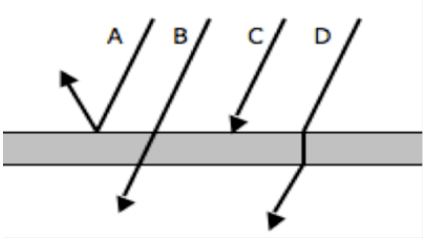
Ray C represents __.
reflection
refraction
transmission
absorption
Light __ travel through a vacuum.
can
cannot
High frequency equals
high energy
low energy
no change in energy
none of the above
Wave height
frequency
wavelength
amplitude
wave speed
All waves can be reflected
true
false
The bending of waves around a barrier.
refraction
diffraction
resonance
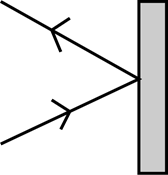
In the illustration, the light ray striking the object is-


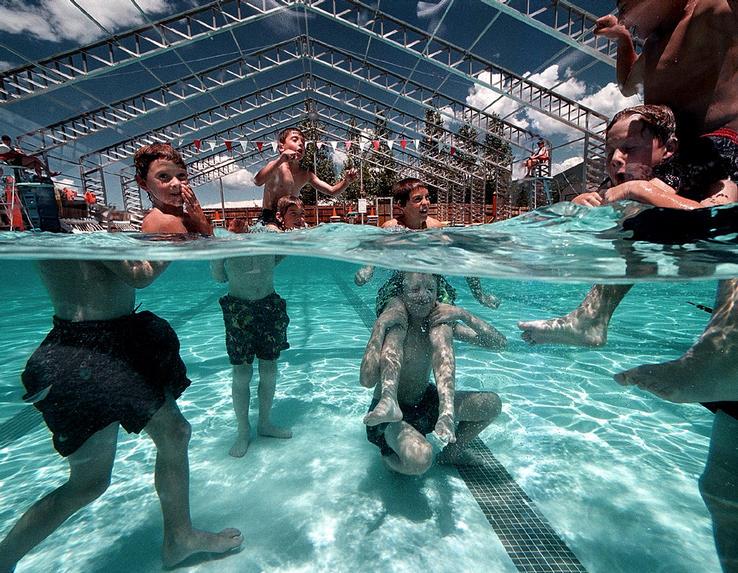
1. Your friends say that they saw a special nail polish that changes color when it is out in the sun. Can light from the sun cause the nail polish to change color?
No. Light is not a physical thing, so it cannot change physical things like nail polish.
Yes. Light from the sun can pull energy out of the nail polish, causing it to change color.
Yes. The nail polish can take in energy from the light, causing it to change color.
No. Light can only change things by warming them up, so it cannot cause the nail polish to change color.
When a material allows light to pass through it,
the material reflects the light and changes
the material absorbs the light and doesn't change
the material transmits the light and doesn't change
material transmits the light and changes
How are we able to perceive an object as being the color white?
All colors of visible light are absorbed by an object and then reflected into our eye.
All colors of visible light are reflected off an object and then to our eye.
All colors of visible light are absorbed by an object and no light is being reflected into our eye.

Type of mirror used in a convenience store to provide a wide angle view...
Plane
Convex
Concave

Type of mirror used by a dentist to get magnified view of a patient's teeth...
Plane
Convex
Concave

Type of mirror found in a bathroom...
Plane
Convex
Concave

Type of mirror used as a side mirror on a vehicle to provide a wide angle view...
Plane
Convex
Concave

Type of mirror that can produce a real image...
Plane
Convex
Concave

Type of mirror that can produce an inverted image...
Plane
Convex
Concave

Type of mirror that provides a wide angle view...
Plane
Convex
Concave

According to the law of reflection the angle of incidence is ____________ the angle of reflection.
less than
greater than
equal to

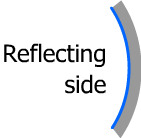

Images in a plane mirror are
real
larger
same size
smaller
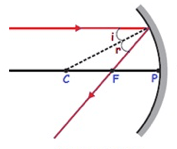
This ray diagram is for which mirror?
concave
convex
plane
window
A virtual image is always
virtual
upright
behind the mirror
in front of the mirror
Plane mirrors are?
Curved inside
Curved outside
Flat
Plane mirrors are coated with ?
Gold
Silver
Copper
The size of your reflection formed in the plane mirror is?
Smaller than you
Bigger than you
No change / Same size
What is the ray of light that strikes the surface ?
Incident ray
reflected ray
normal ray
normal
Ray D represents __
reflection
refraction
transmission
absorption
Ray A represents __
reflection
refraction
transmission
absorption
Ray B represents __
reflection
refraction
transmission
absorption
Any smooth surface that reflects light to form an image is a(n) ____.
telescope
microscope
mirror
lens
The bowl of a shiny spoon forms an enlarged, upright image similar to that of a ____ mirror.
wide-angle
convex
concave
refracting
The image formed by a plane mirror is ____.
real and reversed
real and upright
upright and reversed
virtual and inverted
What type of mirror will produce an image that is inverted?
Plane
Concave
Convex
What type of mirror will produce an image that is smaller and wider?
Plane
Concave
Convex

What kind of mirror is in the picture?
Concave
Convex
Plane
Corner

What kind of mirror is in the picture?
Concave
Convex
Plane
Corner

What kind of mirror is in the picture?
Concave
Convex
Plane
Corner

What kind of mirror is in the picture?
Concave
Convex
Plane
Corner

What kind of mirror is in the picture?
Concave
Convex
Plane
Corner

What kind of lens is in the picture?
Concave
Convex
Plane
Corner

What kind of mirror is in the picture?
Concave
Convex
Plane
Corner

What kind of lens is in the picture?
Concave
Convex
Plane
Corner

What kind of mirror is in the picture?
Concave
Convex
Plane
Corner

What kind of mirror is in the picture?
Concave
Convex
Plane
Corner

What kind of mirror is in the picture?
Concave
Convex
Plane
Corner

What kind of mirror is in the picture?
Concave
Convex
Plane
Corner

What kind of lens is in the picture?
Concave
Convex
Plane
Corner

What kind of lens is in the picture?
Concave
Convex
Plane
Corner

What kind of lens is in the picture?
Concave
Convex
Plane
Corner

What kind of mirror is in the picture?
Concave
Convex
Plane
Corner

What kind of mirror is in the picture?
Concave
Convex
Plane
Corner

What kind of mirror is in the picture?
Concave
Convex
Plane
Corner

