
 Worksheets
SCIENCE FINAL REVIEW
Total questions: 135
Worksheet time: 2hrs 40mins

What is the basic unit of liquid volume in the metric system?
gram
meter
Liter
cm3

What is the volume of the two red beads?
2.4 cm3
4 cm3
6 cm3
2 cm3

Which units of measurement are used for volume?
grams
centimeters
grams/milliliter
milliliter

Which state of matter has the highest amount of energy?
Solid
Liquid
Gas
Plasma

When a gas turns into a liquid
freezing
melting
evaporating
condensing

When a liquid turns into a gas
freezing
melting
evaporating
condensing

When a solid turns into a liquid
freezing
melting
evaporating
condensing
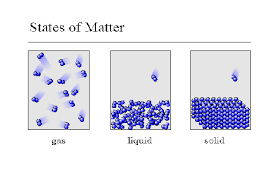
What happens to molecules of matter at higher temperatures?
Particles in an object have less energy
Particles in an object move faster
A gas contracts
Particles go crazy

What shows the relationship between mass and volume?
Volume
Density
Displacement
Matter

What is the formula for density?
density = mass x volume
density = mass / volume
density = mass + volume
density = mass - volume

A sample of He-Man toys has a mass of 10 g and a volume of 2 cm3. What is the objects density?
5.61 g/cm3
5 g/cm3
0.38 g/cm3
20.44 g/cm3

How many atoms of Calcium are in CaCl2?
3
4
1
2

It is a pure substance containing two or more different kinds of atoms.
element
mixture
compound
Plasma

What is krypton considered?
Element
Compound
Mixture
Plasma

These are found on the Periodic Table.
elements
mixtures
compounds
ice cream

What is water?
Element
Compound
Mixture
Plasma

Examples are diamonds (C), Uranium (U), Neon (Ne), etc.
elements
mixtures
compounds
Plasma

What is gold?
Element
Compound
Mixture
Plasma

Can only be separated by chemical means.
Element
Mixture
Compound
Plasma

Which of the following is NOT an example of a physical change?
Crumpled paper
Pencil sharpening
Shrunken clothing
Sour milk

A pure substance containing only one kind of atom.
Plasma
Mixture
Compound
Element

A copper penny turning greenish after a few years.
Chemical Change
Physical Change

Which of the following IS a physical change?
Getting a haircut
Rusty metal
sour milk
A compound

In the NaCl and H2O Lab Salt Crystals formed suggesting what type of change occurred?
physical
chemical

In the Yeast and Peroxide Lab a NEW substance was formed because the wooden splint RE-LIT. What substance was created in order to make this happen?
CO2
O2
NaCHO3
NaCl


Is moldy cheese a chemical or physical change?
chemical
physical

Which of the following is NOT a clue that a chemical reaction has taken place?
Changing size
Changing color
A gas being formed
Formation of a precipitate

The total amount of mass in a system does not change during a chemical reaction
Chemical Reaction
Counting Atoms
Law of Conservation of Mass
Law of Conservation of Volume

In the Sodium Bicarbonate and Vinegar Lab a NEW substance was formed because the wooden splint was EXTINGUISHED. What substance was created in order to make this happen?
Oxygen
Carbon Dioxide
Salt Crystals
Dynamic Equilibrium

All matter is made of
energy
atoms
electrons
compounds

The positive particles of an atom are
electrons
positrons
neutrons
protons

the central region of an atom where its neutrons and protons are is its
nucleus
electron cloud
core
center

an atom with atomic number 6 would have how many protons
6
12
3
cannot be determined

Particles in an atom that are neutral and have no charge are
negatrons
electrons
neutrons
protons

A particle that moves around the nucleus is a(n)...
Proton
Neutron
Electron
Quark



How do you test the hardness of a mineral?
Throw it against a wall
Step on it
Scratch Test
Kick it until it breaks

A naturally occurring, inorganic solid with a crystal structure and a definite chemical composition is referring to
density
streak
mineral
non silicate mineral

Large crystals are going to form
when lava erupts from a volcano
when a shallow sea evaporates
when magma underground cools off
all of the above

Characteristic observed without changing the identity of the material
luster
color
physical property
specific gravity

Mineral crystals can form from cooling ________
dirt
magma
water
air
A rock deep within the Earth experiences extreme temperature and pressure. After a long period of time it becomes which rock?
Magma
Igneous
Metamorphic
Sedimentary
Which type of rock is able to turn into a metamorphic rock?
Only sedimentary
Only igneous
Both igneous and sedimentary
Neither igneous or sedimentary
Rocks and sediment change as they move through the rock cycle. Which change involves turning into melting?
Lava to rock
magma to lava
rock to magma
rock to sediment
What must happen to a metamorphic rock before it becomes a sedimentary rock rock?
It must be broken down into sediment
It must be melted into magma
Its minerals must dissolve in water
It must be exposed to high temperature and pressure
This is the continuous process of rock changing from one type to another.
Igneous rocks
Sedimentary rocks
Metamorphic rocks
Rock Cycle
This is the type of rock that forms from magma or lava hardening.
Igneous rock
Sedimentary rock
Metamorphic rock
Rock Cycle

Which missing rock type is the arrow pointing at?
Igneous
Sedimentary
Metamorphic

Which missing rock type is the arrow pointing at?
Igneous
Sedimentary
Metamorphic

Which missing rock type is the arrow pointing at?
Igneous
Sedimentary
Metamorphic

How does a metamorphic rock become an igneous rock?
Heat and pressure
Melting and cooling
Weathering/Erosion and Cementation
Cycle

How does an igneous rock become a sedimentary rock?
Heat and pressure
Melting and cooling
Weathering/Erosion and Cementation
Cycling

How does a sedimentary rock become a metamorphic rock?
Heat and pressure
Melting and cooling
Weathering/Erosion and Cementation
Cycling

What does a barometer do?
Measures Air Pressure
measures temperature
measures humidity
measures length

The weight of the atmosphere is ...
temperature
humidity
air pressure
weather

A layer of air that surrounds Earth to keep us warm is called ...
atmosphere
Sun's rays
ozone layer
air pressure

Which temperature of air is more dense?
warm
cold
windy nation cold
boiling hot water air

What protects Earth from ultraviolet rays from the sun?
ozone layer
mesosphere
air pressure
troposphere

In which temperature of air do the molecules spread out and take up more space?
cold
warm
Kinda Cold
Like Warm Milk!!!

What gas makes up the majority of the atmosphere?
oxygen
nitrogen
water vapor
carbon dioxide

In what layer of the atmosphere would you find clouds and weather?
troposphere
stratosphere
mesosphere
thermosphere

What is climate?
What's happening in space at a time and place.
What's happening in our atmosphere at a time and place
The average weather over many years
The average temperature over many years.

What is weather?
What's happening in space at a time and place.
What's happening in our atmosphere at a time and place.
The average weather over many years
The average temperature over many years.

Which of the following is a greenhouse gas?
carbon monoxide
oxygen
nitrogen
carbon dioxide

What is precipitation?
Sweat from our bodies on hot days
Warm rain but not cold snow or sleet
Gas that we use in furnaces or ovens
Any form of water that falls from the sky

What is another name or synonym for the water cycle?
Geologic cycle
Hydrologic cycle
Geosphere
Carbon cycle

What is the energy source that drives the water cycle?
The moon T
The heat from our home in the winter all around the world
The sun
he heat generated solely from the core of the earth

The act of turning from a gas into a liquid. ________________________
Condensation
Evaporation
Transpiration
Precipitation

The movement caused within a fluid by the tendency of hotter and therefore less dense material to rise, and colder, denser material to sink under the influence of gravity, which consequently results in transfer of heat. ____________________
Evaporation
Convection
Precipitation
Transpiration

The act of turning from a liquid into a gas. ___________________
Transpiration
Condensation
Evaporation
Precipitation

The process where plants absorb water through the roots and then give off water vapor through pores in their leaves. __________________________
Transpiration
Condensation
Evaporation
Precipitation

What is it called when plants give off water vapor as a waste product?
condensation
evaporation
sublimation
transpiration

The process by which plants release water through the pores in their leaves is called...
accumulation
dormancy
photosynthesis
transpiration

The continuous movement of water from Earth's surface to the atmosphere and back again.
water cycle
weather
rock cycle
Brownie Cycle

What does the air consist of?
molecules
helium
density
weather

Convection takes place because
warm air is more dense than humid air
warm and cold air have the same density
cold air is less dense than warm air
cold air is more dense than warm air

What causes winds?
differences in precipitation
differences in humidity
differences in air pressure

Someone who studies the weather.
rain gauge
taxonomists
meterologist
satellites
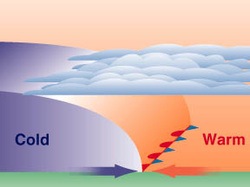

Which front leads to steady rain for several days?
warm front
cold front
stationary front
occluded front

Humidity is the...
Amount of Water Vapor in the Air
Amount of Wind in the Air
Amount of Precipitation in the Air
Amount of Pressure in the Air

Where does a hurricane form?
Over a cold body of water
Over a warm body of water
Over cold land
Over warm land

In what direction do winds always blow?
From areas of high pressure to areas of low pressure
From areas of low pressure to areas of high pressure
From one Pokemon to Another
Low Pokemon Pressure to High Dragon Ball Z pressure
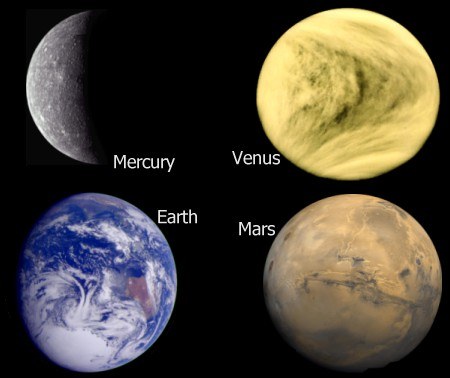


One of the main differences between the outer and inner planets is __________.
The inner planets all have water
the inner planets are much bigger than the outer planets
the outer planets are gas planets
the inner planets have rings, and the inner planets don't

Why does Earth have different seasons?
because of the distance between Earth and the sun
because of the speed of Earth as it rotates on its axis
because of the amount of light blocked by the moon on its axis
because of the tilt of Earth on its axis as it moves around the sun

As the Earth travels around the sun, this tilt causes different areas of the Earth’s surface to get different amounts of daylight at different times of the year. The angle of the Sun’s rays to the surface also causes areas to have more or less of the Sun’s energy. This causes the ________.
months
day and night
seasons
years

The sun is classified as a ___________________
planet
star
comet
asteroid

Which of the following causes seasons?
the earths tilt & revolution
the earth's rotation
the earth's gravitational pull
the earth's size

What force causes the Earth to revolve around the Sun?
a magnetic force
a solar force
an imaginary force
a gravitational force

Why does the moon appear to shine?
it reflects the light of the sun
it glows due to gravity
how quickly it rotates
it is a star

How long does it take for the Earth to make one complete revolution around the Sun?
24 hours
27.5 hours
100 days
365 days

What happens in an eclipse of the Sun?
the moon blocks the light of the Sun from reaching Earth
the Earth blocks the Sun's light from reaching the moon
the moon changes phases
the Sun blocks the Earth's light

Having seasons on Earth helps prove which of the following?
The existence of the Sun
That the Earth revolves around the Sun
The location of stars
That the Earth has a moon orbiting it

What is the major cause of tides on Earth?
the gravitational interaction between the Earth and the Moon
the Earth rotating on its axis
the Earth revolving around the Sun
melting of the polar caps

The shape of the earth's orbit around the sun:
oval
circle
semicircle
ellipse

As the moon revolves around the earth, we always see the same side of the moon.
Nobody cares
false
Maybe
true

This motion brings about DAY and NIGHT on Earth
Rotation
Arkeus
Pikachu
Revolution

How long does it take Earth to complete one Rotation?
365.25 Days
180 Days
12 hours
24 Hours

The blanket of Air or Gases that surround the Earth is called the...
Hydrosphere
Lithosphere
Atmosphere
Cheese


The gas giants are different from the terrestrial planets because they
have smaller atmospheres
are less dense
have larger atmospheres
are more colorful

The sun and all of the planets and other bodies that travel around it.
Universe
Galaxy
Star
Solar System
conclusion


