wayground logo

Free Printable Worksheets

Font size

S
M
L
XL
Worksheets

Energy & the Environment Final Review

Total questions: 130

Worksheet time: 7hrs 34mins

Name
Class
Date
1.
 The law of conservation of energy states that when one form of energy is converted into another,
a)
Energy is destroyed in the process
b)
Energy is created in the process
c)
No energy is destroyed in the process
d)
Energy is lost in the process
2.
Which has the most kinetic energy?
a)
a basketball rolling down a hill
b)
a bus stopped at the top of a hill
c)
a dump truck driving down a hill
d)
a golf ball sitting at the top of the hill
3.
The energy associated with motion is called
a)
Kinetic energy
b)
Elastic potential energy
c)
Gravitational potential energy
d)
Nuclear energy
4.
Light is an example of _________
a)
thermal energy
b)
radiant energy
c)
mechanical energy
d)
nuclear energy
5.
Which of the following has kinetic energy?
a)
a rock poised for a fall
b)
an archer's bow that is drawn back
c)
a rolling bowling ball
6.
When riding a roller coaster, you go up and down many hills. When do you have the maximum potential energy? 
a)
at the top of the hill
b)
as you go down each hill
c)
at the bottom of the each hill
d)
as you go up each hill
7.
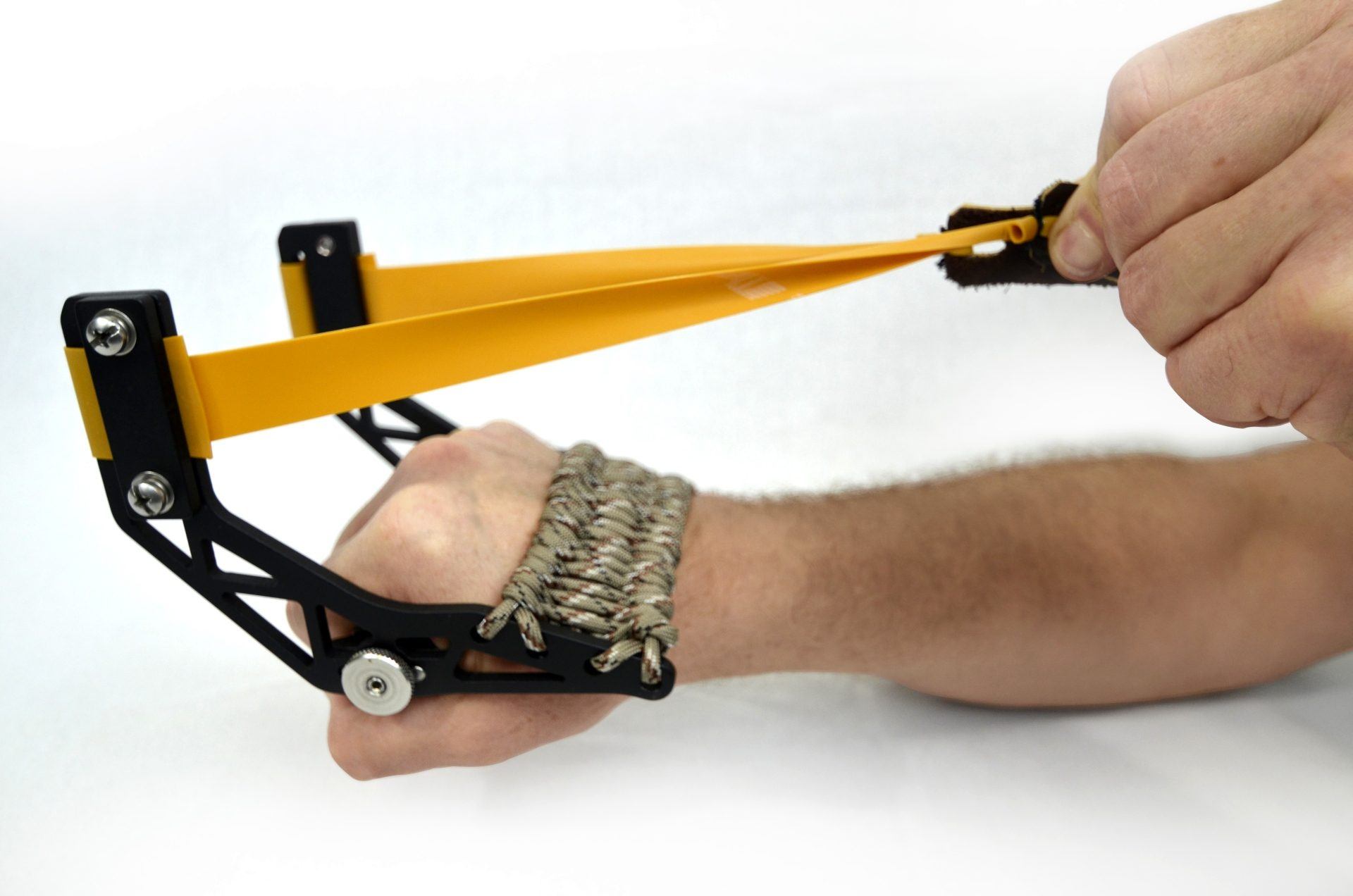
Describe the energy in this picture.
a)
Gravitational Potential
b)
Kinetic
c)
Elastic Potential
d)
No Energy
8.

Wind energy needs...

a)

Birds migration

b)

Highly populated areas

c)

Visual pollution

d)

Wind turbines

9.
a)

solid

b)

liquid

c)

gas

10.
a)

solid

b)

liquid

c)

gas

11.
a)

solid

b)

liquid

c)

gas

12.

Anything that takes up space.

a)

matter

b)

volume

c)

mass

13.

The amount of matter in an object.

a)

matter

b)

volume

c)

mass

14.

Why does a substance change from one state of matter to another?

a)

The substance’s size changes.

b)

The substance’s temperature changes.

c)

The substance turns into a different kind of matter.

15.

If you add heat to matter it evaporates . If you take heat away from matter it _________________.

a)

shapes

b)

melts

c)

condenses

16.

How might temperature changes affect a glass of iced tea?

a)

Making it warmer could cause the ice cubes to melt.

b)

Making it colder could cause the ice cubes to melt.

c)

Making it much warmer could cause the liquid to freeze.

17.

The particles in a gas are very ____________________ packed together.

a)

shapely

b)

tightly

c)

loosely

18.

a. The glass now has less water in it. What happened to the water?

a)

condensation

b)

gas

c)

evaporation

d)

solid

19.

a. The steam makes Mom’s kitchen window look cloudy. What is happening?

a)

evaportation

b)

solid

c)

winter

d)

condensation

20.
Freezing
a)
Solid to gas
b)
Liquid to solid
c)
Gas to solid
d)
Liquid to gas
21.
Which state of matter has tightly packed molecules?
a)
solid
b)
liquid
c)
gas
22.
Which state of matter has a definite shape?
a)
solid
b)
liquid
c)
gas
23.
What is happening when my ice cream changes from a solid to a liquid?
a)
freezing
b)
melting
c)
burning
d)
evaporation
24.
Define a liquid.
a)
Indefinite shape, indefinite volume
b)
Definite shape, definite volume
c)
Found in stars
d)
Definite volume, indefinite shape
25.
The state of matter that has no definite size or shape is
a)
Solid
b)
Liquid
c)
Gas
26.
Particles (molecules) in a ______________________ have more energy than the other states of matter.
a)
gas
b)
solid
c)
liquid
27.
Particles of a liquid
a)
are tightly packed together and stay in a fixed position.
b)
have no viscosity.
c)
decrease in volume with increasing temperature.
d)
are free to move around one another but still touch.
28.
What term describes a solid changing to a gas?
a)
Deposition
b)
Sublimation
c)
Evaporation
d)
Freezing
29.
Particles (molecules) in a ______________________ have more energy than the other states of matter.
a)
gas
b)
solid
c)
liquid
30.
What is condensation?
a)
gas to solid
b)
gas to liquid
c)
liquid to solid 
d)
solid to liquid 
31.
Thermal energy is...
a)
heat energy.
b)
the energy of motion
c)
energy of nuclear processes.
d)
an indication of physical change.
32.
What does STEM stand for?
a)
Science, Technology, Engineering, Mathematics
b)
Something, that thing, everything, maybe
c)
Science, technology, everything, Music
d)
Science, teacher, enjoy, Mathematics
33.

Choose the correct hypothesis for "What effect does studying have on your test grade?"

a)

IF I study for hours, THEN my test grade will be better.

b)

IF I have a good test grade, THEN I will study.

c)

Good grades are from studying.

34.

In an experiment, the one variable that is changed is called the

a)

dependent variable

b)

independent variable

c)

experimental variable

d)

controlled variable

35.

A scientist hypothesizes the the temperature at which an alligator's egg is incubated will determine whether the alligator will be male or female. The independent variable is

a)

the male alligators

b)

the gender of the alligator

c)

the temperature

d)

the incubator

36.

A scientist hypothesizes the the temperature at which an alligator's egg is incubated will determine whether the alligator will be male or female. The dependent variable is

a)

the temperature

b)

the size of the baby alligators

c)

the incubator

d)

the gender of the baby alligators

37.

What two words should be in your hypothesis?

a)

I think

b)

My guess

c)

If... then

d)

No idea

38.

What a hypothesis?

a)

an explanation about what you observed

b)

using your 5 senses to gather data

c)

the thing changed on purpose in the experiment

d)

an educated guess about what will happen in the experiment.

39.
The independent variable is the ONE thing you _____.
a)
change
b)
keep the same
c)
experiment with
d)
investigate
40.
How many variables can be tested in a controlled experiment?
a)
one
b)
two
c)
three
d)
as many as possible
41.

Mr. G normally uses praise as a reward to train his dog. He wants to know the best way to train his dog, so he sets up an experiment to find out if there is a better way to get his dog to respond to commands. What is his dependent variable?

a)

Type of reward

b)

Praise

c)

Type of dog

d)

Amount of time the dog follows commands

42.

What is the dependent variable (effect) is this experiment?

"Does eating breakfast improve test score?"

a)

eating breakfast or not

b)

the grade you got on the test

c)

what time you get up in the morning

d)

how tasty the breakfast is

43.

What is the dependent variable (effect) in this experiment?

"Do tall people jump further than short people?"

a)

height of the person

b)

weight of the person

c)

how fast the person runs

d)

how far the person jumps

44.

What is the independent variable (cause) in this experiment?

"Which type of metal, copper or aluminum, conducts heat faster?"

a)

size of metal

b)

types of metal

c)

time it takes to heat up

d)

shape of the metal

45.

Matias wanted to see if his dog would lose weight if he took the dog for a walk twice a day instead of just once a day. What is the dependent variable in this situation?

a)

The breed of dog

b)

The dog's weight

c)

How many times they go for a walk each day

d)

How fast they walked

46.

Matias wanted to see if his dog would lose weight if he took the dog for a walk twice a day instead of just once a day. What is the independent variable in this situation?

a)

The breed of dog

b)

The dog's weight

c)

How many times they go for a walk each day

d)

How fast they walked

47.

How are observations made?

a)

Only with your eyes.

b)

By trying to explain what you see.

c)

Using your 5 senses

d)

Just making a good guess.

48.

It must be summer.

a)

Qualitative Observation

b)

Quantitative Observation

c)

Opinion

d)

Inference

49.

The penguin got pushed in.

a)

Qualitative Observation

b)

Inference

c)

Quantitative Observation

d)

Hypothesis

50.

The flowers are green and blue.

a)

Qualitative Observation

b)

Quantitative Observation

c)

Inference

d)

Hypothesis

51.

The penguins are black and white.

a)

Qualitative Observation

b)

Inference

c)

Hypothesis

d)

Quantitative Observation

52.

There are 29 students in the classroom.

a)

quantitative observation

b)

qualitative observation

c)

inference

d)

hypothesis

53.

The speed of the car is 55 mph.

a)

Qualitative Observation

b)

Quantitative Observation

c)

Hypothesis

d)

Inference

54.
Tool used to measure MASS
a)
Metric Ruler
b)
Triple Beam Balance
c)
Graduated Cylinder
d)
Thermometer
55.
What is the name of this metric tool?
a)
Triple Beam Balance
b)
Graduated Cylinder
c)
Overflow Can
d)
Massometer
56.
What is the volume of the liquid in this graduated cylinder?
a)
19 mL 
b)
35 mL 
c)
24 mL 
d)
1.9 mL
57.
What is the scale on this graduated cylinder?
a)
.1 mL per line
b)
.2 mL per line
c)
.5 mL per line
d)
1 mL per line
58.
What is the volume of the liquid in this graduated cylinder?
a)
1.5 mL 
b)
15 mL 
c)
1.05 mL 
d)
.15 mL
59.
What is the mass on the triple beam balance?
a)
345.5
b)
304.5
c)
700.5
60.
What is the mass on the triple beam balance?
a)
375.8
b)
383.0
c)
376.0
61.
What is the mass on the triple beam balance? 
a)
206.0
b)
260.0
c)
200.6
62.

What is the name of these objects?

a)

metric ruler

b)

Celsius thermometer

c)

graduated cylinders

d)

pan balances

63.
What does mass measure?
a)
the amount of stuff or matter in an object
b)
the amount of space something takes up
c)
the gravitational pull on an object
d)
measure of how hot or cold something is
64.
What does volume measure?
a)
the amount of stuff or matter in an object
b)
the amount of space something takes up
c)
the gravitational pull on an object
d)
the measure of how hot or cold something is
65.
degrees C
a)
SI unit for mass
b)
SI unit for liquid volume
c)
SI unit for solid volume
d)
SI unit for temperature
66.
mg, g, kg
a)
SI unit for mass
b)
SI unit for liquid volume
c)
SI unit for solid volume
d)
SI unit for length
67.
mg, g, kg
a)
SI unit for mass
b)
SI unit for liquid volume
c)
SI unit for solid volume
d)
SI unit for length
68.
mm, cm, m, km 
a)
SI unit for mass
b)
SI unit for liquid volume
c)
SI unit for solid volume
d)
SI unit for length
69.

mL, L

a)

SI unit for mass

b)

SI unit for liquid volume

c)

SI unit for solid volume

d)

SI unit for length

70.

What is this tool used for?

a)

to find the temperature of a substance

b)

used to stir liquids

c)

used to find the mass

d)

used to add drops of liquid

71.

What is the purpose of this tool?

a)

to measure liquids, not exact

b)

used to stir

c)

to measure exact amounts of liquid

d)

used to find mass

72.

What is the importance for the System of International Units?

a)

to make people think

b)

to make measuring harder

c)

to be different from everyone else

d)

allows scientist to share data easily

73.
a)
graduated cylinder
b)
spring scale
c)
test tube
d)
beaker
74.
a)
eyedropper
b)
compass
c)
test tube
d)
thermometer
75.
a)
gradated Cylinder
b)
compass
c)
metric Ruler
d)
globe
76.
a)
safety goggles
b)
microscope
c)
hand lens
d)
metric measuring tape
77.
a)
metric measuring tape
b)
spring scale
c)
metric ruler
d)
balance
78.
240 cm = ___________ m
a)
2400
b)
24
c)
2.4
d)
0.24
79.
1000 m = ___________ km
a)
100
b)
10
c)
1
d)
0.1
80.
15.6 L = ___________ mL
a)
15,600
b)
156,000
c)
1,560,000
d)
15,600,000
81.
0.932 g = ___________ mg
a)
9.32
b)
93.2
c)
932
d)
9,320
82.
3 km = ___________ mm
a)
30
b)
300
c)
3,000
d)
3,000,000
83.
 159.7 g = ___________ kg
a)
0.1597
b)
1.597
c)
15.97
d)
1597
84.
 1234 mg = ___________ kg
a)
0.0001234
b)
0.001234
c)
0.01234
d)
0.1234
85.
 56 L = ___________ mL
a)
560
b)
5,600
c)
56,000
d)
560,000
86.
 330 cm = ___________ m
a)
3,300
b)
33
c)
3.3
d)
0.33
87.
183 cm = ___________ m
a)
0.183
b)
1.83
c)
18.3
d)
1,830
88.
55 mm = ___________ cm
a)
0.55
b)
5.5
c)
550
d)
5,500
89.
32.9 km = ___________ cm
a)
32,900
b)
329,000
c)
3,290,000
d)
32,900,000
90.

What is the basic unit of length in the metric system?

a)

gram

b)

meter

c)

Liter

d)

cm3

91.

What is the basic unit of mass in the metric system?

a)

gram

b)

meter

c)

Liter

d)

cm3

92.

All matter is made of what

a)

energy

b)

atoms

c)

electrons

d)

compounds

93.

The positive particles of an atom are

a)

electrons

b)

positrons

c)

neutrons

d)

protons

94.

The central region of an atom where its neutrons and protons are is its

a)

nucleus

b)

electron cloud

c)

core

d)

center

95.

Particles in an atom that are neutral and have no charge are

a)

negatrons

b)

electrons

c)

neutrons

d)

protons

96.
Which of the following is a negatively charged subatomic particle?
a)
Electron
b)
Proton
c)
Neutron
d)
Quark
97.
What are the 3 particles that make-up the atom?
a)
Protons, neutrons, and isotopes
b)
Neutrons, isotopes, and electrons
c)
Positives, negatives, and electrons
d)
Protons, neutrons, and electrons
98.
Most of the mass in an atom is concentrated in the _____.
a)
Electrons
b)
Nucleus
c)
Protons
d)
Empty space
99.
Where are electrons of an atom found?
a)
Nucleus
b)
Electron Cloud
c)
Some are in the nucleus and some in the electron cloud.
d)
They are moving everywhere.
100.
Define the term "mass".
a)
Mass/Volume
b)
Anything that has mass and takes up space 
c)
The amount of space an object occupies.
d)
The amount of matter in an object.
101.
Volume is ...
a)
Mass/Volume
b)
The amount of matter in an object.
c)
The amount of space an object occupies.
d)
Anything that has mass and occupies space.
102.
a)
410 cm3
b)
420 cm3
c)
402 cm3
d)
401 cm3
103.
What is the volume of this prism?
a)
18 cubic cm
b)
6 cubic cm
c)
9 cubic cm
104.
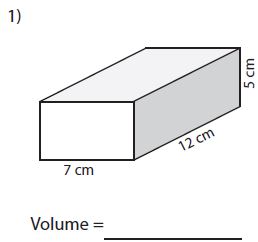
Find the volume of the figure.
a)
63 cm³
b)
91 cm³
c)
819 cm³
d)
409.5 cm³
105.

Which equation would help you find the volume?

a)

5-4=1 mL

b)

5.6-4.8=0.8 mL

c)

4-5=1 mL

d)

5+4=9 mL

106.

What is the volume displacement of SpongeBob?

a)

1 mL

b)

2 mL

c)

3 mL

d)

4 mL

107.

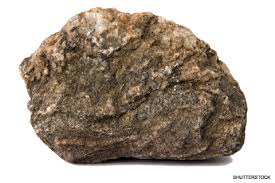
What is the volume of the solid object?

a)

100 mL

b)

125 mL

c)

225 mL

d)

250 mL

108.
Energy of motion is which type of energy?
a)
Potential
b)
Kinetic
c)
Sound
d)
Gravitational
109.
What type of energy is in this picture?
a)
Kinetic
b)
Potential
c)
Chemical
d)
Sound
110.
Energy that is stored in the nucleus of an atom is called _________ energy.
a)
Chemical
b)
Nuclear
c)
Gravitational
d)
Elastic
111.
Electromagnetic energy (such as visible light waves, X-rays, gamma rays and radio waves) is called _______ energy.
a)
Thermal
b)
Radiant
c)
Sound
d)
Electrical
112.
What kind of energy is represented in this picture?
a)
Thermal
b)
Potential
c)
Nuclear
d)
Mechanical
113.
What kind of energy does this device use?
a)
Chemical
b)
Electrical
c)
Thermal
d)
Chemical
114.
Work is:
a)
A transfer of energy by a force to move and object
b)
Something you get paid for
c)
Something you take home
d)
Makes you sweat
115.
On a roller coaster, where is maximum kinetic energy?
a)
At the bottom of a big hill
b)
When going around a corner
c)
When going upside down
d)
At the top of a big hill
116.
Energy that comes from the nucleus of an atom. A form of potential energy.
a)
chemical energy
b)
Nuclear energy
c)
Sound energy
d)
Electrical energy
117.
According to which law of energy, energy can't be created or destroyed?
a)
First law of motion
b)
The law of tacos
c)
Laws of Energy
d)
law of conservation of energy
118.
The purpose of the panels is to change solar energy into ____________.
a)
light energy
b)
electrical energy
c)
chemical energy
d)
mechanical energy
119.
The unit of work is the ...
a)
joule
b)
force
120.
The unit of power is the...
a)
work
b)
watt
121.
Work is done on an object when the object moves in the SAME direction in which the force is applied.
a)
True
b)
False
122.
If you pull at an angle instead of in the direction in which the object moves, MORE of your force does work.
a)
True
b)
False
123.
The FARTHER you move an object, the more work you do.
a)
True
b)
False
124.
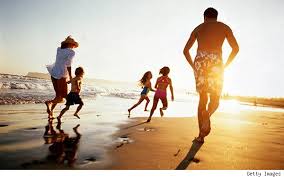
The sun shines down on this family as the play on the beach.
a)
conduction
b)
convection
c)
radiation
125.
A group of friends gather around a fire to stay warm.
a)
conduction
b)
convection
c)
radiation
126.
Walking on the warm sand sand with your bare feet.
a)
conduction
b)
convection
c)
radiation
127.
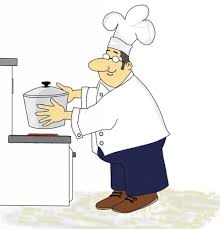
The man goes to take the hot pot off the stove with his bare hands.
a)
conduction
b)
convection
c)
radiation
128.
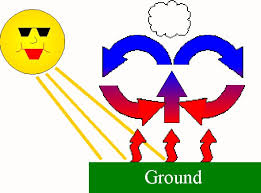
Warm air rises and the cool air sinks.
a)
conduction
b)
convection
c)
radiation
129.
In this experiment, the WARM red dye and the COLD blue dye was placed in the water at the same time. The warm red dye rose to the top while the cold blue dye sank to the bottom.
a)
conduction
b)
convection
c)
radiation
130.
Conduction occurs in...
a)
solids
b)
liquids
c)
gases