wayground logo

Free Printable Worksheets

Font size

S
M
L
XL
Worksheets

8th Q1 Exam Review 2021

Total questions: 134

Worksheet time: 2hrs 37mins

Name
Class
Date
1.
Mechanical and chemical processes that breakdown Earth's surface
a)
Weathering
b)
Erosion
c)
Deposition
d)
Delta
2.
moving weathered material (sediment)
a)
Weathering
b)
Erosion
c)
Deposition
d)
Delta
3.
Laying down of eroded material
a)
Weathering
b)
Erosion
c)
Deposition
d)
Delta
4.
Material from broken down rocks
a)
Sediment
b)
Mass wasting
c)
Deposition
d)
Delta
5.
Breaking down rock mechanically
a)
mechanical weathering
b)
chemical weathering
c)
mass wasting
d)
delta
6.
changes the composition of rocks (weakens them)
a)
chemical weathering
b)
mass wasting
c)
mechanical weathering
d)
delta
7.
A huge downhill movement of rock or soil due to gravity
a)
mass wasting
b)
delta
c)
chemical weathering
d)
deposition
8.
Triangular deposit of sediment entering a large body of water
a)
Delta
b)
Sediment
c)
Mass wasting
d)
Weathering
9.
What words do "break it, take it, drop it" match?
a)
weathering, erosion, deposition
b)
sediment, delta, deposition
c)
mechanical weathering, chemical weathering
d)
Erosion, mass wasting, sediment
10.
When will Earth's surface be done changing?
a)
It will never stop
b)
Earth's surface does not change
c)
It will stop after 5 billion years
d)
We cannot make a good estimate
11.
Which of the following does NOT cause weathering of rocks?
a)
Animals
b)
Wind
c)
Water
d)
Scissors
12.
As erosion from the waves continues, what will most likely happen to the HOLE in this landform?
a)
it will get bigger
b)
it will fill with sediment
c)
it will remain the same
d)
it will permanently fill with water
13.
Which of the following can cause erosion?
a)
falling leaves
b)
flowing water
c)
warmer temperatures
d)
growing grass
14.
Which of the following is a SLOW process that changes Earth's surface?
a)
Flash flooding
b)
Earthquake
c)
Volcanic eruption
d)
wind erosion
15.
This landform is a sea arch. Which is responsible for shaping the arch?
a)
plate tectonics
b)
earthquakes
c)
erosion
d)
deposition
16.
The freezing and thawing action of water affects a rock by
a)
transforming the rock into igneous rock
b)
chemically changing the rock
c)
gradually breaking down the rock into smaller pieces
d)
leaving behind sediment particles from evaporation
17.
It is harder to read the wording on very old tombstones than it is to read the wording on newer ones. The difference is MOST likely the result of:
a)
dirt filling in the letters
b)
modern tombstones being made of artificial materials
c)
weathering of the stone
d)
slow crystallization of the stone
18.
How do plants MOST commonly break large rocks into smaller pieces?
a)
plant leaves insulate surrounding rocks from temperatures
b)
Plant roots grow into cracks in rocks
c)
seeds from plants fall into rocks and release chemicals
d)
stems of plants surround and squeeze rocks
19.

The topsoil covering an area of land was washed away by rain. The land was most likely--

a)

steep without plant roots

b)

steep with plant roots

c)

flat without plant roots

d)

flat with plant roots

20.
Which of the following is most likely to make a rock crack and crumble?
a)
dew evaporating on the rock
b)
leaves decaying on the rock
c)
snow melting in a crack in a rock
d)
water freezing in the crack in a rock
21.
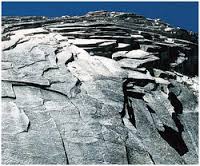
These rocks were broken apart from the continuous freeze/thaw of water in the cracks of the rocks. This is an example of:
a)
ice wedging
b)
acid rain
c)
permeability
d)
abrasion
22.
Bobby observed that a metal trash can was covered with rust.  What type of weathering caused the rust on the trash can?
a)
Mechanical weathering 
b)
Wind weathering
c)
Chemical weathering
d)
Erosion weathering
23.
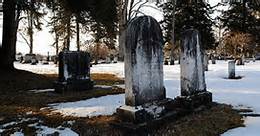
These gravestones have slowly broken down and turned a blackish color due to the action of:
a)
ice wedging
b)
abrasion
c)
acid rain
d)
mechanical weathering
24.

Potholes forming in the road after a cold winter is an example of what type of weather?

a)

mechanical weathering

b)

chemical weathering

25.
The diagrams shows a rock with water trapped in the cracks during the day and at night. 

Which statement best explains why this process results in weathering?
a)
frozen water acts as a solute
b)
water expands when it freezes
c)
the mass of water increases when it freezes
d)
frozen water dissolves most types of rock
26.
Rain washing away soil from a hillside
a)
Weathering
b)
Erosion
c)
Deposition
27.
Waves dropping sand on the beach
a)
Weathering 
b)
Erosion
c)
Deposition
28.
Caves being formed by acid rain dissolving underground limestone
a)
Weathering
b)
Erosion
c)
Deposition
29.

Deltas forming at the mouths of rivers are an example of:

a)

Weathering

b)

Erosion

c)

Deposition

30.
Water getting into cracks, freezing, and breaking the rocks or pavement apart
a)
Weathering
b)
Erosion
c)
Deposition
31.
Ponds filling up with sediment and becoming marshes
a)
Weathering
b)
Erosion
c)
Deposition
32.
What is the major cause of weathering and erosion?
a)
wind
b)
ice
c)
glaciers
d)
moving water
33.
The process of breaking up rocks on Earth's surface is called...
a)
sediment
b)
erosion
c)
weathering
d)
deposition 
34.
What is mechanical weathering?
a)
Process through which rocks are physically broken into smaller pieces.
b)
Rocks are broken down through chemical changes.
c)
Rocks are worn away from acid in plant roots.
d)
Rocks broken down by machinery.
35.
In which type of climate would weathering happen the fastest to a rock?
a)
wet and warm
b)
dry and cold
c)
wet and cold
d)
dry and warm
36.
What are the 3 major types of rocks?
a)
Igneous, Metamorphic, Sedimentary
b)
Metamorphic, Igneous, Cementation
c)
Brown, Red, Gray
d)
Streak, Hardness, Breakage
37.
This rock formed when bits of other rocks became pressed into a solid. What type of rock is it?
a)
Sedimentary Rock
b)
Metamorphic Rock
c)
Igneous Rock
38.
This rock was formed when molten rock cooled into a solid. What type of rock is it?
a)
Igneous Rock
b)
Metamorphic Rock
c)
Sedimentary Rock
39.

The name of a person that studies rocks and the earth.

a)

veterinarian

b)

geologist

c)

podiatrist

d)

teacher

40.
When sediments are pressed together tightly, this is called ____________.
a)
Compaction
b)
Cementation
c)
Weathering
d)
Erosion
41.
The process when rocks break into smaller pieces due to exposure to natural elements is called
a)
erosion
b)
weathering
c)
sediments
42.
True or False: Once a rock is sedimentary, it cannot become an igneous rock.
a)
True
b)
False
43.

Geologists have classified rocks into three major groups of rocks which are:

a)

inorganic, organic and chemical rocks

b)

igneous, sedimentary and metamorphic rocks

c)

metamorphic, chemical and non chemical rocks

d)

sedimentary, inorganic and igneous rocks

44.

The process by which metamorphic rock changes to igneous rock begins with

a)

melting

b)

erosion

c)

deposition

d)

crystallization

45.
The process by which igneous rocks are formed...
a)
heat and pressure
b)
melting and cooling
c)
weathering and erosion
46.
The process by which metamorphic rocks are formed...
a)
heat and pressure
b)
erosion and deposition
c)
melting and cooling
47.
The name rock is given when it is broken down into smaller pieces.
a)
texture
b)
weathering
c)
sediment
d)
erosion
48.
_______ rock forms from magma/lava
a)
Metamorphic
b)
Sedimentary
c)
Igneous
49.
What is process in which water, wind, and heat break down rock?
a)
weathering
b)
exfoliation
c)
cementation
d)
composition
50.
During the rock cycle, what forms when the magma cools?
a)
igneous rocks
b)
sedimentary rock
c)
metamorphic rock
d)
foliated rock
51.
Sedimentary rocks may contain fossils.
a)
True
b)
False
52.

Name of the impression of a plant or animal, in the soil, that existed in the past

a)

diamond

b)

hardness

c)

fossil

53.

A crystalline carbon that is valued as a gem; can cut glass.

a)

minerals

b)

hardness

c)

magma

d)

diamond

54.

Geologist use this to study different minerals that make up rock composition.

a)

mineral

b)

fossil

c)

microscope

d)

hardness

55.

What is underground molten rock?

a)

Lava

b)

Magma

c)

Soil

d)

Intrusive

56.

What is aboveground molten rock?

a)

Extrusive

b)

Magma

c)

Lava

d)

Sedimentary

57.

Limestone is an example of...

a)

Sedimentary

b)

Igneous

c)

Metamorphic

58.

Sandstone is an example of...

a)

Metamorphic

b)

Sedimentary

c)

Igneous

59.

Granite is an example of...

a)

Igneous

b)

Metamorphic

c)

Sedimentary

60.

Marble is an example of...

a)

Igneous

b)

Sedimentary

c)

Metamorphic

61.

Pumice is an example of

a)

Igneous

b)

Metamorphic

c)

Sedimentary

62.

Quartzite is an example of...

a)

Metamorphic

b)

Igneous

c)

Sedimentary

63.

Basalt is an example of...

a)

Igneous

b)

Sedimentary

c)

Metamorphic

64.

Shale is an example of...

a)

Metamorphic

b)

Sedimentary

c)

Igneous

65.

Gneiss is an example of...

a)

Igneous

b)

Sedimentary

c)

Metamorphic

66.

Obsidian is an example of...

a)

Igneous

b)

Sedimentary

c)

Metamorphic

67.

Coal is an example of...

a)

Igneous

b)

Sedimentary

c)

Metamorphic

68.

Conglomerate is an example of...

a)

Igneous

b)

Sedimentary

c)

Metamorphic

69.

What is it called when layers pile up and press down on the material below?

a)

Compaction

b)

Layering

c)

Cementation

d)

I don't know

70.

When large rocks are broken down into smaller parts by physical and chemical means

a)

Weathering

b)

Erosion

c)

Both

d)

Neither

71.

What is the parent material of all rocks?

a)

Magma

b)

Lava

c)

Sedimentary

d)

Organic matter

72.

Intrusive & extrusive are 2 types of...

a)

sedimentary

b)

metamorphic

c)

Igneous

73.

Foliated & non-foliated are 2 types of...

a)

Sedimentary

b)

Metamorphic

c)

Igneous

74.
A natural mixture of minerals.
a)
erosion
b)
magma
c)
alloys
d)
rock
75.
A type of rock that forms from the cooling of molten rock at or below the surface of the earth
a)
Igneous Rock
b)
Metamorphic Rock
c)
Sedimentary Rock
d)
chemical Rock
76.
Igneous rock that forms from lava on Earth's surface
a)
Organic Rock
b)
Intrusive Rock
c)
Clastic Rock
d)
Extrusive Rock
77.
Extrusive rocks that form quickly above the Earths surface have
a)
small crystals
b)
large crystals
c)
small and large crystals
d)
no crystals
78.
Igneous rock that forms when magma hardens beneath Earth's surface
a)
intrusive Rock
b)
compaction
c)
Chemical Rock
d)
Clastic Rock
79.
A slow cooling igneous rock will have _____ crystals
a)
large
b)
small
c)
average
d)
black
80.
One common use for the igneous rock granite is...
a)
building material
b)
cutting tools
c)
abrasion in polishing
d)
cement
81.
How do coarse-grained igneous rocks form?
a)
from sedimentary rocks changed under pressure
b)
from large rock particles cemented together
c)
from rapidly cooling lava
d)
from slowly cooling magma
82.
Extrusive forms _________crystals
a)
small
b)
large
83.
The process by which igneous rocks are formed...
a)
heat and pressure deep underneath earth's surface
b)
melting and cooling of magma
c)
compaction and cementation of sediments
84.
Rock made of layers of compressed sediments
a)
metamorphic rock
b)
igneous rock
c)
sedimentary rock
d)
school house rock
85.
Small pieces of rock are also called
a)
sediment
b)
coal
c)
organic matter
d)
erosion
86.

The breakdown of rock into smaller particles from the effects of wind, water and ice

a)

erosion

b)

cementation

c)

pressure

d)

weathering

87.
Sedimentary Rocks are often made up of other rocks and minerals.
a)
True
b)
False
88.
What characteristic to sedimentary rocks often have?
a)
weather patterns
b)
tiny crystals
c)
striped layers
d)
glassy surfaces
89.
What size sediment makes sandstone?
a)
Pebble
b)
Silt
c)
Sand
90.
The process in which dissolved minerals crystallize and glue sediment together.
a)
cementation
b)
deposition
c)
organic rock
91.
What is the process of running water, wind, or ice loosening and carrying away fragments of rock?
a)
Erosion
b)
Deposition
c)
Compaction
d)
Cementation
92.
What is the process in which sediment settles out of the water or wind carrying it?
a)
Erosion
b)
Deposition
c)
Compaction
d)
Cementation
93.
What is the process that presses sediments together?
a)
Erosion
b)
Deposition
c)
Compaction
d)
Cementation
94.
This keeps sedimentary rock stuck together
a)
fossils
b)
gorilla glue
c)
minerals
d)
sand
95.
Metamorphic rocks form from ___.
a)
igneous rocks
b)
other metamorphic rocks
c)
sedimentary rocks
d)
all types of rocks
96.
What are the two main types of metamorphic rocks and how are they different?
a)
intrusive and extrusive; intrusive rocks are formed inside the earth and extrusive rocks are formed on the surface
b)
foliated and nonfoliated; foliated rocks do not have visible bands/layers and nonfoliated rocks do have visible bands/layers
c)
intrusive and extrusive; intrusive rocks are formed on the earth's surface and extrusive rocks are formed in the Earth
d)
foliated and nonfoliated; foliated rocks have visible bands/layers and nonfoliated rocks do not have visible bands/layers
97.
The difference between regional metamorphism and contact metamorphism is that regional metamorphism is caused by _____ from __________ and contact metamorphism is caused by _________ from _______ intruding into other rock.
a)
heat, tectonic plates, pressure, magma
b)
pressure, tectonic plates, heat, magma
c)
heat, magma, pressure, tectonic plates
d)
pressure, magma, heat, tectonic plates
98.
When metamorphic rocks are formed, the extreme heat is usually caused by the _______.
a)
gravity in the atmosphere
b)
collision of tectonic plates
c)
the fiery hot magma in the Earth's mantle
d)
weight of the mountains
99.
__________  metamorphic rocks have mineral grains that are not arranged in distinct bands.
a)
Conglomerate
b)
Non-foliated
c)
Foliated
d)
Permeated
100.
How do metamorphic rocks form? 
a)
Heat and Pressure
b)
Compaction & Cementation
c)
Cooling of Magma
d)
Sediments & Glue
101.
Which texture best describes the rock above?
a)
porphyritic 
b)
nonfoliated
c)
foliated
d)
clastic
102.
Metamorphic Rocks are classified by
a)
Mineral Composition
b)
Texture (foliated / non foliated)
c)
Grain Sizes
d)
How they formed.
103.
Morph means what?
a)
change
b)
alter
c)
switch
d)
rearrange
104.
The deeper a rock is buried, the greater the pressure is on it
a)
True 
b)
False
105.
True / False: Metamorphic rocks can be metamorphosed more than once.
a)
True
b)
False
106.
Which of the following best describes the type of environment a metamorphic rock forms in
a)
High heat, low pressure
b)
Low heat, high pressure
c)
High heat, high pressure
d)
Low heat, low pressure
107.
There are __________ main categories of metamorphic rock:
a)
1
b)
2
c)
5
d)
10
108.
Which of these is a metamorphic rock?
a)
pumice
b)
sandstone
c)
slate
d)
coal
109.
A rock formed from fragments of other rocks is a(n)
a)
Metamorphic Rock
b)
Sedimentary Rock
c)
Extrusive Rock
d)
Igneous Rock
110.
An igneous rock containing large crystals is most likely a(n)
a)
Chemical Rock
b)
Foliated Rock
c)
Extrusive Rock
d)
Intrusive Rock
111.
A metamorphic rock in which the grains line up in parallel bands is a
a)
Clastic Rock
b)
Nonclastic Rock
c)
Nonfoliated Rock
d)
Foliated Rock
112.
If heat and pressure inside the Earth cause a rock to melt, the material that formed would be
a)
Metamorphic
b)
Magma
c)
Sedimentary
d)
Igneous
113.
You find a rock in which the grains are arranged in parallel bands of white and black crystals.  The rock is probably a(n)
a)
Igneous rock
b)
Sedimentary rock
c)
Metamorphic rock
d)
Extrusive rock
114.
As lava cools and crystallizes, what type of rock will form?
a)
Sedimentary
b)
Metamorphic
c)
Extrusive Igneous
d)
Intrusive Igneous
115.
The parent rock of Gneiss is
a)
Marble
b)
Granite
c)
Obsidian
d)
Biotite
116.
When minerals line up in bands within a metamorphic rock, this rock is...
a)
Nonfoliated
b)
Foliated
c)
Igneous
d)
Sedimentary
117.
Which of the following is not a rock
a)
Pumice
b)
Lava
c)
Halite
d)
Sandstone
118.
The three groups of rocks are classified by
a)
How they form
b)
Color
c)
Grain size
d)
Chemical Composition
119.
The igneous rock texture that is characterized by two distinctly different crystal sizes is called
a)
Coarse grained
b)
Fine grained
c)
Glassy
d)
Porphyritic
120.
Fossils are only found in
a)
Sedimentary rocks
b)
Foliated Metamorphic rocks
c)
Igneous Rocks
d)
Nonfoliated Metamorphic rocks
121.
Sometimes sediments move from one place to another and can settle in layers.  This process is called
a)
Weathering 
b)
Erosion
c)
Expansion
d)
Sedimentary layering
122.
Sediments under great heat and pressure over millions of years form this type of rock.
a)
Sedimentary
b)
Metamorphic
c)
Igneous
123.
What will happen as layers of sediment undergo great pressure for millions of years?
a)
A sedimentary rock will form.
b)
A metamorphic rock will form.
c)
An igneous rock will form.
d)
It will remain as layers of sediment.
124.
What is formed when molten rock material cools and hardens to form a solid?
a)
a sedimentary rock is formed
b)
A metamorphic rock is formed.
c)
An igneous rock is formed.
d)
Hard lava is formed.
125.
Hawaii was formed from volcanoes which means most of its land and rock is igneous rock.
a)
True
b)
False
126.
Many factors play a role in the formation of rocks. What is the difference in the formation of metamorphic rock and igneous rock?
a)
Heat and different minerals
b)
Erosion and hardening 
c)
Time and pressure
d)
There is not a difference in their formation
127.
Which of the following best describes examples of erosion?
a)
Physical and chemical weathering
b)
Constant changes on the surface of the Earth
c)
Lakes and ponds
d)
Wind and moving water
128.
The process of breaking down rock is 
a)
Weathering
b)
Erosion
c)
Plucking
d)
Abrasion
129.
Wind, rain, chemicals and pressure are 4 ways that rocks can be broken down into smaller pieces.  These smaller pieces are called
a)
Pebbles
b)
Sand
c)
Sediments
d)
Granules
130.
Choose the number where the following description best fits:  Hot lava cools.
a)
1
b)
3
c)
4
d)
5
131.
Choose the number where the following description best fits:  Great pressure and heat.
a)
1
b)
2
c)
3
d)
4
132.
Choose the number where the following description best fits:  Great heat from the center of the Earth causes melting.
a)
1
b)
3
c)
4
d)
5
133.
A natural, solid earth material that is made of one or more different minerals is a 
a)
Rock
b)
Gem
c)
Diamond
d)
Coal
134.
Not all rocks are made from minerals.
a)
True
b)
False