wayground logo

Free Printable Worksheets

Font size

S
M
L
XL
Worksheets

Q1 Science Review

Total questions: 135

Worksheet time: 34hrs 45mins

Name
Class
Date
1.

Which state (s) of matter takes the shape of the container they are place in

a)

liquid and solid

b)

liquid and gas

c)

Gas only

d)

Liquid only

2.

1. When ice melts. Its particles

a)

gain energy and begin to move

b)

lose energy and begin to move

c)

move far apart and gain energy

d)

close together and lose energy

3.
Particles move quickest
a)
solid
b)
liquid
c)
gas
d)
solid, liquid and gas
4.
Particles slide past each other
a)
solid
b)
liquid
c)
gas
d)
solid, liquid and gas
5.
Definite shape and definite volume
a)
solid
b)
liquid
c)
gas
d)
solid, liquid and gas
6.
No definite shape or volume
a)
solid
b)
liquid
c)
gas
d)
solid, liquid and gas
7.
Definite volume but not definite shape
a)
solid
b)
liquid
c)
gas
d)
solid, liquid and gas
8.
In which state of matter do particles spread apart and fill all the space available to them? 
a)
crystal
b)
liquid
c)
gas
d)
solid
9.
The amount of space that a gas takes up is its
a)
volume
b)
mass
c)
pressure
d)
density
10.

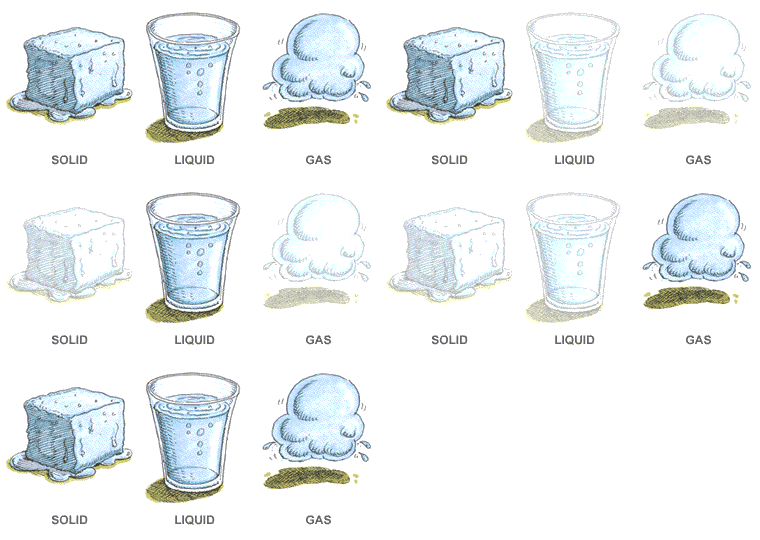
Which state of matter has the least energy? (pictures not in energy order)

a)

solid

b)

liquid

c)

gas

d)

plasma

11.

Which state of matter has more energy than a liquid? (pictures not in energy order)

a)

solid

b)

gas

c)

melted cheese

d)

cookies

12.

Which state of matter has no definite shape, but has a definite volume?

a)

solid

b)

liquid

c)

gas

d)

plasma

13.

Which state of matter has no definite shape and no definite volume?

a)

solid

b)

liquid

c)

gas

d)

plasma

14.

Which state of matter has a definite shape and a definite volume?

a)

solid

b)

liquid

c)

gas

d)

plasma

15.

Which state of matter results when energy is removed from a gas?

a)

solid

b)

liquid

c)

gas

d)

plasma

16.

Which state of matter results when energy is added to a liquid?

a)

solid

b)

liquid

c)

gas

d)

plasma

17.
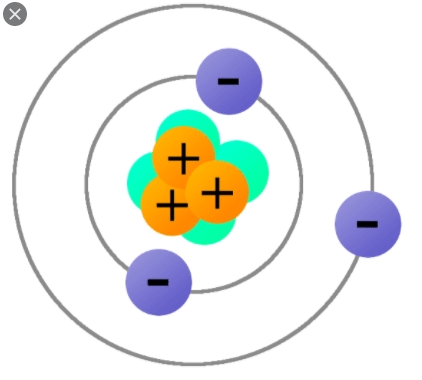
The positive particles of an atom are 
a)
electrons 
b)
positrons 
c)
neutrons 
d)
protons 
18.
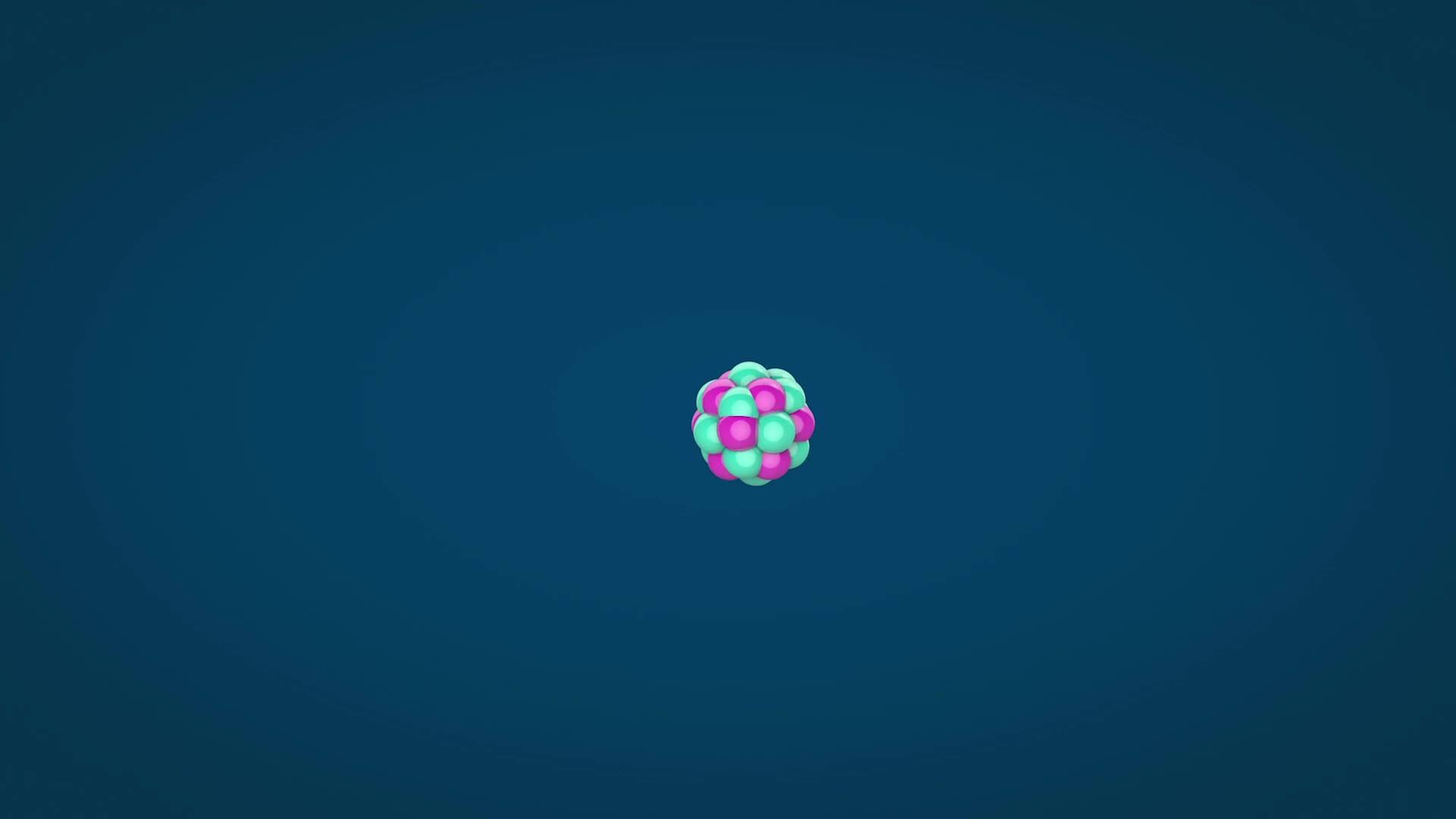
the central region of an atom where its neutrons and protons are is its 
a)
nucleus 
b)
electron cloud
c)
core 
d)
center 
19.
Particles in an atom that are neutral and have no charge are 
a)
negatrons 
b)
electrons 
c)
neutrons 
d)
protons 
20.

Most of the mass of an atom is found in the ______.

a)

nucleus

b)

proton

c)

electron cloud

d)

isotope

21.
electrons have this type of charge?
a)
negative
b)
positive
c)
neutral
22.
How does the size of a proton compare to the size of a neutron?
a)
larger
b)
smaller
c)
equal
23.
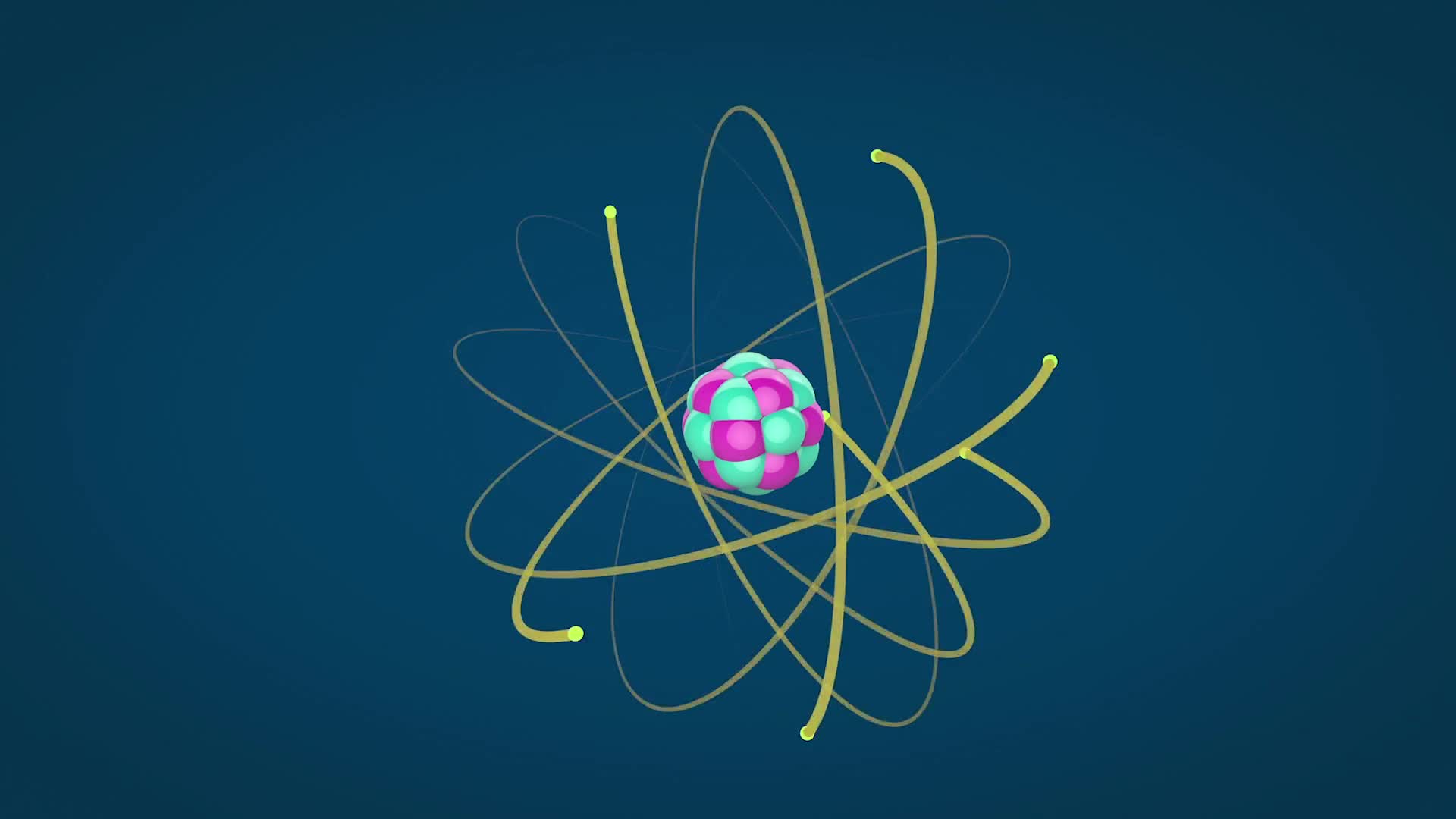
These particles orbit around the nucleus of an atom.  What are they called?
a)
electrons
b)
protons
c)
neutrons
d)
photons
24.
Where are electrons of an atom found?
a)
Nucleus
b)
Electron Cloud
c)
Some are in the nucleus and some in the electron cloud.
d)
They are moving everywhere.
25.

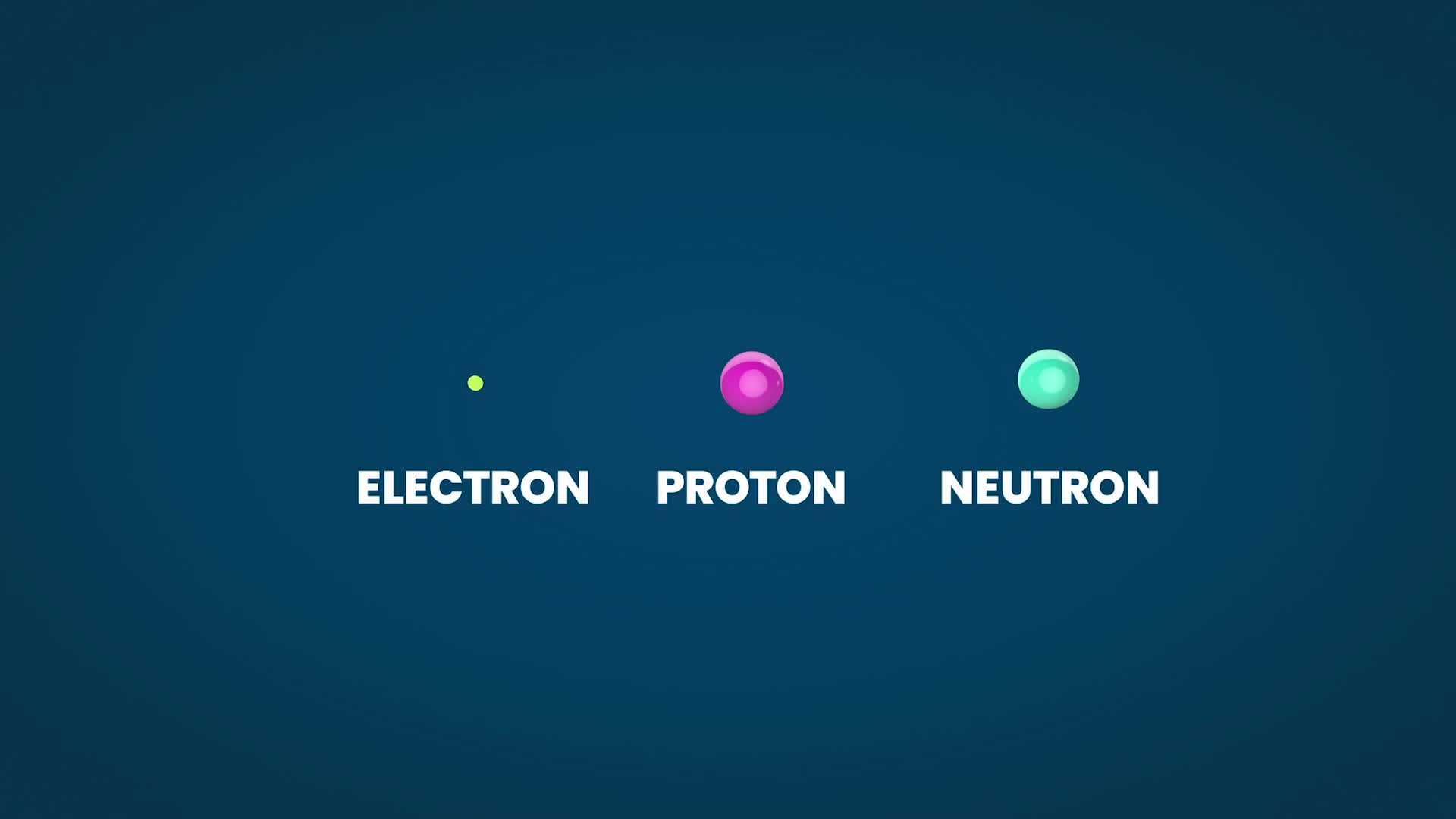
These are the SMALLEST subatomic particles

a)

Proton

b)

Neutron

c)

Electron

26.
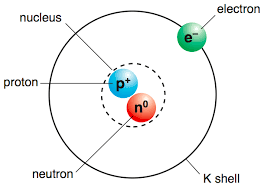
From the diagram, which particles are indicated with the arrow?
a)
electrons and protons
b)
protons and neutrons
c)
electrons and neutrons
d)
photons and nucleons
27.

Why is the overall charge of an atom neutral (0)?

a)

They have the same number of protons and neutrons.

b)

They have the same number of protons and electrons.

c)

They have the same number of electrons and neutrons.
28.

Which subatomic particles contribute the least to the mass of an atom?

a)

Neutrons

b)

Protons

c)

Electrons

29.

Which subatomic particles contribute the most to the mass of an atom?

a)

Protons and Neutrons

b)

Protons only

c)

Electrons only

30.
The atomic number of an elements is the total number of which particles in the nucleus?
a)
neutrons
b)
protons
c)
electrons
d)
protons and electrons
31.
an atom with atomic number 6 would have how many protons 
a)
6
b)
12
c)
3
d)
cannot be determined 
32.
What is the atomic mass of "F"
a)
9
b)
18
c)
17
d)
19
33.
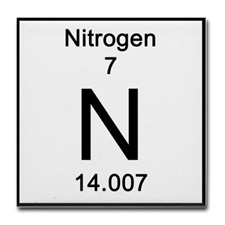
What is the number of protons that the element in this image contain?
a)
14
b)
7
c)
15
d)
18
34.

What are the 3 subatomic particles of an atom?

a)

carbon atom, proton, electron

b)

quarks, neutrons, protons

c)

nucleus, protons, electrons

d)

protons, neutrons, electrons

35.

Where is the element's atomic MASS located?

a)

at the top

b)

at the bottom

c)

the top number + the bottom number

d)

the number of protons + the number of neutrons

36.

Where is the element's atomic NUMBER located?

a)

the top

b)

the bottom

c)

the top + the bottom

d)

the number of protons + the number of neutrons

37.

What is the difference between a scientific law and a scientific theory?

a)

Nothing, they are the same thing.

b)

A law is something that can be proven and a theory is an educated guess

c)

A theory is something that can be proven and a law is an educated guess

d)

You can be arrested if you don't follow the law.

38.

Fluorine has a mass number of 19. It has 10 neutrons. How many protons does it have?

a)

10

b)

9

c)

8

d)

7

39.
Scientific theories are based on
a)
general assumptions of how systems work.
b)
mathematical principles that can be proven true.
c)
large amounts of data collected over time.
d)
observations from within only one scientific discipline.
40.

From this element key of Nitrogen, determine the atomic mass of nitrogen

a)

7

b)

7.01

c)

14.01

d)

21.01

41.

What is one similarity among elements in a group?

a)

atomic mass

b)

atomic weight

c)

chemical properties

d)

practical uses

42.

What does the Ne in this periodic table square represent?

a)

atomic number

b)

atomic symbol

c)

atomic mass

d)

scientific name

43.
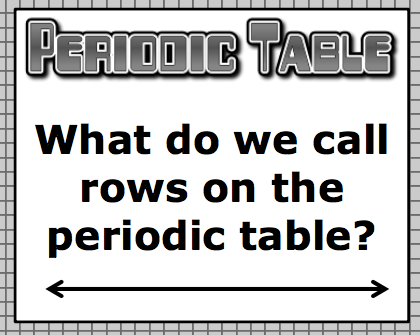
a)
Periods
b)
Groups
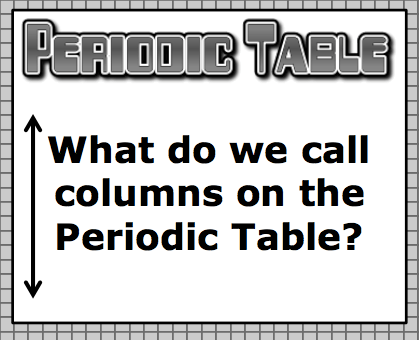
44.
a)
Periods
b)
Groups
45.

Using this section of the periodic table, what is the chemical symbol for Silicon?

a)

S

b)

Si

c)

C

d)

Cl

46.

Using this section of the periodic table, how many protons does an atom of Calcium have?

a)

20

b)

40.078

c)

24

d)

132.905

47.

Elements in the same ________ have the most similar chemical reactivity.

a)

Order

b)

Period

c)

Group

d)

Class

48.
In which of these do particles move slowest?
a)
matter
b)
gas
c)
liquid
d)
solid
49.

In which substance do the particles move the MOST?

a)

air

b)

ice

c)

milk

d)

wood

50.

Which of the following elements is in group or family 2?

a)

K

b)

Cs

c)

O

d)

Ca

51.

Which of the following elements is in period 2?

a)

K

b)

H

c)

O

d)

Ca

52.

Which of the following elements would have similar chemical properties to that of Chlorine (Cl)?

a)

Bromine (Br)

b)

Neon (Ne)

c)

Carbon (C)

d)

Oxygen (O)

53.

Which of the following elements are Group 18 Noble Gases? (Select all that apply)

a)

Calcium (Ca)

b)

Beryllium (Be)

c)

Magnesium (Mg)

d)

Neon (Ne)

e)

Krypton (Kr)

54.
Beryllium is in group number______.
a)
Group 2
b)
Group 3
c)
Group 4
d)
Group 7
55.

A __________ goes up and down on the periodic table.

a)

Group

b)

Period

56.

A _________ goes side to side on the periodic table.

a)

Group

b)

Period

57.

What element is in period 4, group 1?

a)

K - Potassium

b)

V - Vandium

c)

C - Carbon

d)

Ti - Titanium

58.

What two elements are in the same Period?

a)

K - Potassium and Na - Sodium

b)

Li - Lithium and Mg - Magnesium

c)

B - Boron and C - Carbon

d)

Zn - Zinc and N - Nitrogen

59.

Which two elements would have similar properties?

a)

Ar - Argon and Xe - Xenon

b)

Og - Oganesson and Lu - Lutetium

c)

He - Helium and Lu - Lutetium

d)

Ar - Argon and Se - Selenium

60.

What element is in group 2, period 6?

a)

Sr - Strontium

b)

Ba - Barium

c)

S - Sulfur

d)

O - Oxygen

61.

What group does the element Zn - Zinc belong to?

a)

12

b)

10

c)

4

d)

5

62.

There are_______ periods and _________ groups in the periodic table.

a)

8, 7

b)

18, 7

c)

15, 10

d)

7, 18

63.
Elements are made of 
a)
many types of atoms 
b)
the periodic table
c)
one type of atom 
d)
molecules 
64.
All matter is made of 
a)
energy 
b)
atoms 
c)
electrons 
d)
compounds 
65.
What is the basic unit of matter and is the smallest particle of an element?
a)
Atoms
b)
Elements
c)
Compounds
d)
Molecules
66.
Two or more atoms chemically bonded together are called a
a)
atom
b)
element
c)
molecule
d)
mixture
67.
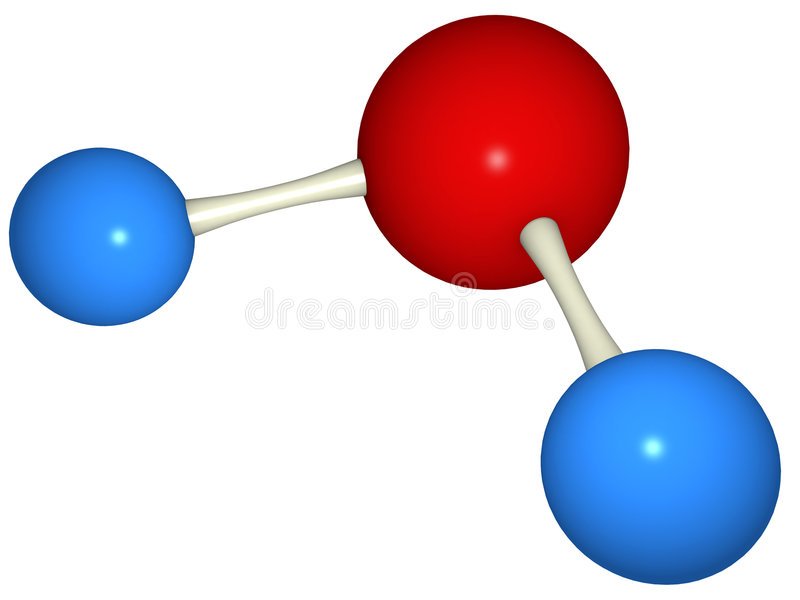
How many hydrogen atoms are there in a water molecule? 
a)
0
b)
1
c)
2
d)
3
68.
This subatomic particle of an atom has a POSITIVE charge.
a)
electron
b)
neutron
c)
proton
d)
amitron
69.
Protons and neutrons clump together to form the __________ of an atom.
a)
nucleus
b)
centrosome
c)
outer shell
d)
orbital
70.
This subatomic particle of an atom has NO charge.
a)
electron
b)
proton
c)
atom
d)
neutron
71.
This subatomic particle of an atom has a NEGATIVE charge.
a)
electron
b)
proton
c)
atom
d)
neutron
72.
A molecule is made up of ____ or more atoms.
a)
1
b)
2
c)
3
d)
4
73.

The nucleus of an atom is made up of ___________________.

a)

Protons and Neutrino

b)

Neutrons and Electrons

c)

Protons and Neutrons

d)

Protons and Electrons

74.

The image shows the periodic grid of potassium. How many electrons are found in the potassium atom?

a)

19

b)

20

c)

39

d)

40

75.

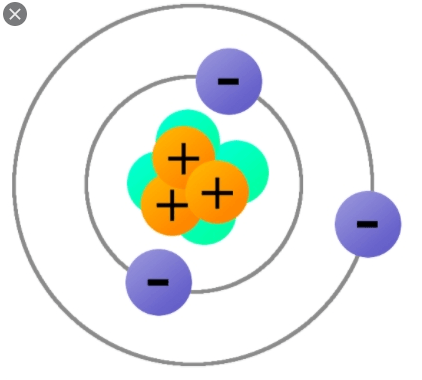
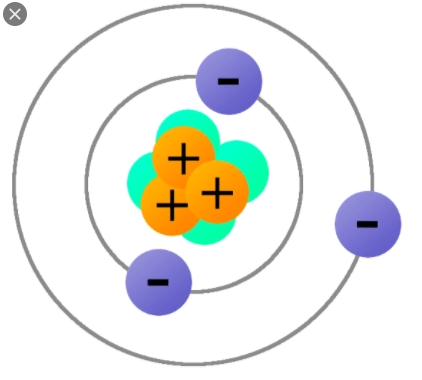
Which part of an atom is represented by the blue circles?

a)

electrons

b)

neutrons

c)

protons

76.

Which part of an atom is represented by the orange circles?

a)

electrons

b)

neutrons

c)

protons

77.

Which part of an atom is represented by the green circles?

a)

neutrons

b)

protons

c)

electrons

78.

Which if the following is described as being pure substances?

a)

elements

b)

compounds

c)

elements and compounds

d)

mixtures

79.

Which of the following describes a substance that has been physically combined and is NOT uniform throughout (you see the DIFFERENT parts that make it up)?

a)

Homogeneous Mixture

b)

Compound

c)

Heterogeneous mixture

d)

element

80.

What is the smallest part of a compound that retains the properties of that compound

a)

atom

b)

element

c)

Molecule

d)

mixture

81.

A student is observing a substance that contains multiple element that have been chemically combine C6H12O6(SUGAR). Which of the following best describes what the student is observing?

a)

Heterogeneous Mixture

b)

Homogeneous Mixture

c)

Element

d)

Compound

82.

What is the smallest part of an element that retains the properties of the element?

a)

atom

b)

molecule

c)

compound

d)

subatomic particles

83.

Which two substances are both compounds?

a)

water(H20)  and iron(Fe)

b)

water(H2O) and carbon dioxide(CO2)

c)

iron (Fe) and salt (NaCl)

d)

oxygen (O) and nitrogen (N)

84.
This picture represents which of the following?
a)
element
b)
compound
c)
mixture
d)

atom

85.
This picture represents which of the following?
a)
element
b)
compound
c)
mixture
d)

atom

86.
This picture represents which of the following?
a)
element
b)
compound
c)
mixture
d)

atom

87.

This substance can be separated by physical means such as filtering, sifting, and evaporating.

a)

Mixtures

b)

Pure Substances

c)

Elements

d)

Compounds

88.
What type of mixture is this?
a)
homogenous mixture
b)
chemical
c)
heterogeneous mixture 
d)
solid mix
89.

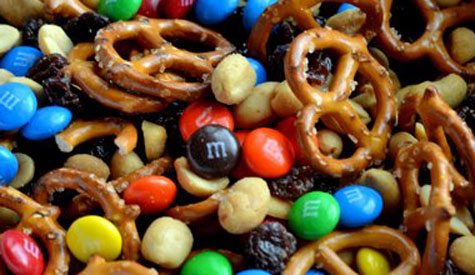
What kind of mixture is shown in the picture?

a)

Homogeneous Mixture

b)

Heterogeneous Mixture

90.

When one or more substance is combined CHEMICALLY it is called __________________.

a)

compound

b)

element

c)

mixture

d)

solution

91.
Contains only one kind of atom.
a)
Element
b)

Compound

c)
Mixture
92.

Which of the following are examples of ELEMENTS?

a)

Oxygen

b)

Water

c)

Fluorine gas

d)

Lemonade

e)

Sulfur Dioxide (SO2)

93.

Which of the following are examples of Mixtures?

a)

The atmosphere

b)

Carbon Dioxide (CO2)

c)

O2

d)

Lemonade

e)

Anything on the Periodic Table

94.

What can be inferred from the picture?

a)

Elements are always made of individual atoms

b)

Mixtures contain only one type of molecule

c)

Molecules always make compounds

d)

Compounds are pure substances

95.

When substances combine chemically...

a)

they form a mixture and their properties change

b)

they form a compound and their properties change

c)

they form a mixture where their properties stay the same

d)

the form a compound where their properties stay the same

96.

A possible explanation to a problem that has not yet been tested.

a)

data

b)

theory

c)

hypothesis

d)

fact

97.

This variable in an experiment is the one being deliberately changed by the scientist.

a)

dependent variable

b)

independent variable

c)

data

d)

control group

98.
The summary at the end of an experiment that explains the results. 
a)
conclusion
b)
procedures
c)
materials
d)
responding variable
99.
A series of steps used by scientists to solve a problem or answer a question. 
a)
scientific method
b)
recipe
c)
data collection
d)
metric system
100.
In a controlled experiment, how many independent variables can be worked with at a time? 
a)
one
b)
none
c)
two or more
d)
how ever many makes sense.
101.
A list of the steps anyone could follow to conduct an experiment. 
a)
obervations
b)
question/problem
c)
materials
d)
procedures
102.
Mr. S. sets up an experiment to see how the mass of a ball affects the distance it rolls off a ramp.  Identify the independent variable.
a)
distance traveled by the ball
b)
height of the ramp
c)
mass of the ball
d)
weight of the ball
103.

Ms. Carlson sets up an experiment to see how the mass of a ball affects the distance it rolls off a ramp. Identify the dependent variable.

a)

height of the ramp

b)

distance traveled by the ball

c)

mass of the ball

d)

weight of the ball

104.
A student is planning an experiment to find out how the height from which he drops a ball affects how high the ball bounces. The dependent variable is the _____.
a)
Diameter of the ball
b)
Force acting on the ball
c)
Height that the ball bounces
d)
Height from which the ball is dropped
105.
When experimenting with the growth of a plant, a scientist uses three (of the same type of) plants, two different fertilizers, equal light, and equal water. What type of variable is the fertilizer?
a)
Dependent
b)
Independent
c)
Control
d)
Compound
106.
If I study for my scientific method quiz, then I will have a better test score. What is the dependent variable?
a)
Scientific Method
b)
Studying
c)
Independent variable
d)
Test score
107.
What is a hypothesis?
a)
A hypothesis is the right answer to an experiment.
b)
A hypothesis is the wrong answer to an experiment.
c)
A hypothesis is an educated guess.
d)
I don't know.
108.
Which is NOT a step in the scientific method?
a)
Make observation
b)
Form a theory
c)
Collect data
d)
Form a hypothesis
109.
What step does every scientific experiment begin with?
a)
hypothesis
b)
question/problem
c)
procedures
d)
conclusion
110.
Which of these contains steps in the right order?
a)
Ask a question, state your hypothesis, research, experiment, analyze, make a conclusion
b)
State your hypothesis, ask a question, research, experiment, analyze, make a conclusion
c)
Ask a question, research, state your hypothesis, experiment, analyze, make a conclusion
d)
State your hypothesis, ask a question, research, make a conclusion, experiment, analyze
111.
True or False: Your hypothesis can never be wrong.
a)
True
b)
False
112.
This variable in an experiment is the one being changed by the scientist. 
a)
dependent variable
b)
independent variable
c)
data
d)
control group
113.
The name of the information that you get from your experiment (you organize it into charts and graphs).
a)
observations
conclusion
b)
data
c)
variables
d)
hypothesis
114.
An experiment is performed on plants to see how different liquids affect plant growth. Each plant in the experiment is given a different liquid; water, apple juice, or milk. Each plant has the same amount of soil, sunlight, and listens to the same music. In this investigation, the independent variable is ...
a)
The type of plant
b)
The amount of sunlight
c)
The type of music
d)
The type of liquid
115.
What is a hypothesis?
a)
an educated guess stating what you believe will be the result of your experiement
b)
a random guess
c)
a statement of the outcome of your experiment
d)
step by step directions for your experiment
116.

What is the experimental method in the experiment?

a)

the conclusion to your experiment

b)

the materials needed to complete experiment

c)

step by step directions of how to complete your experiment

d)

an educated, best guess

117.
What are the materials in your scientific method? 
a)
your favorite markers and lucky eraser
b)
everything you will need to complete your experiment
c)
a hypothesis
d)
step by step directions to complete an experiment
118.
The independent variable is the ONE thing you _____.
a)
change on purpose
b)
control or keep constant
c)
measure
119.

The variable that is being measured or observed is called the _______________. Hint: this is the variable that is the data.

a)

independent variable

b)

dependent variable

c)

control variable

120.
A possible explanation to a problem that has not yet been tested. 
a)
data
b)
theory
c)
hypothesis
d)
fact
121.
What step does every scientific experiment begin with?
a)
hypothesis
b)
question/problem
c)
procedures
d)
conclusion
122.
Testing a hypothesis often involves a(n):
a)
answer
b)
experiment
c)
problem
d)
safety check
123.
Squidward found new reeds to tryout for his clarinet.  He used an APPLAUSOMETER to measure applause after playing  Under the Sea with each reed.  The results were put in the table.
What was controlled?
a)
The Song
b)
The Reed
c)
The Applause
124.
Squidward found new reeds to tryout for his clarinet.  He used an APPLAUSOMETER to measure applause after playing  Under the Sea with each reed.  The results were put in the table.
What was the independent variable?
a)
The Song
b)
The Reed
c)
The Applause
125.
Squidward found new reeds to tryout for his clarinet.  He used an APPLAUSOMETER to measure applause after playing  Under the Sea with each reed.  The results were put in the table.
What was the dependent variable?
a)
The Song
b)
The Reed
c)
The Applause
126.
An experiment is performed on plants to see how different liquids affect plant growth. Each plant in the experiment is given a different liquid; water, apple juice, or milk. Each plant has the same amount of soil, sunlight, and listens to the same music. In this investigation, what are the controlled variables?
a)
Type of plant, amount of music, and sunlight
b)
Water, apple juice, milk
c)
Plant growth
127.
An experiment is performed on plants to see how different liquids affect plant growth. Each plant in the experiment is given a different liquid; water, apple juice, or milk. Each plant has the same amount of soil, sunlight, and listens to the same music. In this investigation, the independent variable is ...
a)
The type of plant
b)
The amount of sunlight
c)
The type of music
d)
The type of liquid
128.
What is a result or conclusion?  
a)
step by step directions on how to complete the experiment
b)
the end of Mrs. Neill's all time favorite novel
c)
the purpose of your experiment 
d)
a statement of the outcome of the experiment
129.
Josie was performing an experiment where she grew the same kind of tomatoes in the same soil and amount of water.  She sat one in the sun and one in a closet for 14 days.  What is the independent variable in Josie's experiment?
a)
tomatoes
b)
soil
c)
sunlight
d)
water
130.
Examine the data shown in the graph below.
What conclusion can be reached by the data shown in the graph?
a)
During the months of May, June , and July, the rate of photosynthesis increases and decreases greatly during the winter months.
b)
During the winter months, photosynthesis increases and during the summer months, photosynthesis decreases.
131.
What must a student do to test their hypothesis?
a)
write a conclusion
b)
design an experiment
c)
do research
d)
ask a teacher
132.
A group of people were asked to test the effectiveness of a new mouthwash compared to their regular mouthwash. What would be the independent variable for this experiment?
a)
type of mouthwash
b)
number of times using the mouthwash
c)
going to the dentist
d)
freshness of breath
133.

Two companies make golf balls, and each claim its ball goes farthest when hit. Which would be the best scientific evidence to deice which ball goes farther?

a)

a golfer hits each ball and how far each ball goes is measured

b)

a machine hits each ball with the same force and how far each ball goes is measured

c)

the results of tests conducted on the two balls by each company is read

d)

a survey asks 500 baseball players which ball goes farther

134.
What are the two groups of a controlled experiment?
a)
Experimental and Constant Variables
b)
Control Group and Dependent Variable
c)
Experimental Group and Control Group
d)
Independent Variable and Hypothesis
135.

What is the correct order of the scientific method?

a)

Hypothesis, Experiment, Problem, Data Collection, Conclusion, Research

b)

Problem, Research, Hypothesis, Experiment, Data Collection, Conclusion

c)

Data Collection, Research, Hypothesis, Conclusion, Problem, Experiment

d)

Research, Data Collection, Hypothesis, Problem, Experiment, Conclusion