
 Worksheets
Practice for Exam
Total questions: 140
Worksheet time: 2hrs 55mins
Aluminum is refined from bauxite, which is found in the ground under rainforests. Humans must destroy this habitat to mine the bauxite and make aluminum. This type of habitat destruction will most likely result in ---
A. an increase in rainfall
B. an increase in number of species
C. a decrease in biodiversity
D. a decrease in cloud formation
In an ecosystem, which type of animal would best be described as a secondary consumer?
Carnivore
Herbivore
Omnivore
Decomposer
In an ecosystem, which animal would best be described as a secondary consumer?
A. Rabbit
B. Grasshopper
C. Coyote
D. Human
Which best describes a type of organism that lives on, and feeds off of plants or other organisms?
saprophytes
autotrophs
omnivores
tracheophytes
An organism that stalks, kills, and eats other animals is known as a ---
consumer
scavenger
herbivore
producer
An organis that creates nutrients using energy from the sun, is known as a ----
A. predator
B. scavenger
C. herbivore
D. producer
Which of the following situations contributes to the sustainability of an ecosystem
A. Increase in biodiversity
B. Decrease in biodiversity
C. Extinction of a population from the ecosystem
D. Removal of many populations of organisms
Complete this statement. The more diverse an ecosystem is ----
A. the more threatened its populations are
B. the more similar the species will be
C. the more stable it is
D. the few varieties of species are present
Which of the following is not an example of how biodiversity contributes to the sustainability of an ecosystem?
A. Controlling pest species
B. Providing potential for medical discoveries
C. Creating a limited gene pool for future generations
D. Regulating the chemistry of air and water supply
An ecosystem experiences a ten year drought. As a result of the drought, many plant and animal species are not able to survive. What will be the effect on the biodiversity and sustainability of the ecosystem?
A. Increased biodiversity and increased sustainability
B. Decreased biodiversity and increased sustainability
C. Increased biodiversity and decreased sustainability
D. Decreased biodiversity and decreased sustainability
Why does higher biodiversity cause an ecosystem to be more sustainable?
A. There are more types of organisms competing for living space in the ecosystem.
B. There are a greater variety of genes and species in the ecosystem.
C. There are more animals preying on one another in the ecosystem.
D. More organisms decrease the rate of disease in and ecosystem.

Refer to the food web. If the grasses in each ecosystem are attacked and killed by a disease, which ecosystem will most likely survive?
A. The prairie ecosystem, because few organisms eat grass.
B. The tundra ecosystem, because there is a variety of producers.
C. The prairie ecosystem, because there a fewer top predators.
D. The tundra ecosystem, because it has more herbivores.
Which statement below best describes how biodiversity contributes to the sustainability of an ecosystem?
A. A variety of plant and animal species allows for more survivors of a natural disaster.
B. Having more species in an ecosystem allows the human population to increase in size.
C. Low biodiversity reduces the competition for resources, which helps native species survive.
D. Few species in the ecosystem reduces the likelihood that disease spreads through the ecosystem.

Based on the table of observations, which ecosystem is likely to be the least sustainable?
A. Ecosystem 1, because it has the fewest species
B. Ecosystem 2, because it includes both aquatic and terrestrial species.
C. Ecosystem 3, because it has few predators.
D. Ecosystem 4, because it supports many animals.

Students were asked to make a claim supported with evidence to answer the question, "Which ecosystem would be most sustainable if all the grasses died from severe drought?" What claim is valid and supported by the evidence?
A. The forest ecosystem is most suitable because there are more top predators.
B. The grassland ecosystem is most sustainable because there are fewer organisms that eat grass.
C. The forest ecosystem is most sustainable because most of the animals can eat other organisms.
D. The grassland ecosystem is most sustainable because there is less competition for food.
An ecosystem that is not sustainable can break down when a natural disaster occurs. This can lead to organisms in the ecosystem either leaving the area or dying off. Increased biodiversity results in a more sustainable ecosystem because ---
A. a greater number of plant species means that there is less barren land.
B. a greater variety of species present allows more organism to adapt after changes occur
C. the transition area between two ecosystems is narrower.
D. there are few species to be affected by environmental stressess.
Which organisms have the most available energy in an energy pyramid?
Producers
Consumers
Decomposers
Detritivores


In this food chain, the snake would be a
tertiary consumer
secondary consumer
primary consumer
producer

Organisms that produce their own food mostly through photosynthesis (producers). Examples are plants and algae.
Ominvore
Detritivore
Heterotroph
Autotroph

Organisms that get their energy and nutrition from other organisms (consumers).
Heterotroph
Autotroph
Decomposer
Detritivore

Why is some energy not passed on to the next trophic level?
The organisms at each level use about 90% of the available energy to live.
The statement is NOT true. All energy IS passed from one trophic level to the next.
The organisms at each level use about 10% of the available energy to live.
Most energy is absorbed by the soil instead.


A Student drew atomic models of four atomic models. Based on the drawings, which one is the least reactive?
Chlorine, because it has three energy levels with seven electrons in the third level
Gallium, because it has four energy levels with three electrons in the fourth level
Neon, because it has two energy levels with eight electrons in the second level
Tin, because it has five energy levels with four electrons in the fifth level

An atom of which element is represented by this model?
Carbon (C)
Neon (Ne)
Sodium (Na)
Boron (B)
A student is studying calcium, a highly reactive element that humans need for strong bones. Which characteristic of calcium is most closely related to its chemical reactivity?
The 20 protons in each atom of calcium
The 2 valence electrons in each atom of calcium
The atomic mass of calcium, which is 40.078 amu
The density of calcium, which is 1.54 g/cm3

How many valence electrons does the atom of Carbon-14, shown above have?
14
10
6
4
An element’s reactivity and other chemical properties are determined by the number of -
isotopes it has.
oxidation states.
valence electrons.
orbitals in an atom.
Which of the following properties uniquely identifies every element?
Number of valence electrons
Charge of the atom
Number of neutrons
Number of protons

Valence electrons are electrons in the shell
furthest from the nucleus
closest to the nucleus
having the lowest energy level
that has the fastest electrons
All atoms are most stable with (or would "prefer") how many electrons in their valence shell?
1
2
8
18
What are valence electrons?
The total number of electrons in an atom
The number of electrons in the outermost shell
The number of electrons in the second shell
The number of protons in the outermost shell


H2SO4

In this chemical equation ,the small numbers dropped down below the letters like the 4 in CH4 are known as the
Products
Reactants
Coefficient
Subscript
How many Carbons are on EACH side of the chemical reaction?
1
3
4
5
Looking at the reactants, there is _____ molecule(s) of CH4 and _______ molecule(s) of O2.
1, 1
1, 2
2, 2
2, 4
Looking at the products , there is _____ atom(s) of Oxygen in CO2 and _______ atom(s) of Oxygen in 2H2O.
1, 1
1, 2
2, 2
2, 4

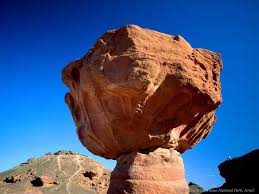
The natural process by which atmospheric and environmental agents, such as wind, rain, and temperature changes, disintegrate and decompose rocks are known as...
Weathering
Erosion
Deposition
Decomposition

What is the process that picks up and moves weathered rocks?
Deposition
Landslide
Weathering
Erosion
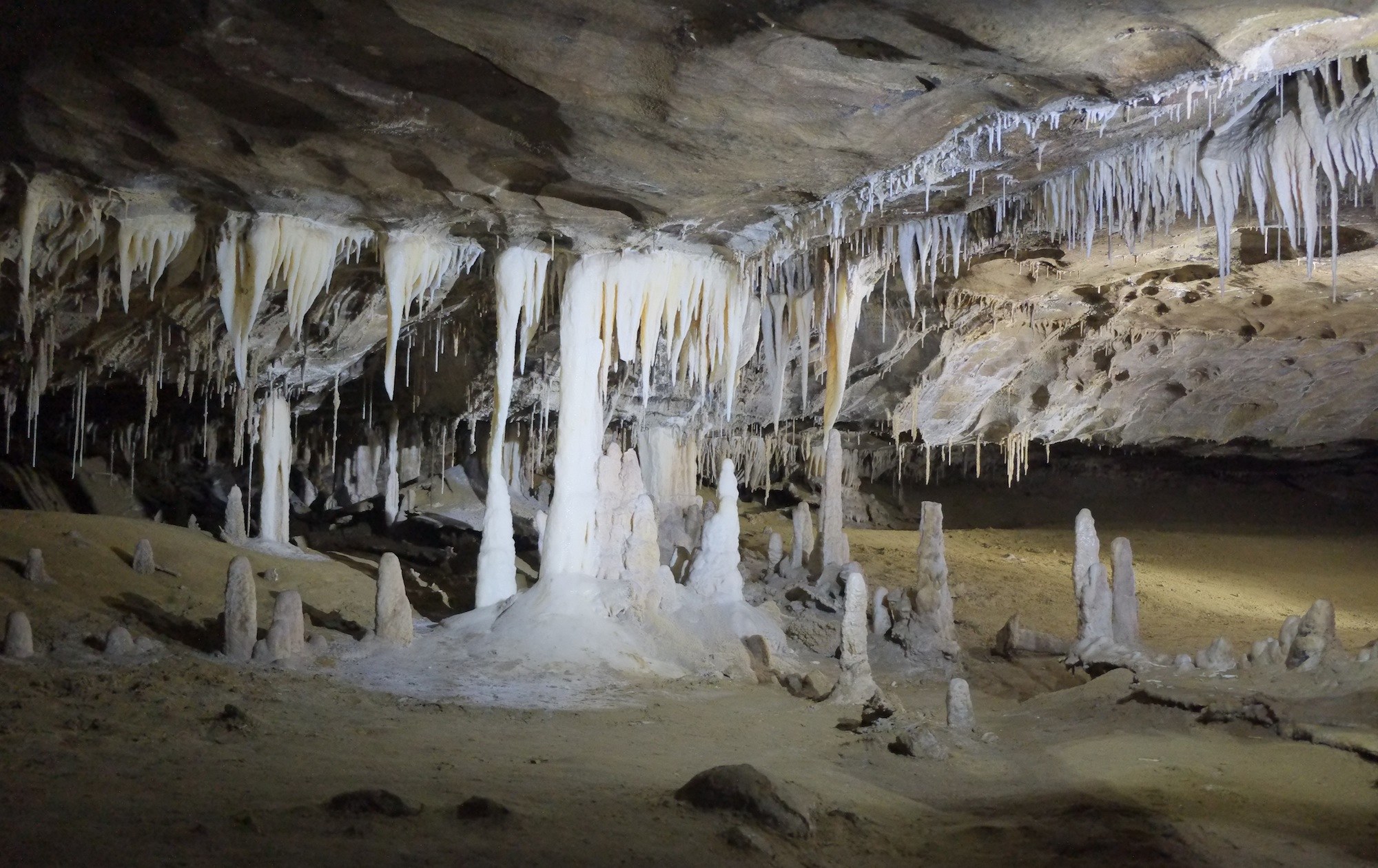
Deposition changes the Earth’s surface because bits of broken rock and soil _____.
stop rivers from flowing.
make rich farmlands.
are dropped in new places and laid down.
move very slowly.

Roots grow into cracks of a rock and pry them apart ...
(the mechanical breakdown of rocks into smaller pieces that is caused by natural processes that does not change the chemical composition of the rock material)
physical (mechanical) weathering
chemical weathering
erosion
deposition


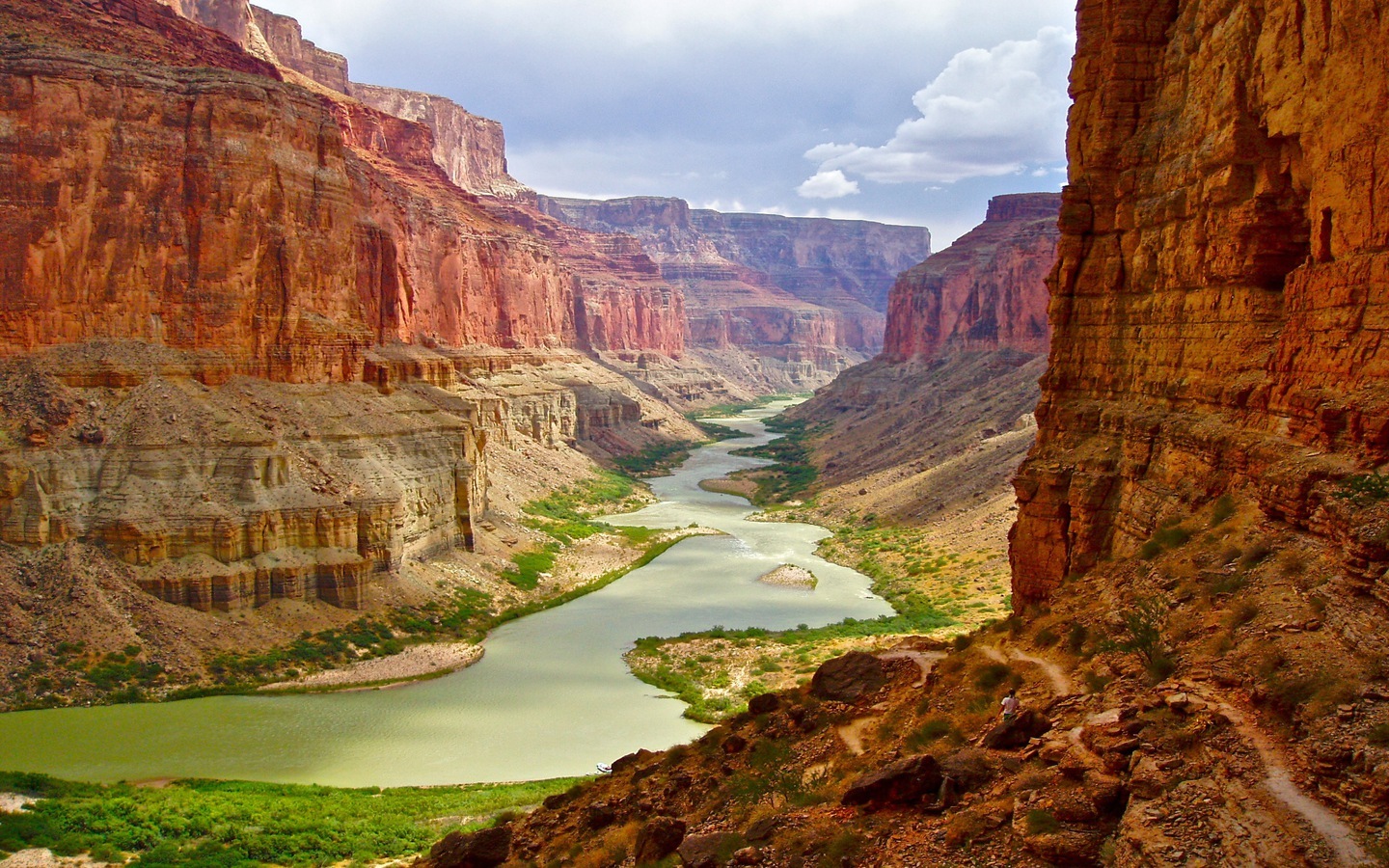


will have a negative effect on which of the following?
Available space for crops
The upper surface of an aquifer is known as a?
geyser
aquifer
water table
well

Which two wells are at risk of being contaminated by the oil leak?
A and B
A and D
B and C
C and D


Based on the data, which number shows the correct location of the element with 2 valence electrons and 3 energy levels.
1
2
3
4

Based on the data, which number shows the correct location of the element with 2 valence electrons and 1 energy levels.
1
2
3
4
Which pair of properties describe the elements in group 18
They have 8 valence electrons and are very reactive
They have 8 energy levels and are stable
They are gases at room temperature and are stable
They are gases at room temperature and very reactive.

Which statement best describes the position of the two elements in the periodic table.
The two elements are in the same period, with Mg the first element in the period table and Ca the last element
The two elements are in the same group, with Mg just above Ca
The two elements are side by side in the same period, with Ca to the left of Mg
The two elements are in the same group, with Ca just below Mg

Which of these elements is in this group?
Lithium
Silicon
Aluminum
Strontium
Which two elements on the periodic table are in the same group?
Na and He
O and C
Li and Ne
He and Ar
Which pair of properties describes the elements in Group 1?
They are chemically stable
They have 8 valence electrons
They are the most reactive metals
They are the most reactive non metals
How many valence electrons are in an element in group 15 in the periodic table?
5
15
7
8

Which two atoms are elements in the same group in the periodic table?
Atom 3 and Atom 4
Atom 1 and Atom 4
Atom 3 and Atom 2
Atom 1 and Atom 2
Which two atoms are elements that belong in period two in the periodic table?
Atom 3 and Atom 4
Atom 1 and Atom 4
Atom 3 and Atom 2
Atom 1 and Atom 2
Based on the data, which number shows the correct location of the element that is brittle and dull.
1
2
3
4
Based on the data, which number shows the correct location of the element that is malleable and a good conductor.
1
2
3
4


What does external mean?
It means something on the inside.
It is a part of the environment that you see.
It means on the outside, or something you can see.
It means it is something you place on the outside.
What kind of beak does a pelican have?
It has a sharp, curved beak to tear its food.
It has a long, thin beak that allows it to suck nectar.
It has a long beak with a pouch to scoop up food in the water.
It has a short, stubby beak to peck things with.
What is meant by adaptation?
An animal can swim in warm water and cold water.
It is any characteristic that helps a plant or animal survive in its environment.
It is a habitat that animals can change.
They develop over long periods of time.
Plants must adapt to their environment, too. Plants that live in dry climates usually have
big, round stems
wide leaves to absorb sunlight
small leaves coated in thick wax
short, small leaves

What adaptation is represented by the image?
Camouflage
Beak Design
Hibernation
Seed Dispersal
During an experiment, a student combines a solid, metallic substance with a clear liquid in a beaker. The mixtures turns hot, produces bubbles, and sparks. Based on the observations, the student can conclude that –
A. a phase change has occurred.
B. atoms have been rearranged to form a new substance.
C. the products are likely harmful to human skin.
D. the metal substance is a poor conductor of heat.
When vinegar and baking soda are combined, bubbles begin to form. Bubbles are evidence of a chemical reaction because they -
A. are less dense than air.
B. form at a fast rate.
C. released a gas
D. have no mass.
Which of the following examples would support that a chemical reaction has occurred?
A. After putting liquid batter into a hot pan, the batter solidifies and begins to turn brown.
B. After turning on a blender filled with fruits, the fruit is chopped up and mixed together.
C. After taking a tray filled with ice cubes out of the freezer, the cubes begin to melt.
D. After adding a spoonful of sugar to a mug of hot coffee, the sugar dissolves completely.
Extreme weather events that cause an impact on the ecosystem, people, and property:
Ecosystem
Catastrophic Events
Storms
Bad Weather
High winds, uprooted trees, and loss of topsoil are all negative impacts of which of these events?
Wildfires
Floods
Tornadoes
Earthquakes


Identify the fish
Sebastes serriceps
Sebastes nebulosus
Naucrates ductor
Seriola lalandi

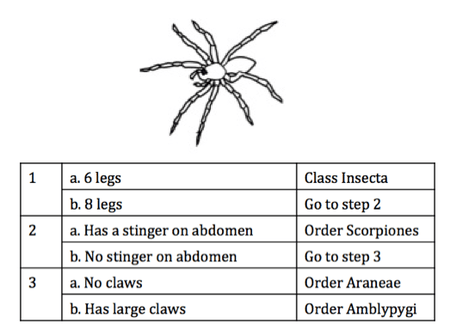
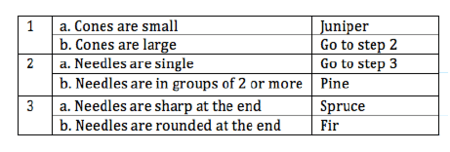
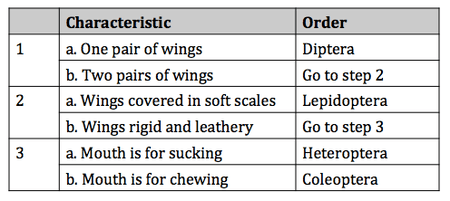
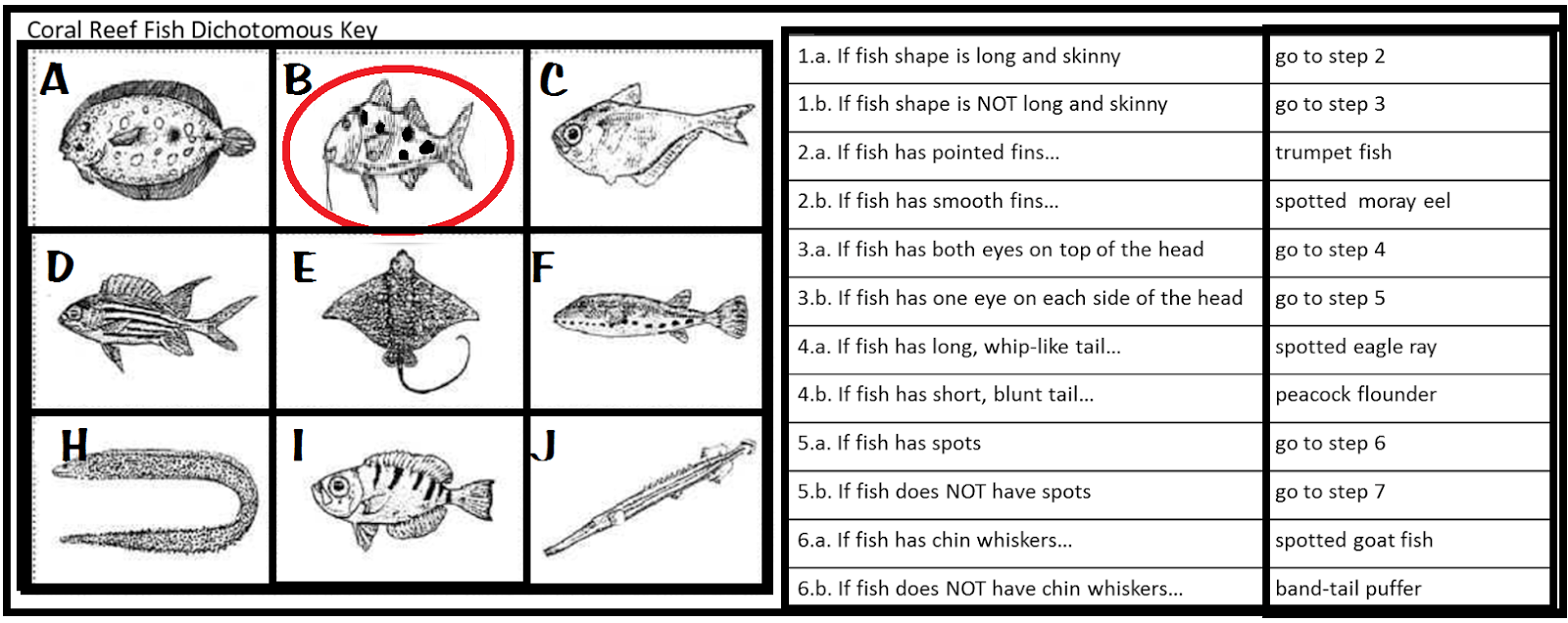

Solange found a bird that fell out of its nest. She used a dichotomous key to help her decide which type of bird she found and what it eats. She concluded that the bird she found eats grub worms.
What information about the bird led her to this conclusion?
The bird has talons and a short, pointed beak.
The bird has webbed feet and a throat pouch.
The bird has webbed feet and a short, round beak.
The bird has talons and a long, pointed beak.

Refer to the leaf diagrams and the dichotomous key. What is the correct classification of Leaf E?
Aesculus
Horse Chestnut
Eastern Red Cedar
Sycamore

Where the better adapted organisms survive to pass traits along to offspring.
Evolution
Natural Selection
Selective breeding
Artifical Selection
Natural selection means that what is changing over time?
The inherited traits of a population.
The acquired traits of a population.
Hair color and eye color
Attractive features.
Why are favorable (advantageous) traits more likely to be passed onto offspring?
Organisms that have them are more likely to survive and reproduce.
Favorable traits come from dominant alleles.
Favorable traits come from recessive alleles.
Because the trait is an acquired phenotype.
Which organisms are most likely to survive?
the best adapted
the fastest
the strongest
the most domesticated
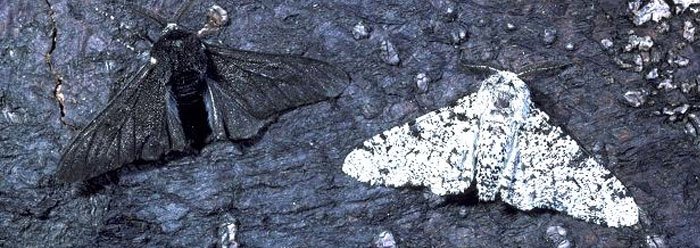

Since the 1800s humans have stopped burning coal, and the trees have returned to their original color. What will we likely see in 50 years?
A population of mostly dark moths
A population of mostly light moths
Equal numbers of light and dark moths
All moths will become extinct from predation

What process is being shown in this image? (click the picture to make it bigger)
Description: First, there were more light mice than dark ones. More light mice got eaten, more dark mice survived. After a few years, most of the mice were dark.
Variation
Natural Selection
Selective Breeding
Homeostasis

Polar bears are carnivorous, and classified as marine mammals because they have evolved to spend much of their time in the water. What environmental condition probably led to these adaptations?
lack of available fish in the ocean
climate becoming colder
presence of predators on land
lack of available food sources on land

Both of these animals are the SAME SPECIES. Which process explains why they look so different from each other?
natural selection
predation
selective breeding
survival of the fittest

What are the different parts of an atom?
Nucleus,Electron Cloud
Protons,Electrons,and Nucleus
Nucleus,Protons,Neutrons,Electrons,and Electron Cloud
Atomic Mass

All atoms have a different Atomic Mass.
True
False

How much charge does a neutron have?
0 charge
1
more than 1

Where are the electrons located in an atom?
Nucleus
Electron Cloud
Atomic Number
Atomic Mass

What is located inside the Nucleus?
Electrons
Protons and Electrons
Neutrons and Protons
Electron Cloud

Where are the valance electron located in a Bohr model?
Outer Shell
Inner Shell
Nucleus
Valance Electrons can't be found in this model.

Which group of Elements is the most stable in the periodic table?
Noble Gasses
The Noble
Least Reactive
Non-Reactive Gasses

Which group of element is the most reactive?
Group 4
Group 1
Group 9
Group 18

The reactivity of an Atom increases by?
going down
Going up
Going Left
Going Right

How is the Periodic Table arranged ?
Atomic Mass
Neutrons
Electrons
Atomic Number

Which planet would be the most likely place to observe for life?
A
B
C
D

Which of the following conditions are absolutely necessary for a planet to support life?
All must be present for a planet to support life
I, II, and IV
II and III
II, IV, and V
Which characteristic of earth is most responsible for its ability to support life?
carbon dioxide present in the atmosphere
earth is terrestrial
proximity to the sun
presence of ice
Earth and Mars are similar in their proximity to the sun.
Why is Earth capable of sustaining life while Mars is not?
Mars is in the habitable zone, but it is a bit smaller than earth,
making it impossible to support life.
Mars is in the habitable zone, but made of gas instead of rock, making it impossible to support life.
Mars is in the habitable zone, but is a bit further from the sun than earth, making it too cold to support life.
Mars is in the habitable zone, but it is a bit further from the sun than earth, making it too hot to support life.

