
 Worksheets
Q4 7th Weather Exam 2023
Total questions: 139
Worksheet time: 1hrs 15mins

What type of front is shown?
Warm Front
Cold Front
Occluded Front
Stationary Front

What type of front is shown?
Warm Front
Cold Front
Occluded Front
Stationary Front

What type of front is shown?
Warm Front
Cold Front
Occluded Front
Stationary Front

What type of front is shown?
Warm Front
Cold Front
Occluded Front
Stationary Front
How does the air in this type of front move?
Warm air slowly moves over cold air
Warm air rapidly moves up when meeting cold air
Warm air is trapped between two colder air masses
Warm air meets cold air and cannot move

How does the air in this type of front move?
Warm air slowly moves over cold air
Warm air rapidly moves up when meeting cold air
Warm air is trapped between two colder air masses
Warm air meets cold air and cannot move

How does the air in this type of front move?
Warm air slowly moves over cold air
Warm air rapidly moves up when meeting cold air
Warm air is trapped between two colder air masses
Warm air meets cold air and cannot move

How does the air in this type of front move?
Warm air slowly moves over cold air
Warm air rapidly moves up when meeting cold air
Warm air is trapped between two colder air masses
Warm air meets cold air and cannot move


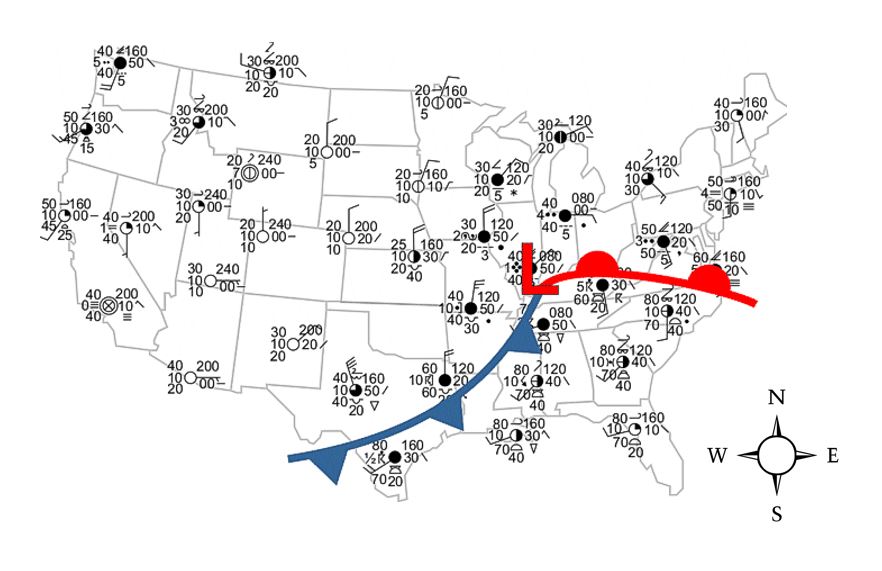
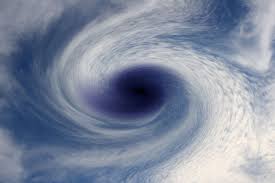

What is the most powerful part of a hurricane?
Eye
Eye Wall
Storm surge
Edge
How do you protect yourself in a hurricane?
Close all doors and windows
Use sand bags for barriers
Have plenty of food and water
All of the above
Hurricanes are...
storms of dust
dangerous storms of wind and rain
found in oceans near the North Pole
landforms
True or False? Hurricanes can cause flooding.
True
False
What can make the electrical power go out during a hurricane?
a first aid kit
watching the news
batteries and flashlights
high winds and falling trees
Hurricanes are a very strong type of __________.
tornado
blizzard
tropical storm
tsunami
Select 2 other names for a hurricane.
typhoon
cyclone
blizzard
earthquake
At what speed does a tropical storm become a hurricane?
129 mph
74 mph
156 mph
130 mph
At what speed does a tropical storm become a hurricane?
129 mph
74 mph
156 mph
130 mph
The scale used to measure the size of hurricanes is called the __________.
Saffir-Simpson Scale
Cal-Ripkin Scale
Richter Scale
Bart-Simpson Scale
The most dangerous type of hurricane has a score of __________.
Category 1
Category 3
Category 5
Category 4
Hurricanes usually occur between the months of __________.
January and March
April and June
November and January
June and November
Each hurricane gets its own __________.
song
poem
number identification code
name
In the northern hemisphere of the earth hurricanes circle __________.
clockwise
counter-clockwise
up and down
front to back
In the southern hemisphere of the earth hurricanes circle __________.
clockwise
counter-clockwise
up and down
front to back
The warm, wet air from the ocean rises up to form _____________.
rain clouds
rainbows
snow
lightning
The center of the hurricane is called the __________.
bullseye
point
nose
eye
The hurricane hunters fly planes and work for _____________.
The FBI
The CIA
Netflix
The National Oceanic and Atmospheric Administration (NOAA)
Is a tornado predictable? True or False
True
False
What is another name for tornado?
Clouds
Twister
Spinner
Reaching Clouds
What is a tornado?
A fast spinning column of air that reaches from the clouds to the ground
A thunderstorm that never touches the ground
A bolt of lightning that reaches from the clouds to the ground
A low hanging cloud that does not spin
In what country are tornadoes the most common?
Brazil
Italy
United States
China
According to people that have been near tornadoes, what do they sound like?
Train
Wind
Whistle
River
How long can tornadoes last?
24 hours
1 week
A few seconds to an hour
5 hours
What combinations of air cause tornadoes to form?
Hot
Cold/dry and warm/wet
Cold/wet and warm/dry
Cold
How fast can tornadoes spin?
They do not spin
Up to 500 km/hr
4 km/hr
4589 km/hr
what damage dose a tornado do
Eat apples
Destroy large buildings and uproot trees
destroy water
destroy insulated concrete forms
What causes a tornado
water and wind
a tornado and another tornado
warm air and cold air
Destroy cars
How to prepare for a tornado
get supplies like water, food, batteries, flashlights and first aid kit
dog water
a umbrella
a pillow
Which of these states is NOT part of "Tornado Alley"?
Kansas
Oklahoma
California
Texas
The definition of tornado is a spinning ________ of air.
cone
column
burst
circle
This EF Scale is used to measure a tornado's size. What does E.F. stand for?
Extra Fajitas
Enlarged Funnel
Evil Forces
Enhanced Fujita
The EF scale uses wind speed and ________ to measure a tornado.
damage
time
location
deaths
In 2007, an EF5 tornado hit Greensburg, Kansas. How fast were the wind speeds said to be?
125 - 149 mph
150 - 174 mph
175 - 199 mph
over 200 mph
What shape does a tornado usually take?
funnel
circle
rectangle
elipse
A meteorologist is a person who...
has been hurt in a tornado.
studies weather.
reads books about the past
helps clean up after a tornado
Why do professional meteorologists become "Storm Chasers"?
To study tornadoes
To better understand tornadoes
To help keep people safe
All of the above
Most tornadoes happen between...
Midnight and 3 am
3 pm and 9 pm
Noon and 2 pm
Friday and Sunday
A Tornado Warning means...
a tornado could form
a tornado will happen in the next few hours
a tornado is happening now
it's safe to go outside
Which happens first, thunder or lightning?
thunder
lightning
They happen at exactly the same time; it just appears to be at different times.
How would a hurricane weaken?
move over cold water
move over land
move over warm water
How would a hurricane strengthen?
move over cold water
move over land
move over warm water
This is a disturbance in the atmosphere that is characterized by lightning and thunder.
Tornado
Hurricane
Thunderstorm
None of these
These clouds are capable of producing severe weather.
Cumulus
Nimbus
Cumulonimbus
Stratus
How is thunder produced?
By the expanding of air molecules as an electric current passes through the air
By the expanding of air molecules at wind gusts pass through the air
By the collision of two or more air masses
By the collision or two or more fronts
How do tornadoes form?
it forms when moist, warm air meets cool, dry air head on.
it forms when cool, moist air meets warm, dry air head on.
it forms when a warm front and a cold front meet.
it forms when two air masses collide.
A tornado can spawn a hurricane
True
False
How do scientists calculate the distance of a thunderstorm?
The difference between the storm system and the rain
The difference between the winds and the rain
The time difference between the thunder and the lightning
The time difference between the lightning and the hail
How long does the average hurricane last?
5-10 minutes
10-20 hours
1-2 days
1 week
What do we call the type of scientists who study thunderstorms, tornadoes, and hurricanes?
Emergency Management Enforcement
Weather Responders
Storm Chasers
Meteorologists
Approximately how many lightning strikes are there per second on the earth?
5
51
100
1,000
Lightning bolt temperatures can reach which of the following temperatures?
50,000°F
28,000°F
5,750°F
926°F
Is an indirect or direct lightning strike more dangerous?
indirect
direct
Which of the following is an electric discharge of energy from storm clouds?
nimbus
thunder
tornado
lightning
About how many tornadoes happen each year?
17
1,000
82
4,200
Which Enhanced Fujita-Pearson rating was given to the tornado that passed by CCS this February?
EF0
EF1
EF2
EF4
What were the maximum wind speeds of the tornado that passed CCS this February?
20 mph
39 mph
74 mph
95 mph
Which way do a hurricane's winds rotate in the Northern Hemisphere?
clockwise
counter-clockwise
Which way do a hurricane's winds rotate in the Southern Hemisphere?
clockwise
counter-clockwise
Which of the following is true about the eye of the hurricane? (Choose TWO)
It is the calmest part of the hurricane.
It is the most dangerous part of the hurricane.
It is characterized by fair weather and light wind speeds.
There is a lot of rain but not much wind.
How warm must ocean water be for a hurricane to form?
68°F
80°F
85°F
92°F
A tropical storm is upgraded to a hurricane when wind speeds reach at least
115 mph.
39 mph.
15 mph.
74 mph.
Where are hurricanes most common
North
South
Near the Equator
East
What do the wind speeds need to reach for a strom to be classified as a hurricane
40-73 mph
600 mph
23-39 mph
74 mph
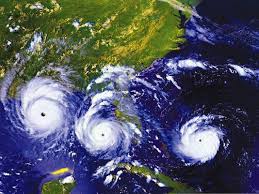
Where do hurricanes form?
In the warm waters of the Atlantic Ocean near the equator
In the cool waters of the North Sea
In the Pacific Ocean near Japan
In

Where are hurricanes formed?
On cold water
On Warm water
Anywhere near the ocean
In the clouds
How many categories are there for hurricanes?
2
6
4
5
What was the most powerful hurricane in the USA?
Harvey
Katrina
Michelle
Moses
The major difference between a tropical storm and a hurricane is __________.
rainfall amounts
wind speed
air temperature
How does ocean water get warm enough for hurricanes to form?
the convection of the Sun's energy onto the water
the radiation of the Sun's energy onto the water
the transformation of Sun's energy onto the water
the conduction of the Sun's energy onto the water
Hurricanes gain strength when it travels over ____________________ .
cool ocean water
salty ocean water
warm ocean water
shallow ocean water

View the colored diagram. Which area of the map would produce the most hurricanes and violent storms?
the gray areas - over warm land
the gray areas - over cool land
near the equator
near the poles
Choose all answers that are names for "hurricanes".
typhoon
tropical cyclone
hurricane
tropical storm
Which situation would reduce the strength of a hurricane?
the formation of a low-pressure area
the formation of a high-pressure area
warm water moving into the area
cool water moving into the area
Which air pressure condition must occur for a hurricane to form?
low-pressure atmosphere
high-pressure atmosphere
moderate-air pressure atmosphere
slightly-mild air pressure atmosphere
Choose all conditions that must occur simultaneously for a hurricane to develop.
low air pressure
warm temperatures
moist ocean air
tropical winds (near the equator)
Which news headline would most likely occur during hurricane season?
Unusually Cold Ocean Water Has Hurricane Watchers Nervous
Storm Surge a Major Concern for New Orleans, Louisiana
Canada Braces for Strong Hurricane Season
Average Ocean Temperatures Down 6-Degrees: Hurricane Season Will Be Strong
What is true about a hurricane that travels into the warmer waters of the Gulf of Mexico?
The hurricane will likely lose strength.
The hurricane will likely get more disorganized.
The hurricane will likely get stronger when it hits land.
The hurricane will likely get stronger.
Which list of situations would allow a hurricane to form?
Near Equator, warm water, high air pressure
Near Equator, warm water, low air pressure
Near Poles, cold water, low air pressure
Near Poles, cold water, high air pressure
What is the difference between a hurricane and a typhoon?
Hurricanes are larger.
Typhoons have greater wind speed.
Hurricanes are found near the equator and typhoons are near the poles.
They are the same. The only difference is which part of the world they are found in.
What frequently causes the most damage from a hurricane?
Wind
Erosion of land
Tornadoes
Storm Surge
Why do hurricanes not form directly on the equator?
It's too hot on the equator
There is not enough wind at the equator.
The Coriolis force needed to spin the hurricane is too weak to move the low-pressure air.
There is only land at the equator.
Air pressure is measured in which unit of measurement?
millipedes
microbars
millibars
macrobars
Why do hurricanes and typhoons winds travel in opposite directions?
Hurricanes form over warm water and typhoons form over cold water.
Hurricanes form in low pressure causing the wind to spin clockwise while typhoons spin counterclockwise because they form in high pressure
Hurricanes form near the equator, typhoons form near the poles.
They both spin in opposite directions because of earth's rotation on its axis.
On August 17, 2017, Hurrican Harvey hit the Texa Gulf Coast. What category of hurricane was Hurrican Harvey if the wind speeds were 134 mph? (The Hurricane Chart can be found on the website you were supposed to read first)
Category 1
Category 2
Category 3
Category 4
Category 5

