
 Worksheets
Quarterly Review Comp1
Total questions: 134
Worksheet time: 2hrs 32mins


The information you collect in an experiment in order to answer a question is called
Charts
Graphs
Data
Hypotheses
This type of variable is what you DON'T change in a lab
Control
Independent
Dependent
A graph can be described as all of the following EXCEPT:
A tool to be interpreted only by trained scientists and mathematicians
A good way to describe the relationship between to variables
A mathematical design
A model
A variable that is unchanged throughout the experiment is the:
Controlled Variable
Experimental Variable
Independent Variable
Dependent Variable
The independent Variable in a lab can be described as the variable:
Represented on the X Axis
Causing the change in the dependent Variable
Over which a scientists usually has direct control when designing an experiement
All of the above
The independent Variable is found on the:
X Axis
Y Axis
The dependent Variable is found on the:
X Axis
Y Axis
The independent Variable is:
What you keep the same in the experiment
What you change in an experiment
What you measure in an experiment
Jack is doing an experiment to see which shoes help him run the fastest. What will his independent variable be?
The shoes he wears
The track he runs on
The time of day he runs
Sally is doing an experiment to see which brand of sunscreen works best. What is not a controlled variable for this experiment?
The time of day she is in the sun
The amount of time she is in the sun
The amount of sunscreen she uses.
The brand of sunscreen.
The variable that is being tested, counted or measured and is responding to the independent variable is known as:
Control
Independent Variable
Constant
Dependent Variable
Which brand of paper towel will absorb the most liquid? What is the dependent variable?
brand of paper towel
amount of water absorbed
Zach wants to know if the amount of time he spends on social media has an effect on his grades. What is the independent variable?
Time on social media
His grades
Maddie wants to determine if the weight of the dog determines the number of puppies in a litter. What is the dependent variable?
type of dog
number of puppies
Beth wants to know if increasing her exercise will decrease the time it takes her to run a mile. What is the independent variable?
Distance
amount of exercise
Brad sets up an experiment to see how the mass of a ball affects the distance it rolls off a ramp. Identify the independent variable.
distance traveled by the ball
mass of the ball
height of the ramp
weight of the ball
Mr. Pransky wants to see how different surfaces affect how high a tennis ball can bounce. What is the independent variable?
the different surfaces
how high they bounce
This variable is the one thing that changed on purpose...
Dependent Variable
Control
Independent Variable

What is the DEPENDENT variable (effect) in this experiment?
"Does eating breakfast improve test scores?"
eating breakfast or not
the grade you got on the test
what time you get up in the morning
how tasty the breakfast is

You are testing how the amount you water a plant affects its growth. What would be the INDEPENDENT VARIABLE in this experiment.
They type of pot you put the plants in.
The amount you water each plant.
The amount of sunlight the plants get.
The amount the plant grows.

Mr. Pransky wants to see how different surfaces affect how high a tennis ball can bounce. What is the independent variable?
the different surfaces
using the same ball
how high they bounce

A student wants to test the hypothesis of "If salt is added to water then the boiling point of water will decrease (go down)." What is the independent variable?
Whether salt is added or not
Boiling Point
Amount of water
If you were testing the time it took for objects of different sizes to reach the ground after being dropped from 30 feet in the air, which of these would be the DEPENDENT VARIABLE?
The time it takes for each object to hit the ground.
The size of each object.
The type of object you use.
The height you drop the object from
Why do we use graphs in science?
to record and display data
to show trends in data
to predict what will happen if we extend the experiment
all of these are correct

Sadie is testing how the age of a seed affects how fast plants grow. Look at the picture to see if you can figure out what makes her experiment unfair. Mark all that apply.
She used different types of seeds/plants.
The plants are in different pots.
She did not plant very many plants.
Seed age might not make a difference.
What is the manipulated variable?
what we are changing or testing
what we are observing or measuring
what we keep the same to make the experiment fair
What is the responding variable?
what we are changing or testing
what we are observing or measuring
what we are keeping the same to make the experiment fair
What are the constant variables?
what we are changing or testing
what we are observing or measuring
what we keep the same to make the experiment fair
Scientific Question: Does being tardy impact test scores?
What is the manipulated variable?
test scores
the time a student arrives to class
amount of time to complete test
Scientific Question: Does being tardy impact test scores?
What is the responding variable?
test scores
the time a student arrives to class
amount of time to complete test
Scientific Question: Does being tardy impact test scores?
What is one of the constant variables?
test scores
the time a student arrives to class
amount of time to complete test
Scientific Question: Will a person fall asleep faster if they listen to music?
What is the manipulated variable?
music
time to fall asleep
person
Scientific Question: Will a person fall asleep faster if they listen to music?
What is the responding variable variable?
music
time to fall asleep
person
What is the control variable?

Jamal is trying to perfect his basketball shots. He thinks getting closer to the basketball hoop before throwing the ball will help him score more points. In this situation, what is the manipulated variable?
How close Jamal gets to the hoop
How high Jamal jumps when he shoots
How many points he scores
How hard he throws the ball
What can force do to an object?
Accelerate an object
Slow down an object
Have the object remain in place
Have the object change shape
All of the above
What is the measure of force?
Newtons
Light years
Inches
Gallons
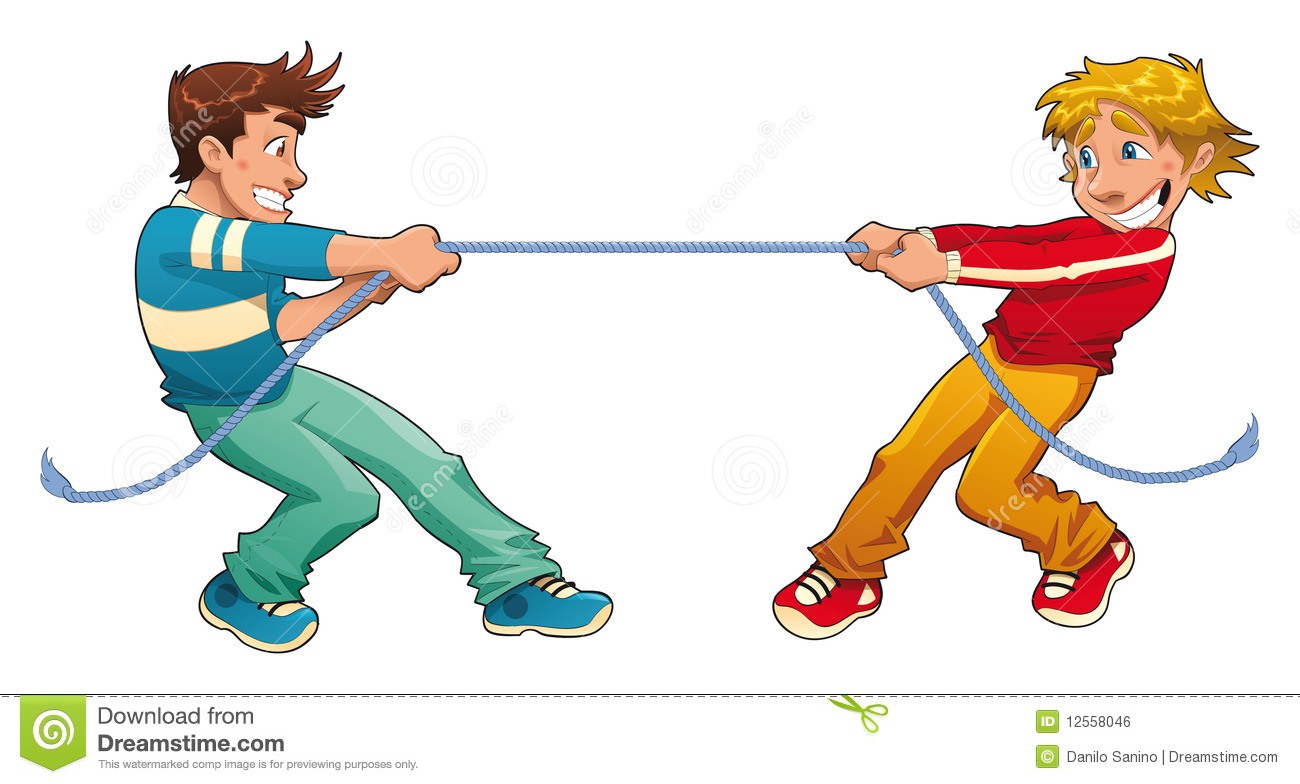

___________ is an opposing force that makes objects in motion slow down.
force
speed
friction
mass
The force you get when an object moves
through air
Gravity
Nuclear
Air resistance
Electrostatic
The sum of all forces acting on an object and direction is called the
Balanced Force
Net Force
Unbalanced Force
Contact Force

Are the forces balanced or unbalanced?
Balanced
Unbalanced

Name the missing force.
Normal Force
Push/Pull Force
Friction Force
Tension Force
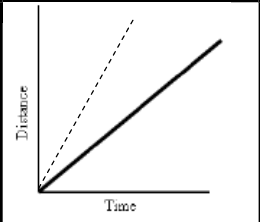
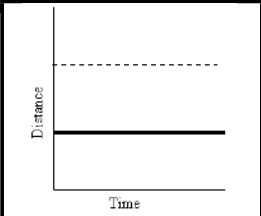


What is the resultant force?
17 N, Left
6N, Right
11N, Left
23N

Which one of Newton's laws is shown
3rd law
2nd law
1st law

What does this picture represent
Force,magnetism,acceleration
Force, money, Apples
Force, Mass, Acceleration
Funny, monkeys, Arrive

Which one of Newton's laws are displayed
2nd law
1st law
3rd law

Which of Newton's laws is shown
1st law
3rd law
2nd law

If there is a big mass, it would need a stronger force to accelerate it. Which law does this describe?
3rd law
1st law
2nd law
All of the landforms on earth
Biosphere
Geosphere
Atmosphere
Cryosphere
All of the frozen areas
Cryosphere
Lithosphere
Hydrosphere
Stratosphere
All of the air, oxygen, nitrogen, and gases that surround the earth.
atmosphere
biosphere
hydrosphere
geosphere
All of the living things, living systems on eaarth
atmosphere
hydrosphere
geosphere
biosphere
All of the bodies of water on the earth.
cryosphere
geosphere
biosphere
hydrosphere
Which two earth spheres are interacting: A fish swimming in a river.
geosphere and atmosphere
hydrosphere and biosphere
geosphere and cryosphere
atmosphere and biosphere
Which three earth spheres are interacting: A polar bear floating on an iceberg in the ocean.
geosphere, atmosphere, biosphere
cryosphere
biosphere
hydrosphere
hydrosphere
cryosphere
geosphere
atmosphere
geosphere
lithosphere
Which two earth spheres are interacting: The wind blows the leaves from a tree.
atmosphere
biosphere
atmosphere
geosphere
geosphere
hydrosphere
geosphere
atmosphere
Which two earth spheres are interacting: The sun dries up a small river.
hydrosphere
biosphere
hydrosphere
atmosphere
hydrosphere
geosphere
hydrosphere
cryosphere
Which two earth spheres are interacting: The ocean waves crash onto the sandy beach.
geosphere
biosphere
geosphere
atmosphere
geosphere
hydrosphere
geosphere
cryosphere
__________ is part of the geosphere.
lake
clouds
glacier
mountains
_________ is part of the cryosphere.
icebergs
rivers
hills
wind

When plants use their roots to get water from the ground, which 2 spheres are interacting? (choose 2)
Geosphere
Hydrosphere
Atmosphere
Biosphere

When ocean water evaporates into the air, which 2 spheres are interacting? (choose 2)
Geosphere
Hydrosphere
Atmosphere
Biosphere

What is the biosphere?
all the air and gases on the planet
made up of living things
the non-living soil, rocks, and minerals of the Earth
the rivers, lakes, and oceans of the Earth

What is the geosphere?
all the air and gases on the planet
all the frozen water on the Earth
the non-living soil, rocks, and minerals of the Earth
the rivers, lakes, and oceans of the Earth

What is the hydrosphere?
all the air and gases on the planet
made up of living things
the non-living soil, rocks, and minerals of the Earth
the rivers, lakes, and oceans of the Earth

What is the atmosphere?
all the air and gases on the planet
made up of living things
the non-living soil, rocks, and minerals of the Earth
the rivers, lakes, and oceans of the Earth

When a river current erodes the banks of the river, the interaction is between the __________ and the _____________.
atmosphere and hydrosphere
biosphere and geosphere
hydrosphere and geosphere
atmosphere and biosphere

When an animal or human breathes air, the interaction is between the __________ and the _____________.
atmosphere and hydrosphere
biosphere and geosphere
hydrosphere and biosphere
atmosphere and biosphere
All matter is made of what
energy
atoms
electrons
compounds
The central region of an atom where its neutrons and protons are is its
nucleus
electron cloud
core
center
An atom with atomic number 6 would have how many protons
6
12
3
cannot be determined

What subatomic particle is electrically neutral (no charge)?
Proton
Ion
Neutron
Electron

Who is known for an atom model that uses shells for electron configuration?
Mendal
Bohr
van Leewenhoek
Reagan
The tendency of a substance to float or rise in a fluid.
buoyancy
boiling point
color
conductivity
The temperature at which a substance changes from a liquid to a gas.
density
odor
boiling point
buoyancy
The range of visible light that a substance reflects.
hardness
color
solubility
boiling point
The ability of a substance to conduct heat, sound, or electricity.
malleability
magnetism
color
conductivity
The amount of matter in a certain volume.
odor
boiling point
density
conductivity
The ability of a substance to be pulled into a thin strand.
ductility
melting point
buoyancy
density
The ability of a substance to resist being scratched.
ductility
hardness
solubility
color
The ability of a substance to attract iron.
malleability
conductivity
hardness
magnetism
The ability of a substance to be pressed or pounded into a thin sheet.
magnetism
conductivity
ductility
malleability
The temperature at which a substance changes from a solid to a liquid.
melting point
boiling point
ductility
buoyancy
the ability of a substance to give off a certain smell.
boiling point
density
odor
melting point
The ability of a substance to dissolve in another substance.
color
solubility
hardness
odor

