wayground logo

Free Printable Worksheets

Font size

S
M
L
XL
Worksheets

Energy in Ecosystems

Total questions: 131

Worksheet time: 2hrs 10mins

Name
Class
Date
1.
What is a producer? 
a)
an organism that consumes other organisms
b)
an organism that uses the suns energy to make its own food
c)
an organism that breaks down other organisms 
2.
What is photosynthesis?
a)
how fungi obtain energy
b)
The process in which green plants use oxygen to make carbon dioxide 
c)
the process in which green plants use carbon dioxide to make oxygen
d)
the process of absorbing energy by touching things 
3.
What is the source of all energy? 
a)
producers
b)
sun
c)
consumers
d)
decomposers
4.
Which of the following is the best example of a decomposer?
a)
vulture
b)
bacteria
c)
algae
d)
rat
5.
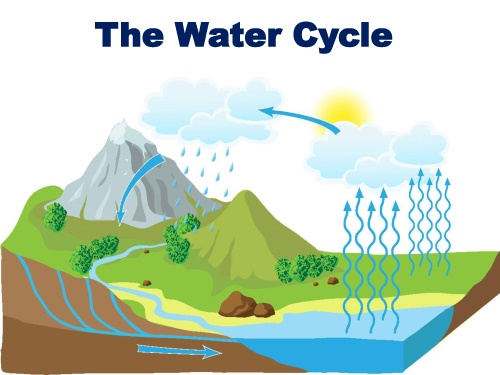
In a picture of a water cycle what part of the cycle do clouds represent? 
a)
evaporation
b)
precipitation
c)
condensation
d)
runoff
6.
in a picture of the water cycle what part does rain represent? 
a)
precipitation
b)
condensation
c)
evaporation
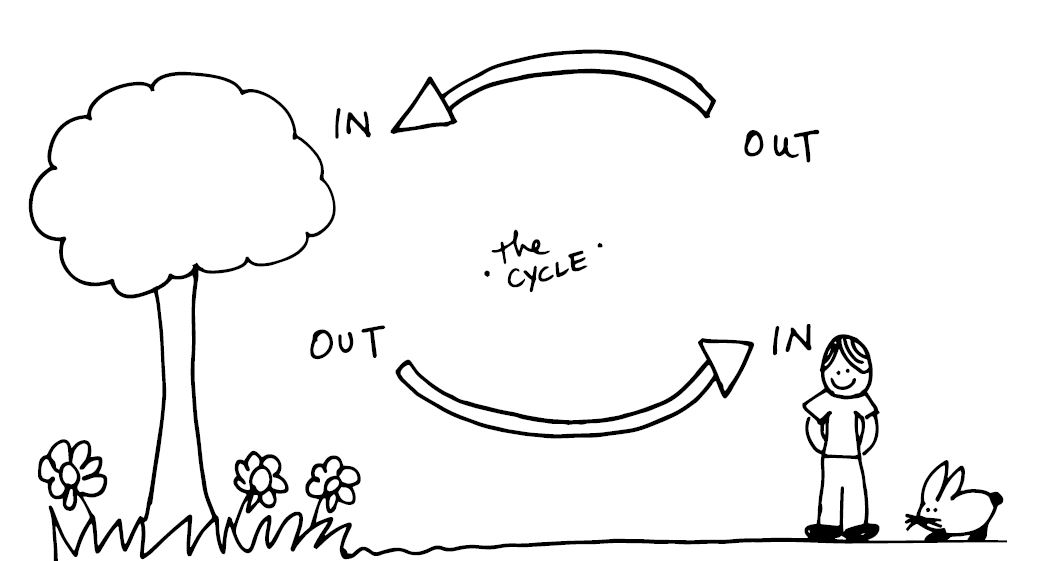
d)
runoff 
7.
this picture represents what kind of organism? 
a)
carnivore
b)
herbivore
c)
super predator
d)
omnivore
8.
what type of organism is represented in this photo?
a)
carnivore
b)
omnivore
c)
herbivore
9.
Which of these is a "producer"?
a)
An oak tree
b)
A wolf
c)
A squirrel
d)
A mushroom
10.
Which of these is always a primary consumer, and thus only eats plants?
a)
Herbivore
b)
Omnivore
c)
Carnivore
d)
Producer
11.
Which of these can be a primary or a secondary consumer, as it eats both plants & animals?
a)
Herbivore
b)
Omnivore
c)
Carnivore
d)
Producer
12.
Which of these is usually a predator, because they do not eat plants.
a)
Herbivore
b)
Omnivore
c)
Carnivore
d)
Producer
13.
Which of these is a decomposer?
a)
Bacteria
b)
Worms
c)
Fungus
d)
All of these
14.
All steps in a food chain always involve a loss of...
a)
light
b)
mass
c)
time
d)
energy
15.
What kinds of organisms are in the first trophic level?
a)
Producers
b)
Primary consumers
c)
Secondary consumers
d)
Tertiary consumers
16.
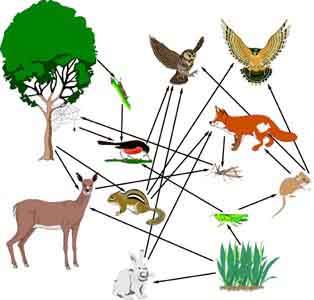
What type of model illustrates the complex feeding relationships in an ecosystem?
a)
ecosystem model
b)
energy pyramid
c)
food web
d)
trophic model
17.
A food chain shows how _____ moves through an ecosystem
a)
matter
b)
food
c)
energy
d)
atoms
18.
The most energy would be found in the
a)
mongoose
b)
leaf
c)
snake
d)
caterpillar
19.
The herbivores in this food chain are the
a)
plants
b)
shrimp
c)
minnows
d)
osprey
20.
The producers in this food web are
a)
phytoplankton and zooplankton
b)
krill and seaweed
c)
phytoplankton and seaweed
d)
blue whale and killer whale
21.
The autotroph in this food chain is
a)
Grass
b)
Grasshopper
c)
Frog
d)
Python
22.
How much energy is passed from one trophic level to the next?
a)
10%
b)
50%
c)
90%
d)
100%
23.
Which of the following organisms is a predator for the frog?
a)
Butterfly
b)
Caterpillar
c)
Snake
d)
Chipmunk
24.
A consumer gets energy by doing what?
a)
Making it themselves.
b)
Breaking down biotic wastes and dead organisms and returning raw materials to the ecosystem.
c)
Soaking it up from the ground.
d)
Feeding on other organisms.
25.
What would happen if I came through with a helicopter and dropped a million rabbits in this ecosystem?
a)
Hawk population would decrease
b)
Grass population would increase 
c)
Grass population would decrease
d)
Snake population would decrease
26.
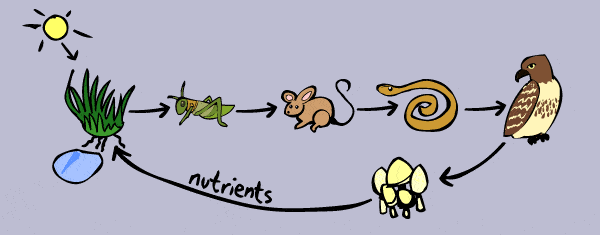
What do the arrows in the food chain show?
a)
The transfer of energy
b)
What animals eat
c)
The order of animal dominance
d)
The size of the population
27.
Look at the energy pathways in the food chains shown. In which food chain would humans receive the least amount of energy supplied by the producer?
a)
Food chain 1
b)
Food chain 2
c)
Food chain 3
d)
all food chains are equal 
28.

Organisms that do not make their own food are called _____________.

a)

producers

b)

consumers

c)

community

d)

habitat

29.

The transfer of food energy from a producer to consumer is called a(n) __________

a)

producers

b)

community

c)

food chain

d)

succession

30.

Plants make their own food through a process known as ________________.

a)

producers

b)

habitat

c)

consumers

d)

Photosynthesis

31.

Which organism is the producer?

a)

snake

b)

quail

c)

Cactus

d)

Road Runner

32.

What is the role of algae in an ocean food web?

a)

producers

b)

decomposers

c)

first-level consumers

d)

second-level consumers

33.

Which statement is the best description of how energy derived from the sun flows through this food web?

a)

consumer -> producer -> decomposer

b)

producer -> decomposer -> consumer

c)

producer -> consumer ->decomposer

d)

decomposer -> producer-> consumer

34.

Pablo has a hamburger and a salad for lunch. Which term describes pablo

a)

producer

b)

scavenger

c)

herbivore

d)

omnivore

35.
This is the formula for which process?
6H2O + 6CO2  -->  C6H12O+ 6O2
a)
Photosynthesis
b)
Glycolysis
c)
Cellular Respiration
d)
Acidification
36.
What does a scavenger eat?
a)
Any prey that it can catch.
b)
Fresh plants only.
c)
Things that are already dead.
d)
Only pepperoni pizza
37.
Although 70% of the air we breathe is Nitrogen, most organisms cannot use atmospheric Nitrogen directly.  Which organisms chemically change  nitrogen into a more useable form in the nitrogen cycle?
a)
plants
b)
herbivores
c)
bacteria
d)
carnivores
38.

Which of these is NOT part of the water cycle?

a)

Evaporation

b)

Precipitation

c)

Combustion

d)

Condensation

39.

What is needed for photosynthesis to take place?

a)

Light

b)

Carbon Dioxide

c)

Water

d)

All of the others

40.
Which of the following is an example of a HETEROTROPH?
a)
Grass
b)
Algae
c)
Lemon Tree
d)
Bear
41.
Which organisms can make their own food by doing photosynthesis?
a)
Autotrophs / Producers
b)
Heterotrophs / Consumers
c)
Omnivores
d)
Carnivores
42.
Which organisms must eat other organisms to get energy?
a)
Autotrophs / Producers
b)
Heterotrophs / Consumers
c)
Grasses
d)
Wheat
43.
What is the water cycle?
a)
the 3 forms of water
b)
the movement of water on, above, or below the surface of the Earth
c)
when water melts
d)
when clouds form
44.
Which of these is an example of precipitation?
a)
snow
b)
air
c)
clouds
d)
vapor
45.
Which is the opposite of condensation?
a)
runoff
b)
evaporation
c)
precipitation
d)
transpiration
46.
Which best explains why runoff is important?
a)
It returns water to other locations on Earth
b)
It increases the chance of flooding
c)
It makes evaporation occur faster
d)
It increases condensation
47.
Snow, sleet, hail, and rain are all examples of  ________________. 
a)
evaporation
b)
condensation
c)
accumulation
d)
precipitation
48.
Does evaporation happen before or after condensation?
a)
before
b)
after
c)
during
49.
What is it called when WATER is FORMED from an LIQUID to a WATER VAPOR Oor an [GAS]?
a)
EVAPORATION
b)
PRECIPITATION
c)
TRANSPIRATION
50.
What is the next stage after EVAPORATION in the water cycle?
a)
CONDENSTATION
b)
GROUNDWATER
51.
What does groundwater do?
a)
It sends water to our buildings, houses, and water transplant places
b)
to the sky
c)
to the sun
d)
To the Earth's surfaces
52.
What is the process during which water cools and turns from a gas to a liquid?
a)
Codensation
b)
Runoff
c)
Precipitation
d)
Evaporation
53.
The first step in the water cycle 
a)
evaporation
b)
condensation 
c)
precipitation
d)
there is no first step 
54.
The water cycle has no start or end
a)
true
b)
false
55.
How much of the atmosphere is composed of nitrogen gas?
a)
87%
b)
38%
c)
78%
d)
21%
56.
How do plants get the nitrogen they need?
a)
from the air
b)
from the soil or water in which they live
c)
from the Sun
d)
from broken-down rocks
57.
Why do all organisms need nitrogen?
a)
To live and grow 
b)
To build phosphorus
c)
To make oxygen levels grow
d)
To help blood circulate better
58.
Nitrogen fixing bacteria, lives in nodules on the root of a plant called
a)
Broccoli
b)
Legumes
c)
Beats
d)
Carrots
59.
The swelling on the roots of a soybean are called
a)
Noodles
b)
Nitrogen
c)
Nodules
d)
Legumes
60.
Animals obtain the nitrogen they need directly from the
a)
soil in their habitat
b)
air they breathe
c)
plants they eat
d)
bacteria living within them
61.
A particular golf course is using large amounts of nitrogen fertilizer. What process could move this nitrogen into a local stream?
a)
volatilization
b)
nitrogen fixation
c)
runoff
d)
ammonification
62.
Nitrogen is the most plentiful gas in the atmosphere.
a)
True
b)
False
63.
Plants and animals cannot use nitrogen directly from the air.
a)
True
b)
False
64.
What converts nitrogen into a useable form for plants and animals?
a)
bacteria
b)
fungi
c)
rain
65.
Organisms that play a role in the nitrogen cycle
a)
only plants
b)
only animals
c)
only bacteria
d)
plants, animals, & bacteria
66.
Which answer best defines carbon dioxide?
a)
A gas in the atmosphere that animals breathe to survive
b)
a green substance in plant leaves that captures energy fro the sun
c)
The process in which plants use energy fro the sun to make their own food
d)
a gas in the atmosphere that plants use during the process of photosynthesis
67.
The carbon dioxide-oxygen cycle is best defined as-
a)
the process in which plants use energy from the sun to make their own food
b)
a green substance in plant leaves that captures energy from the sun
c)
living things
d)
the movement of carbon dioxide and oxygen between organisms and the air
68.

________________ could increase the amount of oxygen in the air.

a)

Building more houses

b)

Burning more oil

c)

Paving more streets

d)

Planting more trees

69.

Plants use _____________ to make their own food during photosynthesis.

a)

water

b)

energy from the Sun

c)

carbon dioxide

d)

water, energy from Sun, carbon dioxide

70.

How plants and animals interact in the carbon dioxide/oxygen cycle?

a)

Plants release oxygen into the atmosphere which animals inhale. Animals exhale carbon dioxide into the atmosphere which is taken in by plants.

b)

Animals release oxygen into the atmosphere which plants inhale. Plants release carbon dioxide into the atmosphere which is breath in by animals.

c)

Plants and animals don't need each other.

d)

Plants and animals take in oxygen and release carbon dioxide.
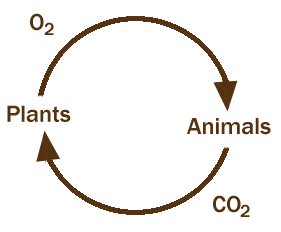
71.
Which statement is true about the carbon dioxide-oxygen cycle?
a)
animals breathe in nitrogen and release oxygen which is used by plants
b)
animals breathe in oxygen and release carbon dioxide which is used by plants
c)
animals breathe in nitrogen and release carbon dioxide which is used by plants
d)
animals breathe in carbon dioxide and release oxygen which is used by plants
72.
Which statement is an example of how plants and animals depend on each other?
a)
animals provide food for plants
b)
animals provide water for plants
c)
animals provide oxygen for plants
d)
animals provide carbon dioxide for plants
73.
If all the trees on Earth were destroyed, what would be the effect on humans?
a)
there would be a lack of food
b)
there would be a lack of oxygen
c)
there would be a lack of fresh water
d)
there would be a lack of carbon dioxide
74.
Animals and plants use substances that cycle through the environment.  Which substance is needed by plants to survive and is released into the environment by animals?
a)
oxygen
b)
sugar
c)
salt
d)
carbon dioxide
75.

What gas do animals and people take in?

a)

oxygen

b)

carbon dioxide

c)

water

d)

energy

76.

What gas do people and animals release?

a)

oxygen

b)

water

c)

energy

d)

carbon dioxide

77.
Plants use CO2 in the process of ___________________ to make ___________ and oxygen.
a)
Photosynthesis and Water
b)
Photosynthesis and Sugar
c)
Photosynthesis and Coal
d)
Photosynthesis and Oxygen
78.
The class decided to have a terrarium.  The teacher says it is important to include both plants and animals.  Why is it necessary to include both plants and animals?
a)
plants provide food for the animals and animals provide water for the plants
b)
plants provide water for the animals and animals provide food for the plants
c)
plants provide carbon dioxide for the animals and animals provide oxygen for the plants
d)
plants provide oxygen for animals and the animals provide carbon dioxide for the plants
79.
What does an "exchange of gases" mean?
a)
It means that gases are apart of everything. 
b)
It means that orange juice is an upside down milkshake with a missing tail.
c)
It means that humans and plants trade gases back and forth.
d)
It means that carbon in apart of all living things. 
80.

Which answer best describes the transfer of energy as it moves up the energy pyramid?

a)

Energy gets larger as you go up the pyramid.

b)

Energy gets smaller as you go up the pyramid.

c)

Energy stays the same as you go up the pyramid.

d)

What is energy?

81.

About how much energy is LOST when an organism consumes another organism from a different trophic level?

a)

10%

b)

90%

c)

50%

d)

25%

82.

Where is the most energy stored?

a)

In the primary consumers because they eat the most.

b)

At the top of the pyramid since it is the highest.

c)

In the tertiary consumers because they are most abundant.

d)

In the producers because they are most abundant.

83.

Where do producers get their energy from?

a)

Decomposers

b)

Primary Consumers

c)

Secondary Consumers

d)

The Sun

84.

What is another word for producer?

a)

Heterotroph

b)

Autotroph

85.

If the snake has 50 kJ of energy, how much does the grass have?

a)

50

b)

500

c)

5000

d)

5

86.

If the grass has 4360 kJ of energy, how much energy does the owl get?

a)

436

b)

4.36

c)

46

d)

4360

87.

If the rabbit has 240 kJ of energy, how much does the snake get?

a)

240

b)

2400

c)

2

d)

24

88.
Which level will contain plants?
a)
A
b)
B
c)
C
d)
D
89.
The organism that eats the secondary consumer is called the
a)
primary consumer
b)
tertiary consumer
c)
secondary consumer
d)
producer
90.
What is the name for the organism that eats the primary consumer?
a)
secondary consumer
b)
tertiary consumer
c)
producer
d)
decomposer
91.
Consumers can make their own food
a)
True
b)
False
92.
Which organism is the apex (top) predator in this ecosystem?
a)
algae/seaweed
b)
sea lion
c)
killer whale
d)
penguin
93.
Which organism is the producer?
a)
small fish
b)
penguin
c)
algae/seaweed
d)
killer whale
94.
Earthworms help break down plant and animal remains and return the nutrients back into the soil. What are earthworms?
a)
consumers
b)
decomposers
c)
producers
d)
predators
95.
Cows are herbivores, which means that they eat plants. A cow would be which part of the food chain?
a)
decomposer
b)
producer
c)
secondary consumer
d)
primary consumer
96.

A sunflower is an example of a

a)

decomposer

b)

producer

c)

consumer

97.

In this picture, the rhino is a

a)

secondary consumer

b)

decomposer

c)

primary consumer

d)

producer

98.

What does the snake eat?

a)

frog

b)

hawk

c)

mushroom

d)

grasshopper

99.

Which organism eats the snake?

a)

frog

b)

hawk

c)

mushrooms

d)

grasshopper

100.

What does the grasshopper eat?

a)

frog

b)

hawk

c)

grass

d)

mushrooms

101.

What eats the grasshopper?

a)

grass

b)

snake

c)

frog

d)

hawk

102.
Which organism do the owl and the weasel compete for in the food web?
a)
Hawk
b)
Spider
c)
Grasshopper
d)
Shrew
103.
Which of the following is a herbivore?
a)
cricket
b)
frog
c)
hawk
d)
shrew
104.
What does a food chain represent?
a)
How all living organisms within a habitat are connected.
b)
All of the things that a particular animal eats.
c)
How plants create their own food.
d)
A single path of energy transfer within a habitat.
105.
What does a food web represent?
a)
All connections of energy flow throughout all organisms in a habitat.
b)
The specific ways that mutualism is carried out.
c)
A single pathway or energy flow between organisms. 
d)
How carnivores get their food. 
106.
What is a trophic level?
a)
Each level represented within a food chain or web.
b)
Levels of ecosystems that the world is divided into.
c)
Different levels of nutrients present within an organism.
d)
The levels of sunlight an autotroph needs to survive. 
107.
An energy pyramid represents what?
a)
How much sunlight is available for the ecosystem to use. 
b)
How much energy a particular organism needs. 
c)
How much energy is needed to build a pyramid. 
d)
The amount of energy available to the next 'feeder' in a food web.
108.
a treeless biome that has permafrost
a)
Tundra
b)
Desert
c)
Taiga
d)
Deciduous
109.
the trees in this biome are characterized by needle-like leaves that are called conifers
a)
Desert
b)
Taiga
c)
Tundra
d)
Grasslands
110.
Plants in this biome are adapted to poor soil, extreme temperatures and less than 25 centimeters of rainfall per year.
a)
Tundra
b)
Taiga
c)
Desert
d)
Grasslands
111.
this biome has rich, fertile soil and much of the crop production in the U.S. is from this biome
a)
Grasslands
b)
Tundra
c)
Desert
d)
Tropical Rainforest
112.
this biome has the largest diversity (largest number of different kinds) of plant and animal species
a)
Desert
b)
Tundra
c)
Deciduous Forest
d)
Tropical Rainforest
113.
lichens, mosses, grasses, and other low-growing plants are common vegetation in this biome due to the permafrost, low rainfall, and very cold temperatures
a)
Desert
b)
Taiga
c)
Tundra
d)
Grasslands
114.
cacti are the main plant associated with this biome
a)
Desert
b)
Tundra
c)
Taiga
d)
Grasslands
115.
This biome gets the highest percentage of rain yearly
a)
Taiga
b)
Temperate Deciduous Forest
c)
Tropical Rainforest
d)
Grasslands
116.

Which land biome is mainly covered with grass?

a)

Desert

b)

Taiga

c)

Grassland

d)

Tundra

117.

Which biome is hot and humid all year round with plenty of rain?

a)

Tundra

b)

Tropical Rain Forest

c)

Taiga

d)

Temperate Forest

118.

Which is the largest land biome in the world?

a)

Taiga

b)

Tundra

c)

Grassland

d)

Desert

119.

Which land biome do we live in?

a)

Grassland

b)

Tundra

c)

Deciduous Forest

d)

Taiga

120.

Which land biome is the coldest in temperature without any trees?

a)

Taiga

b)

Grassland

c)

Tundra

d)

Deciduous Forest

121.

Which biome is sandy and/or rocky with very little rain?

a)

Desert

b)

Tundra

c)

Grassland

d)

Tropical Rain Forest

122.

Which biome has tree leaves that change color and drop off as the season changes from fall to winter?

a)

Tropical Rain Forest

b)

Deciduous Forest

c)

Tundra

d)

Coniferous Forest

123.

Prairies and savannas are two examples of this land biome?

a)

Tundra

b)

Grassland

c)

Desert

d)

Taiga

124.

Which land biome is located near and/or along the Earth's Equator?

a)

Grassland

b)

Temperate Forest

c)

Tropical Rain Forest

d)

Tundra

125.

The following animals are common to which land biome? (anaconda, gorilla, monkey, toucan bird, red-eyed tree frog, python, jaguar, three-toed sloth, anteater, macaw bird)

a)

Deciduous Forest

b)

Tropical Rain Forest

c)

Tundra

d)

Taiga

126.

The following animals are common to which land biome?

(polar bear, walrus, arctic fox, seal, penguin, snowy owl, caribou, arctic hare, musk oxen)

a)

Tundra

b)

Taiga

c)

Temperate Forest

d)

Coniferous Forest

127.

The following animals are common to which land biome? (white-tailed deer, black bear, turkey, chipmunk, skunk, raccoon, groundhog, and squirrel)

a)

Grassland

b)

Tundra

c)

Deciduous Forest

d)

Coniferous Forest

128.

The following animals are common to which land biome? (zebra, ostrich, lion, giraffe, bison, elephant, cheetah, hyena, hippo, rhino, prairie dog, and ostrich)

a)

Desert

b)

Grassland

c)

Tundra

d)

Tropical Rain Forest

129.

The following animals are common to which land biome? (moose, elk, lynx, red deer, bobcat, mountain goat, grizzly bear, and gray wolf)

a)

Temperate Forest

b)

Tundra

c)

Deciduous Forest

d)

Taiga

130.

The following animals are common to which land biome? ( scorpion, camel, fennec fox, kangaroo rat, black widow spider, roadrunner, and jackrabbit)

a)

Desert

b)

Tundra

c)

Deciduous Forest

d)

Grassland

131.

A biome is _______________________________________

a)

all the living things in a small area.

b)

a very large ecosystem.

c)

all the members of one species in an area.

d)

a role/ job of an organism.