
 Worksheets
Semester Test Review #1 8th grade
Total questions: 129
Worksheet time: 2hrs 9mins
What does making an observation involve?
Using your imagination
Using your senses
Using your emotions
Using your intuition
What do qualitative observations focus on?
Numerical data
Non-numerical data
Mathematical calculations
Statistical analysis
Which of the following is NOT a qualitative observation?
The sky is blue
The music is loud
The book weighs 500 grams
The cake smells sweet
Which of the following is an example of a quantitative observation?
The sky is blue.
The flower smells sweet.
The track is 10 meters long.
The animal is furry.
Why is an inference not considered a guess?
It is based on random thoughts
It is based on prior knowledge and observations
It is made without evidence
It is a spontaneous decision
The hardened remains of a living thing that died long ago.
fossil
extinct
endangered
minerals
Why are there more animal fossils than plant fossils?
Animals are smaller than plants.
Plants have harder bodies than animals.
Plants have softer bodies than animals.
Animals eat plants.
Which type of rock are most fossils found?
sedimentary rock
metamorphic rock
igneous rock
fossils
Which is an imprint fossil?
bone
a cast
a trace fossil
original remains
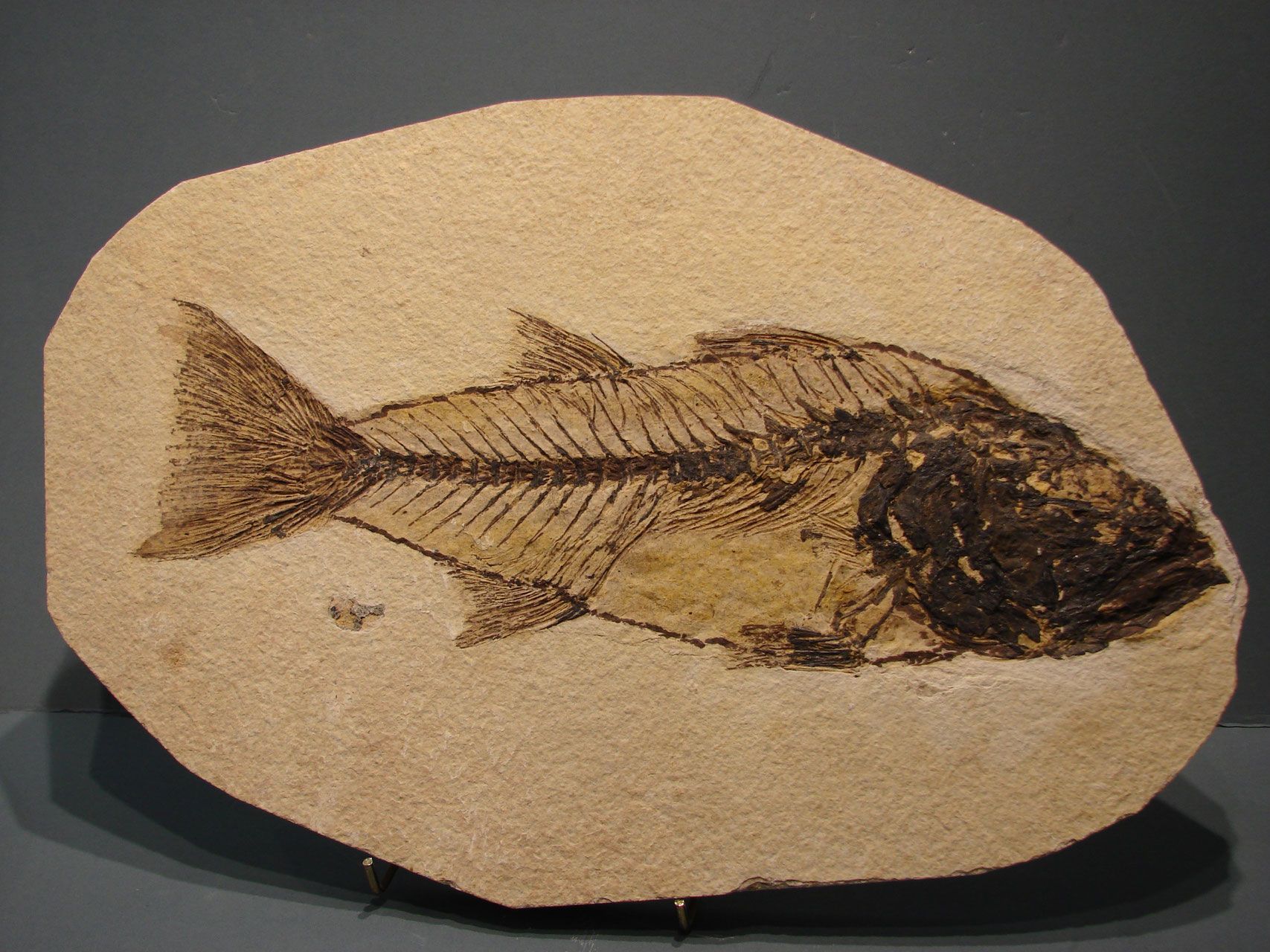
If a scientist found a fish fossil in the desert, what can they infer?
An animal ate the fish.
The water covered the area long ago.
Today's fish looks the same
The fish is endangered.

This type of fossil is tree sap hardened and replaced by minerals.
Petrified wood
Imprint
Amber
Mold

What type of fossil is pictured here?
Forest fossil
Trace fossil
Cast fossil
Body fossil
When a species no longer exists it is _________
Endangered
Fossil
Extinct
Dead
Which of the following is an example of a body fossil?
a perfect mold of a dinosaur bone
a carbon print left by leaf
the skull of a mammoth that fell in a tar pit
a dinosaur foot print
Livings things today are not related to plants and animals of the past
True
False
If one rock is dated to be 2 million years old, and another rock above it is dated to be 1 million years old. This type of dating is the most accurate and gives the precise age of the rock.
Relative Dating
Absolute Dating
When two rock layers are compared based on their location, and the layer at the bottom is said to be older than the layer above it, this is an example of...
Relative Dating
Absolute Dating
Most fossils that are found are...
Skin and Hair
Hard Parts like Bones, Teeth, and Shells
Organs

Which description correctly describes the "relative age" of a layer of rock?
the rock is 5.3 million years old
radioactive isotopes decay and give us an exact age of rock
older rock is on the bottom and younger rock is on the top
all of these are relative age terms
Earth scientist have studied a trilobite over time. The trilobite grew in size, some species grew antennae etc as time went on. This is best explained by:
the fossils changed because of extinction
the fossils changed over time due to evolution
the fossils changed due to weathering and erosion
the processes that form today differ from the past

Which of the following would be an index fossil
the trilobite and the ammonite snail shell
the fan shaped shell and the trilobite
the cone shaped shell
the trilobite only

Which fossil is older?
Cactocrinus
Neptunia
Trophite
Monotis
A Punnett square shows you all the ways in which _____ can combine.
Genes
phenotypes
Alleles
dogs
The factor that covers up another factor is a?
Recessive gene
not the best one
allele
dominant factor

An Example of an inherited trait would be?
My favorite color is Orange.
My favorite animal is a bird
I have Hazel eyes
I am really strong
A genotype is?
medicine and agriculture
a genetic variation
gentic make up of an organism
a recessive trait
An organism with two different alleles for a trait is?
Homozygous
Genotype
dominant factor
Heterozygous
A genotype when there are two alleles that are exactly the same is?
Purebred
Homozygous
Heterozygous
Recessive
An organism that received different alleles for a trait from each parent?
Dominant
Recessive
Hybrid
Proteins
The physical appearance of an organism is?
phenotype
genoty[e
probability
beauty
A factor that seems to disappear?
dominant factor
hidden factor
weak factor
recessive factor
Strands of DNA that are twisted together are called?
alleles
chromatin
chromosomes
genes
the different "forms" of the same gene are called?
choices
mutations
alleles
dominant
The human body cells have what number of chromosomes?
23 chromosomes
46, or 23 pairs of chromosomes
too many to count
72 chromosomes
The small segments of a chromosome that help code for a trait are called?
trait
mutations
DNA
genes
When a DNA sequence is copied, sometimes mistakes occur in the new strand of DNA. This is known as a ?
alleles
dominant trait
recessive trait
mutation
Who is often referred to as the "Father of Genetics?"
Mr. Tsigaridas
Watson and Crick
Gregor Mendel
Rosalind Franklin
A Scientist is looking at a section of a chromosome that carries the code for red hair in a human. What part of a chromosome is he observing?
Trait
Gene
Dominant factor
Recessive factor
In DNA molecule, the nitrogenous bases are?
Adenine, Guanine, Cytosine and Uracine
Adenine, Thymine, Cytosine and Guanine
Adenine, Thymine, Cytosine and Vasolene
Adenine, Thymine, and Cytosine
The nitrogenour base pairs are?
Adenine-Thymine and Cytosine-Guanine
Adenine-Cytosine and Thymine-Guanine
Adenine-Protein and Thymine-fats
Thymine pairs with Cytosine
Adenine is always paired with _______________________.
Thymine
Cytosine
Guanine
It doesn't match with anything
Cystosine is always paired with ______________.
Adenine
Thymine
Guanine
It doesn't match with anything
If one side of DNA is ATTA what would the complementary strand look like?
CGGC
GCCG
TAAT
ATTA
If one side of DNA is TTAACCGG what would the complementary strand look like?
AAGGCCGG
TTAACCGG
AAGGCCGG
AATTGGCC
The shape of DNA looks like a twisted ladder, known as
helicase
a double helix
a triple helix
Humans have (a) chromosomes.
Where is DNA found in the cell?
Mitochondria
Ribosomes
Nucleus
Endoplasmic Reticulum
Where does the dependent variable go on a graph?
On top
On the x axis
On the y axis
It doesn't belong on a graph
Where does the independent variable go on a graph?
On top
On the x axis
On the y axis
It doesn't belong on a graph
What is a control variable in an experiment?
The variable purposefully changed
The variable that is measured
The variable that stays the same
In an experiment you CHANGE or MANIPULATE this type of variable.
Independent Variable
Dependent Variable
Controlled Variable
What type of observation is this?
The kid is wearing blue and red.
Qualitative Observation
Quantitative Observation
What type of observation is this?
There are 7 kids playing basketball.
Qualitative Observation
Quantitative Observation.

Read the statement and decide if it's an observation or inference:
The dog is smarter than the human.
Observation
Inference
Explaining or interpreting the observations is called _____?
observation
inference
question
Which of the following is an example of a qualitative observation?
The cat weighs 34 kg
The clouds look grey and dark
The girl can run 15 mph
There are 50 states in the USA
A student wants to test the effects of type of exercise on heart rate. What is the dependent variable?
time of day exercise occurs
amount of exercise
heart rate
type of exercise

What is the dependent variable in the following experiment: Does the amount of coffee students drink increase their test scores?
Same test
Amount of coffee
Test scores
Test scores without drinking coffee
What is the independent variable in the following experiment: Does the amount of coffee students drink increase their test scores?
Same test
Amount of coffee
Test scores
Test scores without drinking coffee
What needs to be constant in the following experiment: Does the amount of coffee students drink increase their test scores?
Same test
Amount of coffee
Test scores
Test scores without drinking coffee

Identify the independent variable in the following experiment: If I give the same type of plants different liquids (pop, juice, water, monster), will they still grow?
Different Liquids
How much the plants grow
Plants given water
The same plants; the same amount of liquid
Identify the dependent variable in the following experiment: If I give the same type of plants different liquids (pop, juice, water, monster), will they still grow?
Different Liquids
How much the plants grow
Plants given water
The same plants; the same amount of liquid

"The potato weighs 174.95g." is an example of a(n)
Inference
Qualitative Observation
Quantitative Observation
Average
Identify what needs to be constant in the following experiment: If I give the same type of plants different liquids (pop, juice, water, monster), will they still grow?
Different Liquids
How much the plants grow
Plants given water
The same plants; the same amount of liquid

What is an observation?
A scientific statement based on ideas
Using your senses to notice what is going on around you
To be unaware of your surroundings
The question that you want an answer to.
Which type of variable is what you change or manipulate. It's the cause.
Independent Variable
Dependent Variable
Controlled Variable
Which type of variable is the data you measured during an experiment. It's the effect.
Independent Variable
Dependent Variable
Controlled Variable
Katiana wanted to figure out what type of liquid worked best for growing beans. She used the same amount of soil and the same type of beans in each pot. She “watered” each one with 50 mL of liquid. One plant added cola, one added lemonade, and one with just water. After one week, she measured how high they had grown.
WHAT IS THE INDEPENDENT VARIABLE?
The liquid used - cola, water & lemonade
How high they had grown in a week.
The same soil and same type of beans.
Coach Mickey wanted to see if listening to music would affect the number of free throws the Fremont Junior High basketball team could make in 10 minutes. On day one, she didn’t play any music and counted how many baskets they made. On day 2, she played rap music and counted the baskets, and on day 3, she played classical music and counted the baskets.
What is the DEPENDENT VARIABLE??
The number of baskets made in 10 minutes.
Music or no music being played.
The Fremont Basketball team
What type of observation is this?
The kid is wearing blue and red.
Qualitative Observation
Quantitative Observation
Read the statement and decide if it's an observation or inference:
The man is wearing a striped tie.
Observation
Inference
Explaining or interpreting the observations is called _____?
observation
inference
question
Which type of variable is the data you measured during an experiment. It's the effect.
Independent Variable
Dependent Variable
Controlled Variable
Which type of variable is what you change or manipulate. It's the cause.
Independent Variable
Dependent Variable
Controlled Variable
What type of variable must remain the same for the entire experiment?
Independent Variable
Dependent Variable
Controlled Variable
Katiana wanted to figure out what type of liquid worked best for growing beans. She used the same amount of soil and the same type of beans in each pot. She “watered” each one with 50 mL of liquid. One plant added cola, one added lemonade, and one with just water. After one week, she measured how high they had grown.
WHAT IS THE DEPENDENT VARIABLE?
The liquid used - cola, water & lemonade
How high the had grown in a week.
Same amount of soil and same type of beans.

Investigating an object closely.
Observations
Looking
Seeing
Hypothesize

Observations using the 5 senses
QuaLitative Observations
QuaNtitative Observations
Observations
Experimenting

Observing by counting or measuring
QuaLitative Observations
QuaNtitative Observations
Observations
weighing

The part of an experiment that changes
Observations
Conclusion
Hypothesis
Variable

What is the DEPENDENT variable (effect) in this experiment?
"Does eating breakfast improve test scores?"
eating breakfast or not
the grade you got on the test
what time you get up in the morning
how tasty the breakfast is

You are testing how the amount you water a plant affects its growth. What would be the INDEPENDENT VARIABLE in this experiment.
They type of pot you put the plants in.
The amount you water each plant.
The amount of sunlight the plants get.
The amount the plant grows.

A student wants to test the hypothesis of "If salt is added to water then the boiling point of water will decrease (go down)." What is the independent variable?
Whether salt is added or not
Boiling Point
Amount of water
If you were testing the time it took for objects of different sizes to reach the ground after being dropped from 30 feet in the air, which of these would be the DEPENDENT VARIABLE?
The time it takes for each object to hit the ground.
The size of each object.
The type of object you use.
The height you drop the object from
What is the independent variable in this experiment?
Will a person wake up earlier if they drink water?
the person
the time it takes for a person to wake up
the water
none of these
What is the independent variable in the experiment?
Mr. Block wants to see which treat causes her cat, Whiskers, to jump the highest.
the type of treat
how high Whiskers jumps
the type of cat
Mr. Block
Using any of your 5 senses to describe the world around you.
Observation
Inference
Prediction
Logical Theory

Which of the following is an observation about the man in this picture:
The man hates his purple shirt.
The man has a purple shirt.
The man is having a bad day.
This man is upset because he's hungry
Observations like the color or texture of an object are ________________ observations.
quantitative
qualitative
operational
scientific
Pick the INFERENCE
The boy is probably crying because he dropped his ice cream cone
The girl is wearing a yellow dress
I want to go back to sleep.

The cat looks mad. He must be hangry.
Observation
Inference
An observation is different from an inference since:
Inferences always lead to experiments, observations do not
Observations do not temporarily explain something like inferences do
You make thousands of observations daily, but less inferences
Inferences can be proven, observations cannot be
Which of the following is an example of a quantitative observation?
The apple is red and shiny.
The temperature is 25 degrees Celsius.
The room smells like lavender.
The music is loud.
What is the independent variable in the following experiment?
"If plants are given different amounts of sunlight, how will it affect their growth rate?"
The type of plant
The amount of sunlight
The growth rate of the plants
The type of soil used
Which statement is an inference?
The sky is blue.
The grass is wet because it rained last night.
The car is red.
The book is on the table.


In the Punnett square, what is the probability for white fur?

(Click the picture to see it without the text)


EACH parent provided ______ of your genes.
25%
50%
75%
100%
Which of the following is an example of a homozygous dominant genotype?
Rr
rr
NN
Nr
Which of the following is an example of a homozygous recessive genotype?
Rr
rr
NN
Nr
Which TWO of the following are examples of heterozygous genotypes?
Rr
rr
NN
Nr
Brown hair is an example of a
Genotype
Phenotype
Which of the following genotypes is heterozygous?
FF
tt
Gg
RR
Which genotype is homozygous recessive?
rr
AA
TT
Ff
dominant trait
recessive trait
homozygous dominant
heterozygous
Which of the following genotypes is heterozygous?
Bb
BB
bb
B
In a heterozygous genotype like Bb, the ___________ allele is expressed.
recessive
dominant

Baldness is an example of a
genotype
phenotype

How tall you are is an example of a
genotype
phenotype

Look at the picture. The probability that a child will inherit the recessive trait (represented by the genotype bb) is
25%
50%
75%
100%
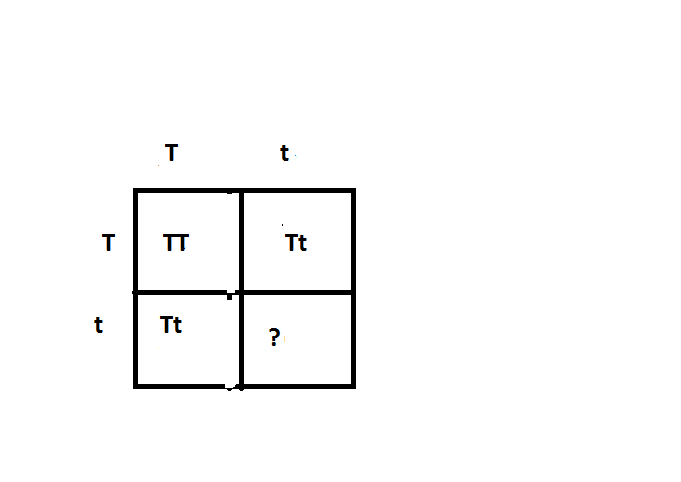
T = allele (gene) for tall phenotype
t = allele (gene) for short phenotype
In the Punnett square, what belongs in the missing square?
tt
Tt
TT
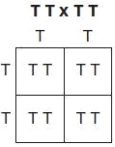
What ratio of the offspring from the cross shown will be homozygous recessive for the trait of tallness?
0 in 4
1 in 4
2 in 4
4 in 4
Dominant alleles (genes) are represented by a:
male gene
lowercase letter
recessive trait
capital letter

What is the probability of homozygous recessive offspring?
25%
50%
0%
100%
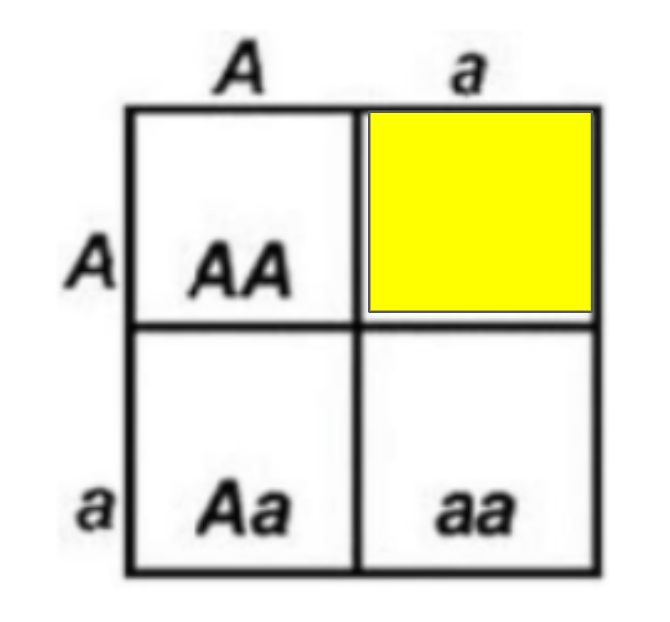
What belongs in the yellow box?
AA
Aa
aa
Which of the following genotypes is heterozygous?
Bb
BB
bb
Which of the following is a homozygous dominant genotype?
Yy
YY
yy
Which of the following is a homozygous recessive genotype?
HH
dd
Aa
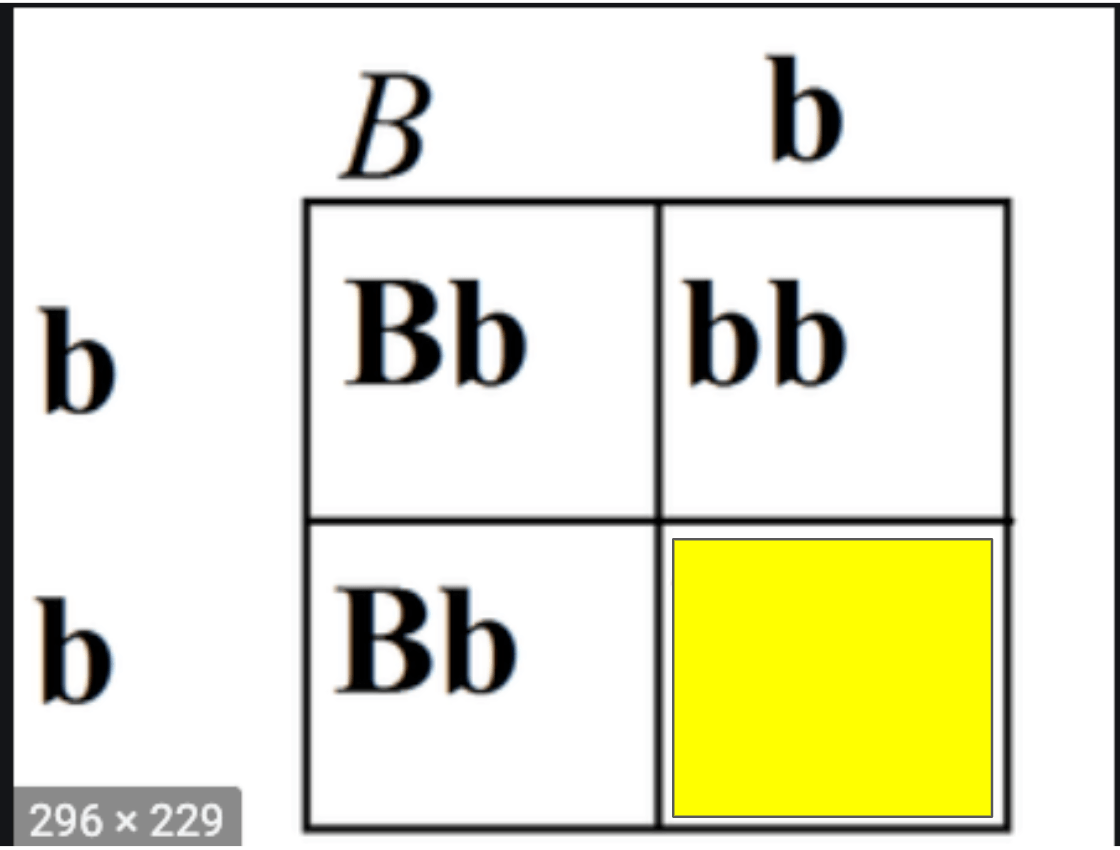
Fill in the yellow box.
Bb
BB
bb
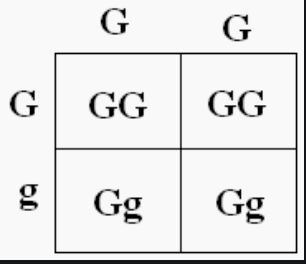
What is the chance that the offspring born from this cross will have a homozygous dominant genotype?
25%
50%
75%
100%
The Punnett square is used to tell the color of a frog's skin. G is the allele that codes for green skin and g is the allele that codes for brown skin. What is the chance the baby frogs will have brown skin?
0%
25%
50%
100%

A heterozygous yellow pea plant's genotype would be:
YY
yy
Yy
Yg

In a certain species of plant, the color purple (P) is dominant over white color (p).
According to the Punnett Square, what is the probability of an offspring being white?
25%
0%
100%
50%

