wayground logo

Free Printable Worksheets

Font size

S
M
L
XL
Worksheets

Thermal Energy & Waves

Total questions: 126

Worksheet time: 1hrs 23mins
Name
Class
Date
1.

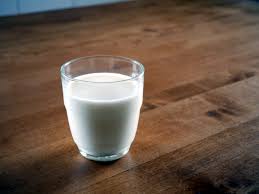
During the summer, Chang takes a glass of milk from the refrigerator and places it on the kitchen counter. Over time, energy as heat is transferred to the milk from the air. Which change would most likely occur?

a)

The temperature of the milk will increase.

b)

The temperature of the milk will decrease.

c)

The milk will change from a liquid to a gas.

d)

The milk will change from a liquid to a solid.

2.

Joe places two solid objects in contact with each other. Which property determines the direction of the flow of heat between the two objects?

a)

material of the objects

b)

volume of objects

c)

density of objects

d)

temperature of objects

3.

Jeriah places two metal cubes in contact with each other. Energy transfers as heat flows from Cube A to Cube B. What conclusion can you draw regarding Cube A?

a)

It is larger than Cube B.

b)

It is cooler than Cube B.

c)

It is smaller than Cube B.

d)

It is warmer than Cube B.

4.
The movement of thermal energy from a warmer object to a cooler object is called:
a)
heat
b)
temperature
c)
motion
d)
momentum
5.
No more energy can be removed from matter at:
a)
its freezing point
b)
0°C
c)
absolute zero
d)
273 K
6.
Heat transfer occurs:
a)
in many directions
b)
both from warm objects to colder ones and from cold objects to warmer ones
c)
only from warm objects to colder ones
d)
only from cold objects to warmer ones
7.
A measure of the average kinetic energy of the individual particles in an object is called:
a)
thermal energy
b)
conduction
c)
convection
d)
temperature
8.
When you touch something that feels cold, 
a)
heat from your hand moves into the cold substance.
b)
coldness moves from the cold substance into your hand.
c)
it melts.
d)
it freezes.
9.
What does absolute zero mean?
a)
A failed quiz.
b)
The lowest temperature possible.
c)
The hottest temperature possible.
d)
A race.
10.
The temperature of a substance increases as___.
a)
the substance expands
b)
the average kinetic energy of its particles increases
c)
the substance's volume increases
d)
the substance's mass increases
11.
You're holding hands with your best friend.  Your friend's hands are REALLY warm and yours are really cold.  After a few minutes, this has changed.  How might you explain what happened?
a)
The cold energy from your hand transferred to your friend's hand through conduction.
b)
The heat energy from your friend's hand transferred to your hand through conduction. 
c)
The cold energy from your hand transferred to your friend's hand through convection.
d)
The heat energy from your friend's hand transferred to your hand through convection.
12.
What is the definition of CONDUCTION?
a)
When heat is transferred from objects like rays of light or electromagnetically.
b)
a  hot liquid or air that  expands, becomes less dense, and rises or becomes more dense, and sinks.
c)

Form of heat transfer where heat energy is directly transferred between molecules through molecular collisions or direct contact

d)
When heat transfers through the heater or AC in your house.
13.

The transfer of heat by the movement of a fluid

a)

Convection

b)

Conduction

c)

Contusion

d)

Radiation

14.

The transfer of energy by electromagnetic waves

a)

Radiation

b)

Convection

c)

Conduction

d)

Insulation

15.

Which of the following is the correct definition for "Electromagnetic Waves"?

a)

A form of energy that can move through the vacuum of space

b)

A form of energy that only moves through solids

c)

The highest point of a wave

d)

The process of drawing up, soaking up or taking in

16.

The highest point on a wave is the

a)

compression

b)

crest

c)

frequency

d)

trough

17.

The lowest point of a wave is the

a)

energy

b)

crest

c)

radiation

d)

trough

18.

The number of complete waves that pass a given point in a certain amount of time

a)

frequency

b)

emit

c)

greenhouse effect

d)

amplitude

19.

What do we call the height of a wave?

a)

amplitude

b)

frequency

c)

wavelength

d)

crest

20.

Horizontal distance between the crests or between the troughs of two adjacent waves

a)

wavelength

b)

frequency

c)

albedo effect

d)

radiation

21.

The bouncing back of a wave when it hits a surface through which it cannot pass.

a)

reflection

b)

absorption

c)

conduction

d)

radiation

22.

when two objects are at the same temperature and no heat flows

a)

Thermal Equilibrium

b)

Thermal Insulation

c)

Thermal Conduction

d)

Thermal Contraction

23.

Identify the type of Wave Property

a)

Reflection

b)

Refraction

c)

Diffraction

d)

Resonance

24.

Identify the type of Wave Property

a)

Reflection

b)

Refraction

c)

Diffraction

d)

Resonance

25.

Identify the type of Wave Property

a)

Reflection

b)

Refraction

c)

Diffraction

d)

Resonance

26.

Identify the type of Wave Property

a)

Reflection

b)

Refraction

c)

Diffraction

d)

Resonance

27.

Identify the type of Wave Property

a)

Reflection

b)

Refraction

c)

Diffraction

d)

Resonance

28.

Identify the type of Wave Property

a)

Reflection

b)

Refraction

c)

Diffraction

d)

Resonance

29.

Identify the type of Wave Property

a)

Reflection

b)

Refraction

c)

Diffraction

d)

Resonance

30.

Identify the type of Wave Property

a)

Reflection

b)

Refraction

c)

Diffraction

d)

Resonance

31.

Identify the type of Wave Property

a)

Reflection

b)

Refraction

c)

Diffraction

d)

Resonance

32.

Identify the type of Wave

a)

Electromagnetic (light)

b)

Transverse

c)

Longitudinal

d)

Amplitude

33.

Identify the type of Wave

a)

Electromagnetic (light)

b)

Transverse

c)

Longitudinal

d)

Amplitude

34.

Identify the type of Wave

a)

Electromagnetic (light)

b)

Transverse

c)

Longitudinal

d)

Amplitude

35.

Identify the type of Heat Transfer

a)

Conduction

b)

Convection

c)

Radiation

d)

Thermoregulation

36.

Identify the type of Heat Transfer

a)

Conduction

b)

Convection

c)

Radiation

d)

Thermoregulation

37.

Identify the type of Heat Transfer

a)

Conduction

b)

Convection

c)

Radiation

d)

Thermoregulation

38.

Identify the type of Heat Transfer

a)

Conduction

b)

Convection

c)

Radiation

d)

Thermoregulation

39.

When an object is hot, it's molecules have increased...

a)

Potential Energy.

b)

Kinetic Energy.

c)

Elastic Energy

d)

Electrical Energy

40.

Distance: 1. Crest to Crest 2. Trough to Trough 3. One full crest & One full trough

a)

Crest

b)

Trough

c)

Amplitude

d)

Wavelength

41.

In a ___ wave, the particles move side to side (parallel) to the wave direction.

a)

Radiation

b)

Transverse

c)

Longitudinal

d)

Crest

42.

Thermal Conductors are characterized by:

a)

Resisting heat transfer

b)

Easily allowing heat transfer

c)

Neither resist nor allow

43.

Thermal Insulators are characterized by:

a)

Resisting heat transfer

b)

Easily allowing heat transfer

c)

Neither resist nor allow

44.

Wave C has the greatest...

a)

Frequency

b)

Compression

c)

Amplitude

d)

Wavelength

45.

Wave A has the greatest...

a)

Frequency

b)

Compression

c)

Amplitude

d)

Wavelength

46.

Waves transfer...

a)

hertz

b)

medium

c)

energy

d)

people

47.

Solids, liquids, gases are examples of a...

a)

small

b)

medium

c)

large

d)

extra large

48.

In a ___ wave, the particles move side to side (perpendicular) to the wave direction.

a)

Radiation

b)

Transverse

c)

Longitudinal

d)

Crest

49.

The highest point on a transverse wave

a)

Crest

b)

Trough

c)

Amplitude

d)

Wavelength

50.

How does thermal energy tend to move?

a)

Upwards

b)

Left to right

c)

High energy to low energy

d)

Low energy to high energy

51.

The height of the wave

a)

Crest

b)

Trough

c)

Amplitude

d)

Wavelength

52.

The lowest point on a transverse wave

a)

Crest

b)

Trough

c)

Amplitude

d)

Wavelength

53.

__________ means to move back and forth quickly.

a)

Pitch

b)

Amp (Amplitude)

c)

Vibrate (vibration)

d)

Echo

54.

Select all that apply. light-

a)

requires a medium (matter) to travel through

b)

does NOT require a medium (matter) to travel through.

c)

CANNOT be seen in the vacuum of space

d)

CAN be seen in the vacuum of space

e)

is radiant energy

55.

Select all that apply. Sound -

a)

requires a medium (matter) to travel through

b)

does NOT require a medium (matter) to travel through.

c)

CANNOT be heard in the vacuum of space

d)

CAN be heard in the vacuum of space

e)

is mechanical energy

56.
Our eyes can detect light only within a range of ____________ called visible light.
a)
frequencies
b)
speeds
c)
mediums
d)
periods
57.
If a transverse wave is moving from right to left, the individual particles in the medium are moving
a)
right to left
b)
left to right
c)
up and down
d)
none of the above
58.
Sound waves from a radio generally travel in which medium?
a)
air
b)
earth
c)
light
d)
water
59.
The ____________ of a longitudinal wave radiates outward from its source, while the particles vibrate back and forth about their original positions.
a)
medium
b)
wave front
c)
crest
d)
kinetic energy
60.
The maximum displacement of a particle by a wave is called
a)
medium
b)
amplitude
c)
wavelength
d)
period
61.
Constructive interference
a)
the change in direction of a wave when it encounters an obstacle or edge
b)
points in a standing wave that have no vibration due to interference
c)
interference that increases amplitude
d)
a pattern of vibration that resembles a stationary wave
62.
The bending of waves as they pass from one medium to another at an angle
a)
reflection
b)
refraction
c)
diffraction
d)
absorption
63.
Electromagnetic waves are made by vibrating
a)
electric charges
b)
sound
c)
water droplets
d)
vapor
64.
Electromagnetic waves travel by transferring ________ between vibrating electric and magnetic fields.
a)
matter
b)
energy
c)
directional change
d)
antinodes
65.
True or False: Mechanical waves require a medium. Electromagnetic waves may travel through a medium.
a)
True
b)
False
66.
Visible light travels the fastest in which of the following materials?
a)
glass
b)
water
c)
air
d)
visible light travels at the same speed regardless of material
67.
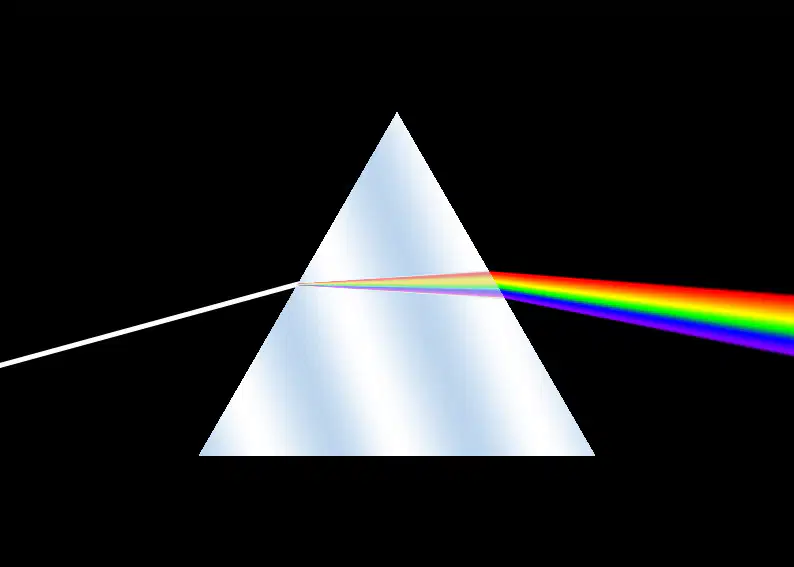
What is occurring in this picture?
a)
The prism is reflecting white light.
b)
The prism is causing the white light diffract.
c)
The prism refracts the white light.
d)
The prism is absorbing the white light.
68.
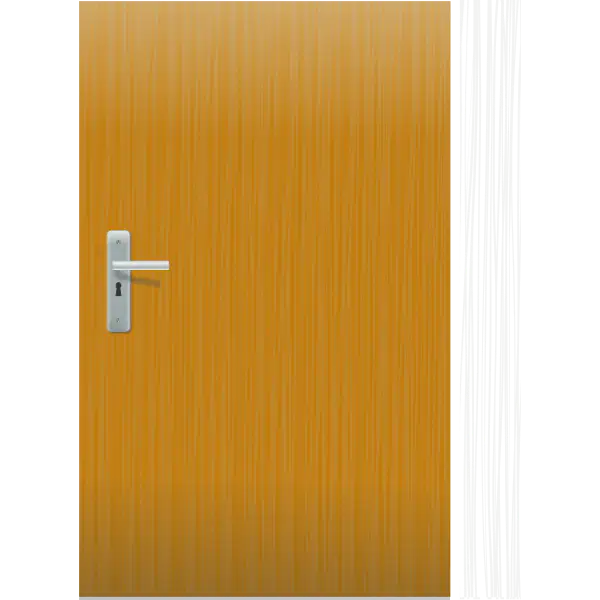
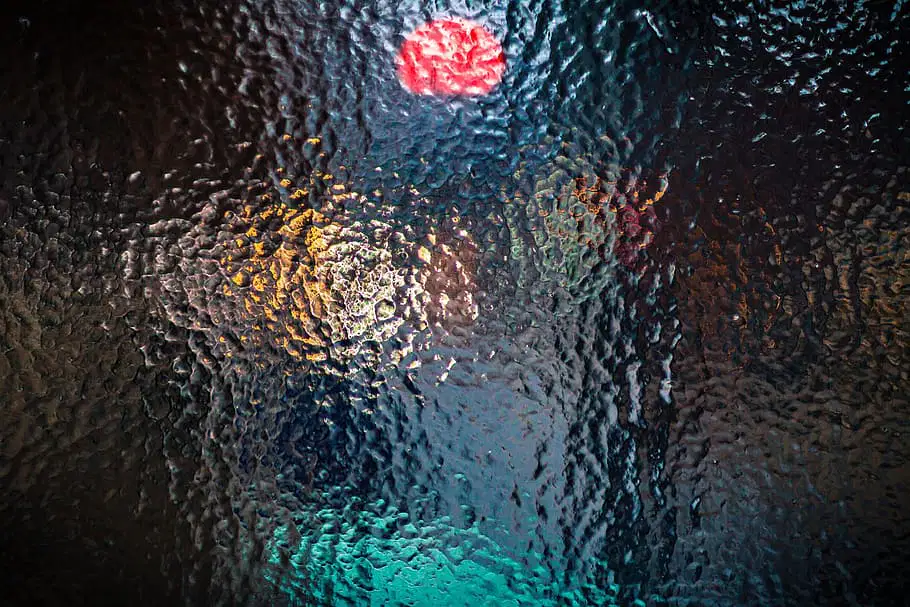
Select the item that would be described as opaque.
a)
Option 1
b)
Option 2
c)
Option 3
d)
All of these are opaque
e)
69.
When electromagnetic waves behave as a particle, they are called _________
a)
wotons
b)
photons
c)
motons
d)
litons
e)
Option 2
70.
Sound travels the fastest in which of the following?
a)
Metal
b)
Water
c)
Air
71.
Which direction does heat travel?
a)
left to right
b)
up and down
c)
cold to hot
d)
hot to cold
72.
Using a mirror is an example of light behaving in which way?
a)
Reflection
b)
Refraction
c)
Deflection
d)
Diffraction
73.
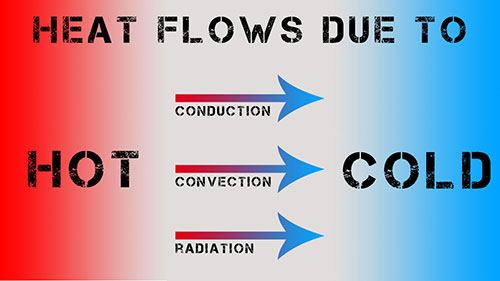
Which type of heat transfer is occurring in the picture?
a)
Conduction
b)
Convection
c)
Radiation
74.
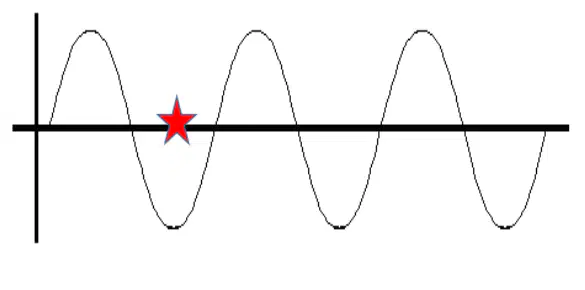
Identify the part of the wave shown in the picture
a)
Crest
b)
Resting position
c)
Wavelength
d)
Amplitude
75.
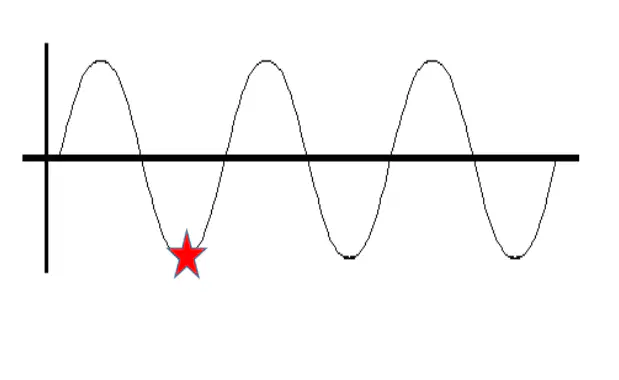
Identify the part of the wave shown in the picture
a)
Resting Position
b)
Crest
c)
Trough
d)
Frequency
76.
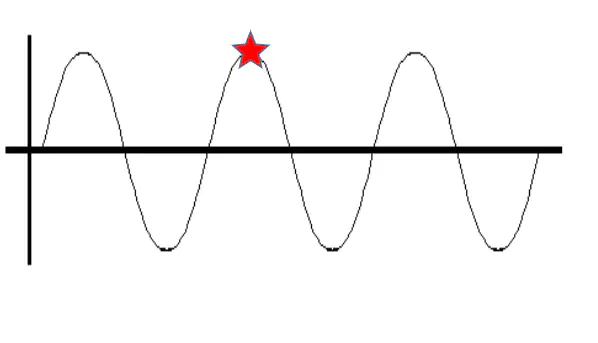
Identify the part of the wave shown in the picture
a)
Amplitude
b)
Trough
c)
Frequency
d)
Crest
77.
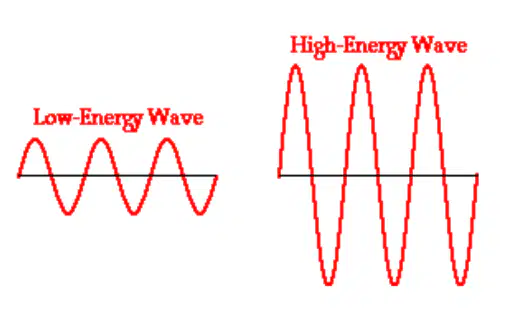
Which of the following waves has the higher amplitude?
a)
Low energy wave
b)
High Energy Wave
c)
They have equal amplitudes
d)
Energy cannot be measured by the information provided.
78.
Number of waves in a given amount of time?
a)
Amplitude
b)
Frequency
c)
Wavelength
d)
Trough
79.
Waves carry which of the following?
a)
Energy
b)
Time
c)
Life
80.
Ocean waves travel through water. This means that ocean waves are an example of which of the following?
a)
Mechanical waves
b)
Electromagnetic waves
c)
Amplitude waves
d)
low frequency waves
81.
True or False: Electromagnetic waves require a medium in order to travel.
a)
True
b)
False
82.
As the amplitude of a wave increases, the amount of energy __________
a)
increases
b)
decreases
c)
stays the same
83.
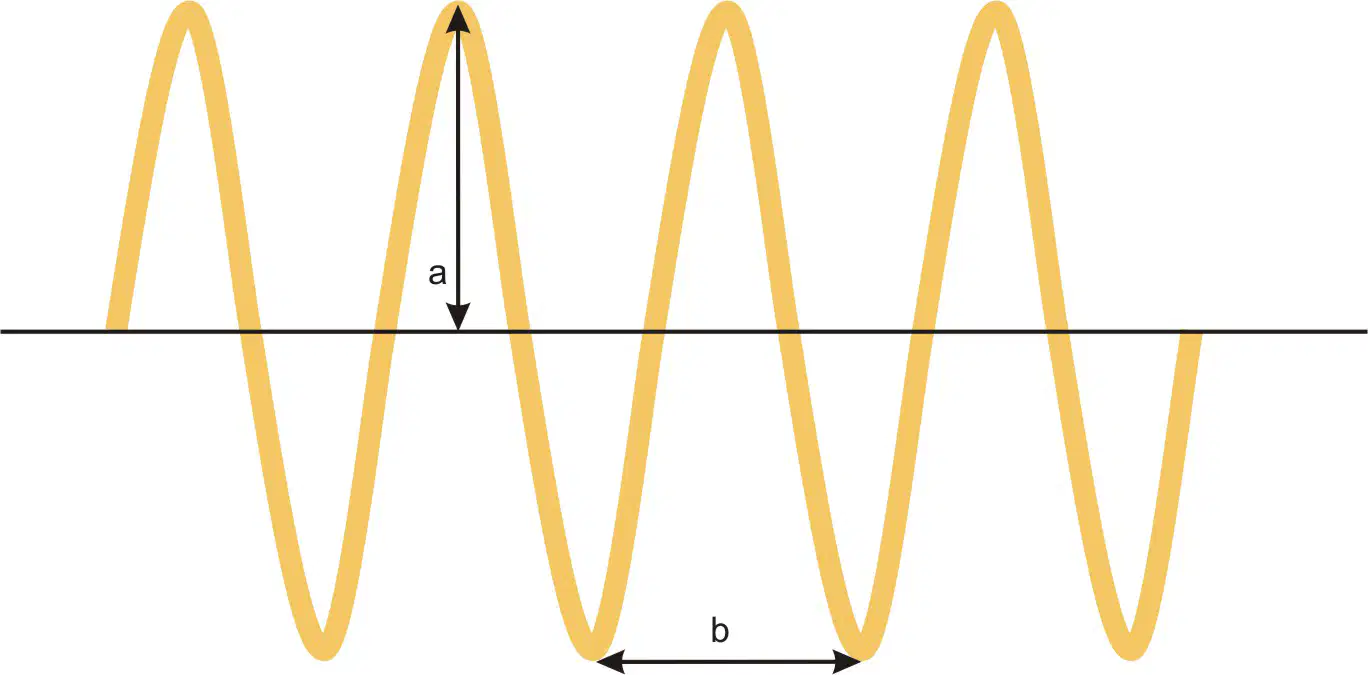
In the picture, "A" is measuring the distance from the resting position to the crest. This is known as ______________
a)
Trough
b)
Wavelength
c)
Frequency
d)
Amplitude
84.
In the picture, "B" is measuring the distance between two troughs. This is known as ____________
a)
Trough
b)
Wavelength
c)
Frequency
d)
Amplitude
85.
If heat is added to a substance, the atoms that make up that substance will begin to move ______________
a)
slower
b)
faster
c)
left
d)
right
86.
Which type of heat transfer does not rely on atoms or particles to transfer thermal energy?
a)
Conduction
b)
Convection
c)
Radiation
d)
All of these
87.
How are light and sound ALIKE?
a)
Both travel as rays
b)
Both can vary in pitch
c)
Both depend on vibrations in air
d)
Both are forms of energy that travel as waves
88.
The frequency of a sound wave determines it _________.
a)
amplitude
b)
energy
c)
pitch
d)
volume
89.
Volume describes
a)
how high or low a sound is
b)
how loud or quiet a sound is
c)
how long the sound lasts
d)
how beautiful the sound is
90.
What does the term pitch describe?
a)
a high point of a wave
b)
how low or high a sound is
c)
how loud or soft a sound is
d)
the matter through which a wave travels
91.
a)
reflection
b)
refraction
92.
Back and forth movement in air bouncing off molecules
a)
vibration
b)
sound
c)
amplify
d)
pitch
93.
This is produced by vibrating objects through air
a)
sound
b)
vibration
c)
amplify
d)
pitch
94.
The LONGER the wavelength the ___________ the sound
a)
Higher
b)
Lower
c)
Better
d)
Funnier
95.
The SHORTER the wavelength the _________ the sound.
a)
Higher
b)
Lower
c)
Louder
d)
More annoying
96.
What form of energy travels in straight lines?
a)
Light
b)
Heat
c)
Motion
d)
Hello!
97.
_____________ happens when a light ray hits a surface and bounces off.
a)
Reflection
b)
Refraction
c)
Subtraction
d)
Addition
98.

_____?_____ materials allow SOME light waves to pass through, but not in a straight path.

a)

Opaque

b)

Transparent

c)

Translucent

99.

The pitch of a sound corresponds to the

a)

amplitude

b)

frequency

c)

crest

100.

Between waves B and D, which is louder?

a)

Wave B

b)

Wave D

101.

When you yell in a canyon, you hear an echo of your voice. Why is this?

a)

The sound waves are absorbed by the walls of the mountains.

b)

The sound waves are reflected by the walls of the mountians.

c)

The sound waves are transmitted through the walls of the mountains.

102.

Why do things appear green

a)

They reflect green wavelengths of light

b)

They absorb green wavelengths of light

c)

Only green wavelengths of light hit it

103.

What is the absorption of light?

a)

Light hits and object and does not leave

b)

Light bounces off an object

c)

Light changes its freqency

d)

Light changes its wavelength

104.
This is used to separate white light into colors. 
a)
prism
b)
reflection
c)
sunlight
d)
spectrum
105.

Sound waves travel the fastest through _______.

a)

Gases

b)

Solids

c)

Liquids

d)

Plasma

106.

What is the Doppler Effect?

a)

A change in frequency due to the relative motion of a wave source and an observer

b)

When a wave overlaps with another wave

c)

When a wave bounces off of another object

d)

When a wave bends due to traveling through a different medium

107.
___ is when light travels through a material and bends.
a)
Diffraction
b)
Dispersion
c)
Mirage
d)
Refraction
108.
Which describes a convex lens?
a)
triangular in shape
b)
more transparent in the middle
c)
thicker on the edges than in the middle
d)
thicker in the middle than on the edges
109.

How does a concave lens differ from a convex lens?

a)

A convex lens is another way to describe a plane mirror; a concave lens is curved

b)

A concave lens is curved inward on both sides; a convex lens is on only one side

c)

A convex lens has a thick center and thin edges, a concave lens has a thin center and thicker edges

d)

A convex lens has a thin center and thick edges. a concave lens has a thick center and thinner edges

110.

A concave lens has an inward curved shape. It refracts light outward from the lens. They light rays spread apart as they exit the lens. Which represents a concave lens?

a)

A

b)

B

c)

A and B

d)

neither A or B

111.

What type of lens do you have in your eye?

a)

Concave

b)

Prismatic

c)

Objective

d)

Convex

112.

Which of the following are uses for convex lenses? (Choose all that are correct)

a)

Camera lens

b)

Telescope lens

c)

Microscope lens

d)

Magnify glass

113.
Why does green grass look green?
a)
It reflects all colors except green.
b)
It absorbs all colors except green.
c)
It only absorbs green.
d)
The colors mix to make green.
114.
A __ lens makes objects appear smaller and further away.
a)
convex
b)
concave
c)
prism
d)
flat
115.
Light will be reflected in many different directions off of a ___ surface.
a)
rough
b)
smooth
c)
flat
d)
mirrored
116.

A unit used to compare the loudness of different sounds

a)

Reverberation

b)

Decibel

c)

Echolocation

d)

Sonar

117.

The echo of a sound that is heard after the sound source stops producing sound waves

a)

Echolocation

b)

Doppler Effect

c)

Sonar

d)

Reverberation

118.

The change in frequency of a wave as its source moves in relation to an observer.

a)

Echolocation

b)

Reverberation

c)

Sonar

d)

Doppler Effect

119.

To move rapidly back and forth

a)

Agitate

b)

Wave

c)

Vibration

d)

Swing

120.

Why cinema halls are made with curved walls?

a)

To avoid multiple reflection of sound.

b)

To maintain the frequency of the sound.

c)

To have a proper amplified sound for the audience.

d)

To ensure equal distribution of sound among the audience.

121.
Through which medium will sound waves travel the fastest?
a)
iron metal
b)
the vacuum of outer space
c)
air 
d)
water
122.
The general term for determining the position of an object by reflecting sound off of it is called...
a)
reverberation
b)
echolocation
c)
beats
d)
resonance
123.
A wave in which the oscillations are at right angles to the direction of wave travel is called a
a)
angular wave
b)
longitudinal wave
c)
oscillating wave
d)
transverse wave
124.
The technology that uses frequencies above those that we can hear is called...
a)
ultrasound
b)
infrasound
c)
supersound
d)
hypersound
125.
When a violin string responds to another violin string, we call that...
a)
acoustics
b)
reverberations
c)
resonance
d)
harmonics
126.
Multiple echoes of a sound is called...
a)
reverberations
b)
resonance
c)
acoustics
d)
harmonics