
 Worksheets
Earth, Moon and Sun
Total questions: 128
Worksheet time: 2hrs 8mins
About how many high tides and low tides occur on Earth every 24 hours?
1 of each
2 of each
3 of each
4 of each
What is the difference between a spring tide and a neap tide?
Spring tides occur when gravity from the Moon is the strongest and the difference between the tides is greatest whereas neap tides occur when gravity from the Moon is the weakest and the difference is the smallest.
Spring tides occur when gravity from the Moon is the weakest and the difference between the tides is the smallest whereas neap tides occur when gravity from the Moon is the strongest and the difference is greatest.
Spring tides occur twice a day whereas neap tides occur twice a month.
Spring tides occur when the tide is the highest during the day and neap tides occur when the tide is the lowest.
A (a) occurs when ocean water is at its highest level during the day.
A (a) occurs when the difference between high tide and low tide is the least.
The rising and falling of the ocean’s surface is known as _______________.
Waves
Currents
Tides
Erosion
A spring tide occurs during a _______________ and _______________.
Full Moon and New Moon
1st Quarter and 3rd Quarter
High Tide and Low Tide
Neap Tide and Spring Tide
A (a) occurs when ocean water is at its lowest level during the day.
A (a) occurs when the difference between high tide and low tide is the greatest.
A neap tide occurs during a _______________ and _______________.
Spring Tide and Neap Tide
High Tide and Low Tide
Full Moon and New Moon
1st Quarter and 3rd Quarter
Waxing Crescent and Waning Crescent
This type of tide occurs during a new moon.
(a)
This type of tide occurs during a third quarter moon.
(a)
This type of tide occurs when the moon is between the Earth and the Sun.
(a)
This type of tide occurs when the Earth is between the moon and the Sun.
(a)
This type of tide occurs when the gravitational forces of the Sun, Earth, and moon are perpendicular to one another (right angles).
Spring Tide
Neap Tide
High Tide
Low Tide
What causes tides?
The rotation of the Earth on its axis
Wind over the ocean's surface
The gravitational pull of the moon and the sun
Changes in ocean temperature
Which of the following is caused by the revolution and tilt of the Earth?
Changes in global weather patterns
Changes in seasons
Changes in temperature
Changes in day and night
During summer, what change will you see in the daylight hours?
There will be more daylight hours
The daylight and nighttime hours will be the same
There will be less daylight hours
There will be no change in daylight hours
The change in temperature in the northern hemisphere during winter is due to –
the Sun being closer to the Earth
the northern hemisphere being tilted towards the Sun and thus receiving more direct sunlight
the northern hemisphere being tilted away from the Sun and thus receiving less direct sunlight
the Earth being on the warmer side of the Sun
Spring and autumn both have a certain day where the amount of daytime hours and nighttime hours are the same. What is this day called?
(a)
What season does the Northern Hemisphere experience when the Earth is tilted toward the Sun?
(a)
What would we experience if the Earth was not tilted on its axis?
Very extreme changes in seasons
The same season year round
Summer and winter
Spring and Autumn
What seasons would locations in the southern hemisphere experience if it is autumn in the northern hemisphere?
(a)
If it is December 21st, what event would the southern hemisphere be experiencing?
(a)
The path an object, such as a planet, takes as it revolves around another object is known as a(n) (a) .
The (a) is an imaginary line drawn around Earth that divides it into two halves - the northern hemisphere and the southern hemisphere.
The (a) generally occurs around June 21-22 in the northern hemisphere and marks the longest day of the year (most sunlight).
The season in which the weather becomes warmer and plants and flowers begin to grow again is known as (a) .
The (a) generally occurs around September 22-23 in the northern hemisphere and marks equal day and night.
The (a) hemisphere is the half of Earth located below the equator.
The (a) are each of the four divisions of the year marked by particular weather patterns and daylight hours.
The action of one object moving completely around another in an orbital path is known as a(n) (a) .
The coldest season of the year due to shorter days and longer nights is known as (a) .
The (a) generally occurs around March 20-21 in the northern hemisphere and marks equal day and night.
The (a) hemisphere is the half of Earth located above the equator.
The process of turning or spinning on an axis is known as a(n) (a) .
A(n) (a) is an imaginary line that runs through both poles of a planet.
The season in which the weather becomes cooler and leaves begin to fall from plants is known as (a) .
The warmest season of the year due to longer days and shorter nights is known as (a) .
The (a) generally occurs around December 21-22 in the northern hemisphere and marks the shortest day of the year (least sunlight).
True or False: The Earth revolves around the Sun once every 24 hours.
True
False
True or False: Seasons occur because the Earth is tilted on its axis as it revolves around the Sun.
True
False
The northern and southern hemispheres always experience the same seasons at the same time.
True
False
Revolution and tilt allow the Earth to experience particular weather patterns and amounts of daylight hours at different places on Earth at the same time.
True
False
The hemisphere experiencing winter is tilted away from the Sun and receives less direct sunlight.
True
False
During the summer months, the nights are longer than the days.
True
False
A winter solstice occurs when the Sun reaches its lowest point in the sky at noon.
True
False
During autumn, the weather becomes warmer and plants begin to grow again.
True
False
There are two equinoxes per year – summer and winter.
True
False
An equinox occurs when the Sun crosses the plane of the equator and it is marked by nearly equal amounts of day and night.
True
False
Without the Earth’s tilt and revolution around the Sun, seasons would be completely different and may not even exist at all.
True
False
During this season the days are shorter and the nights are longer. This helps to cause colder temperatures than any other season.
(a)
The first day of this season generally occurs around June 21st in the northern hemisphere.
(a)
The first day of this season generally occurs around March 20th in the northern hemisphere.
(a)
During this season the days are longer and the nights are shorter. This helps to cause warmer temperatures than any other season.
(a)
The first day of this season generally occurs around September 22nd in the northern hemisphere.
Summer
Winter
Spring
Autumn
The first day of this season generally occurs around December 21st in the northern hemisphere.
(a)
During this season the weather becomes warmer and plants begin to grow again.
(a)
Briefly explain the difference between rotation and revolution in your own words.
Rotation is the spinning of Earth on its axis; revolution is the orbit of Earth around the Sun.
Rotation is the orbit of Earth around the Sun; revolution is the spinning of Earth on its axis.
Rotation and revolution are the same thing.
Rotation is the movement of the Sun around the Earth; revolution is the movement of the Earth around the Moon.
Why do the northern and southern hemispheres experience opposite seasons?
Because the Earth is flat.
Because the Sun moves closer to one hemisphere.
Because of the tilt of the Earth's axis.
Because the Moon blocks sunlight to one hemisphere.
Why is the Earth generally warmer at the equator than at the poles?
Because the equator is closer to the Sun.
Because the equator receives more direct sunlight.
Because the poles are covered in ice.
Because the equator is at a higher altitude.
Explain the cause of seasons on Earth.
The Earth's distance from the Sun changes.
The Earth's tilt on its axis and its revolution around the Sun.
The Sun's temperature changes.
The Earth's rotation speed changes.
the earth is tilted at (a) degrees
What is the order of the Sun, Earth, and moon during a lunar eclipse?
Sun, moon, Earth
Earth, moon, Sun
moon, Sun, Earth
Sun, Earth, moon
What is the order of the Sun, Earth, and moon during a solar eclipse?
Sun, moon, Earth
Earth, Sun, moon
moon, Sun, Earth
Sun, Earth, moon
Where does the light from the moon come from?
The light is created within the moon through nuclear fusion.
The light comes from reflected sunlight.
The light comes from reflected light off the surface of the Earth.
The light comes from the reflection of other planets.
What is the umbra?
The fully shaded, darkest area of the shadow cast on the surface by the moon.
The lighter, partially shaded, outer region of the shadow cast on the surface by the moon.
When the Earth, moon, and Sun are in a perfect line.
The portion of the moon in Earth’s shadow.
During which phase of the moon can a lunar eclipse occur?
New moon
Full moon
1st Quarter
3rd Quarter
Why are you less likely to see a solar eclipse than a lunar eclipse?
New moon phases occur less frequently than full moon phases
The moon’s shadow covers the entire Earth during a solar eclipse
Only people on Earth experiencing daytime can view a solar eclipse
The moon’s umbra only covers a small area on Earth’s surface
During a total lunar eclipse the moon is in which of the following locations?
The Sun’s umbra
The Sun’s penumbra
The Earth’s umbra
The Earth’s penumbra
The three types of lunar eclipses are total, partial, and (a) .
The (a) is the darker, fully shaded area present during an eclipse.
A (a) eclipse occurs when the moon appears darkened as it passes into Earth’s shadow.
The three types of solar eclipses are total, partial, and (a) .
The partial or total blocking of light of one celestial object (Sun or moon) by another is known as a(n) (a) .
A (a) eclipse occurs when the moon passes between the Sun and Earth.
The ________________ is the lighter, partially shaded outer region of the shadow during an eclipse.
Umbra
Penumbra
Corona
Annular
This type of eclipse can only occur during a full moon and can only be viewed at night.
Solar Eclipse
Lunar Eclipse
Both A and B
Neither A nor B
This type of eclipse occurs when the moon appears darkened as it passes into Earth's shadow.
Solar Eclipse
Lunar Eclipse
Both A and B
Neither A nor B
This type of eclipse can only occur during a new moon phase.
Solar Eclipse
Lunar Eclipse
Both A and B
Neither A nor B
This type of eclipse occurs when the moon passes between the Sun and the Earth.
Solar Eclipse
Lunar Eclipse
Both A and B
Neither A nor B
Why does the moon appear to change shapes in the sky?
The gravity on the moon from the Earth changes the shape.
The light reflected off of the moon from the Earth changes.
The relative position of the Sun, Moon, and Earth changes the amount of reflected sunlight that we see.
The amount of sunlight reflected off the moon changes its shape as seen on Earth.
How long does the lunar cycle take to complete?
24 hours
29.5 days
14 days
365 days
Which phase of the moon occurs directly before the waning gibbous phase?
Waxing gibbous
Waxing crescent
Waning crescent
Full moon
During which phase of the moon does the Earth see none of the illuminated side?
New moon
Full moon
1st Quarter
3rd Quarter
Which phase of the moon occurs directly after a 3rd quarter phase?
1st Quarter
Waxing crescent
Waning crescent
Full moon
How long does it take the moon to revolve around the Earth one complete time?
27.3 days
24 hours
29.5 hours
14 days
Which phase of the moon occurs directly after a waxing crescent phase?
New moon
Full moon
1st Quarter
3rd Quarter
The moon rotates on its axis at the same rate that it orbits around the Earth. This causes us on Earth to see which of the following?
Some phases more often than others
Only one side of the moon from Earth
The far side of the moon during a full moon
All sides of the moon from Earth
If today is October 9th and we observe a full moon, how many more weeks will it be before we observe the next first quarter?
1 week
2 weeks
3 weeks
4 weeks
If today is October 24th and we observe a waning crescent, on what approximate date did we observe the last waxing crescent?
October 3rd
October 10th
October 17th
October 31st
If today is October 7th and we observe a waxing gibbous, on what date will we observe the next waning crescent?
October 1st
October 17th
October 21st
October 28th
If today is October 12th and we view a first quarter, on what date will we observe the next third quarter?
October 5th
October 15th
October 19th
October 26th
If today is October 31st and we view a third quarter, on what date did we observe the last new moon?
October 3rd
October 10th
October 17th
October 24th
If today is October 22nd and we view a new moon, on what date will we observe the next first quarter?
October 5th
October 8th
October 15th
October 29th
A decreasing amount of visible light on the moon’s surface is referred to as (a) .
The moon’s surface is completely visible from Earth during a _______________.
Full Moon
Waxing Crescent
Third Quarter
First Quarter
New Moon
During a _______________, the reflected light is increasing on the moon’s surface, but less than half is visible from Earth.
First Quarter
New Moon
Full Moon
Waning Crescent
Waxing Crescent
Only the left half of the moon is visible from Earth during a _______________.
First Quarter
Third Quarter
Full Moon
New Moon
The appearance of phases of the moon as viewed from Earth as the moon orbits the Earth is known as the _______________.
Lunar Cycle
Solar Cycle
Earth Cycle
Moon Rotation
During a _______________, the reflected light is decreasing on the moon’s surface, but more than half is still visible from Earth.
New Moon
First Quarter
Waxing Gibbous
Waning Gibbous
Full Moon
No reflected light from the Sun is visible on Earth during a _______________.
Solar Eclipse
New Moon
Waxing Crescent
Full Moon
First Quarter
During a _______________, the reflected light is decreasing on the moon’s surface and less than half is visible from Earth.
New Moon
First Quarter
Full Moon
Waxing Crescent
Waning Crescent
An increasing amount of visible light on the moon’s surface is referred to as (a) .
Only the right half of the moon is visible from Earth during a first quarter.
True
False
During a _______________, the reflected light is increasing on the moon’s surface and more than half is visible from Earth.
Waxing Gibbous
Waning Gibbous
Third Quarter
Full Moon
New Moon
The term "waxing" refers to an increase in light and the term "waning" refers to a decrease in light.
True
False
During the lunar cycle, it takes 14 days or about 2 weeks to observe all phases of the moon here on Earth.
True
False
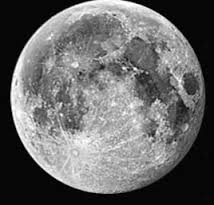


What phase of the moon is shown?
waning gibbous
1st quarter
waxing crescent
Waxing gibbous

What is the phase of the Moon at position #5?
New Moon
Third Quarter Moon
First Quarter Moon
Full Moon

What is the correct phases of the Moon at position 3?
Waning Crescent
First Quarter (or Waxing Half)
Third Quarter (or Waning Half)
Waxing Gibbous

Which phase of the moon is this?
Last Quarter
Waning Gibbous
Full Moon
Waning Crescent

Which moon phase is shown?
Waxing Crescent
Waning Gibbous
Full Moon
Waning Crescent

Which phase of the moon is this?
Waxing Gibbous
Waning Gibbous
First Quarter
Full Moon

Which phase of the moon is this?
Waxing Gibbous
Waning Crescent
First Quarter
Full Moon
The Earth ROTATING on its axis causes:
a year/365 days
the seasons
night and day
a hurricane
It takes the Earth __________ to make one complete ROTATION.
30 days
24 hours
365 days
12 hours
One REVOLUTION of the Earth around the Sun is equal to:
24 hours
365 days
28 days
1 month
What part of the earth gets the most direct sunlight all year?
North pole
Antarctica
Equator
Utah
What hemisphere do we live in?
Northern Hemisphere
Southern Hemisphere

What season is the northern hemisphere experiencing in the photo?
Fall
Spring
Winter
Summer

