
 Worksheets
S8P1 Milestone Review
Total questions: 141
Worksheet time: 3hrs 58mins

What is the atomic number of Palladium
atomic number is 107
atmoic number is 106
atomic number is 46
5 protons. 6 neutrons
What is the atomic number of Palladium
atomic number is 107
atmoic number is 106
atomic number is 46
5 protons. 6 neutrons

What is the atomic mass of Copper
atomic mass is 20
atomic mass is 63
atomic mass is 64
atomic mass is 15
Elements in the same _______ on the periodic table have the same number of valence electrons
rows
periods
groups
The tendency of a substance to catch fire and burn
Reactivity
Flammable
Combustibility
Sparking
Subatomic particle that has a negative charge
Proton
Electron
Neutron
Nucleus
Change of state where a liquid becomes a solid, heat is removed
Melting
Freezing
Condensation
Sublimation
Subatomic particle that has no charge and that is located in the nucleus of an atom
Neutron
Proton
Electron
Nucleus
An atom's central region, which is made up pf proton and neutron
Neutron
Neptune
Nucleus
Negative


Salt - NaCl
Element
Compound
Homogeneous Mixture
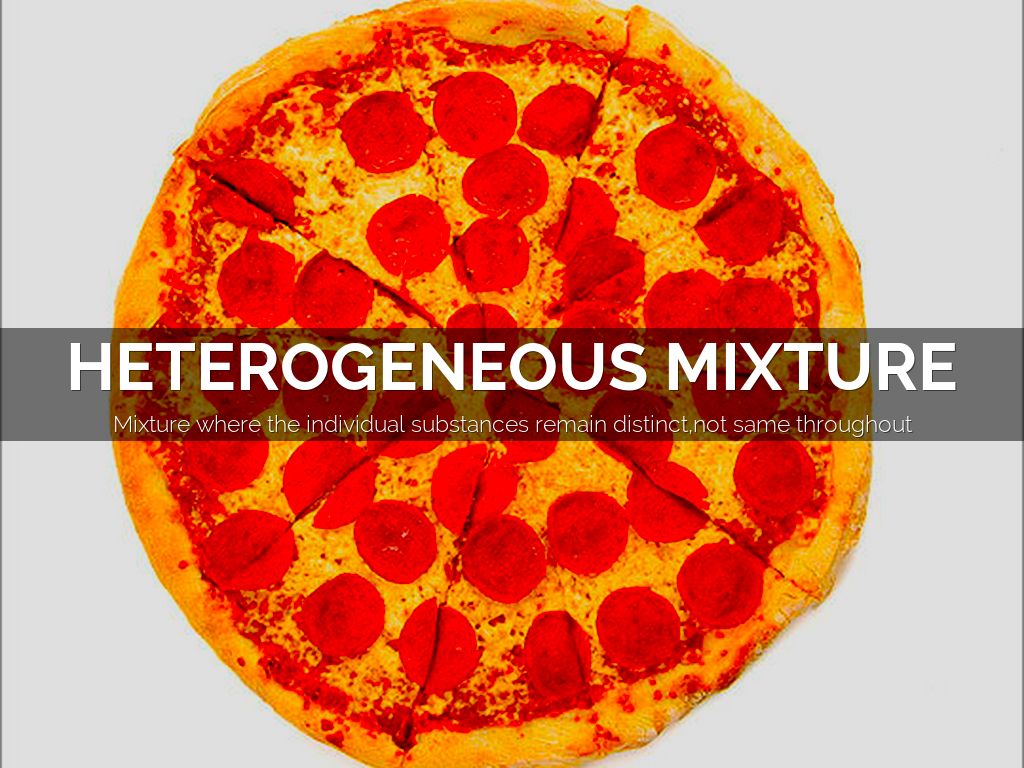
Heterogeneous Mixture
Air
Element
Compound
Homogeneous Mixture
Heterogeneous Mixture
A pure substance can either be a(n) _____ or a(n) _____.
element
homogeneous mixture
heterogeneous mixture
compound
The features that describe a substance without changing its identity
physical property
chemical property
characteristic property
The amount of matter found in a object
volume
mass
weight
What causes an object to float or sink. D=mass divided by volume
weight
density
matter
The ability to form a new substance
reactivity
ductility
malleability
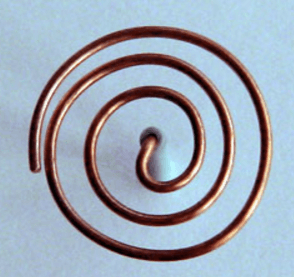
The ability to be pulled into a wire
ductility
solubility
malleability

If reactants' mass is 18g , what is the mass of the reactants ?
15
36
81
18
CH4 + 2O2 → CO2 + 2H2O

What is being modeled here?
Element
Compound
Homogeneous Mixture
Heterogeneous MIxture

Which model represents a compound?
Model 1
Model 2
Model 3
Model 4

Which model represents an element?
Model 1
Model 2
Model 3
Model 4

Which diagram(s) are modeling pure substances?
1 only
1, 3, and 4
2 only
1 and 4


Which is Chemical Equation is Balanced?
CH₄+O₂------> CO₂+2H₂O
H₂+O₂-----> 2H₂O₄
4Al+3O₂-----> 2Al₂O₃
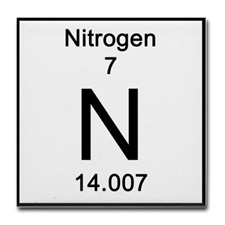
N₂+ H₂ -----> NH₃

How many oxygen atoms are in this chemical formula?
6 oxygen atoms
2 oxygen atoms
3 oxygen atoms
4 oxygen atoms

Which picture below would correctly demonstrate the Law of Conservation of Matter if this picture is showing the reactants?


In a reaction A + B ----> C.
Reactant A has 5g and product C has 9g.
How many grams should reactant B have so that this equation is following the Law of Conservation of Matter?
4g
5g
9g
14g
A student is planning an investigation to explore different properties of matter.
Which investigation will help the student explore a physical property of matter? (S8P1)
investigation: Place a solid in a beaker and add a small amount of liquid . observation: The beaker becomes warm to the touch .
investigation: Add a small amount of solid to a liquid in a beaker . observation: The solid dissolves in the liquid .
investigation: Add a small amount of solid to a liquid in a beaker . observation: The solution starts to fizz and overflows the container .
investigation: Place a solid in a beaker and add a small amount of liquid . observation: Bubbles form on the top of the solid .
A student is asked to conduct an investigation that will determine a physical property of a cube- shaped solid block of salt sample .
Which procedure BEST measures a physical property of the sample?
(S8P1)
1 . Measure 10 mL of vinegar (acetic acid) in a graduated cylinder . 2 . Pour the acetic acid into a beaker . 3 . Drop the sample into the beaker of acetic acid to determine what happens to the sample . 4 . Record your observations .
1 . Gently break the solid sample into smaller pieces using a hammer . 2 . Use long-handled forceps to pick up one of the small sample pieces . 3 . Hold the small sample piece in the flame of a Bunsen burner for a few seconds to determine what happens to the sample . 4 . Record your observations .
1 . Use a ruler to measure the length of one side of the sample . 2 . Record this value to the nearest millimeter . 3 . Cube the value in step 2 . 4 . Place the cubed sample on the digital balance .
5 . Record this value to the nearest tenth of a gram . 6 . Divide the value in step 5 by the value in step 3 .
1 . Cut away two different-sized pieces of the sample and place into a container on a hot plate . 2 . Place two thermometers in the containers, one touching each sample . 3 . Record the time it takes the temperature of the smaller sample to increase 1°C . 4 . Continue to heat the sample .
5 . Record the time it takes the temperature of the larger sample to increase 1°C . 6 . Subtract the value in step 3 from the value in step 5 .

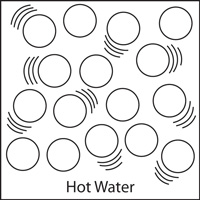
Which model shows the structure and movement of particles in a solid? (S8P1)
Model 1
Model 2
Model 3
Model 4
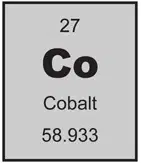
S8P1e.
The diagram below shows the block for cobalt (Co) as seen on the periodic table. What is the atomic number of cobalt?
27
28
58.933
31.933
S8P1a Which is an example of a mixture?
water
hydrogen gas
a blueberry muffin
a spoon made of the element silver
S8P1a Ammonia can be represented by the chemical formula NH3. Which of the following best describes ammonia?
an atom
a compound
an element
a mixture

S8P1a A diagram of a particle is shown above. The particle is most likely _________.
an atom
a molecule
a homogeneous mixture
a heterogeneous mixture

S8P1e Which are the name and atomic number for the element?
K and 19
K and 39.098
Potassium and 19
Potassium and 39.098

S8P1e An atom of the element has how many protons?
18
19
39
58
S8P1e Which of the following could be the chemical symbol representing the element cobalt?
co
Co
CO
Cob

S8P1e The model shows a neutral atom. How many protons are in this atom?
2
4
5
9

S8P1e In which period, or row, of the periodic table would you find this element?
Period 2
Period 4
Period 6
Period 7
S8P1b Which type of arrangment and movement would particles of mercury display?
Particles closely packed together and they vibrate back and forth
Particles are spread far apart and they move quickly
Particles are close together but they are able to slip past one another
Particles are spread far apart and electrons are detached from atoms
S8P1b In which state of matter do particles spread and fill the volume of the container that holds them?
gas
ice
solid
liquid
S8P1b How is plasma different from gas?
Plasma has a definite shape, but gas does not
Gas is hotter than plasma
Electrons separate from atoms in plasma
Gas has a definite volume, but plasma does not
S8P1c A scientist performs an investigation in which thermal energy is removed from a sample of a substance. When the substance begins to change from a gas to a liquid, the scientist measures the temperature of the substance. This temperature is the substance's _______
melting point
freezing point
evaporation point
condensation point
S8P1cd Which of the following is an example of a chemical change?
water evaporating
carbon joining with oxygen to form carbon dioxide
ice cream melting
salt dissolving in water to form a solution
S8P1cd What happens during a physical change?
new substances are formed
the identity of the substance is changed
a chemical reaction occurs
the form of a substance changes but not its identity
S8P1cd A sample of aluminum has a volume of 3.0 cm3 and a mass of 8.1g. Which is the density of aluminum?
2.7 g/cm3
5.1 g
11.1 cm3
24.3 g/cm3
S8P1f According to the law of conservation of matter, which of the following is true?
In a chemical reaction, the total mass of the reactants is greater than the total mass of the products.
In a chemical reactions, the total mass of the reactants is equal to the total mass of the products
In a chemical reaction, elements change into other elements, but new matter is not created
In a chemical reaction, matter cannot change form, but new matter can be created
S8P1f Look at the incomplete chemical equation: Ca + Cl2 --> ?
The reactants are shown. How many chlorine (Cl) atoms must be present in the product that forms this reaction?
1
2
3
4
S8P1f During a chemical reaction, methane (CH4) and oxygen (O2) combine to produce carbon dioxide (CO2) and water (H2O). The balanced chemical equation identifies the reactants and products for this reaction, along with some of their masses.
CH4 + 2O2 --> CO2 + 2H20
16g + ? --> 44g + 36 g
Which mass of oxygen (O2) is required for this reaction to occur?
16 g
36 g
44 g
64 g

The diagram show Oxygen and Nitrogen.
What does this diagram represent?
one molecule of oxygen and one molecule of nitrogen
one atom of oxygen and one molecule of nitrogen
one atom of oxygen and one atom of nitrogen
one molecule of oxygen and one atom of nitrogen
Which element is a poor conductor of heat?
F
K
Fe
Ag
Which element is an excellent conductor of heat and electricity?
Cu
C
He
Ne
Metals are
poor conductors of heat and electricity
great conductors of heat and electricity
Nonmetals are
poor conductors of heat and electricity
great conductors of heat and electricity

Elements found along the steplike like are referred to as
nonmetals
metals
metalloids

Select the element that is a nonmetal
N
Cu
Ni
Na

Select the element that is a metal
O
Ca
F
Cl
Chemical X has a mass of 5 grams, and chemical Y has a mass of 10 grams. If the two chemicals are mixed and a complete chemical reaction takes place, what is most likely the mass of the product?
5 grams
10 grams
15 grams
50 grams
Chemical X has a mass of 20 grams, and chemical Y has a mass of 30 grams. If the two chemicals are mixed and a complete chemical reaction takes place, what is most likely the mass of the product?
20 grams
30 grams
50 grams
100 grams
How can a scientist, using the periodic table, find an element with properties similar to another element?
By comparing density
By finding its periodic group
By comparing malleability
By comparing atomic weight

Silicon (Si) is a semiconductor, because it is a
metal
nonmetal
metalloid
Which is an example of a physical change?
boiling
rotting
burning
rusting
After a chemical reaction occurs in an open test tube, measurements indicate that the mass of the reactants is greater than the mass of the products remaining in the test tube. What most likely explains the measurements?
A solid was produced.
A gas was produced.
The salinity of the reactants was high.
The temperature of the reactants was low.
What are the 3 subatomic particles of an atom?
shell, proton, electron
cloud, neutrons, protons
nucleus, protons, electrons
protons, neutrons, electrons
Which subatomic particle has a negative charge?
proton
neutron
electron
Which subatomic particle has a positive charge?
proton
neutron
electron
Which subatomic particle has a neutral or no charge?
proton
neutron
electron

What two parts of an atom make up the nucleus of the atom?
Electron and Protons
Neutron and Protons
Proton and Electrons

What is "a" in the picture?
Proton
Electron
Neutron
What is "b" in the picture?
Proton
Electron
Neutron
What is "c" in the picture?
Proton
Electron
Neutron
A region around the nucleus of an atom where electrons are likely to be found.
Electron Cloud or shell
Nucleus
Protons
Electrons
The unit used to express the mass of the particles in an atom.
Proton
AMU
Neutron
Electron

The smallest part of any element. Made up of protons, neutrons and electrons.
Atom
AMU
Ion
Isotope
The total number of protons and neutrons in the nucleus of an atom
Atomic Number
Mass Number
Atomic Theory
Electron Cloud
The small, dense, positively charged center of an atom
Neutron
Proton
Nucleus
Electron
The atomic mass is the (THINK: What two parts have a MASS?)
number of protons and neutrons inside the nucleus
number or electrons or protons
number of protons, neutrons and electrons


What is the name of this element? (HINT: What part tells you WHO it is? That part tells you the NAME of the atom)
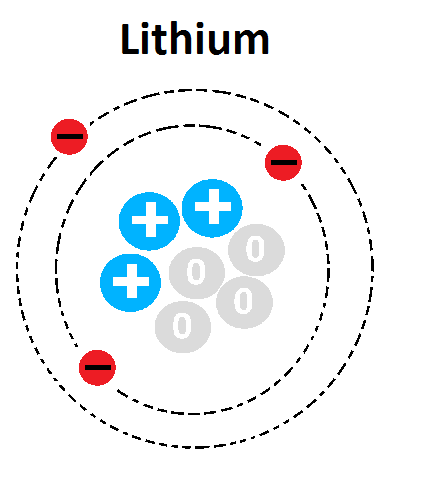
What is the mass number of this atom? (THINK: What two parts have a MASS?)
Which of the following correctly lists the pair of subatomic particles that balance the charge of the atom?
Protons and neutrons
Electrons and neutrons
Protons and electrons
Electrons and ions

Atoms are made up of ________________
energy
electrons
subatomic particles
gasses


Which form of matter has a definite shape and takes up space (has definite volume)?
liquid
solid
gas
clay


What is the name of group number 1?
halogens
noble gases
alkali metals
alkaline earth metals
What is the name of group number 2?
transition metals
halogens
metaloids
alkaline earth metals
What group number are the halogens found?
18 (8A)
1
2
17 (7A)

Which element is found in group 2, period 6?
Oxygen (O)
Barium (Ba)
Selenium (Se)
Carbon (C)
Which halogen is found in period 4?
Krypton (Kr)
Xenon (Xe)
Bromine (Br)
Iodine (I)
Most of the elements on the periodic table are non-metals.
True
False

What is the name of Group 18?
Alkaline Earth Metals
What family does Hydrogen belong to?
Hydrogen does not belong to any family
Which family on the periodic table is also known as the "salt formers"?
Alkali Metals
Alkaline Earth Metals
Halogens
Nitrogen Family
40 grams of calcium reacts with 71 grams of chlorine to produce _______ g of calcium chloride.
31
101
100
111
______ g of potassium reacts with 16 g of oxygen to produce 94 g of potassium oxide.
88
110
50
78
14 g of lithium reacts with _____ g of sulfur to produce 46 g of lithium sulfide.
32
60
25
10
88 g of strontium reacts with 160 g of bromine to produce _______ g of strontium bromide.
72
240
248
80
Is the chemical equation following the Law of Conservation of Mass?
3 H2 + N2 → 2 NH3
Yes, it is following the Law
No, it is not following the Law
Is the chemical equation following the Law of Conservation of Mass?
Na2O + 2 CO2 → 2 Na2CO3
Yes, it is following the Law
No, it is not following the Law
What happens to the total mass of the substances after a chemical reaction?
It decreases.
It increases.
It remains the same.
It increases then decreases.
Jin bought a heat pack that weighs 15 g. He shook it so it would release heat to warm his hands. The release of heat indicates a chemical reaction took place in a closed system. What would be the mass of the heat pack after the chemical reaction?
5 g
10 g
12 g
15 g

