wayground logo

Free Printable Worksheets

Font size

S
M
L
XL
Worksheets

Chemistry Midterm

Total questions: 141

Worksheet time: 2hrs 3mins

Name
Class
Date
1.

During a flame test, sodium chloride produces an intense yellow flame. This yellow color is produced when electrons in excited atoms

a)

are gained by the atoms

b)

are lost by the atoms

c)

move to higher energy states within the atoms

d)

move to lower energy states within the atoms

2.

Which temperature is equal to 170 C?

a)

103 K

b)

443 K

c)

-103 K

d)

498 K

3.
1 meter = _______ cm
a)
1
b)
1,000
c)
100
d)
400
4.
4 cm = ___mm
a)
400
b)
40
c)
4
d)
4,000
5.
180m = ___dm
a)
8
b)
18,000
c)
1,800
d)
18
6.

190 km = ___m

a)

190

b)

190,000

c)

19

d)

19,000

7.
65g = ___mg
a)
650
b)
6,500
c)
65,000
d)
6
8.
12m = ___mm
a)
12,000
b)
120
c)
1,200
d)
120,000
9.
___m = 17km
a)
17,000
b)
170
c)
1,700
d)
I will miss Mr. Campbell next year.  :(
10.
How many inches are in 1 mile?
(Hint:  5280 ft = 1 mi)
a)
66,330 in
b)
63,360 in
c)
63,660 in
d)
63,066 in
11.
How many yards are in 1 mile?
(Hint:  3 ft = 1 yd and 5280 ft = 1 mi)
a)
1670 yds
b)
5280 yd
c)
1760 yds
d)
5820 yds
12.
How many years are in a 3 months?
a)
Uh Duh! There are no years in a month!
b)
0.75yrs
c)
0.50yrs
d)
0.25yrs
13.

Factor that you keep the same in an experiment

a)

Independent Variable

b)

Dependent Variable

c)

Controlled Variable

d)

Operational Definition

14.

What is a statement that describes how to measure a particular variable?

For example: use a tape measure and measure to the nearest inch

a)

Operational Definition

b)

Independent Variable

c)

Control Variable

Scientific Inquiry

d)

Scientific Law

15.
What is a factor that can change in an experiment?
a)
Claim
b)
Variable
c)
Scientific Inquiry
d)
Hypothesis
16.
What variable in an experiment is the manipulated variable?
For example: keep bread at room temp, and keep another one in the refrigerator- here you are changing the temps on purpose to see what happens. 
a)
Operational Definition
b)
Control Variable
c)
Dependent Variable
d)
Independent Variable
17.
What variable in an experiment is measured? - it is also called the responding variable.
For example: measuring the amount of mold on bread 
a)
Dependent variable
b)
Operational Definition
c)
Independent Variable
d)
Control Variable
18.
What is a statement that describes how to measure a particular variable? 
For example: use a tape measure and measure to the nearest inch
a)
Operational Definition
b)
Independent Variable
c)
Control Variable 
Scientific Inquiry
d)
Scientific Law
19.
What is the type of correlation?
a)
Negative 
b)
no association
c)
positive 
20.
What type of correlation does this graph have?
a)
positive 
b)
negative
c)
none
d)
all of the above
21.
What type of correlation does this graph have?
a)
positive
b)
negative
c)
none
d)
all of the above
22.
Something that takes up space and has mass.
a)
volume
b)
matter
c)
mass
d)
density
23.
A state of matter that has a definite volume and shape.
a)
solid
b)
liquid
c)
gas
d)
matter
24.
The amount of space something takes up
a)
density
b)
volume
c)
mass
d)
matter
25.
You can measure ______ with grams.
a)
mass
b)
volume
c)
conductivity
d)
melting point
26.
Solids have a definite _______________.
a)
smell
b)
shape
c)
picture
d)
sound
27.
A description of objects that can be measured and observed.
a)
gas
b)
mustangs
c)
physical properties
d)
melting point
28.
Which of the following chemical formulas represents a compound? 
a)
C3
b)
O2
c)
CH3CHO
d)
H2
29.
Which statement best describes an element?
a)
made from mixture 
b)
thousands in the world
c)
pure, made of only one atom
d)
can be separated 
30.
Carbon is considered an element while carbon dioxide is considered a compound. This is because carbon dioxide is –
a)
a gas at room temperature.
b)
made of two different elements.
c)
given off by green plants.
31.
This picture represents which of the following?
a)
element
b)
compound
c)
mixture
32.
This picture represents which of the following?
a)
element
b)
compound
c)
mixture
33.
What is the name of a single type of atom?
a)
cell
b)
proton
c)
element
d)
atom
34.
What is the term for combining 2 or more DIFFERENT atoms together?
a)
atoms
b)
elements
c)
molecules
d)
compounds
35.
Are these molecules also compounds?
a)
YES
b)
NO
36.
What are the two types of mixtures? 
a)
element and sub-atomic
b)
atoms and compounds
c)
homogeneous and heterogeneous
d)
element
37.
How many classification of mixtures there are? 
a)
one
b)
two
c)
three
d)
four
38.
Is coffee a Homogeneous Mixture? 
a)
YES
b)
NO
39.
Soup is a Heterogeneous Mixtures?  
a)
TRUE
b)
FALSE
40.
It is a liquid mixture in which the minor component (the solute) is uniformly distributed with the major component (the solvent).
a)
solution
b)
element
c)
sub-atomic
d)
dissolution
41.
A solution consists of two parts. One part is the substance that is dissolved. What is the name of this part of a solution?
a)
solute
b)
solvent
c)
dissolution
d)
mixture
42.
When a substance can dissolve in another substance, it is said to be..
a)
soluble
b)
insoluble
c)
miscible
d)
solution
43.

What is this?

a)

Element

b)

Compound

c)

Homogeneous Mixture

d)

Heterogeneous MIxture

44.

What is this?

a)

Element

b)

Compound

c)

Homogeneous Mixture

d)

Heterogeneous Mixture

45.

What is this?

a)

Element

b)

Compound

c)

Homogeneous Mixture

d)

Heterogeneous Mixture

46.
a)

Element

b)

Compound

c)

Homogeneous Mixture

d)

Heterogeneous MIxture

47.

What is it?

a)

Pure Substance

b)

Mixture

48.

What is it?

a)

Pure Substance

b)

Mixture

49.

A mixture in which different materials can be distinguished easily

a)

element

b)

compound

c)

heterogeneous

d)

homogeneous

50.

a mixture that is uniform in composition; components are evenly distributed and not easily distinguished

a)

element

b)

compound

c)

heterogeneous

d)

homogeneous

51.
At approximately what temperature does the solubility of sodium chloride, NaCl, match the solubility of potassium dichromate, K2Cr2O7?
a)
60 ºC
b)
30 ºC
c)
50 ºC
d)
83 ºC
52.
How many grams of K2Cr2O7, are soluble in 100 g of water at 95 ºC?
a)
83 grams
b)
75 grams
c)
40 grams
d)
12 grams
53.
How many atoms of carbon (C) are in C6H12O6?
a)
3
b)
6
c)
12
d)
24
54.
Element or compound?
H2O
a)
element
b)
compound
55.
Which is the correct formula for:
 three hydrogen (H)
one sulfur (S)
four oxygen (O)
a)
H3SO4
b)
HSO4
c)
H4S3O
d)
H2O
56.
The blue numbers in the image below represent ________
a)
I don't know, and don't want to try
b)
coefficients
c)
subscripts
d)
none of the answers are correct
57.
How many atoms are there TOTAL in:
H2SO4
a)
6
b)
5
c)
7
d)
3
58.
Jack has a rock. The rock has a mass of 14g and a volume of 2cm3. What is the density of the rock?
a)
7 mL
b)
7 g/cm3
c)
28 g/cm3
d)
1/7 g/cm3
59.
Which units of measurement are used for volume?
a)
grams
b)
centimeters
c)
grams/milliliter
d)
milliliter
60.
What is the formula for density?
a)
density = mass x volume
b)
density = mass / volume
c)
density = mass + volume
d)
density = mass - volume
61.
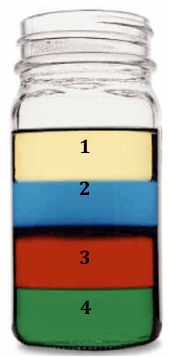
Put the liquids in order from most dense to least dense?
a)
4, 3, 2, 1
b)
1, 2, 3, 4
c)
3, 4, 2, 1, 
d)
4, 3, 1, 2
62.
Which liquid has the highest density? 
a)
corn syrup
b)
lamp oil
c)
rubbing alcohol
d)
honey
63.
What is the volume of 150 grams of lead if it has a density of 11.3 g/cm3?
a)
13.3 g
b)
13.3 cm3
c)
.075 g
d)
1695 cm3
64.
An empty beaker has a mass of 60 grams.  When mercury is added to the beaker, it has a mass of 200 grams. What is the mass of the mercury?
a)
140 grams
b)
200 grams
c)
140 mL
d)
260 g
65.
Density is...
a)
the amount of mass in an object
b)
the amount of space an object takes up
c)
the amount of mass in a given space
d)
the weight of an object
66.
Archimedes used density to discover if the crown of gold was real because
a)
Substances have their own unique densities
b)
Substances can change densities depending on their size
c)
Substances can change densities depending on their mass
d)
Substances can change densities depending on their volume
67.
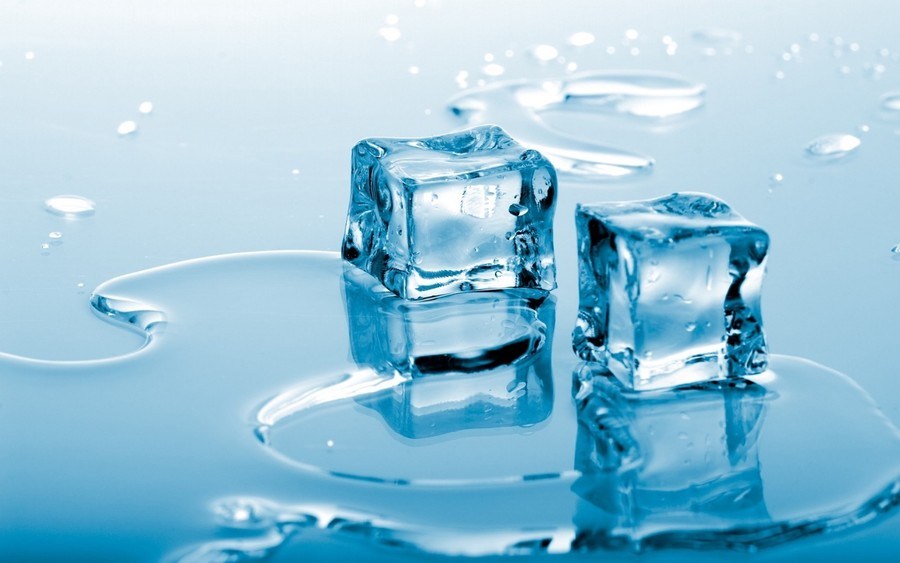
Why do ice cubes float in a  glass of water?
a)
the ice cubes are more dense than the water
b)
the water is more dense than the ice cubes
c)
the water is more dense than the glass
d)
the ice is more dense than the glass
68.
This pumice has a mass of 35.4 grams.  Water the same size as this pumice has a mass of 41.2 grams.  Will it sink or float?
a)
sink
b)
float
c)
same
69.
Water freezing into ice is an example of a...
a)
Physical Change
b)
Chemical Change
70.
A change that alters the physical properties of a substance without changing its composition.
a)
Physical Change
b)
Chemical Change
71.
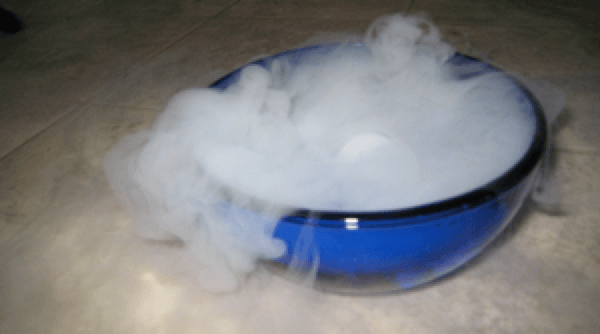
Which of the following is an example of sublimation?
a)
Dry Ice
b)
Water boiling into steam
c)
Ice cream melting
d)
Water freezing into ice
72.
Any change in the state of matter of a substance is a...
a)
Physical Change
b)
Chemical Change
73.
Which of the following DOES NOT indicate a chemical change/reaction is occurring?
a)
Color Change
b)
Formation of a Precipitate
c)
Formation of gas/bubbles
d)
State of matter change
74.
We use chemical equations to show what happens in a....
a)
Chemical Change
b)
Physical Change
75.
Which of the following indicates a PHYSICAL change?
a)
Change in temperature
b)
Change in shape
c)
Formation of a precipitate
d)
Change in color
76.
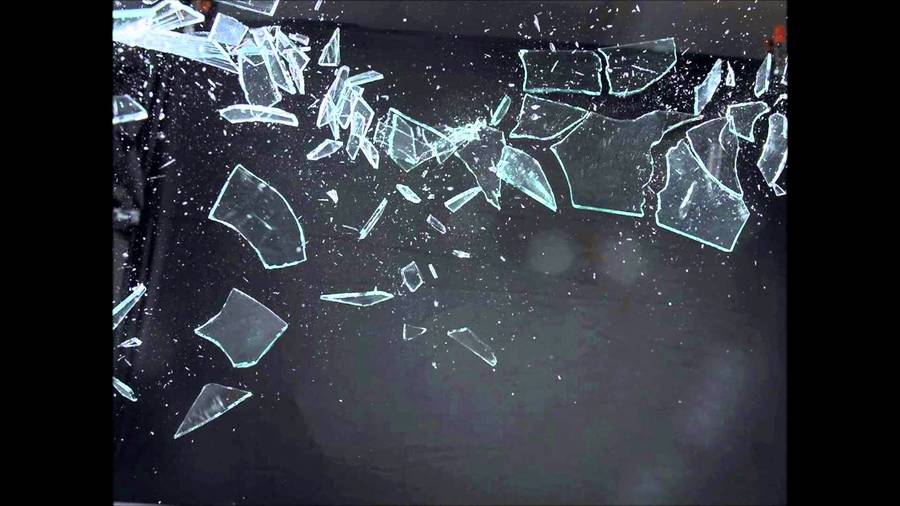
Chemical or Physical?  Glass breaking into tiny shards
a)
Chemical Change
b)
Physical Change
77.
Which Law states that Matter cannot be created or destroyed during a Chemical Change/Reaction?
a)
Conservation of Energy
b)
Conservation of Matter (Mass)
c)
Conservation of Momentum
d)
Conservation of Thermodynamics
78.
Physical or Chemical Change?
a)
Physical Change
b)
Chemical Change
79.

At higher temperatures

a)

particles in an object have less kinetic energy

b)

particles in an object move faster

c)

a gas contracts

80.
Which of the following is NOT a part of the Kinetic Theory of Matter?
a)
All matter is made up of tiny particles.
b)
Occasionally, particles stop moving.
c)
Particles are always moving in random paths.
d)
The type of movement of particles depends on the amount of energy.
81.
What is the phase change called that occurs when a solid turns into a liquid?
a)
Melting
b)
Freezing
c)
Condensation
d)
Vaporization
82.
Which of the following states of matter has the LOWEST level of energy?
a)
Solid
b)
Liquid
c)
Gas
d)
Plasma
83.
What happens to the average kinetic energy of matter when it is heated?
a)
It increases
b)
It decreases 
c)
It doesn't change
d)
It cannot be determined
84.
What state of matter is shown in the image?
a)
Solid
b)
Liquid
c)
Gas
d)
Thermal Energy
85.
At what temperature does matter change phases from a solid to a liquid?
a)
Melting Point
b)
Boiling Point
c)
100 degrees Celsius
d)
Condensation Point
86.
If the atoms of an object are moving fast, the temperature would be...
a)
High
b)
Low
87.
When the temperature of matter decreases the particles ...
a)
speed up and move farther apart
b)
speed up and move closer together
c)
slow down and move farther apart
d)
slow down and move closer together
88.
When air in a hot air balloon is heated the air inside the baloon...
a)
expands
b)
contracts
c)
evaporates
d)
condenses
89.
When thermal energy is added to a substance, the substance's particles move:
a)
More rapidly at an increased diestance from each other.
b)
More rapidly with less distance between each other.
c)
More slowly with a greater distance between each other.
d)
More slowly with a reduced distance between each other.
90.
What phase change occurs between points B and C if heat is added?
a)
Freezing
b)
Melting
c)
Boiling
d)
Condensing
91.
Which phase change occurs between points D and E if heat is added?
a)
Freezing
b)
Melting
c)
Boiling
d)
Condensing
92.

What phase change occurs when a solid turns directly to a gas?

a)

Freezing

b)

Condensation

c)

Sublimation

d)

Vaporisation

93.

The random motion of the particles in a substance is greatest when the substance is:

a)

condensed

b)

frozen

c)

gas

d)

a liquid

94.

What is the measure of the average kinetic energy of the particles in an object?

a)

Motion

b)

Temperature

c)

Thermal Energy

d)

Heat

95.

Particles in a gas move __________, than particles in a solid

a)

faster

b)

slower

c)

less randomly

d)

less fluidly

96.

Particles in a solid move __________, than particles in a liquid

a)

faster

b)

slower

c)

more randomly

d)

more fluidly

97.
A substance Y has a melting point of –7ºC and a boiling point of 63ºC. At which temperature is Y a liquid?
a)
A
b)
B
c)
C
d)
D
98.
When the temperature is constant (k) inside a balloon, if you add pressure on it, the volume will ..... 
a)
Decrease
b)
Increase
c)
Not Change at all
d)
Particles will solidify 
99.
For example, if you increase the temperature of a gas inside a balloon, the balloon will....
[pressure is constant (k)]
a)
Expand (increase in volume)
b)
Deflate (decrease in volume
100.
Pick the best answer to explain all properties of gases....
a)
They're fluids 
Can be compressed
Little space between particles 
b)
They're solids 
Can be compressed
Lots of space between particles 
c)
They're fluids 
Cannot be compressed
Lots of space between particles 
d)
They're fluids 
Can be compressed
Lots of space between particles 
101.
What is the name of the law that involves these two variables:
Temperature increases // Pressure increases 
a)
Gay-Lussac's Law
b)
Boyle's Law
c)
Charles' Law
d)
Ideal Gas Law 
102.
What is the name of the law that involves these two variables:
Temperature decreases // Volume decreases  
a)
Boyle's Law
b)
Charles' Law
c)
Gay-Lussac's Law
d)
Ideal Gas Laws
103.
What is the name of the law that involves these two variables:
Pressure decreases // Volume increases 
a)
Boyle's Law
b)
Charles' Law
c)
Gay-Lussac's Law
d)
Ideal Gas Law 
104.
What 2 variables are used in a Hot Air Balloon? 
[Hint:  Space and Heat]
a)
Pressure and Volume
b)
Volume and Temperature
c)
Temperature and Pressure
d)
Pressure, Temperature and Volume 
105.

What is the equation to solve for Gay Lussac's Law?

a)

P1 (P2) = V1 (V2)

b)

V1 / T1 = V2 / T2

c)

P1 / T1 = P2 / T2

d)

V1 / V2 = T1 / T2

106.

What variable is constant (k) in Boyle's Law?

a)

Pressure

b)

Volume

c)

Temperature

d)

# of moles

107.

What is the equation to solve for Charles' Law?

a)

P1 (P2) = V1 (V2)

b)

V1 / T1 = V2 / T2

c)

P1 / T1 = P2 / T2

d)

V1 / V2 = T1 / T2

108.

What variable is constant (k) in Gay-Lussac's Law?

a)

Pressure

b)

Volume

c)

Temperature

d)

# of moles

109.

Which Gas Law is inversely proportional?

a)

Boyle's

b)

Charles

c)

Gay-Lussac's

d)

Ideal Gas Law

110.
When a basketball is left outside in the cold it goes flat because the volume of air inside the ball has been reduced. What  gas law does this represent?
a)
Boyle's Law
b)
Charles's Law
111.

Chlorine gas has a pressure of 1.05 atm at 25oC. What pressure will it exert at 75oC?

a)

1.23 atm

b)

.28 atm

c)

.33 atm

d)

5.56 atm

112.
Which box has a higher density?  
a)
Box A
b)
Box B
c)
cannot be determined
d)
they are the same
113.
Calculate the density of the cube.
a)
2 g/cm3
b)
4 g/cm3
c)
6 g/cm3
d)
8 g/cm3
114.
A fish has a mass of 30g. What is the density of the fish?
a)
5 mL
b)
5 g/mL 
c)
6 g/mL
d)
6 g
115.
The table below lists the densities of five metals. All of the following metals will float in mercury except...
a)
copper
b)
gold
c)
silver 
d)
zinc
116.

According to the picture from left to right, which of the answers is correct?

a)

neurally buoyant, positively buoyant, negatively buoyant

b)

negatively buoyant, neutrally buoyant, positively buoyant

c)

positively buoyant, neutrally buoyant, negatively buoyant

d)

neutrally buoyant, negatively buoyant, positively buoyant

117.
Two liquids are poured out of containers at the same height & time. Liquid 1 empties from the container before liquid 2. Which liquid has a lower viscosity? 
a)
liquid 1
b)
liquid 2
c)
both liquids have the same viscosity
d)
cannot be determined
118.

Which graduated cylinder has the highest viscosity

a)

The graduated cylinder with the ball at 20mL.

b)

The graduated cylinder with the ball at 30mL.

c)

The graduated cylinder with the ball at 40mL.

d)

The graduated cylinder with the ball at 50mL.

119.

How is viscosity & density affected when a fluid is heated?

a)

viscosity increases & density increases

b)

viscosity decreases & density decreases

c)

viscosity decreases & density increases

d)

temperature has no affect on viscosity or density

120.
Fill in the blank...
_________________ is the measure of the pull of gravity on the matter in an object.
a)
mass
b)
weight
c)
gravity
d)
space-time
121.
What is the formula for finding volume?
a)
length X width 
b)
length X width X height
c)
height X weight
d)
1/2 base X height
122.

This is the name of the force that tries to pull an aircraft down.

a)

Thrust

b)

Gravity

c)

Drag

d)

Lift

123.

This is the name of the force that tries to move an aircraft forward.

a)

Thrust

b)

Gravity

c)

Drag

d)

Lift

124.

This is the name of the force that tries to hold an aircraft back.

a)

Thrust

b)

Gravity

c)

Drag

d)

Lift

125.

This is the name of the force that tries to push an aircraft up.

a)

Thrust

b)

Gravity

c)

Drag

d)

Lift

126.

Whose Principle explains how lift occurs?

a)

Newton

b)

Descartes

c)

Bernoulli

d)

Pascal

127.

Bernoulli's Principle states...

a)

The slower the air is moving, the lower the air pressure.

b)

The faster the air is moving, the lower the air pressure.

128.
Faster air movement over an airfoil creates  _________ pressure, which in turn allows lift.
a)
Higher
b)
Lower
129.

What is Newton's Third Law?

a)

The law of momentum.

b)

An object in motion will stay in motion unless acted upon by an outside force.

c)

The faster air moves, the lower the air pressure.

d)

For every action, there is an equal and opposite reaction.

130.
The amount of force pushing on an area is the definition of....
a)
Fluid
b)
Viscosity
c)
Barometer
d)
Pressure
131.
What pressure does a 4000N horse exert on the ground if each foot is 10cm2?
a)
40 N/cm2
b)
100 N/cm2
c)
400 N/cm2
d)
10 N/cm2
132.
Army tank tracks are useful for travelling through the mud because..
a)
they decrease the force the vehicle exerts on the ground
b)
they increase the force the vehicle exerts on the ground
c)
they decrease the pressure the vehicle exerts on the ground
d)
they increase the pressure the vehicle exerts on the ground
133.
Which of these animals would probably cause the greatest pressure on the ground?
a)
A fat cow with big feet
b)
A fat cow with small feet
c)
 A calf with big feet
d)
A calf with small feet
134.
Where would you find the largest pressure?
a)
At the bottom of the ocean
b)
At the top of Mt Everest
c)
Close to ground on the Scotch oval
d)
In a rockpool on the Great Barrier Reef
135.
What is the difference between particles in a gas and a solid?
a)
gas particles are closer together
b)
solid particles move faster than gas particles
c)
solid particles expand on heating
d)
gas particles have more kinetic energy than solid particles
136.
Look at the pressure triangle. How do we calculate the area?
a)
f ÷ a
b)
f x p
c)
p x f
d)
f ÷ p
137.
Where is pressure the greatest on the dam?
a)
D
b)
C
c)
B
d)
A
138.
Pressure is equal to force divided by what
a)
area
b)
mass
c)
time
d)
distance
139.
True or false:
Pressure depends on depth
a)
true
b)
false
140.
What does pressure measure?
a)
Strength
b)
Force exerted on a given area of surface
141.
How can we increase the gas pressure inside a sealed container?
a)
Increase the number of particles inside the container
b)
Increase the temperature
c)
Decrease the volume of the container
d)
All of these