
 Worksheets
Science Final Exam REVIEW GAME (2022*)
Total questions: 145
Worksheet time: 2hrs 41mins

The Law of Conservation of Energy states:
Energy can be created or destroyed but not transformed
Energy cannot be created or destroyed, it can only be transformed
Energy can't be created, destroyed or transformed
Energy only exists on Earth
Which of the methods of generating electricity does NOT use renewable energy resources?
Burning coal in a power plant
Turbines spinning in dam
Solar panels taking in light energy
Drilling wells to reach heat deep inside the earth


Renewable energy resources produce less_____________ than fossil fuels.
pollution
energy
wind
light
What is a renewable resource?
A resource you can reuse over and over
An object you cannot replace
Fossil fuels
A resource that has a nearly unlimited supply
All of the following are considered renewable energy sources EXCEPT –
Wind
Coal
Biomass
Solar





This form of energy takes millions of year to be created and it is created from the remains of dead plants and animals.
fossil fuels
renewable energy
radiant energy
work
nonrenewable resource
these forms of energy cannot be easily replaced
these forms of energy can be easily replaced
these forms of energy do not exist
these forms of energy include only kinetic forms of energy
another name for light energy is...
radiant energy
conduction
convection
power
What are the main fossil fuels?
Coal
Oil
Natural Gas
Nuclear Energy
Nuclear Energy is made through 2 processes called...
Fission
Fusion
Fracking
Heating
Which fossil fuel is created from the remains of dead plants and forms into a "rock?"
Coal
Petroleum
Natural Gas
Nuclear Energy
What is the main element in fossil fuels?
Carbon
Oxygen
Methane
Uranium
In the United States, what percent (%) of our energy comes from fossil fuels?
85%
30%
75%
99%
In order to use the energy inside of fossil fuels, they must be...
burned
melted
crushed
cut
What is needed for all fossil fuels to form?
Heat
Pressure
A lot of time
All of these

What type of energy is in this picture?
Gravitational Potential Energy
Elastic Potential Energy
Elastic Kinetic Energy
Kinetic Sound Energy
A ball sitting on a table is an example of what type of energy?
Kinetic
Potential
Electrical
Radiant
Sunlight warming Earth is an example of...
Creation of energy
Transfer of energy
Loss of energy
Destroying energy
A battery powered clock is an example of...
thermal energy
chemical energy
radiant energy
gravitational energy
The strings on a guitar are an example of...
Gravitational kinetic energy
Elastic kinetic energy
Elastic potential energy
Gravitational potential energy
Identify the correct energy transformation for a bonfire burning:
Chemical --> Radiant --> Thermal
Kinetic --> Potential --> Kinetic --> Sound
Sound --> Electrical --> Thermal
Electrical --> Sound --> Thermal
Which statement about fossil fuels is true?
fossil fuels are non-renewable resources
fossil fuels do not create pollution when burned
fossil fuels are renewable resources
fossil fuels form very rapidly (quickly)


Renewable Resources are the SAME as ...
Non-Renewable Resources
Green Energy
Fossil fuels are considered nonrenewable because they
do not produce pollution
are no longer used by humans
are created so quickly
take millions of years to form, so once they're gone, they're gone
A disadvantage of nuclear energy is that it creates...
fossil fuels
hydroelectric
radioactive waste
biomass
Fission is the process of
combining atoms to form new atoms
splitting atoms to make smaller atoms
Breaking atoms down
Destroying atoms


Earth's ozone layer is important because it absorbs
visible light
harmful ultraviolet radiation (UV light)
x-rays
radio waves


Which pressure system results in rainy or stormy weather?
weather system
high pressure
low pressure
jet stream


APPROXIMATELY what percentage of Earth's surface is covered by oceans?
40%
50%
60%
70%

In the past, refrigerators, aerosol spray propellants and cleaning solvents were all sources of a greenhouse gas known as ________ and they put a hole in the ozone layer.
carbon dioxide
methane
chlorofluorocarbon (CFC)
nitrous oxide

Air pressure differences cause _____________ to form.
tides
salinity
wind
none of the others
_________ is the most abundant (common) gas in our atmosphere
oxygen
nitrogen
carbon dioxide
methane
A(n) _______________ front results in a quick drop in temperature, strong winds, and precipitation
stationary
occluded
warm
cold
Identify the 2 main gases in Earth's atmosphere
Nitrogen
Oxygen
Methane
Carbon Dioxide
What gas makes up 21% of Earth's Atmosphere?
Nitrogen
Oxygen
Ozone
None of the Above
Where do satellites orbit?
Thermosphere
Stratosphere
Exosphere
Mesosphere
What is the correct order of layers for the atmosphere from Earth's surface to outer space?
Thermosphere
Stratosphere
Mesosphere
Troposphere
Exosphere
Thermosphere
Exosphere
Troposphere
Mesosphere
Stratosphere
Troposphere
Stratosphere
Mesosphere
Thermosphere
Exosphere
Troposphere
Stratosphere
Exosphere
Thermosphere
Mesosphere
What is the energy source for the water cycle?
the sun
the earth
clouds
the moon
Which of the following best describes climate?
day to day conditions of the atmosphere at a place in regards to heat, dryness, sunshine, wind, rain, etc.
long-term conditions (months/years) of the atmosphere at a place in regards to heat, dryness, sunshine, wind, rain, etc.
Which of the following best describes weather?
day to day conditions of the atmosphere at a place in regards to heat, dryness, sunshine, wind, rain, etc.
long-term conditions (months/years) of the atmosphere at a place in regards to heat, dryness, sunshine, wind, rain, etc.
Which pressure system results in rainy or stormy weather?
weather system
high pressure
low pressure
jet stream

cold front
warm front
stationary front
low pressure

cold front
warm front
stationary front
high pressure

cold front
warm front
stationary front
high pressure

cold front
warm front
stationary front
low pressure

cold front
warm front
stationary front
low pressure
This type of front is "stuck" and rain may happen for many days
cold front
warm front
high front
stationary front

What weather did Seattle just experience?
cooler temperatures and a thunderstorm because of the cold front that just passed through
cooler temperatures and light rain because of the low pressure system that just passed through
warmer temperatures because of the warm front that just passed through
no precipitation and a drop in temperature because of the cold front that just passed through
If a high pressure system is expected to move across Ohio tomorrow, what kind of weather could we expect?
Wet
Stormy
Sunny
Windy
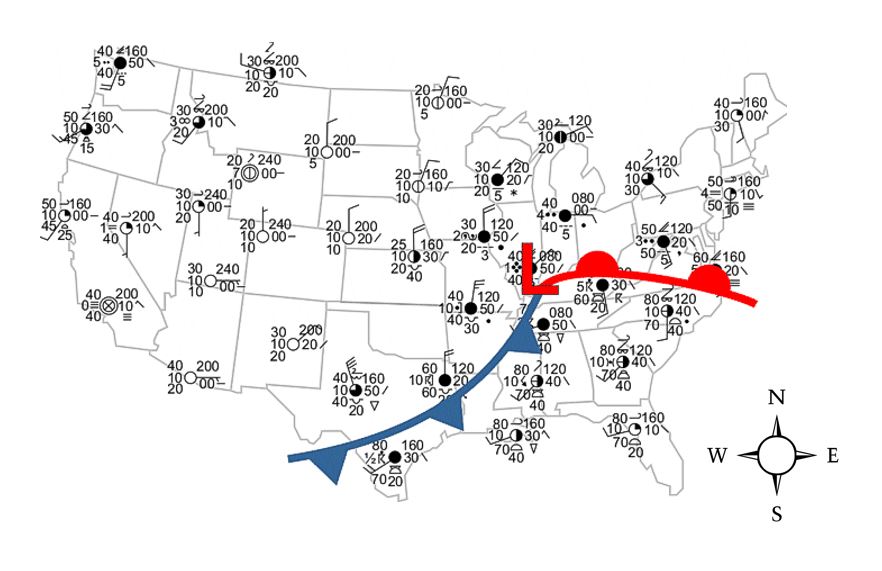
Bob and Ann want to know if today has a higher or low air pressure system. Outside they notice that the atmosphere is cool and dry. This means they are experiencing a…
High pressure system
Low pressure system
Both a high and low pressure system
Neither a high & low pressure system
On a cold, cloudy day, the local weather forecaster predicts that a high-pressure system will be moving into the area in the next 24 hours. Which weather conditions will this system most likely bring to the area?
stormy
sunny
snowy
hot

What is the forecast going to be in Dallas?
Sunny skies
Rain showers
Snow Flurries
Hurricane
What is the forecast going to be in Minneapolis?
Sunny skies
Rain showers
Snow Flurries
Hurricane
What is the forecast going to be in Los Angeles?
Sunny skies
Rain showers
Snow Flurries
Hurricane
The high temperature for Dallas, Texas today was 56 degrees F. Tomorrow's high temperature is forecasted to be 69 degrees F with possible rain showers. What inference can be made?
Dallas is experiencing a low pressure system.
A stationary front will pass through the area.
A high pressure system will pass through Dallas.
A cold front is approaching the area and will decrease temperatures.
Over the last decade we have had an increase in the amount of rain in our area.
weather
climate

Which of the following gases, released by cattle livestock as a waste product of digestion, can add to global warming? Hint: It does the most damage compared to other greenhouse gases.
Carbon Dioxide
Methane
Chlorofluorocarbon
Nitrogen
Too many greenhouse gasses in the atmosphere may block heat from escaping into space and trap too much heat next to the Earth’s surface causing: ____________.
another ice age
global warming
earthquakes
volcanic eruptions
Something that might happen because of global warming is: __________.
melting polar ice caps
more reflected sunlight off the ice pack
lower sea levels
a sale on bathing suits

Over the past 200 years, the level of carbon dioxide in the atmosphere has
decreased slightly.
increased until recently, and then decreased.
increased steadily.
stayed about the same.
The greenhouse effect is
the absorption of energy by clouds.
a gradual increase in the temperature of the atmosphere.
the use of solar panels to create energy in greenhouses
the process by which gases hold heat in the atmosphere.
Which of the following is NOT a greenhouse gas?
Oxygen (O2)
Carbon Dioxide
Methane
Nitrous Oxide
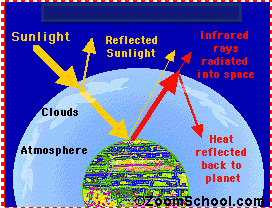
Do we need greenhouse gases on Earth?
Yes - they keep the Earth warm
Yes - they get rid of all harmful gases on our planet
No - they only cause terrible climate change
No - they only block some of the Sun's rays
Which of the following human activities contribute to an increased green house effect?
Harvesting energy from the sun.
Deforestation (cutting down trees)
Walking to work.
Switching to solar powered electricity
Which of the following NATURAL events would be most likely to contribute to changing Earth's climate?
Earthquake
Hurricane
Volcanoes Errupting
Monsoon
What do humans do that releases greenhouse gases into the atmosphere?
Burn fossil fuels
Use wind energy
Ride bikes
Planting trees

Which of the following can ADD carbon to the atmosphere?
the sun shining
deforestation
evaporation
burning fossil fuels
Which of the following gases DOES NOT trap heat?
carbon dioxide
nitrogen
water vapor
methane
Things you can do to help decrease global warming include:
Eat more meat
Keep your thermostat high, keeping your house as warm as possible
Keep your air conditioner on high
Turn off your lights when you’re not using them
What is the biggest danger posed by global warming to people living in coastal areas (near water)?
increased precipitation
increased acidity of sea water
lack of carbon dioxide in the atmosphere
rising sea level
Climate can change everyday.
True - climate can and does change every day
False - climate changes over long periods of time
False - climate only changes once every 100 years
False - climate changes as fast as weather changes
Which of the following have been linked to climate change?
droughts
flooding
melting of polar ice caps
less sunshine
Which of the following human activities contributes the MOST carbon dioxide to our atmosphere?
using electricity
driving cars
using solar energy
becoming a vegetarian and not eating meat

Why are too many greenhouse gases bad for the environment?
They cause trees to die.
They release heat and will be the cause of the next ice age.
They trap heat in our atmosphere causing the planet to warm up.
They are fossil fuels which pollute our environment.

Oil, gasoline and coal are all examples of this type of fuel.
natural gases
fossil fuels
alternative fuels
bio-fuels

Choose all of the following which are examples of climate and not just weather?
The high temperature tomorrow will be 47 degrees.
It snowed 2 inches in Ann Arbor today.
The average rainfall during Spring in Michigan is 14 inches.
The temperature in Michigan in the month of May ranges from 73 degrees to 91 degrees Fahrenheit.

Which of the following is a consequence of global warming? (Choose all that apply)
Seas rising (flooding)
Loss of habitat for animals.
More severe storms and weather.
Increased forest fires and drought.
Due to the changing climate, places like Australia and California are going to experience longer periods of ________ in which these areas lack water.
drought
rain
hurricanes
tornadoes
Ice caps _______ light from the sun, whereas the ocean does the opposite because it is darker in color.
reflect
absorb
break apart
dissolve
This greenhouse gas is the most abundant in our atmosphere
methane
water vapor
carbon dioxide
climate
Which one of the choices below is NOT a cause for global warming?
Having too many cows
Burning Fossil Fuels
Planting new trees
A car running off of gasoline
Why does cutting down trees increase global warming?
trees soak up carbon dioxide
trees provide shade which counteracts global warming
trees absorbs the sun's energy without radiating back into the atmosphere
trees drain greenhouse gases like oxygen from soil
What happens to the temperature if more greenhouse gases are released into the atmosphere?
Temperature goes up
Temperature goes down
Temperatures stay the same
Temperature isn't connected to carbon dioxide
Without the Greenhouse Effect the Earth would be too
warm
cold
blue
funny

Global warming and climate change are exactly the same.
True
False - global warming can cause climate change
False - climate change can cause global warming
False - climate change and global warming are not real phenomenons

Burning fossil fuels is one of the main causes for global warming.
True - it puts a lot of carbon dioxide into the atmosphere
False
True - it puts a lot of water vapor into the atmosphere
True - it puts a lot of CFC's into the atmosphere
Earth’s climate system is powered mainly by energy from:
Earth's Tilt
The sun
Latitude Energy
The rain shadow
It was hot all week last week. Is this a sign of climate change?
Yes
No

How is the greenhouse effect produced?
When solar energy trespasses the atmosphere then leaves and goes back to space.
When some solar energy is reflected back to earth and gets trapped here by greenhouse gases.
When the green house is burned.
When the sun doesn't emit radiation.
The Earth acts like a _____________ that catches and traps __________ from the sun.
greenhouse; heat
global warming; heat
net; greenhouse effect
greenhouse gas; cold

What is the point of the paint under the eyes?
It absorbs light, allowing the player to see more clearly.
It reflects light, allowing the player to see more clearly.
It absorbs light, making it more difficult for the player to see.
It reflects light, making it more difficult for the player to see.
Cloud cover ________ radiant (light) energy.
reflects
absorbs
breaks down
catches

How can a volcano impact temperatures of the planet?
Gases are released into the atmosphere and these can act like a curtain, blocking out sunlight, cooling the planet.
Gases are released into the atmosphere and these can act like a curtain, absorbing sunlight, warming the planet.
Gases are released into the atmosphere and these don't impact temperature at all.
Volcanoes do not impact temperatures at all when they erupt.

What is climate feedback?
In a climate system, one change can lead to another, and another, and another... etc.
In a climate system, feedback is provided to tell the climate how it is doing.
Scientists collect data in order to change the climate
Changes in climate stop any new changes from happening

How does the concentration of carbon dioxide in the atmosphere affect temperature?
As carbon dioxide concentrations increase, temperatures increase
As carbon dioxide concentration increase, temperatures decrease.
Carbon dioxide concentrations have no affect on climate
As carbon dioxide concentrations increase, temperatures become more random.
Climate change causes extreme weather conditions such as:
Flooding
Heat Waves
Hurricanes
Drought
Possible human solutions for limiting global warming and climate change are...
biking or walking instead of driving
using renewable sources of energy
removing carbon from fossil fuel emissions
throwing away more trash
The average temperature of the surface of Earth has increased approximately 2°F in the past century. Which reason best explains this increase in temperature?
lower levels of ozone in the atmosphere
lower levels of nitrogen in the atmosphere
higher levels of carbon dioxide in the atmosphere
higher levels of oxygen in the atmosphere
Climatologists get clues about the climate of the past by studying what? There is more than one answer.
Rocks
Fossils
TikTok
Glaciers
True or False: Climate on Earth never changes
True
False
Earth is currently experiencing
a warming trend
a period of unchanging climate
a cooling trend
an ice age
What are some signs of climate change? Choose all signs on the list.
change in rain and snow patterns
lowering ocean levels
more precipitation overall
weaker storms
All global warming is bad.
True - We don't want to be too hot.
False - If we didn't have some global warming, the Earth would be too cold to live on.
Where do fossil fuels come from?
The carbon dioxide released from cars.
The remains of plants and animals that died long ago.
Heat from the greenhouse effect.
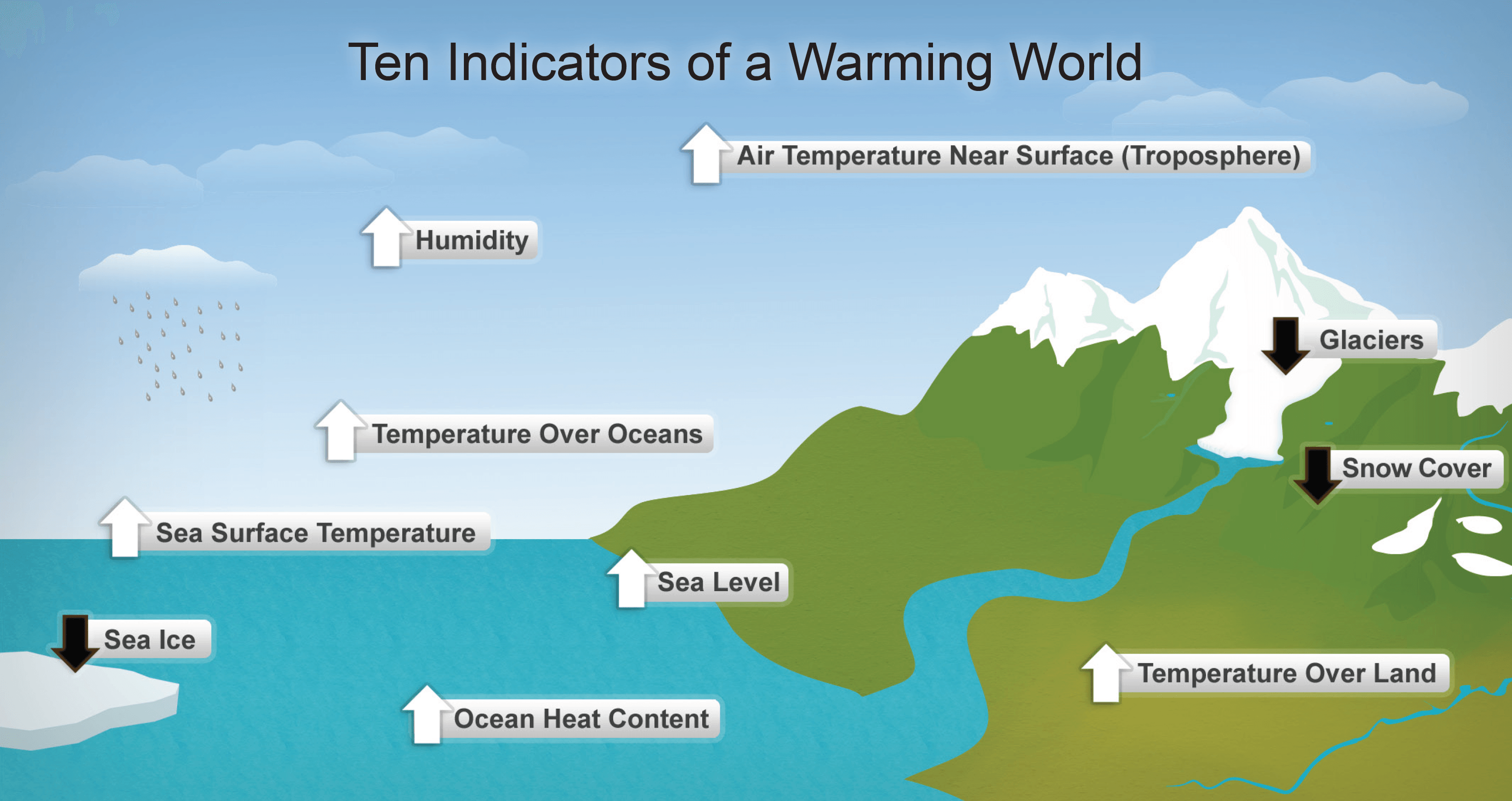
Which two are likely to result from global warming?
increase in surface temperatures
reduction in greenhouse gases
rise in ocean levels
decrease in air pollution
Which TWO activities produce the greatest amount of greenhouse gases?
Deforestation
Electricity generation
Transportation
Landfills
Which best explains how livestock farming contributes to global warming ? Animals __________
waste pollutes the soil
are consuming too much grass
decayed matter emits too much carbon dioxide
produce methane when they are digesting food

