
 Worksheets
Oceans
Total questions: 134
Worksheet time: 2hrs 45mins

What is an Ocean?
small body of water
large body of water

What % of the world is water?
20%
50%
70%
97%

What type of water is in the Ocean?
regular water
salt water
fresh water
spring water

Where coral and fish live
Midnight Zone
Twilight Zone
Abyss
Sunlight Zone

Dark, but some fish live here
Midnight Zone
Twilight Zone
Abyss
Sunlight Zone

VERY Dark, not much life
Midnight Zone
Twilight Zone
Abyss
Sunlight Zone

A volcanic mountain that rises above the surface of the water is called ____________
trench
island
mid-ocean ridge
seamount
What is the difference between a volcanic island & a seamount?
A volcanic island rises above the surface of the water & a seamount does not
A seamount rises above the surface of the water & a volcanic island does not
Both the seamount & volcanic island are underwater
Both the seamount & the volcanic island rise above the water
sound waves used to make a map of the ocean floor
ocean floor topography
sonar
seamount
continental slope
the steep drop-off between the outer edge of the continental shelf and the deep ocean floor
continental shelf
guyot
continental slope
trench
the underwater edge of a continent
continental slope
trench
continental shelf
abyssal plain
an underwater mountain chain where new ocean floor is formed
mid-ocean ridge
seamount
guyot
abyssal plain
How many major oceans are there in the world?
7
6
5
4
The largest ocean in the world is the
Atlantic
Pacific
Indian
Arctic
Southern
The smallest ocean in the world is the
Atlantic
Pacific
Indian
Arctic
Southern
This ocean was named by scientists in the year 2000
Atlantic
Pacific
Indian
Arctic
Southern

What hemisphere is the United States in?
Southern
Up
Northern
Equador

What part of the Earth is the hottest?
The middle- Equator
Antarctica
South Africa
Sahara Desert

Vertical lines that help us locate places on Earth are called?
X, Y Axis
Longitude
Equator
latitude

Which two countries are found on the Equator?
Congo
Brazil
Russia
Canada

What is a Tsunami?
A current of water caused by the moon
A huge wave caused by wind
A series of waves caused by an earthquake
A current caused by heat

How can climate change affect the oceans?
Melt polar ice making the oceans change temperature
Make ocean levels rise and flood some land
Make some hurricanes and typhoons longer, more destructive
All of the above

Would you expect California ocean to be warmer or cooler than the Atlantic ocean on the East Coast?
The same because they are on the same latitude
Cooler because the current comes from Arctic
Warmer because the current comes from Equator
Much colder
Oceans circulate in large circular patterns called
whirlpools
vortexs
gyres
oceans don't circulate
the current that moves up the atlantic coast of the United States and brings warm water to cold regions is called the
Kiroshio Current
Brazil Current
Gulf Stream Current
California Current
when trade winds don't blow around the equator and warm surface water stays in the eastern pacific ocean the weather patter that happens is called
El Nino
La Nina
Pacific Jet Stream
Nor'Easter


Ocean salinity is greater when there is ice formation and evaporation.


The depth of the ocean is always the same.
Salinity of ocean water is not the same everywhere.
The Gulf Stream is a surface current.
The temperature of the ocean is different depending on where you are.


What continent is this?
Africa
South America
Australia
Eurasia

What continent is this?
Africa
South America
Australia
Antarctica

What continent is this?
Eurasia
North America
South America
Australia

What continent is this?
Eurasia
North America
South America
Australia

Which ocean is this?
Arctic
Pacific
Indian
Atlantic

Which ocean is this?
Arctic
Pacific
Indian
Atlantic

Which ocean is this?
Arctic
Pacific
Indian
Atlantic
How many continents are there?
4
5
6
7
How many oceans are there?
3
4
5
6


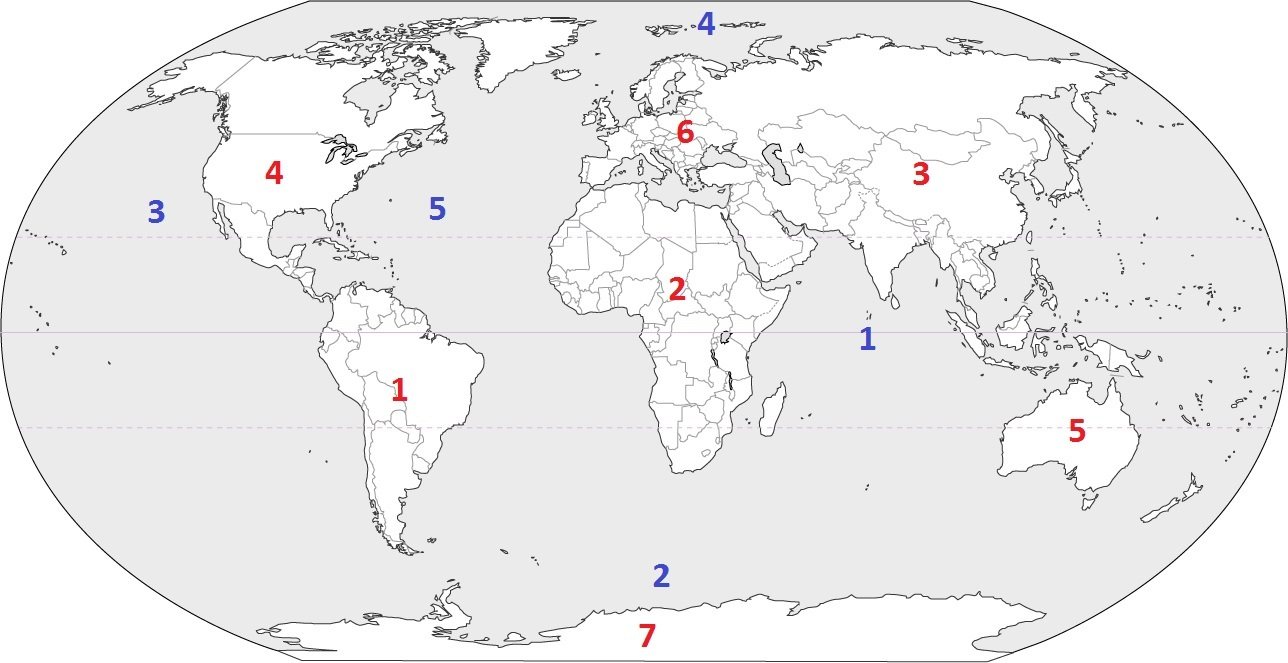
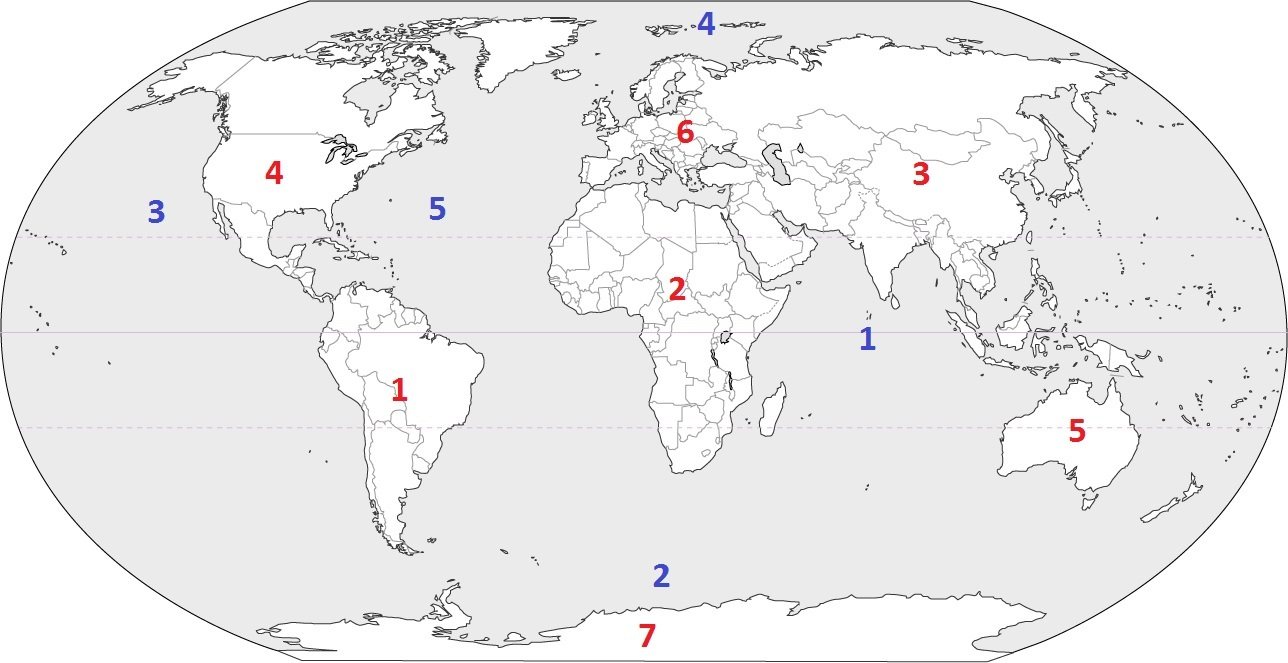
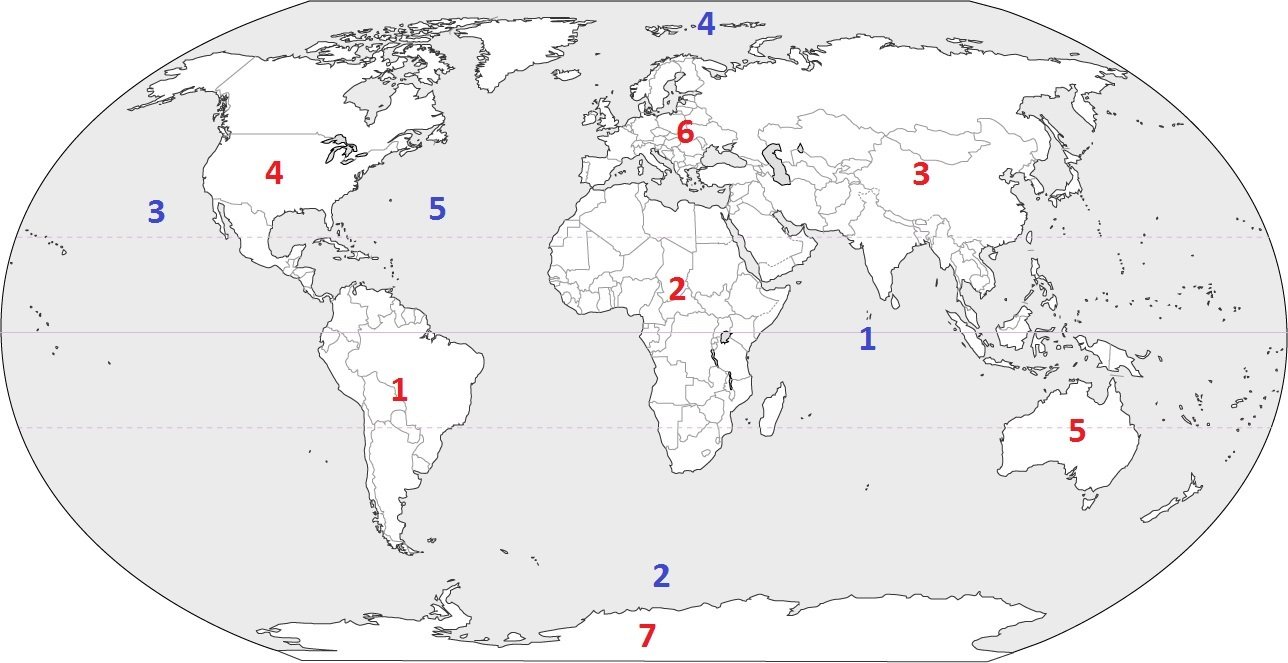
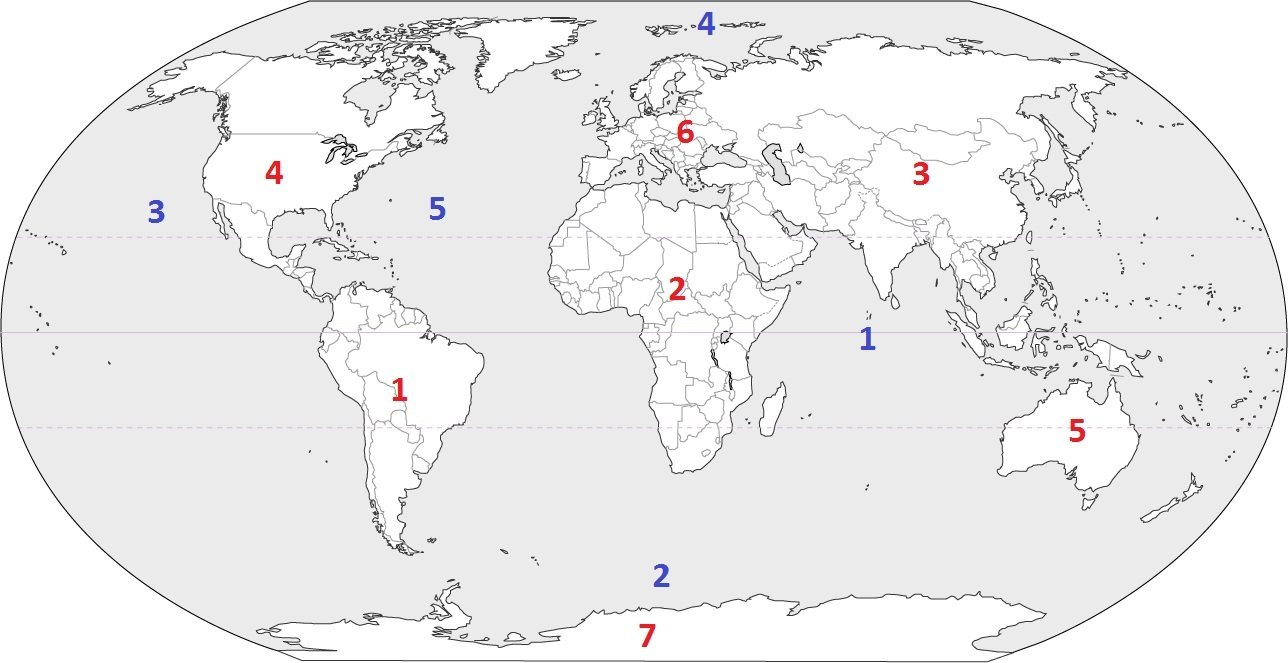


How many continents are in the world?
7
5
6
4

How many oceans are in the world?
6
4
5
7

Name the continent.
Europe
Australia

Name the continent.
Europe
Asia

Which ocean is between North America and Asia?
Pacific Ocean
Atlantic Ocean

Which ocean do we swim in when we go "down the shore" or "to the beach"?
Atlantic Ocean
Indian Ocean

Which ocean is found between Africa, India, and Australia?
Pacific Ocean
Indian Ocean

Which ocean is found up north?
Arctic Ocean
Atlantic Ocean

What is this called?
globe
map

Which continent do we live on?
North America
South America
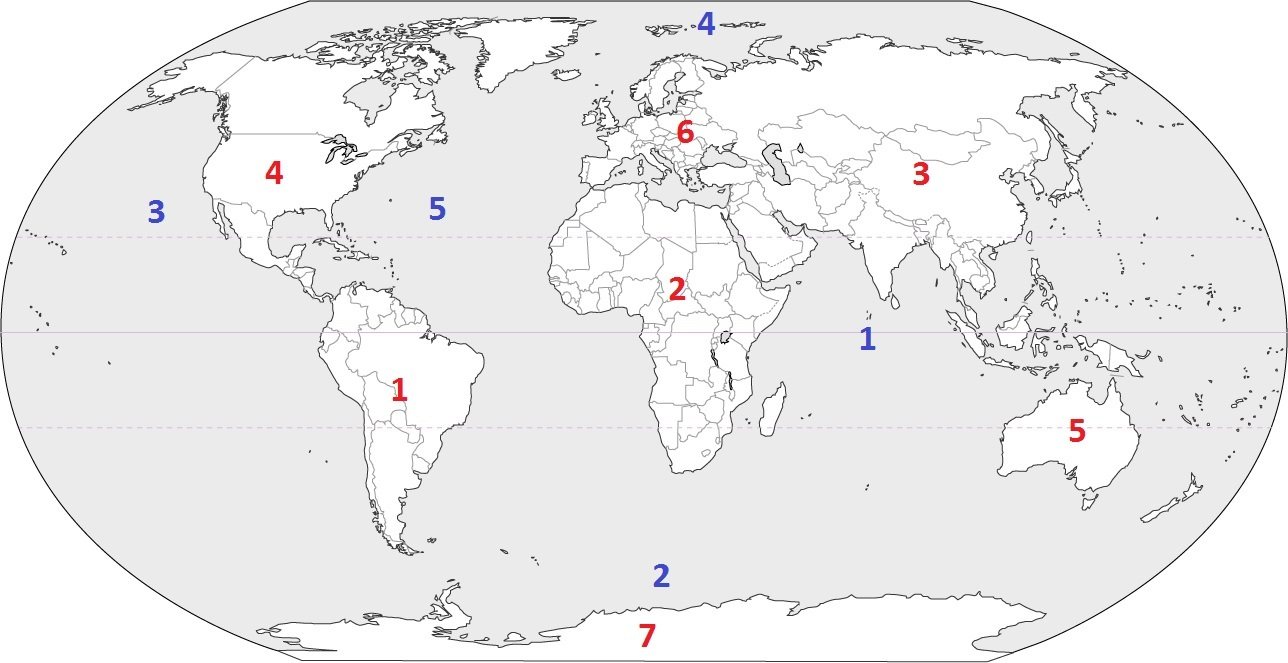
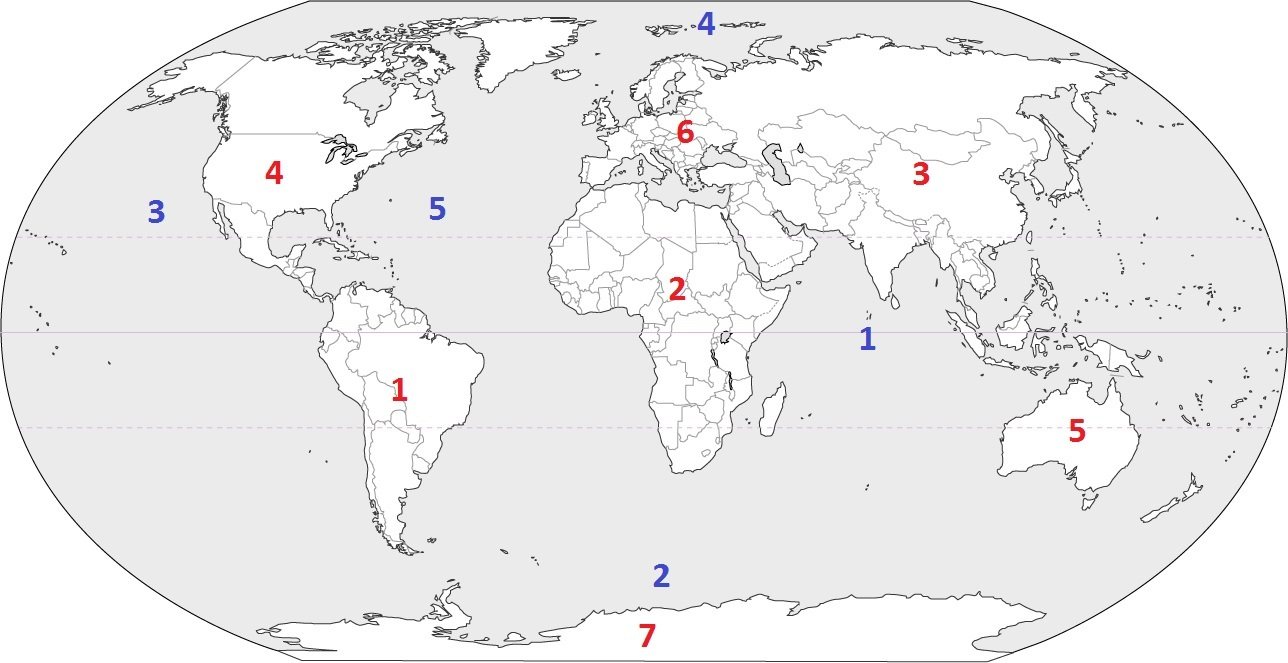
Over ___% of our planet’s oxygen is produced by the ocean.
60
70
80
90

Which ocean is this?
Arctic
Pacific
Indian
Atlantic
Less than ___% of the planet’s oceans have been explored.
5
10
15
20
The largest ocean on Earth is the ___ Ocean.
Pacific
Atlantic
Indian
Artic
What are the names of the oceans?
Indian, Pacific, Atlantic, Antarctica
Indian, Pacific, Atlantic, Arctic
India, Pacif, Atlanta, Art
Indian, Pacific, Atlanta, Antarctica
What can you do to stop pollution of oceans?
Go swimming more
Watch a video
Write a letter
Reduce amount of garbage
True or False: All oceans have salt?
TRUE
FALSE
How many oceans is Australia surrounded by?
3
4
2
1
Which ocean is half the size of the Pacific?
Arctic ocean
Atlantic ocean
Southern ocean
Indian ocean
The Pacific Ocean and Atlantic Ocean are the two largest oceans on Earth.
True
False
Which is not an ocean?
Southern ocean
Arctic ocean
Caribbean ocean
Indian ocean
Why are Earth’s oceans salty?
Rain washed salts into them.
They contain a lot of water vapor.
Algal blooms in the ocean produced salt.
Which description best characterizes the seafloor?
A. mostly flat
B. full of life-forms
C. similar to the continents
Ocean waves move water
to form tides.
long distances.
in a circular motion.
Ocean surface currents are caused by
wind.
gravity.
density.
Density currents move ocean water
upward.
downward.
horizontally.
Seafloor topography
A. is the result of the Coriolis effect.
is a vast expanse of only abyssal plains.
includes plains, mountains, and trenches.
was produced by upwelling and surface currents.
Density currents are the result of
upwelling during cold months.
wind blowing over a large area
changes in salinity or temperature.
particle circulation in surface waves.

