wayground logo

Free Printable Worksheets

Font size

S
M
L
XL
Worksheets

2nd semester Review - 6th grade 2019

Total questions: 130

Worksheet time: 11hrs 50mins
Name
Class
Date
1.
Select the answer that shows the order of events a rock goes through.
a)
erosion, weathering, deposition
b)
weathering, erosion, deposition
c)
deposition, weathering erosion
d)
erosion, deposition, weathering
2.
What is the process that picks up and moves weathered rocks?
a)
deposition
b)
landslide
c)
weathering
d)
erosion
3.
The natural chemical or physical processes that breaks down rock on Earth's surface.
a)
weathering
b)
erosion
c)
deposition
d)
jackhammering
4.
This type of weathering occurs when rock is physically broken down into smaller pieces of rock.
a)
mechanical weathering
b)
chemical weathering
c)
erosion weathering
d)
deposition
5.
This type of weathering occurs when rocks weaken then break down due to chemical changes in the composition of the rock.
a)
mechanical weathering
b)
chemical weathering
c)
erosion weathering
d)
deposition
6.
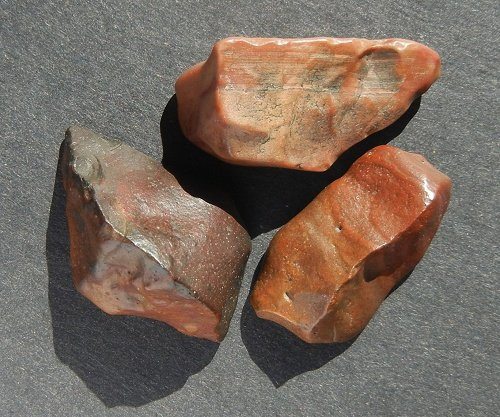
These rocks were made smooth by wind blowing smaller rock particles across their surface.  This is an example of:
a)
ice wedging
b)
chemical weathering
c)
acid rain
d)
abrasion
7.
small, solid pieces of materials from rocks or living things
a)
sediment
b)
clastic rock
c)
organic rock
d)
deposition
8.
Water flows through permeable materials ____________________ than impermeable materials.
a)
slower
b)
faster
9.
Sand is ___________, meaning that water can pass through easily.
a)
Permeable
b)
Impermeable
c)
Solid
d)
Soft
10.
What causes mass movement?
a)
water
b)
wind
c)
gravity
d)
weather
11.
What causes desertification?
a)
Over-cultivation of the land
b)
Not letting the land rest
c)
Overgrazing
d)
All of these options
12.
What is the primary source of energy that generates most ocean waves?
a)
earthquakes
b)
wind
c)
asteriods falling in the ocean
d)
volcanic eruptions
13.
What causes surface waves?
a)
underwater volcanoes
b)
earthquakes
c)
wind
d)
landslides
14.

What phenomenon does the Coriolis Effect arise from?

a)

Rotation of the Earth on its axis.

b)

Revolution of the Earth on its axis.

c)

Curvature of the Earth’s surface.

d)

Effect of winds high in the atmosphere.
15.
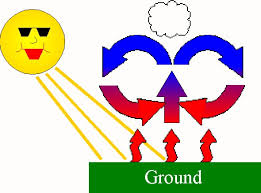
What kind of heat transfer happens when the sun is heating your body?
a)
Conduction
b)
Radiation
c)
Convection
d)
Density
16.
What heat transfer happens when you burn your hand by touching a fire?
a)
Radiation
b)
Conduction
c)
Convection
d)
I don't know!!!!!!!!!!!
17.
Warm air rises and the cool air sinks demonstrates this type of heat transfer. 
a)
conduction
b)
convection
c)
radiation
d)
Insolation 
18.
Warm air is __________ dense than cold air and rises creating convection currents.
a)
more
b)
less
19.
In what way does the Sun warm Earth? 
a)
radiation
b)
convection
c)
conduction
d)
condensation
20.
What are the two classifications of wind? 
a)
Local Winds and Global Winds 
b)
Global and Land Wind
c)
Local and Coriolis Wind 
d)
Tradewinds and Sea Winds
21.
Which is not true about the Jet Stream?
a)
It is fast moving wind.
b)
It is in the stratosphere
c)
It can move large air masses of hot or cold air over large distances 
d)
It is stationary and does not change its location. 
22.

What type of winds blow constantly, predictably, and over long distances?

a)

land breezes

b)

local winds

c)

global winds

d)

sea breezes

23.

The curving of air to the right in the Northern hemisphere is caused by _?_ and is called the _?_ effect.

a)

Earth's rotation...Coriolis

b)

Earth's revolution...Coriolis

c)

Earth's rotation...Doppler

d)

Earth's revolution...Doppler

24.

What is the initial source for global winds and convection in the atmosphere?

a)

continental deflection

b)

the rotation of the Earth

c)

Moon's gravity

d)

unequal heating of the Earth by the sun

25.
Which is NOT a characteristic of local winds?
a)
They occur within a small area.
b)
Land and sea breezes are examples.
c)
They blow over short distances.
d)
They blow steadily over long distances.
26.
What characteristic do global winds and local winds share?
a)
They are both wind.
b)
They are both created by unequal heating of the Earth’s surface.
c)
They both occur in small areas.
d)
They both occur in small areas.
27.
The Coriolis effect is the curving of wind across Earth. What causes winds to curve?
a)
Earth's revolution
b)
Earth's magnetic field
c)
Earth's rotation
d)
Earth's gravitational pull
28.
_____________ air is more dense and tends to sink
a)
cold
b)
warm
c)
moist
d)
dry
29.
A colder air mass moves toward a warmer air mass. 
a)
cold
b)
warm
c)
stationary
d)
occluded
30.
When a cold front or a warm front stays in place for several days without invading another front, it is called a ______. 
a)
stationary front 
b)
 cold front 
c)
occluded front
d)
warm front 
31.
How do we name air masses?
a)
Water and temperature
b)
Air pressure
c)
Humidity and temperature
d)
Cold and warm
32.
When a warm air mass and a cold air mass meet, but they push at each other and neither one can move, it is called a/an - 
a)
warm front
b)
cold front
c)
occluded front
d)
stationary front
33.

Which of the following is found in the earths Geosphere

a)

Soil

b)

Rocks

c)

Minerals

d)

All of the Above

34.
Wind is part of what sphere of Earth?
a)
Windosphere
b)
Atmosphere
c)
Hydrosphere
d)
Airosphere
35.
This picture shows
a)
Atmosphere
b)
Biosphere
c)
Hydrosphere
d)
Geosphere
36.
All living things on earth are part of the....
a)
Biosphere
b)
Lithosphere
c)
Hydrosphere
d)
Atmosphere
37.
Bio = 
a)
Earth
b)
Sphere
c)
Life
d)
Water
38.
Geo = 
a)
Earth
b)
Sphere
c)
Life
d)
Water
39.
Hydro = 
a)
Sphere
b)
Earth
c)
Life
d)
Water
40.
Earth's liquid water:
a)
biosphere
b)
cryosphere
c)
hydrosphere
d)
geosphere
41.
Which two spheres both contain water?
a)
cryosphere and hydrosphere
b)
cryosphere and geosphere
c)
hydrosphere and geosphere
d)
atmosphere and geosphere
42.
All frozen water on Earth is...
a)
Hydrosphere
b)
Geosphere
c)
Cryosphere
d)
Atmosphere
43.
What is climate?
a)
What's happening in space at a time and place.
b)
What's happening in our atmosphere at a time and place
c)
The average weather over many years
d)
The average temperature over many years.
44.
What is weather?
a)
What's happening in space at a time and place.
b)
What's happening in our atmosphere at a time and place.
c)
The average weather over many years
d)
The average temperature over many years.
45.
The seasons are caused by___________?
a)
The direction the Earth's axis is tilted toward the sun
b)
Tropical Storms
c)
Changes in the moon
d)
The Earth's rotation on its axis
46.
When the sun's rays pass through our atmosphere and then heat is trapped by the atmosphere it is called
a)
Global Warming
b)
Greenland Effect
c)
Greenhouse Effect
d)
Ice Age
47.
Climates are classified according to which two major factors?
a)
elevation & precipitation
b)
latitude & temperature
c)
elevation & latitude
d)
precipitation & temperature
48.
What is an epicenter? 
a)
Where an earthquake started
b)
The surface right above where an earthquake started 
49.
Many earthquakes happen along the borders of...
a)
Countries
b)
Tetonic Plates
c)
Climate Zones
d)
None of the above.
50.

If a farmer plants a field with different crops each year, the soil becomes less fertile, a situation called nutrient depletion.

a)

True

b)

False

51.

The process of restoring an area of land to a more productive state is called ________________.

a)

Nutrient Depletion

b)

Land Reclamation

c)

Desertification

d)

Fertilizer

52.

78% of the Earth's atmosphere is ___________ and 21% of the Earth's atmosphere is _____________.

a)

Oxygen, Nitrogen

b)

Nitrogen, Oxygen

c)

Nitrogen, Carbon Dioxide

d)

Oxygen, Carbon Dioxide

53.

What is the order of the layers of the atmosphere, starting with the layer closest to Earth's surface?

a)

Stratosphere, Troposphere, Exosphere, Mesosphere, Thermosphere

b)

Troposphere, Stratosphere, Mesosphere, Thermosphere, Exosphere

c)

Troposphere, Stratosphere, Mesosphere, Exosphere, Thermosphere

d)

Troposphere, Stratosphere, Thermosphere, Exosphere, Mesosphere

54.

Which explanation correctly describes the greenhouse effect?

a)

The process of the atmosphere keeping the Earth's surface dense

b)

The process of the atmosphere trapping the sun's radiation, and making the Earth warm and livable for humans

c)

The process of the atmosphere keep us from floating into space

d)

The process of the atmosphere reflecting all of the Sun's heat back into space

55.
What are the 2 most abundant gases in Earth's atmosphere?
a)
carbon dioxide and oxygen
b)
carbon dioxide and nitrogen
c)
nitrogen and oxygen
d)
nitrogen and hydrogen 
56.
What is the layer of gases that surrounds the planet and makes conditions on Earth suitable for living things?
a)
gravity
b)
density
c)
air pressure
d)
atmosphere
57.
The force of a column of air pressing down is called what?
a)
Air Mass
b)
Air Pressure
c)
Air
d)
Heavy
58.
What happens to the air pressure the higher up in space you go?
a)
the air pressure increases
b)
the air pressure decreases
c)
the air pressure stays the same
d)
there is no air pressure
59.
Warm air rising at the equator and cold air sinking at the poles is one reason for which event?
a)
hurricanes
b)
Coriolis Effect
c)
Earth's rotation
d)
convection currents
60.

Newton’s law states that for every action, there is an ________ reaction.

a)

unequal and opposite

b)

equal and similar

c)

stronger and opposite

d)

equal and opposite

61.
The distances of stars from Earth is measured using ____________.
a)
distance
b)
parallax
c)
a telescope
d)
apparent magnitude
62.
An apparent shift in the position of an object when viewed from different locations. 
a)
Parallax
b)
Perihelion
c)
Solar Nebula
d)
Prominence
63.
A light year is...
a)
The speed light travels
b)
How long it takes light to get to you from the sun
c)
The distance light can travel in a year
d)
How many years it takes light to be emitted
64.
Our galaxy is called the
a)
Earth Nebula
b)
The Hubble Galaxy
c)
The Milky Way
d)
The Snickers
65.
The Milky Way Galaxy is a 
a)
spiral
b)
lenticular
c)
elliptical 
d)
irregular
66.
What are the the 3 types of galaxies?
a)
Spiral Galaxies, Regular Galaxies, and Lliptical Galaxies
b)
Spiral Galaxies, Irregular Galaxies, and Elliptical Galaxies
c)
 Milky Way, Elliptical Galaxies, and Spiral Galaxies
d)
Milky Way, Elliptical Galaxies, and Irregular Galaxies
67.
What color of star is the hottest?
a)
Blue
b)
Red
c)
Yellow
d)
Orange
68.
What color of star is the coolest?
a)
Red
b)
Yellow
c)
Blue
d)
White
69.
The H-R diagram is a graph that shows the relationship between ______________ for stars. 
a)
temperature and color
b)
temperature and brightness
c)
brightness and color
d)
distance and brightness
70.
What is a Star?  (pg. 284)
a)
a large celestial body that is composed of gas and emits light
b)
a large ball of fire
71.
A star is born when ________________ begins to happen.
a)
nuclear fusion
b)
nuclear abrasion
c)
crying
d)
nuclear fission
72.
Parallax is used to determine a star’s
a)
distance from Earth.
b)
temperature.
c)
composition.
d)
brightness.
73.
The absolute brightness of a star depends on its
a)
distance and temperature.
b)
size and temperature.
c)
color and temperature.
d)
distance and color.
74.
Most stars are made of which elements?
a)
Hydrogen only
b)
Hydrogen and Lithium
c)
Hydrogen and Sodium
d)
Hydrogen and Helium
75.

What is the Hertzsprung-Russel Diagram?

a)

A map which tells the approximate location of stars in the Milky Way galaxy and their distance from Earth.

b)

A table that alphabetically lists stars by name and includes dates of when the star was first charted.

c)

A chart which organizes stars into categories based on the amount of Hydrogen they burn.

d)

A graph used to classify stars according to their luminosity, color, temperature, and stage.

76.
What is the term for Earth being in the center?
a)
geocentric
b)
heliocentric
c)
sun centered
d)
Galileo
77.

What does the term heliocentric mean?

a)

helium centered

b)

earth centered

c)

sun centered

d)

space centered

78.

What countries were involved in the "Space Race?

a)

USA and Russia

b)

USA and Soviet Union

c)

USA and Korea

d)

USA and France

79.

Which term describes the apparent shift in the position of an object when a person views it from different locations?

a)

ellipses

b)

parallax

c)

axis of rotation

d)

parallax problem

80.
What is the center of our solar system?
a)
moon
b)
earth
c)
sun
d)
Jupiter
81.
How long does it take for the Earth to make one full orbit around the Sun?
a)
one day
b)
one week
c)
one month
d)
one year
82.
The Earth is rotating on its axis, creating _____
a)
the 12 months
b)
the years
c)
the seasons
d)
day and night
83.
The movement of the Earth around the Sun is called its _____
a)
revolution
b)
rotation
c)
precession
d)
gyration
84.
Which term describes the motion of the planets around the sun?
a)
rotation
b)
revolution
c)
completion
d)
galaxy
85.
The process of Earth spinning on its axis is referred to as
a)
revolution
b)
ionization
c)
rotation
d)
ellipse
86.
Earth is tilted on its
a)
axis
b)
side
c)
oval
d)
pole
87.

large round pits on the moon created by meteoroid impacts

a)

craters

b)

highlands

c)

mare

d)

maria

88.

Because the moon's revolution and rotation periods are the same, it _____________________________________

a)

rotates backward

b)

never really moves

c)

keeps the same side always facing Earth

89.

The surface of the moon is covered in more craters than Earth's surface because...

a)

the moon doesn't have an atmosphere like Earth to burn up space debris and other objects.

b)

the moon's gravitational force is stronger than Earth's.

c)

the moon protects the Earth from impact craters.

d)

Earth's surface weathers more slowly than the moon's surface.

90.

Which of the following characteristics is common to ALL FOUR planets in the inner solar system?

a)

have one or two moons

b)

have a solid rocky surface

c)

have a thin, toxic, atmosphere

d)

have the same orbit length around the sun

91.
Gas giants
a)
Inner planets
b)
Outer planets
c)
Both
d)
Venus
92.
Terrestrial planets
a)
Inner planets
b)
Outer planets
c)
Both
d)
Asteroid belt
93.
Solid, rocky surface
a)
Inner planets
b)
Outer planets
c)
Both
d)
Saturn
94.

Temperatures in the POLAR ZONES are...

a)

cold all year

b)

always warm

c)

warm in summer and cold in winter

95.

Temperatures in the TEMPERATE ZONES are...

a)

cold all year

b)

always warm

c)

warm in summer and cold in winter

96.

Temperatures in the TROPICAL ZONES are...

a)

cold all year

b)

always warm

c)

warm in summer and cold in winter

97.

What is a drought?

a)

The measure of how dry an area of land is

b)

When the conditions are drier than normal

c)

when the temperature is higher than normal

d)

when the precipitation levels are higher than normal

98.

What causes droughts?

a)

People using too much water

b)

Precipitation levels being substantially low

c)

High precipitation levels

99.
What are all of the climate zones that result from the unequal heating of Earth?
a)
tropical and polar
b)
temperate and polar
c)
temperate and tropical
d)
tropical, temperate, and polar
100.
Which statement accurately compares the heating and cooling rates for water and land?
a)
Water heats up and cools down at a faster rate than land.
b)
Land heats up and cools down at a slower rate than water.
c)
Water heats up and cools down at a slower rate than land.
d)
Land and water heat up and cool down at the same rate.
101.
What is the source of energy for the Earth's water cycle?
a)
Sun's radiation
b)
ocean currents
c)
trade and prevailing winds
d)
Moon's gravitational attraction
102.

What is the correct alignment during a total lunar eclipse?

a)

sun , Earth, moon

b)

none of the above

c)

Earth, sun, moon

d)

Sun, moon, Earth

103.
What is the correct order of the Earth, Moon, and Sun in order for a solar eclipse to occur?
a)
Earth, Moon, Sun
b)
Moon, Sun Earth
Moon, Sun, Earth
c)
Sun, Earth, Moon
104.
Tides are caused by
a)
strong winds that blow over ocean waters.
b)
the interaction of Earth, the moon and the sun.
c)
the shifting of the plates on the ocean floor.
d)
variations in the salinity of ocean water
105.
What causes tides?
a)
gravity
b)
wind
c)
spring
d)
neap
106.
What type of tides would this arrangement of earth-moon-sun create?
a)
neap tide
b)
spring tide
c)
new moon tide
d)
full moon tide
107.

Wha type of tide would this arrangement of earth-moon-sun create?

a)

full moon tide

b)

new moon tide

c)

neap tide

d)

spring tide

108.

Neap tides occur when the Earth, Sun and Moon are

a)

At a 90 degree angle

b)

In a straight line

109.
What is at the center of the Solar System?
a)
Earth
b)
Moon
c)
Sun
d)
Jupiter
110.

Which is the outer layer of the sun's atmosphere?

a)

solar wind

b)

corona

c)

sunspots

d)

chromosphere

111.
Identify part 1.
a)
corona
b)
photosphere
c)
core
d)
radiation zone
112.
Identify part 2.
a)
corona
b)
convection zone
c)
core
d)
radiation zone
113.
Identify part 3.
a)
corona
b)
convection zone
c)
core
d)
radiation zone
114.
Identify part 4.
a)
photosphere
b)
convection zone
c)
core
d)
radiation zone
115.
Identify part 5.
a)
photosphere
b)
chromosphere
c)
core
d)
radiation zone
116.
Identify part 6.
a)
photosphere
b)
chromosphere
c)
corona
d)
radiation zone
117.

The major source of energy and the driving energy source of the water cycle. __________________

a)

moon

b)

ocaen

c)

Sun

d)

atmosphere

118.

A narrow band of fast moving winds high in the atmosphere that move from west to east

a)

Jet Stream

b)

doldrums

c)

equator

d)

polar easterlies

119.

The amount of water vapor in the air is known as ___.

a)

dew point

b)

humidty

c)

relative humidity

d)

rain

120.

Surface area is an important factor in the rate of

a)

erosion

b)

weathering

c)

deposition

d)

compaction and cementation

121.

How was the solar system formed?

a)

great big explosion

b)

Mrs. Keenum formed it :)

c)

Electromagnetic waves

d)

cloud of gas and dust

122.

Which country launched the first human into space?

a)

US

b)

China

c)

Soviet Union

d)

Korea

123.

A large artificial satellite where people can work and live for a long period of time

a)

Space station

b)

Rocket

c)

Space satellite

d)

Solar station

124.

What do temperature differences between the equator and the two poles produce?

a)

Conduction currents in the atmosphere

b)

convection currents in the atmosphere

c)

Convection winds in the atmosphere

d)

Conduction winds in the atmosphere

125.

two words that describe the actual brightness of a star?

a)

apparent magnitude and luminosity

b)

apparent brightness and absolute brightness

c)

absolute magnitude and luminosity

d)

apparent magnitude and absolute magnitude

126.

Name two characteristics that all gas giants have in common (choose 2 answers)

a)

large

b)

small

c)

have rings

d)

no moons

127.

Where did rocket technology come from?

a)

USSR

b)

US

c)

China

d)

Korea

128.

What are solar winds?

a)

streams of electrically charged particles

b)

winds that come from the equator

c)

winds that come from the moon

d)

particles from the galaxy

129.

Which layer of the sun do solar winds come from?

a)

photosphere

b)

core

c)

convection zone

d)

corona

130.

How does water exist in the atmosphere?

a)

liquid

b)

gas

c)

solids

d)

all three