
 Worksheets
CBA 2 Review
Total questions: 138
Worksheet time: 3hrs 41mins
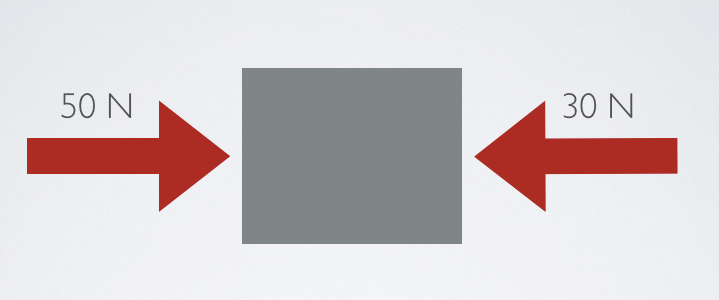


These forces are...
Balanced
Unbalanced

These forces are...
Balanced
Unbalanced

These forces are...
Balanced
Unbalanced

The net force is...
50 N
0 N
100 N
2500 N

The net force is...
-20 N
0 N
80 N
20 N


What is true about this image?
It shows unbalance forces.
It shows balanced forces.
The people on the right are winning.
The people on the left are winning.

What is true about this picture?
the forces are balanced
the net force is 10N
The net force is 3 N
The net force is 7N
What is the definition of balanced forces?
Two forces acting in opposite directions on an object, and they are not equal in size.
Two forces acting in the same direction on an object, and they are equal in size.
Two forces acting in opposite directions on an object, and one is larger than the other.
Two forces acting in opposite directions on an object, and they are equal in size.
Can you provide an example of unbalanced forces?
A book sitting on a table
A car accelerating forward while the brakes are applied
A person standing still
A car moving at a constant speed
Explain the effects of balanced forces on an object with an example.
The object stops moving completely
The object accelerates in the direction of the force
The object remains at rest or continues to move at a constant speed in a straight line.
The object moves in a circular path
What is any push or pull called?
Force
Energy
Speed
Acceleration

What conclusion can be made with the diagram?
An example of balanced forces
An example of unbalanced forces
The bigger person with the red shirt will win
The person with the green shirt will in the tug of war

What is the Net Force acting on the box in this picture?
10 N to the Left
10 N to the Right
60 N to the Left
60 N to the Right

What is the Net Force acting on the box in this picture?
30 N to the Right
30 N to the Left
70 N to the Right
70 N to the Left
A soccer ball kicked down the field is:
a balanced force
an unbalanced force
0 Newtons
traveling at a constant speed
If the net force on an object at rest is zero Newtons. What can you conclude?
The object is in motion.
The object is not in motion.
There is an unbalanced force
There is acceleration
___________ forces always cause an object's motion to change.
balanced
unbalanced
contact
non-contact

5 N Left
25 N Right
30 N Left
55 N Right

What is the Net Force and the direction of the object's movement as a result of the net force?
11N, Right
11N, Left
1N, Left
1N, Right

Why does a book on a table not move?
No forces are acting on the book
Forces of the table pushing up and gravity pulling down are balanced
Gravity is the only force acting on the book

Is this an example of a balanced or unbalanced force?
Balanced force
Unbalanced force
I don't know

How do you know if this object is balanced?
It's not balanced; it's Net Force is 14 N
It is balanced because its Net Force is 0 N.
It's not balanced; it's Net Force is 10 N left and 4 N up.
I don't know how to tell.

What is the net force on this object?
80 N West
80 N East
40 N West
40 N East

Which image demonstrates a balanced force


If the car in the diagram rolls faster and faster as it moves down the ramp, you can be sure that
there is no friction acting on the object.
the forces acting on it are unbalanced.
the net force on the car is 0 N.
only gravity is acting on the car.
What is a force?
push
none
push or pull
pull
How can forces affect objects?
change an object's size
changes the gravitational pull
changes speed and direction
all of the above
An example of friction is
a softball player sliding across the clay field to third base
ice melting
roller skating on a smooth surface
balloons sticking to a cat's fur
Mass is the amount of _________ in an object.
weight
matter
particles
atoms
The amount of gravitational force between objects depends on the _______ between them and the ______ of each.
gravity,mass
distance,mass
weight,gravity
distance,gravity
Any object with mass is attracted to any other object with mass.
true
false
What is a pulling force that pulls things down towards the center of the Earth?
friction
applied force
magnetic force
gravity
What is a push or pull that causes motion?
force
gravity
friction
buoyancy
What is a pulling force when placed near magnetic objects and other magnets with opposite poles. A pushing force when next to a magnet with the same pole facing?
force
gravity
magnetic force
air resistance
The forces that need two objects to be in contact with each other are called.......
contact forces
non-contact forces
electric forces
magnetic forces

what force is pulling the apple down?
gravitational force
tension
normal reaction

what is the force shown in the picture?
magnetic force
electric force
applied force
Is the force of attraction that the body with mass exerts on another.
Tension
Push or pull
Gravity
Normal force

What force ultimately slows the roller coaster to a stop?
Applied
Normal
Friction
Gravitational

Force created between two touching forces is ______ force
gravitational
seen
contact
friction
as the mass of an object increases, the pull of gravity...
Increases
Decreases
Stays the same
Choose all the examples that demonstrate the force of friction.
A. A bike rolling down a hill
B. Rubbing hands together to keep warm
C. Air rushing over and around a car as it drives down the road
D. A pot resting on a silicone pad to absorb heat from cooking

Look at the diagram. Three bar magnets, each with opposing poles, are placed near each other in a straight line. Which of the following variables can change the strength of the magnetic force between the magnets?
Distance between the magnets
Color of the magnets
Material of the table
Shape of the magnets
Generated between two bodies in contact with each other by resistance to rubbing between them.
Push or pull
Tension
Elasticity
Friction

A force that resists motion between two surfaces that are pressed together
bouyancy
air resistance
friction
gravity

The action or process of moving or being moved
rest
energy
inertia
motion
The unit of measurement for force is:
Newton
Kilogram
Kilometer
Joule
This force is a non-contact force
magnetic
normal
tension
spring

What force brings the pencil down towards the Earth?
Friction
Magnetic
Electric
Gravitational


What type of force helps slow down a moving car?
normal force
gravitational force
electrical force
frictional force
Newton’s law states that for every action, there is an ________ reaction.
unequal and opposite
equal and similar
stronger and opposite
equal and opposite

When a small car pushes a big truck, the truck applies an equal and opposite force on the car.
False
True

How is this an example of Newton’s Third law?
Only the ball is using the head
They are both exerting an equal force on each other
Only the head is pushing the ball

Force always come in________
waves
triplets
pairs


What happens to the balloon if the air is released ?
Balloon goes right
Balloon goes up
Balloon goes down
Balloon goes left

A book pushes down on a table with a force of 5N, the table..
Pushes back with a force of 5N
Pushes back with a force less than 5N
Pushes back with a forcec greater than 5N
Does nothing. A table has no force.
According to Newton’s Third Law, when you lean on a wall, which force is greater?
Wall's foce
Your force
Wall's friction
They are equal

When a cannon fires a cannonball we observe the action of the cannonball pushing forwards off of the cannon. Which is the reaction force?
The cannon pushing up on the ground
The cannon pushing backwards off of the cannonball
The cannonball pulling backwards
The cannonball falling forward

This picture shows .............
Newton 2nd law of motion
Newton 3rd law of motion
Newton 1st law of motion
I don't know
A swimmer pushes on the water and the water pushes on the hand and the swimmer moves forward. What is the ACTION force?
Swimmer pushes on the water
the water pushes on the hand and the swimmer moves forward
A swimmer pushes on the water and the water pushes on the hand and the swimmer moves forward. What is the REACTION force?
Swimmer pushes on the water
the water pushes on the hand and the swimmer moves forward
A bowling ball hits the pins and the pins fall over. What is the ACTION force?
Bowling ball hitting pins
Pins falling over

The swimmer pushes off of the wall of the pool and moves forward. What is the ACTION in this example?
Swimmer pushes off the wall of the pool
Swimmer moves forward

If you apply MORE force to the ground what happens to the ground pushing on you?
The force remains the same
The force increases
The force decreases

If the gymnast decreases the force they exerts on the trampoline, what will the reaction be?
The gymnast will be pushed back by the trampoline with more force and go higher into the air
The gymnast will be pushed back by the trampoline with less force and not go as high into the air
No change will happen to the gymnast

The baseball player wants to hit a homerun. What does he have to do to the force they exert on the ball?
The baseball player will need to apply more force to the bat swinging at the ball
The baseball player will need to apply less force to the bat swinging at the ball
The baseball player should change nothing about his swing

Katniss Everdeen applies 20 N of force back on her bow. What happens to the arrow when she lets go?
The arrow goes backwards
The arrow goes forwards with 20 N
The arrow goes forwards with 30 N
The arrow goes forwards with 0 N

Water, oil, and a piece of cork are placed in a container. After a few minutes, the liquids and object layer as pictured below. Which of the following answer
The cork is less dense than water but more dense than oil.
The cork is less dense than oil but more dense than water.
The cork is more dense than both the water and the oil.
The cork is less dense than both the water and the oil.

Anya created a density tower using seven liquids. After seeing how the liquids layered, she created a table to compare their densities. Which density comparison did Anya list incorrectly?
Density comparison 1
Density comparison 2
Density comparison 3
Density comparison 4
Relative density describes–
the amount of space an object takes up.
the amount of matter in an object.
how dense something is compared with a reference material.
anything that has mass and takes up space.
Santi was making iced tea during the hot summer. He added a spoonful of sugar to his tea. After he added it, he noticed that the sugar sank to the bottom. Which answer choice best describes why this happened?
The temperature outside forced the sugar to the bottom of the iced tea.
The ice in the drink forced the sugar to the bottom of the glass.
The sugar was less dense than the iced tea.
The sugar was more dense than the iced tea.

Rami completed the table below after measuring each block's mass and volume. She then decided to place each block in dish soap, which has a density of 1.03 g/mL. Which of the following statements is supported by the table?
Both blocks will sink in dish soap.
Both blocks will float in dish soap.
Block 1 will sink in dish soap while block 2 will float.
Block 1 will float in dish soap while block 2 will sink.

The chart below shows the densities of various substances. Which three statements are true? Select three correct answers.
The unknown liquid is more dense than iron.
If mercury was placed in the unknown liquid, it would float.
Iron and germanium are less dense than the unknown liquid.
Lead is more dense than the unknown liquid.
If germanium were placed in the unknown liquid, it would sink.

Scarlett and her mom poured various liquids into a graduated cylinder to see what would happen. How many labeled substances are more dense than water?
3
1
2
4

Scarlett and her mom poured various liquids into a graduated cylinder to see what would happen. How many labeled substances are less dense than olive oil?
1
2
3
4

The density of water is 1.00 g/mL. Which of the following items would sink if placed in water? Select three correct answers.
Table-tennis ball density 0.084 g/mL
Eraser density 1.43 g/mL
Paper clip density 1.5 g/mL
Cork density 0.25 g/mL
Quarter density 1.5 g/mL

The densities of different substances are listed above. Which of the following is supported by the information in the table?
If placed in a container, Substance 3 would sink to the bottom, Substance 1 would float to the top, and Substance 2 would layer in between.
If placed in a container, Substance 2 would sink to the bottom, Substance 1 would float to the top, and Substance 3 would layer in between.
If placed in a container, Substance 1 would sink to the bottom, Substance 2 would float to the top, and Substance 3 would layer in between.
If placed in a container, Substance 3 would sink to the bottom, Substance 2 would float to the top, and Substance 1 would layer in between.


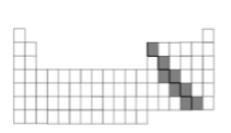
One property of nonmetals is that it they are good conductors of electricity.
true
false
Some characteristics of metals are that they are malleable and ductile.
TRUE
FALSE

What does it mean when a substance is dissolved in another substance?
It undergoes a chemical change.
It remains the same at the molecular level.
It becomes a gas.
It loses its physical properties.
Is rusting an example of a chemical change?
Yes, rusting is a chemical change because it involves the formation of a new substance (rust) from iron.
No, rusting is a physical change that does not involve any new substances.
Yes, rusting is a reversible process that can be undone.
No, rusting is a process that only affects the appearance of iron.
Can a chemical reaction be reversed?
Yes, all chemical reactions can be reversed.
Some chemical reactions can be reversed, but many result in new substances that cannot be easily changed back.
No, chemical reactions are always permanent.
Only physical changes can be reversed, not chemical reactions.
What does it mean if a solid forms in a liquid during a reaction?
A new substance has been created, often referred to as a precipitate.
The liquid has evaporated completely.
The reaction is incomplete and needs more time.
The temperature of the liquid has increased significantly.
What happens during a color change in a chemical reaction?
A color change indicates that a new substance may have formed as a result of the reaction.
The temperature of the reaction increases significantly.
The reaction will always produce a gas.
The reaction will slow down immediately.
What is the importance of observing chemical changes?
It helps scientists understand how substances interact and transform.
It allows scientists to predict weather patterns.
It is essential for developing new cooking recipes.
It helps in identifying the color of substances.
What are products in a chemical reaction?
Products are the new substances formed as a result of a chemical reaction.
Products are the starting materials in a chemical reaction.
Products are the energy released during a chemical reaction.
Products are the catalysts that speed up a chemical reaction.
What is an indicator of a temperature change in a chemical reaction?
A temperature change indicates that a chemical reaction is occurring, either releasing or absorbing heat.
A temperature change is always a sign of a physical change, not a chemical reaction.
A temperature change is irrelevant to chemical reactions and only indicates environmental factors.
A temperature change can only indicate an increase in temperature, not a decrease.
What is an example of a physical change?
Breaking a rock into smaller pieces.
Burning wood to ash.
Rust forming on iron.
Melting ice into water.
What are some signs of a chemical reaction?
Color change, odor change, temperature change, and the formation of a new substance.
Only color change and odor change.
Temperature change and pressure increase.
Formation of gas and change in mass.
What is an example of a chemical reaction that produces gas?
Baking soda reacting with vinegar, which produces carbon dioxide gas.
Dissolving sugar in water, which produces oxygen gas.
Mixing salt and water, which produces hydrogen gas.
Heating magnesium in air, which produces nitrogen gas.
What is the role of reactants in a chemical reaction?
Reactants are the starting substances that undergo a chemical change to form products.
Reactants are the final substances produced in a chemical reaction.
Reactants are substances that do not change during a chemical reaction.
Reactants are the energy sources required for a chemical reaction.
What is a chemical change?
A physical change that alters the appearance of a substance.
A process that involves the formation of a new substance.
A change that can be easily reversed without altering the substance.
A change that only affects the temperature of a substance.
What is the difference between a physical change and a chemical change?
A physical change creates a new substance, while a chemical change does not.
A physical change involves a change in state, while a chemical change involves a change in temperature.
A physical change does not create a new substance, while a chemical change results in the formation of one or more new substances.
A physical change is reversible, while a chemical change is always irreversible.
How can you tell if a chemical reaction has occurred?
By observing changes such as color, temperature, gas production, or the formation of a solid.
By measuring the pH level of the solution.
By checking the density of the substances involved.
By determining the boiling point of the reactants.

