
 Worksheets
2026 STAAR Science Review
Total questions: 135
Worksheet time: 4hrs 9mins
How many molecules and oxygen atoms are in 2H2O2?
1 molecule, 1 oxygen atom
2 molecules, 2 oxygen atoms
2 molecules, 4 oxygen atoms
4 molecules, 8 oxygen atoms
H2C3O4N5

Which of these formulas contain equal numbers of nitrogen atoms?
Formulas I and III
Formulas I and IV
Formulas I, II and V
Formulas II and III
How many atoms of oxygen are found in aluminum nitrate, Al(NO3)3?
3
6
7
9

In the equation shown, what are the reactant(s)?
N2 + H2
NH3
In the equation shown, what are the product(s)?
N2 + H2
NH3

Is this equation balanced?
Yes
No

Is this equation balanced?
Yes
No
A student heated a 10 gram sample of a chemical in an open container. A chemical reaction occurred, and the mass of the sample was measured again. The mass of the sample was found to be less than before the reaction. Which of the following best explains the decrease in mass of the sample?
The heat caused the chemical to become less dense.
The reaction gave off more heat than was added.
Some of the lighter particles were destroyed.
Some of the particles escaped as a gas formed.
A student dissolved 25 grams of salt into 1,000 grams of water. What should the mass of the saltwater mixture be?
975 grams
1,000 grams
1,025 grams
2,500 grams

Which of the models of a chemical reaction best represents the Law of Conservation of Mass?
A
B
C
D


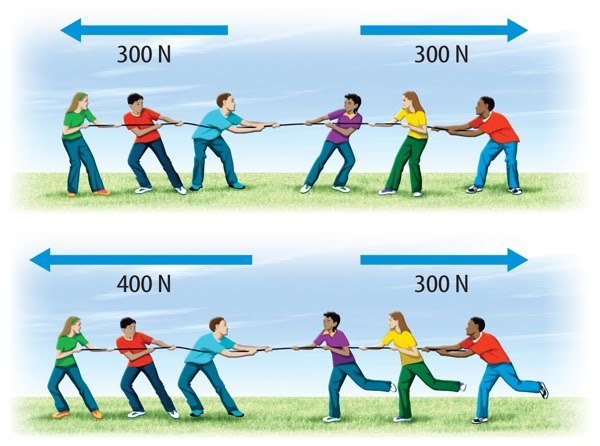
Student A is pushing at 63 newtons, and student B is pushing at 56 newtons. What is the net force (calculation).
119 N Right
7
7 N Right
119

Student A is pulling at 57 newtons and student B is pushing at 96 newtons. What is the net force (calculation).
153 N Left
39 N Left
153 N Right
39

What is the net force (calculation).
5 N Right
19 N Left
13 N Right
13 N Left

Forces that have a net force of zero ( the object is still) are ?
Unbalanced
Balanced

What is Newton's First Law
F=ma
Every action has an equal and opposite reaction
An object at rest stays at rest, an object in motion stays in motion.
Friction

Which is an example of the Newton's 1st Law (Inertia)?
A rocket taking off from Earth
A crash test dummy flies through the windshield in a collision
A small rock skips on a pond faster than a large rock
Which is an example of Newton's Second Law?
A rocket taking off from Earth
A crash test dummy flies through the windshield in a collision
A small rock skips a pond faster than a large rock
Which example best describes Newton’s 3rd Law?
Paddling a canoe to make the boat move
A large truck takes longer to slow down than a car
Falling forward in a train that is slowing down quickly

What is the resulting net force?
5000 N right
4000 N right
40 N left
4000 N left

A swing has potential energy if
it is sitting still
moving at a constant speed
accelerating at a fast pace
using multiple units of kinetic energy
What energy transformations take place when a battery operated radio is in use?
electrical to chemical to sound
thermal to nuclear to electrical
chemical to electrical to sound
chemical to sound to thermal
According to the Law of Conservation of Energy, energy cannot be ______ or _______
destroyed, determined
created, nuclear
destroyed, remade
created,destroyed
Plants turn_______ energy into _______ energy for food.
thermal, mechanical
radiant, chemical
electromagnetic, light
potential, kinetic

The roller coaster cart has the most gravitational potential energy at position
Z
Y
W
X
On a rollercoaster, where is maximum kinetic energy?
At the top of the big hill
At the bottom of a big hill
On the way up a big hill
At the top of the hill ,where the car stops for a brief moment

What type of energy transformation in an electric hot plate is plugged in?
electrical to light
mechanical to electrical to light
thermal to mechanical to light
electrical to thermal
A hairdryer converts-
chemical to electrical
electrical to thermal
electrical to solar
thermal to mechanical to light

What is the energy transformation?
Chemical to Electrical to Light
Mechanical to Electrical to Light
Electrical to Thermal to Mechanical
Kinetic to Sound to Potential

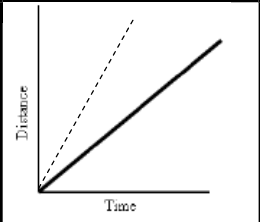
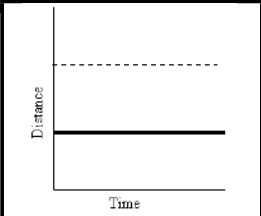
Match the description to the graph:
"The car is stopped."


Match the description to the graph:
"The car is coming back."


Segment A-B The bus is _________________.
at rest
returning (to original position)
moving forward
Which of the graphs shows that one of runners started in the same place?


Match the description to the graph:
"The car is slowing down."

Describe the motion in the graph:
Constant Speed (positive slope)
Stopped (at rest)
Acceleration (increasing speed)
Return Home (negative slope)

Describe the motion in the graph:
Constant Speed (positive slope)
Stopped (at rest)
Acceleration (increasing speed)
Return Home (negative slope)

Which is faster?
walking
skating
biking

Which scene matches the graph?
Jonathon walked to his girlfriends house - stayed a while then walked home
Justice rode her bike to the mall
Yeshua walked home from school

Which graph shows the object moving from fast to slow?
A
B
C
D

What is the speed of the object during segment B?
0.5 m/s
1.3 m/s
2 m/s
2.5 m/s
Which star stage does our sun belong to?
Supergiant
Giant
Main Sequence
White Dwarf
Which type of star is the coldest?
Yellow Star
Red Star
Orange Star
Blue Star

In the diagram given, what happens as we move from right to left?
Stars get larger
Stars get colder
Stars get hotter
Compared to the rest of the stars, our sun is considered...
Extremely large and cooler
Small with a medium temperature
Medium size with medium temperature
Blue stars are the _____________.
hottest
coolest
smallest
biggest
What determines the color of a star?
Size
Temperature
Composition
They are all the same color
As you move from the bottom to the top of the H-R diagram the __________ changes.
Temperature
Luminosity or Brightness

What is found on the X-axis of an H-R diagram?
Luminosity
(or brightness)
Temperature
Star Size
Distance
Which group is found in the bottom left corner of the H-R Diagram?
Supergiants
Giants
Main Sequence
White Dwarfs

What Seasons is position A?
Northern Hemisphere (Summer)/ Southern Hemisphere (Winter)
Northern Hemisphere (Fall)/ Southern Hemisphere (Winter)
Northern Hemisphere (Spring)/ Southern Hemisphere (Fall)
Northern Hemisphere (Winter)/ Southern Hemisphere (Summer)
What Seasons is position A?
Northern Hemisphere (Summer)/ Southern Hemisphere (Winter)
Northern Hemisphere (Fall)/ Southern Hemisphere (Winter)
Northern Hemisphere (Spring)/ Southern Hemisphere (Fall)
Northern Hemisphere (Winter)/ Southern Hemisphere (Summer)

Which part of the Earth is receiving the most direct Sunlight?
Northern Hemisphere
Southern Hemisphere
Polar Hemisphere
MidAtlantic Hemisphere
Which part of the Earth is receiving the the least direct Sunlight?
Northern Hemisphere
Southern Hemisphere
Polar Hemisphere
MidAtlantic Hemisphere

What happens during the Summer Solstice?
Most direct sunlight
Least direct sunlight
Moderate sunlight
temperate sunlight
What happens during the Summer Solstice?
shortest day
longest day
easy day
slow day

What happens during the Autumnal/Vernal Equinoxes?
Equal day and Night
Longer Days, shorter nights
Shorter Days, longer nights
Indirect sunlight
The REVOLUTION around the Sun and the TILT on the Earth's axis cause what?
Seasons
Rain
Tidal Waves
Moon Phases.
A[n] ______________ tide occurs when the sun is at right angles to the line between Earth and the moon.
high
neap
low
spring
A[n] ___________ tide occurs when the sun, Earth, and the moon are in a straight line.
spring
high
low
neap

Which body has the greater effect on Earth's tides?
Sun
Saturn
Moon
Venus

Wha type of tide would this arrangement of earth-moon-sun create?
full moon tide
new moon tide
neap tide
spring tide

What type of tides would this arrangement of earth-moon-sun create?
neap tide
spring tide
new moon tide
full moon tide

cold
stationary
warm
occluded

cold
stationary
occluded
warm

What will the weather be like in the area of high pressure?
will be hotter
will be windy
will be relatively calm
will be cold
Cool, dry air belongs to which pressure system?
High
Low
Warm, moist air belongs to which pressure system?
High
Low

What does this symbol represent?
Low pressure
High pressure
Hot air
Hot temperature
What can cause a Hurricane to get weak?
Cooler Air/Water
Reaching land
Both

Where do Hurricanes form?
NEAR the Equator
Away from the Equator
NEAR the North/South Poles
Hurricanes develop in ________ regions.
Arctic/Polar
Tropical
Which of the following helps to explain why tectonic plates move?
Plates move because of the gravitational force of the moon pulling on Earth's surface.
Plates moves because the asthenosphere is slowly moving.
Plates move because landforms cause them to move in different directions.
Plates move because they are slowly expanding and growing larger.

This diagram shows a subduction zone. What type of plate boundary is shown in the image, and what type of landform is likely to occur here?
divergent boundary; a trench
convergent boundary; continental volcanic arc
divergent boundary; island volcanic arc
convergent boundary; folded mountains
Which land features is associated with a convergent boundary?
Folded mountains, volcanoes, and deep ocean trenches
Fault-block mountains, rift valleys, rift zones and flat-topped plateaus
earthquakes, and mountain ranges
What event is associated with the activity at a transform boundary when there is a sudden release of energy?
volcano
earthquake
mountain ranges


Which of the following is a harmful influence of human activity on groundwater?
Natural filtration through soil.
Contamination from leaking septic systems.
Recharge from rainwater.
Conservation efforts to protect aquifers.
How do human activities such as overfishing impact ocean systems?
They increase the biodiversity of marine life.
They can lead to the depletion of fish populations.
They have no significant impact on ocean systems.
They help in the natural regeneration of coral reefs.
What role do oceans play in regulating Earth's climate?
They have no effect on the climate.
They absorb and store solar energy.
They only affect local weather patterns.
They cool the Earth's core.
Which of the following is a sustainable practice to reduce human impact on ocean systems?
Overfishing.
Using single-use plastics.
Implementing marine protected areas.
Dumping waste into the ocean.
What is the impact of agricultural runoff on ocean systems?
It provides nutrients for marine life.
It can cause harmful algal blooms.
It has no effect on ocean systems.
It purifies ocean water.
Which of the following is a benefit humans receive from healthy ocean systems?
Increased air pollution.
Decreased biodiversity.
Abundant seafood resources.
More desertification.

Select all Abiotic factors that contribute to an ecosystem. (Select ALL that apply)
Soil
Wind
Trees
Sunlight
Air
Select all Biotic factors that contribute to an ecosystem. (Select ALL that apply)
Insects
Wind
Trees
Sunlight
Birds

Why is biodiversity important?
Species diversity ensures natural sustainability
Species are more resistant to disease and disturbances
Creates a functional and healthy ecosystem
Purifies our air and water supplies
All of the above

Which trophic level has the most energy?
Producers
Primary consumers (herbivores)
Secondary consumers (carnivores)
Tertiary consumers (top carnivores)
Which trophic level has the lowest population?
Producers
Primary consumers (herbivores)
Secondary consumers (carnivores)
Tertiary consumers (top carnivores)

How does natural selection select for specific traits in a species?
Traits that increase their chance of survival
Traits that increase their chance of attracting a mate
Traits that increase their chance of passing down their genes
All of the above




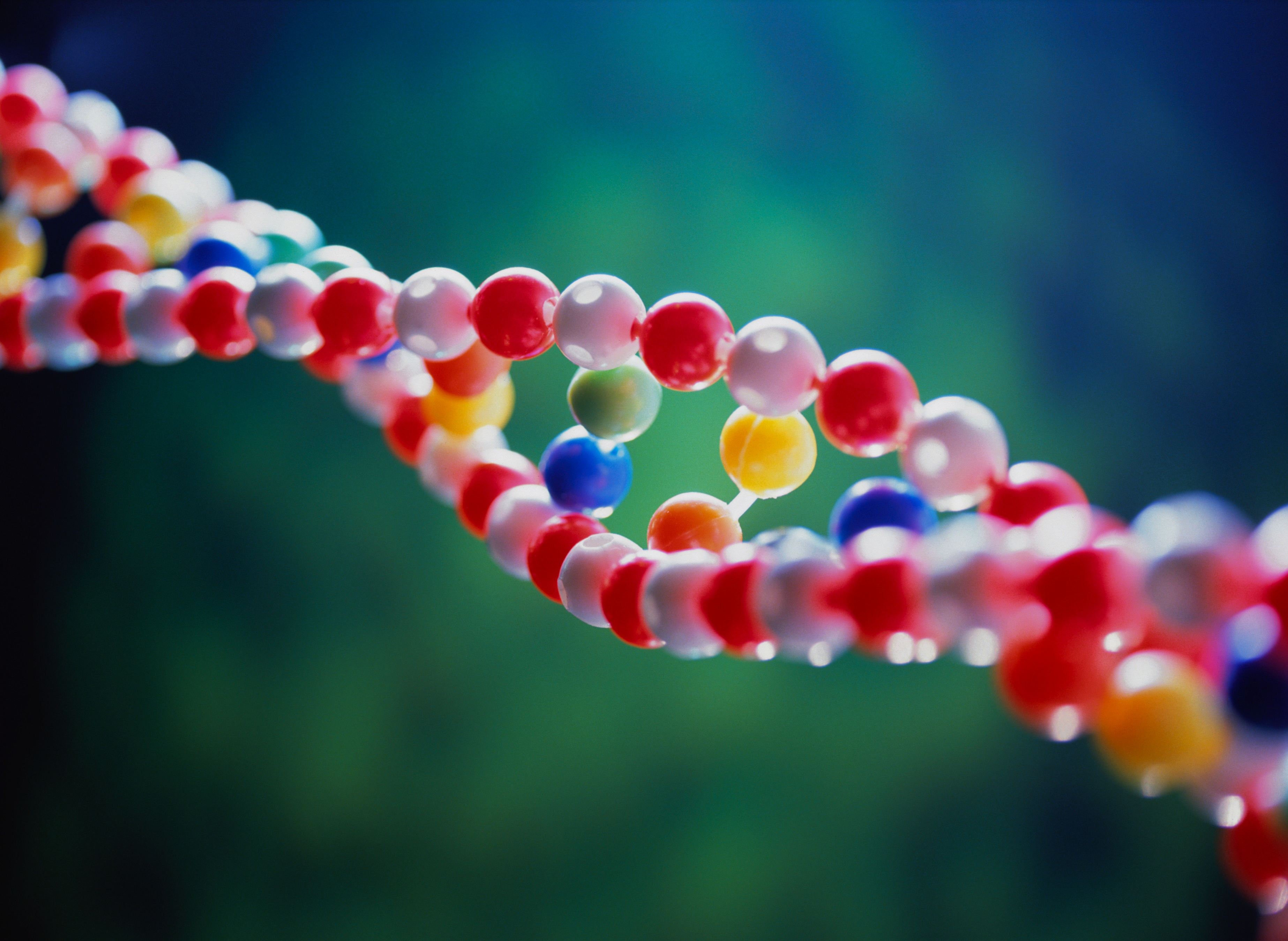
How many chromosomes do human cells have?
46
23
2
44

What happens to the potential energy of a ball as it rolls down a hill?
It turns into sound energy
It increases
It remains constant
It decreases
Which of the following best describes the energy transformation in a battery-powered flashlight?
Chemical to electrical to light
Electrical to thermal to sound
Thermal to electrical to light
Mechanical to chemical to light
According to Newton's Second Law, what is the relationship between force, mass, and acceleration?
Force equals acceleration divided by mass
Force equals mass plus acceleration
Force equals mass divided by acceleration
Force equals mass times acceleration

