
 Worksheets
Quiz #7 - Forces
Total questions: 131
Worksheet time: 5hrs 59mins
When 2 or more objects hit each other, at least one of the objects is moving
friction
force
energy
collision
A push or pull on an object that causes a change in shape
energy
gravity
force
collision
Change in shape due to force (push or pull)
deform
elastic limit
peak force
collision
Largest amount of deformation (bending) an object can do AND return to its original shape
breaking point
elastic limit
friction
deformation
The least amount of force needed to cause permanent deformation to an object
elastic limit
friction
breaking point
peak force
The highest amount of force on both objects during a collision
elastic limit
kinetic energy
peak force
friction
Moving energy of objects that can be transferred to other objects
potential energy
kinetic energy
gravity
peak force
The amount of matter in an object
weight
volume
force
mass
The distance travelled in a given amount of time. Speed = distance / time (s=d/t)
mass
height
speed
force
The thing that is changed by the scientist during an experiment, found on the x-axis of a graph
control variable
independent variable
dependent variable
kinetic energy
The thing that is impacted by the effects by the independent variable, it is found on the y-axis of a graph
control variable
independent variable
dependent variable
potential energy
Energy that is stored until an outside force acts on the object causing the energy to transform
kinetic energy
speed
potential energyt
friction
Two surfaces rubbing against each other
energy
force
gravity
friction
the act of air pushing on an object
friction
force
air resistance
energy

A Physics book is on a desk. A Chemistry book is on top of it.
Physics book pushes ______ on Chemistry book.
up
down
left
right
What is motion?
Distance over time
The location of an object
Movement
Change in position

What is happening in this position-time graph?
moving away at a constant speed
moving towards at a constant speed
moving away increasing speed
moving towards increasing speed
What is a force?
a push
a pull
a push or a pull
none of the above
Force is measured in:
Newtons
Grams
Milliliters
Centimeters
True or False: A force MUST change the motion of an object.
True
False
What is net force?
The sum of all forces acting on an object
The force from a net
The force moving the object to the left
The force moving the object to the right


Newton's 1st Law states that objects tend to travel...
In circular motion unless acted on by a force.
In straight lines unless acted on by a force.
only when a force is applied.
only when a force is not applied.
If an object is at rest, a _____________ is required to make the object move.
friction
force
energy
gravity
Katie has a mass of 50 kg. How much does she weigh? Remember, Fg = m x g
5 N
500 N
250 N
100 N
Joe and Matt fight over the last piece of sushi. Joe uses his chopsticks to pull the sushi toward himself with a force of 50 N. Matt uses a fork and pulls in his own direction with 80 N. Who takes the sushi?
Matt
Joe
No one
Not enough information
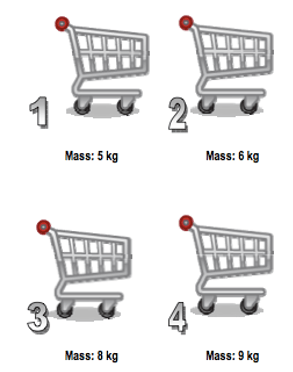
A shopping cart has some mass. When it's full, it has 8 times more mass. How much more inertia will it have?
The inertia wont change.
Twice the inertia.
1/8 the inertia.
8 times more inertia.
When standing on the ground, the Normal force is pointing...
at an angle, off the ground.
straight upward, off the ground.
parallel, along the ground.
None of the above.
A lunar robot has a weight of 1000 N on the moon. If the moon's gravity is
gmoon = 2 m/s2,
what is the mass of the robot?
2000 kg
500 kg
100 kg
10000 kg
The net force is defined as...
...the sum of all forces acting on an object.
...the vector sum of a few forces acting on an object.
....the vector sum of all forces acting on an object.
...the sum of a few forces acting on an object.
All forces are always measured in...
pounds
kilograms
meters per second squared
Newtons
What is a force?
A push or pull on an object.
The amount of matter in an object.
The space an object takes up.
The force of gravity acting on an object.
When forces are acting in the same direction they should be added together.
True
False
The sum of all the forces acting on an object is known as the (a) force.
Forces that are acting in opposite directions should be subtracted from each other.
True
False

The net force acting on the object is acting
to the right
up
down
to the left

The net force acting on the object is (a) N.

Is it balanced?
Yes
No

The net force is (a) N.

What force holds the planets in motion around the sun?
magnetic
electrical
graviational
air resistance
If there are two forces going in the same direction how would you find net force?
subtract
add
neither
multiply
With unbalanced forces, the object will move in the direction of the _________ force.
larger
smaller
equal
What is a force?
the motion the object creates
the object hitting one another
the push or pull of an object
really going fast
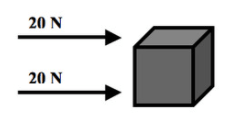
What is the net force?
20 N
0 N
400 N
40 N

If these teams are pulling with the same amount of force, what will happen?
The boy in the green shirt will win.
They will not move at all.
The boy in the red shirt will win.
Both will fall down

What is the net force and direction?
4 N to left
4 N to right
0 n to left
4 N
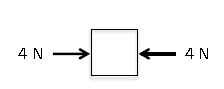
What is the net force and direction?
4 N to left
4 N to right
0 N
0 N to right

What is the net force and direction?
4 N to left
4 N to right
0 N
0 N to right

What is the net force and direction?
3 N to left
3 N
0 N
3 N to right

What is the net force and direction?
5 N to left
7 N
2 N to right
5 N to right

What is the net force and direction?
1 N to left
5 N to left
1 N to right
4 N to right
Forces that have a net force of zero newtons are considered to be a(n)
balanced force
unbalanced force
The sum of all forces acting on an object is known as…
Applied force
Net force
Normal force
I don't know
Which of the following is a characteristic of a balanced force?
Equal in size, opposite in direction
Causes a change in the direction of an object
Causes a change in motion of an object
I don't know
Which of the following is a characteristic of an unbalanced force?
Equal in size, opposite in direction
Does not cause a change in motion of an object
Causes a change in motion of an object
I don't know
Which of the following represents balanced forces?
7N -> ->7N
11 N -> <- 11 N
8 N <- -> 4 N
I don't know
Which of the following represents unbalanced forces?
7 N -> -> 3N
5 N <- -> 5 N
2 N <- -> 2 N
I don't know
Calculate the Net Force:
16 N <- -> 5 N
12 N to the Left
11 N to the left
21 N to the left
I don't know
Calculate the Net Force:
120 N --> --> 50 N
12 N to the right
125 N to the left
170 N to the right
I don't know
Calculate the Net Force:
10 N --> <-- 4 N + <-- 7 N
7 N to the left
21 N to the right
1 N to the left
I don't know

Calculate the Net Force
0 N
7 N Right
28 N Right
I don't know

Calculate the Net Force
2 N Right
12 N Right
2 N Left
I don't know
Two students kick a soccer ball at the same time. Student A kicks the ball with a force of 80 N to the right. Student B kicks the ball with a force of 45 N to the left. Calculate the net force.
45 N Right
35 N Right
30 N Right
I don't know
Three dogs are pulling on a stuffed animal. Dog A pulls with a force of 150 N to the north. Dog B pulls with a force of 150 N to the south. Dog C (a much smaller dog) is pulling to the east with a force of 40 N. Which dog will win the toy?
dog A
Dog B
Dog C
I don't know
Match these about variables
1
variables the scientist can change
2
total number of variables
things that stay the same
constants
A custodian notices some dirty tables and wants to know which cleaner is the best to use. He tests three different cleaners and looks at how well they clean compared to tap water. What is the independent variable?
type of cleaner
tap water
An experiment is being done to determine how light affects the growth of small zinnia plants. One plant is placed in full sunlight, the second in a shaded area, the third in an unlit closet. What is the independent variable in the experiment?
the amount of light
plant in the closet
Steve wanted to see if different types of fertilizer influence sunflower growth. What is the independent variable?
type of fertilizer
sunflower grown without fertilizer
Control
"I change"
"I Test"
Compare
Stays the same
Independent Variable, we say (two answer):
"I change"
"I Test"
Compare
Stays the same
The two groups in a controlled experiment are -
Control Group
Experimental Group (Test)
Independent Variable
Dependent Variable
Constant(s)
A custodian notices some dirty tables and wants to know which cleaner is the best to use. He tests three different cleaners and looks at how well they clean compared to tap water. What is the control group?
type of cleaner
tap water
An experiment is being done to determine how light affects the growth of small zinnia plants. One plant is placed in full sunlight, the second in a shaded area, the third in an unlit closet. What is the control group in this experiment?
the amount of light
the plant in the closet
Steve wanted to see if different types of fertilizer influence sunflower growth. What is the control group?
type of fertilizer
sunflower grown without fertilizer
Hypothesis: If plants are watered more than normal, then growth height will increase. What is the independent variable?
the amount of water
a plant receiving the normal amount of water
Hypothesis: If plants are watered more than normal, then growth height will increase. What is the control group?
the amount of water
a plant receiving the normal amount of water
The "normal", "natural" or whatever is NOT receiving the tested variable
Independent Variable
Control Group
When two equal forces act in opposite directions on an object, they are called ______________________.
frictional force
balanced force
centripetal force
gravitational force
When an unbalanced force acts on an object, the force ______________________.
changes the motion of the object
is cancelled by another force
does not change the motion of an object
is equal to the weight of the object
The resistance of an object to any change in its motion is called ______________________.
inertia
friction
gravity
weight
According to Newton’s second law of motion, force is equal to mass times ______________________.
inertia
weight
acceleration
direction
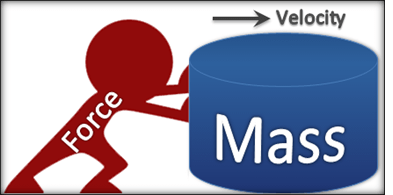
The picture is an example of Newton's...
1st Law
2nd Law
3rd Law

The picture is an example of Newton's...
1st Law
2nd Law
3rd Law

The picture is an example of Newton's...
1st Law
2nd Law
3rd Law
Acceleration is due to a force put on an objects mass.
1st Law
2nd Law
3rd Law


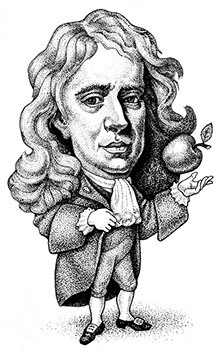


Isaac Newton developed these 3 laws concerning ______________.
Velocity.
Mass
Acceleration.
Motion
What explains why objects resist changes in their state of motion?
gravity
inertia
force
friction
What explains a quantity that has BOTH speed and direction?
Inertia
Force
Speed
Velocity
The force that prevents a ball rolling on the ground from continuing on it's path forever is...
Friction
Gravity
Inertia


An inflated balloon released from rest moves horizontally.
The law that best explains this event is
Newton's 1st Law
Newton's 2nd Law
Newton's 3rd Law
Law of Gravity
True or False: objects with greater mass require more force to accelerate when compared to objects with less mass.
True
False
A force is:
a push
a pull
both
neither
Which force causes an object to speed up or slow down (accelerate or decelerate)?
Newton's Second Law is also known as the Law of _______
Inertia
Acceleration
Action - Reaction
Gravitation
Which of the following is the correct position - time graph for an object moving with a constant velocity?


A dictionary weighing 15 Newtons is placed on a desk.
What is the force that the desk exerts on the dictionary?
none
15 N
1.5 N
150 N
Isaac Newton stated for every action there is an
_________ and _________ reaction.
equal and same
equal and opposite
unequal and same
unequal and opposite

