wayground logo

Free Printable Worksheets

Font size

S
M
L
XL
Worksheets

8th grade review

Total questions: 128

Worksheet time: 2hrs 33mins

Name
Class
Date
1.
What happens to frequency when the energy increases?
a)
it increases
b)
it decreases
c)
it stays the same
2.
What part of the wave is shown at letter A?
a)
crest
b)
trough
c)
wavelength
d)
frequency
3.
Which part of the wave is shown at letter B?
a)
crest
b)
trough
c)
wavelength resting point
4.
Which part of the wave is shown at letter C?
a)
crest
b)
wavelength
c)
resting point
d)
amplitude
5.
Which part of the wave is shown at letter E?
a)
trough
b)
crest
c)
resting point
d)
amplitude
6.
Which part of the wave is shown at letter D?
a)
trough
b)
resting point
c)
wavelength
d)
frequency
7.
What does a wave carry?
a)
boats
b)
matter
c)
energy
d)
water
8.
What is the frequency of this wave?
a)
3 Hertz
b)
4 Hertz
c)
5 Hertz
d)
6 Hertz
9.
If there is no wave, the particles would be at the _____________________.
a)
wavelength
b)
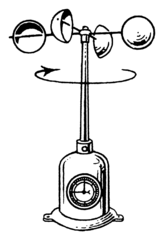
resting point
c)
trough
d)
beach
10.
When wavelength increases, what happens to the frequency?
a)
it increases
b)
it decreases
c)
it stays the same
11.
What is the speed of a wave that has a wavelength of 2 and a frequency of 2.5?
a)
2.5 m/s
b)
5 m/s
c)
4.5 m/s
d)
6 m/s
12.
Which wave has a longer wavelength?
a)
wave C
b)
wave D
13.
Which wave has a greater frequency?
a)
wave B
b)
wave C
14.
Which wave has the most energy?
a)
top wave
b)
bottom wave
15.
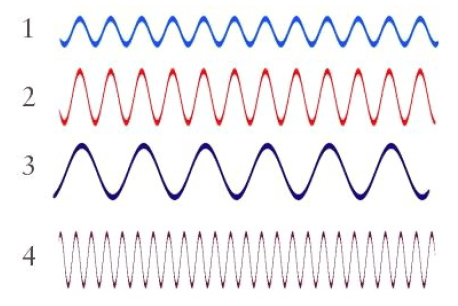
Which wave in the diagram has the greatest frequency?
a)
1
b)
2
c)
3
d)
4
16.
Which of the following is NOT a mechanical wave?
a)
sound
b)
light
c)
ocean
d)
seismic
17.
How would a person measure the wavelength on this sound wave?
a)
dense to less dense
b)
trough to crest
c)
compression to compression
d)
beginning of illustration to the end
18.

You can't hear sounds in outer space because there is no

a)

medium

b)

light

c)

energy

d)

heat

19.

All waves carry ________ as they travel from one place to another.

a)

matter

b)

space

c)

energy

d)

water

20.
Which travels faster, light or sound?
a)
light
b)
sound
21.

What is energy?

a)

moving energy

b)

stored energy

c)

renewable energy

d)

The ability to do work.

22.

What is potential energy?

a)

moving energy

b)

stored energy

c)

renewable energy

d)

non renewable energy

23.

What is kinetic energy?

a)

moving energy

b)

potential energy

c)

stored energy

d)

renewable energy

24.

What is NOT a renewable energy source?

a)

coal

b)

wind

c)

solar

d)

water

25.

Which is NOT a non-renewable energy source?

a)

coal

b)

oil

c)

wind

d)

gas

26.
Energy of motion is which type of energy?
a)
Potential
b)
Kinetic
c)
Sound
d)
Gravitational
27.
What kind of energy is represented in this picture?
a)
Thermal
b)
Potential
c)
Nuclear
d)
Mechanical
28.
What kind of energy does this device use?
a)
Chemical
b)
Electrical
c)
Thermal
d)
Chemical
29.
What kind of energy is represented in the picture?
a)
Thermal
b)
Chemical
c)
Sound
d)
Nuclear
30.
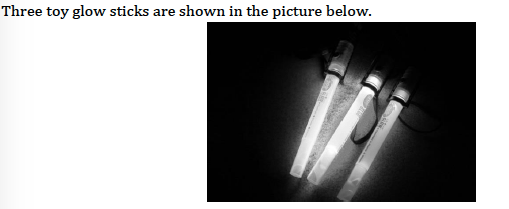
The glow sticks produce light for a short amount of time. The light from the glow stick is a conversion from what to what?
a)
thermal to light
b)
gravitational to potential
c)
radiant to electrical
d)
chemical to light
31.
On a roller coaster, where is maximum potential energy?
a)
At the bottom of a big hill
b)
When going around a corner
c)
When going upside down
d)
At the top of a big hill
32.
On a roller coaster, where is maximum kinetic energy?
a)
At the bottom of a big hill
b)
When going around a corner
c)
When going upside down
d)
At the top of a big hill
33.
Energy that is stored in bonds between atoms is:
a)
Mechanical energy
b)
Chemical energy
c)
Kinetic energy
d)
Nuclear energy
34.
Energy that comes from the nucleus of an atom. A form of potential energy.
a)
chemical energy
b)
Nuclear energy
c)
Sound energy
d)
Electrical energy
35.
According to which law of energy, energy can't be created or destroyed?
a)
First law of motion
b)
The law of tacos
c)
Laws of Energy
d)
law of conservation of energy
36.
What type of energy includes both kinetic and potential energy?
a)
mechanical energy
b)
chemical energy
c)
heat energy
d)
sound energy
37.
Stored energy is called ______ energy.
a)
Kinetic
b)
Potential
c)
Pacific
d)
Safe
38.

Steam is an example of _____________energy.

a)

light

b)

thermal

c)

sound

d)

electrical

39.

Potential energy depends on ____________ & ______________.

a)

mass, speed

b)

mass, position

c)

speed, position

d)

mass, weight

40.

Kinetic energy depends on _____________ & _____________.

a)

mass, speed

b)

mass, position

c)

mass, weight

d)

speed, distance

41.

A windmill is an example of ________________energy.

a)

thermal

b)

mechanical

c)

light

d)

electrical

42.

When energy changes from one form to another, we call it a _______________.

a)

transformation

b)

creation

c)

expiration

d)

compilation

43.
Why is the insect a consumer?
a)
It is eaten by a mouse.
b)
It can make its own food.
c)
It eats the plant.
44.
Short Answer on Test: Why will having fewer insects affect the mice?
a)
The mice will not have enough insects to eat.
b)
It will not affect the mice.
c)
The mice will have too many insects to eat.
45.
In the food chain pictured, the source of energy for the water plant is ______.
a)
Sun
b)
Water Plant
c)
Mayfly
d)
Trout
46.
In the food chain pictured, why is the plant a producer?
a)
The plant consumes the sun.
b)
The plant makes its own food.
c)
The plant is not a producer.
47.
Which of the following organisms is a producer?
a)
Sun
b)
Water Plant
c)
Mayfly 
d)
Trout
48.
Which picture would be first to show the flow of energy through the food chain.
a)
Snake
b)
Sun
c)
Carrot
d)
Rabbit
49.
Which picture would be first to show the flow of energy through the food chain.
a)
Snake
b)
Sun
c)
Carrot
d)
Rabbit
50.
Which picture would be second to show the flow of energy through the food chain.
a)
snake
b)
sun
c)
carrot
d)
rabbit
51.
Which picture would be third to show the flow of energy through the food chain.
a)
Snake
b)
Sun
c)
Carrot
d)
Rabbit
52.
Short Answer on the Test: What would happen if all of the carrots died in the food chain?
a)
The rabbits would have too much to eat.
b)
The rabbits would not be able to eat carrots.
53.
Where does the energy start in this food chain?
a)
Plant
b)
Sun
c)
Deer
d)
Wolf
54.
What is the role of a producer?
a)
Use sunlight to make food
b)
Gain energy from eating other organisms
c)
Keep other species from overpopulating
d)
Breaking down dead stuff 
55.
What's the role of consumers in a food chain?
a)
Use sunlight to make food 
b)
Eat other species and keep them from overpopulating
c)
Break down dead stuff
d)
Add nutrients to the soil
56.
What is the role of decomposers in a food chain?
a)
Use sunlight to make food
b)
Eat other organisms to gain energy
c)
Make the food for the whole food chain
d)
Break down dead organisms and add nutrients to the soil
57.
Which of these organisms would receive energy from the snake?
a)
Plant
b)
Rabbit
c)
Mouse
d)
Hawk
58.
Which type of consumer eats plants only?
a)
Herbivores
b)
Omnivores
c)
Carnivores
d)
Scavengers
59.
Which type of consumer eats meat only?
a)
Producers
b)
Herbivores
c)
Carnivores
d)
Omnivores
60.
Which type of consumer eats meat and plants?
a)
Herbivores
b)
Carnivores
c)
Omnivores
d)
Plants
61.
Which type of consumer is always a first consumer?
a)
Herbivore
b)
Omnivore
c)
Carnivore
d)
Producer
62.
Which type of consumer could be a first or second consumer?
a)
Herbivore
b)
Omnivore
c)
Carnivore
d)
Producer
63.
Which of these is true about this food web?
a)
The Owl gets its energy from the producer.
b)
The Lion gets its energy only from a wild cat.
c)
The Kite gets its energy from the goat.
d)
The Mouse is most likely to die, several ways.
64.
True or false: as you move along the spectrum, radio to gamma waves, the wavelengths decrease in size (get smaller)
a)
true
b)
false
65.
A wave with a large wavelength will have a ______ frequency and _____ energy
a)
high, low
b)
high, high
c)
low, high
d)
low, low
66.
Select the correct order of waves on the EMS from the longest wavelength to the shortest wavelength
a)
Radio, Micro, Infra, Visible, Ultra, X-ray, Gamma
b)
Gamma, X-ray, Ultra, Vis, Infra, Micro, Radio
c)
Vis, Micro, Infra, Ultra, X-ray, Gamma, Radio
d)
Micro, Radio, Vis, Infra, Ultra, X-ray, Gamma
67.
Which has the LONGEST wavelength and, therefore, the lowest frequency/energy
a)
Gamma Rays
b)
Radio Waves
c)
Visible Light
d)
Infrared rays
68.
Which has the SHORTEST wavelength and, therefore, the highest frequency/most energy
a)
Radio waves
b)
Ultraviolet Rays
c)
Gamma Rays
d)
X-rays
69.
Which section of the spectrum is the ONLY one we can see?
a)
X-rays
b)
Visible Light
c)
Gamma Rays
d)
Ultraviolet Rays
70.
How are electromagnetic waves different from other waves? 
a)
They have very short wavelengths 
b)
They transmit energy instead of matter 
c)
They can travel through empty space
d)
They can change direction by reflection 
71.
Which of the following electromagnetic waves has the lowest energy?
a)
gamma ray
b)
infrared wave
c)
visible light wave
d)
microwave
72.
High frequency waves have _________ wavelengths.
a)
varying
b)
long
c)
the same
d)
short
73.
What are electromagnetic waves?
a)
sound waves
b)
electric & magnetic fields (energy) that travel through empty space very quickly
c)
Someone's name
d)
things like longitudinal waves
74.

Which of the following electromagnetic waves has the lowest energy?

a)

infrared light

b)

visible light

c)

ultraviolet light

d)

x-rays

75.
EM waves are always____________
a)
Transverse
b)
Compression
c)
Longitudinal
d)
Seismic
76.
Infrared waves are used in__________________.
a)
Bath tubs
b)
Microwaves
c)
Remote Controls
d)
Tanning
77.
Cancer can be treated with_______________waves.
a)
Penicillin
b)
Radio
c)
Infrared
d)
Gamma
78.
EM waves________________travel through space.
a)
Never
b)
Cannot
c)
Can
d)
Wish they could
79.
EM waves _______ travel the same speed in a vacuum. 
a)
never
b)
sometimes
c)
always
d)
can
80.
This type of EM wave shows a break in bones.
a)
gamma ray
b)
x-ray
c)
brokenometer
d)
radio wave
81.
________ is an EM wave that has the LEAST energy.
a)
radio
b)
gamma rays
c)
microwaves
d)
visible light
82.
Select the best answer- What is weather?
a)
Weather is what is happening in the atmosphere in a certain place at a certain time.
b)
Weather is the atmosphere.
c)
Weather is precipitation.
d)
Weather is wind.
83.
Which of the following is a part of weather?
a)
temperature
b)
wind direction
c)
precipitation
d)
all of the above
84.
What is the layer of air that surrounds Earth?
a)
water vapor
b)
condensation
c)
precipitation
d)
atmosphere
85.
Which tool is used to measure precipitation?
a)
thermometer
b)
compass
c)
rain gauge
d)
wind vane
86.
Which tool measures wind direction?
a)
wind vane and stopwatch
b)
wind vane and compass
c)
compass and rain gauge
d)
wind vane and thermometer
87.
The Sun gives us all of the following except-
a)
light
b)
heat
c)
energy
d)
water
88.
Energy to create weather comes from-
a)
clouds
b)
the Sun
c)
the atmosphere
d)
evaporation
89.
a)
nimbostratus cloud
b)
cumulonimbus cloud
c)
cirrocumulus cloud
d)
altostratus cloud
90.
What type of cloud looks like cotton and is in the lower altitudes?
a)
Cumulus
b)
Stratus
c)
Cirrus
91.
what type of cloud is shown?
a)
cumulus
b)
cirrus
c)
stratus
92.
what type of cloud is shown?
a)
cumulus
b)
cirrus
c)
stratus
93.
Clouds are made up of tiny drops of ______ or ice. The moisture in the cloud affects the weather.
a)
dust
b)
water
c)
cloud particles
d)
precipitation
94.
This is sometimes called a thunderhead cloud. It looks very tall like mountains and heavy rain comes from it. 
a)
Cumulus
b)
Cirrus
c)
Stratus
d)
Cumulonimbus
95.
This weather instrument is a...
a)
anemometer
b)
barometer
c)
wind vane
d)
thermometer
96.
This weather instrument is a...
a)
thermometer
b)
anemometer
c)
rain gauge
d)
barometer
97.
This weather instrument is a...
a)
anemometer
b)
Christmas ornament
c)
wind vane
d)
barometer
98.
This weather instrument is an...
a)
wind vane
b)
anemometer
c)
barometer
d)
thermometer
99.
Temperature is measured in...
a)
degrees
b)
inches
c)
centimeters
d)
feet
100.
This tool measures the wind speed.
a)
barometer
b)
anemometer
c)
thermometer
d)
my dog when he sticks his head out the window
101.
What weather instrument is pictured?
a)
Anemometer
b)
Thermometer
c)
Barometer
d)
Hygrometer
102.
What weather instrument is pictured?
a)
Anemometer
b)
Wind Vane
c)
Barometer
d)
Hygrometer
103.
What weather factor does a wind vane measure?
a)
Air Pressure
b)
Air Temperature
c)
Wind Speed
d)
Wind Direction
104.
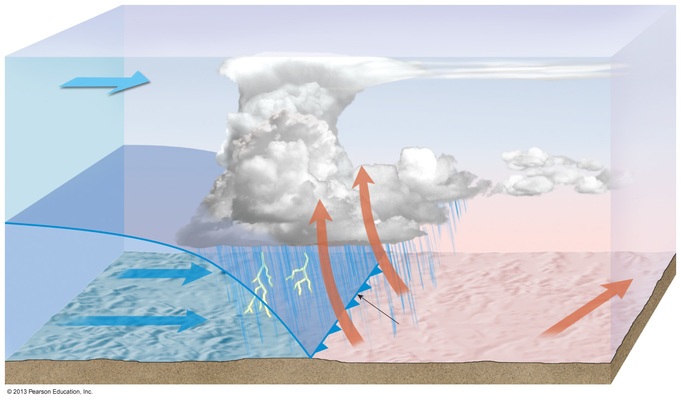
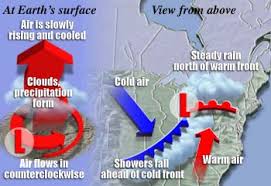
What type of storm front is this? 
a)
warm front
b)
cold front
c)
stationary front
d)
occluded front
105.
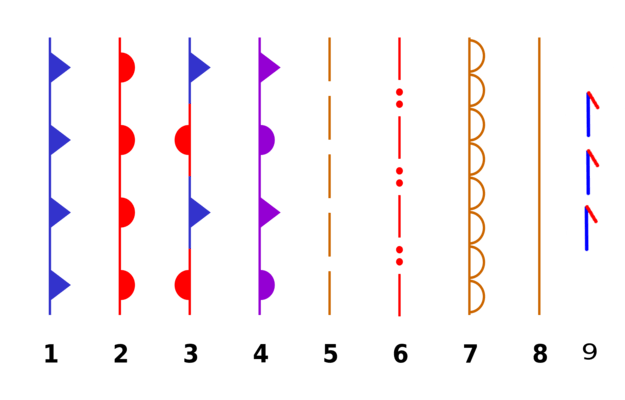
What does symbol # 3 mean?
a)
stationary front
b)
occluded front
c)
warm front
d)
cold front
106.
A front is
a)
where warm air is cooling at earth's surface
b)
a line where hot and cold air are separating
c)
a line where two different air masses meet
d)
where cold air is rising and forming rain clouds
107.
Which most likely produces clear, cool weather?
a)
zero air pressure
b)
stable air pressure
c)
a low pressure system
d)
a high pressure system
108.
_____________ air is more dense and tends to sink
a)
cold
b)
warm
c)
moist
d)
dry
109.
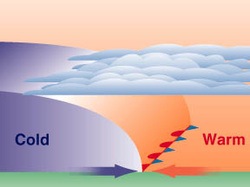
Which type of front is pictured?
a)
Cold front
b)
Warm front
c)
Occluded front
d)
Stationary front
110.
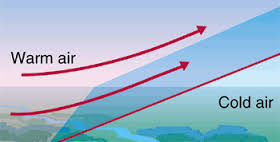
Which type of front is pictured?
a)
Cold front
b)
Warm front
c)
Occluded front
d)
Stationary front
111.
What symbol is this?
a)
warm front
b)
cold front
c)
stationary front
d)
occluded front
112.
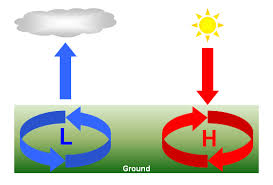
Which system results in rainy or stormy weather?
a)
high pressure
b)
low pressure
c)
hurricane
d)
weather system
113.
Which system results in drier, fairer weather?
a)
high pressure
b)
low pressure
c)
hurricane
d)
weather system
114.
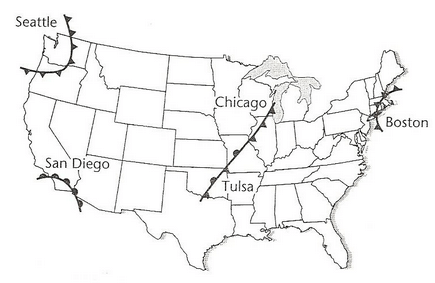
Which type of front is near Seattle?
a)
cold front
b)
warm front
c)
occluded front
d)
stationary front
115.
Which front is located near San Diego?
a)
cold front
b)
warm front
c)
occluded front
d)
stationary front
116.
Which type of front is located near Boston?
a)
warm front
b)
cold front
c)
stationary front
d)
occluded front
117.
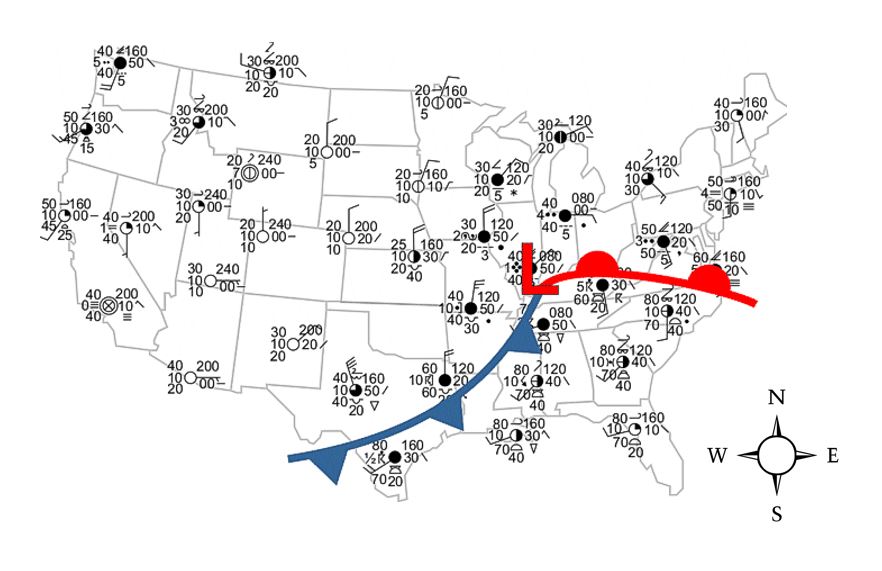
What direction is the warm front moving on the map? 
a)
North
b)
South
c)
East
d)
West
118.
What direction is the cold front moving on the map? 
a)
Southwest
b)
Northwest
c)
Southeast
d)
Northeast
119.
An ecosystem is made up of _______ and ________ things.
a)
Living and nonliving
b)
Alive and dead
c)
Plants and animals
d)
Land and water
120.
What is another word for an animal's home?
a)
Habitat
b)
Niche
c)
Population
d)
Organism
121.
An adaptation a walrus has is:
a)
It has long tusks to pull itself up on ice
b)
It eats fish
c)
It likes to sleep and be awake
d)
It lives in the tundra
122.
Which of these rabbits would be able to survive in the hot grasslands?
a)
Jackrabbit with long ears
b)
Snowshoe hare with short ears
123.
What 4 things does an organism need to survive?
a)
Food, water, shelter, space
b)
Food, friends, shelter, space
c)
Water, shelter, prey, predators
d)
Shelter, food, water, humans
124.

Which of the following is the closest relative to the horseshoe crab?

a)

blue crab

b)

spider

c)

oyster

d)

fiddler crab

125.

Telson is used to ______.

a)

carry their eggs

b)

flip itself over

c)

swim

d)

fight other predators

126.

Their life span is ______.

a)

50 years

b)

10 years

c)

6 months

d)

20 years

e)

5 years

127.

Their eggs hatch in ______.

a)

1 month

b)

1 week

c)

6 months

d)

2 weeks

128.

what color is their blood?

a)

red

b)

orange

c)

black

d)

blue