
 Worksheets
8th Gr Earth Science Final
Total questions: 150
Worksheet time: 5hrs 38mins

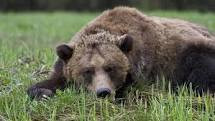
Minus the air in this picture, this image best describes which connection?
Atmosphere-Biosphere
Hydrosphere-Atmosphere
Hydrosphere-Geosphere
Geosphere-Biosphere
Which one is an example of Atmosphere and Geosphere?
A volcano erupts adding Carbon Dioxide to the air.
Air temperature impacts the evaporation of lakes and streams.
Plants use essential elements such as water, carbon and nitrogen from the soil.
How would earth be different if there was NO water vapor in the air? How would it affect Earth’s temperature?
Temperatures would become both extremely hot and extremely cold at various times, because the water cycle would no longer regulate the temperatures of the spheres.
Temperatures would become extremely hot and stay that way, because the water cycle would no longer regulate the temperatures of the spheres.
Temperatures would become extremely cold and stay that way, because the water cycle would no longer regulate the temperatures of the spheres.
How is the hydrosphere integrated into the atmosphere and geosphere? In other words, how is the hydrosphere “included” in the atmosphere and geosphere? Choose all of the examples below.
Springs and aquifers
Dust storms
Rain clouds and precipitation
Frozen rivers and lakes
Water pumped from underground for irrigation
Which of the following is the correct order of the sublayers as you go deeper through the Earth?
Lithosphere, Mesosphere, Asthenosphere
Lithosphere, Asthenosphere, Mesosphere
Asthenosphere, Mesosphere, Lithosphere
Mesosphere, Lithosphere, Asthenosphere
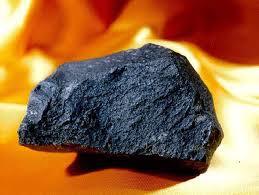

What type of rock can be described as being intrusive and extrusive?
Igneous
Sedimentary
Metamorphic
What type of rock can be described as being foliated or non-foliated?
Igneous
Sedimentary
Metamorphic
What type of rock can be described as being clastic , organic (biological) , or chemical?
Igneous
Sedimentary
Metamorphic

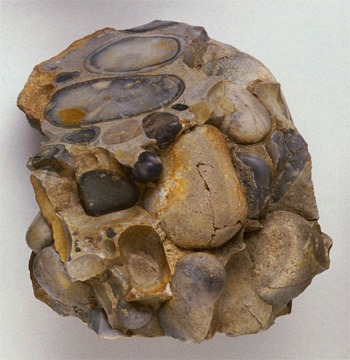
The color of a rock is a result of its chemical composition?
True
False


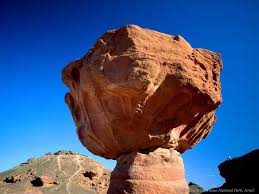

Which of the following is the most effective agent of erosion?
Wind
Water
Glaciers
Gravity
A stream moving at high speed with a high discharge can carry much __________________ sediments then a slow moving stream.
Larger
Smaller
more rounded
All of the land that drains into the river either directly or through its tributaries is known as a?
River
Water table
Flood Plain
Water shed
All of the following cause weathering EXCEPT
water
glaciers
plants
volcano eruptions
What is the process of moving sediments from location to another?
Deposition
Erosion
Weathering
Compaction
Which of these is an example of erosion?
Light shinning onto a mountain
Rain breaking down rock
Wind blowing away sediment
All of the above

Equilibrium between continental crust and the denser mantle below it.
Compression
Equilibrium
Isostasy
Uplift
Upward vertical motion of Earth's surface.
mountain
isostasy
uplift
subsidence
Downward vertical motion of Earth's surface.
uplift
isostasy
strain
subsidence
Deep underwater trough created by one plate sub-ducting under another plate at a convergent plate boundary.
ocean trench
canyon
mountain
transform fault
Area where tectonic plates slide horizontally past each other.
convergent fault
transform fault
divergent fault
fault zone
Ocean trenches formed along lines where two plates (a) under the water.
(Make sure the word is spelled correctly and is ALL lower case)
The Appalachian Mountains in the eastern United States are rounded and have soil where trees can grow. The Rocky Mountains in the western United States are rugged and have much rock exposed.
Therefore, the Rocky Mountains are _________ and have experienced ________ erosion.
older, less
older, more
younger, less
younger, more

What is magma?
molten rock under the ground
molten rock on the surface of the earth
molten rock on the moon
What is Viscosity ?
internal resistance to flow
how dense something is compared to another substance
the type of magma
The Hawaiian Islands - Kilauea is an example of a
Shield volcano
cinder cone volcano
Composite volcano
These volcanoes are steep sided and generally small
(less than 500 meters high). They are formed when material ejected high into the air falls back to Earth and piles up around the vent.
Cinder cone
Shield
Composite or Strato
EXAMPLES: Mount St. Helens and Mount Rainier of the Cascade Range in North America.
composite or strato
cinder cone
shield
The larger belt of convergent boundary volcanoes is called
the ring of fire
the horseshoe of fire
the belt on fire
What is an earthquake’s epicenter?
the place on the surface directly above the focus
a spot halfway between the focus and the surface
the spot below the focus
any spot along the nearest fault
What is a fault?
a place on Earth where earthquakes cannot occur
a fracture in Earth where movement has occurred
the place on Earth’s surface where structures move during an earthquake
another name for an earthquake
A seismogram shows that P waves travel
at the same speed as surface waves
more slowly than S waves.
at the same speed as S waves
faster than S waves.
A travel-time graph can be used to find the
focus of an earthquake.
strength of an earthquake
damage caused by an earthquake
epicenter of an earthquake.
Where do most earthquakes occur?
in the mountains of Africa
around the edge of the Pacific Ocean
around the edge of the Atlantic Ocean
on the western lowlands of Europe
What measurement for earthquake do scientists use most often today?
seismic scale
Richter scale
moment magnitude scale
epicenter magnitude scale
Violent shaking from an earthquake can cause soil and rock on slopes to move and cause a
fault
landslide
tsunami
sinkhole

What is the relative age of a rock?
The age determined by the things around it.
The age of an igneous rock.
The age determined by radioactive dating.
The time it takes for 1/2 of the radioactive atoms to decay in an element.


Trilobites can be found in both rocky places and marine areas on Earth, even though they are marine animals. How can we use trilobites fossils to show that changes have occurred over time?
Trilobite fossils are in both rocky and marine areas proving that Earth has changed by natural processes.
Trilobites actually show that nothing ever changes
Natural processes no longer occur so trilobites show nothing
Trilobites are compressed so much by natural processes that they only show in marine places

Where would law of superposition be more useful than radioactive dating?
used to tell which hill peak is the nearest
used to tell the exact age of your family
used to tell which layer of sedimentary rock in the grand canyon is the oldest
used to tell whether two animals that lived in different continents are related

A cave explorer found a bunch of Megalodon sharks teeth in a cave in the middle of the Arizona Desert. What best explains why he would discover shark fossils here?
Megalodons would hunt their prey on the surface as well the ocean
Megalodons were known to fly
Millions of years ago Arizona was under water. Over time the Earth changed, the ocean became a desert, and the shark's teeth were fossilized.
Megalodons love Arizona, and go there to retire

Look at the reference image. Which combination accurately portrays the correct age order?
B is higher so it is OLDER than D
C is older than E, even though it is FOLDING upwards
G is older than all the other layers
A is higher, so is OLDEST layer

What is the oldest organism on the geologic time scale?
primitive horses
sea scorpions
giant insects
trilobites
How old do Paleontologists believe the Earth is?
2019 years old
3.6 billion years old
4.6 billion years old
4.6 million years old

Which organisms are the most recent (closest to present day)?
primitive reptiles
giant insects
primitive horses
brachiopods

4 is the...
Continental Slope
Continental Rise
Continental Shelf
Trench
Abyssal Plain
2 is the...
Continental Slope
Continental Rise
Continental Shelf
Trench
Abyssal Plain
1 is the...
Continental Slope
Continental Rise
Continental Shelf
Trench
Abyssal Plain
Which of the following contribute to the saltiness of the ocean?
runoff from rivers and streams
living organisms in the ocean
precipitation
factories dumping waste in the ocean
What percent of the ocean's water is salt?
1%
3.5%
97%
24%

_______ causes the Coriolis Effect
Earth's rotation
gravity
wind
density


Which TWO statements about Earth's freshwater are supported by the graphs?
Most freshwater is in glaciers and ice caps.
Aquifers are the largest source of surface water.
Only a very small amount of available water is freshwater.
Saltwater represents only a small portion of available water.
the process of a gas changing to a liquid (gas to liquid) as it cools
precipitation
codensation
transpiration
evaporation
amount of open space between rock particles
permeability
aquifer
porosity

What is the water that fills the cracks and spaces in
underground soil and rock layers called?
groundwater
precipitation
water table
snow
How are a pond and a stream different?
A pond has plants and animals, while a stream does not.
A pond has still water, while a stream has moving water.
A pond flows into a lake, while a stream flows into a river.
A pond gets its water from the rain, while a stream does not.
Which statement best describes freshwater?
Freshwater is water only found in the atmosphere.
Freshwater is water found in the oceans.
Freshwater is water found only underground.
Freshwater is water found in lakes, rivers and streams.
If Earth is 1 AU away from the sun, and Neptune is 30 AU away from the sun, what does this mean?
Neptune is 30 years older than the Earth
Neptune is 30 times larger than Earth
Neptune is 30 times farther away from the sun than the Earth
Why do the planets orbit the sun?
They don't, the planets orbit the Earth
Because Science
The sun is so massive that it has a very large gravitational pull, which causes objects to orbit it
Because they want to

Which planet is NOT one of the
"Gas Giants"?
Uranus
Venus
Neptune
Saturn

What is the largest planet in
our solar system?
Neptune
Jupiter
Uranus
Mars

Which outer planets have rings?
Just Saturn
Saturn and Jupiter
Jupiter, Neptune, and Saturn
all 4 of the outer planets
Which of the following is an accurate model of how the Sun, Earth, and Moon move?
Sun and moon orbit Earth
Earth and moon orbit Sun
Earth orbits the Sun and the moon orbits Earth
Earth and sun orbit moon
Because the Moons periods of rotation and revolution are the same, it...
Revolves backwards
Never moves
Keeps the same side facing Earth
Changing the side that faces Earth
Why can we see the moon?
It reflects sunlight
It goes through phases
It produces its own light
The sun moves around the moon
Large, flat dark areas on the moon.
Maria
Highlands
Craters
Waning
What is the main cause of the rising and falling tides?
the Sun's gravity
the Moon's gravity
The rotation of the Earth
The rotation of the Moon
Approximately how big is Earth's moon?
half of the Earth's size
one-quarter of the Earth's size
1/10 of the Earth's size
1/100 of the Earth's size

This phase is ______.
full moon
waxing crescent moon
first quarter
waning gibbous

This phase is _______.
full moon
waxing crescent moon
first quarter
waning gibbous

This phase is ______.
full moon
waxing crescent moon
first quarter
waning gibbous


What stage in a stars life cycle is this describing?


The cold front is moving
east and southeast
west and northwest
north
south

Why do you see precipitation near the L? (select 2 answers)
because that is low pressure and that is where air rises, forming clouds
because that is where air is falling and it brings rain with it
because southern Ohio is always rainy this time of year
because the cold front is meeting the warm front which forces warm air to rise rapidly forming clouds

What is humidity?
cold air
hot air
the amount of moisture in the air
direction of a front
What is a front?
where warm air mass meets
measurements to make weather maps
a large body of air
a place where two different air masses meet.
A cold front is,,,,,
a cold air mass that bumps against a warm air mass
a warm air mass meets a colder air mass and slowly rises over it.
A force applied by the weight of air
cold front
barometer
air pressure
humidity
At the beach on a hot day, you notice dark clouds moving in from over the ocean. What most likely caused this to happen?
precipitation & evaporation
water is wet
transpiration & evaporation
evaporation & condensation
Weather travels across the U.S. in what direction?
north to south
west to east
south to north
east to west
A student states the weather is the same as the climate. Which response BEST tells the student the difference between weather and climate?
Weather is about the wind and the rain, but climate is about the clouds.
Weather is measured with tools like thermometers, but climate is measured with tools like forecasts.
Weather is the conditions in one day, but climate is the conditions over a long time.
Weather is recorded on charts, but climate is recorded on world maps.
At the seashore late in the afternoon on a hot, sunny day, a person often feels a strong breeze coming in from the ocean. Which of the following is the reason for the breeze?
The pounding waves generate air currents.
The heavy, cool air over the ocean rushes in to replace the warm air that rises over the land.
The warm air over the ocean rushes in to replace the cool air that rises over the land.
There are no clouds to block the wind coming in from the ocean.
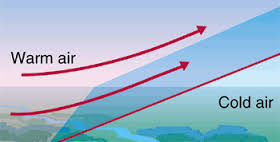
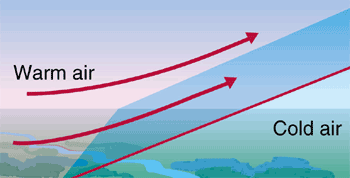
Why does warm air rise above cold air?
Warm air is less dense
Warm air is more dense
Cold air is stronger than warm air
What type of weather will you see along a cold front?
Thunderstorms
Sunny skies
Gentle rain
No weather
When rocks are deeply buried, placing them under pressure because of the weight of overlying layers, this is called:
lithification
cementation
deposition
compaction
Series of processes that change one type of rock into another type of rock
extrusive rock
rock
rock cycle
sediment
One of the major rock types that is created from previously existing rock by the action of intense heat and pressure
igneous rock
metamorphic rock
plastic deformation
sedimentary rock
Which is NOT accurate?
Igneous -->Melting --> Magma
Sediment --> Compaction --> Sedimentary
Metamorphic --> Heat and Pressure --> Sedimentary
Magma --> Cooling --> Igneous
Metamorphic Rock --> Weathering & Erosion --> __________
Magma
Igneous
Sediment
Metamorphic
Sedimentary --> ____________--> magma
Weathering and Erosion
Heat and Pressure
Melting
Cooling

Which of the following would DECREASE the salinity of water?
Increased chemical weathering of rocks on land
Water freezing, leaving behind salt
Rain falling into the ocean
Water evaporating, leaving behind salt
This zone of the ocean gets the most sunlight, so it has the most plants that need to undergo photosynthesis.
Surface Zone
Transition Zone
Deep Zone
This zone of the ocean is the largest zone by volume (has the biggest percent of ocean water)
Surface Zone
Transition Zone
Deep Zone
Why are there warmer ocean temperatures by the equator?
Because it gets more direct sunlight
Because it gets less direct sunlight
Because it faces the sun for fewer hours in a day
Because the equator reflects more sunlight

