wayground logo

Free Printable Worksheets

Font size

S
M
L
XL
Worksheets

TJH Interim Review

Total questions: 145

Worksheet time: 3hrs 31mins

Name
Class
Date
1.
Temperature, light, air, water, and soil are all  _____  parts of the environment
a)
alive
b)
biotic 
c)
abiotic
d)
living
2.
Field mice eat corn. Which would most likely happen if the field mouse population grew?
a)
There would be more corn to feed the field mice.
b)
There would be less corn due to the mice eating it.
c)
The habitat would get overpopulated because the mice woudl eat too much.
3.

At which temperature range will the least amount of competition take place?

a)

5°C to 10°C

b)

20°C to 25°C

c)

25°C to 30°C

4.

Coyotes and hawks live together in the same habitat. There will be competition between the coyotes and the hawks only if which of the following is true?

a)

both coyotes and hawks feed on the same resource

b)

coyotes rely on hawks as a food source

c)

the coyote population decreases due to hunters

5.
Which two organisms in this food web are COMPETING for food with each other?
a)
Cougar and Deer
b)
Rabbit and Snake
c)
Insects and Grass
d)
Shrew and Mouse
6.
This graph shows ....
a)
When one population inceases, the other decreases. 
b)
When one population decreases, the other inceases. 
c)
When one population increases, the other increases instantly. 
d)
When one population increases, the other increases shortly after. 
7.
A living or once-living organisms in an ecosystem is a
a)
population
b)
biotic factor
c)
abiotic factor
d)
community
8.
Which of the following is not a biotic factor?
a)
mushroom
b)
air
c)
elephant
d)
coyote
9.
Which of the following is not an abiotic factor?
a)
sun
b)
temperature
c)
soil
d)
grass
10.
Which organism do the owl and the weasel compete for in the food web?
a)
Hawk
b)
Spider
c)
Grasshopper
d)
Shrew
11.
Which process is responsible for carrying fertilizers that have been applied to crops into bodies of water, such as a river?
a)
Runoff
b)
Evaporation
c)
Ocean Currents
d)
Tectonic Plate movement
12.
Why are advantageous traits more likely to be passed onto offspring?
a)
Because they are more likely to survive and reproduce.
b)
Because they come from dominant alleles.
c)
Because they come from recessive alleles.
d)
Because the trait is an acquired phenotype.
13.
A group of herbivores are separated from their population.  In the new environment, the only edible vegetation grows at the top of tall trees.  Which of the following is a likely physical adaptation that may develop?
a)
striped fur
b)
a tendency to mate during the summer
c)
the ability to swim
d)
a long neck
14.

The nucleus of an atom contains which subatomic particles?

a)

protons and electrons

b)

protons and neutrons

c)

electrons and neutrons

d)

protons, electrons, and neutrons

15.
Particles in an atom that are neutral and have no charge are 
a)
negatrons 
b)
electrons 
c)
neutrons 
d)
protons 
16.

Which subatomic particle has a positive charge?

a)

proton

b)

neutron

c)

electron

d)

midichlorian

17.

Which subatomic particle has a negative charge?

a)

proton

b)

neutron

c)

electron

d)

cybertron

18.

The region around the nucleus where the electrons may be found.

a)

Electron Cloud

b)

Reactivity

c)

Neutron

d)

Atom

19.
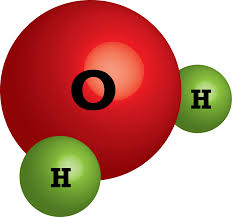
How many atoms of Hydrogen are in this compound?
a)
1
b)
2
c)
3
d)
4
20.
How many atoms of Oxygen are in this compound?
a)
1
b)
2
c)
3
d)
4
21.
How many atoms of Hydrogen are in this compound?
a)
1
b)
2
c)
3
d)
4
22.
How many atoms of Oxygen are in this compound?
a)
1
b)
2
c)
3
d)
4
23.
How many total atoms are in the element Carbon in this compound?
H2C3O4N5
a)
2
b)
3
c)
4
d)
5
24.
How many total atoms are in this compound?
H2C3O4N5
a)
5
b)
14
c)
15
d)
19
25.
In this compound structure of alcohol, how many Hydrogen atoms are there?
a)
2
b)
4
c)
6
d)
8
26.
How many elements are present in this compound? (Careful!)
Mg2As3COHNi2
a)
2
b)
4
c)
6
d)
10
27.
A subscript is the small number below a(n) ________ that tells the number of _______ of that element.
a)
element symbol; atoms
b)
atom; element symbol
c)
subscript; protons
d)
compound; elements
28.
If there is no subscript, there is/are ______ atom(s) of that element.
a)
0
b)
2
c)
only 1
d)
1 million
29.
How many elements are in the following?
C2H8O
a)
2
b)
1
c)
3
d)
0
30.
How many atoms are Carbon are in the following?
C2H8O
a)
8
b)
2
c)
10
d)
11
31.
How many total atoms are in the following?
C2H8O
a)
11
b)
2
c)
8
d)
10
32.

At the atomic level, what makes elements reactive?

a)

having a filled outer level

b)

exchanging or sharing valence electrons

c)

having the same number of electrons

d)

having the same number of protons

33.

Look at the column, taken from the periodic table. Which of the following statements is correct for the elements shown?

a)

Lithium has 6.9 protons.

b)

Lithium has the least number of protons.

c)

Sodium has the most number of protons.

d)

Potassium has 39.1 protons.

34.

An atom has 12 protons, 14 neutrons, and 12 electrons. What is the atomic number of this element?

a)

24

b)

26

c)

12

d)

38

35.

Which of the following is true of properties of the elements in the same period of the periodic table?

a)

They are similar.

b)

They are not similar.

c)

They are identical.

d)

They have the same atomic mass.

36.

What is a vertical column of the periodic table called?

a)

group

b)

period

c)

energy level

d)

atomic number

37.

What element has 6 Valence Electrons but only two (2) Energy shells/Orbitals?

a)

Gold

b)

Oxygen

c)

Barium

d)

Sulfur

38.

Valence Electrons determine an element's___________________________, While Protons determine an element's____________________________.

a)

IDENTITY; REACTIVITY

b)

Both determine reactivity

c)

REACTIVITY; IDENTITY

d)

Both determine identity

39.

Which of the following is NOT evidence of a chemical reaction?

a)

Two clear solutions are mixed and a pink solution is produced

b)

Melting a large block of Ice until it evaporates completely.

c)

A jug of fresh milk is forgotten and eventually forms a solid

d)

Aluminum is added to a beaker along with another reactant and the mixture begins to boil.

40.

To create a Precipitate, means to form a_____________.

a)

Liquid

b)

Semi-solid

c)

Solid

d)

Metal

41.
Which celestial body is know for its intense pull of gravity?
a)
nebula
b)
black hole
c)
Super Giant
d)
A Galaxy
42.
The Milky Way galaxy is described as a disk of stars orbiting a central point on the disk. Which of these best explains why people on Earth cannot see the entire shape of the Milky Way?
a)
Earth is a part of this galaxy
b)
Many more stars exist outside the galaxy
c)
The stars in the center of the galaxy are extremely small.
d)
The center of the galaxy consists of a dense cluster of stars.
43.
The universe has may different components.  Which list places four components of the universe in the most likely order from smallest to largest.
a)
Planets, Stars, Galaxies, Nebulae
b)
Nebulae, Stars, Planets, Galaxies
c)
Galaxies, Stars, Planets, Nebulae
d)
Planets, Stars, Nebulae, Galaxies
44.
The Milky Way galaxy is described as a disk of stars orbiting a central point on the disk. Which of these best explains why people on Earth cannot see the entire shape of the Milky Way?
a)
Earth is a part of this galaxy
b)
Many more stars exist outside the galaxy
c)
The stars in the center of the galaxy are extremely small.
d)
The center of the galaxy consists of a dense cluster of stars.
45.
What type of galaxy is this?
a)
Spiral
b)
Elliptical
c)
Irregular 
d)
Irrational
46.
A system of stars, gas, dust, and dark matter bound together by gravity is called ---
a)
an asteroid
b)
a nebula
c)
a galaxy
d)
a moon
47.
Stars are made up mostly of which two elements?
a)
Hydrogen and Helium
b)
Mercury and Strontium
c)
Iron and Potassium
d)
Krypton and Bismuth
48.
The stars and all the other matter in a galaxy are held together by which of the following?
a)
Dark Matter
b)
Inertia
c)
gravity
d)
magnetism
49.
Galaxies are classified by their shapes into all of the following types except
a)
spiral galaxy
b)
irregular galaxy
c)
oblong galaxy
d)
elliptical galaxy
50.
Which of the following is an accurate description of the relationship between components of the universe?
a)
Stars always contain galaxies
b)
Galaxies contain many stars
c)
Stars contain several nebulae
d)
Nebulae contain many galaxies
51.
Which of the following best describes a star?  A star is a celestial body ---
a)
composed of rock and metal with a very high density
b)
that is too big to be an asteroid, but too small to be a planet.
c)
that rotates on an axis and revolves around the Sun
d)
composed of gases that emit light due to nuclear reactions
52.
Which of the following best describes a nebula.  A nebula is
a)
a region in the solar system that is occupied by irregularly shaped bodies
b)
a large and icy celestial body with an irregular orbit around the Sun
c)
a natural satellite created by the collision of two large asteroids
d)
an interstellar cloud of dust, hydrogen, helium and other gases
53.
Which of the following best describes a galaxy?  A galaxy is ---
a)
A particle of debris in the solar system that does not act as a satellite of any planet
b)
a visible body of liquid or frozen crystal droplets suspended above a planetary surface
c)
a massive system of stars, gas, dust and dark matter bound together by gravity.
d)
the visible path of a meteoroid as it enters Earth's atmosphere
54.
An interstellar cloud of dust and gases that serves as a location for the formation of new stars is
a)
a meteor
b)
a planet
c)
a galaxy
d)
a nebula
55.
Galaxies are classified into all of the following types by their shapes except --
a)
spiral
b)
elliptical
c)
lenticular
d)
crescent
56.
A characteristic of a nebula is that it
a)
is at the center of the solar system
b)
is a region where stars are born
c)
forms halfway through a star's life cycle
d)
has the coolest temperature in space
57.
Which of the following components of the universe is best described as a system of stars, gases, and dust held together by gravity.
a)
a nebula
b)
a planet
c)
a meteor
d)
a galaxy
58.
Which of the following components of the universe is best described as an interstellar cloud of dust and gases where stars are formed?
a)
a nebula
b)
a planet
c)
a meteor
d)
a galaxy
59.
Why does Earth get more energy from the sun than from all the other stars in the universe combined?
a)
The sun is much larger than other stars.
b)
The sun is much hotter than the other stars.
c)
The sun is much more dense 
d)
The sun is much closer than the other stars.
60.
Which of these correctly compares the masses of different objects in the universe?
a)
A moon has less mass than a star and more mass than the planet it orbits.
b)
A planet has less mass than a galaxy and more mass than the star it orbits.
c)
A galaxy has less mass than a moon and more mass than a planet.
d)
A star has less mass than a galaxy and more mass than a planet.
61.
Which term would be considered the smallest object?
a)
Sun
b)
Supercluster
c)
Galaxy
d)
Universe
62.
A large cloud of dust and gas
a)
black hole
b)
nebula
c)
Galaxy
d)
Supercluster
63.

What type of galaxy is this?

a)

Spiral

b)

Elliptical

c)

Irregular

d)

Irrational

64.

What type of galaxy is this?

a)

Spiral

b)

Elliptical

c)

Irregular

d)

Irrational

65.

What type of galaxy is the Milky Way?

a)

Spiral

b)

Elliptical

c)

Irregular

d)

Irrational

66.

Where is the moon when there is a new moon?

a)

Between the earth and sun

b)

In front of the earth

c)

Behind of the earth

d)

Behind the sun and earth

67.

How long does it take the moon to orbit the earth?

a)

60 days

b)

7 days

c)

27 days

d)

365 days

68.

What occurs as earths axial tilt changes?

a)

Tides change

b)

Day Changes

c)

Season Changes

d)

Years pass

69.

Which wave below has the highest energy?

a)
b)
70.

Which wave below has the lowest energy?

a)
b)
71.

Which color of light has the shortest wavelength?

a)

Red

b)

Orange

c)

Yellow

d)

Green

e)

Blue

72.

Which color of light has the longest wavelength?

a)

Red

b)

Orange

c)

Yellow

d)

Green

e)

Blue

73.

Which wavelength below has the highest energy?

a)
b)
c)
d)
e)
74.

What is the main cause of global convection currents?

a)

The increase in the number of cities

b)

Deforestation

c)

The greenhouse effect

d)

Uneven heating of the Earth by the Sun

75.

Which weather system is characterized by a whirling mass of warm, moist air that generally brings stormy weather?

a)

Warm Pressure System

b)

Warm Front System

c)

Cold Front System

d)

Low Pressure System

76.

Use the Fronts and Pressure Systems Map and Chart to decide what kind of weather system is moving into the Pacific Northwest.

a)

Warm Front

b)

Occluded Front

c)

Stationary Front

d)

Cold Front

77.

Thunderstorms are more common in some areas than in others. The map shows the average number of thunderstorms per year in different parts of the United States.

Why are there significantly more thunderstorms in Florida than in California?

a)

The air in Florida is more stable than the air in California.

b)

The state of Florida is smaller than the state of California

c)

The air above Florida holds less moisture than the air above California.

d)

The ocean currents near Florida are warmer than the ocean currents near California.

78.

Identify the direction the low pressure system is moving across the state of Texas.

a)

southeast to northwest

b)

southwest to northeast

c)

northeast to southwest

d)

northwest to southeast

79.

What is one condition that is necessary for a hurricane to form?

a)

A strong warm front

b)

A strong cold front

c)

Cold ocean water

d)

Warm ocean water

80.

All hurricanes must have an energy source to form and grow. From where does this energy come?

a)

The Earth's rotation on its axis

b)

High air pressures

c)

Warm air rises and pulls cooler air is pulled into it

d)

Warm ocean waters

81.
what kind of pressure predicts good weather?
a)
high
b)
low
c)
cold
d)
stationary
82.
name this front
a)
warm front
b)
cold front
c)
stationary front
d)
occluded front
83.
name this front
a)
warm front
b)
cold front
c)
stationary front
d)
occluded front
84.
What does this symbol on a weather map indicate? 
a)
High pressure system
b)
Low pressure system
c)
Cold front
d)
Warm front
85.
What kind of weather is usually associated with a high pressure system?
a)
Sunny weather
b)
Precipitation (rain, snow, etc.)
86.
Which front is located near San Diego?
a)
cold front
b)
warm front
c)
occluded front
d)
stationary front
87.

What phase is this?

a)

Full moon

b)

New moon

c)

Waxing crescent

d)

Waning crescent

88.

What phase is this?

a)

Waning gibbous

b)

Waxing crescent

c)

Waning crescent

d)

Waxing gibbous

89.

What phase is this?

a)

Waxing gibbous

b)

Waning crescent

c)

Waxing crescent

d)

New moon

90.

What phase is this?

a)

Waning gibbous

b)

Waxing gibbous

c)

Waning crescent

d)

Full moon

91.

What phase is this?

a)

Waning gibbous

b)

1st Quarter

c)

3rd Quarter

d)

New moon

92.

What phase is this?

a)

Full moon

b)

2nd Quarter

c)

1st Quarter

d)

3rd Quarter

93.

What phase is this?

a)

Waxing gibbous

b)

New moon

c)

Full moon

d)

Waxing crescent

94.

What phase is this?

a)

Waxing crescent

b)

Waning crescent

c)

Waxing gibbous

d)

Waning gibbous

95.

What phase is this?

a)

Waning gibbous

b)

1st Quarter

c)

3rd Quarter

d)

New moon

96.

What phase is this?

a)

Full moon

b)

New moon

c)

Waxing crescent

d)

Waning crescent

97.

What phase is this?

a)

Waxing gibbous

b)

Waning crescent

c)

Waxing crescent

d)

New moon

98.

What phase is this?

a)

Waning gibbous

b)

1st Quarter

c)

3rd Quarter

d)

New moon

99.

What phase is this?

a)

Waxing gibbous

b)

New moon

c)

Full moon

d)

Waxing crescent

100.

What phase is this?

a)

Waning gibbous

b)

Waxing crescent

c)

Waning crescent

d)

Waxing gibbous

101.

What phase is this?

a)

Waning gibbous

b)

Waxing gibbous

c)

Waning crescent

d)

Full moon

102.

What phase is this?

a)

Waxing crescent

b)

Waning crescent

c)

Waxing gibbous

d)

Waning gibbous

103.

What phase is this?

a)

Full moon

b)

2nd Quarter

c)

1st Quarter

d)

3rd Quarter

104.

What phase is this?

a)

Full moon

b)

New moon

c)

Waxing crescent

d)

Waning crescent

105.

What phase is this?

a)

Waning gibbous

b)

1st Quarter

c)

3rd Quarter

d)

New moon

106.

What phase is this?

a)

Waxing crescent

b)

Waning crescent

c)

Waxing gibbous

d)

Waning gibbous

107.

Which hemisphere do we live in?

a)

Northern Hemisphere

b)

Southern Hemisphere

c)

Western Hemisphere

d)

Eastern Hemisphere

108.

Based on the diagram, which season would the northern hemisphere be experiencing?

a)

Winter

b)

Spring

c)

Summer

d)

Fall

109.

What season is the southern hemisphere experiencing when the northern hemisphere is experiencing summer

a)

Fall

b)

Winter

c)

Spring

d)

Summer

110.

Earth experiences seasons as it revolves around the sun because of its

a)

shape

b)

tilt

c)

speed

d)

mass

111.

What season would we be experiencing with Earth #3?

a)

Winter

b)

Spring

c)

Summer

d)

Fall

112.

What time of day is represented in the picture at letter x?

a)

Day

b)

Night

113.

True or false: The diagram represents summer in the northern hemisphere.

a)

True

b)

False

114.

What season would we be experiencing with Earth #1?

a)

Winter

b)

Spring

c)

Summer

d)

Fall

115.
What is the net force on this box?
a)
30 N left
b)
25 N right
c)
5 N left
d)
55 N right
116.
The total amount of forces acting on an object is called...
a)
Contact Force
b)
Balanced Force
c)
Unbalanced Force
d)
Net Force
117.
Which of the following has a net force of 0 Newtons?
a)
An asteroid moving at a constant speed through space 
b)
A car accelerating from a stop sign
c)
A box of dishes falling from a counter 
d)
A rocket taking off 
118.
(T or F?) A balanced force is only an object that is not moving. 
a)
True 
b)
False
119.

To calculate net force you must

a)

Add the forces

b)

Subtract the forces

120.
Which could be an example of an unbalanced force?
a)
A plate sitting on a dining table
b)
A ball at the top of a hill that is not moving
c)
A soccer ball kicked in space, traveling at a constant speed
d)
A baseball that has just been thrown to home plate.
121.
When an object has a net for that is GREATER than 0 Newtons, the object is...
a)
balanced and still
b)
balanced and moving at a constant speed
c)
unbalanced and accelerating
d)
unbalanced and still
122.

In a tug of war game, the NET FORCE is 50N to the LEFT. The winning team pulled with a force of 200N to the left. How much force did the losing team pull with?

a)

150N right

b)

250N right

c)

100N right

d)

50N right

123.
Acceleration of an object happens when things ________
a)
slow down
b)
go faster
c)
change direction (turn)
d)
All of the above
124.
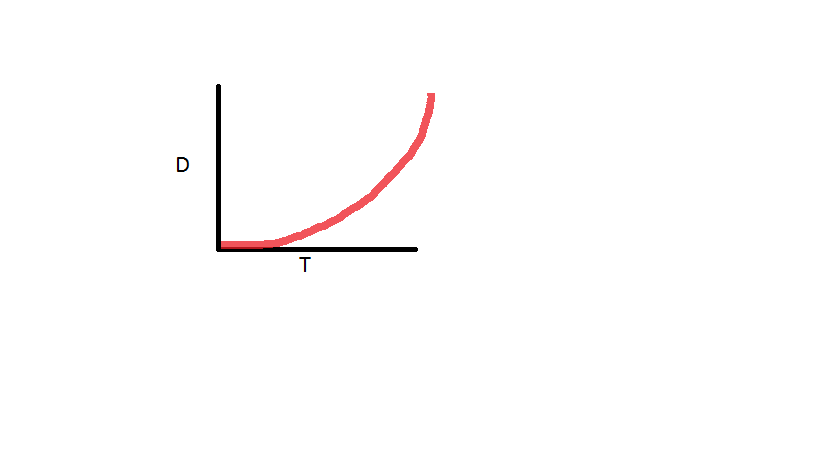
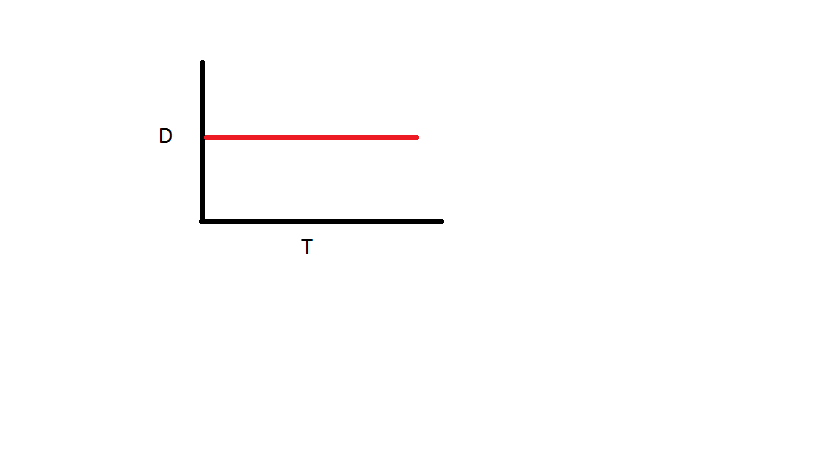
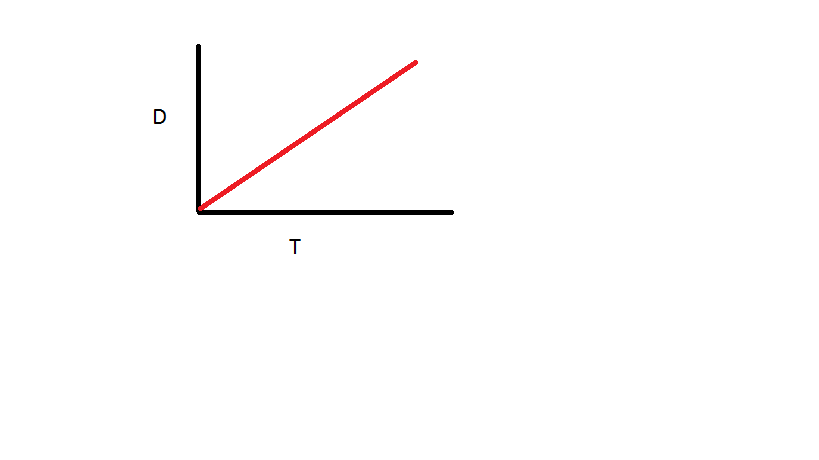
In the distance vs. time graph, what type of motion does the line represent? 
a)
Speed
b)
Velocity
c)
Acceleration
d)
Deceleration
125.
In the distance vs. time graph, what type of motion does the line represent?
a)
No motion
b)
Constant velocity
c)
Acceleration
d)
Deceleration
126.
In the distance vs. time graph, what type of motion does the line represent?
a)
Acceleration
b)
No motion
c)
Deceleration
d)
Constant Velocity
127.
A car traveling 300 miles in 5 hours is an example of _____. 
a)
Speed
b)
Velocity
c)
Acceleration
d)
Direction
128.
Describe the speed of the object from 4-6 seconds using the distance vs. time graph.
a)
Increasing speed
b)
Decreasing speed
c)
Not moving
d)
Constant speed
129.
Describe the speed of the object from
0-2 seconds using the distance vs. time graph.
a)
Constant speed
b)
Speeding up
c)
Slowing down
d)
Not moving
130.
What is the object doing from 10-12.5 seconds?
a)
Slowing down 
b)
Returning to the starting position
c)
Speeding up
d)
Not moving
131.
Which time section is the object moving the fastest?
a)
0-10 seconds
b)
10-20 seconds
c)
20-30 seconds
d)
30-40 seconds
132.
Which graph is would represent a decrease in speed?
a)
Graph A
b)
Graph B
c)
Graph C
d)
The object is not decreasing in speed in any of these graphs
133.
What kind of acceleration is shown here?
a)
positive
b)
negative
c)
none
d)
varies
134.
Which section of the graph shows decreasing velocity?
a)
CD
b)
DE
c)
EF
d)
GH
135.
Which graph represents the greatest acceleration?
a)
A
b)
B
c)
C
d)
D
136.
What is happening at D?
a)
Stationary
b)
Accelerating
c)
Fast steady speed; moving away from the starting position
d)
Slower steady speed; moving away from the starting position
137.

Which runner stopped for a rest?

a)

Albert

b)

Bob

c)

Charlie

d)

None of them stopped

138.
1. Which of the following statements about speed and velocity is correct?
a)
Velocity only describes an object’s rate of motion.
b)
Speed describes how an object is changing its velocity.
c)
Speed and velocity both describe how an object is speeding up.
d)
Only velocity includes the direction an object is traveling.
139.
Acceleration describes how an object’s velocity is changing.  Which of the following scenarios provides the best example of an accelerating object?
a)
A car driving at a constant speed
b)
A book sitting on top of a high shelf
c)
A toy train traveling in a circle
d)
A toy boat floating in a bathtub
140.
When a car goes around a corner at 20 mph, why do we say it  accelerates?
a)
The car is accelerating because of the velocity is constant
b)
The car accelerates because it's going 20 mph
c)
Cars always accelerate when they are in motion
d)
The car is accelerating because it's changing direction
141.
The gees fly 23 mph to the south when they migrate for the winter. 
a)
speed
b)
velocity
c)
acceleration
142.
The tornado is traveling northwest at 20 mph. 
a)
speed
b)
velocity
c)
acceleration
143.
The Olympian swam 200 meters in 20 seconds. 
a)
speed
b)
velocity
c)
acceleration
144.
Avery likes to walk 30 feet in 10 seconds. What is her speed?
a)
3 feet/sec
b)
6 feet/sec
c)
10 feet/sec
d)
2 feet/sec
145.
65mi/hr South is an example of...
a)
Speed
b)
Velocity
c)
Acceleration
d)
Direction