
 Worksheets
7th Grade Physical Science Final Exam Practice Questions
Total questions: 150
Worksheet time: 3hrs 38mins
Which of the following is an example of Newton's First Law of Motion?
An object at rest will stay at rest, and an object in motion will stay in motion with the same speed and direction, unless acted upon by an external force.
An object in motion will eventually come to a stop on its own.
An object at rest will immediately start moving when an external force is applied.
An object at rest will eventually start moving on its own.
Newton's Second Law of Motion states that the acceleration of an object is directly proportional to the net force acting on it and inversely proportional to its:
time
distance
velocity
mass
Which equation represents Newton's Second Law of Motion?
F = md
F = mv
F = mv^2
F = ma
Which of the following statements is true about weight?
Weight is a measure of the force exerted on an object due to temperature.
Weight is a measure of the force exerted on an object due to magnetism.
Weight is a measure of the force exerted on an object due to friction.
Weight is a measure of the force exerted on an object due to gravity.
Friction is a force that opposes the motion of objects. Which of the following is an example of friction?
When you try to push a heavy box and it doesn't move.
When you throw a ball in the air and it falls back down.
When lift a heavy box off the wet floor.
Which type of friction occurs when an object moves through a fluid, such as air or water?
Static friction
Rolling friction
Fluid friction
Surface friction
What is the force that keeps planets in orbit around the Sun?
gravity
friction
magnetism
centrifugal force
What is the term for the force that opposes the motion when two surfaces are in contact?
Gravity
Friction
Inertia
Momentum
Which of the following is a unit of measurement for weight?
Newton
Joule
Watt
Ampere
What is the effect called when an object moving in the atmosphere experiences a force opposite to its direction of motion?
Air Resistance
Lift
Thrust
Weight

Determine the speed at 20 seconds based on the information shown in the graph. Speed = distance/time
2 m/s
10 m/s
20 m/s
.5 m/s
What two measurements are necessary for calculating speed?
Mass and time
Temperature and mass
Mass and distance
Distance and time

Which of the graphs shows that one of runners started 10 yards further ahead of the other (note that graph c is the bottom right and graph d is the bottom left)?
Graph A
Graph B
Graph C
Graph D
Length between two points
Reference Point
Distance
Displacement
Position
Why does ice float?
Liquid water is less dense than solid water.
Solid water is less dense than liquid water.
Gaseous water is less dense than solid water.
Liquid water is less dense than gaseous water.
What is the measuring unit for mass?
centimeter
millimeter
grams
pounds
Which units of measurement are used for volume?
grams
centimeters
grams/milliliter
milliliter

What is this tool to find volume?
triple beam balance
ruler
thermometer
graduate cylinder

What is the volume of the dinosaur?
(a)

In this image, the VOLUME of A is _____ the volume of B
equal to
greater than
less than

Which box has a higher density?
A
B
They are the same
An object floats when density of the object is...
less than the density of the fluid it is submerged in
more than the density of the fluid it is submerged in
Gravitational Force

Teddy the Turtle is not paying attention while skateboarding and hits a rock. The skateboard stops...he doesn't. Choose the scientific law that explains what happens.
The Law of Inertia
The Law of Acceleration
The Law of Gravity
If you increase the force on an object (without changing it's mass), its acceleration...
decreases
stays the same
also increases
stops
What is Newton's First Law?
F=ma
Every action has an equal and opposite reaction
An object at rest stays at rest, an object in motion stays in motion.
Friction
Friction is a force that acts
in the same direction as the motion
opposite to the direction of the motion
opposite to the applied skittles
the same direction as the applied force

What is the net force on the box?
40 N left
0 N (balanced)
400 N right
40 N right
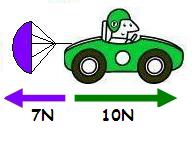
What is the net force?
3 N
3 N, right
17 N, right
3 N, left

What force holds the planets in motion around the sun?
Magnetic
Electrical
Gravitational
Air Resistance

This car is turning, but there’s a puddle of water in the road. Which diagram best shows how the puddle will affect the path of the car after it hits the puddle?


A person would weigh less on on the Moon than on the Earth because . . .
Moon has more mass, and therefore more gravity
Moon has less mass, and therefore more gravity
Moon has more mass, and therefore less gravity
Moon has less mass and therefore less gravity
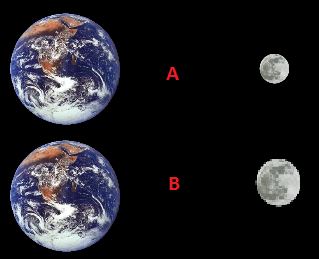
Which system has the greater gravitational attraction between the two objects (if any)?
System A
System B
Same gravitational attraction fro System A and System B
A(n) _____ is the curved path of an object around a point/object in space.
orbit
rotation
revolution
phase
Which of the following will NOT change if you go to the moon...
your weight
your mass
the atmosphere
Heat transfer occurs
in many directions
both from warm objects to colder ones and from cold objects to warmer ones
only from warm objects to colder ones
only from cold objects to warmer ones
What happens to particles as they heat up?
They slow down
Nothing
They don't move
They speed up
What happens to particles as they cool down? (select 2)
They slow down
They move closer to each other
They don't move
They speed up
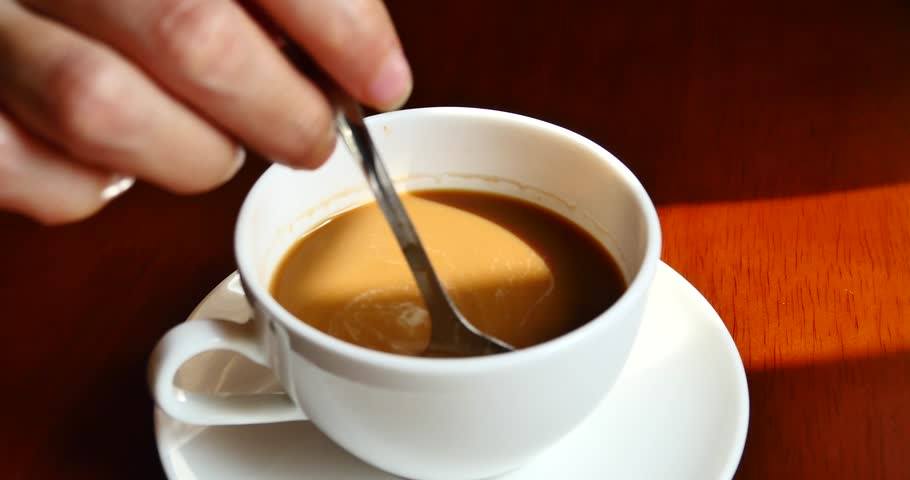
Hot coffee is stirred with a spoon, the spoon gets hot due to
Convection
Conduction
Radiation
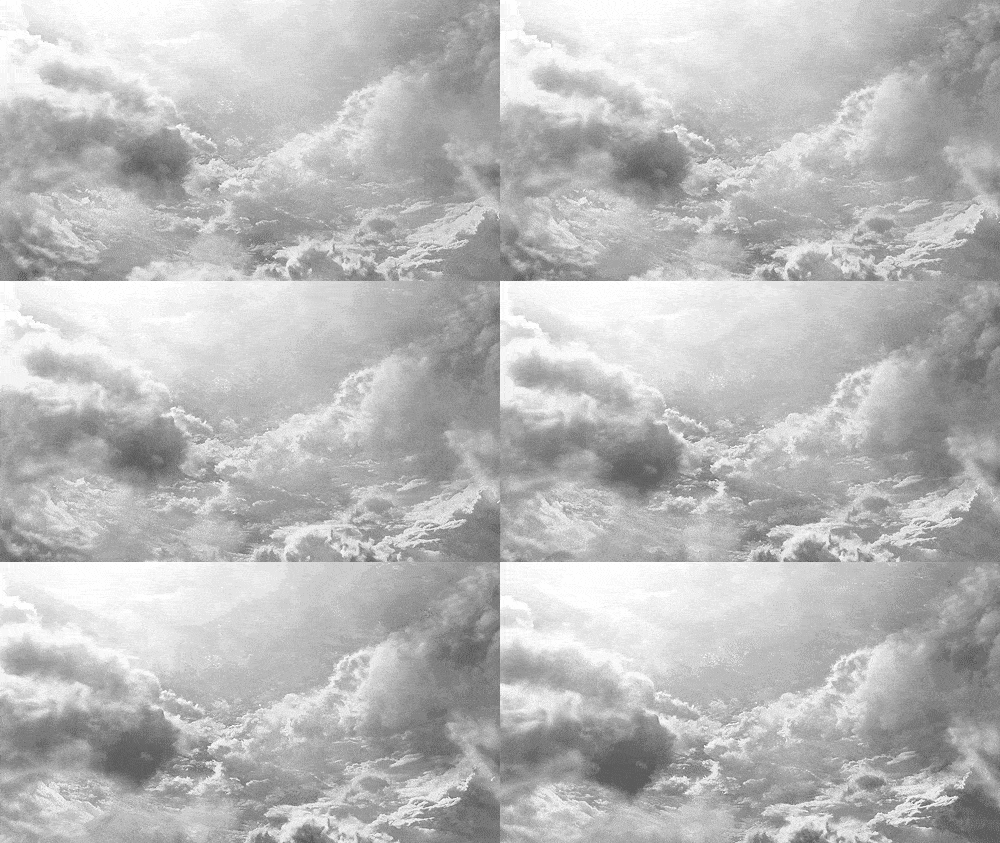
The cause of weather systems on earth is
Convection
Conduction
Radiation

A group of friends gather around a fire to stay warm.
conduction
convection
radiation

Energy (heat) is added in order to change state from ...
solid to liquid
liquid to solid
gas to liquid
gas to solid
Which of the following is NOT considered an insulator?
Plastic
Styrofoam
Rubber
Aluminum
Where is the strongest attraction force of the magnet?
at the poles
in the middle
above the magnet
below the magnet
If you cut a magnet in half, what happens to the poles?
One half gets the North Pole, the other half gets the South Pole
Both halves get only a North Pole
Both halves get only a South Pole
Both halves get a North pole and a South Pole


What is electrical current?
the flow of electrons through an object
the difference in number of electrons from 2 objects
the resistance of a resistor
the path to enlightenment
Which of the following can be considered a "resistor" in an electrical circuit?
battery
light bulb
switch
Metal is used to make electrical wires because_______.
It allows an electric current to freely flow.
It slows electric currents from flowing.
It is very cheap.
It is very expensive.
A chemical change is different than a physical change because in a chemical change
chemicals are used
molecules do not physically touch
a new substance is formed and in a physical no new substance is formed
the change can be seen but in a physical change it cannot

How many Carbons are present on the reactant side?
1
2
3
4

How many Oxygens are on the product side of this chemical equation?
1
2
3
4
What does it mean for a reaction to be exothermic? Choose 1 of the following.
When two substances react, the temperature of the mixture decreases.
When two substances react, the temperature of the mixture increases.
There is more energy going into the reactant to break the bond than there is energy leaving the product.
The amount of energy entering and leaving is the same.
The positive particle in an atom.
proton
neutron
electron
electron cloud
When you burn Steel Wool, what is the new substance produced from a chemical change with Oxygen and Iron?
Which of the following IS a physical change?
Getting a haircut
Rusty metal
A compound
sour milk
Tiny pieces of matter that everything is made of
model
atoms
substances
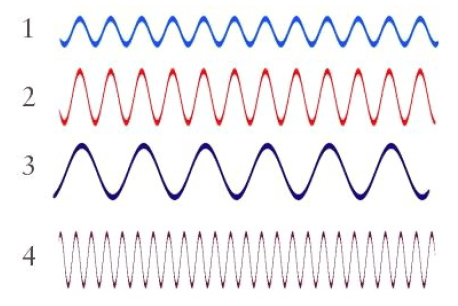
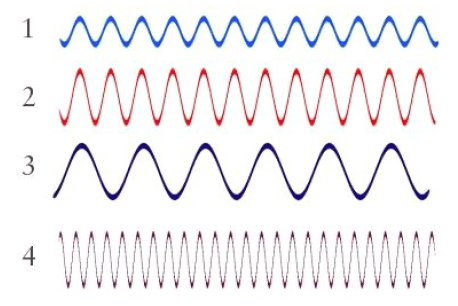
What term describes when a wave strikes and object and bounces off?

Which wave is pictured? (a)
Which diagram shows the wavelength of a wave?


A wave that can travel through matter AND empty space is a:
electromagnetic wave
longitudinal wavy
transverse wave
mechanical

You can't hear sounds in outer space because there is no
medium
light
energy
heat


Use the image to answer the following question(s).
Light exits the prism in the diagram above and separates into different colors of the visible spectrum. These colors are different because they have different __________.
densities
reflections by the prism
mixtures of white light
wavelengths

The colors of the visible light spectrum in order from largest wavelength to smallest wavelength are:
Violet, Indigo, Blue, Green, Yellow, Orange, and Red
Green, Blue, Indigo, Violet, Red, Orange, and Yellow
Red, Orange, Yellow, Green, Blue, Indigo, and Violet
Yellow, Orange, Red, Violet, Indigo, Blue, and Green

A black shirt capturing light waves and making a person feel hot in the summer is an example of:
Reflection
Refraction
Absorption

What medium do sound waves travel fastest through?
Solids
Liquids
Gases
According to Newton’s third law of motion, the strength of a reaction force is (a) the strength of the action force.

A burning candle converts _____ energy into _____ energy.
nuclear, electromagnetic
kinetic, electromagnetic
electrical, electromagnetic
chemical, light

Based on the table above, sound waves travel most slowly through which of the following?
air
glass
water
steel
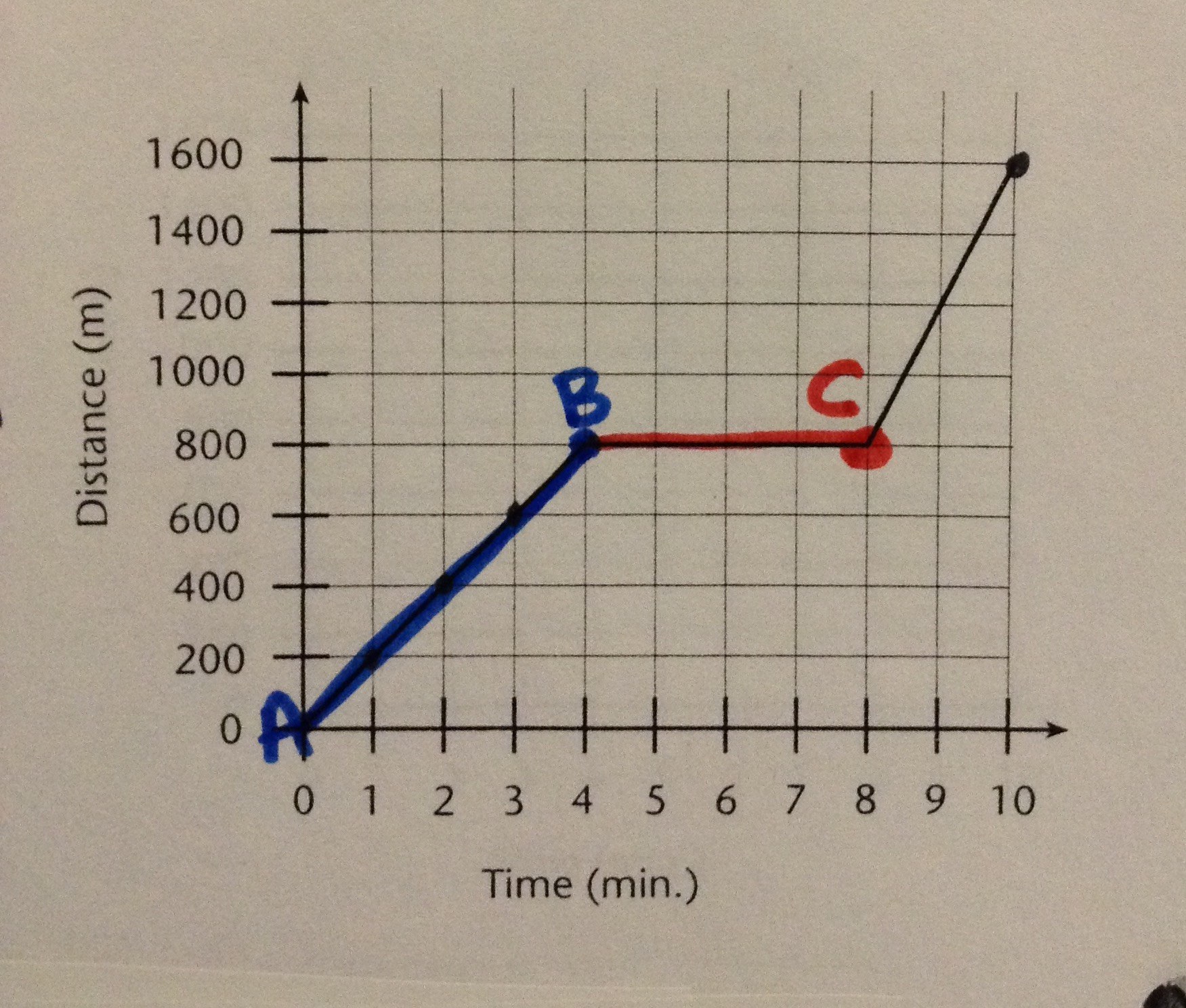
What was occurring from point B to point C?
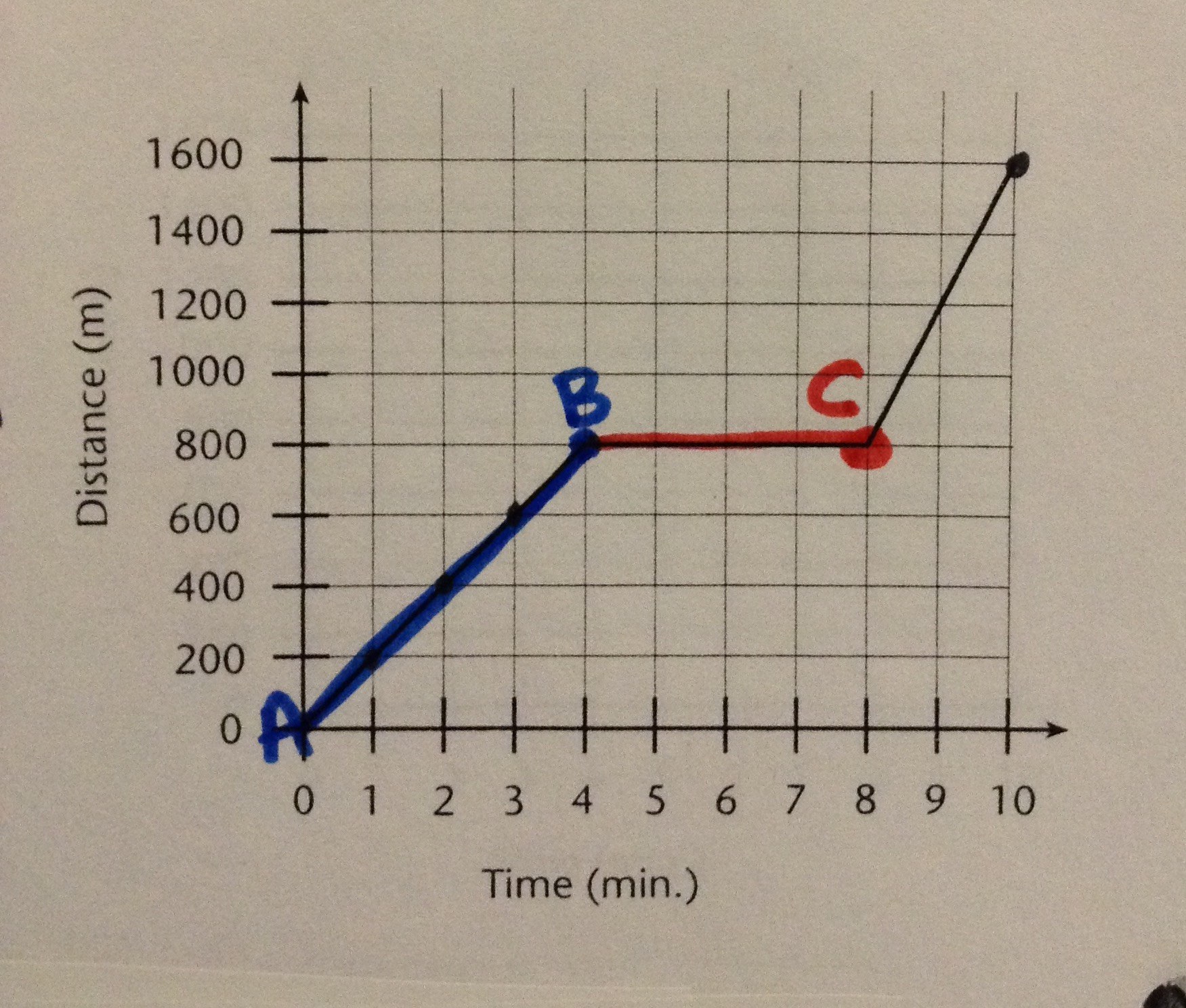
What is occurring from point A to point B?


The diagram represents four processes, labeled A, B, C, and D, that occur when water changes phase. Which two processes increase the motion of the molecules?
A and B
C and D
B and C
D and A

The diagram below shows what occurs when a ray of light strikes and enters a pond. Which property of light is illustrated when the ray enters the pond?
refraction
absorption
reflection
emission

Which diagram best represents molecules of matter in the solid phase?
1
2
3
4

The diagram shows water being heated in a flask. The flask has a rubber stopper with a glass tube extending through it. The current level of the water in the glass tube is indicated. The temperature of the water is 25°C. If heating continues, the water in the glass tube will most likely
turn into a solid
move into the flask
become more dense
rise higher in the tube

The diagram below represents several forms of electromagnetic energy. Which feature best distinguishes one form of electromagnetic energy from another?
color
wavelength
surface temperature
distance traveled

Base on diagram, which shows two insulated Styrofoam cups of water connected by an aluminum bar. The thermometers show the temperature of the water in cup A and cup B at the beginning of a heat-flow experiment. Which process is most responsible for the temperature changes that will take place?
radiation of heat from the water in the cups to the thermometers
conduction of heat through the aluminum bar
radiation of heat from the water in the cups into the air
conduction of heat through the air to the water in the cups
Base on diagram, which shows two insulated Styrofoam cups of water connected by an aluminum bar. The thermometers show the temperature of the water in cup A and cup B at the beginning of a heat-flow experiment. Over the next 15 minutes, which changes would most likely occur?
The temperature in cup A will decrease and the temperature in cup B will increase.
The temperature in cup A will decrease and the temperature in cup B will decrease.
The temperature in cup A will increase and the temperature in cup B will increase.
The temperature in cup A will increase and the temperature in cup B will decrease.

Which graph best represents the relative distance between the particles of most substances in their solid, liquid, and gas states?
1
2
3
4

The picture below shows a ringing bell inside a vacuum jar. As air is pumped from the vacuum jar, the sound level of the ringing bell will decrease until it can no longer be heard. This happens because air must be present in the jar in order for
sound to be transferred
the rubber to seal the jar
electricity to flow through the wires
the bell clanger to vibrate
Which graph correctly shows the effect of heat energy on the motion of molecules of matter?


The diagram shows the relative wavelengths for several types of electromagnetic energy. Which type of electromagnetic energy has a shorter wavelength than ultraviolet waves?
visible light
x rays
microwaves
infrared light

Which diagram best represents light being reflected after striking the flat surface of a mirror?
1
2
3
4

The drawings below represent four different forms of electromagnetic energy. Which diagram represents electromagnetic energy with the shortest wavelength?
A
C
B
D
A wet shirt is put on a clothesline to dry on a sunny day. The shirt dries because water molecules
gain heat energy and condense
lose heat energy and condense
gain heat energy and evaporate
lose heat energy and evaporate

The diagram below shows a glass containing a liquid and ice cubes. Which process causes water droplets to form on the outside of the glass?
evaporation
condensation
freezing
melting

The diagram shows a metal spoon in a glass of water. Which process causes the metal spoon to appear split or broken?
absorption
refraction
convection
reflection


The graph shows the distance traveled by four cars, A, B, C, and D, over a period of time. The average speed of a moving object can be determined by using the equation below. Which car traveled at an average speed of 20 kilometers per hour? s = d /t
A
B
C
D

The diagrams below show smooth blocks of wood being pushed across the same surface. The mass of the block and amount of force applied are labeled in each diagram. In which diagram would the block of wood have the greatest acceleration?
1
2
3
4

Which graph shows an object slowing down?
1
2
3
4

The illustration shows an example of energy changing forms. Which changes in energy form are illustrated in the diagram?
electrical → sound → light and mechanical
mechanical → light → sound and electrical
sound → mechanical → light and electrical
light → electrical → mechanical and sound

The diagram shows a boulder rolling down a hill into a valley and then up the opposite hill. At which position does the boulder have the greatest potential energy?
A
B
C
D
The diagram shows a boulder rolling down a hill into a valley and then up the opposite hill. At which position does the boulder have the greatest kinetic energy?
A
B
C
D

What is the sequence of the energy transformations represented in the diagram?
mechanical →chemical →solar
solar →electrical →mechanical
mechanical →electrical →solar
solar →chemical →electrical
The density of hot and cold water are different mainly because
The molecules in hot water move slower and are slightly closer together
The molecules in hot water are larger
The molecules in hot water move faster and are slightly further apart
The molecules in cold water move faster and are further apart
If you cut a wooden block in half, each half would have
a) Half the density of the original piece
b) Twice the density of the original piece
c) The same density as the original piece
d) No density at all
Half the density of the original piece
twice the density of the original piece
The same density as the original piece
No density at all


Find the volume of this piece of brass.
50.0 g
10.0 cm
6.0 cm3
12.0 cm3

What does each sphere represent?
different elements
compounds
chemical bonds

Figure A shows a beaker containing water, sand, and salt. The salt is totally dissolved in the water. Figure B shows the contents of the beaker being poured through filter paper in a funnel over a flask. Figure C shows the same flask after sitting at room temperature for 15 days. After 15 days, the flask contains only solid salt particles. Why are the contents of the flask in figure B are classified as a mixture.
because it is the physical combination of two or more substances. Can be separated by filtration and settling.
because it is the chemical combination of two or more elements. Cannot be physical separated.
A student mistakenly dumped iron filings and sand into a beaker of salt that the teacher needed for a salt water fish tank. Check all that needs to be done to separate all the substances back to original.
use a magnet to separate iron filings
evaporate the water to separate the water from the salt
filter salt from water using a coffee filter
filter the salt water from the sand using a coffee filter
add water to make a solution of salt water and sand mixture

A mixture of salt, sand, and water is thoroughly stirred. It is then filtered through a filter paper as shown in the diagram below. Which substance(s) pass through the filter?
salt and sand
sand and water
water and salt
water only


The only sure evidence of a chemical reaction is
the formation of a gas
a color change
the production of new materials
changes in properties.

The diagram shows the steps necessary to produce the energy needed to run a hair dryer. As it moves from location A to location D in the diagram, the energy stored in the coal
is converted to solar energy
is recycled
reduces the friction in the hair dryer
is transformed

The illustration shows an example of energy changing forms. Which changes in energy form are illustrated in the diagram?
electrical → sound → light and mechanical
mechanical → light → sound and electrical
sound → mechanical → light and electrical
light → electrical → mechanical and sound
The diagrams show a person moving a 50-kilogram object up a ramp. In which diagram is there the least amount of friction on the object?


The cartoon below shows a humorous view of a law of motion. Which statement best summarizes the scientific concept shown in the cartoon?
A falling body accelerates at a constant speed.
The motion of an object is constantly changing due to magnetic forces.
The force of friction causes an object in motion to move faster.
A body in motion will remain in motion unless influenced by an outside force.


An accident might release radiation into the surrounding area.

