
 Worksheets
Life's Origins Biology Unit Test Review
Total questions: 140
Worksheet time: 3hrs 14mins
Eyepiece = 20X
Objective lens = 20X


All living organisms are composed of...
cells
monkeys
eukaryotes
tissues
The idea of the 'cell' came from a scientist examining which type of tissue?
seaweed
cork
neural tissue
algae
Which of the following is a difference between a dissecting microscope and a compound microscope
The compound microscope bounces light off of the specimen
The dissecting microscope usually has multiple objective lenses
The dissecting microscope generally uses slides with thin sections
The compound microscope generally has 3 levels of magnification
The ability to distinguish between two objects with a given microscope or telescope is known as
resolving power
magnification
fine adjustment
illumination power
What is generally the maximum useful magnification that one can use with a light microscope?
100x
400x
1000x
4000x
One must utilize an electron microscope to effectively see which of the following?
Red blood cells
Coronavirus
Plant ovaries
Flagella
What is one disadvantage of using an electron microscope
The specimen cannot be alive when viewed
The specimen cannot be viewed with as great a magnification as with a light microscope
One cannot view thin sections, only the surface of objects
It has less resolving power compared to a compound light microscope
Which is not true?
One can only use staining techniques with electron microscopes, not light microscopes
Heavy metal is attached to specimens when preparing slides for electron microscope viewing
A dissecting microscope can be used to view thin section microscope slides
Two microscopes can have the same magnification but different resolving powers.
What is the difference between transmission electron microscopes and scanning electron microscopes
TEM is used for thin sections while SEM is for surface photography
SEM does not require heavy metal staining while TEM does.
One can use a slide prepared for a compound light microscope directly in TEM, but not in SEM.
SEM generally has higher magnification than TEM
Which of the following requires a beam of energy of some type (whether light or electrons) to pass through the specimen being examined?
Only light microscopy
Only light microscopy and transmission electron microscopy
light microscopy, transmission electron microscopy, and scanning electron microscopy
none of these


In eukaryotic cells, all cellular contents outside the nucleus; in prokaryotic cells, all of the cell's contents
Centriole
Chloroplast
Cytoplasm
Cytoskeleton
Specialized structure that performs important cellular functions within a cell
Vacuole
Ribosome
Organelle
Nucleus
Cell organelle that stores materials such as water, salts, proteins, and carbohydrates
Centriole
Vacuole
Ribosome
Lysosome
Cell organelle that breaks down lipids, carbohydrates, and proteins into small molecules that can be used by the rest of the cell
Vacuole
Chloroplast
Lysosome
Golgi apparatus
Network of protein filaments in a eukaryotic cell that gives the cell its shape and internal organization and is involved in movement
Cytoskeleton
Golgi apparatus
Ribosome
Endoplasmic reticulum
Structure in an animal cell that helps to organize cell division
Nucleus
Nucleolus
Endoplasmic reticulum
Centriole
Describe COHESION.
Water molecules attracted to other substances.
Water molecules climbing upwards against the force of gravity.
Water molecules dissolving many substances because of its polarity.
Water molecules attracted to other water molecules.
Describe ADHESION.
Water molecules attracted to other substances.
Water molecules climbing upwards against the force of gravity.
Water molecules dissolving many substances because of its polarity.
Water molecules attracted to other water molecules.

Attractions between water molecules are called
Covalent bonds
Ionic bonds
Polar bonds
Hydrogen bonds
Why does ice float?
As water freezes, it expands and its density decreases.
As water freezes, it takes up more hydrogen from the atmosphere
As water freezes, air becomes trapped between the water molecules.
As water freezes, it takes up more oxygen from the atmosphere
What type of bond attaches the oxygen and hydrogens together in a SINGLE water molecule?
hydrogen bonds
ionic bonds
covalent bonds
Which end of the water molecule has a slightly positive charge?
the oxygen end
the hydrogen end
both ends are slightly positive
neither end is positive
Why does water moderate temperature so well?
It does not allow heat in between the hydrogen bonds.
More energy is needed to break all the hydrogen bonds, or rebuild them, between water molecules.
Water has high energy all the time, so it can't heat up any more.
The polarity of the water molecule resists the added energy, causing water to stay the same temperature.
Why is water so good at dissolving so many substances?
it is polar
it is less dense as a solid
cohesion
adhesion
Cellular Respiration occurs in what cell organelle?
chloroplast
cytoplasm
mitochondria
animal
Which organism go through cellular respiration?
animals
plants
both animals and plants
none
What's the chemical formula for glucose?
6C6H12O6
C12H6O12
C6H12O6
CHO
Which molecule is the reactant of Glycolysis?
water
glucose
carbon dioxide
ATP
Which molecule is the product of Glycolysis and the reactant of the Krebs Cycle?
pyruvic acid
carbon dioxide
water
oxygen
Which molecule is the product of the Krebs Cycle?
oxygen
pyruvic acid
carbon dioxide
water
Which molecule is the reactant of the Electron Transport Chain?
carbon dioxide
pyruvic acid
oxygen
ATP
What is formed at the end of the Electron Transport Chain by the combination of its reactant and hydrogen?
water
oxygen
carbon dioxide
glucose
The Electron Transport Chain is a series of chemical reactions in which energy is transferred to form a large amount of what molecule?
glucose
oxygen
pyruvic acid
ATP


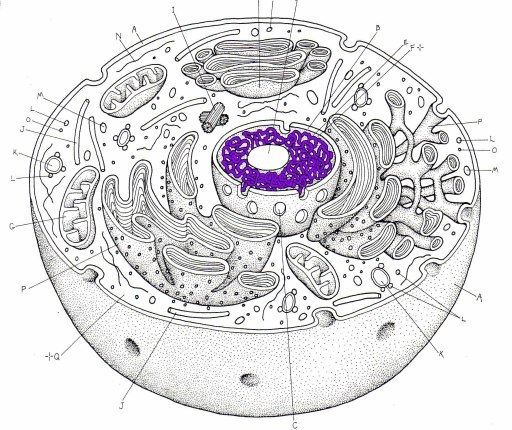


Where do the dark reactions (Calvin cycle) take place?
thylakoid membrane
lumen
stroma


According to the Endosymbiotic Theory, why are the ancestors to Eukaryotic cells Prokaryotes?
Prokaryotic cells evolved
Prokaryotic cells mutated, developing advantageous traits
Prokaryotes grew inside each other, increasing complexity
Prokaryotic cells grew together with eukaryotic organisms
Why do mitochondria and chloroplasts have DNA in them?
They were once prokaryotic cells.
They produce their own DNA through photosynthesis.
They receive the DNA from the nucleus.
They process the DNA of the cell.
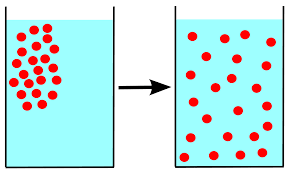

What does semi-permeable mean?
Some molecules can move through the membrane
Nothing can move through the membrane
All molecules can pass through the membrane.

