wayground logo

Free Printable Worksheets

Font size

S
M
L
XL
Worksheets

Unit 6 + Unit 9 - Waves Sound and Light + Matter

Total questions: 135

Worksheet time: 11hrs 15mins

Name
Class
Date
1.
Balance this equation,            Al2O3 ---> Al + O2 
a)
Cannot be balanced
b)
2Al2O3 ---> 2Al + 3O2 
c)
2Al2O3 ---> 4Al + 3O2 
d)
3Al2O3 ---> 2Al + O2 
2.
Which is the Law of Conservation of Matter?
a)
matter cannot be created or destroyed, it only changes form
b)
matter can be created but it cannot be destroyed, it never changes form
c)
matter can be destroyed but it cannot be created, it usually just changes form
d)
matter is an unproven theory created by Hans Geiger
3.
__NaClO--> __NaCl + __O2
a)
2,2,2
b)
2,2,3
c)
3,2,2
d)
1,2,3
4.
__H2O2 --> __H2O + __O2
a)
already balanced
b)
2,1,1
c)
2,2,1
d)
2,1,2
5.
__BF3 + __Li2SO3 --> __B2(SO3)3 + __LiF
a)
2,3,1,3
b)
2,3,1,6
c)
4,4,2,12
d)
3,3,1,9
6.
__C6H12O6 + __O2 --> __H2O + __CO2
a)
1,6,6,6
b)
already balanced
c)
1,6,1,6
d)
2,12,12,12
7.
_AgNO3 + _Cu _Cu(NO3)2 + _Ag
a)
2 AgNO3 + 2 Cu → 3 Cu(NO3)2 + 1 Ag
b)
2 AgNO3 + 1 Cu → 1 Cu(NO3)2 + 2 Ag
c)
1 AgNO3 + 2 Cu → 2 Cu(NO3)2 + 1 Ag
d)
3 AgNO3 + 2 Cu → 3 Cu(NO3)2 + 2 Ag
8.
__(NH4)3PO4 + __Pb(NO3)4 --> __Pb3(PO4)4 + __NH4NO3
a)
2,1,1,6
b)
1,2,2,3
c)
4,3,1,12
d)
4,2,1,12
9.
What does the Law of Conservation of Mass state?
a)
Matter cannot be gained or lost in a chemical reaction.
b)
Matter can only be lost in a chemical reaction.
c)
Matter can only be gained in a chemical reaction.
d)
Matter can be gained and lost in a chemical reaction. 
10.
Balance this equation:
 2Li + Cl2 -> LiCl
a)
2Li + Cl2 -> 4LiCl2
b)
2Li + Cl2 -> LiCl2
c)
2Li + Cl2 -> 2LiCl
11.
What is the right ratio of chemicals for the BCE (Balanced Chemical Equation)?__FeCl3 + __Ca(OH)2 --> __Fe(OH)3 + __CaCl2
a)
4,3--> 2,1
b)
3,2 --> 3,1
c)
2,3 --> 2,2
d)
2,3 --> 2,3
12.
Fill in the blanks with coefficient:
PCl5+_ H2O→_ HCl+H3PO4
a)
4, 5
b)
1, 6
c)
3, 8
d)
2,2
13.
Balance the equation:
Si(OH)4+NaBr-->
 SiBr4+NaOH
a)
Si(OH)4+2NaBr--> SiBr4+NaOH
b)
Si(OH)4+4NaBr--> SiBr4+4NaOH
c)
Si(OH)4+NaBr--> SiBr4+4NaOH
d)
Si(OH)4+2NaBr--> SiBr4+2NaOH
14.
Balance this reaction: ____ RbNO3 + ____ BeF2 ----> ____ Be(NO3)2 + ____ RbF
a)
1,1,1,1
b)
1,2,1,1
c)
2,1,1,2
d)
2,1,2,1
15.

Balance this reaction: ____ CH4 + ____ O2 ---> ____ CO2 + ____ H2O

a)

2,1,3,1

b)

1,2,1,2

c)

1,2,2,1

d)

2,1,1,2

16.
__Al + __Fe3N2 -->__AlN + __Fe
a)
already balanced
b)
4,2,4,6
c)
2,1,2,3
d)
1,2,1,3
17.
__H2O2 --> __H2O + __O2
a)
already balanced
b)
2,1,1
c)
2,2,1
d)
2,1,2
18.
__BF3 + __Li2SO3 --> __B2(SO3)3 + __LiF
a)
2,3,1,3
b)
2,3,1,6
c)
4,4,2,12
d)
3,3,1,9
19.
_P4+_O  _P2O3
a)
3 P4+1 O→ 2 P2O3
b)
1 P4+1 O→ 2 P2O3
c)
1 P4+ 3 O→ 2 P2O3
d)
1 P4+ 2 O→ 3 P2O3
20.
_BaS + _PtF2  _BaF2 + _PtS
a)
1 BaS + 1 PtF2 → 1 BaF2 + 1 PtS
b)
4 BaS + 2 PtF2 → 1 BaF2 +  1 PtS
c)
1 BaS + 2 PtF2→ 2 BaF2 +  2 PtS
d)
1 BaS + 3 PtF2 →1 BaF2 +  2 PtS
21.
_AlBr3 + _K2SO _KBr + _Al2(SO4)3
a)
6 AlBr3 + 1 K2SO4 → 6 KBr + 1 Al2(SO4)3
b)
2 AlBr3 + 3 K2SO→ 6 KBr + 1 Al2(SO4)3
c)
1 AlBr3 + 1 K2SO→ 2 KBr + 3 Al2(SO4)3
d)
2 AlBr3 + 3 K2SO→ 1 KBr + 2 Al2(SO4)3
22.
How many Hydrogen are in 4H2O?
a)
6
b)
8
c)
2
d)
4
23.
Balance this equation:  H2 + N2 → NH3
a)
 H2 + 4N2 → NH3
b)
 H2 + 3N2 → 2NH3
c)
 3H2 + N2 → 2NH3
d)
 2H2 + 2N2 → 2NH3
24.
_Al + _HCl →_H2 + _AlCl3
a)
2 Al + 2 HCl → 2 H2 + 6 AlCl3
b)
3 Al + 3 HCl → 6 H2 + 2 AlCl3
c)

Al + HCl → 3 H2 + AlCl3

d)
2 Al + 6 HCl → 3 H2 + 2 AlCl3
25.
_K + _Cl2 _KCl
a)
2 K + 16 Cl2 → 8 KCl
b)

2 K + Cl2 → 2 KCl

c)
3 K + 4 Cl2 → 3 KCl
d)

K + Cl2 →KCl

26.
_AgNO3 + _Cu _Cu(NO3)2 + _Ag
a)

2 AgNO3 + 2 Cu → 3 Cu(NO3)2 + Ag

b)

2 AgNO3 + Cu → Cu(NO3)2 + 2 Ag

c)

AgNO3 + 2 Cu → 2 Cu(NO3)2 + Ag

d)
3 AgNO3 + 2 Cu → 3 Cu(NO3)2 + 2 Ag
27.

Is the following reaction balanced?

2KClO3  2KCl + 3O22KClO_{3\ }\longrightarrow\ 2KCl\ +\ 3O_2  

a)

Yes

b)

No

28.

Is the following reaction balanced?

H2 + O2  H2OH_2\ +\ O_2\ \longrightarrow\ H_2O  

a)

Yes

b)

No

29.

Is the following reaction balanced?

10P + 4O2  2P2O510P\ +\ 4O_{2\ }\longrightarrow\ 2P_2O_5  

a)

Yes

b)

No

30.

Which number is needed to balance the following equation?


2Na + 2H2O  2NaOH +H22Na\ +\ 2H_2O\ \longrightarrow\ 2NaOH\ +\ldots H_2  

a)

2

b)

1

c)

3

d)

4

31.

True or false:

In any physical change or chemical reaction, mass is conserved.

a)

True

b)

False

32.

What is the "Law of Conservation of Mass"?

a)

Mass cannot be created or destroyed

b)

Mass is messy

c)

There is no Mass

d)

Mass is measured in liters

33.

Which side of the chemical reaction is the reactant?

a)

Left

b)

Right

c)

Top

d)

Coefficient

34.

Which side of the chemical equation is the product?

a)

Right

b)

Left

c)

Middle

d)

Bottom

35.

What do you change when balancing equations?

a)

subscript

b)

coefficient

c)

Element

36.
__Na + __Cl2 --> __NaCl
a)
1,1,2
b)
2,1,2
c)
2,1,1
d)
already balanced
37.
The red numbers in the image below represent ________
a)
subscripts
b)
coefficients
c)
I don't know, and don't want to try
d)
None of the answers are correct
38.
The blue numbers in the image below represent ________
a)
I don't know, and don't want to try
b)
coefficients
c)
subscripts
d)
none of the answers are correct
39.

Balance the following:

____ Al + ____ O2 → ____ Al2O3

a)
2,3,4
b)
4,3,2
c)
1,1,2
d)
2,1,1
40.

Balance the following:

____ Fe + ____ Cl2 → ____ FeCl3

a)
1,1,2
b)
1,3,1
c)
2,2,3
d)
2,3,2
41.
The number of atoms you begin with in a chemical reaction ...
a)
must be the same as the number of  atoms you end with
b)
must be an even number
c)
can be different to the number you finish with
d)
changes depending on how much energy is formed
42.

Balancing the following:

____ Al + ____ HCl → ____ AlCl3 + ____ H2

a)
1,3,1,2
b)
2,3,2,3
c)
2,6,2,3
d)
3,2,6,2
43.

Balance the following:

____ H2SO4 + ____ NaNO2 → ____ HNO2 + ____ Na2SO4

a)
1,1,2,1
b)
1,2,2,1
c)
2,3,3,2
d)
4,3,2,1
44.

What is the law of conservation of energy?

a)

Energy cannot be created or destroyed, but only changed from one form into another or transferred from one object to another.

b)

Energy can be created and destroyed, never changes form.

c)

Energy cannot be transferred from one object to another. Energy is only able to move in a straight line.

d)

Energy is bought at the grocery store.

45.
At the end of chemical reactions, what is the total mass of the reactants compared to the total mass of the products?
a)
the product is doubled
b)
the product is half the mass of the reactants
c)
the mass is the same
d)
the mass changes depending on the reaction
46.
The substances at the beginning of a chemical equation are called the ____
a)
product
b)
yield
c)
chemical symbol
d)
reactants
47.

What is the right part of a chemical equation called...

H2 + O2 --> H2O

a)

Reactants

b)

Products

c)

Yields

d)

Chemical Equation

48.
When balancing equations a ____ can be placed to the left of a formula of a substance to make the equations balanced
a)
charge
b)
subscript
c)
random number
d)
coefficient
49.
What is the right ratio of chemicals for the BCE (Balanced Chemical Equation)?__H2SO3 + __KOH--> __H2O+ __K2SO3
a)
2,1 --> 2,1
b)
1,2 --> 1,1
c)
1,2 --> 1,2
d)
1,2 --> 2,1
50.
What is the right ratio of chemicals for the BCE (Balanced Chemical Equation)?__H2 + __S --> __H2S
a)
1,1 --> 1
b)
2,2 --> 2
c)
1,2 --> 1
d)
1,2 --> 2
51.
What is the right ratio of chemicals for the BCE (Balanced Chemical Equation)?__AgNO3 + __H2S --> __Ag2S+ __HNO3
a)
2,1 --> 1,2
b)
1,2 --> 1,1
c)
1,2 --> 1,2
d)
1,2 --> 2,1
52.
What is the right ratio of chemicals for the BCE (Balanced Chemical Equation)?__CH4 + __O2 --> __CO2+ __H2O
a)
2,1 --> 2,1
b)
1,2 --> 1,1
c)
1,2 --> 1,2
d)
1,2 --> 2,1
53.

What is transferred from place to place by waves?

a)

matter

b)

energy

c)

particles

d)

light

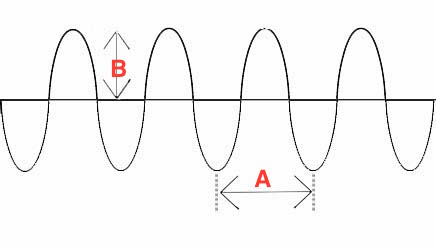
54.

What does the arrow in the picture represent?

a)

amplitude

b)

wavelength

c)

frequency

d)

trough

55.

What does the arrow in the picture represent?

a)

wavelength

b)

echolocation

c)

amplitude

d)

peak

56.

Waves that require a medium to travel are:

a)

mechanical waves

b)

transverse waves

c)

electromagnetic waves

d)

light waves

57.

What happens when you increase the amplitude of a sound?

a)

it makes the sound louder

b)

it makes the sound travel faster

c)

it makes the sound softer

d)

it changes the pitch or note of the sound

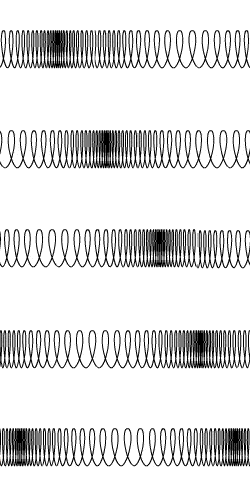
58.

What kind of wave is pictured below?

a)

compressional wave

b)

transverse wave

c)

longitudinal wave

d)

mechanical wave

59.

Which wave is pictured?

a)

Transverse

b)

Longitudinal

c)

Electromagnetic

d)

Light

60.

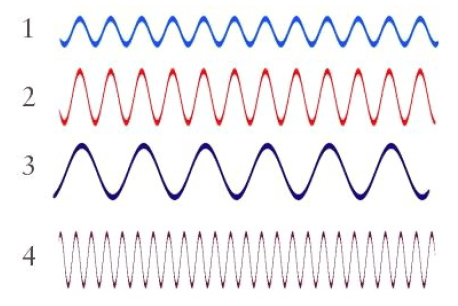
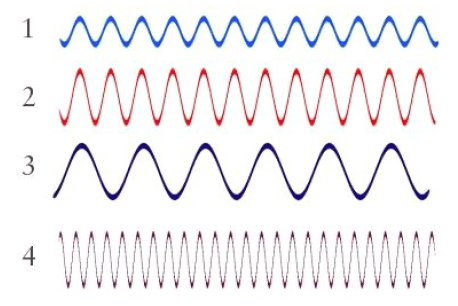
Which wave in the diagram has the greatest frequency?

a)

1

b)

2

c)

3

d)

4

61.

Which wave in the diagram has the longest wavelength?

a)

1

b)

2

c)

3

d)

4

62.

Which of the following can a mechanical wave travel through (select all that apply)?

a)

solid

b)

liquid

c)

gas

d)

empty space

63.

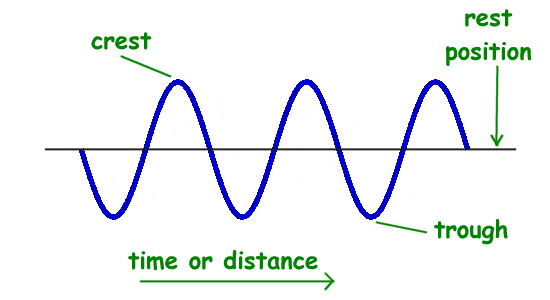
What is measured from crest to crest or trough to trough?

a)

mediums

b)

resting position

c)

wavelength

d)

origin

64.

If a wave has a greater frequency, what happens to the wavelength?

a)

increases

b)

decreases

c)

stays the same

65.

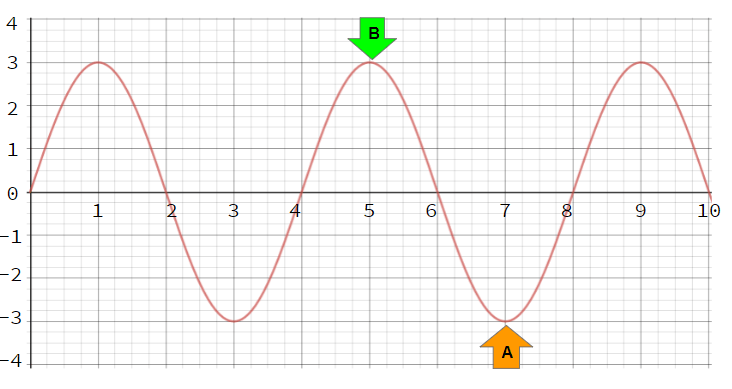
What property does the orange arrow (A) represent?

a)

Crest

b)

Trough

c)

Wavelength

d)

Peak

66.

The highest point of a wave is called what?

a)

trough

b)

wavelength

c)

peak

d)

amplitude

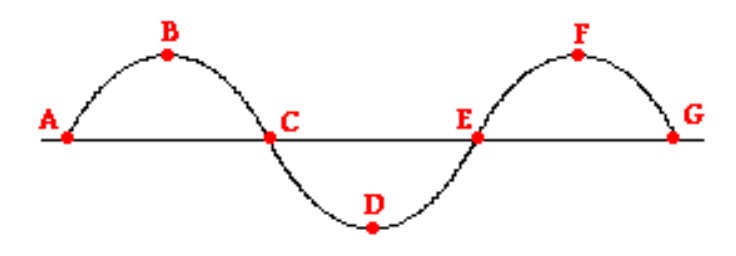
67.

Which word is used to identify the distance between points C & G?

a)

Amplitude

b)

Crest

c)

Frequency

d)

Wavelength

68.

The highest point on a wave is:

a)

the crest

b)

the trough

c)

the top

d)

the coast

69.

Which wave in the diagram has the greatest frequency?

a)

1

b)

2

c)

3

d)

4

70.
The highest point on a wave is:
a)
the crest
b)
the trough
c)
the top
d)
the coast 
71.
What property of the wave is represented by the letter "B"?
a)
amplitude
b)
crest
c)
trough
d)
wavelength
72.
The type of waves that require medium to pass:
a)
Mechanical Waves
b)
Electromagnetic Waves
73.
Which wave is pictured?
a)
Transverse
b)
Longitudinal
c)
Both
d)
Neither
74.
Sound needs a medium to travel through.  What is a medium?
a)
solid, liquid, gas
b)
open space
c)
waves
d)
nothing
75.

a disturbance caused by energy moving through a system in a cyclical pattern

a)

Wave

b)

Amplitude

c)

Frequency

d)

Speed

76.

When a wave bounces off of something and moves in a different direction

a)

reflection

b)

refraction

c)

absorption

d)

propagation

77.

when a wave is bent by traveling from one medium to another

a)

reflection

b)

refraction

c)

absorption

d)

propagation

78.
Which wave in the diagram has the greatest frequency?
a)
1
b)
2
c)
3
d)
4
79.
Which of the following is NOT a mechanical wave?
a)
sound
b)
light
c)
ocean
d)
seismic
80.

The highest point on a wave is:

a)

the crest

b)

the trough

c)

the top

d)

the coast

81.

Which word is used to identify the distance between points C & G?

a)

Amplitude

b)

Crest

c)

Frequency

d)

Wavelength

82.

Which letter(s) represent the trough of the wave?

a)

A

b)

B & D

c)

D

d)

C & G

83.
Which wave has a greater frequency?
a)
A
b)
B
84.
What kind of wave is pictured below?
a)
compressional wave
b)
transverse wave
c)
sound wave
d)
mechanical wave
85.
How would a person measure the wavelength on this sound wave?
a)
dense to less dense
b)
trough to crest
c)
compression to compression
d)
beginning of illustration to the end
86.

You can't hear sounds in outer space because there is no

a)

medium

b)

light

c)

energy

d)

heat

87.

All waves carry ________ as they travel from one place to another.

a)

matter

b)

space

c)

energy

d)

water

88.

What property of the wave is represented by the letter "B"?

a)

amplitude

b)

crest

c)

trough

d)

wavelength

89.
What type of wave is this?
a)
Longitudinal
b)
Transverse
90.

Sound waves can travel through a vacuum because they don't require particles.

a)

True

b)

False

91.
which material does sound travel the fastest?
a)
solid 
b)
liquid 
c)
gases
92.
When a wave strikes and object and bounces off. (example echo)
a)
medium
b)
refraction
c)
reflection
d)
interference
93.
When a wave bends as it passes through at an angle from one medium to another.(example: pencil in a glass of water-)
a)
medium
b)
refraction
c)
reflection
d)
interference
94.
The highest point on a wave is:
a)
the crest
b)
the trough
c)
the top
d)
the coast 
95.
The type of waves that require medium to pass:
a)
Mechanical Waves
b)
Electromagnetic Waves
96.
A wave with a large wavelength will have a ______ frequency and _____ energy
a)
high, low
b)
high, high
c)
low, high
d)
low, low
97.
A certain photon of light has a wavelength of 4.22x10⁻⁷nm. What is the frequency? (v=c/λ)
a)
7.11x10¹⁴ Hz
b)
7.11Hz
c)
1.41x10⁻¹⁵
d)
-1.41x10¹⁵
98.
Select the correct order of waves on the EMS 
a)
Radio, Micro, Infra, Visible, Ultra, X-ray, Gamma
b)
Gamma, X-ray, Ultra, Vis, Infra, Micro, Radio
c)
Vis, Micro, Infra, Ultra, X-ray, Gamma, Radio
d)
Micro, Radio, Vis, Infra, Ultra, X-ray, Gamma
99.
Which has the LONGEST wavelength and, therefore, the lowest frequency/energy
a)
Gamma Rays
b)
Radio Waves
c)
Visible Light
d)
Infrared rays
100.
Which has the SHORTEST wavelength and, therefore, the highest frequency/most energy
a)
Radio waves
b)
Ultraviolet Rays
c)
Gamma Rays
d)
X-rays
101.
Which section of the spectrum is the ONLY one we can see?
a)
X-rays
b)
Visible Light
c)
Gamma Rays
d)
Ultraviolet Rays
102.
As the frequency of an electromagnetic wave increases, the amount of energy in that wave...
a)
increases.
b)
decreases.
c)
stays the same.
103.
The height of the wave is known as the _____________.
a)
amplitude
b)
crest
c)
trough
d)
wavelength
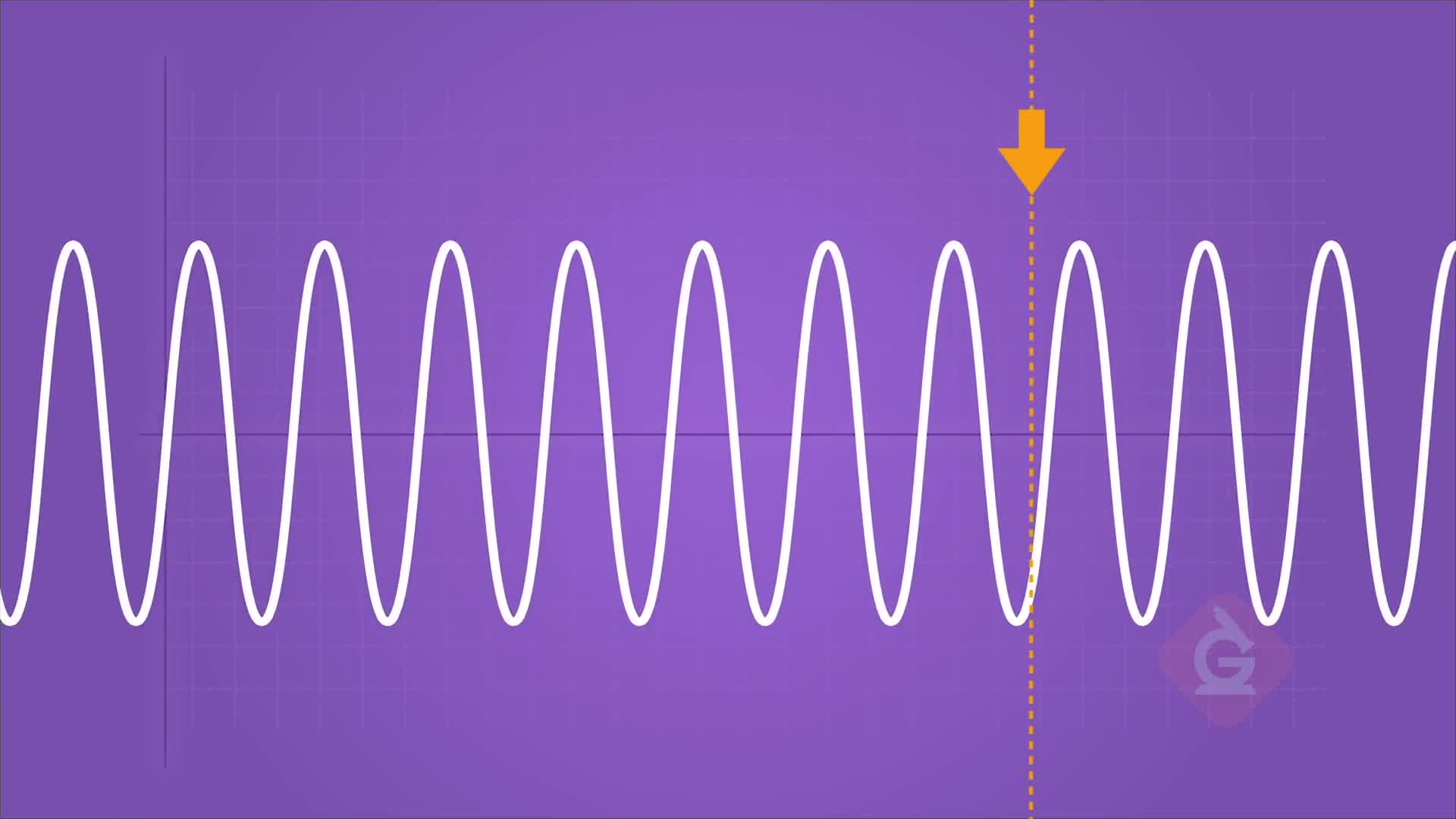
104.
The blue section of the wave is measuring _________________.
a)
wavelength
b)
crest
c)
trough
d)
amplitude 
105.
What is a photon?
a)
When radiation burst through electric waves
b)
The emission of electrons from a metal caused by light striking the metal
c)
The rate at which a waves energy flows through a given unit of area.
d)
packets of electromagnetic energy
106.
Light behaves like both a particle and a ______.
a)
Mass
b)
Wave
c)
Current
107.
What happens to the energy of a photon as the frequency of the wave increases? 
a)
The energy increases
b)
The energy decreases
c)
The energy stays the same 
108.
What does the letter 'h' represent in the formula E = hv?
a)
Planck's constant
b)
Hydrogen
c)
Energy
109.
What is the energy of a quantum of light with a frequency of 7.39x10¹⁴Hz.(E=Hv)
a)
4.88x10¹⁹
b)
4.88x10⁻¹⁹
c)
2.22x10²³
d)
2.22x10⁻²³
110.
Certain blue lights have a frequencey of 6.91x10¹⁴Hz. What is the wavelength? (λ=c/v)
a)
4.34x10²¹
b)
4.34x10⁻²¹
c)
4.34x10⁻⁷
d)
2.07x10²³
111.
What is the wavelength for a quantum of light with energy of 7.56x10⁻¹⁹J? (λ=hc/E) 
a)
2.62x10⁻⁷m
b)
2.62x10⁷m
c)
2.64x10-45m
d)
2.64x1045m
112.
A light has a wavelength of 5.06x10⁻⁷m. What is the frequency of the light? What is the color of light? (v=c/λ)
a)
16.87Hz, Red
b)
5.93Hz, Orange
c)
5.93x10⁻¹⁴Hz, Blue
d)
5.93x10¹⁴Hz, Green
113.
The energy for a quantum of light is 2.84x10⁻¹⁹J. What is the wavelength. (λ=hc/E)
a)
6.97x10-45m
b)
6.97x1045m
c)
6.97x10⁻⁷m
d)
6.97x10⁷m
114.
What is the frequency of a light that has the Energy of 2.84x10⁻¹⁹. (v=E/h)
a)
4.30x10¹⁴Hz
b)
4.30x10⁻¹⁴Hz
c)
4.30x10-54Hz
d)
4.30x1054Hz
115.
What is the Energy of a blue light with the frequency of 6.91x10¹⁴Hz? (E=hv)
a)
4.56x1049J
b)
9.55x10-49J
c)
4.56x10⁻¹⁹J
d)
5.82x10¹⁹J
116.
Select the correct order of waves on the EMS from the longest wavelength to the shortest wavelength
a)
Radio, Micro, Infra, Visible, Ultra, X-ray, Gamma
b)
Gamma, X-ray, Ultra, Vis, Infra, Micro, Radio
c)
Vis, Micro, Infra, Ultra, X-ray, Gamma, Radio
d)
Micro, Radio, Vis, Infra, Ultra, X-ray, Gamma
117.

The _______ of a wave is the number of complete waves passing a fixed point per second.

a)

wavelength

b)

frequency

c)

amplitude

d)

speed

118.

Which type of radiation has the HIGHER frequency?

a)

(a)

b)

(b)

119.

The brightness of light depends on the _______ of the light wave.

a)

wavelength

b)

amplitude

c)

speed

d)

frequency

120.

A wave with a large wavelength will have a ______ frequency and _____ energy

a)

high, low

b)

high, high

c)

low, high

d)

low, low

121.

As the frequency of an electromagnetic wave increases, the amount of energy in that wave...

a)

increases.

b)

decreases.

c)

stays the same.

122.

As the frequency of an electromagnetic wave increases, the speed of light ____.

a)

increases.

b)

decreases.

c)

stays the same.

123.

Which type of radiation has the LONGEST wavelength?

a)

Gamma Rays

b)

Radio Waves

c)

Visible Light

d)

Infrared rays

124.

Which type of radiation has the SHORTEST wavelength?

a)

Radio waves

b)

Ultraviolet Rays

c)

Gamma Rays

d)

X-rays

125.

Considering frequency of 109 Hz and frequency of 1011 Hz, which type of radiation has the LONGER wavelength?

a)

109 Hz

b)

1011 Hz

126.

Light acts like

a)

a wave.

b)

a particle.

c)

Both a wave and a particle

d)

neither a wave nor a particle.

127.

To calculate the frequency of an electromagnetic wave, you need to know the speed of the wave and its

a)

wavelength.

b)

intensity.

c)

refraction.

d)

amplitude.

128.

Electromagnetic waves vary in

a)

the speed they travel in a vacuum.

b)

wavelength and frequency.

c)

the way they reflect.

d)

the orientation of their electric and magnetic fields.

129.

The full range of frequencies of electromagnetic radiation is called

a)

visible light.

b)

radio waves.

c)

the electromagnetic spectrum.

d)

invisible radiation.

130.

Light in the form of a particle that has discrete amount of energy is called a

a)

Charm

b)

Photon

c)

Exciton

d)

Muon

131.
True or false: as you move along the spectrum, radio to gamma waves, the wavelengths decrease in size (get smaller)
a)
true
b)
false
132.
________ is an EM wave that has the LEAST energy.
a)
radio
b)
gamma rays
c)
microwaves
d)
visible light
133.
A student placed a pencil in a cup of water.  The pencil appears broken because light-
a)
always travels in a straight line
b)
bends when it passes through water
c)
makes the water in the glass evaporate
d)
reflects the pencil on the water's surface
134.
Refraction is the bending of a wave disturbance as it passes from one _________ into another.
a)
glass
b)
medium
c)
area
d)
boundary
135.
The energy of waves _______ as the wavelength gets shorter.
a)
increases
b)
decreases
c)
stays the same