
 Worksheets
Midterm Basics Review
Total questions: 137
Worksheet time: 2hrs 53mins
What is the primary difference between prokaryotic and eukaryotic cells?
Presence of a cell wall
Presence of a nucleus
Ability to photosynthesize
Size of the cell
Which of the following organic molecules is primarily responsible for storing genetic information?
Proteins
Lipids
Carbohydrates
Nucleic acids
What is the shape of DNA?
Single helix
Double helix
Triple helix
Linear strand
During DNA replication, which enzyme is responsible for unwinding the DNA double helix?
DNA polymerase
Helicase
Ligase
Primase
What is the process of copying a segment of DNA into RNA called?
Translation
Transcription
Replication
Transformation
Which of the following is NOT a function of proteins?
Catalyzing biochemical reactions
Storing genetic information
Transporting molecules
Providing structural support
What phase of the cell cycle is characterized by the replication of DNA?
G1 phase
S phase
G2 phase
M phase
Which type of cellular transport requires energy?
Diffusion
Osmosis
Active transport
Facilitated diffusion
What is the main difference between aerobic and anaerobic respiration?
Use of glucose
Production of ATP
Requirement of oxygen
Occurrence in mitochondria
Which of the following is a product of anaerobic respiration in muscle cells?
Lactic acid
Ethanol
Carbon dioxide
Water
How many daughter cells are produced at the end of meiosis?
1
2
3
4
Which of the following best describes the role of ribosomes in a cell?
DNA replication
Protein synthesis
Lipid storage
Energy production
What is the function of the cell membrane?
To provide energy to the cell
To control the movement of substances in and out of the cell
To store genetic information
To synthesize proteins
Which of the following processes occurs during the G1 phase of the cell cycle?
DNA replication
Cell growth
Chromosome separation
Cytokinesis
Match the response to the stimulus.

shiver to generate warmth

drink water

sweat to cool off

eat
Maintaining a stable internal
environment is called
homeostasis
equilibrium
balance
evenness
The combination of chemical reactions through
which an organism builds up or breaks down
materials as it carries out its life processes is called ...
absorption
metabolism
digestion
consumption

An adult hydra is producing its offspring through budding. Which characteristic of life does this represent?
All living things use energy
All living things reproduce
All living things contain cells
All living things grow
Why aren't viruses considered living things?
They aren't made of cells
They don't have DNA or RNA
They make us sick
They are made of protein
The correct word equation for aerobic respiration is
carbon dioxide + water (+ energy) → glucose + oxygen
water + oxygen → carbon dioxide + glucose (+ energy)
glucose + oxygen → carbon dioxide + water (+ energy)
glucose + water → carbon dioxide + water (+ energy)

What type of respiration requires oxygen?
Aerobic
Anaerobic

This image shows the gas exchanged performed by an organelle. This organelle is most likely a...
Mitochondrion
Chloroplast
Lysosome
Nucleus

This process is called...
Cellular Respiration
DNA Replication
Photosynthesis
Photosystem II
If I hold my breath for too long, I do not get oxygen. This is dangerous for my brain cells because...
They cannot produce enough ATP
They have too few mitochondria
They make too many enzymes
They dry out
produces the most energy
aerobic
anaerobic
both
Requires glucose (sugar)
aerobic
anaerobic
both
(Why do I need this before a workout?)

which bond does carbon mostly form
hydrogen bond
dipole-dipole
covalent bond
What is an example of a lipid?


What is an example of a protein?


What are examples of carbohydrates?
triglycerides, waxes, fat, and oils
form polypeptides such as antibodies, enzymes, and hormones
glucose, fructose, cellulose, and lactose
DNA and RNA
What are examples of proteins?
triglycerides, waxes, fats, and oils
form polypeptides such as antibodies, enzymes, and hormones
glucose, fructose, cellulose, and lactose
DNA and RNA
What are examples of lipids?
triglycerides, waxes, fats, and oils
form polypeptides such as antibodies, enzymes, and hormones
glucose, fructose, cellulose, and lactose
DNA and RNA

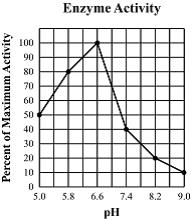
Which of the following conclusions can be drawn from the graph?
The optimum temperature is 20C
The optimum temperature is 38C
The enzyme's activity continually increases as temperature increases.
The enzyme's activity continually decreases as temperature increases.
Enzymes are an example of
Lipids
Carbohydrate
Protein
Nucleic Acid
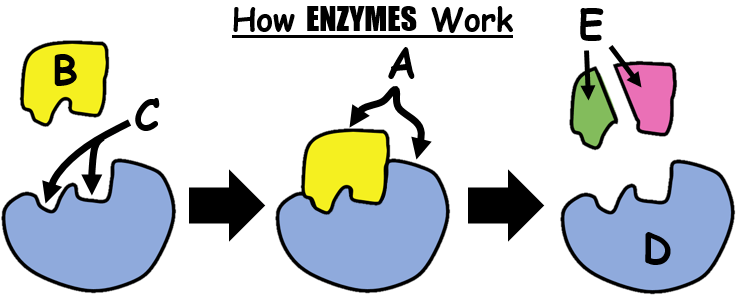
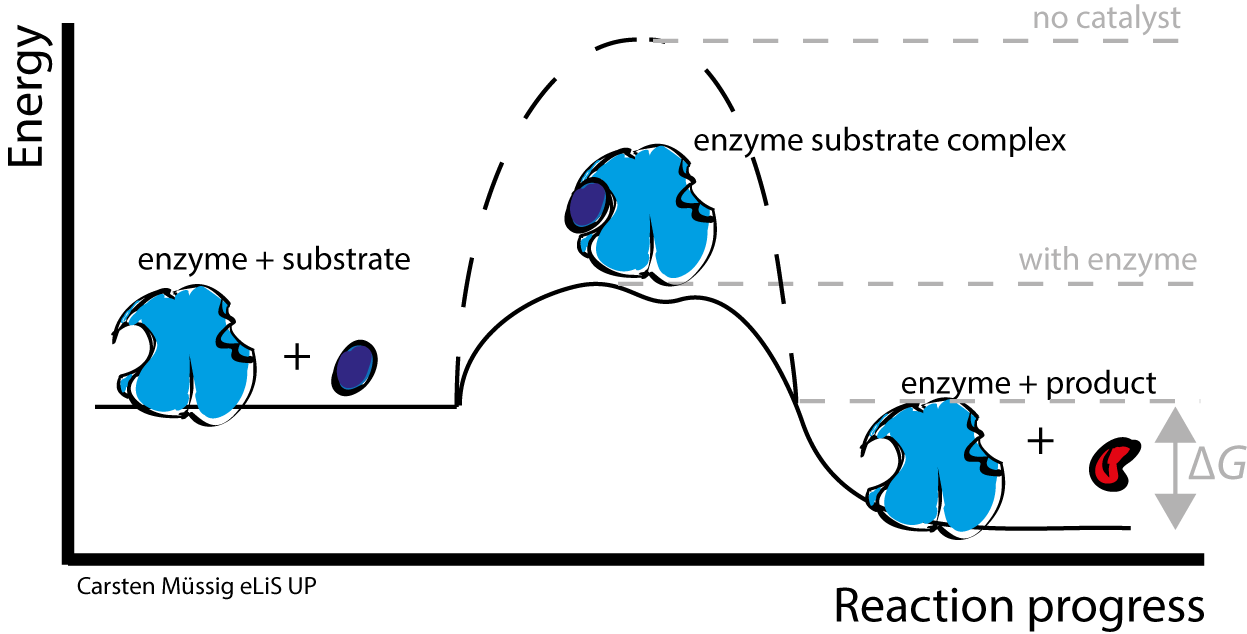
What happens when enzymes are heated to a high temperature?
The enzymes die.
The shape of the enzyme are changed and it denatures
The enzymes' amino acid sequence changes.
The enzymes remain the same
CAT TCA CTG
ATG TGA CAG
TAC ACT GTC
GTA AGT GAC
CAT TCA CTG
DNA is located in the _____ in eukaryotic cells.
nucleus
cytoplasm
mitochondria
ribosome
What is the backbone of DNA made of?
sugar and phosphate
nitrogen bases
sugar and nitrogen bases
phosphate and nitrogen bases
The shape of DNA is arranged as:
a double helix
one strand of nucleotides
squiggly lines
a single nucleotide

A gene is...
A segment of DNA with the information necessary to synthesize a protein
A segment of DNA with the information necessary to synthesize carbohydrates
A long chromosome
A segment of DNA that carries out DNA replication

gene
chromosome
trait
DNA
In DNA Adenine pairs with:
Cytosine
Thymine
Guanine
Uracil
In RNA Adenine pairs with:
Cytosine
Thymine
Guanine
Uracil
Please label the cell pictured.
nucleus
cell membrane
organelles
What is the result of transcription?
The synthesis of RNA from protein
The synthesis of protein from RNA
The synthesis of protein from DNA
The synthesis of RNA from DNA
What is the result of translation?
The synthesis of RNA from protein
The synthesis of protein from RNA
The synthesis of protein from DNA
The synthesis of RNA from DNA
What role does the mRNA play in protein synthesis?
mRNA modifies the original DNA strand
mRNA mutates to form protein
mRNA is the transcribed message from a DNA sequence
mRNA moves the amino acids
Codons represent a...
triplet sequence of bases
single sequence of bases
quadruple sequence of bases
pair of bases
A codon consists of ___ nucleotides?
2
3
4
5
Codons are located on the...
DNA
mRNA
rRNA
tRNA
Which organelle is the location where protein is made?
Ribosome
Nucleus
Cytoplasm
Nucleotide
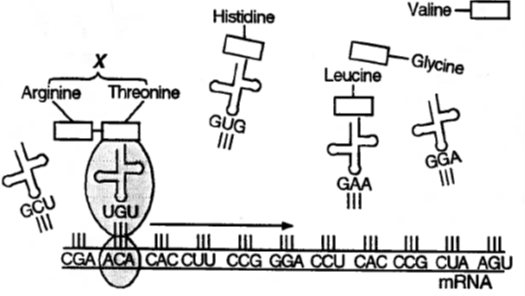
What is the location in the cell for translation?
nucleus
mitochondria in cytoplasm
ribosome in cytoplasm
chloroplast in cytoplasm

What process is happening in the diagram?
transcription
translation
dna replication
mitosis
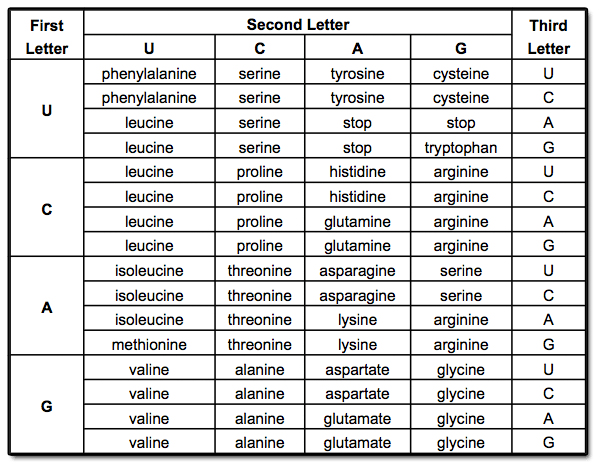

A small section of RNA that transports amino acids
to the ribosome for synthesis into proteins.
tRNA
mRNA
rRNA
DNA
Put the following stages of MITOSIS in order: anaphase, prophase, metaphase, and telophase.
prophase, metaphase, telophase, anaphase
prophase, anaphase, metaphase, telophase
prophase, metaphase, anaphase, telophase
prophase, telophase, metaphase, anaphase
What is the longest stage (cell spends 90% here) of the cell cycle called?
Cytokinesis
M phase
Interphase
G1 Phase


What happens in the M phase of the cell cycle?
cell growth
mitosis
DNA replication
Select all stages of interphase?
G1
S
G2
Mitosis

(A) the time in-between divisions (90% of the cell cycle)
interphase
mitotic phase
mitosis
cytokinesis

(B) when the cell is growing and performing its metabolism (aka its job)
G1
G2
G3
S

(G) When the cytoplasm is dividing
G3
Cytokinesis
Interphase
Mitosis

(C) When the cell is making a copy of its DNA (aka, duplicating the chromosomes)
Mitosis
G1
G2
S

(D) When the cell is growing and preparing to divide
G1
S
G2
mitosis
True or False: Cancer is the result of the cell cycle that has become out of control.
True
False
True or False: Cells in the G0 phase never replicate.
True
Fasle
Why are cancer cells are never in the G0 phase?
they are always dividing
they never divide
they divide too slowly
they replicate their cytoplasm

When cells leave the cell cycle, they exit during G1 phase and then enter G0 phase, a resting period. Most normal cells can leave G0 phase and reenter the cell cycle at G1 phase before entering S phase. Cancer cells are different because they cannot enter G0 phase and are likely to do which of the following?
Fail to complete S phase
Mutate during G1 phase
Repeat the cell cycle continuously
Die after completing mitosis


The cell membrane...
controls the cell and contains DNA
is used for structure and support
controls what enters and leaves the cell
makes ribosomes

B is pointing to the
polar hydrophilic heads
nonpolar hydrophobic heads
polar hydrophilic tails
nonpolar hydrophobic tails
A is pointing to the
polar hydrophilic heads
nonpolar hydrophobic heads
polar hydrophilic tails
nonpolar hydrophobic tails
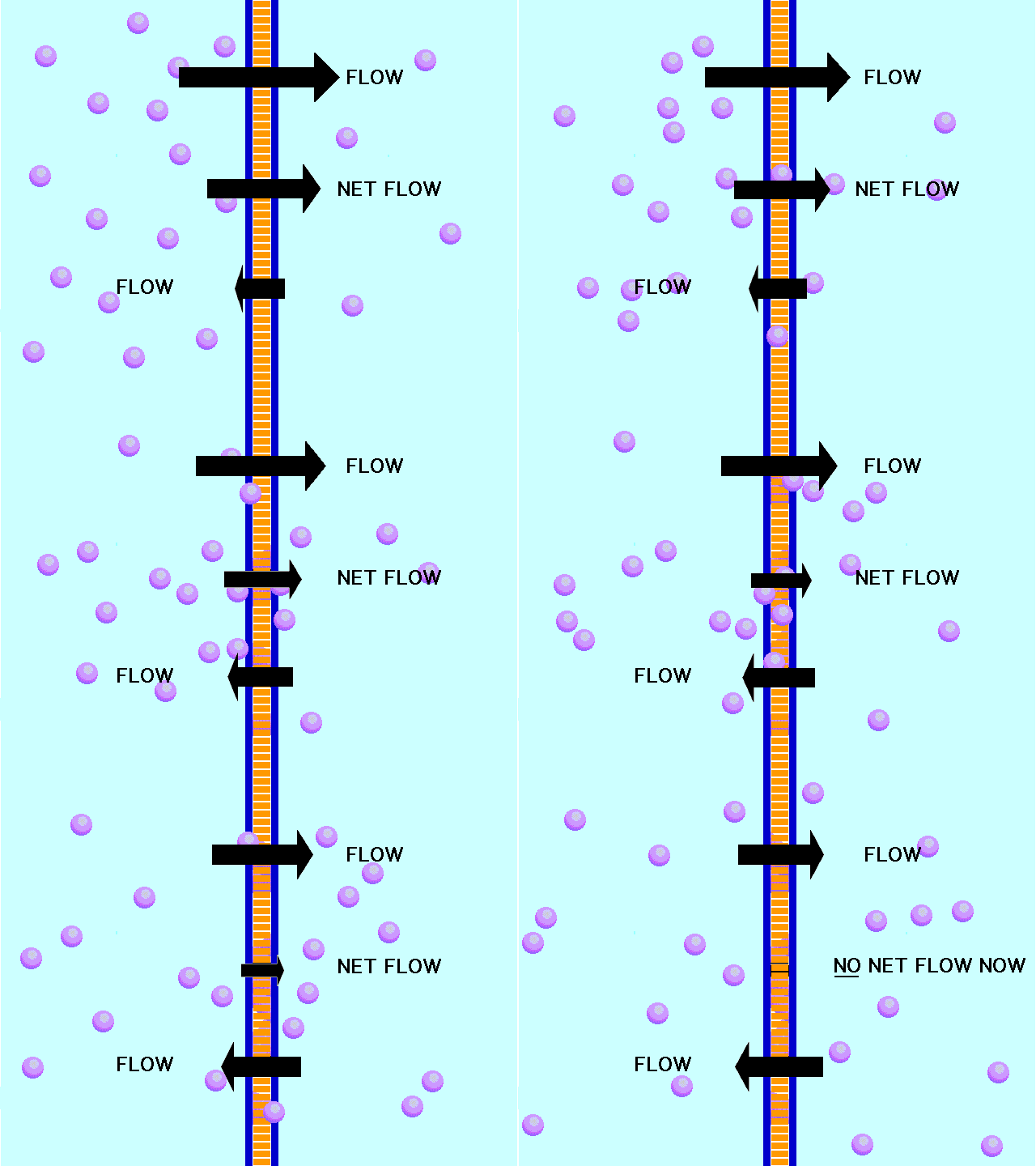
Passive transport is shown
Active transport is shown
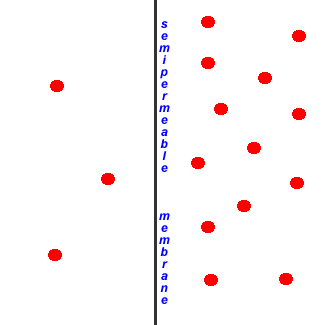
Which side of the membrane has a HIGH concentration?
left
right
top
bottom
The type of transport that goes against the concentration gradient and requires energy is...
passive transport
facilitated diffusion
active transport
osmosis

What cell transport is shown in the picture?
Facilitated Diffusion
Membrane pump
Diffusion
Endocytosis
Osmosis is the movement of _____ across a membrane.
food
energy
oxygen
water
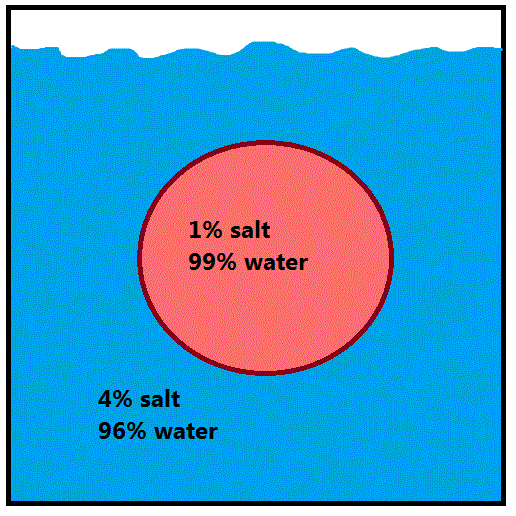
Where will the water go?
Into the cell
Out of the cell
Equally in & out
The water will not move
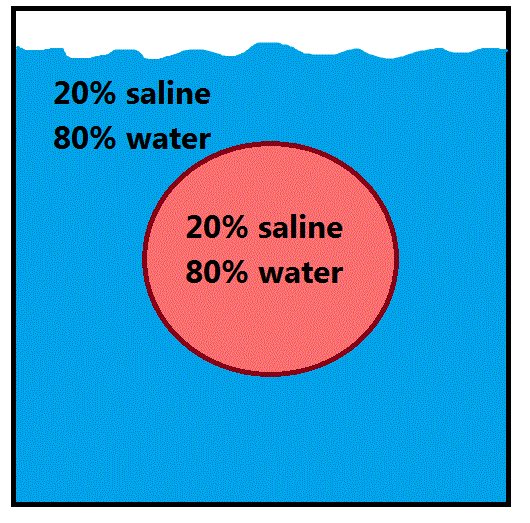
A blood cell is placed into the jar, as seen. Where will the water go?
Into the cell
Out of the cell
Equally in & out
The water will not move
Why can't you drink salt water?
It's hypertonic to your cells
It's hypotonic to your cells
It's isotonic to your cells
It's paratonic to your cells

Which cell is placed into a hypotonic environment?
A
B
C
D

Which phase of meiosis is shown in the picture?
Prophase II
Metaphase II
Telophase I
Telophase II

Which phase of meiosis does the picture on the left happen?
prophase I
prophase II
metaphase I
telophase II
After meiosis II, which of the following is true about the cells that are produced?
Four cells are produced. They are identical to each other and each contains half the number of chromosomes that the parent cell has.
Four cells are produced. Each is unique and contains half the number of chromosomes that the parent cell has.
Four cells are produced. Each is unique and contains the same number of chromosomes that the parent cell has.
Two cells are produced. Each is unique and contains the same number of chromosomes that the parent cell has.
What effect does crossing over has in terms of traits of offspring?
Results in identical traits of offsprings.
Causes variation in the traits of offsprings.
It really does nothing to the traits of offspring.
The four cells that are produced after Meiosis are _______.
haploid because they contain just half the number of chromosomes as the parent cell.
diploid because they contain as many chromosomes as the parent cell.
diploid because they contain twice as many chromosomes as the parent cell.

In which stage of MEIOSIS does crossing over occur? (The exchange of genetic material between chromosomes in a tetrad.)
Anaphase I
Metaphase I
Prophase I
Telophase I
A Goat has 60 chromosomes in its body cells. How many chromosomes would you expect to be in a goat's egg cell?
60
30
100
120

Which of the following are CORRECT observations about the differences between MITOSIS and MEIOSIS? (Check all that apply.)
Mitosis produces cells that identical to the parent cell.
Meiosis produces cells that have half the number of chromosomes as the parent cell.
All cells go through INTERPHASE as part of the cell cycle, whether it goes to mitosis or meiosis next.
In both types of cell division, the chromosomes are only duplicated once.
Only in Mitosis, do you see chromosomes pair up to form a tetrad.
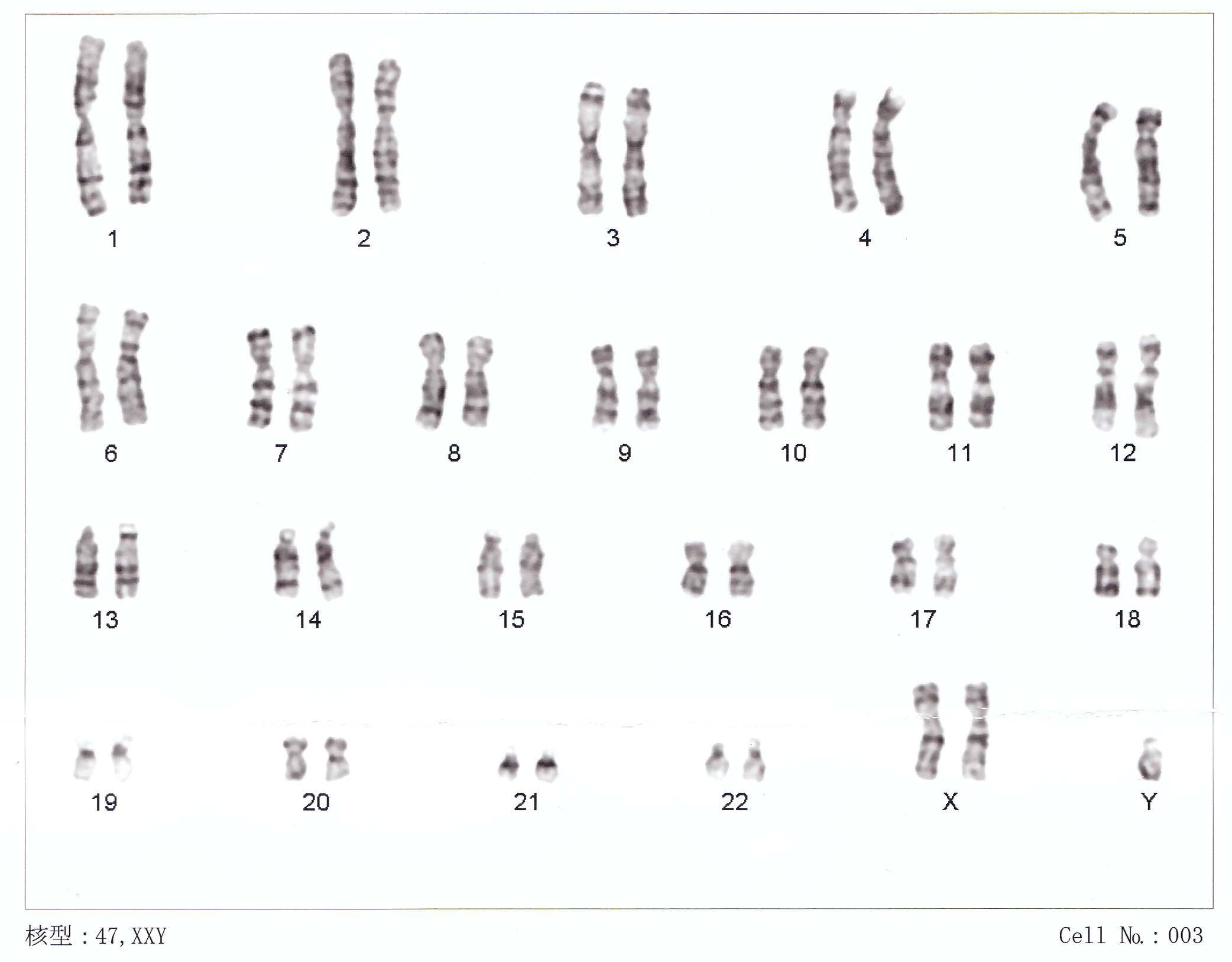
These are the chromosomes of someone with Kleinfelters syndrome. What is different about their chromosomes?
There is only one Y chromosome
One of the 5th chromosomes is too curved
There is an extra X chromosome
There are too few chromosomes
Homologous chromosomes differ in that they may...
carry different genes
be a different size
carry different alles for the same genes
have centromeres in different locations


Why are insertion and deletion (frameshift) mutations so harmful?
They change all of the codons from the mutation on down the line, which changes the amino acid sequence
They insert things that an organism doesn't need.
They often delete things that organisms need.
Insertion and deletions are not any more harmful than substitution mutations.

How many females are carriers in this family?
1
2
3
4

Label the parts of the Cell Cycle
G1
S phase
G2
Mitosis
Genetic material condenses
Prophase
Chromosomes line up in middle of cell
Metaphase
Sister chromatid moves apart
Anaphase
The cell starts to split into two
Telophase
Cell growth, and DNA replicates
Interphase

Cells spend most of their lives in which phase?
Interphase
Prophase
Telophase
Metaphase

