
 Worksheets
Exam 4 Geology
Total questions: 133
Worksheet time: 2hrs 13mins

What is the soft layer of rock in the mantle that can act like a solid and a liquid?
Core
asthenosphere
lithosphere
crust

The crust and the uppermost mantle make up this solid layer of hard rock.
inner core
asthenosphere
lithosphere
outer core
How does the temperature change as you move from the crust to the core?
it gets cooler
it gets hotter
it stays the same
the core is frozen

What is layer A?
crust
inner core
outer core
mantle

What is layer B?
crust
inner core
outer core
mantle

What is layer C?
crust
inner core
outer core
mantle

What layer is D?
crust
inner core
outer core
mantle

What did Alfred Wegener call the "Supercontinent" that existed 250 million years ago?
North America
Pangaea
Eurasia
Atlantica

What is the liquid layer composed of nickel and iron?
crust
mantle
outer core
inner core

Which descriptions is NOT correct?
crust is a solid
mantle is a gas
outer core is a liquid
inner core is a solid
How many tectonic plates are there?
12
5
3
15

Which of these is NOT a property of minerals
color
texture
size
sound
What scale is used to measure the hardness of a mineral?
Miller's Hardness Test
Harry's Hardness Scale
Mohs Hardness Scale

This is a beautiful piece of clear quartz. When you hit quartz with a small hammer it breaks in a rough, jagged way. What type of breakage does quartz have?
Cleavage
Fracture
Match the following
Breaking apart rocks
Weathering
Moving rock or soil around
Erosion
Laying sediment down
Deposition
Weathering breaks down _____ into ______
Mountains
Boulders
Rocks
Pebbles
Sand

Gravity pulling rocks down a mountain is...
Weathering
Erosion
Deposition
Rivers carrying rocks downstream is...
Weathering
Erosion
Deposition
Glaciers picking up and carrying rocks and soil as they move is...
Weathering
Erosion
Deposition

A sand bar forming where sand gets left at the end of a river is...
Weathering
Erosion
Deposition
Silicates are minerals that are rich in...
Selinium, Oxygen
Selinium, Carbon
Silicon, Oxygen
Silicon, Carbon
Inorganic means ________________.
living
nonliving
crystal structure
chemical composition
When a liquid is __________dense it sinks and when it is __________ dense it rises.
less, more
more, more
more, less
less, less
A ________ is a naturally occurring, inorganic solid that has a crystal structure and a fixed chemical composition.
crystal
rock
quartz
mineral
The repeating pattern of a mineral's particles forms a solid called a ______.
compound
crystal
element
rock
What Are The Three Main Types Of Rocks?
Igneous, Depository, Metamorphic
Depository, Igneous, Sedimentary
Metamorphic, Igneous, Depository
Igneous, Metamorphic, Sedimentary
How are metamorphic rocks formed?
Heating and cooling
Deposition
Heating and pressure
Materials gathering and pressing together
How are sedimentary rocks formed?
Heating and pressure
Sediment forming together
Weathering
Cooling

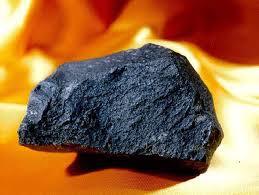
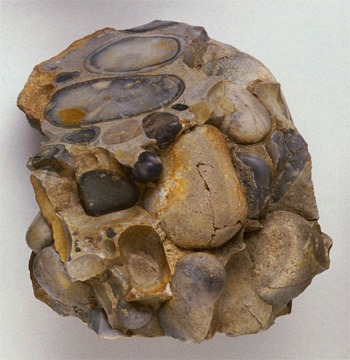


The color of a rock is a result of its chemical composition?
True
False

The Mount Rushmore National Monument is carved from the granite (formed from magma underground) of South Dakota's Black Hills. What type of rock is granite?
Igneous
Metamorphic
Sedimentary
None of the above

The seated sculpture of President Lincoln inside the Lincoln Memorial was carved out of white Georgia marble (formed from Earth's pressure and heat). What type of is marble?
Igneous
Metamorphic
Sedimentary
None of the above

Which is the process that breaks up rock on Earth’s surface?
deposition
melting
compaction
weathering


Sedimentary Rock --> ____________--> Sediment
compaction and cemetation
weathering and erosion
heat and pressure
melting and cooling
Which is NOT accurate?
Igneous -->Melting --> Magma
Sediment --> Compaction --> Sedimentary
Metamorphic --> Heat and Pressure --> Sedimentary
Magma --> Cooling --> Igneous
Which state of matter is the earth's inner core?
plasma
liquid
solid
gas
Which earth layer is made up of the upper mantle and the crust?
core
lower mantle
asthenosphere
lithosphere
What is geology?
the study of rocks
the study of history
the study of maps
the study of earth
What was an evidence for plate tectonics that was claimed by the author of the theory?
plate measurements
knowledge of the mantle
fossils on the coasts
the movie Ice Age
This layer of the earth is the thickest part
crust
outer core
mantle
inner core
The one large land mass before it drifted apart was called
Panthalassa
Terra
Pangaea
Pandora


Hot, molten rock inside the earth is called ...
lava
magma
igneous rock
minerals
Once magma reaches the earth's surface, it is called __________.
a vent
minerals
igneous rocks
lava
Series of natural processes by which rocks are slowly
changed from one kind of a rock to another.
igneous rock
metamorphic rock
sedimentary rock
rock cycle
Rock particles carried and deposited by water, wind & ice.
sedimentary rock
sediment
metamorphic rock
igneous rock
Rock formed when existing rock is changed by heat &
pressure.
sedimentary rock
texture
metamorphic rock
intrusive rock
All rocks are made up of one or more.
sediments
minerals
metals
magma

Not formed from living things or the remains of living things
inorganic
matter
cells
erosion
A naturally occurring, inorganic solid that has a crystal structure and a definite chemical composition.
deposit
mineral
weathering
erosion
A weak spot in the crust where magma has come to the surface.
motlen
lava
volcano
plate
The shaking that results from the movement of rock beneath Earth’s surface.
erosion
weathering
volcano
earthquake
A break in Earth’s crust along which rocks move.
plate
fault
volcano
sediment
A section of the rigid layer of the mantle and crust that slowly moves over the soft layer of the mantle, carrying pieces of continental and oceanic crust.
plate
volcano
deposition
fault
What processes create sedimentary rocks (and fossils)
Heat
Compaction
Cementation
Cooling
What changes a metamorphic rock into a sedimentary rock
Cementation
Pressure (Compaction)
Cooling
Melting
What are rocks made of?
Salt
Minerals
Other rocks
Sand
Rocks can turn into any other rocks?
True
False
rock fragments that have been transported to a different location
metamorphic rock
sedimentary rock
sediment
soil

Magma that reaches the surface flows from a volcano as ____________
Magma
Water
Ice
Lava

What is letter G?
Heat and pressure
Cooling
Deposition, Compaction, Cementation
Weathering and erosion
How are igneous rocks formed?
Sediment forming together
Heating and pressure
Cooling
Deposition

What is number 4?
heat pressure
melting
weathering
cooling/crystallization
_____________________ is the process of breaking down rocks.
transportation
deposition
weathering
sedimentation

This rock started as molten magma but transformed after a volcano erupted. What type of rock is this?
Sedimentary
Igneous
Metamorphic
rock formed from sediments, organic remains, or chemical precipitates (ex. limestone)
metamorphic rock
sedimentary rock
sediment
soil
the transport of fragments of rock by water, wind, ice, or gravity
weathering
erosion
deposition
lithification
Having visible layers would identified a rock as (a) . Rocks that are cooled lava or magma are (b) rock. Intense heat and pressure allows for (c) rock to form.
molten rock below Earth’s surface
extrusive igneous rock
intrusive igneous rock
lava
magma
What can cause rocks to change?
The Earth's orbit around the sun
Environmental conditions
The minerals falling apart
Internal conditions
These Rocks are formed from Heat and Pressure
Metamorphic
Igneous
Sedimentary

A model showing the processes that create and change rock.
Water Cycle
Carbon Cycle
Rock Cycle
Nitrogen Cycle
A water wave caused by an earthquake is called a __________________.
tsunami
seismic wave
electromagnetic wave
surfing wave
A force that acts on rock to change its shape or volume.
stress
seismic waves
tsunami
Stress that pull on crust and causes it to become thinner in the middle.
tension
compression
shearing
A stress force that squeezes rock until it bends or breaks is called _____________.
compression
tension
shearing
The instrument that records and measures earthquake's seismic waves is called a ____________________.
seismograph
seismogram

The figure below is an illustration of ________, which occurs beneath tectonic plates and causes them to move.
Ring of Fire
Osmosis
S waves
Convection Currents

The place where an earthquake originates inside the Earth's surface is called...
Epicenter
Focus
Underground
Crust

The place on the Earth's surface, above the origin of the earthquake.
Epicenter
Focus
Surface
Crust
Coal is NOT a mineral because
It is not solid.
It is not naturally occurring.
It is organic.
It is inorganic.
Native copper is a solid, inorganic substance found in Earth. What would it be classified as?
Soil.
Animal.
Mineral.
Vegetable.

Guess the Mineral!
This mineral can be crushed into a white powder that is widely known as baby powder. This powder has the ability to absorb moisture, oils, and odor. What is the name of the mineral?
Zinc.
Talc.
Fluorite.
Salt.

Guess the Mineral!
This mineral is the hardest naturally occurring mineral. It is most often used in jewelry but can also be used on the tips of saw blades. What is the name of the mineral?
Fluorite.
Talc.
Diamond.
Sulfur.
Fossils can only be found in which type of rock?
Fossils cannot be found in rocks
Metamorphic
Igneous
Sedimentary

Based on the chart, apatite can scratch gypsum, but it cannot scratch _________.
Fluorite
Talc
A copper penny
Feldspar
Things like: green, red, yellow, blue, etc. describes what property of a mineral?
Luster
Streak
Density
Color
Hardness
Things like the color of the streak across a streak plate, describes what property of a mineral?
Luster
Streak
Density
Color
Hardness
A mineral's breakage pattern refers to its ___.
Luster
Streak
Cleavage & Fracture
Color
Hardness
The Mohs Scale helps to identify a mineral's ___.
Luster
Streak
Cleavage & Fracture
Color
Hardness

