
 Worksheets
Unit 7: Classification Review
Total questions: 135
Worksheet time: 3hrs 41mins
Endosymbiotic Theory is the idea that ______ cells could have evolved from_____cells
prokaryotic, eukaryotic
eukaryotic, animal
prokaryotic, plant
eukaryotic, prokaryotic
Prokaryotic cells do not have
cell wall
nucleus
cytoplasm
ribosomes
Both prokaryote and eukaryotes have a cell membrane
True
False
Only eukaryotes have a membrane
Only prokaryotes have a membrane
Mitochondria and Chloroplast are similar to prokaryotic cells like bacteria in what way?
Their DNAs are copies of each other
Their DNAs both have uracil
Their DNAs are circular
Their DNAs both have short lifespans
Mitochondria and Chloroplast are similar to prokaryotic cells like bacteria in what way?
They have the same lifespan
They divide the same way
They are the same color
They have the same shape
Evidence for endosymbiosis includes
Mitochondria and chloroplast have their own Lysosomes
Mitochondria and chloroplast have their own vesicles
Mitochondria and chloroplast have their own RNA
Mitochondria and chloroplast have their own DNA
Evidence for endosymbiosis includes
Mitochondria and Chloroplast are the same color
Mitochondria and Chloroplast are the same size
Mitochondria and Chloroplast are the same structure
Mitochondria and Chloroplast have the same pH
Eukaryotic cells can have
Only chloroplast
Only mitochondria
both mitochondria and chloroplast
neither chloroplast nor mitochondria
Early bacteria that could perform photosynthesis evolved into
Mitochondria
Chloroplast
ATP
ADP
Early bacteria that could make its own energy evolved into
Mitochondria
Chloroplast
ATP
ADP
WARM UP: What are the two organelles only found in plant cells?
(a)
True or False: Diffusion NEVER requires energy.
TRUE
FALSE
When substances are TOO large to move across the plasma membrane on their own, they can use ______ or _____ to diffuse across the cell membrane
lipids, carbohydrates
lipids, nucleic acids
water, salt
channel proteins, carrier proteins

Osmosis is the movement of water from an area of lower solute concentration to an area of higher solute concentration. Which DIRECTION is water moving in the picture?
from left to right
from right to left
it's not moving
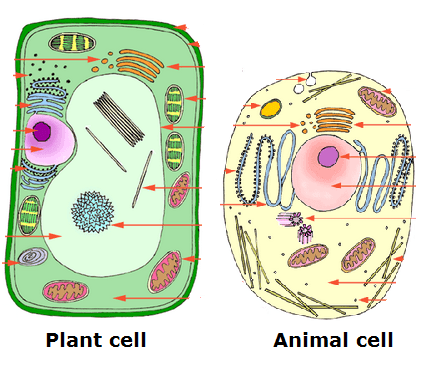
What distinguishes a plant cell from an animal cell? (How do you tell them apart) Hint: There's 3 ways (Check all 3)
Large Central Vacuole
Mitochondria
Cell Wall
Ribosomes
Chloroplasts

Photosynthesis takes place within me. I am a...
Mitochondria
Cell Wall
Chlorine
Chloroplast

I decide what goes in and out of the cell. I am composed of lipids and can be found in BOTH plant and animal cells. I am a...
Cell Wall
Cell Membrane
Cytoplasm
Golgi Apparatus

I provide plant cells their rigid shape. I am the...
uncooked spaghetti
Cytoskeleton
Cell Membrane
Cell Wall
Animal and Plant Cells are...
Shopkoytes
Eukaryotes
Prokaryotes
The building blocks of non-living things
the jelly-like fluid region of a cell located inside the cell membrane, holds organelles in place
cytoplasm
cell wall
organelle
golgi apparatus




What is one way in which all living things on Earth are alike?
All living things have hair.
All living things are made of cells and come from other cells.
The cells of all living things have chloroplast.
All living things eat other organisms for nutrition.

This organelle stores materials like water & nutrients and is very large in a plant cell.
nucleus
golgi body
chloroplast
vacuole
Which of the following converts food into energy for the cell?
vacuole
mitochondria
cytoplasm
cell membrane
The kingdom of heterotrophic, multicellular, eukaryotes capable of returning nutrients to the soil
bacteria
fungi
plant
archaea
The kingdom of heterotrophic, multicellular, eukaryotes capable of returning nutrients to the soil
bacteria
fungi
plant
archaea
Eubacteria
Animalia
Plantae
Protista
Archaeabacteria

Which of the following is not included in the kingdoms of life?
viruses
animals
archea
plants
fungi
Which kingdoms contain organisms whose
cells HAVE cell walls?
protists, fungi, plants and animals
plants, fungi, and bacteria
animals, bacteria, plants
plants , protists, animals
Match the following vocabulary words
Autotrophs
Organisms that can make their own food from their environment.
Heterotrophs
Organisms that cannot make their own food
Prokaryotic
Cells that do not have a nucleus or organelles
Eukaryotic
Cells that have a nuclei and organelles
Unicellular
Organisms that are made of only one cell
____________ & _________________ are the two energy producing organelles that definitely arose from endosymbiosis.
Rough ER & Smooth ER
Mitochondria & Flagellum
Chloroplast & Mitochondria
Chloroplast and Golgi apparatus
How are bacteria becoming resistant to antibiotics?
bacteria does not become resistant to antibiotics.
by a genetic mutation/by acquiring resistance from another bacterium.
by wishing they were resistant.
antibiotic resistance does not exist.
Taking antibiotics can make a person become resistant.
True
False
Taking antibiotics when not needed can weaken the effectiveness of the medicine.
True
False
The kingdom of unicellular prokaryotes that evolved as the first life forms on Earth; capable of living in extreme environments
Eubacteria
Protists
Fungi
Archaeabacteria
Kingdom of unicellular prokaryotes that cause most human disease and are susceptible to antibiotic treatments
Eubacteria
Protist
Virus
Archaeabacteria
Kingdom of unceulluar eukaryotes that includes autotrophs, heterotrophs and decomposers.
Eubacteria
Protist
Fungi
Animal
Kingdom of autotrophic multicellular eukaryotes
Protist
Plant
Animal
Fungi
Kingdom of multicellular eukaryotic heterotrophs that lack cell walls
eubacteria
protist
fungi
animal
All living organisms are classified based on (Choose 2)
STRUCTURE
HEIGHT
FUNCTION
LOCOMOTION
Bacterial population can be controlled by
Proper Sanitation
Fever
Antibiotics
Bacteria can be controlled by all of these methods
How have the presence of organelles allowed eukaryotes to perform complex functions?
organelles create separate spaces with specific jobs in the cell
organelles decrease the cells productivity
organelles decrease the cells size
organelles cause cells to be multicellular
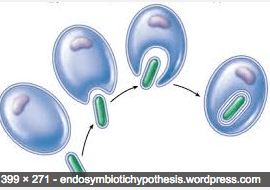
In this diagram, the endosymbiont (prokaryote being engulfed) is
blue
green
purple

proteins
Earth's present conditions
early Earth's conditions
they didn't mean to mimic anything in particular

heat waves
lightening
volcano
hurricane

sea
swimming pool
ocean
rain

The diagram shows a proposed theory of the origin of eukaryotic cells, called endosymbiosis.
Which of the following explains why cells that contained mitochondria-like organelles had an evolutionary advantage?
They were able to photosynthesize
They had more DNA
They were able to make more use of available energy
They were immune to bacterial invasion.
How are mitochondria and chloroplasts like bacteria cells?
They divide by meiosis
They contain their own DNA
They have the same membrane-bound organelles
They can make their own food
Endosymbiotic Theory is the idea that ______ cells could have evolved from_____cells
prokaryotic, eukaryotic
eukaryotic, animal
prokaryotic, plant
eukaryotic, prokaryotic
Prokaryotic cells do not have
cell wall
nucleus
cytoplasm
ribosomes
Both prokaryote and eukaryotes have a cell membrane
True
False
Only eukaryotes have a membrane
Only prokaryotes have a membrane
How did one type of prokaryote get inside of another type of prokaryote
Acts as a ligand
One engulfed the other
Fused in as a vesicle
snuck in as a retrovirus
Symbiosis means
Feeding off of something
Using something for its ATP
Living in harmony
Producing sugars
Early bacteria that could make its own energy evolved into
Mitochondria
Chloroplast
ATP
ADP
Early bacteria that could perform photosynthesis evolved into
Mitochondria
Chloroplast
ATP
ADP
Evidence for endosymbiosis includes
Mitochondria and chloroplast have their own Lysosomes
Mitochondria and chloroplast have their own vesicles
Mitochondria and chloroplast have their own RNA
Mitochondria and chloroplast have their own DNA
Mitochondria and Chloroplast are similar to prokaryotic cells like bacteria in what way?
They have the same lifespan
They divide the same way
They are the same color
They have the same shape
Mitochondria and Chloroplast are similar to prokaryotic cells like bacteria in what way?
Their DNAs are copies of each other
Their DNAs both have uracil
Their DNAs are circular
Their DNAs both have short lifespans
The theory of Endosymbiosis explains
The origin of eukaryotes
How bacteria live
How species develop
Why cells rely on one another
____________ & _________________ are organelles that definitely arose from endosymbiosis.
rough ER & smooth ER
Chloroplast & Mitochondria
Mitochondria & Flagellum
Chloroplast and Golgi apparatus
All of the following are evidence of endosymbiosis EXCEPT
mitochondria and chloroplast ribosomes are similar to bacterial ribosomes
mitochondria and chloroplast have double membranes
mitochondria and chloroplast are similar in size to bacteria
mitochondria and chloroplast have a nucleus
Which do BOTH prokaryotes and eukaryotes contain?
nucleus
mitochondria
ribosomes
cell wall
Which does only eukaryotic cells contain?
nucleus
DNA
cell membrane
ribosomes
The smallest unit of a living thing are
atoms
cells
DNA
organelles
Which cell type tends to be smaller?
Prokaryote
Eukaryote
there is not a size difference
Bacteria is an example of a(n)
prokaryotic cell.
eukaryotic cell.
The first word in a scientific name is the
species
phylum
genus
class
The scientist who came up with the current classification system
Darwin
Newton
Mendel
Linnaeus
The science of grouping and naming organisms
Phylogeny
Dichotomy
Taxonomy
Genetics
The taxonomic level that would include the MOST number of species
class
kingdom
phylum
genus


Which bacteria can live in extreme environments, such as hot springs?
Archaeabacteria
Eubacteria
Protist
Fungi

Which of the following is a common trait to all members of the six kingdoms: Eubacteria, Archaebacteria, Protista, Fungi, Plantae, and Animalia?
Presence of a cell wall
Capable of sexual reproduction
Presence of genetic material
Presence of a nucleus
Fungi and bacteria share which of the following similiarities?
Members of both groups have cell walls made of chitin
Members of both groups are decomposers
Members of both groups are capable of photosynthesis
Members of both groups are classified as eukaryotes
Match the kingdom with the substance that composes their cell wall.
cellulose
plantae
chitin
fungi
peptido.
eubacteria
no peptido
archaebacteria
Which kingdom of organisms is motile with flagella, cilia, or pseudopods?
animalia
fungi
protista
bacteria
Which kingdom/s have organisms that are ONLY sessile?
animalia
plantae
fungi
protista
bacteria
which domain contains eukaryotic organisms?
eukarya
bacteria
archaea
Reorder the following from most to least inclusive of taxa in classification.
Domain
Kingdom
Phylum
Class
Order


what taxon contains the least amount of organisms?
kingdom
phylum
genus
species

What levels of classification are used in the scientific name?
Kingdom, Phylum
Kingdom, Species
Genus, Species
Phylum, Genus
A wolf's scientific name is Canis rufus. Which genus does it belong to?
Canis
rufus
wolf
animal

Into which Kingdom would you put this organism?
Plant
Animal
Fungi
Bacteria
Protist

Into which Kingdom would you put this organism?
Plant
Animal
Fungi
Bacteria
Protist


Some bacteria are motile which means
they are very big
they can move
they are multicellular
they are eukaryotes
Bacteria are
unicellular
multicellular
Humans are made of
eukaryotic cells
prokaryotic cells
Multi-celled organisms that contain a nucleus are referred to as
eukaryotes
prokaryotes
Single celled organisms that do not contain a nucleus are referred to as
eukaryotes
prokaryotes


