wayground logo

Free Printable Worksheets

Font size

S
M
L
XL
Worksheets

Grade 10 Science Exam Review

Total questions: 139

Worksheet time: 2hrs 38mins

Name
Class
Date
1.
What does the word "converging" mean?
a)
to separate
b)
to come together
c)
parallel 
d)
perpendicular
2.
A converging lens is also known as a ____ lens.
a)
convex
b)
concave
c)
double
d)
refracted
3.
When an object is placed on the focal point in front of a convex lens, the image produced is ___.
a)
real, reduced, and inverted
b)
real, enlarged, and inverted
c)
real, true, and inverted
d)
There is no image
4.
When an object is placed between the focal point and the convex lens, the image produced is ___.
a)
real, reduced, and inverted
b)
real, enlarged, and inverted
c)
virtual, enlarged, and upright
d)
virtual, reduced, and upright
5.
What does the word "diverging" mean?
a)
to spread apart
b)
to come together
c)
parallel
d)
perpendicular
6.
A diverging lens is also known as a ____lens.
a)
refracted
b)
diffracted
c)
convex
d)
concave
7.
___ is when light travels through a material and bends.
a)
Diffraction
b)
Dispersion
c)
Mirage
d)
Refraction
8.
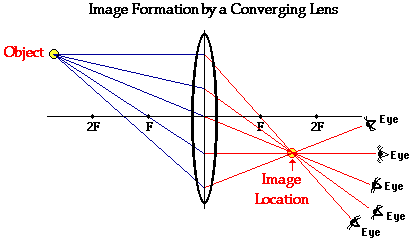
The point where the rays meet is known as....
a)
Fire
b)
the focal point
c)
refraction
d)
Plane of the lens
9.
This image is.....
a)
inverted and smaller
b)
inverted and larger
c)
not inverted and smaller
d)
not inverted and larger
10.
a real image...
a)
is produced by virtual rays and can be projected on a screen
b)
is produced by real rays and cannot be projected on a screen
c)
is produced by virtual images and cannot be projected on a screen
d)
is produced by real rays and can be projected on a screen
11.
Which describes a convex lens?
a)
triangular in shape
b)
more transparent in the middle
c)
thicker on the edges than in the middle
d)
thicker in the middle than on the edges
12.
Is a convex lens thicker or thinner in the middle?
a)
Thicker 
b)
Thinner 
13.
What type of lens do humans have in their eyes? 
a)
Concave Lens 
b)
Convex Lens 
14.
What type of image is formed when rays of light actually intersect?
a)
real
b)
virtual
c)
projected
d)
curved
15.
Light rays bend when they go from air to water  because of a change in ___________.
a)
color
b)
wavelength
c)
density
d)
speed
16.
This diagram best represents 
a)
reflection
b)
refraction
c)
absorption
d)
diffusion
17.
What is the ray of light that strikes the surface.
a)
Incident ray
b)
reflected ray
c)
normal ray
d)
normal
18.
....................... - the imaginary line perpendicular to the surface.
a)
Normal
b)
Angle of incidence 
c)
Angle of reflection
19.
Law of reflection state that - The angle of incidence is .................. to the angle of reflection.
a)
equal
b)
double
c)
half
20.

This reflection is

a)

specular.

b)

diffuse.

21.

Images in a plane mirror are

a)

real

b)

larger

c)

same size

d)

smaller

22.

This image is

a)

real.

b)

virtual.

23.

The image formed by this converging mirror is

a)

upright, same size, virtual

b)

inverted, same size, real

c)

inverted, larger, virtual

d)

upright, smaller, real

24.

The image formed by this converging mirror is

a)

upright, same size, virtual.

b)

inverted, same size, real.

c)

upright, larger, virtual.

d)

inverted, smaller, real.

e)

no image is formed.

25.
A student placed a pencil in a cup of water.  The pencil appears broken because light-
a)
always travels in a straight line
b)
bends when it passes through water
c)
makes the water in the glass evaporate
d)
reflects the pencil on the water's surface
26.
How is light affected by an increase in the index of refraction?
a)
Its frequency increases
b)
Its frequency decreases
c)
Its speed increases
d)
Its speed decreases
27.
Atmospheric refraction of light rays is responsible for which of the following effects? 
a)
spherical abberation
b)
mirages
c)
chromatic abberation
d)
total internal reflection in a gemstone
28.
Which color of light is most refracted during dispersion by a prism?
a)
red
b)
yellow
c)
green
d)
violet
29.
The velocity of light in vacuum is _______ m/s
a)
3x10⁸
b)
3x10¹²
c)
3x10⁶
d)
3x10¹⁰
30.
Light has the lowest velocity in which medium?
flint glass n=1.70
barium glass n=1.60
crown glass n=1.523
water n=1.33
diamond n=2.45
a)
diamond
b)
water
c)
flint glass
d)
barium glass
31.
Glass has a _____________ index of refraction than air.
a)
Equal
b)
Greater
c)
Less
d)
Impossible to say
32.
Absolute refractive index of any medium is always _______.
a)
less than 1
b)
greater than 1
c)
1
d)
0
33.
A cation is a ____ ion.
a)
negative
b)
positive
c)
neutral
d)
ficticious
34.
Nitrogen will form which of the following ions?
a)
N
b)
N-3
c)
N-5
d)
N+5
35.
Beryllium will ____ valence electrons when forming an ionic bond.
a)
lose 4
b)
gain 4
c)
lose 2
d)
gain 2
36.
Ionic bonds form between metals and ____.
a)
metalloids
b)
metals
c)
nonmetals
37.
Ionic bonds happen because of the ____ of valence electrons.
a)
sharing
b)
transfer
38.
What type of bond is this? Lithium with Fluorine?
a)
ionic
b)
covalent
39.
Nitrogen will do what to gain a stable octet?
a)
Lose 3
b)
Gain 3
c)
Lose 1
d)
Gain 2
40.
Which of the following would produce an anion?
a)
Ca
b)
Al
c)
K
d)
F
41.
In the chemical formula for an ionic compound, which item is written first?
a)
positive ion
b)
negative ion
c)
subscript
d)
the female
42.
What is the formula of Sodium oxide?
a)
Na2O
b)
NaO2
c)
Na2O2
d)
Na2O
43.
What is the formula of calcium oxide?
a)
CaO2
b)
CaO
c)
Ca2O
d)
CO
44.
What is the formula for magnesium phosphide?
a)
Mg3P2
b)
Mg2P3
c)
Mg2(PO4)3
d)
Mg3(PO4)2
45.
What is the formula for tin (II) nitride?
a)
Sn3N2
b)
SnN2
c)
Sn3N
d)
SnN
46.
Name the following ionic compound: MgSO4
a)
magnesium sulfoxide
b)
magnesium sulfide
c)
magnesium sulfate
d)
magnesium oxide
47.
If copper (II) and phosphate bond together, the resulting chemical formula would be:
a)
Cu2(PO4)3
b)
CuPO4
c)
Cu3(PO4)2
d)
Cu3PO4
48.

What is the chemical name for Cu(OH)3

a)

Copper Hydroxide

b)

Copper Hydroxide III

c)

Copper III Hydroxide

d)

Copper I Hydroxide III

49.
This type of model shows only the valence electrons of an element? 
a)
Bohr diagram 
b)
Childers model
c)
Lewis-dot diagram 
d)
What is a valence electron again?
50.
Which of the following combinations would need roman numerals in the name?
a)
potassium + fluorine
b)
beryllium + oxygen
c)
boron + iodine
d)
silver + oxygen
51.
What can be generalized about covalent bonds?
a)
Electrons will be exchanged.
b)
Electrons will be transferred.
c)
Electrons will be given and taken.
d)
Electrons will be shared.
52.
How many electrons should Carbon have around its Lewis dot structure?
a)
1
b)
3
c)
4
d)
5
53.
What two types of atoms make a covalent bond?
a)
2 Nonmetals
b)
1 Nonmetal & 1 Metal
c)
2 Metals
d)
2 Noble Gases
54.
What is a diatomic element?
a)
a metal bonded with a nonmetal
b)
2 or more nonmetals bonded together
c)
2 or more metals bonded together
d)
2 atoms of the same element bonded together
55.
Which element below is not diatomic?
a)
hydrogen
b)
oxygen
c)
nitrogen
d)
sulfur
56.

Identify the following compound as ionic or covalent: MgO

a)

ionic

b)

covalent

57.

Identify the following compound as ionic or covalent: Na2SO4

a)

ionic

b)

covalent

58.

Identify the following compound as ionic or covalent: CF4

a)

ionic

b)

covalent

59.

Identify the following compound as ionic or covalent: SO2

a)

ionic

b)

covalent

60.

Identify the following compound as ionic or covalent: Ca(OH)2

a)

ionic

b)

covalent

61.

When naming covalent compounds...

a)

You need roman numerals and no prefixes

b)

You do not need roman numerals or prefixes

c)

You need roman numerals and prefixes

d)

You do not need roman numerals but you do need prefixes

62.
What type a reaction is taking place in this picture?
a)
Synthesis
b)
Decomposition
c)
Single Replacement
d)
Double Replacement
63.
This pictures simulates what type of reaction?
a)
Synthesis
b)
Decomposition
c)
Single Replacement
d)
Double Replacement
64.
What does (aq) mean in a chemical reaction?
a)
Ag
b)
silver
c)
aqualirious
d)
aqueous
65.
The following reaction is an example of what reaction type? 
CoCO3 → CoO + CO2
a)
Synthesis
b)
Decomposition
c)
Single Replacement
d)
Double Replacement
66.
Si + S8 --> Si2S4
a)
Synthesis (combination)
b)
Decomposition
c)
Single replacement
d)
Double replacement
67.
KOH + H3PO4 --> K3PO4 + H2O
a)
Synthesis (combination)
b)
Decomposition
c)
Single replacement
d)
Double replacement
68.
What are always the product(s) for the combustion of a hydrocarbon?
a)
O2
b)
Acids and Bases
c)
H2O and CO2
d)
H2 and C
69.
When balancing equations what does
 -->
mean?
a)
subscript
b)
equals
c)
it is just an arrow
d)
yield
70.
Cu + 2Ag(NO3) → 2Ag + Cu(NO3)
a)
Synthesis Reaction
b)
Decomposition Reaction
c)
Single Displacement Reaction
d)
Double Displacement Reaction
71.
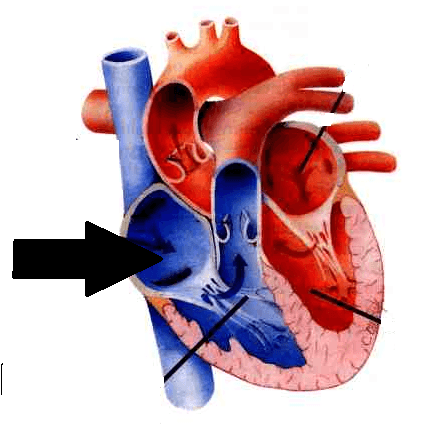
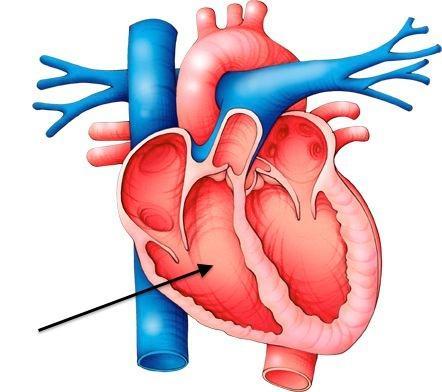
Identify
a)
Left atrium
b)
Right atrium
c)
Left ventricle
d)
Right ventricle
72.
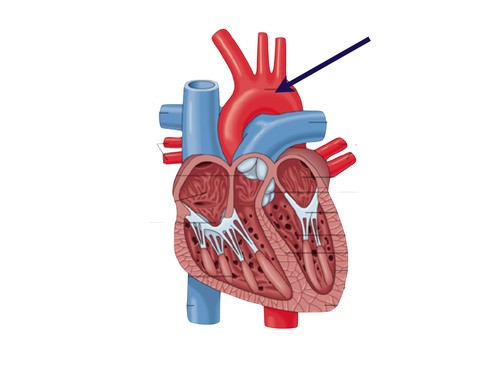
Identify
a)
Pulmonary veins
b)
Pulmonary artery
c)
Aorta
d)
Vena cava
73.
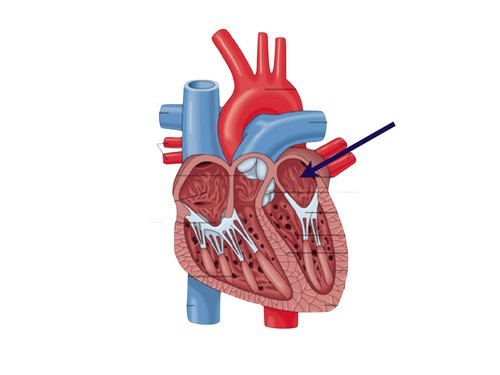
Identify
a)
Left atrium
b)
Right atrium
c)
Left ventricle
d)
Right ventricle
74.
Identify
a)
Left atrium
b)
Right atrium
c)
Left ventricle
d)
Right ventricle
75.
Identify
a)
Left atrium
b)
Right atrium
c)
Left ventricle
d)
Right ventricle
76.
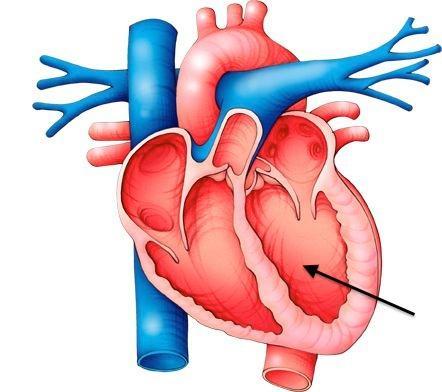
Identify
a)
Left atrium
b)
Right atrium
c)
Left ventricle
d)
Right ventricle
77.
This chamber of the heart RECEIVES blood returning from the body
a)
Right Atrium
b)
Right Ventricle
c)
Left Atrium
d)
Left Ventricle
78.
What is pulmonary circulation?
a)
Blood travelling to and from the lungs
b)
Blood travelling to and from the body
c)
A blood clot in the lungs
d)
The vessel that brings blood to the lungs
79.
Blood circulation from the heart to the rest of the body is called
a)
Full body
b)
Systemic
c)
pulmonary
d)
heart to lung
80.
Which is NOT a function of the circulatory system?
a)
deliver O2 and nutrients to cells
b)
remove CO2 and wastes from cells
c)
break down carbohydrates into glucose
d)
transport other materials through body
81.
Structure(s) that keep the blood flowing in one direction.
a)
Valve(s)
b)
Septum(s)
c)
Neuron(s)
d)
Bronchiole(s)
82.

These cells play a vital role in defending the body against infection

a)

Leucocytes

b)

Erythrocytes

c)

Blastocytes

d)

Plasmacytes

83.

_______ function in the life-saving process of clotting blood.

a)

Phagocytes

b)

Leucocytes

c)

Erythrocytes

d)

Platelets

84.

A fish's heart has ___ chambers.

a)

1

b)

2

c)

3

d)

4

85.

True or false:

Blood traveling in veins is blue.

a)

True

b)

False

86.

True or false:

Arteries always carry blood away from the heart.

a)

True

b)

False

87.

True or false:

Arteries always carry oxygenated blood.

a)

True

b)

False

88.

The blood in the vena cava is...

a)

oxygenated, returning to the heart

b)

deoxygenated, returning to the heart

c)

oxygenated, leaving the heart

d)

deoxygenated, leaving the heart

89.

The blood in the vena cava is...

a)

oxygenated, returning to the heart

b)

deoxygenated, returning to the heart

c)

oxygenated, leaving the heart

d)

deoxygenated, leaving the heart

90.
The circulatory system works with the ___________ system to provide our body with oxygen.
a)
respiratory
b)
digestive
c)
muscular
d)
skeletal
91.
Which chambers of the heart are the thickest and strongest?
a)
Atria
b)
Ventricles
c)
Valves
d)
Aorta
92.
  Compared to arteries, veins 
a)
have a pleated endothelium.
b)
have thinner walls.
c)
have more smooth muscle in their tunica media. 
d)
hold their shape better when cut. 
93.
The liquid part of blood that makes up 55% of its composition?
a)
Plasma
b)
Platelets
c)
White blood cells
d)
Red blood cells
94.

Hydrochloric acid is secreted in the _______________ .

a)

oesophagus

b)

stomach

c)

large intestine

d)

small intestine

95.

Most nutrient absorption occurs in the ________________ .

a)

mouth

b)

stomach

c)

large intestines

d)

small intestines

96.

Identify the organ that produces bile.

a)

pancreas

b)

liver

c)

gall bladder

d)

large intestines

97.

Protein is broken down into ______________ before they are asborbed into the small intestines.

a)

fatty acids

b)

amino acids

c)

citric acid

d)

hydrochiloric

98.

____________ in the pancreatic and intestinal juice completes the digestion of fats.

a)

Amylase

b)

Renin

c)

Pepsin

d)

Lipase

99.

The villi provides a surface area for the absorption of nutrients into the bloodstream.

a)

True

b)

False

100.
Small muscular pouch responsible for storing bile
a)
pancreas
b)
mechanical
c)
amylase
d)
gallbladder
101.
Gland that produces insulin as well as other chemicals needed for digestion
a)
pancreas
b)
esophagus
c)
large intestine
d)
gall bladder
102.
Which stage of digestion removes water?
a)
large intestine
b)
small intestine
c)
mouth
d)
stomach
103.
Chewing food is an example of _____________.
a)
chemical digestion
b)
physical digestion
104.
Where nutrients go after the small intestine has absorbed them.
a)
bloodstream
b)
stomach
c)
esophagus
d)
kidneys
105.
Where does chemical digestion begin?
a)
mouth
b)
esophagus
c)
stomach
d)
small intestine
106.
Peristalsis refers to
a)
one of the digestive organs
b)
the action of the stomach
c)
heart rate increasing
d)
smooth muscles moving food through the digestive system
107.
Flap of skin that covers the opening to the windpipe during swallowing
a)
Stomach
b)
Pepsin
c)
Pancreas
d)
Epiglottis
108.
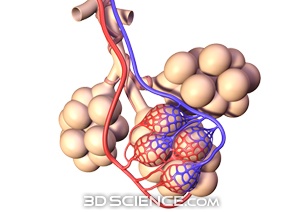
The air sacs that are covered with capillaries where gas exchange takes place
a)
bronchi
b)
lungs
c)
oxygen
d)
alveoli
109.
The organ system that provides the body with oxygen and rid the body of carbon dioxide.
a)
Circulatory System
b)
Trachea
c)
Arteries
d)
Respiratory System
110.
The Trachea splits into 2 branches and each of these goes into 1 of the lungs.
a)
Bronchioles
b)
Alveoli
c)
Bronchi
d)
Esophagus
111.
The Bronchi branch out into many different smaller tubes which take oxygen to the alveoli. What are these tiny tubes called?
a)
Trachea
b)
Larynx
c)
Pharynx
d)
Bronchioles
112.
What organelle controls and regulates cellular activity?
a)
Ribosome
b)
Nucleus
c)
Mitochondria
d)
Lysosome 
113.
The major function of ribosomes is to
a)
Make fats
b)
Synthesize protein
c)
Digest protein
d)
Make sugars
114.
The ____________ packages and processes material before it exports out of the cell.
a)
Vacuoles
b)
mitochondria
c)
Golgi apparatus 
d)
nucleus 
115.
Which of the following is an enzyme filled organelle that breaks down waste in the cell?
a)
lysosomes
b)
chloroplast
c)
mitochondria 
d)
Golgi apparatus 
116.
Select the statement that best describes the function of the cell wall.
a)
It gives structural support to plant cells.
b)
Its jelly-like fluid surrounds the nucleus and most of the cell’s internal parts.
c)
It contains the cell’s nuclear material. 
d)
It produces food from sunlight. 
117.
What am I?       I'm a real "powerhouse". I break down glucose to make ATP.  
a)
Cell membrane 
b)
ribosome
c)
mitochondria
d)
lysosome
118.
What is the name and function of the organelle displayed above?
a)
Mitochondria: breakdown glucose and produce ATP
b)
Chloroplast: converts solar energy into chemical energy
c)
Vacuole: Stores H2O, salt, food
d)
Nucleus: stores genetic information
119.
which of the following transports material within the cell?
a)
Golgi apparatus 
b)
Endoplasmic reticulum
c)
cell wall 
d)
ribosomes
120.
Rough endoplasmic reticulum has ________________ attached to it. 
a)
ribosomes 
b)
chromosomes 
c)
Golgi apparatus 
d)
nucleolus 
121.
What is the function of vacuoles?  
a)
make protein
b)
store genetic information
c)
storage of salt, H2O, food, and waste
d)
transports material outside the cell
122.
Which of these statements best describes the function of the cell membrane?
a)
It allows things to freely enter and exit the cell
b)
it controls which substances enter and exit the cell
c)
it prevents substances from entering the cell
d)
it prevents substances from leaving the cell
123.

The main human activity that releases greenhouse gases is

a)

using public transportation and there by reduce the affects of greenhouse gases.

b)

burning fossil fuels

c)

texting on cellphones

d)

eating meat

124.
T/F: Water vapor is a greenhouse gas
a)
True
b)
False
125.
Which of the following is an example of a greenhouse gas?
a)
Carbon Dioxide
b)
Nitrogen
c)
Oxygen
d)
Neon
126.
Which is a green-house gas?
a)
Methane
b)
Oxygen
c)
Hydrogen
d)
Ammonium
127.

What are the main greenhouse gases?

a)

carbon dioxide, oxygen, water vapor, nitrous oxide, methane

b)

carbon dioxide, methane, nitrous oxide, water vapor, sulfur dioxide

c)

methane, water vapor, carbon dioxide, oxygen

d)

methane, water vapor, carbon dioxide, nitrous oxide

128.

Gases in the Earth's troposphere retaining the infrared radiation and warming the Earth is referred to as:

a)

Climate Change

b)

Permafrost Melt

c)

Ozone Depletion

d)

Greenhouse Effect

129.

What is the function of the Ozone Layer?

a)

It protects the surface of the Earth from the ultraviolet radiation

b)

It protects the Earth's surface from the infrared radiation

c)

It decreases greenhouse emissions

d)

It builds reservoirs of carbon

130.

Which gas(es) caused the thinning of the Ozone?

a)

CO2

b)

CFC

c)

CH4

d)

CO

131.

Choose the elements that the gas CFC is composed of ? Click all that apply.

a)

carbon

b)

chlorine

c)

fluorine

d)

hydrogen

132.
What is climate?
a)
A long period of time. 
b)
Atmospheric conditions of a place at a particular point in time. 
c)
Average atmospheric conditions of a place over a long period of time, usually 30 years. 
d)
Current weather outlook of a place. 
133.

Why do areas near the coasts have warmer winters?

a)

the water absorbs heat from the air around the coasts

b)

the water releases heat into the air around the coasts

134.

What does most sunlight do when it reaches earth?

a)

Gets absorbed by the surface

b)

Gets reflected by the surface

c)

Gets absorbed by the air

d)

Gets reflected by the air

135.

What is the scientific definition of the albedo effect?

a)

How much sunlight an object reflects

b)

How much sunlight an object absorbs

c)

How hot an object gets

d)

How cold an object gets

136.

High or low albedo: snow

a)

high

b)

low

137.

High or low albedo: dirt

a)

high

b)

low

138.
What has the highest albedo?
a)
the oceans
b)
 glacial ice
c)
the ground
d)
roads
139.
What heats faster, land or water?
a)
Land
b)
Water