
 Worksheets
APES Unit 1 (Full)
Total questions: 135
Worksheet time: 2hrs 18mins

How does carbon in a grass plant get into a lion?
The lion eats an antelope that ate the grass
Carbon from grass doesn't end up in a lion.
The lion absorbs the carbon given off by transpiration
The lion breathes in carbon given out by the plant
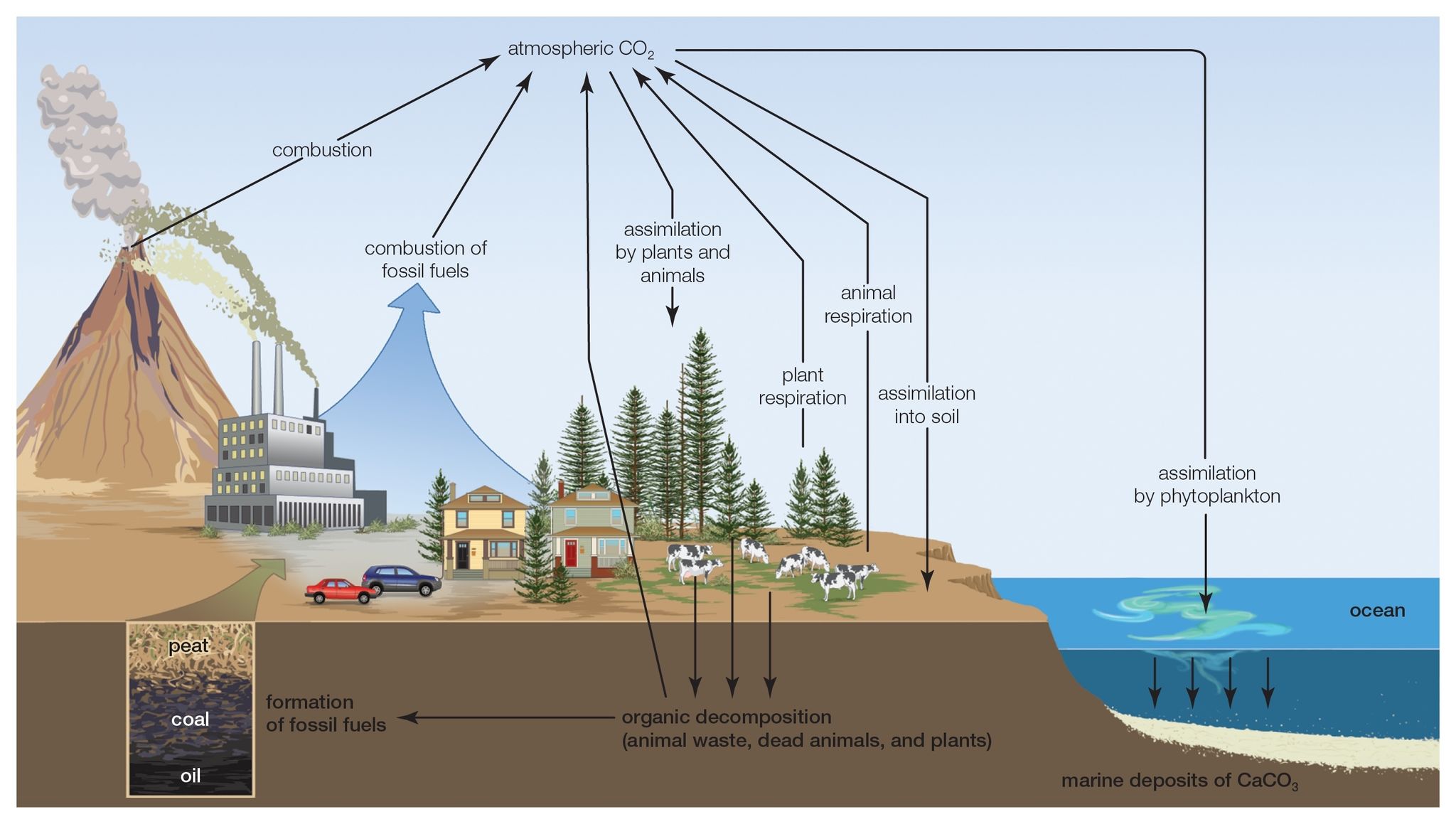

To make proteins and nucleic acids (ex. DNA)
To build lipids
To help create carbohydrates and nucleic acids (ex. DNA)


Organisms that do not decompose can be buried and over a long period of time become what?
Respiration is the process by which plants and animals take in _____ and release _____.
What is the role of denitrifying bacteria
change nitrate back into nitrogen gas
change nitrogen gas into nitrate
absorb carbon dioxide in the soil
release oxygen gas into the atmosphere
consuming other organisms
The process of converting nitrogen into ammonium by bacteria.
ammonification
denitrification
nitrofication
detrivore
The biological transformation of ammonia or ammonium to nitrites and nitrates.
ammonification
denitrification
nitrification
nitrogen fixation
Bacterial action that results in the combination of atmospheric nitrogen with other elements; making nitrogen available for use by plants.
ammonificaiton
denitrification
nitrification
nitrogen fixation


This is NOT a part of the phosphorus cycle.
Phosphate is incorporated into sedimentary rocks
Phosphate bound to soil
Atmospheric phosphate
Phosphate is absorbed from the soil by plants
Why is phosphorus important to us in APES?
it works alongside the nitrogen cycle to fertilize plants
it is the primary component of mountains, which serve as habitats for animals
it enhances decomposition of organic matter
it is a component of many biological molecules, such as nucleic acids, some lipids, ATP, and bony structures
The phosphorus cycle occurs much more quickly than the carbon and nitrogen cycles.
true
false
Many towns use water from aquifers for drinking. How does water get into aquifers?
rainwater runoff
recharge zones, found mainly in wetlands
it runs off from rivers into the aquifers


Which process causes water to enter the atmosphere as water vapor?
infiltration
evaporation
condensation
precipitation
When condensation occurs, water changes from a _________.
gas to liquid
liquid to gas
solid to liquid
solid to a gas

Which is an example of a sustainable practice?
I. Replanting a logged forest
II. Developing substitutes for nonrenewable resources
III. Banning the use of all fossil fuels without a planned transition to an alternative
I only
II only
I and III
I and II
I, II, and III
Terrestrial biomes are defined by ____ and ____ variables.
temperature; precipitation
temperature; animals
precipitation; plants
animals; plants
Which of the following are examples of wetlands?
swamps
marshes
bogs
all of these are correct
Which biome has warm temperatures, high precipitation, and little seasonal variation due to its location near the equator?
Boreal forest
Tropical rainforest
Woodland/shrubland
Subtropical desert
Phosphorus essentially does NOT have a ___ phase in its biogeochemical cycle.
Solid
Liquid
Gas
Which trophic level has the MOST biomass?
Producers
Primary Consumers
Secondary Consumers
Tertiary Consumers
How much energy is LOST between trophic levels?
10%
90%
100%
50%
75%
Which of the following best explains why decomposers in soils and water are important to ecosystems?
They recycle nutrients
They store carbon
They remove heavy metals
The increase oxygen levels
They neutralize acids
The major biological source of dissolved oxygen in the ocean comes from ___
decomposition of organic matter
photosynthesis by phytoplankton
metabolic processes in coral reefs
respiration by zooplankton
Two major processes involved in the carbon cycle are ___
photosynthesis and respiration
fixation and denitrification
evaporation and transpiration
weathering and erosion
Which biome is characterized by the presence of permafrost?
temperate seasonal forest
woodland/shrubland
tundra
boreal forest
The ecological role an organism performs in their specific environment is considered the organism's...
Habitat
Population
Biome
Niche
Which of the following is true of carbon as it cycles in nature?
Carbon dioxide is released during photosynthesis
Carbon compounds rarely exist in the gaseous state
Carbon sinks include old growth forests and oceans
The carbon dioxide concentration in the atmosphere is reduced by cutting trees
Which organisms play the largest role in converting nitrogen into various usable forms and back to a gas form?
rabbits
bacteria
plants
worms
Which of the following best describes weathering and erosion?
when it rains on rocks
decay of dead organisms
break down of rocks that wash into the water
when a volcano erupts
What does denitrification do?
converts fixed nitrogen into nitrogen gas
converts nitrogen gas into fixed nitrogen
makes nitrates
makes ammonia

The organisms represented by X are
A) Decomposers
B) Producers
C) Carnivores
D) Scavengers

Which two organisms are classified as producers?
A) tadpole and worm
B) algae and grass
C) grass and tadpole
D) raccoon and algae

Which population would be most immediately affected by the removal of the lizard
population?
A) sedges
B) algae
C) ants
D) centipedes
The major biological source of dissolved oxygen in the ocean comes from
decomposition of organic sediments on the ocean floor
oxidation of sulfur by bacteria in ocean vent communities
photosynthesis by phytoplankton
respiration by zooplankton
Which of the following best describes soil in many tropical rain forests?
They are permanently frozen
They are nutrient rich due to leaf litter from winter
They are identical to grassland soils
They are nutrient poor due to high competition from plant species
Which of the following statements is true of aquatic biomes?
Freshwater and marine biomes are evenly distributed on Earth.
Freshwater biomes are a vital source of drinking water.
Freshwater biomes supply a greater portion of Earth’s oxygen than marine biomes
Marine biomes include streams, rivers, ponds, and lakes.
Which aquatic biome provides the benefits of flood control, protection from storms, water filtration, and groundwater recharge?
rivers and streams
wetlands
lakes
open ocean

Suppose that a new predator of the rabbit migrated to this ecosystem. What is the most likely initial effect on the other organisms?
More competition among the mice for food
More competition among the hawks for food
Less competition among snakes for food
Less grass available for food
Which of the following has the lowest productivity?
Lakes
Estuaries
Open Ocean
Coral Reef

Otter


Which of the following does not produce carbon dioxide?
Photosynthesis
Burning Fossil Fuels
Animal respiration
Plants decaying
Which one of these does not add CO2 to the atmosphere?
cooking with gas
planting trees
burning wood
riding in a bus
The largest reservoir of nitrogen is the:
Oceans
Rivers
Rock, Lithosphere, & Land
Atmosphere
Which of the following best illustrates an abiotic factor affecting a biotic component?
Composting manure is added to agriculture
Phosphorous content in soil affecting plant growth
Plants release oxygen into the atmosphere.
Plants preventing soil erosion

__________ primary productivity is the total amount of energy that producers convert to chemical energy in organic molecules per unit of time.
Net
Total
Gross
Secondary

__________ primary productivity = the organic materials that remain after photosynthetic organisms in the ecosystem have used some of these compounds for their cellular energy needs (cellular respiration).
Gross
Total
Net
Secondary

The total quantity of all living matter in an area is called:
Troposphere
Net Primary Productivity
Biomass
Ecosystem

Ecological efficiency from one trophic level to the next is generally:
1%
10%
75%
90%
If gross primary productivity in a wetland is 3 kg C/m2/year and respiration is 1.5 kg C/m2/year, what is the net Primary Productivity of the wetland?
1.5 kg C/m2/year
2 kg C/m2/year
3 kg C/m2/year
4.5 kg C/m2/year
Producers rely on _____ to release chemical energy and consumers rely on ____ to release chemical energy.
Cellular Respiration; photosynthesis
Cellular Respiration; cellular respiration
photosynthesis; cellular respiration
photosynthesis; photosynthesis
Which ecosystem has the HIGHEST NPP?
Swamp/marsh
coral reef
tropical rain forest
Tropical seasonal forest
If gross primary productivity is 5 gC/m2yr, and the producers need 1.5 gC/m2yr for their own respiration, what is the net primary productivity?
3.5 gC/m2yr
6.5 gC/m2yr
-3.5 gC/m2yr
7.5 gC/m2yr
Producers rely on _____ to release chemical energy and consumers rely on ____ to release chemical energy.
Cellular Respiration; photosynthesis
Cellular Respiration; cellular respiration
photosynthesis; cellular respiration
photosynthesis; photosynthesis
The GPP of a certain producer is 5,000 gC/m2yr and the NPP is 4,000 gC/m2yr. What is the repsiratory energy needed by the autotrophs?
cannot be determined from the information given
1,000 gC/m2yr
9,000 gC/m2yr
-1,000 gC/m2yr
Which ecosystem has the LOWEST NPP?
Savanna
Desert
Tropical rain forest
Taiga


What are the two most significant factors that influence life in a biome?
Average temp and precipitation
Soil type and climate
Plants and animals
Tropical grasslands are also known as
Prairies
Savannas
Rain lands
Boreal forests are known for trees that shed their leaves in winter.
True
False
All of the nonliving parts of an ecosystem
biotic factors
abiotic factors
niche
habitat
All of the living or once living things in an ecosystem, or anything that originates from a living thing.
biotic factors
abiotic factors
niche
habitat

Which of the following is a terrestrial ecosystem?
forest
pond
ocean
lake

Which of the following is an aquatic ecosystem?
forest
prairie
ocean
desert
Suppose that a new predator of the rabbit migrated to this ecosystem. What is the most likely initial effect on the other organisms?
More competition among the mice for food
More competition among the hawks for food
Less competition among snakes for food
Less grass available for food
An ecosystem contains
only one species
multiple species
living and non-living components
all the similar biomes across the world
A population is best described as
only one species
multiple species
living and non-living components
all the similar biomes across the world


One characteristic feature of the tundra is that only the surface thaws in the summer and refreezes in the winter, leaving a permanently frozen subsoil. This characteristic is known as
Hoarfrost
Glaciation
Permafrost
Crystallization
Which of the following has the lowest productivity?
Lakes
Estuaries
Open Ocean
Coral Reef
Select the major types of Aquatic Biomes
Rivers & Lakes
Marine & Fresh water
Oceans & Rivers
Glaciers & Streams
Which biome contains the aphotic zone?
mangrove swamps
strams and rivers
coral reefs
open ocean
Most of the photosynthesis in lakes and ponds occurs in the?
bentich zone
littoral zone
limnetic zone
profundal zone
Which of the following ecosystems experiences harsh conditions due to conditions from tides?
Coral reef
Freshwater wetlands
Open ocean
Intertidal zone
Which of the following biomes has the lowest soil nutrient levels?
Woodland/shrubland
Boreal forest
Temperate rainforest
Tropical rainforest
A person's ecological footprint is
the land whtat a person lives on.
the amount of carbon dioxide a person contributes to climate change.
the land required to produce a person's food.
the land needed to support all of a person's activities
Traveling southward from the Arctic regions of Canada to the tropics of Panama, one passes through several biomes - tundra, coniferous forest, temperate deciduous forest, and tropical rain forest. This pattern of change in vegetation is primarily the result of
primary and secondary successsion
invasion of exotic species
increase in mean annual temperature and a decrease in mean annual precipitation
an increase in both mean annual temperature and mean annual precipitation
an increase in total annual hours of sunlight
Which of the following biomes is best characterized as an area that forms the narrow band along the coast that experiences a range of environmental conditions (including daily changes in sunlight, temperature, and water) ?
open oceans
lakes
coral reefs
intertidal zones
Which aquatic biome provides the benefits of flood control, protection from storms, water filtration, and groundwater recharge?
rivers and streams
wetlands
lakes
open ocean
What is the limiting nutrient in aquatic biomes?
nitrogen
phosphorus
carbon
hydrogen
A plant that has air roots (does not grow in soil or water) is known as a(n) ______.
evergreen
succulent
epiphyte
deciduous

Which of the following will result in accelerated eutrophication when introduced into streams, lakes, and bays?
Bacteria and viruses
pesticides
herbicides
phosphates
acid wastes
Eutrophication:
lessens biodiversity.
lowers the dissolved oxygen content of the water.
is caused by nutrient enrichment.
results in increased photosynthetic productivity.
all of these

