wayground logo

Free Printable Worksheets

Font size

S
M
L
XL
Worksheets

Biology Final Review (Spring 22)

Total questions: 145

Worksheet time: 3hrs 2mins

Name
Class
Date
1.
This variable in an experiment is the one being changed by the scientist. 
a)
dependent variable
b)
independent variable
c)
data
d)
control group
2.
An experiment is performed on plants to see how different liquids affect plant growth. Each plant in the experiment is given a different liquid; water, apple juice, or milk. Each plant has the same amount of soil, sunlight, and listens to the same music. In this investigation, the independent variable is ...
a)
The type of plant
b)
The amount of sunlight
c)
The type of music
d)
The type of liquid
3.
Dependent variable means
a)
the scientist controls what to test
b)
educated guess
c)
ask a question
d)
what is being measured
4.
Which side of a penny will hold more drops of water? Choose the best hypothesis.
a)
If I use the heads side of a penny, then it will hold more drops of water than tails.
b)
Heads
c)
Tails
d)
Tails will hold more drops of water.
5.
Squidward found new reeds to tryout for his clarinet.  He used an APPLAUSOMETER to measure applause after playing  Under the Sea with each reed.  The results were put in the table.
What was controlled?
a)
The Song
b)
The Reed
c)
The Applause
6.
Squidward found new reeds to tryout for his clarinet.  He used an APPLAUSOMETER to measure applause after playing  Under the Sea with each reed.  The results were put in the table.
What was the dependent variable?
a)
The Song
b)
The Reed
c)
The Applause
7.
Squidward found new reeds to tryout for his clarinet.  He used an APPLAUSOMETER to measure applause after playing  Under the Sea with each reed.  The results were put in the table.
What was the independent variable?
a)
The Song
b)
The Reed
c)
The Applause
8.
A claim is ______________________________.
a)
a kind of shellfish often used in chowder. 
b)
a fact.
c)
a statement or conclusion that answers the original question or problem
d)
a bad thing to make about something.
9.
Evidence is ___________________
a)
A statement or conclusion that answers a question
b)
Scientific data that supports the claim
c)
A justification that connects the claim to the evidence
d)
Not vital when using an argument
10.
Reasoning is __________________.
a)
A statement of conclusion that answers the original question/problem
b)
Scientific data that supports the claim
c)
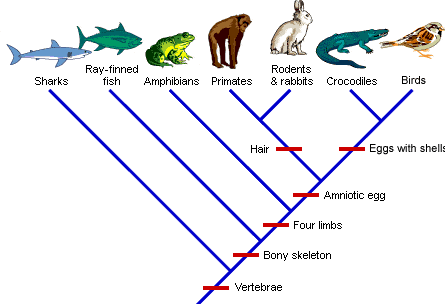
A justification that connects the evidence to the claim
d)
Empirical Evidence
11.
According to the American Health Association, peanut butter is a great source of protein.
a)
Claim
b)
Evidence
12.
Air is matter. We found that the weight of the ball increases by .5lbs each time we pumped more air into it. This shows that air has weight, one of the characteristics of matter.
Which sentence is the claim?
a)
Air is matter.
b)
We found that the weight of the ball increases by .5lbs each time we pumped more air into it.
c)
This shows that air has weight, one of the characteristics of matter.
13.
Air is matter. We found that the weight of the ball increases by .5lbs each time we pumped more air into it. This shows that air has weight, one of the characteristics of matter.
Which sentence is the evidence?
a)
Air is matter.
b)
We found that the weight of the ball increases by .5lbs each time we pumped more air into it.
c)
This shows that air has weight, one of the characteristics of matter.
14.
Air is matter. We found that the weight of the ball increases by .5lbs each time we pumped more air into it. This shows that air has weight, one of the characteristics of matter.
Which sentence is the reasoning?
a)
Air is matter.
b)
We found that the weight of the ball increases by .5lbs each time we pumped more air into it
c)
This shows that air has weight, one of the characteristics of matter.
15.

What is a hypothesis?

a)

the thing changed on purpose in the experiment

b)

an explanation about what you observed

c)

using your 5 senses to gather data

d)

an educated guess about the outcome of an experiment

16.

What two words should be in your hypothesis?

a)

I think

b)

If ...then...

c)

It will

d)

No idea

17.

Choose the correctly written hypothesis for "What is the effect of putting Pam Cooking Spray on the bottom of a sled?"

a)

I think the sled will slide faster.

b)

If I put Pam Cooking Spray on the bottom of my sled, then I will win the race."

c)

If I put Pam Cooking Spray on the bottom of my sled, then I will slide faster.

18.

Factors that limit the growth of a population are called?

a)

Carrying Capacity

b)

Limiting Factors

19.

When all the resources needed are available the population number...

a)

Increases

b)

Decreases

c)

Stays the same

20.

Carrying capacity is...

a)

The lowest number of organisms in an ecosystem.

b)

The total number of organisms in an ecosystem.

c)

The maximum number of organisms an ecosystem and its resources can support.

d)

The number of living organisms in an ecosystem.

21.

During which day did this population reach carrying capacity?

a)

Day 2

b)

Day 11

c)

Day 23

d)

Day 35

22.

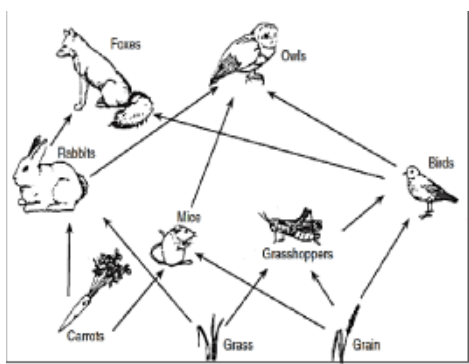
Choose two effects caused by an increase in the mouse population.

a)

The population of grain will increase.

b)

The population of grain will decrease.

c)

The population of owls will increase.

d)

The population of owls will decrease.

23.

What is the effect of humans on this food web?

a)

The population of marlins may be reduced by humans consuming too many red elderberry.

b)

Competition among humans, marlens, and bears may reduce food availability for the porcupine.

c)

Human consumption of the salmon may reduce food sources for the grizzly bear.

24.

What role do plants play in the flow of energy within an ecosystem?

a)

consumers

b)

decomposers

c)

herbivores

d)

producers

25.

The snake in this food chain is a

a)

producer

b)

primary consumer

c)

secondary consumer

26.

The rabbit, field mouse, and the deer are all

a)

producer

b)

primary consumer

c)

secondary consumer

27.

Animals that eat both plants and animals

a)

herbivore

b)

carnivore

c)

omnivore

28.

Animals that eat other animals

a)

herbivore

b)

carnivore

c)

omnivore

29.

Animals that eat only plants

a)

herbivore

b)

carnivore

c)

omnivore

30.

What is the grass in this food chain?

a)

producer

b)

primary consumer

c)

secondary consumer

31.

Which of these is a food chain in the food web?

a)

grass-mouse-deer

b)

rabbit-snake-fox

c)

grass-mouse-snake

d)

mouse-weasel-fox

32.

Where does the owl in this food web get its energy?

a)

rabbit, grasshopper, fox

b)

rabbit, mice, birds

c)

carrots, grass

33.

Barnacles create home sites by attaching themselves to whales.

a)

Mutualism

b)

Commensalism

c)

Parasitism

34.

Ticks feed on deer blood with harms the deer.

a)

Mutualism

b)

Commensalism

c)

Parasitism

35.

Yucca flowers are pollinated by yucca moths. The moths lay their eggs in the flowers. Both species benefit.

a)

Mutualism

b)

Commensalism

c)

Parasitism

36.

Hermit crabs live in shells made and then abandoned by snails.

a)

Mutualism

b)

Commensalism

c)

Parasitism

37.

Honey guide birds alert and direct badgers to bee hives. The badgers feed on the honey and then allow the birds to eat.

a)

Mutualism

b)

Commensalism

c)

Parasitism

38.

Mistletoe extracts water and nutrient from the spruce tree it is attached to.

a)

Mutualism

b)

Commensalism

c)

Parasitism

39.

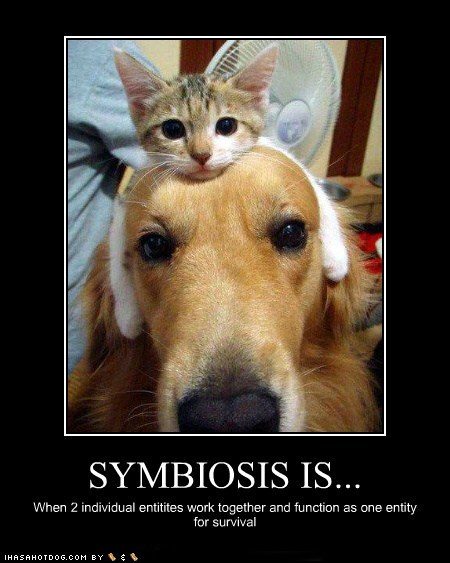
A relationship in which two species live closely together.

a)

resource

b)

mutualism

c)

succession

d)

symbiosis

40.

According to the image, what is the producer?

a)

plant

b)

insect

c)

mouse

d)

snake

41.

The word "primary" means "first."

If that's true, what does primary consumer mean?

Hint: look carefully at the food chain!

a)

the first organism in a food chain

b)

the first organism that consumes something else for energy

42.

According to the image, what is the primary consumer in the food chain?

a)

plant

b)

insect

c)

mouse

d)

snake

43.

According to the image, what is the secondary consumer?

a)

plant

b)

insect

c)

mouse

d)

snake

44.

This question is confusing! Look carefully at the image. What trophic (energy) level is the secondary consumer?

a)

1st

b)

2nd

c)

3rd

d)

4th

45.

What kind of organisms are usually primary consumers?

a)

plants

b)

herbivores

c)

carnivores

46.

What kind of organisms are usually at the top of the food chain?

a)

producers

b)

herbivores

c)

omnivores

d)

carnivores

47.

Look carefully at the image. If energy is lost as it moves up the food chain, what trophic level has the most amount of energy?

a)

1st level - producers

b)

2nd level - primary consumers

c)

3rd level - secondary consumers

d)

4th level - tertiary consumers

48.
The efficiency of energy transfer from a lower trophic level to the next highest level is roughly
a)
1%
b)
10%
c)
100%
d)
1000%
49.
What is the definition of behavior
a)
animal's response to a stimulus
b)
animal's type of communication
c)
animal's care of offspring
d)
animal's main characterisitics
50.
Which of the following is an example of COURTSHIP behavior?
a)
growling at foe
b)
barking for attention
c)
nursing young
d)
showing bright feathers
51.
Which animal displays migratory behavior?
a)
geese 
b)
moose
c)
deer
d)
wild hog 
52.
A bark, snort, growl, and hoot are all examples of what type of communication 
a)
non-verbal communication
b)
verbal communication
c)
short distance communication
d)
aggressive communication 
53.

What does camouflage mean?

a)

are the things organisms do to survive

b)

an organisms ability to look like another animal

c)

an organism ability to blend in with its surroundings or environment

54.

Characteristics to help an organism survive and reproduce are called ____________________________.

a)

features

b)

flexibility

c)

adaptations

d)

structures

55.

This would be considered a complex pattern of innate behaviors.

a)

Behavior

b)

Conditioning

c)

Instinct

d)

Imprinting

56.

A chameleon lies next to a large blue flower so predators can NOT find it. This is an example of

a)

camouflage

b)

mimicry

c)

migration

57.

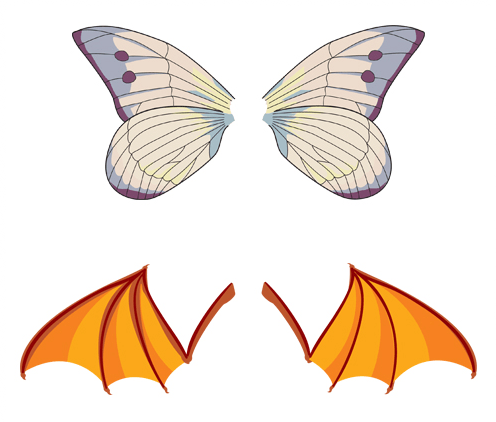
Some butterflies have spots on their wings that look like snake eyes. This is called

a)

A pretty butterfly

b)

Instinct

c)

camouflage

d)

mimicry

58.
The ingredients of photosynthesis are
a)
sugar and water.
b)
sugar and oxygen.
c)
carbon dioxide and water.
d)
carbon dioxide and oxygen.
59.
What are the products of photosynthesis?
a)
Carbon dioxide and water
b)
Carbon dioxide and oxygen
c)
Glucose and oxygen
d)
Glucose and water
60.
Which gas is removed from the atmosphere during photosynthesis?
a)
hydrogen
b)
oxygen
c)
nitrogen
d)
carbon dioxide
61.
What gas is released by plants during photosynthesis?
a)
sulfur
b)
carbon dioxide
c)
oxygen
d)
hydrogen
62.
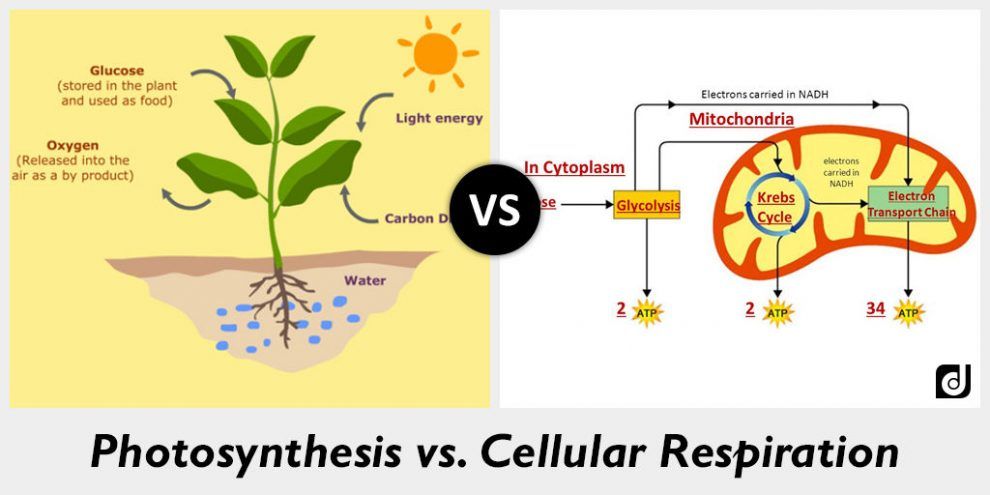
How can photosynthesis be related to cellular respiration?
a)
What's produced by one is needed for the other
b)
They both produce the same products
c)
They both have the same reactants (need the same things)
d)
These 2 processes have nothing in common
63.
Why is photosynthesis important?
a)
creates oxygen for animals to breath
b)
creates energy for heterotrophs to use
c)
creates food for plants to use
d)
all of these are correct
64.
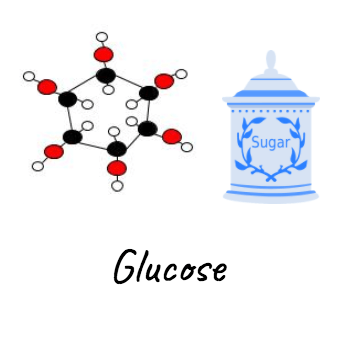
What is another name for glucose?
a)
Chlorophyll
b)
Chloroplasts
c)
Stomata
d)
Sugar
65.
The main source of energy for all life comes from ____.
a)
the Earth
b)
the moon
c)
the sun
d)
the food we eat/make
66.
What is the purpose of cellular respiration?
a)
To turn energy from the sun into glucose
b)
To turn oxygen into glucose
c)
To turn ATP into glucose
d)
To turn glucose into energy in the form of ATP
67.
Glucose is...
a)
A product of photosynthesis and cellular respiration
b)
A reactant of photosynthesis and cellular respiration
c)
A product of photosynthesis and a reactant of cellular respiration
d)
A reactant of photosynthesis and a product of cellular respiration
68.

What is the equation for photosynthesis?

a)

O2+ H2O → C6H12O6 + CO2

b)

CO2+ Light → C6H12O6 + O2

c)

CO2+ H2O+ light → C6H12O6 + O2

69.
What are the products in the equation below:
CO2+ H2O → C6H12O6 + O2
a)
CO2+H20
b)
ATP+Glucose 
c)
C6H12O6+O2
70.
Fermentation involves
a)
aerobic respiration
b)
anaerobic respiration 
71.
What cells in the body may undergo lactic acid fermentation during exercise? 
a)
Muscle cells
b)
Fat cells
c)
Liver cells
d)
Skin cells
72.
Fermentation is cellular respiration without which molecule?
a)
CO2
b)
O2
c)
C6H12O6
73.
When respiration occurs with oxygen, it is called _______
a)
anaerobic
b)
aerobic
c)
light-dependent
d)
fermentation
74.
Fermentation is:
a)
Cellular Respiration 
b)
Photosynthesis
c)
Aerobic
d)
Anaerobic
75.
What is the difference between biotic and abiotic?
a)
Biotic are non-living things
b)
Abiotic are living organisms
c)
Biotic is life,
Abiotic is non-living
d)
Biotic is non-living, Abiotic is living
76.

Biodiversity, aka biological diversity, usually refers to

a)

the same species in a general location

b)

the number of different species in a given area

c)

the number of animal species in a given area

d)

the number of plant species in a given area

77.

Great Biodiversity = Great Sustainability

a)

True

b)

False

78.

Species that are clearly critical to the functioning of an ecosystem are known as

a)

biodiversity

b)

keystone species

c)

main species

d)

native species

79.

A species that is likely to become extinct if protective measures are not taken immediately is known as

a)

threatened species

b)

endemic species

c)

keystone species

d)

endangered species

80.

Human activities that destroy habitats so they no longer support the original species that lived there is called

a)

poaching

b)

species interaction

c)

habitat loss

d)

population growth

81.

Suppose a local community wanted to reduce the amount of solid waste they were contributing to land pollution. Which of the following suggestions has the potential to result in the greatest reduction of waste?

a)

composting food wastes

b)

recycling paper and paperboard

c)

reusing rubber, leather, and textiles in new products

d)

recycling glass, plastic and metals

82.

How can many types of food waste and yard trimmings be recycled

a)

by reusing

b)

by burning

c)

by bagging

d)

by composting

83.

Ecosystem ____________ means the efforts of healing environmental resources such as water, forest, energy, air, minerals and others which are used without causing them to extinct.

a)

preservation

b)

conservation

c)

restoration

84.

What are the roles of an individual in order to materialize the National Green Technology Policy?

a)

Using energy from renewable sources, such as solar energy.

b)

Do activities which can decrease the release of carbon dioxide gas, such as carpooling and using public transport.

85.

How many chromosomes do humans have?

a)

23

b)

92

c)

46

d)

184

86.

What is a trait?

a)

Your DNA

b)

The things that make an individual unique

c)

Common characteristics in a species

d)

Chromosomes

87.

Where are "Genes" found?

a)

Mitochondria

b)

Cytoplasm

c)

Centrosomes

d)

Chromosomes

88.

How do we write DOMINANT alleles?

a)

Capital letters

b)

Lower case

89.

How do we write recessive alleles?

a)

Capital letters

b)

Lower case

90.

"T" is dominant, "t" is recessive. If an organism has the genes "Tt."

Which will trait will result?

a)

"T" dominant

b)

"t" recessive

91.

"G" is dominant, "g" is recessive. If an organism has the genes "gg."

Which will trait will result?

a)

"G" dominant

b)

"g" recessive

92.

What should you use to predict the traits of offspring when you know the genes of two parents?

a)

a graph

b)

a flow chart

c)

a data table

d)

a Punnett square

93.

What is the probability of bb offspring?

a)

1/4

b)

2/4

c)

0/4

d)

4/4

94.

What allele combination should go in the missing box?

a)

AA

b)

Aa

c)

aa

d)

none of these

95.

Who is Gregor Mendel

a)

an Austrian Monk from the mid 1800s who contributed to the study of Genetics

b)

The scientist who discovered the structure of DNA

c)

a British scientist who discovered penicillin

d)

The scientist who used X-Ray Crystallography to shed light on the structure of DNA

96.

What did Gregor Mendel study?

a)

Mold Spores

b)

Pea Plants

c)

Sun Flowers

d)

Rats

97.
Structures are similar in appearance but not in structure
a)
Vestigial 
b)
Homologous 
c)
Analogous Structures 
d)
Embryonic 
98.
Which layer is the youngest
a)
1
b)
2
c)
3
d)
4
99.

Which of the following is the collection of life's remains found in sedimentary rock?

a)

natural selection

b)

homologous structures

c)

Charles Darwin

d)

the fossil record

100.

Similar structures with different purposes found in different species are known as _____

a)

vestigial structures

b)

DNA

c)

homologous structures

d)

the fossil record

101.
The changes of species over time
a)
Embryonic 
b)
Natural selection 
c)
Mimicry 
d)
Evolution 
102.

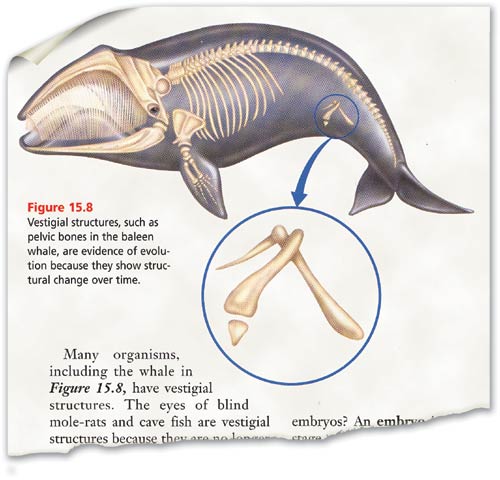
The picture shows a/an ___________

a)

homologous structure

b)

vestigial structure

103.
The opossum and kangaroo both incubate their young in a pouch. This provides evidence that they---
a)
are descended from a common ancestor
b)
Have very similar skeletal structures
c)
belong to the same species
d)
must range great distances to eat
104.

What is this an example of?

a)

Homologous structure

b)

Analogous structure

c)

Vestigial organs

d)

Functional adaption

105.
Which of the following is an example of a vestigial structure?
a)
the wings of a red-tailed hawk
b)
the hind limbs of a house cat
c)
the fins of sharks
d)
the tailbone of a human
106.
Which is not evidence for evolution?
a)
many animals have homologous structures due to common ancestry
b)
Many animals have vestigial structures from an ancestor
c)
We can observe changes in life forms by observing the fossil record
d)
All of these are evidence for evolution
107.

Similarities in bone arrangements, like those in the picture, support the hypothesis that...

a)

these organisms are not well adapted

b)

these organisms share a common ancestor

c)

these organisms all share the same DNA sequences

d)

these organisms are members of the same species
108.
According to this cladogram, primates are most closely related to -
a)
Amphibians
b)
Rodents and rabbits
c)
Crocodiles
d)
Birds
109.
According to this cladogram, birds are LEAST related to -
a)
Amphibians
b)
Sharks
c)
Ray Finned Fish
d)
Crocodiles
110.
Which trait do only humans have, according to the cladogram?
a)
jaws
b)
mammary glands & hair
c)
terrestrial during all life stages
d)
opposable thumbs
111.
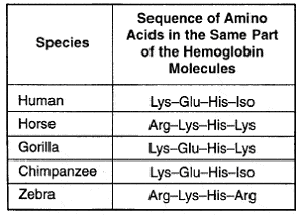
You look at two species and see very similar amino acid sequences. What does this likely tell you?
a)
These are the same animal.
b)
These animals have a common ancestor.
c)
These animals are not likely related.
d)
These animals are likely becoming one species.
112.
A slight difference in an inherited trait between individual members of the same species.
a)
variations
b)
adapatations
c)
homologous structures
d)
analogous structures
113.
An inherited trait that increases an organism's chance of surviving and reproducing.
a)
variation
b)
adaptation
c)
vestigial structure
d)
mutation
114.
The discovery of DNA and genes proved that
a)
Darwin was wrong
b)
mutations create variations and come from genes
c)
we are all the same species
d)
bats and butterflies have a very close common ancestor
115.
The English naturalist that developed the theory of how evolution works.
a)
Charles Darwin
b)
Charles M. Schulz
c)
Charles Dickens
d)
Charles Norris
116.

What is natural selection?

a)

When reproduction occurs and mutations happen.

b)

When a offspring has the traits from its parents.

c)

When an organism is able to camoflauge in its environment.

d)

the process whereby organisms that are better adapted to their environment tend to survive and reproduce more offspring.

117.

Which of these are possible traits of a rattle snake?

Select all that apply

a)

venom

b)

rattle

c)

hair

d)

legs

e)

scales

118.

What is an adaptive trait?

a)

A genetic trait that helps an organism to maximize its survival and reproduction ability

b)

A trait that makes an animal strong

c)

a trait that makes an animal weak

d)

a poisonus plant

119.

How do you "win" at natural selection?

a)

survive

b)

go extinct

c)

survive & reproduce

120.

Natural Selection is driven by a change in the environment and survival of the

a)

Earth

b)

Fastest

c)

Fittest

d)

Biggest

121.
In RNA, Uracil pairs with ______. 
a)
cytosine
b)
adenine
c)
guanine
d)
thymine
122.
The process to go from DNA to mRNA is _______
a)
translation
b)
transcription
c)
replication
123.
The process to go from mRNA to a protein is called ____
a)
transcription
b)
rRNA
c)
replication
d)
translation
124.
Choose the nucleotide sequence of the RNA strand that would be complementary to the following strand: 
GTAGTCA
a)
UATUAGA
b)
ACGACTG
c)
CAUCAGU
d)
CATCAGT
125.
What is the location in the cell for translation?
a)
nucleus
b)
mitochondria
c)
ribosome
d)
chloroplast
126.
What is the three base sequence of mRNA that codes for a single amino acid?
a)
Anticodon
b)
Codon
c)
Protein
127.
Which is the mRNA molecule that would be transcribed from this DNA template:
TGGCAAGTACGT
a)
ACCGTTCATGCA
b)
UGGCAAGUACGU
c)
UCCGUUCUUGCU
d)
ACCGUUCAUGCA
128.
How many amino acids are coded for by this sequence of nucleotides:
ATG GGA ACT CCA
a)
4
b)
2
c)
6
d)
12
129.

What is the amino acid sequence for the following mRNA strand:


UGG-ACU-CGA-GUG

(a)  

130.

What is the amino acid sequence for the following mRNA strand:


AUU-AAG-UGC-GGG

(a)  

131.

What mutation has occurred here?

T-G-A-C-C-A

T-G-A-G-C-A

a)

Substitution

b)

Deletion

c)

Insertion

d)

Frameshift

132.

Which of the following would result in a frameshift mutation?

a)

Insertions only

b)

Substitution only

c)

Deletion only

d)

Insertions and Deletions

133.

DNA molecule segment is : TTACGCAAG

The mutated DNA segment is TTCGCAAG. This is an example of ___ mutation.

a)

Substitution

b)

Deletion

c)

Insertion

d)

Inversion

134.

A mutation is defined as:

a)

A change in the cell's structure

b)

Anything that changes in an embryo

c)

Any change in the physical features of a human

d)

A change in the DNA sequence

135.

Identify the DELETION mutation form the following:

ATG CCA AAT

a)

ATG TCA AAT

b)

ATG CCT AAA T

c)

ATC CA AT

d)

ATG CCA AAT

136.

Eukaryotic cell differs from Prokaryotic cell in having

a)

Well defined nucleus

b)

Endoplasmic Reticulum

c)

Mitochondria

d)

Golgi complex

137.

Function of ribosomes is

a)

mRNA production

b)

Protein synthesis

c)

DNA Stabilizing

d)

Regulating transport of materials

138.
a)
Cytokinesis
b)
Interphase
c)
Anaphase
d)
Metaphase
139.
If the message never gets through for a cell to stop dividing and it just keeps dividing over and over again, what can form?
a)
tumor
b)
freckle
c)
goosebump
d)
scab
140.
You inherited...
a)
most of your chromosomes from your mother
b)
most of your chromosomes from your father
c)
a random number of chromosomes from each parent
d)
half your chromosomes from your mother and half from your father.
141.
Human eggs and sperm are _____, and each has ____ chromosomes.
a)
diploid, 23
b)
diploid, 46
c)
haploid, 23
d)
haploid, 46
142.
In which phase of the cell cycle does this occur:
The cytoplasm divides.
a)
Interphase
b)
Anaphase
c)
Cytokinesis
d)
Telophase
143.
In which phase of the cell cycle does this occur:
The chromosomes line - up along the middle of the cell.
a)
Cytokinesis
b)
Telophase
c)
Metaphase
d)
Anaphase
144.
In which phase of the cell cycle does this occur:
A nuclear membrane reforms around the chromosomes.
a)
Prophase
b)
Interphase
c)
Anaphase 
d)
Telophase
145.
If a parent cell has 12 chromosomes, how many chromosomes will each gamete have after meiosis?
a)
4
b)
6
c)
12
d)
24