wayground logo

Free Printable Worksheets

Font size

S
M
L
XL
Worksheets

Final Exam - Semester 1

Total questions: 150

Worksheet time: 4hrs 35mins

Name
Class
Date
1.

Which of the following is the correct equation for Photosynthesis?

a)

C6H12O6 +H2O ---> CO2 + O2

b)

C6H12O6 + 6 O2 ---> 6 CO2 + 6 H2O

c)

6 CO2+ 6 O2 ---> C6H12O6 + 6 H2O

d)

6 CO2 +6 H2O ---> C6H12O6 + 6 O2

2.

Which of the following is the correct equation for Cellular Respiration?

a)

C6H12O6 +H2O ---> CO2 + O2

b)

C6H12O6 + 6 O2 ---> 6 CO2 + 6 H2O

c)

6 CO2+ 6 O2 ---> C6H12O6 + 6 H2O

d)

6 CO2 +6 H2O ---> C6H12O6 + 6 O2

3.

Which of the following are reactants (inputs) of photosynthesis?

a)

Glucose and oxygen

b)

Glucose and water

c)

Carbon dioxide and oxygen

d)

Water and carbon dioxide

4.

Why does glucose (C6H12O6) have more energy than carbon dioxide (CO2)?

a)

Glucose has more energy because it has a higher number of carbon bonds

b)

They both have equal amounts of energy

c)

Carbon dioxide has more carbon bonds than glucose

d)

None of the above, energy is not stored in these molecules

5.

Why do plants need both mitochondria and chloroplasts?

a)

Plants do not have mitochondria because they only use photosynthesis

b)

Plants use photosynthesis to store the sun's energy as glucose, and cellular respiration to transfer the energy to ATP

c)

Plants use cellular respiration to store the sun's energy as glucose, and photosynthesis to transfer the energy to ATP

d)

Plants use photosynthesis to store the sun's energy as ATP, and cellular respiration to transfer the energy to glucose

6.

Which of the following are biological macromolecule(s)? (select all that apply)

a)

Carbohydrates

b)

Proteins

c)

Lipids

d)

Nucleic acids

7.

Enzymes speed up chemical reactions in our bodies. Which type of macromolecule are they?

a)

Carbohydrates

b)

Proteins

c)

Lipids

d)

Nucleic acids

8.

Which type of macromolecule is used for long term energy storage?

a)

Carbohydrates

b)

Proteins

c)

Lipids

d)

Nucleic acids

9.

What are considered the building blocks for proteins?

a)

amino acids

b)

peptide bonds

c)

carbohydrates

d)

nucleic acids

10.

All eukaryotic cells contain which of the following?

a)

Nucleus

b)

Cell wall

c)

Chloroplasts

d)

All of the above

11.

Students tested how different amounts of water affect the height of plants growth. What is the independent variable in this experiment?

a)

Amount of sunlight

b)

The days it is grown

c)

The height of the plant

d)

The amount of water

12.

Students tested how different amounts of water affect the height of plants growth. What is the dependent variable in this experiment?

a)

Amount of sunlight

b)

The days it is grown

c)

The height of the plant

d)

The amount of water

13.

Which of the following organism's carry out all of the characteristics of life? (check all that apply)

a)

Unicellular protists

b)

Prokaryotes

c)

Eukaryotes

d)

Multicellular organisms

14.

Which scientist formulated the theory of evolution through natural selection?

a)

Charles Darwin

b)

Thomas Malthus

c)

James Hutton

d)

Jean-Baptiste Lamarck

15.

A farmer's use of the best livestock for breeding is an example of?

a)

Natural selection

b)

Artificial selection

c)

Extinction

d)

Adaptation

16.

Body parts of unrelated organisms that serve the same function are examples of?

a)

Homologous structures

b)

Vestigial structures

c)

Analogous structures

d)

Fossil structures

17.

Which of the following is an important concept in Darwin's theory of evolution by natural selection?

a)

Descent with modification

b)

Homologous molecules

c)

Processes that change the surface of the earth

d)

The tendency toward perfection

18.

Mutations and the genetic recombination that occurs during sexual reproductions are both sources of?

a)

Genetic Variation

b)

Stabilizing selection

c)

Genetic Equilibrium

d)

Genetic drift

19.

What conclusion can you draw from this question, If species A and B have very similar genes and proteins , what is probably true?

a)

Species A and B share a relatively recent common ancestor

b)

Species A evolved independently of species B for a long period

c)

Species A is younger than species B

d)

Species A is older than species B

20.

Which of the following groups, by themselves do NOT form a clad?

a)

Cone-bearing plants and flowering plants

b)

Ferns, cones-bearing plants, and flowering plants

c)

Moses and ferns

d)

Moseses, ferns, cone-bearing plants and flowering plants

21.

Which of the following groups share the most recent common ancestor?

a)

Cone-bearing plants and flowering plants

b)

Mosses and ferns

c)

Mosses and cone-bearing plants

d)

Ferns and flowering plants

22.

Which term means maintaining balance within the body such as regulating temperature, water, sugars and salts?

a)

Diffusion

b)

Transport

c)

Mitosis

d)

Homeostasis

23.
Which of the following illustrates the correct ordering of trophic levels?
a)
decomposers-carnivores-autotrophs-herbivores
b)
herbivores-autotrophs-carnivores-decomposers
c)
producers-herbivores-carnivores-decomposers
d)
carnivores-producers-omnivores
24.
The transfer of energy from a lower trophic level to the next highest level is roughly
a)
1%
b)
10%
c)
100%
d)
1000%
25.
Trophic levels are represented by 
a)
squares
b)
circles
c)
pyramids
d)
lines
26.
Which animal is the top predator?
a)
hawk
b)
lizard
c)
snake
d)
grass
27.
In the energy pyramid here, how much of the energy in each level gets lost as heat or used by the organism for survival?
a)
80%
b)
90%
c)
10%
d)
20%
28.
Which of the following is a herbivore?
a)
cricket
b)
frog
c)
hawk
d)
shrew
29.
Hawks weigh about 1.5 kg. About how much grass must be consumed by grasshoppers to support the one hawk? (Hint: multiply by 10)
a)
1.5 kg
b)
50 kg
c)
1,500 kg
d)
5,000 kg
30.
What would happen if a decomposer is removed from the ecosystem?
a)
Nothing
b)
The ecosystem would eventually die
c)
Only the producers would be affected
d)
Only the consumers would be affected
31.
What would happen to the ecosystem if the biomass of primary consumers was higher than the biomass of producers? 
a)
The primary consumers will eat all of the producers...no more organisms to convert light energy to chemical energy (glucose)
b)
The primary consumers will become the producers and perform photosynthesis 
c)
The producers will become primary consumers
d)
This is DEFINITELY not the right answer.
32.
What is the water cycle?
a)
the 3 forms of water
b)
the movement of water on, above, or below the surface of the Earth
c)
when water melts
d)
when clouds form
33.
What is it called when plants give off water vapor as a waste product?
a)
condensation
b)
evaporation
c)
sublimation
d)
transpiration
34.
What follows condensation in the water cycle? 
a)
evaporation, by the sun's heat
b)
condensation, because the air is cooled
c)
precipitation, because the cloud is saturated, or full
d)
run off, because gravity pulls things down
35.
What is the role of decomposers in an Ecosystem? 
a)
They recycle matter and nutrients to form fossil fuels
b)
They are burn and release as carbon dioxide
c)
Decomposers are responsible to turn oxygen into carbon dioxide
d)
They recycle energy back to the sun
36.
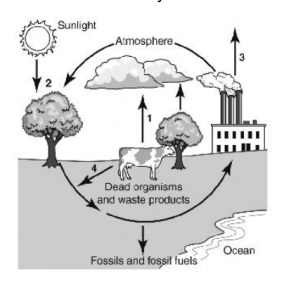
What is happening at 1?
a)
respiration: releasing CO2
b)
decomposing COin the soil
c)
photosynthesis: absorbing CO2
d)
turning CO2 from the atmosphere into organic molecules
37.
Photosynthesis
a)
absorbs CO2
b)
releases CO2
38.
Respiration
a)
absorbs CO2
b)
releases CO2
39.
Abiotic factors are parts of the environment that are...
a)
Nonliving 
b)
Living
c)
Populations
d)
Vegetation
40.
What is one way in which all living things on Earth are alike?
a)
All living things have hair.
b)
All living things are made of cells and come from other cells.
c)
The cells of all living things have chloroplast.
d)
All living things can move. 
41.
What structures distinguish a plant cell from an animal cell?
a)
Plant cells have cell walls and ribosomes.
b)
Plant cells have cell walls and chloroplasts.
c)
Plant cells have chloroplasts and ribosomes.
d)
Plant cells have chloroplasts and mitochondria.
42.
The basic unit of life is called a (n)
a)
atom
b)
compound
c)
cell
d)
energy
43.
"Endosymbiosis" means
a)
Living together
b)
Living inside
c)
Entering together
d)
Joining together
44.
The theory of Endosymbiosis explains
a)
The origin of eukaryotes
b)
How species develop
c)
How bacteria live
d)
Why cells rely on one another
45.
____________ & _________________ are organelles that definitely arose from endosymbiosis.
a)
Rough ER & Smooth ER
b)
Mitochondria & Flagellum
c)
Chloroplast & Mitochondria
d)
Chloroplast and Golgi apparatus
46.
What are the reactants of photosynthesis 
a)
Water, light, and carbon dioxide
b)
sugar, light and water
c)
Water, light, carbon dioxide
d)
sugar and oxygen 
47.
What are the products of photosynthesis?
a)
Sunlight and water
b)
oxygen and sugar
c)
Energy and Carbon dioxide
d)
Heat
48.
The sac like portion inside the chloroplast is called
a)
Golgi appartus
b)
Endoplasmic reticulum 
c)
Stroma
d)
Thykloids
49.
The fluid like substance found inside the chloroplast is called
a)
Cytoplasm
b)
Stroma
c)
Thykloids
d)
Cell Wall
50.
What pigment absorbs sunlight for photosynthesis?
a)
chloroplast
b)
thylakoid
c)
grana
d)
chlorophyll
51.
The main source of energy for all life comes from ____.
a)
the Earth
b)
the moon
c)
the sun
d)
the food we eat/make
52.
How can photosynthesis be related to cellular respiration?
a)
What's produced (made) by one is needed (the reactants) for the other
b)
They both produce the same products
c)
They both have the same reactants (need the same things)
d)
These 2 processes have nothing in common
53.
All living things do which of the following?
a)
Chemosynthesis
b)
Respiration
c)
photosynthesis
d)
all of the answers
54.
What is one of the reactants of cellular respiration?
a)
energy
b)
glucose
c)
carbon dioxide
d)
water
55.
______________ produces the most ATP.
a)
photosnthesis
b)
aerobic respiration
c)
anaerobic respiration
d)
glycolysis
56.
What is the molecule called that mitochondria produce when they respire glucose?
a)
ATP
b)
ADP
c)
DNA
d)
80p
57.
Where does glycolysis occur?
a)
Inner mitochondrial membrane
b)
Mitochondrial Matrix
c)
Cytosol
d)
At a ribosome
58.
Where does ETC occur?
a)
Mitochondrial matrix
b)
Outer mitochondrial membrane
c)
Inner mitochondrial membrane
d)
Cytosol
59.
what travel through the electron transport chain?
a)
cells
b)
electrons
c)
blood
d)
thylokoid
60.
what is ATP?
a)
newly used word for ADP
b)
part of a membrane
c)
energy carrier
61.
Lactic acid fermentation occurs in your muscles after a workout because your cells are struggling to get...
a)
Glucose
b)
Sunlight
c)
Oxygen
d)
Water
62.
Because fermentation takes place in the absence of oxygen, it is said to be
a)
aerobic
b)
anaerobic
c)
cyclic
d)
oxygen-rich
63.
The process carried out by yeast that causes bread to rise is
a)
alcoholic fermentation
b)
lactic acid fermentation
c)
cellular respiration
d)
yeast mitosis
64.
which would be an example of quantitative data?
a)
color of an animal's fur
b)
height of a tree
c)
smell of a flower
d)
texture of a pear
65.
if you wanted to make a reaction in your body speed up, you should add a(n)
a)
strong acid
b)
enzyme (catalyst)
c)
strong base
d)
glycerol 
66.
where is most of the energy stored in the ATP molecule?
a)
between the 2nd and 3rd phosphate groups
b)
between the 1st and 2nd phosphate groups
c)
the bond between the adenine and ribose
d)
the bond between the ribose and the 1st phosphate group
67.
which cell would have the largest amount of chloroplasts? 
a)
leaf 
b)
heart
c)
muscle
d)
root
68.
what is a theory?
a)
an initial thought or feeling about what should happen
b)
a testable explanation to a problem or a question
c)
the best current explanation about how something works
d)
logical inferences based on feelings
69.
Which two organisms in the chart are most closely related?
a)
A and B
b)
A and C
c)
B and C
d)
C and D
70.

According to this tree, which of these animal phyla are most closely related?

a)

Arthropoda & Mollusca

b)

Arthropoda & Chordata

c)

Chordata & Mollusca

71.

The diagram below represents possible genetic relationships between groups of organisms.

Which statement is a valid conclusion that can be drawn from the diagram?

a)

Insects are more complex than mammals.

b)

Earthworms and sea stars have a common ancestor.

c)

Snails appeared on Earth before corals.

d)

Sponges were the last new species to appear on Earth.

72.
Epiphytes are plants that grow on other plants. They do not harm the plants that they grow on. Instead they obtain what they need for survival from the air and the sun. Some species of orchids like the one pictured above are examples of epiphytes because they grow on tree trunks in tropical rain forests.  Which of the following correctly identifies the relationships between orchids and tropical rain forest trees? 
a)
mutualism
b)
commensalism
c)
parasitism
d)
predation
73.

1. Viruses are not considered to be living things, but they depend upon living cells for energy, reproduction, and protection at the expense of the cells that they invade.The type of relationship described could best be classified as one of

a)

Commensalism

b)

A. Mutualism.

c)

A. Parasitism.

d)

A. Resignation.

74.

Which organisms in figure 1 could be classified as carnivores?

a)

deer, mice, and grasshoppers

b)

grasshoppers, lizards, and shrews

c)

coyotes, shrews, and lizards

d)

mountain lion, deer, and shrews

75.
In this food pyramid, which level has the greatest amount of energy?
a)
Producers
b)
Primary Consumers
c)
Secondary Consumers
d)
Tertiary Consumers
76.
If a disease destroying barley plants in a field swept through an ecosystem, what would happen to the barley eating bird population in the the field ?
a)
The bird population would stay the same
b)
The bird population would infinitely increase
c)
The bird population would decrease
77.
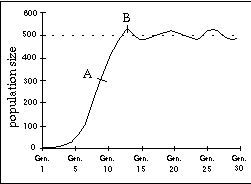
What is the carrying capacity of the graph?
a)
around 500
b)
more than 500
c)
less than 500
d)
around 600
78.
Which organism help to breakdown or decompose waste and dead organisms?
a)
The organisms and waste breakdown on their own.
b)
Only fungi
c)
Only bacteria
d)
Fungi, bacteria and other decoposers such as worms and beetles.
79.
A species living together in one area is called a:
a)
species
b)
community
c)
ecosystem
d)
population
80.
Different organisms living together in the same area:
a)
community
b)
population
c)
species
d)
ecosystem
81.

The range of all  conditions in which a species lives and how it gets what it needs to survive and reproduce.
a)
population
b)
ecosystem
c)
niche
d)
biology
82.
Gerald wants to find out how quickly he can melt a stick of butter. He plans to use a hair dryer with 4 different heat settings. What would be the control group in his experiment?
a)
Hottest Setting
b)
Lowest Setting
c)
No Heat
d)
Middle Setting
83.

At night, there is no sunlight, so which process do plants go through?

a)

Photosynthesis

b)

Cellular Respiration

c)

Transcription

d)

Translation

84.

What is happening at 1 (in the middle from the cow)?

a)

respiration: releasing CO2

b)

decomposing CO2 in the soil

c)

photosynthesis: absorbing CO2

d)

turning CO2 from the atmosphere into organic molecules

85.

Which of the following is NOT a characteristic of life?

a)

reproduces

b)

responds to stimuli

c)

has sharp teeth

d)

displays organization

86.

The highest level of organization is the _____.

a)

biosphere

b)

biome

c)

ecosystem

d)

community

87.

A symbiotic relationship in which one organism is harmed and another benefits is......

a)

predation

b)

parasitism

c)

mutualism

d)

commensalism

88.

Which of the following is NOT an abiotic factor?

a)

temperature

b)

animals

c)

water

d)

sunlight

89.

A symbiotic relationship in which both species benefit is

a)

mutualism

b)

parasitism

c)

predation

d)

commensalism

90.

Which is a characteristic of exponential growth rate?

a)

Population growth rate reaches a carry capacity.

b)

Population growth reaches a maximum number an environment can support.

c)

Population results in a S-shaped graph.

d)

Population results in a J-shaped graph.

91.

The study of the interactions of living things with each other and the environment is called ____.

a)

sensitive period

b)

demography

c)

nurturing

d)

ecology

92.

Which of the following is a testable explanation?

a)

independent variable

b)

dependent variable

c)

hypothesis

d)

observation

93.

The type of heterotroph that eats only plants is a(n) _______.

a)

herbivore

b)

carnivore

c)

omnivore

d)

detritivore

94.

The variety of life in an area determined by the number of different species is called _____.

a)

genetic diversity

b)

ecosystem diversity

c)

biodiversity

d)

forest diversity

95.
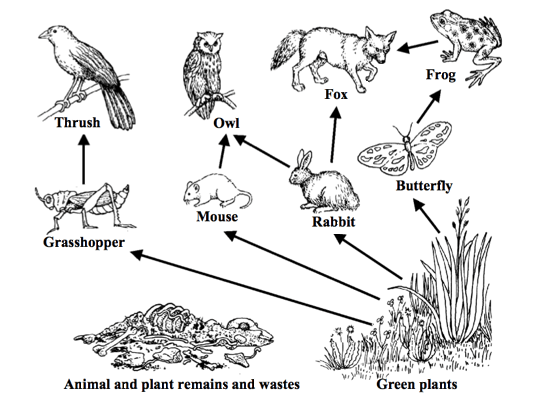
The owl receives energy from which organisms?
a)
grasshopper and mouse
b)
mouse and rabbit
c)
rabbit and butterfly
d)
butterfly and frog
96.
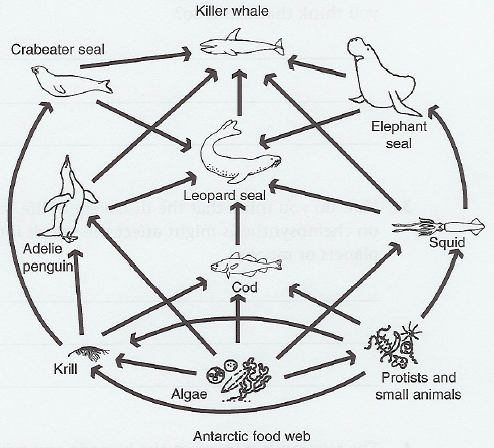
How many predators does the squid have?
a)
1
b)
2
c)
3
d)
4
97.
The krill is eaten by which consumer?
a)
blue whale
b)
phytoplankton
c)
leopard seal
d)
penguin
98.
Which of the following is an example of an AUTOTROPH?
a)
Appletree
b)
Dog
c)
Mushroom
d)
Human
99.
Most plants appear green because chlorophyll
a)
absorbs green light.
b)
absorbs violet light.
c)
reflects green light.
d)
does not absorb violet light.
100.
Where do the light-dependent reactions occur? 
a)
thylakoid membrane
b)
stroma
c)
mesophyll
d)
mitochondria
101.
Use the diagram to answer the question. Between which parts of the molecule must the bonds be broken to form an ADP molecule?
a)
A and B
b)
A and C
c)
B and C
d)
C and D
102.
Is ADP or ATP more like a fully charged battery, and why?
a)
ADP, because it has three phosphate groups; breaking and reforming the bonds among them releases energy.
b)
ATP, because it has three phosphate groups; breaking and reforming the bonds among them releases energy.
c)
ADP, because it has two phosphate groups; breaking and reforming the bonds among them releases energy.
d)
ATP, because it has two phosphate groups; breaking and reforming the bonds among them releases energy.
103.
Which of the following best describes photosynthesis?
a)
Photosynthesis converts radiant energy into chemical energy.
b)
Photosynthesis produces carbohydrates.
c)
Plants need sunlight, carbon dioxide, water, nutrients, and chlorophyll to complete photosynthesis.
d)
Plants use chlorophyll, water, and carbon dioxide to make sugar.
104.

Which of the following might result in a decrease in the deer population?

a)

A law forbidding hunting in an area.

b)

An increase in the growth of plants in the area.

c)

A decrease in the population of the deer's predator

d)

The constructions of a shopping mall in the area.

105.

Which of the following would NOT be a limiting factor for a deer in the forest?

a)

water

b)

shelter

c)

food

d)

size of the deer population

106.

Koalas are dependent upon their food plant, the Eucalyptus tree. If Eucalyptus trees tend to grow in clusters, the distribution of koalas will be:

a)

Uniform

b)

Random

c)

Clumped

d)

Density-Independent

107.
The largest number of individuals in a species that an environment can support long term
a)
carrying capacity
b)
emigration
c)
immigration
d)
population density
108.

The number of individuals in a specific area is known as.....

a)

population

b)

sampling

c)

estimate

d)

population density

109.
How are photosynthesis and cellular respiration related?
a)
They have opposite equations
b)
they have the same equation
c)
they both produce carbon dioxide
d)
they both produce oxygen
110.
__________ is an organism that only eats meat for energy.
a)
Omnivore
b)
Borivore
c)
Herbivore
d)
Carnivore
111.

All of the populations that live in one area together

a)

limiting factors

b)

populations

c)

community

d)

speed limit

112.
Which statement is correct?
a)
A population is the same as a community
b)
A community is a group of populations
c)
A community is a part of a population
d)
A population is a group of communities
113.
All food chains_____________________
a)
have more consumers than producers
b)
produce and use same amount of energy
c)
begin with a producer
d)
are unhealthy 
114.
A relationship between two organisms in which one organism benefits and the other is unharmed...
a)
Mutualism 
b)
Competition
c)
Parasitsm 
d)
Commensalism 
115.

Fancy pigeons are created by people choosing to mate a male and female pigeon with certain desired traits. What is this an example of?

a)

Sexual selection

b)

Genetic modification

c)

Natural selection

d)

Selective breeding

116.

The yucca plant releases a strong scent at night when the yucca moth is active. The yucca moth, attracted by the scent, gathers pollen from the yucca flower. The yucca moth then deposits her eggs and the pollen on the another plant. This ensures that the plant will be cross-pollinated and that the yucca moth larvae have a steady food supply. Which relationship does this best illustrate?

a)

commensalism

b)

mutualism

c)

parasitism

d)

predation

117.

Two different populations of birds live in the same area and eat the same types of food. Which most likely describes the relationship between these two populations of birds?

a)

competition

b)

mutualism

c)

parasitism

d)

predator-prey

118.
Ecosystems are made up of....
a)
Living things only
b)
Living and non-living things
c)
air and nutrients only
d)
dust particles
119.
Many animals have fur that helps them to camouflage with their surroundings.  This is an example of 
a)
Population changes
b)
Adaptations
c)
Keystone species
d)
Biodiversity
120.
An example of a population is
a)
All the field mice in a field
b)
The mice, owls and oak trees in a forest
c)
All the trees, animals, soil, sunlight and water in a biome
d)
All the people and pets at a dog show
121.

An example of a community is

a)

All the frogs, tadpoles and lily pads in a pond

b)

All the frogs, tadpoles, lily pads, sunlight, wind and temperature of the pond.

c)

All the water, mud, a certain temperature and certain amount of sunlight in a pond

122.
Choose the correct order of organization from smallest to largest
a)
Species--> Population--> Community--> Ecosystem-->Biosphere
b)
Community--> Species--> Population--> Biosphere --> Ecosystem
c)
Ecosystem--> Community--> Species--> Population--> Biosphere 
d)
Population-->Species--> Community--> Ecosystem-->Biosphere
123.
What are the monomers of carbohydrates?
a)
Amino acids
b)
Fatty acids
c)
Nucleotides
d)
Monosaccharides (simple sugars)
124.

Living and nonliving things made of tiny units of matter called __________.

a)

cells

b)

atoms

c)

iron

d)

insects

125.

An element is ___________________________

a)

a substance made of two or more kinds of atoms

b)

any liquid

c)

A substance made entirely of one kind of atom

d)

any gas found in the atmosphere

126.

When two or more different elements are connected by a chemical bond a ______________ is formed

a)

compound

b)

element

c)

atom

d)

cell

127.

DNA and RNA are two kinds of

a)

nucleic acids

b)

atoms

c)

cells

d)

elements

128.

Jello-like material, fills the space between cell organelles, is where many chemical reactions occur

a)

cytoplasm

b)

chromatin

c)

chloroplast

d)

cell membrane

129.

How are a theory and a hypothesis different?

a)

a hypothesis has been tested and accepted by the scientific community, based on evidence, and could potentially change in the future

b)

there is no difference... they can be used interchangeably

c)

a theory has been tested and accepted by the scientific community, based on evidence, and could potentially change in the future

d)

a hypothesis is testable and a theory is not

130.

Which element is able to bond with 4 different atoms, form a variety of different structures, and form single/double/triple bonds?

a)

hydrogen

b)

carbon

c)

oxygen

d)

neon

131.

_____________ is the breakdown of polymers into monomers and ____________ is the formation of polymers from monomers

a)

dehydration synthesis, hydrolysis

b)

disulfide bonds, hydrolysis

c)

hydrolysis, dehydration synthesis

d)

dehydration synthesis, peptide bonds

132.

The monomers of proteins are called _________. All 20 of these have the exact same structure except for the "R" group/functional group.

a)

amino acids

b)

nucleic acids

c)

monosaccharides

d)

triglycerides

133.

Which type of cell would you expect to find a higher number of mitochondria?

a)

muscle cell

b)

skin cell

c)

bone cell

d)

nerve cell

134.
What is another way to describe natural selection?
a)
survival of the smartest
b)
survival of the fastest
c)
survival of the biggest
d)
survival of the fittest
135.
The following concept identify transitional species over time through preserved specimen and offer supporting evidence to the Theory of Evolution?
a)
DNA studies
b)
embryology 
c)
extinction
d)
fossil record
136.
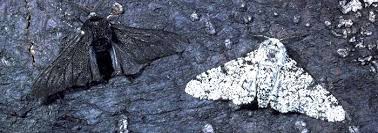
Predict which moth would increase in population
a)
light 
b)
dark
137.
The process by which populations slowly change over time is called__________
a)
selective breeding
b)
adaptation
c)
speciation
d)
evolution
138.
The study of embryos of various organisms to show a common ancestor because of similarities in development is...
a)
natural selection
b)
embryology
c)
speciation
d)
evolution
139.
What does Darwin's theory of evolution suggest?
a)
species change over time
b)
extinct species are not related to living species
c)
different species can interbreed
d)
animals that look alike are most closely related
140.
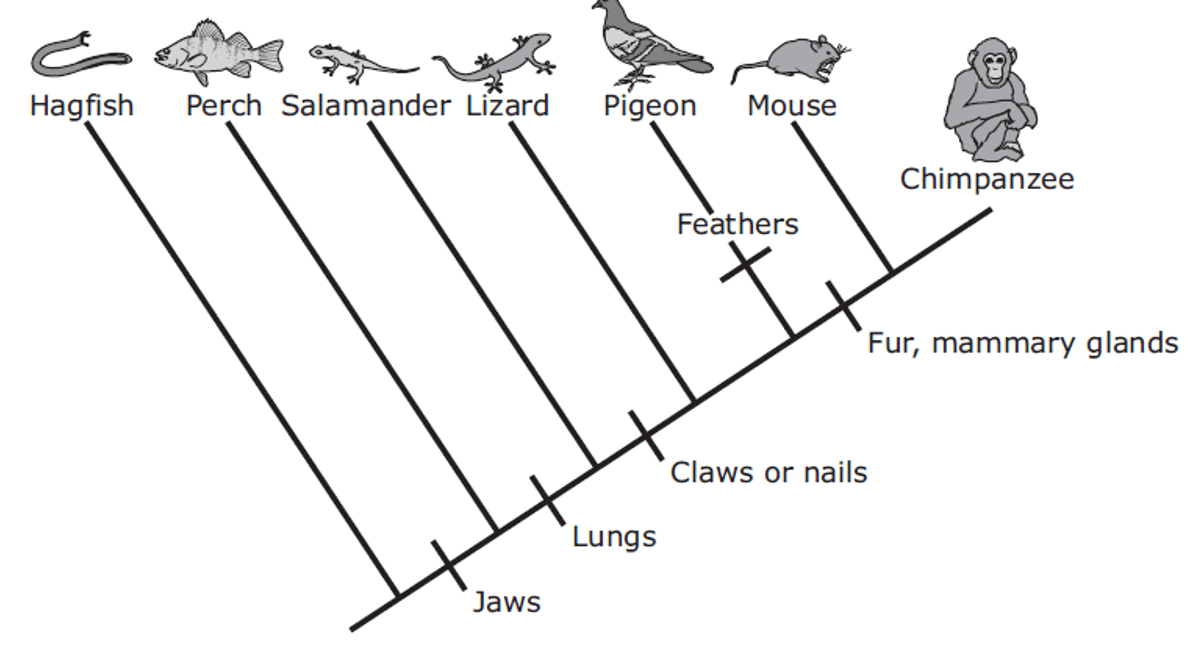
All the animals to the right of the hagfish would have the common characteristic of -
a)
Fur
b)
Claws or nails
c)
Lungs
d)
Jaws
141.
According to this cladogram, birds are LEAST related to -
a)
Amphibians
b)
Sharks
c)
Ray Finned Fish
d)
Crocodiles
142.

Identify the type of molecule shown in the diagram:

a)

carbohydrates

b)

proteins

c)

lipids

d)

nucleic acids

143.

Identify the type of molecules shown in the diagram:

a)

carbohydrates

b)

lipids

c)

proteins

d)

nucleic acids

144.
Which of the following correctly identifies the subatomic particle with its electrical charge?
a)
protons (positive), electrons (no charge), neutrons (negative)
b)
protons (positive), electrons (negative), neutrons (no charge)
c)
protons (negative), electrons (positive), neutrons (no charge)
d)
protons (no charge), electrons (negative), neutrons (positive)
145.
What is the purpose of the Nucleic Acid biomolecules?
a)
provide quick energy for a cell
b)
create a waterproofing barrier between the internal and external environment
c)
carry genetic information
d)
perform signaling, motor, transport, and enzymatic processes throughout the cell
146.
What is the purpose of the Protein biomolecules?
a)
provide quick energy for a cell
b)
create a waterproofing barrier between the internal and external environment
c)
carry genetic information
d)
perform signaling, motor, transport, and enzymatic processes throughout the cell
147.
What is the purpose of the Carbohydrate biomolecules?
a)
provide quick energy for a cell
b)
create a waterproofing barrier between the internal and external environment
c)
carry genetic information
d)
perform signaling, motor, transport, and enzymatic processes throughout the cell
148.
What is the purpose of the Lipid biomolecules?
a)
provide quick energy for a cell
b)
create a waterproofing barrier between the internal and external environment
c)
carry genetic information
d)
perform signaling, motor, transport, and enzymatic processes throughout the cell
149.
What term used to identify a Nucleic Acid monomer?
a)
Disaccharide
b)
Fatty Acid Chain
c)
Nucleotide
d)
Polypeptide
150.
Scientist sometimes compare the limbs of these organisms to look for evidence of common ancestry.
These limbs provide evidence of common ancestry because they— 

a)
have the same basic structure
b)
are the same size
c)
are parts of mammals
d)
perform the same function