
 Worksheets
Before the EOC Review
Total questions: 140
Worksheet time: 3hrs 30mins

The amount of energy the producers in this energy pyramid provide the primary consumer is 54,000 joules. From this amount, 540 joules are provided to the tertiary consumers. Based on this model, how much of the energy was provided to secondary consumers?
53,460 J
5,400 J
540 J
54 J

The diagram represents one way an enzyme can be inhibited. Which statement explains the effect of an inhibitor on an enzyme?
A substrate will be able to bond with the enzyme.
The enzyme will likely be attacked by immune cells
The enzyme will be unable to produce more enzymes.
A substrate will be unable to attach to the enzyme.

The green frog (Lithobates clamitans clamitans) is found in many parts of the United States. The table contains some information about this frog. Why does the ability to lay 1,000 to 5,000 eggs increase the fitness of the species L. clamitans clamitans?
It increases opportunities for offspring to compete for limited resources.
It increases the probability that some offspring will survive long enough to reproduce.
It increases the probability that moving water will promote gene flow from one population to another.
It increases the chance of the recombination of alleles, leading to genetic drift in the population.

Food webs such as the one shown were first used in 1927 by the animal ecologist Charles Elton. The food web below represents the feeding relationships among organisms in an Alaskan ecosystem. An environmental change that removed which of these organisms from the ecosystem would cause the most instability in the ecosystem?
Auklets
Foxes
Salmon
Zooplankton
During meiosis, homologous chromosomes exchange genetic material. This exchange of genetic material
increases the genetic variation
reduces the diploid number to the haploid number
increases the haploid number to the diploid number
reduces the probability of mutations
Bactrian camels, dromedaries, llamas, and alpacas are all members of the same taxonomic family, Camelidae. Members of this family all have two toes, no hooves, true canine teeth, and a split upper lip. The family Camelidae originated in North America. The physical features of animals in this family and the family’s geographical origin provide evidence that all these animals
live in the same type of ecosystem
have slowly evolved to become herbivores
have a common ancestor
exchanged DNA at some point in the past
Which statement best describes the relationship between the products of photosynthesis and the reactants in cellular respiration?
The products of photosynthesis serve as the reactants in cellular respiration to provide chemical energy.
The products of photosynthesis combine with the reactants in cellular respiration to remove ATP from cells.
The products of photosynthesis inhibit the reactants in cellular respiration in the presence of light.
The products of photosynthesis change the structure of the reactants in cellular respiration in the presence of light.

The initial steps in gene expression are modeled. Double-stranded DNA first unwinds into two strands. Which process and product are represented in the diagrams?
Process: transcription; product: mRNA
Process: translation; product: protein
Process: replication; product: tRNA
Process: recombination; product: polymerase

An analysis of DNA and RNA sequences can be used to classify organisms. A dendrogram, such as the one shown, is based on molecular data. It can be used to represent evolutionary relationships within a group of organisms that are hypothesized to have descended from a common ancestor. Which statement is best supported by the information in this dendrogram?
Lesser pandas are more genetically similar to giant pandas than they are to raccoons.
Brown bears are more genetically similar to giant pandas than they are to sun bears.
Lesser pandas are more genetically similar to raccoons than they are to giant pandas.
The bear species are all more genetically similar to dogs than they are to giant pandas.

Some students used vinegar to dissolve a way the shells of three eggs and used these eggs as models of human red blood cells. The students observed the changes in the eggs when they were placed in different solutions. Which statement best describes the role of the cell membrane in this model?
The cell membrane is an impermeable barrier that prevents water from entering the cell.
The cell membrane allows solutions to enter the cell, which causes the cell to shrink.
The cell membrane allows water to enter and leave the cell.
The cell membrane removes solutes from the environment.


What happens in the stage labeled "process 2"?

From left to right, what is the sequence of the complementary strand of DNA in this molecule?
Complete the sentence with the correct word.
________________ is how many organisms an area can support for an extended period of time.
Abiotic
Limiting factors
Biotic
Carrying capacity
Complete the sentence with the correct word.
________________ are the things that affect population size.
Abiotic
Limiting factors
Biotic
Carrying capacity
What is "abiotic" ?
living
non-living
What is "biotic" ?
living
non-living
What images represent abiotic factors?
Choose all that are correct.


What images represent biotic factors?
Choose all that are correct.


What graph represents carrying capacity?


An organism that obtains energy by eating other organisms is a ___________.
Decomposer
Consumer
Producer
_____________ break down dead and/or decaying matter.
Producers
Consumers
Decomposers
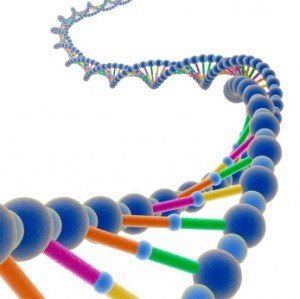

The mutated DNA segment is TTCGCAAG. This is an example of ___ mutation.
T-G-A-C-C-A
T-G-A-G-C-A

What word describes a trait that helps an organism survive in its environment?
natural selection
mutation
camouflage
adaptation
CAT TCA CTG


Which macromolecule is shown?
lipid
protein
nucleic acid
carbohydrate

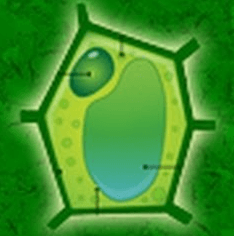
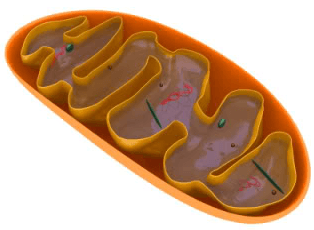


How do we write DOMINANT alleles?
Capital letters
Lower case
How do we write recessive alleles?
Capital letters
Lower case

the possible combination of alleles in a gene (what you can't see)
The physical traits (what you can see)

Squidward has light blue skin, and his genotype for this trait is Bb. Which of the following would describe Squidward?
Purebred
Heterozygous
Homozygous
Sex-linked
The genotype for a yellow plant is...

Some flowers are controlled by codominance. Red flowers (RR), blue flowers (BB) and Speckled flowers (RB).
Cross a red flower with a speckled flower. What is the phenotypic ratio?
2 red, 2 speckled
2 red, 2 blue
2 blue, 2 speckled
In fruit flies, eye color is a sex linked trait. Red (R) is dominant to white (r). What is the sex and eye color of flies with the following genotype: X R X r ?
male with white eyes
female with red eyes
male with red eyes
female with white eyes
In fruit flies, eye color is a sex linked trait. Red (R) is dominant to white (r). What is the sex and eye color of flies with the following genotype: X r Y ?
male with red eyes
female with red eyes
male with white eyes
female with white eyes
H= normal blood clotting
h=hemophilia
XHXh x XHY
What is the probability that any of their offspring will have hemophilia?
4/4
3/4
2/4
1/4
Look at this cross: XBXb x XBY
Colorblindness is a recessive sex-linked trait.
What proportion of the male children are colorblind?
100%
75%
50%
25%

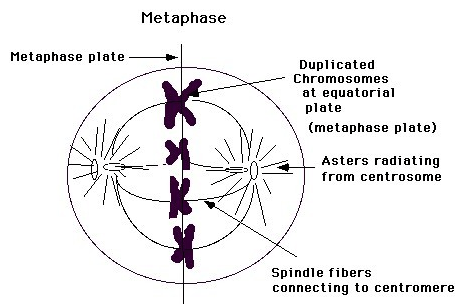


Scientists have found evidence that about 2.4 million years ago a gene regulating jaw muscles mutated and may have led to the more graceful human jaw we see today. The diagram below shows the skulls of 3 hominid species. Which statement below most closely explains the link between jaw size and hominid evolution?
The jaws of hominids evolved to be smaller and less protruding over time as did the skull.
The jaws of hominids evolved to be larger and more protruding over time.
There appears to be no change in the jaws of hominids over time.
The jaws of hominids changed over time due to a change in brain size

Based on the illustration to the right, what do the similarities between human and chimpanzee hands and feet suggest about the different organisms?
Chimpanzees and humans both have hands and feet adapted for walking upright, showing they have identical DNA.
Chimpanzees and humans both have similar hands for grasping, proving they make and use complex tools.
Humans and chimpanzees both developed five digits on their hands and feet, suggesting they have a common ancestor.
Humans and chimpanzees both have thumbs, proving they eat similar foods like meat, nuts, and vegetation.

The illustration below shows four lobes of the human brain.
What lobe is designated by label 2?
temporal
parietal
occipital
frontal

Which lobe of the brain is designated by number 4?
Occipital Lobe
Parietal Lobe
Frontal Lobe
Temporal Lobe
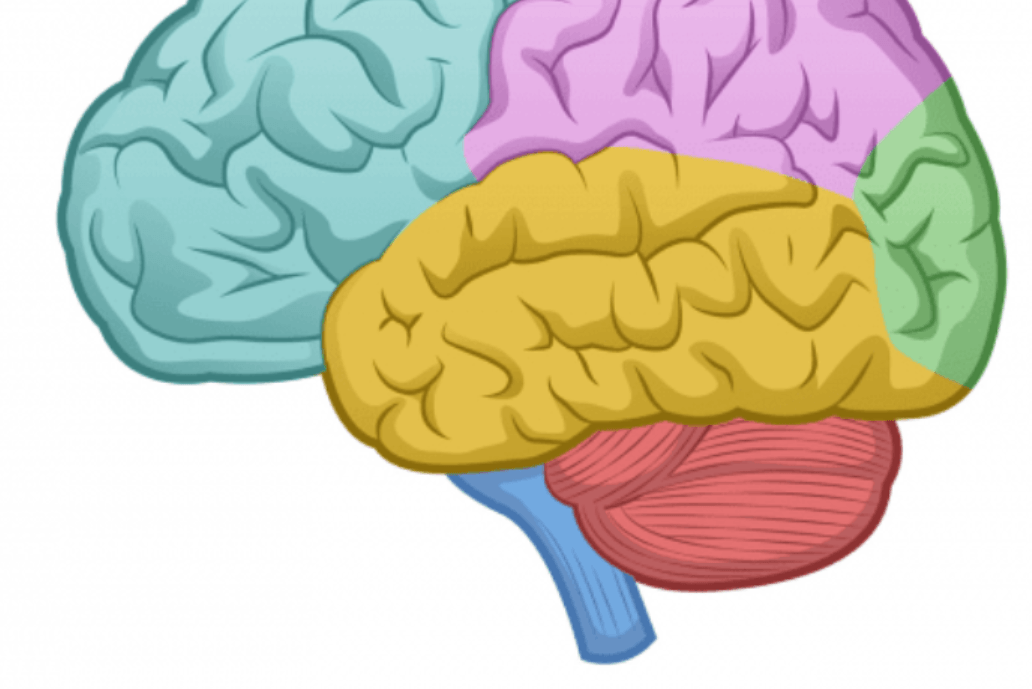
What structure is red in this picture?
Cerebrum
Cerebellum
Brain Stem
Example: "Modern day humans and apes evolved from a common ancestor.


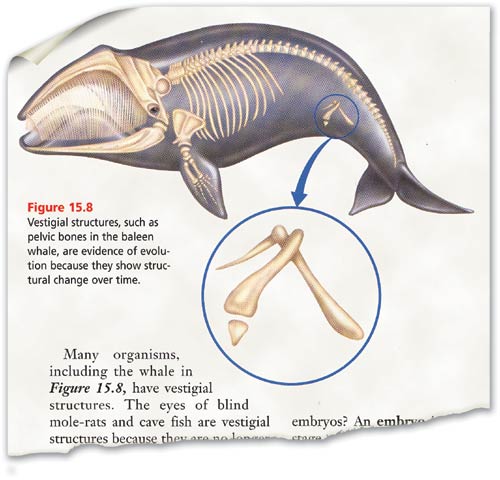
The picture shows a/an ___________
homologous structure
vestigial structure
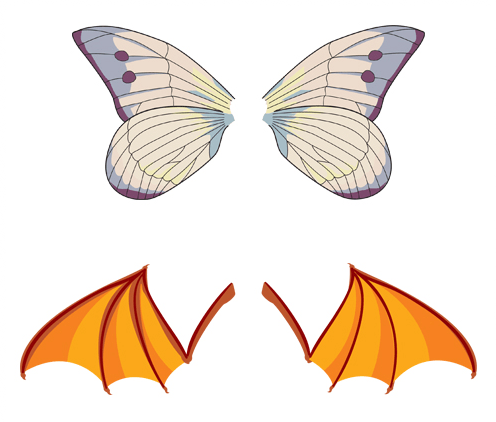
What is this an example of?
Homologous structure
Analogous structure
Vestigial organs
Functional adaption
Which statement best describes Blood Pressure?
The Force applied on the Blood Vessels by the Heart
It’s Normal and Healthy to have extended periods of High Blood Pressure.
Your Blood Pressure is Higher when you Sleep.
Being Nervous can Decrease your Blood Pressure.
When an individual has Atherosclerosis, it forms Plaque within the Arteries.
How does Atherosclerosis affect Blood Flow?
Arterial plaque clogs the arteries, limiting or stopping blood flow.
Arterial plaque changes the direction of blood flow, which forces oxygenated blood to the heart.
Arterial plaque changes the size of blood cells, which prevents blood from flowing in the arteries.
Arterial plaque clears the arteries, increasing blood flow.
Flexibility in blood vessels allows the vessels to stretch and move based on changes in Blood Volume. Conditions like Hypertension can cause the arteries to harden and lose their Flexibility.
How would the hardening of the arteries most likely affect Blood Flow?
The hardening of the arteries would likely cause blood flow to remain constant.
The hardening of the arteries would likely increase blood flow.
The hardening of the arteries would likely cause blood flow to stop completely.
The hardening of the arteries would likely restrict blood flow.

Arteriosclerosis is a disease which clogs arteries in the human body. In arteriosclerosis, artery walls become thick. Fatty deposits build up on inner walls of arteries. This condition reduces the ability of arteries to perform their function. The diagram above shows a comparison between a healthy artery and one with arteriosclerosis. Which of the following explains how Atherosclerosis affects the Body?
Decreases the circulation of Blood to tissues
Assembles Amino Acids into Proteins
Replaces damaged Cells with new Cells
Breaks down Food particles into Molecules
A Doctor prescribes a Blood Thinner, like Aspirin, to a patient with a Heart Condition.
How will this Blood Thinner affect the Flow and Viscosity of Blood?
The Blood Thinner will Increase the Flow and Decrease the Viscosity
The Blood Thinner will Decrease the Flow and Increase the Viscosity
The Blood Thinner will Increase the Flow and the Viscosity
The Blood Thinner will Decrease the Flow and the Viscosity
If there is an Increase in Blood Viscosity, then there will be a ________ in Resistance flowing within the Blood Vessels.
Increase
Decrease
If the Arteries are Narrow and Hard, the Blood Pressure is likely to be _____ than Normal
Higher
Lower
An Athlete comes in Dehydrated from the Field because his body lacks ALOT of Fluids.
How does Dehydration affect the Flow and Viscosity of Blood?
Dehydration will Increase the Flow and Decrease the Viscosity
Dehydration will Decrease the Flow and Increase the Viscosity
Dehydration will Increase the Flow and the Viscosity
Dehydration will Decrease the Flow and the Viscosity
A/an ________ is an injection of a weakened form of a pathogen to help the individual gain immunity from a disease.
Virus
Vacuum
Vaccine
Antibiotic
Which of the following help to make up the 1st line of defense?
white blood cells, histamine
t cells, b cells antibodies
skin, hair, chemical secretions such as mucus, saliva and tears
Skin, histamine
Which of the following are involved in the 3rd line of defence?
B cells, T helper cells, Killer T cells, Antibodies
B cells, T helper cells, Killer T cells, Antigens
skin, hair, chemicals such as mucus, tears and saliva
Histamines, and Phagocytic White blood cells (macrophages)
The third line of defense helps to
prevent pathogens from entering body
fight all types pathogens once they have entered the body
fight off specific pathogens, and remember pathogens that have previously invaded

B cells are a type of white blood cell involved in the 3rd line of defense. B cells
Help to activate other white blood cells such as killer T cells and B cells
Produce antibodies
Produce antigens
Kill pathogenic cells

After fertilization the zygote increases in size and travels down the Fallopian tube to become embedded in the walls of the uterus. This process is known as

The letters in the diagram indicate structures present in a human male.
What change would occur immediately if both
structures labeled B were damaged or blocked?
Structure A would decrease in size.
The blood supply to structure E would decrease.
Gametes (sperm) would no longer be transported to
structure C to exit the body
Structure D would be able to deliver more
gametes.
What is the gland that produces a fluid that aids sperm longevity. It lies beneath the bladder and surrounds the urethra.
vas deferens
prostate gland
erectile tissue
testicles
What are the two small glands at the ends of each vas deferens that secrete an alkaline fluid rich in fructose (sugar nutrient) that serves as a source of energy for sperm?
vas deferns
seminal vesicles
erectile tissue
bladder
Natural Passive Immunity comes from...
Mother's breast milk.
Antibodies from other sources injected into the human bloodstream.
It damages the placenta while the brain is developing leading to future developmental problems.
It tastes real bad and the baby doesn't like how it taste.
It does not cause any risk to the fetal development of the baby
This tiny organism spends its day reproducing rapidly (about once every 20 minutes), often inside the bodies of other organisms. Its genetic material is not contained inside a nucleus.
Eubacteria
Protista
Fungi
Plantae
This organism spends its day in hot gases and molten rock deep within the earth. This type of tiny organism existed billions of years ago.
Fungi
Eubacteria
Archaebacteria
Animalia
This organism spends its day taking in carbon dioxide and releasing oxygen through its stomata. It never eats but can grow many meters tall.
Fungi
Plantae
Protista
Animalia

What is the difference between a fungus and a plant?
Fungi are autotrophic and the plants are heterotrophic
Fungi are heterotrophic and the plants are autotrophic
Plants can move but fungi cannot move
Plants are multicellular and animals are unicellular

